
How many senses do we have? 22–33 senses?
How Many Senses Do We Have? Rethinking the Traditional Five Through Modern Neuroscience Estimated reading time: 10 minutes Key Takeaways Many of us learned that humans have just five senses. Modern neuroscience tells us that we actually have between 22 and 33 senses. Real-life experiences are multisensory, and our brain mixes inputs from both the […]
With Craig Major and Jon Irwin
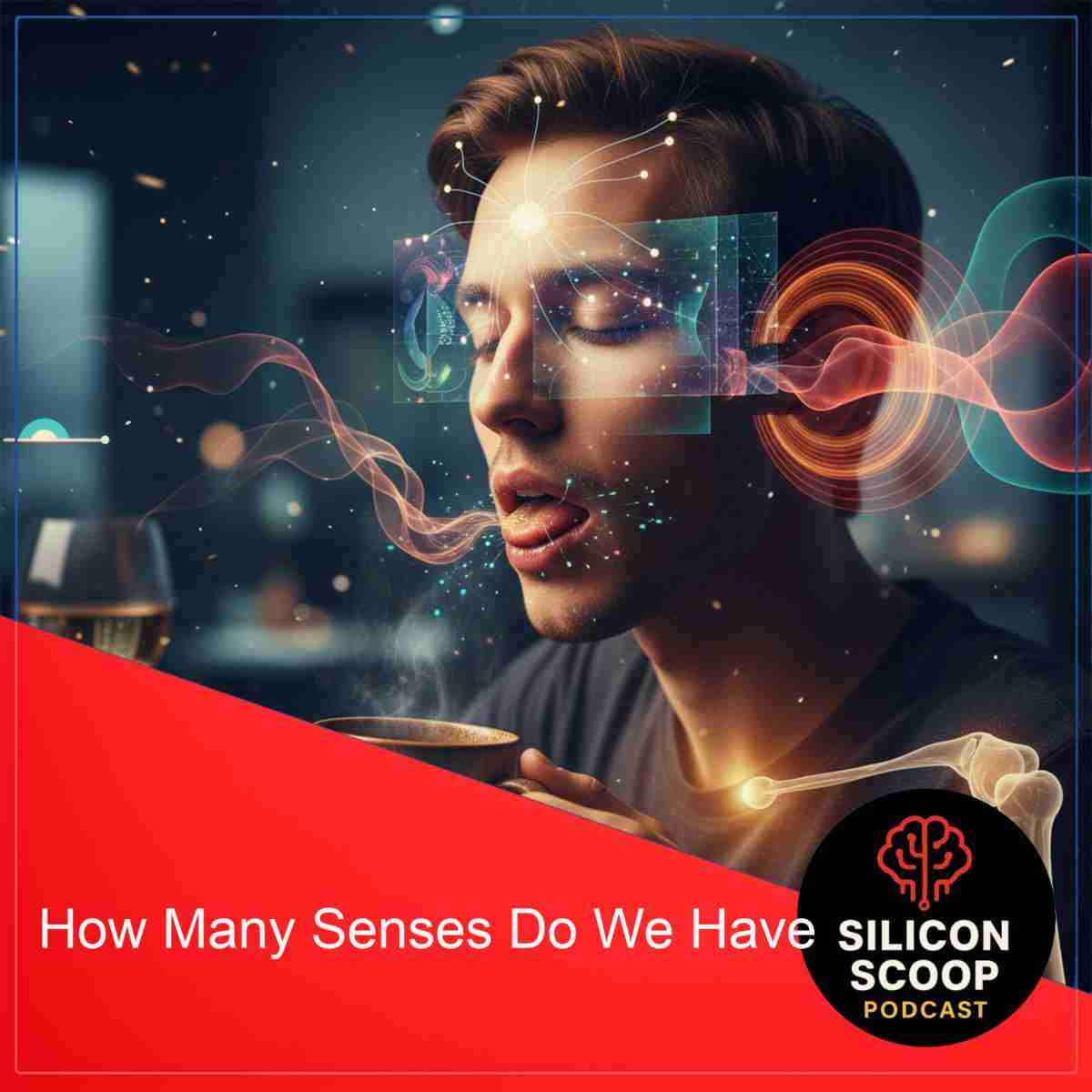
How Many Senses Do We Have? Rethinking the Traditional Five Through Modern Neuroscience
Estimated reading time: 10 minutes
Key Takeaways
- Many of us learned that humans have just five senses.
- Modern neuroscience tells us that we actually have between 22 and 33 senses.
- Real-life experiences are multisensory, and our brain mixes inputs from both the classic senses and many internal signals.
- The science of sensory integration looks at not just vision, hearing, smell, taste, and touch but also hidden systems like proprioception, vestibular sense, and interoception.
- Researchers are rethinking the five senses and showing that every day we live with a rich, multisensory world.
Table of contents
- How Many Senses Do We Have? Rethinking the Traditional Five Through Modern Neuroscience
- Introduction
- Section 1: Evolution of Sensory Theory – From Five to Dozens
- Section 2: The Nature of Multisensory Perception
- Section 3: Internal & Extra Senses – Proprioception, Vestibular, Interoception, Agency, and Ownership
- Section 4: The Composite Nature of Traditional Senses
- Section 5: Crossmodal Interactions and Sensory Integration in Everyday Life
- Section 6: Experiential Learning – Exhibitions, Illusions, and Public Engagement
- Section 7: The Complexity of Counting Senses
- Section 8: Broader Implications of Understanding Our Many Senses
- FAQ Section (10 Questions and Answers)
- Conclusion
Introduction
Have you ever wondered how many senses we have? Many of us learned that humans have just five senses. But modern neuroscience tells us that we actually have between 22 and 33 senses. Research now shows that real-life experiences are multisensory. This means that our brain mixes inputs from both the classic senses and many internal signals. The science of sensory integration now looks at not just vision, hearing, smell, taste, and touch but also hidden systems like proprioception, vestibular sense, and interoception. This new view is reshaping the idea of “how many senses do humans have.” Researchers are rethinking the five senses and showing that every day we live with a rich, multisensory world.
(Source: Centre for the Study of the Senses)
Section 1: Evolution of Sensory Theory – From Five to Dozens
Aristotle taught that we have five senses: vision, audition, olfaction, gustation, and somatosensation. These ideas came from long ago when people thought the world was made of earth, air, fire, water, and ether.
Today, research challenges this view. Many scientists now say that the number of sensory systems is much higher. Key points include:
- The classic five senses served as a basic guide.
- Modern neuroscience finds many more sensory systems.
- Experts like Charles Spence and Barry C. Smith show us new ways of grouping how our body feels and thinks.
- Researchers now look at internal signals—like body position (proprioception), balance (vestibular sense), and how we feel inside (interoception).
This new idea changes the old view by rethinking the five senses. It also adds the ideas of multisensory perception and the science of sensory integration to our modern vocabulary.
(Source: Centre for the Study of the Senses, Spence’s Research Group)
• Call to Action 1 – Discover more about how our sensory systems work by [Insert CTA text here].
Section 2: The Nature of Multisensory Perception
Multisensory perception means that our brain takes information from many senses at once and makes one complete picture of the world around us. Every time you brush your teeth, get dressed, or eat breakfast, many senses are at work.
Key ideas include:
- What you see, hear, smell, taste, and feel all join together.
- The brain can mix sounds with sights. For example, the color you see might make a sound seem different.
- Your morning routine is a mashup of inputs: the light of the bathroom, the sound of water running, the smell of shampoo, and the feel of the towel.
This mix shows that our experiences are not built on single senses only. Instead, they come from a whole network of signals working together in the science of sensory integration and multisensory perception. This idea is very important in understanding how many senses do humans have.
(Source: Research on Multisensory Perception)
• Call to Action (Post-Section 2) – Learn how integrating sensory data can transform your perception – [Insert CTA text here].
Section 3: Internal & Extra Senses – Proprioception, Vestibular, Interoception, Agency, and Ownership
Modern neuroscience adds new “senses” to the list. Here are some that expand on our classic five:
• Proprioception – The Sense of Limb and Body Position
– Helps you know where your arm or leg is, even when you are not looking.
– Lets you touch your nose with your eyes closed.
– Is important for activities like walking, typing, and playing sports.
(Source: Research by Charles Spence, Crossmodal Research Laboratory, University of Oxford)
• Vestibular Sense – The Sense of Balance and Motion
– Tells you about head rotation, movement, and balance.
– Works with vision and proprioception to keep you upright.
– For example, when you are on an airplane, you feel changes in weight and tilt.
(Source: Research on Vestibular System Function)
• Interoception – The Sense of Internal Bodily Signals
– Lets you feel your heartbeat, breathing, or a growling stomach.
– Helps you know when you are full, hungry, or anxious.
– Is key to linking physical signals with emotions.
(Source: Interoception Research)
• Sense of Agency – The Feeling of Causing an Action
– Gives the feeling that “I am moving my arm” rather than it moving by itself.
– Helps in knowing that your actions have a result in the world.
– Clinical studies show that when agency is lost, as after a stroke, simple actions become confusing.
(Source: Research from Neurological Studies on Agency)
• Sense of Ownership – The Feeling That Your Body Is Yours
– Makes you feel that your arm or leg belongs to you.
– Even if someone else touches your arm, you still know it is your body.
– Clinical examples like somatoparaphrenia show what happens when this sense is disturbed.
(Source: Studies in Body Ownership and Somatoparaphrenia)
Key terms like “proprioception and interoception” and “vestibular system function” show that modern science is broadening our view on how many senses humans have.
Section 4: The Composite Nature of Traditional Senses
What many of us call “touch” or “taste” are not single, simple senses. Instead, they are a mix of different signals. Let’s look at how:
Touch (Somatosensation) is made of several parts:
- Tactile: Feel the pressure, vibration, or texture (rough vs. smooth).
- Thermoreception: Sense if something is hot or cold.
- Nociception: Notice pain from a cut or burn.
- Itch: Feel a tickle or irritation.
- Affective Touch: Experience a gentle touch that feels nice and comforting.
Taste and Flavor also mix multiple parts together:
- Gustation: The basic tastes like sweet, sour, salty, bitter, and umami.
- Olfaction: Smell from the nose adds flavors such as mint, coffee, or fruit.
- Oral Touch and Texture: Feel the creaminess or crunchiness of food.
- Chemesthetic Sensations: Experience a burn from chili or a cool feeling from mint, driven by the trigeminal nerve.
These detailed layers of touch and taste highlight the science of sensory integration and multisensory perception, showing that many traditional senses are composites.
(Source: Traditional ‘single’ senses are actually composites research)
Section 5: Crossmodal Interactions and Sensory Integration in Everyday Life
Our senses do not work alone; they join forces. This joining is known as crossmodal effects, where one sense can change how another sense works. Consider these examples:
• Footsteps and Body Perception
– Changing the sound of your steps can change how heavy or light you feel.
– Lighter-sounding footsteps may make you feel as if you are floating.
– Heavier-sounding steps might make you feel weighed down.
• Audioguides in Art Museums
– At places like Tate Britain, specially designed audio guides help people remember details of paintings.
– The sound guides change the way visitors look at art and increase visual memory.
• Aircraft Noise and Taste
– In noisy environments, like inside an airplane, taste perception changes.
– The sound of the cabin can make the umami taste in tomato juice more strong while softening other tastes.
These examples show the power of multisensory perception. They also illustrate how the science of sensory integration is at work every day in ways we do not notice.
(Source: How sound and other senses interact research)
• Call to Action 2 – Ready to explore the full potential of your senses? [Insert CTA text here].
Section 6: Experiential Learning – Exhibitions, Illusions, and Public Engagement
Public exhibits let us see and feel these ideas in action. Museums and installations let visitors learn about their senses hands-on. Two clear examples include:
• Senses Unwrapped Exhibition
– Held at Coal Drops Yard, King’s Cross in London.
– It shows how our senses work and sometimes fool us.
– Visitors participate in tasks that show how the brain can mix signals to create our everyday experiences.
• The Size–Weight Illusion with Curling Stones
– In this illusion, three objects of the same weight are presented in different sizes.
– People mostly feel that the smallest object is heaviest even if they weigh the same.
– This trick shows that how we expect an object to feel can change our actual feeling when we lift it.
These exhibitions combine the ideas of multisensory perception and the science of sensory integration. They give us a way to see and feel the complex mix of senses at work in our everyday lives.
(Source: Exhibitions and public engagement on multisensory perception)
Section 7: The Complexity of Counting Senses
Counting the senses is not as simple as it might seem. There are several reasons why:
• Stimulus and Receptors
– Different senses are triggered by different stimuli like light, pressure, or chemicals.
– The receptors in our body (eyes, ears, skin, etc.) are built to catch these signals.
• Distinct Neural Pathways
– Each sense sends signals along different nerve routes.
– These signals end up in separate areas of the brain.
• Phenomenology: How It Feels
– Some feelings, like pain, are different from other touches even if they come from the same area.
– The feel of body ownership and agency is also unique.
• Functional Roles
– Our senses do more than just show us the world; they help us stand, move, eat, and even talk to others.
Because of these differences, researchers count anywhere from 5 to over 30 senses. Modern estimates usually fall between 22 and 33. This range shows that using different criteria can lead to very different counts.
(Source: Why Counting Senses Is So Difficult)
Section 8: Broader Implications of Understanding Our Many Senses
Knowing that we have many senses changes our view of daily life. Here are some important points:
• Everyday Activities
– When you walk, eat, or play, pay attention to more than just what you see and hear.
– Notice your body’s position (proprioception) and your balance (vestibular sense).
– Tune into internal feelings from interoception, like hunger or a racing heart.
• Design and Healthcare
– Better understanding of multisensory perception can lead to smarter designs in architecture and user interfaces.
– In healthcare, knowing how the senses work together can improve treatments and therapies.
• Art and Education
– Artists use crossmodal effects to create richer experiences.
– Educators can help students learn by engaging multiple senses at once.
Practical advice: Next time you are eating a meal or taking a walk, try to feel every part of the experience. Notice the texture of your food, the sound of your steps, the gentle shift of your body. This added awareness can improve your mood and lead to a better quality of life through the science of sensory integration and multisensory perception.
(Source: Broader Implications in Modern Research)
────────────────────────────────────────
Call to Action (Before FAQ) – Have more questions about your sensory systems? [Insert CTA text here].
FAQ Section (10 Questions and Answers)
1. Q: How many senses do we have?
A: While we are taught that humans have five senses, modern research shows we have between 22 and 33 senses. This new count includes both the well-known senses and many internal senses.
2. Q: What does “multisensory perception” mean?
A: Multisensory perception is when our brain uses different sensory inputs—like sight, sound, smell, touch, and internal signals—to create one complete experience of the world.
3. Q: What is proprioception and how does it work?
A: Proprioception is the sense that tells you where your arms and legs are. It works by sending signals from your muscles and joints to your brain. This sense lets you move without looking at your body.
4. Q: What is the vestibular sense?
A: The vestibular sense is the sense of balance and motion. It comes from the inner ear and helps you know when you are moving or if you are tilted, particularly when you are on a moving vehicle or standing up.
5. Q: How does interoception differ from other senses?
A: Interoception is the sense of what happens inside your body, like your heartbeat, hunger, or how you breathe. It helps you understand and feel your internal state, which is very different from the senses that detect the outside world.
6. Q: What do the terms “sense of agency” and “sense of ownership” mean?
A: The sense of agency is the feeling that you are in control of your actions. The sense of ownership is the feeling that your body parts belong to you. Both are important for making sense of who is doing an action.
7. Q: Why is counting senses so difficult?
A: Scientists use many different ways to decide what counts as a sense. Some focus on types of receptors, others on how the brain processes signals, and some on how the experience feels. This variety leads to counts ranging from 5 to over 30.
8. Q: Can one sense change how another one works?
A: Yes. For example, changing the sound of steps can make you feel lighter or heavier, and background noise can change how food tastes. This interaction is part of multisensory perception.
9. Q: Why do exhibitions like “Senses Unwrapped” matter?
A: Exhibitions let people experience firsthand how our senses work together and sometimes fool us. They make the science of sensory integration real and fun.
10. Q: How can understanding all our senses benefit daily life?
A: By being aware of the full range of our senses, you can improve your well-being, enjoy richer experiences in art and design, and even use this knowledge in healthcare and education.
Conclusion
We started with the classic view that we have only five senses. Today, modern neuroscience tells us that the answer is far more complex. With extra senses like proprioception, the vestibular system, interoception, the sense of agency, and sense of ownership, we see that how many senses humans have can range between 22 and 33. Recognizing these extra layers leads us to rethink the five senses and embrace multisensory perception as a key to understanding daily life.
As we learn more about the science of sensory integration, we find that every experience—from eating a meal to simply walking outside—is very rich. This knowledge can help us feel better, design smarter spaces, and open our eyes to the wonders of our body and mind. Continue to explore, ask questions, and join the growing discussion in neuroscience and philosophy about our many senses.
Keep exploring the amazing world of your senses and let the journey inspire you to see life in a whole new way!
Additional Links
Flowgrammer.ca – 💡 Unlock AI-Powered Automation! Let flowgrammer.ca handle complex workflows so you can focus on growing your business.
- Silicon Scoop Podcast – Stay Informed, Stay Ahead!
- Startup Talk Podcast
- Flowgrammer Podcast –
- Startup Investor Drinks – Join Toronto’s Startup Community and connect with fellow startup enthusiasts and investors.
- TorontoStarts Startup and Entrepreneur Community – Become a part of Toronto’s thriving startup ecosystem.
- Workhaus – Discover flexible workspace solutions for your business needs.
- Work with The Startup Coach – Get expert guidance and mentorship for your startup journey.
- Reach out to Jon Irwin on LinkedIn – Connect with our co-host and technology expert.
Flowgrammers.ca – 💡 Join Toronto’s Fastest Growing AI and Busiess Automation Community..
Flowgramming.space – 💡 AI Agent and Workflow Marketplace..
Episode transcript
Read the full transcript
Craig: stop saying you only have five senses. that's aristotleian nonsense that's holding you back. how we understand human hardware. modern neuroscience just confirmed you're actually running between twenty two and thirty three distinct sensory inputs, and knowing them unlocks a massive upgrade for your health and spatial awareness. so the five senses model is obsolete, and we aren't just seeing and hearing. we are processing okay. i'm gonna get a lot of this wrong. proprioception limb position, vestibular data balance, and introception internal organ statuses in real time. it's a shift from viewing the brain as a simple five channel receiver to a massive multi sensory integration engine. and this explains everything from why vr motion sickness happens to why airplane noise makes tomato soup taste better. understanding this allows us to hack your own experiences. what do you think about this, john?
Jon: i think this is cool. this makes total sense. i don't think this is sci fi. and this just speaks to how science has advanced. and so now they've recognized that many of the bodily systems previously lumped under general systems or general senses are, in fact, functionally separate sensory modalities. so for example, what we call touch is actually a complex grouping of sensory inputs. pressure, vibration, heat, cold, pain, itch, all that stuff. right? each with dedicated receptors and neural pathways. similarly, with taste and smell, they involve multiple submodalities and interactions rather than a single unified sense. so beyond the five senses, researchers identify sensory systems, and that's what you were talking about. so pro proprioception, i think, i could be wrong, is the subconscious sense of where your body parts are in space, allowing you to touch your nose with your eyes closed. there's vestibular sense, which balance, which is balance and spatial orientation, which is mediated by the fluid and hair cells in the inner ear. interoception, which is sensing internal states of the body like heart rate, hunger, breath, and bladder fullness. nociception, which is the perception of pain, which alerts the body to potential damage. and so, these systems are physiologically distinct from classic senses and have dedicated processing pathways. so, they suggest that if each of these sensory channels is counted separately, reach anywhere between twenty two and thirty three. and so, i think this is cool. so just to add another layer of complexity to all of this, it lies in how these senses interact. so human perception, it's not a sense of independent channels firing in isolation. instead, it's sensory inputs that are continuously integrated in the brain to form a unified and coherent experience. so for example, your sense of taste is heavily influenced by smell and touch, which is why food flavors seem richer or different when aromas are present. so, like, this just it makes total sense to me. what about you?
Craig: it makes sense. i guess i just, you know, never really thought about this because, you know, what is that feeling when you're internally, your stomach is grumbling or, you know, you're not or you're feeling hot or you're you know? so i guess i never really thought about those types of things as different types of perception, but i guess it's like, the dashboards of old 1970 sedans. you know? you just had a speedometer and a fuel gauge. you know? the modern reality your battery is more like a formula one car. you have hundreds of telemetry center sensors like monitoring tire pressure, touch and pressure, engine heat, the thermoception, chassis tilt, the vestibular, and internal fuel chemistry, the introception, all feeding into a central computer simultaneously. and i think when you start looking into this, you're gonna start to see more of the science around why they say your gut is your second brain, and it may have more control over you than you think because it has control over several, types of these, perceptions, senses.
Jon: yep. yeah. and, like, i think i think this is great. not only for understanding this for building, robotics and robots. right? but understanding these for practical implications for medicine, psychology, and rehab. like, for instance, disruption in interoception, they can be linked to anxiety and eating disorders, and balance disorders stem from vestibular dysfunction. so if you can recognize that there's a richer sensory landscape, that actually could help clinicians diagnose and treat conditions that were previously misunderstood. i think this has huge, huge implications for, the medical, medical world.
Craig: i think it does too. like, it changes i think it has effects on all areas of life that we just haven't realized yet. yeah. like, if, the sound in an airplane cabin can make taste in tomato juice more strong while softening other tastes. what other sounds, what other pressure, what other things can change your feeling and senses and enhance or, retard other feelings, right, or senses? so imagine restaurants that have the sound or volume or pressure or smells or the things that now they know, will maximize the experience of the dishes they're serving that evening. or maybe your dentist does certain things that reduces your pain receptors based on your environment around. there's a lot of interesting things when you start looking at how your body interacts and you can really start changing things in your life when you start realizing what is controlling these things. and can you change your mood or can you change how you react to things around you as a result of this?
Jon: absolutely. yeah. can they introduce things for therapy? can they introduce different sensory things to help with, with recovery? like, there's a whole bunch of there's a plethora of opportunity here for, for changing the way that people are treated for treatments. if this is phenomenal, i'm so excited about this. i love this.
Craig: so the vestibular system balance is basically a biological accelerometer and a gyroscope low located in your inner ear using fluid inertia to detect head rotation, gravitational pull, identical physics to your smartphone's screen rotation sensor. the mcgurk effect proves your brain trust vision over audio. if you see a video of lips saying, but you hear the sound, your brain will force you to hear, duh. it's a hardware bug in sensory integration. so this has been tested. it's called the bagurk effect. look it up. humans technically have a magnetoreception hardware or cryptochromones in the eye similar to migratory birds, but the software seems to be disabled or subconscious in modern humans. so we don't have to migrate south for the, summer like they
Jon: do. yeah.
Craig: so is counting, you know, itch, puretoseption, it's called, and pain, no exception as separate senses, just semantic bloating, or some argue that these are just subgenres of touch, making 33 senses claim a bit more academic, and maybe more inflated than it really is. so your high performance machine running dozens of background processes start treating your body like it. now that you know you have 33 senses, which one is malfunctioning for you today? is it your balance, your internal hunger gauge, or plain old eyesight? let us know in the chat what you're gonna work on and what you think of these studies.
More from Silicon Scoop
All episodes
silicon-scoop · October 16, 2026
Meta’s $18 Billion Teen Safety Settlement: Soft Guardrails, Hard Leverage Over TikTok and YouTube
Deep dive on Meta teen safety settlement, social media addiction lawsuit, new Facebook Instagram time limits and pressure on TikTok YouTube age verification.
View episode

silicon-scoop · October 15, 2026
How Claude Mythos Is Reshaping Cryptanalysis: HAWK, AES and the Rise of AI-Driven Crypto Research
Claude Mythos cryptanalysis weakens HAWK post-quantum signature, speeds AES Möbius Bridge attack, and powers CryptanalysisBench benchmark in AI-driven crypto research.
View episode

silicon-scoop · October 14, 2026
Nvidia’s $12.9 Billion Hugging Face Bet: How Controlling the Open-Source Model Hub Reshapes AI Chips, Cloud, And Competition
Nvidia Hugging Face acquisition could reshape open source AI models, AI chip dominance, and the global developer model hub, raising antitrust and neutrality questions.
View episode