
Smart Underwear Fart Tracker
Smart Underwear Fart Tracker: A New Era in Intestinal Gas Tracking Device Estimated reading time: 8 minutes Key Takeaways The Smart Underwear fart tracker is a clip-on, wearable electrochemical sensor that attaches to your underwear to track intestinal gas events noninvasively. Early results from the Human Flatus Atlas study show that the sensor recorded an […]
With Craig Major and Jon Irwin
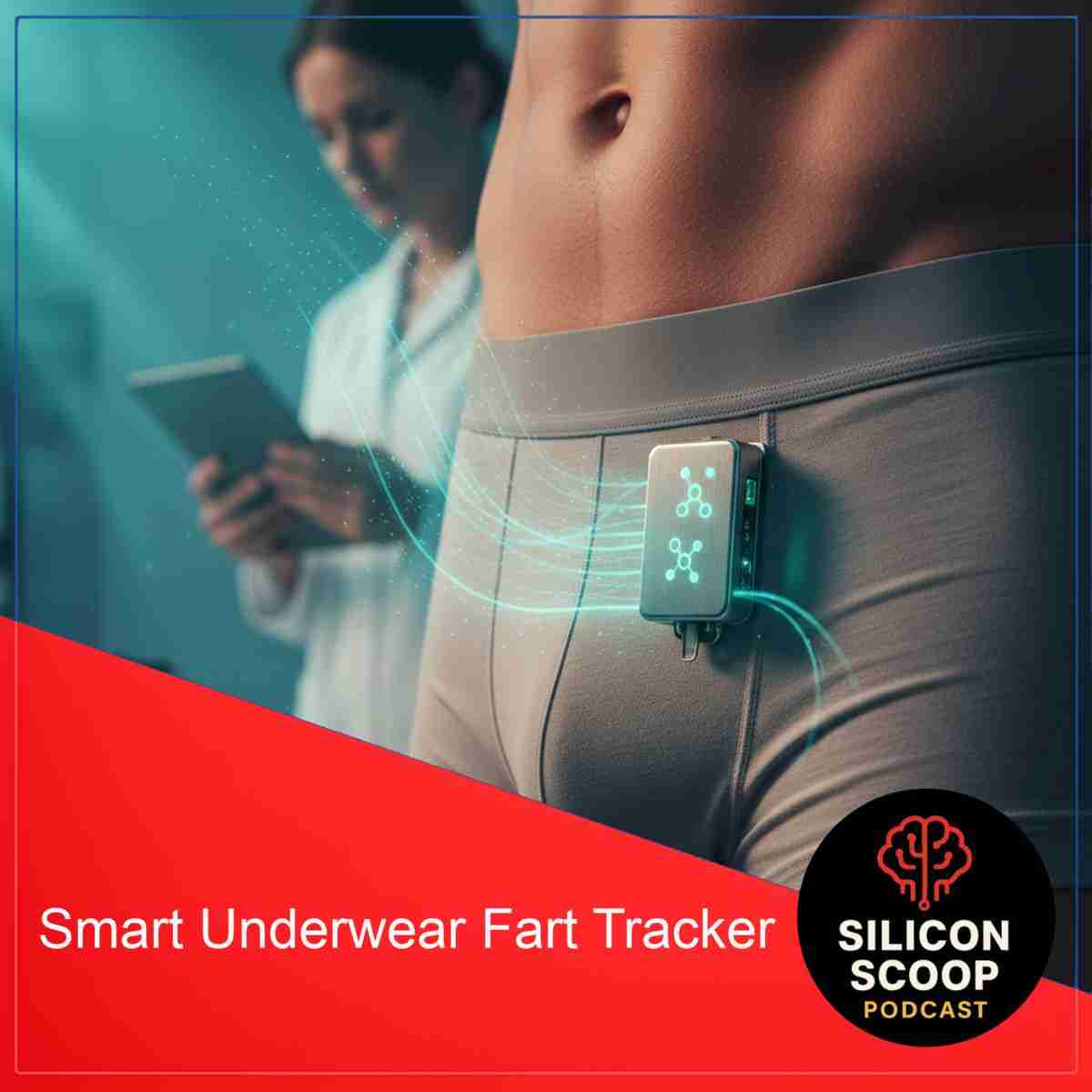
Smart Underwear Fart Tracker: A New Era in Intestinal Gas Tracking Device
Estimated reading time: 8 minutes
Key Takeaways
- The Smart Underwear fart tracker is a clip-on, wearable electrochemical sensor that attaches to your underwear to track intestinal gas events noninvasively.
- Early results from the Human Flatus Atlas study show that the sensor recorded an average of 32 gas events per day—more than double the earlier textbook estimate of 14.
- Objective flatulence measurement could soon change how doctors view flatulence patterns, replacing unreliable self-reports.
- The sensor measures hydrogen gas (H₂) produced when gut microbes break down carbohydrates and can capture secondary data such as minor readings of other gases like carbon dioxide (CO₂).
- Future research aims to scale the Human Flatus Atlas, validate the sensor in larger populations, and expand applications in diagnostics and microbiome research.
Table of contents
- Smart Underwear Fart Tracker: A New Era in Intestinal Gas Tracking Device
- Introduction to Smart Underwear Fart Tracker
- Section 2: Device Overview & Technical Details – Smart Underwear Sensor
- Section 3: Study Design, Key Findings & Clinical Implications – Human Flatus Atlas Study
- Section 4: Broader Significance, Future Research & Applications – Gut Microbiome Health Monitor
- Section 5: Frequently Asked Questions – Your Guide to Understanding the Smart Underwear Sensor
- Conclusion
Introduction to Smart Underwear Fart Tracker
The world of wearable technology is evolving fast. One of the most innovative gadgets hitting the research labs is the Smart Underwear fart tracker. This smart underwear sensor is a clip-on, wearable electrochemical sensor that attaches to your underwear to track intestinal gas events noninvasively. Unlike traditional methods, this intestinal gas tracking device continuously measures gas events, giving real-life data on how many farts per day is normal.
The Smart Underwear sensor works by measuring hydrogen gas (H₂) that is produced when our gut microbes break down carbohydrates. Early results from the Human Flatus Atlas study led by Brantley P. Hall at the University of Maryland show that the sensor recorded an average of 32 gas events per day—more than double the earlier textbook estimate of 14. Researchers believe these findings could soon change how doctors view flatulence patterns, as objective flatulence measurement replaces unreliable self-reports.
Key Terms
- Smart Underwear sensor: A clip-on wearable sensor designed to monitor intestinal gases.
- Human Flatus Atlas study: An ongoing project using the sensor to chart natural flatulence patterns in daily life.
These breakthroughs signal a dramatic step forward in using smart underwear sensor technology to understand our gut better.
Call To Action 1: Discover how Flowgrammer’s innovative solutions can bring research breakthroughs to everyday life. Learn more today at Flowgrammer’s innovative solutions.
──────────────────────────────
Section 2: Device Overview & Technical Details – Smart Underwear Sensor
The Smart Underwear sensor is a compact and reliable wearable tool designed for objective flatulence measurement. This intestinal gas tracking device boasts several key features and benefits for users and researchers alike.
Key Features and Technical Specifications
- Clip-On Design:
- – The sensor clips to the user’s underwear, ensuring it remains discreet and comfortable.
- – It can be attached externally without any intrusive methods.
- Electrochemical Sensor:
- – Designed to monitor hydrogen gas (H₂) as the primary target during gut microbiome fermentation.
- – Captures secondary data such as minor readings of other gases like carbon dioxide (CO₂).
- Data Recording and Communication:
- – Measures the frequency and magnitude of gas events during daily activities.
- – Communicates this data to a linked mobile device or app for further logging and analysis.
Noninvasiveness and Benefits
- Unlike self-reporting approaches or traditional methods using rectal tubes or gas collection bags, this wearable gut health technology is noninvasive.
- Users can wear it during everyday life, whether at home or work, and enjoy accurate, continuous monitoring.
- This technology removes subjectivity from measuring flatulence, making the data more reliable.
Technical Research Integration
In a peer-reviewed study published today (early 2025) involving 19 healthy adults from the University of Maryland, the sensor’s performance was validated. The study reported that:
“The sensor reliably detected discrete gas events, proving it as a feasible tool for real-world intestinal gas tracking.”
This research confirms that the Smart Underwear sensor is a robust tool in the world of objective flatulence measurement.
For more study details, please visit: more study details.
──────────────────────────────
Section 3: Study Design, Key Findings & Clinical Implications – Human Flatus Atlas Study
The primary research for the Smart Underwear fart tracker revolves around the Human Flatus Atlas study. This study is groundbreaking in its design, real-world application, and potential clinical impact for gastrointestinal (GI) health.
Study Design Overview
- Population:
- – The study involved 19 healthy adults in the United States.
- – Participants had no significant gastrointestinal diseases, ensuring the focus was on normal physiology.
- Study Protocol:
- – Participants wore the clip-on sensor during waking hours over the course of one week.
- – They continued with their normal daily routines and diets.
- – The sensor’s ease of use and noninvasive design allowed for authentic flatulence tracking.
Measurement Metrics
- Primary Metric:
- – The number of discrete flatus events per day was recorded objectively using the sensor.
- Secondary Metrics:
- – Temporal patterns of gas events were tracked throughout the day.
- – The study noted inter-individual variations in the frequency of gas events.
Key Findings
- Average Frequency:
- – Data showed an average of about 32 gas events per day.
- – This is significantly higher than the traditional textbook estimate of 14 events per day, which addresses the common query “how many farts per day is normal.”
- Variation Among Individuals:
- – Reported events ranged between 4 to 59 per day, demonstrating wide natural variation.
- Clinical Implications:
- – The device’s objective measurements offer a clearer picture of gut health compared to self-report methods.
- – Reliable data on gas frequency can help clinicians differentiate between normal physiology and potential issues like IBS or dysbiosis.
- – Combining this tool with standard GI tests opens new avenues for noninvasive diagnostics.
Research Integration and Considerations
- The sensor effectively recorded hydrogen gas as a proxy for gut fermentation. This real-life data extraction marks a significant leap from traditional, more invasive methods.
- Although the small size of the study means conclusions are preliminary, these encouraging results lay the groundwork for larger-scale studies.
- The study compared these outcomes to traditional methods, emphasizing that devices like the Smart Underwear sensor deliver continuous, unbiased data.
Call To Action 2: Ready to explore the power of data driven by smart technology? Check out Flowgrammer’s latest offerings and join the future of wearable health tech at Flowgrammer’s latest offerings.
──────────────────────────────
Section 4: Broader Significance, Future Research & Applications – Gut Microbiome Health Monitor
The groundbreaking findings from the Human Flatus Atlas study have important scientific and clinical significance. This research not only challenges current assumptions but also paves the way for broader applications in gut health and diagnostics.
Scientific Significance
- Fills a Knowledge Gap:
- – Prior to this development, most doctor assessments of flatulence relied on self-reports or invasive methods.
- – The objective flatulence measurement provided by the Smart Underwear sensor fills the void for real-life, continuous data.
- Microbiome Activity:
- – Hydrogen gas measured by the sensor acts as an indicator of gut microbiome activity and fermentation.
- – This approach transforms the conventional understanding of intestinal gas patterns by linking them to broader microbiome health.
Clinical Impact and Applications
- Gastroenterology Diagnostics:
- – More reliable differentiation between normal and abnormal gas frequency in patients.
- – Potential for better diagnosis of gastrointestinal disorders including IBS, SIBO, and food intolerances.
- Microbiome Research:
- – Provides a continuous, noninvasive recording of gut fermentation activity.
- – Helps researchers explore how different diets, lifestyle choices, and microbial populations interact to influence intestinal gas events.
- Future Directions:
- – With further refinement, future versions could allow overnight or 24-hour monitoring, expanding applications into sleep quality research and nocturnal GI disorder studies.
- – The accumulation of large-scale anonymized data sets through the Human Flatus Atlas project could help define precise reference ranges for normal flatulence.
Ethical and Privacy Considerations
- User Comfort and Privacy:
- – The sensor is discreet, skin-safe, and does not record any personal conversations or images.
- – Data collected is fully anonymized to ensure user privacy.
- Overcoming Stigma:
- – Although flatulence has been a taboo topic, focusing on the scientific and diagnostic benefits helps normalize conversations around gut health.
- – This noninvasive tool supports a serious, research-backed approach to studying everyday biological functions.
Research Integration and Future Plans
The initial study has sparked enthusiasm to scale the research into a full Human Flatus Atlas. Future research directions include:
- Validating the sensor in larger and more diverse populations.
- Studying the links between gut microbiome profiles and gas patterns using metabolomics and sequencing.
- Exploring how dietary modifications or treatments affect gas output and overall gut health.
These future insights will refine how clinicians use objective flatulence measurement to assess gastrointestinal and microbiome health.
──────────────────────────────
Section 5: Frequently Asked Questions – Your Guide to Understanding the Smart Underwear Sensor
1. What is a Smart Underwear fart tracker and how does it work?
- It is a wearable sensor that attaches to underwear to monitor intestinal gas events.
- The device uses electrochemical measurements to detect hydrogen gas from gut fermentation, enabling objective flatulence measurement.
- More details at: More details.
2. How many farts per day is normal?
- In a recent study, healthy adults averaged around 32 gas events per day.
- There is a wide variation, ranging from 4 to 59 events per day, which suggests natural differences in gut microbiome activity.
- Learn more at: Learn more.
3. What makes this device different from traditional flatulence measurement methods?
- It is noninvasive and continuously monitors gas output in everyday life.
- Traditional methods rely on patient self-reporting or invasive procedures, which are less accurate.
- Additional insights at: Additional insights.
4. How reliable is the Smart Underwear sensor?
- The sensor underwent validation in a peer-reviewed study with 19 healthy adults.
- It reliably detected discrete gas events using hydrogen as a proxy for fermentation.
- Research details can be found at: Research details.
5. Can this device help diagnose gastrointestinal disorders?
- Yes, by providing objective data on gas frequency and patterns, the sensor may help clinicians differentiate between normal and abnormal GI activity.
- It can potentially aid in diagnosing conditions like IBS or SIBO once further research is completed.
- More information at: More information.
6. Is the Smart Underwear sensor comfortable to wear?
- The design is discreet and lightweight, ensuring that it does not interfere with daily activities.
- User feedback has been positive regarding its comfort during prolonged wear.
- Details and user testimonials at: Details and user testimonials.
7. How does the sensor measure intestinal gas?
- The sensor detects hydrogen gas produced during gut microbial fermentation.
- This hydrogen gas is measured in real-time, providing an objective count of gas events throughout the day.
- Technical insights available at: Technical insights.
8. What are the benefits of using a wearable gut health technology device?
- It offers continuous and objective measurement without the need for invasive procedures.
- Its data can help link gut microbiome activity with dietary factors and overall health.
- Explore benefits at: Explore benefits.
9. How secure is the data from the Smart Underwear sensor?
- Privacy is a top priority. The data recorded are anonymized, and the sensor does not capture any personal information beyond gas event counts.
- Security measures are explained in detail at: Security measures.
10. When will this technology be available for wider use?
- Currently, the sensor is being used in research settings as part of the Human Flatus Atlas study.
- Future plans could bring this wearable gut health technology to more clinical and research applications as the data collection expands.
- Updates on availability and future developments can be found at: Updates on availability and future developments.
──────────────────────────────
Conclusion
The Smart Underwear fart tracker and its accompanying sensor technology mark an important frontier in noninvasive measurement of intestinal gas. By offering objective flatulence measurement, the device challenges old assumptions and provides researchers and clinicians with reliable data on gut microbiome activity. With early results revealing an average of 32 gas events per day and highlighting the natural variability among individuals, this smart wearable tool is set to redefine what we consider “normal” flatulence.
From clinical applications in diagnosing gastrointestinal conditions to its broader role in microbiome research, the Smart Underwear sensor represents a significant advancement. The Human Flatus Atlas study is only the beginning—future research will undoubtedly expand our understanding of gut health, enabling more precise diagnostics and personalized treatment strategies.
Flowgrammer remains committed to bringing innovative, data-driven technology to those at the forefront of health research. Join the conversation and see how emerging smart technologies can transform everyday life. For more details on our groundbreaking research and technology, please visit our website.
Thank you for reading, and we look forward to sharing more updates on this evolving technology.
Additional Links
Flowgrammer.ca – 💡 Unlock AI-Powered Automation! Let flowgrammer.ca handle complex workflows so you can focus on growing your business.
- Silicon Scoop Podcast – Stay Informed, Stay Ahead!
- Startup Talk Podcast
- Flowgrammer Podcast –
- Startup Investor Drinks – Join Toronto’s Startup Community and connect with fellow startup enthusiasts and investors.
- TorontoStarts Startup and Entrepreneur Community – Become a part of Toronto’s thriving startup ecosystem.
- Workhaus – Discover flexible workspace solutions for your business needs.
- Work with The Startup Coach – Get expert guidance and mentorship for your startup journey.
- Reach out to Jon Irwin on LinkedIn – Connect with our co-host and technology expert.
Flowgrammers.ca – 💡 Join Toronto’s Fastest Growing AI and Busiess Automation Community..
Flowgramming.space – 💡 AI Agent and Workflow Marketplace..
Episode transcript
Read the full transcript
Craig: for decades, medical textbooks claimed humans pass gas 14 times a day, but a new wearable sensor just proved that number is a total lie. we are looking at the fitbit for flatulence, and it reveals your gut as twice as active as your doctor thinks. the world's first objective fart tracker, a clip on electrochemical sensor for your underwear that tracks intestinal gas events in real time. early data from human flatus atlas study shows the average person has 32 events per day, shattering previous medical estimates. this kills reliance on patient self reporting, which is notoriously unreliable and creates hard data standard for diagnosing ibs, sibo, and food intolerance. what do you think about this, john?
Jon: i think this is great because there's so many people who suffer from ibs, from suffer from gut biome issues, from so many issues, and and your gut is essentially your second brain, which we've covered before. but i think this is great for treatment. so just to kind of, like the way that they used to measure flatulence, was relying on participants to self report gas episodes, or on brief invasive clinical tests that can't really capture what happens during everyday life. so obviously, these approaches are underestimate how much gas people actually pass. so this new smart underwear, changes this, and they use electrochemical sensors that attach discreetly to daily underwear and continuously detect hydrogen gas, which is a byproduct of gut bacteria fermenting food. and this happens throughout normal activities. so this will give researchers a real world continuous data stream rather than snapshots or unreliable memory. the other thing so just to talk about hydrogen. so hydrogen is useful as a marker because it's produced exclusively by gut microbiomes. meaning, the sensors aren't just counting events. they are directly tracking underlying microbial metabolism in the intestines. so this is functionally similar to how continuous glucose monitors, how they revolutionize diabetes care by replacing periodic finger prick checks with ongoing metabolic data. and like you said, using these sensors, they found on average about 32 times a day that people were passing gas, which is double what other literature estimated. but what they also found was there's a wide variation. some people pass gas as few as four times in a day, while others pass gas 59 times or more. so, which obviously, this challenges conventional notion that there's a single normal rate of flatulence. but it also speaks to a bigger issue. and this is something that is just starting to come to the surface now in in the last year or two, i would say, for me at least. and this is taking care of your gut microbiome. and so, this is great for two people. for two types of people. those who have issues and those who actually want to treat or or work on their gut microbiome. i'd wear this. what about you?
Craig: well, i guess it depends on the, like, what actual data you get. like, great. you know? i like to think of this as an emission test for your car. a mechanic, checks the exhaust to see how the engine is burning fuel. this sensor checks your exhaust to see exactly how your microbiome is breaking down carbohydrates as an example. if the reading is off, we know the engine. your gut needs tuning. and so if it was proactive enough to, you know, supplements, the right probiotics, the right, you know, foods i need to eat or whatever to fix the problems that you know? yeah. i would rather than it just reporting back that i am over flatulent than average people, and, you know, i need to look at that or what have you. i think, it was a study of only 19 healthy adults in the us. participants had no significant gastrointestinal diseases, ensuring the focus was on normal physiology. they continued to wear their normal day, continued to the normal diets and routines. they wore the clip on sensor on hours over the course of a week, waking hours. so, i don't know if it was 19 people. is that a long enough study?
Jon: yeah. i don't think so.
Craig: but it's
Jon: a good start.
Craig: right. the biggest shift, in gi diagnostics since, the capsule endoscopy c, we talked about the pill camera before. we're moving the subjective, symptom diaries to objective biometric logging. i always thought that we should have better toilets that do chemical analysis because that would probably give you a detailed pardon?
Jon: which we covered. right? see
Craig: well, they do a visual one, not a chemical one. no. and that the chemical analysis would then obviously be, the way to go and get all that stuff. but if we can get some of that through this electrical chemical sensing, great. and anything that actually helps. so i think that today's day and age, we don't know what's in half of what we're eating. people, can't sleep. their gut hurts all the time. you know, things are going on, and it'd be nice to have some idea that you're moving in the right direction, some guidance that it's this biome or that biome that you can actually do yourself versus having to go to all sorts of doctors and take tests and do all these things that may or may not end up helping.
Jon: yeah. exactly.
Craig: so, the sensor detects hydrogen, but hydrogen itself is odorless. the smell comes from sulfur compounds less than 1% of the volume, which means this device tracks activity, not stink. the study is officially called the human flatulence flatus atlas. while it sounds funny, atlas projects like the cancer genome atlas are actually scientific gold standard for mapping biological baselines. why hydrogen? because hydro humans' cells don't produce hydrogen. only bacteria do. if a sensor detects h two, it is a 100% confirmation of micro bile activity with zero noise from the host's body. mhmm. so we finally have hard data on one bodily function nobody wanted to talk about. and it turns out we're all twice as active as we thought. be honest in the chat. would you wear a fart tracker to get better health data, or is that too much information? drop a yes or no. we'd love to hear what you think.
More from Silicon Scoop
All episodes
silicon-scoop · October 19, 2026
OpenAI’s Jalapeño Chip Stakes a Claim Against Nvidia Blackwell in Real-World AI Inference
OpenAI Jalapeno chip challenges Nvidia GB300 Blackwell with InferenceX AI benchmark results, reshaping AI inference accelerator efficiency and latency.
View episode

silicon-scoop · October 16, 2026
Meta’s $18 Billion Teen Safety Settlement: Soft Guardrails, Hard Leverage Over TikTok and YouTube
Deep dive on Meta teen safety settlement, social media addiction lawsuit, new Facebook Instagram time limits and pressure on TikTok YouTube age verification.
View episode

silicon-scoop · October 15, 2026
How Claude Mythos Is Reshaping Cryptanalysis: HAWK, AES and the Rise of AI-Driven Crypto Research
Claude Mythos cryptanalysis weakens HAWK post-quantum signature, speeds AES Möbius Bridge attack, and powers CryptanalysisBench benchmark in AI-driven crypto research.
View episode