
Revolutionary 3D Printed Motor MIT: Pioneering Multi‐Material 3D Printing in Manufacturing
Revolutionary 3D Printed Motor MIT: Pioneering Multi‐Material 3D Printing in Manufacturing Estimated reading time: 8 minutes Key Takeaways MIT researchers have demonstrated that a fully functional, linear motor can be built in just a few hours using a low‑cost, multi‑material 3D printer. Multi‑material 3D printing uses multiple extruders and different material classes—such as structural polymers, […]
With Craig Major and Jon Irwin
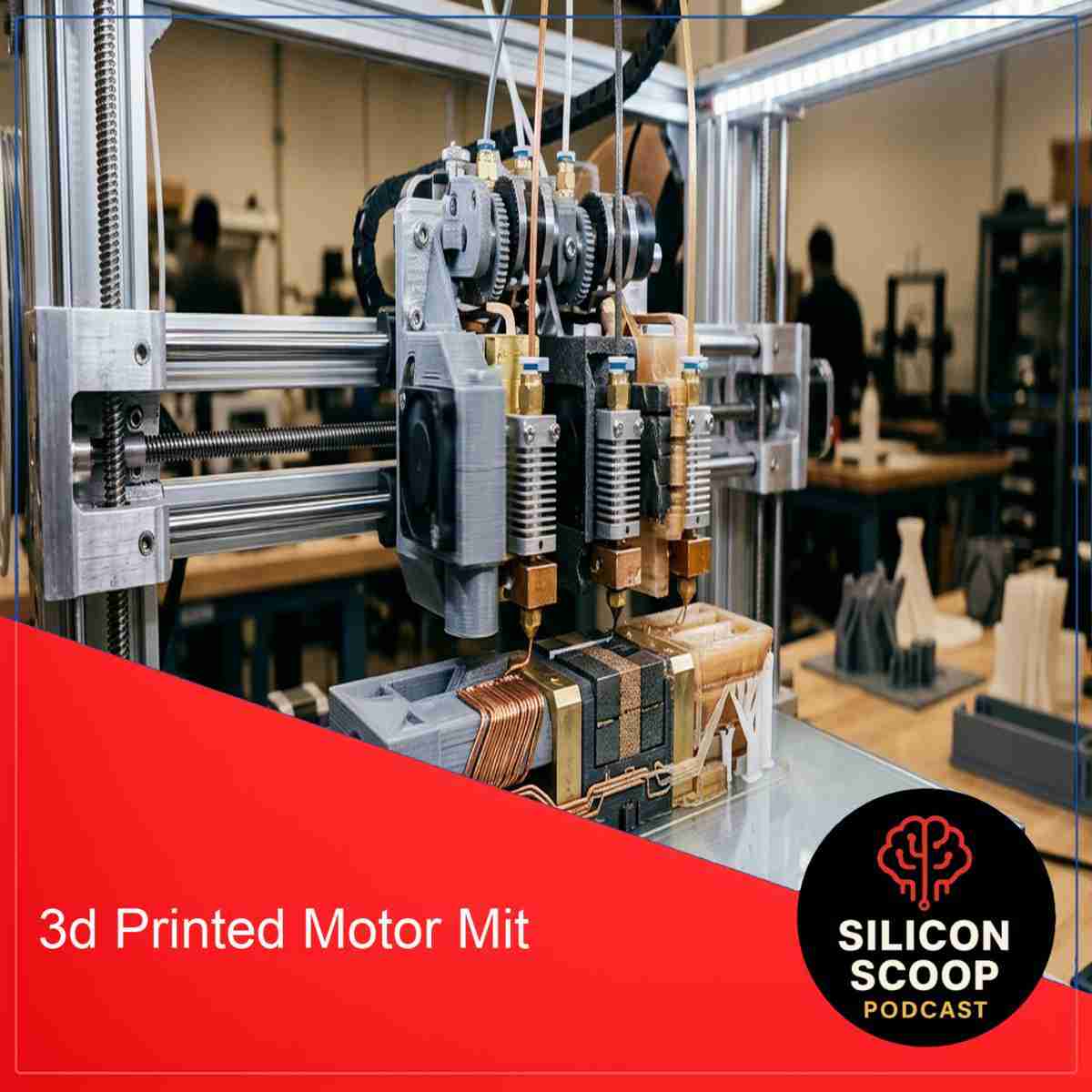
Revolutionary 3D Printed Motor MIT: Pioneering Multi‐Material 3D Printing in Manufacturing
Estimated reading time: 8 minutes
Key Takeaways
- MIT researchers have demonstrated that a fully functional, linear motor can be built in just a few hours using a low‑cost, multi‑material 3D printer.
- Multi‑material 3D printing uses multiple extruders and different material classes—such as structural polymers, conductive filaments, and magnetic composites—to build complex mechanical parts in one integrated print.
- Researchers demonstrated that a 3D printed linear motor can be fabricated in about three hours with a total material cost of approximately US$0.50.
- This innovation slashes prototyping time and cost from weeks or months down to hours and paves the way for future ‘print‑to‑part’ manufacturing in industrial automation.
- On‑demand manufacturing and localized printing of parts can lessen reliance on lengthy supply chains and reduce warehousing needs.
Table of contents
- Revolutionary 3D Printed Motor MIT: Pioneering Multi‐Material 3D Printing in Manufacturing
- Introduction
- Cut Weeks of Busywork Down to Hours
- Section 2 – Breaking Down the MIT Breakthrough: 3D Printed Linear Motor in Hours
- Scale Without Hiring More People
- Section 3 – Technical Deep Dive: How Multi‑Material 3D Printing Enables Functional Electromechanical Devices
- Section 4 – Implications for the Future of 3D Printing in Manufacturing: Faster Prototyping and On‑Demand Production
- Section 5 – Frequently Asked Questions and Concluding Thoughts
- Frequently Asked Questions
- Concluding Thoughts
Introduction
MIT researchers have taken a giant leap in manufacturing innovation. The breakthrough 3D printed motor MIT development shows that a fully functional, linear motor can be built in just a few hours. Using a low‑cost, multi‑material 3D printer, these researchers have reimagined how electromechanical devices are prototyped. Multi‑material 3D printing is the process of using multiple extruders and different material classes—such as structural polymers, conductive filaments, and magnetic composites—to build complex mechanical parts in one integrated print. This method is revolutionizing rapid prototyping and industrial innovation, as highlighted by recent MIT 3D printing research and detailed in the peer‑reviewed article published in Virtual and Physical Prototyping.
Cut Weeks of Busywork Down to Hours
If your team is still copying data, chasing approvals, or manually updating spreadsheets, you’re leaving speed (and profit) on the table. Flowgrammer builds custom automations that eliminate repetitive tasks, reduce errors, and keep work moving—automatically.
👉 Book Your Free Automation Consult → https://flowgrammer.ca/
——————————————————————-
Section 2 – Breaking Down the MIT Breakthrough: 3D Printed Linear Motor in Hours
MIT researchers have rethought how devices are made. They retrofitted a standard fused‑filament (FDM/FFF) 3D printer with four extruders. This upgrade allowed the printer to deposit five distinct materials in a single build. The materials include:
- Standard thermoplastics for structure
- Conductive polymers for electrical paths
- Magnetic composites for actuators
- Insulating polymers for safe separation
- Support materials for complex geometries
What Happened:
- Researchers demonstrated that a 3D printed linear motor can be fabricated in about three hours.
- Total material cost was approximately US$0.50.
- The modified printer combined structural and functional elements in one integrated process.
(Source details extracted from the Virtual and Physical Prototyping journal.)
Key Technical Idea:
- The printer’s four extruders enabled simultaneous deposition of five different materials.
- Conductive polymer‑based filaments formed coils and electrical traces.
- Magnetic materials were printed to generate the magnetic fields required for motor function.
(Source: MIT 3D printing research summary, see Virtual and Physical Prototyping.)
Why It Matters:
- It slashes prototyping time and cost from weeks or months down to hours.
- Rapid, on‑demand iteration can significantly benefit research, engineering, and even small‐scale manufacturing.
- This innovation paves the way for future ‘print‑to‑part’ manufacturing in industrial automation.
(Source: MIT research findings, see Virtual and Physical Prototyping.)
Scale Without Hiring More People
Growth shouldn’t mean more admin, more bottlenecks, or more “we’ll get to it later.” Flowgrammer helps you automate the handoffs between tools, teams, and customers so your business runs smoother—24/7.
🚀 See How Much Time You Can Save → https://flowgrammer.ca/
——————————————————————-
Section 3 – Technical Deep Dive: How Multi‑Material 3D Printing Enables Functional Electromechanical Devices
Inside the Process:
MIT’s approach centers on a retrofitted fused deposition modeling (FDM/FFF) printer. The key modifications and engineering approaches are as follows:
Printer and Process Details:
- Printer Type: A standard FDM printer modified for multi‑material printing.
- Extruder Setup: Four extruders managing the deposition of five different material classes.
(Source: Technical details from the MIT 3D printed motor MIT project, see Virtual and Physical Prototyping.)
Materials and Their Roles:
- Structural Thermoplastics: Polymers like PLA, ABS, or nylon are used to form the main body and structural elements, ensuring rigidity and mechanical stability.
- Conductive Polymer-Based Filaments: These are critical for printing coils, coil-like patterns, and electrical connections that drive the motor.
- Magnetically Active Composite Filaments: Necessary to create magnetic regions that facilitate motion without additional assembly.
- Insulating or Flexible Polymers: Act as isolation barriers and allow compliant motion regions where needed.
- Support/Sacrificial Materials: Aid in printing complex geometries that require temporary structures.
(Source: Detailed process insights from the MIT research shared in Virtual and Physical Prototyping.)
Engineering Challenges and Solutions:
- Multi‑Material Alignment:
– Software toolpaths and precise calibration are essential to ensure that the conductive, magnetic, and structural materials align perfectly.
– Achieving exact registration between layers is vital for a functional motor. - Material Interfaces:
– Addressing adhesion and thermal compatibility between dissimilar materials.
– For example, managing the bonding strength between a conductive trace and the structural polymer to avoid delamination. - Performance Tradeoffs:
– Conductive filaments do not match the performance of copper in conductivity.
– Similarly, printed magnets are less strong than their sintered rare‑earth counterparts.
– The focus is on rapid prototyping and reducing costs rather than on boosting raw performance. - Design Automation:
– Innovations in CAD‑to‑print workflows and parametric design are crucial.
– Automation radically reduces the cycle time from design iterations to testable prototypes.
(Source: See engineering challenge details in the MIT study shared in Virtual and Physical Prototyping.)
Quick Comparison:
- Traditional Methods:
– Machining, assembly, and often weeks to months for a functional prototype. - 3D Printed Approach:
– On‑demand generation of a prototype in three hours at a fraction of the cost.
(Source: Comparative insights drawn from MIT 3D printed motor MIT research, see Virtual and Physical Prototyping.)
The multi-material 3D printing process underscores the potential in merging structural and electronic functions without additional post‑processing. This technical deep dive illustrates how electromechanical devices might evolve in fast-paced industrial settings, offering immediate benefits in speed and cost-efficiency.
——————————————————————-
Section 4 – Implications for the Future of 3D Printing in Manufacturing: Faster Prototyping and On‑Demand Production
Future Impact on Industries:
The breakthrough from MIT has strong implications for the future of 3D printing in manufacturing. By integrating material deposition into one seamless process, the gap between design and functional product narrows significantly. Key impacts include:
- Rapid Prototyping:
– Engineers and researchers benefit from the ability to iterate multiple prototypes in a single day.
– Cost savings and faster design rotations enhance innovation. - On‑Site Manufacturing:
– Factories and small manufacturers could produce electromechanical components on‑site.
– This localized manufacturing reduces dependency on external supply chains and long lead times. - Hybrid Manufacturing Workflows:
– Printed motor components can complement conventional production methods.
– They can act as demonstrators for new designs before mass production is launched.
(Source: Broader implications highlighted in the MIT 3D printed motor MIT research and discussed in Virtual and Physical Prototyping.)
Potential Future Directions:
- Technical Advances Needed:
– Improved conductive materials that approach the performance of copper.
– Stronger magnetic composites and higher resolution printing methods.
– Better control over multi‑material printing to expand the range of functional parts. - Research and Industrial Applications:
– The technology could soon power educational demonstrators and lab‑scale actuators for robotics.
– Custom low‑force actuators for robotics and automation may become more common.
– Early-stage concept testing without full industrial tooling is now within reach. - Long‑Term Vision:
– Imagine an on‑demand production system where factories print their own replacement parts or even complete electromechanical assemblies.
– This shift in production strategy could reduce global supply‑chain issues and lessen inventory burdens.
(Source: Future directions drawn from research and industrial forecasts in the MIT study, as referenced in Virtual and Physical Prototyping.)
The future of 3D printing in manufacturing is bright. With technologies like the 3D printed motor MIT, prototyping and production cycles shrink from weeks or months to mere hours. This improvement can lead to smoother workflows, quicker design validations, and ultimately, more agile and cost‑efficient manufacturing processes.
Scale Without Hiring More People
Growth shouldn’t mean more admin, more bottlenecks, or more “we’ll get to it later.” Flowgrammer helps you automate the handoffs between tools, teams, and customers so your business runs smoother—24/7.
🚀 See How Much Time You Can Save → https://flowgrammer.ca/
——————————————————————-
Section 5 – Frequently Asked Questions and Concluding Thoughts
Frequently Asked Questions
1. What makes the 3D printed motor developed by MIT unique?
– The motor leverages a multi‑material fabrication process. All critical elements—structure, conductive paths, and magnets—are printed in a single build. This drastically cuts prototyping time and material cost, presenting a unique approach to rapid iteration.
2. How do the printed components compare with traditional manufacturing methods?
– Traditional methods involve separate machining, assembly, and longer lead times. The 3D printed motor, while a proof‑of‑concept, drastically reduces time and cost by printing all necessary components in one go. Performance parameters like power density remain lower, but rapid prototyping is a major win.
3. What are the potential industrial applications for this technology?
– This technology has applications in robotics, factory automation, and custom low‑force actuators. It also holds promise for on‑demand spare parts production and educational demonstrators in research labs.
4. What technical and material challenges still need to be overcome?
– Key challenges include ensuring precise multi‑material alignment, improving adhesive bonding between dissimilar materials, and addressing performance tradeoffs with printed conductive and magnetic components. Research continues to push these boundaries.
5. How does multi‑material 3D printing set itself apart in rapid prototyping?
– It allows for the integration of functional and structural elements in a single print. This results in less assembly, lower costs, and faster iteration times compared to traditional prototyping methods.
6. Is the printed linear motor ready for industrial-scale production?
– Not yet. The 3D printed motor is a promising proof‑of‑concept. Current prototypes do not yet match the performance or durability of fully machined industrial motors; however, it opens up pathways for future improvements.
7. What improvements are needed for wider adoption of printed electromechanical devices?
– Enhancements in printable material properties, such as improved conductivity and magnet strength, are needed. Additionally, advances in printer resolution and multi‑material alignment techniques will boost performance.
8. Can this technology reduce dependency on traditional supply chains?
– Yes. On‑demand manufacturing and localized printing of parts can lessen reliance on lengthy supply chains and reduce warehousing needs, making the production process more agile.
9. What industries stand to benefit the most from rapid prototyping via multi‑material 3D printing?
– Industries reliant on iterative design, such as robotics, custom automation, and laboratory research, will see significant benefits. Manufacturing sectors that use prototyping as a preliminary step in product development can also derive great value.
10. How does this breakthrough influence our understanding of “print‑to‑part” manufacturing?
– It demonstrates that functional electromechanical components can be produced from digital files directly on a printer. This marks an important step toward fully integrated, on‑demand production systems that can redefine manufacturing paradigms.
Concluding Thoughts
MIT’s breakthrough in 3D printed motor MIT technology is a game‑changer in the field of additive manufacturing. By demonstrating that a fully functional linear motor can be printed with a multi‑material system, researchers have paved the way for rapid prototyping that is both affordable and highly efficient. Key points include:
- The integration of five distinct material types using a modified FDM printer.
- The rapid production cycle of only three hours, with material costs under a dollar.
- The potential for on‑demand production and agile manufacturing that can complement conventional methods.
- A significant reduction in lead times, which can transform supply chains and inventory management.
While the technology is still in the proof‑of‑concept phase, it introduces compelling opportunities for industrial applications. Engineers can iterate designs on a daily basis; manufacturers may soon begin to see the blend of 3D printed components with conventional processes, especially in niche applications requiring custom designs. The future of 3D printed linear motor prototypes, 3D printed engine parts, and 3D printed electronics and motors is rapidly unfolding, with multi‑material 3D printing at its core.
The journey from digital design to a working motor in mere hours marks not only a technological milestone but also a paradigm shift in manufacturing philosophy. As research continues to refine the materials, processes, and printer capabilities, the vision of localized, on‑demand production becomes increasingly attainable. This breakthrough is a glimpse into a future where innovation is not hindered by long lead times or expensive tooling. Instead, engineers and researchers can explore ideas freely and bring them to life almost instantly.
In conclusion, the MIT 3D printed motor MIT breakthrough is more than just a novel experiment—it is part of a broader move towards efficient, agile, and economical manufacturing solutions. As more advancements are made in multi‑material 3D printing, we will likely see a rapid transformation across industries, where the line between prototyping and production becomes ever more blurred.
Additional Links
Flowgrammer.ca – 💡 Unlock AI-Powered Automation! Let flowgrammer.ca handle complex workflows so you can focus on growing your business.
Flowgrammers.ca – 💡 Join Toronto’s Fastest Growing AI and Busiess Automation Community..
-
-
- Silicon Scoop Podcast – Stay Informed, Stay Ahead!
- Startup Talk Podcast
- Flowgrammer Podcast –
- Startup Investor Drinks – Join Toronto’s Startup Community and connect with fellow startup enthusiasts and investors.
- TorontoStarts Startup and Entrepreneur Community – Become a part of Toronto’s thriving startup ecosystem.
- Workhaus – Discover flexible workspace solutions for your business needs.
- Work with The Startup Coach – Get expert guidance and mentorship for your startup journey.
- Reach out to Jon Irwin on LinkedIn – Connect with our co-host and technology expert.
-
More from Silicon Scoop
All episodes
silicon-scoop · October 16, 2026
Meta’s $18 Billion Teen Safety Settlement: Soft Guardrails, Hard Leverage Over TikTok and YouTube
Deep dive on Meta teen safety settlement, social media addiction lawsuit, new Facebook Instagram time limits and pressure on TikTok YouTube age verification.
View episode

silicon-scoop · October 15, 2026
How Claude Mythos Is Reshaping Cryptanalysis: HAWK, AES and the Rise of AI-Driven Crypto Research
Claude Mythos cryptanalysis weakens HAWK post-quantum signature, speeds AES Möbius Bridge attack, and powers CryptanalysisBench benchmark in AI-driven crypto research.
View episode

silicon-scoop · October 14, 2026
Nvidia’s $12.9 Billion Hugging Face Bet: How Controlling the Open-Source Model Hub Reshapes AI Chips, Cloud, And Competition
Nvidia Hugging Face acquisition could reshape open source AI models, AI chip dominance, and the global developer model hub, raising antitrust and neutrality questions.
View episode