
Cryopreserved brain tissue neural activity: What the new FAU mouse hippocampus revival study reveals about cryomedicine advancements
Cryopreserved brain tissue neural activity: What the new FAU mouse hippocampus revival study reveals about cryomedicine advancements https://torontostarts.com/silicon-scoop/ Flowgrammer.ca -> https://flowgrammer.ca/ AI News and Resources -> https://flowgrammers.ca OpenClaw Toronto -> https://openclawto.com/ Turn “Proof of Principle” Into Profit If breakthroughs can come from shutting down the busywork and restoring what matters, your business can too. Flowgrammer automates repetitive tasks, connects your tools, and keeps your operations running smoothly—so you can focus on growth, not grunt work. Book Your Free Automation Consult → https://flowgrammer.ca/ Startup Investor Drinks Toronto - https://startupdrinksto.com/ Toronto’s Startup Community - https://torontostarts.com/ Silicon Scoop Silicon Scoop Podcast - https://torontostarts.com/silicon-scoop/ Apple: https://podcasts.apple.com/us/podcast/silicon-scoop/id1758711826 Spotify: https://open.spotify.com/show/5bAzF0MwV6TtLhJAhvHayI YouTube: https://www.youtube.com/playlist?list=PLj4v-RoA7A-gT62vrEYqh1zCv-0Hj-o5J Startup Talk Startup Talk Podcast -> https://torontostarts.com/startup-talk-toronto-startup-podcast/ Apple -> https://podcasts.apple.com/us/podcast/startup-talk/id1763804003 Spotify -> https://open.spotify.com/show/1siJMILILidHAiAsrX2VBU YouTube: https://youtube.com/playlist?list=PLj4v-RoA7A-jxV5FHs5e61oIsuvUJYmT_&si=LYegRe5GYLKNQ7xL
With Craig Major and Jon Irwin
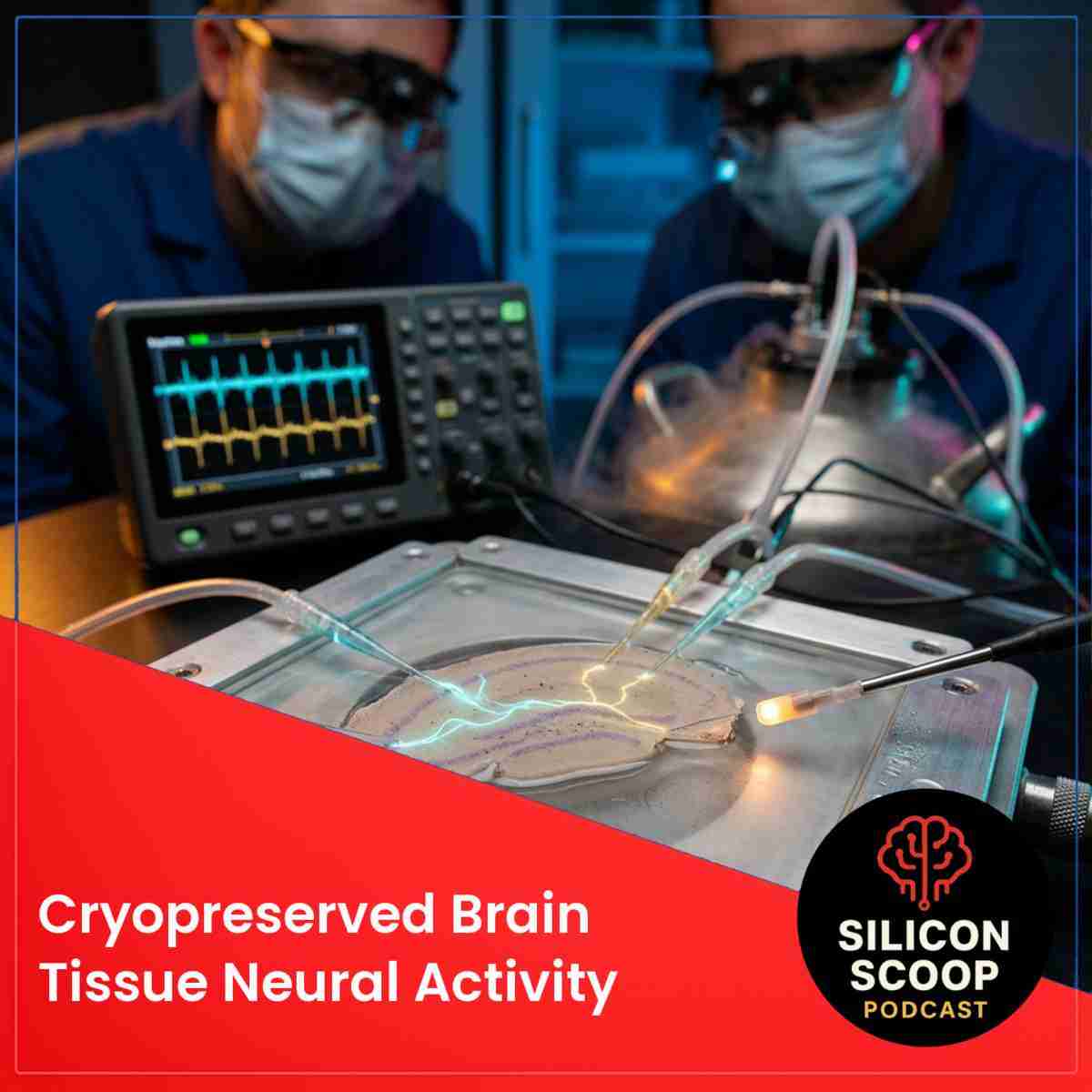
Cryopreserved Brain Tissue Neural Activity: What the New Mouse Hippocampus Revival Study Means for Cryomedicine Advancements
Estimated reading time: 12 minutes
Key Takeaways
- It advances the future of cryonics and neuroscience with real data instead of theory.
- It raises new possibilities for organ preservation techniques in transplant medicine.
- It opens doors for better, more reproducible brain disease research.
- It demonstrates progress in cryomedicine advancements that could touch multiple fields.
Table of contents
- Cryopreserved Brain Tissue Neural Activity: What the New Mouse Hippocampus Revival Study Means for Cryomedicine Advancements
- Introduction: From Science Fiction to Measurable Science
- Section 1: What Happened in the New FAU Hippocampus Recovery Study
- Section 2: Brain Tissue Vitrification Explained — And Why Vitrification vs Freezing Matters
- 🔁 Turn “Proof of Principle” Into Profit
- Section 3: The Technical Breakthrough — What Exactly Recovered After Cryopreservation
- Section 4: Dr. Alexander German Brain Research and the V3 Cryoprotectant
- Section 5: From Slices to Whole Brains — How Far Did the Study Actually Go?
- Section 6: Why This Matters for Cryomedicine Advancements and Organ Preservation Techniques
- Section 7: The Future of Cryonics and Neuroscience — Promise, Limits, and Realism
- Section 8: Key Takeaways
- ⚙️ Freeze the Busywork. Accelerate Results.
- Frequently Asked Questions
Introduction: From Science Fiction to Measurable Science
Cryopreserved brain tissue neural activity has taken a major step out of the realm of speculation and into the laboratory.
Researchers at Friedrich-Alexander University Erlangen-Nuremberg (FAU) have done something that many scientists once thought was far off: they vitrified mouse hippocampal tissue, stored it at cryogenic temperatures, warmed it back up, and measured the return of real brain functions.
This is not a story about waking up a frozen animal. It is not a claim that consciousness has been preserved or restored. What happened is more specific — and in some ways more important.
The team recovered electrical activity, cellular metabolism, and synaptic plasticity in brain tissue that had been brought into a deep cryogenic glass-like state. That is the kind of result that shifts what scientists think is possible.
Here is why this matters beyond the headline:
- It advances the future of cryonics and neuroscience with real data instead of theory.
- It raises new possibilities for organ preservation techniques in transplant medicine.
- It opens doors for better, more reproducible brain disease research.
- It demonstrates progress in cryomedicine advancements that could touch multiple fields.
The researchers themselves describe this as a “proof of principle.” That is an honest and important framing. The path to human whole-brain preservation is still long. But this study plants a clear marker showing the concept is not biologically impossible.
Let’s break down exactly what happened, how it was done, and what it really means.
Section 1: What Happened in the New FAU Hippocampus Recovery Study
The FAU Hippocampus Recovery Study Explained
The core question this study asked was straightforward: can brain tissue recover meaningful function after being cryogenically preserved?
To test this, the FAU team used mouse hippocampal slices — thin sections of one of the brain’s most important regions.
What is the hippocampus?
- It is a brain region critical for memory formation, spatial navigation, and learning.
- Its internal circuitry is very well understood, which makes it ideal for laboratory testing.
- One of its most studied behaviors is long-term potentiation (LTP) — the strengthening of synaptic connections over time.
LTP is the cellular-level process most closely linked to how we learn and form memories. If LTP comes back after cryopreservation, it means the tissue is not just alive in a basic sense — it is functionally capable at a level relevant to higher brain processes.
The main results of the study:
- Mouse hippocampal slices were vitrified and cooled to cryogenic temperatures.
- Some experiments also included whole mouse brains.
- After controlled warming, researchers observed the return of electrical activity, active metabolism, and LTP.
The fact that all three of these functions recovered is what makes this a standout result. Each one is a different layer of brain tissue function. Getting all three back suggests that neural activity after cryopreservation is not just a theoretical possibility — it is something that can be demonstrated under the right conditions.
The study was published in PNAS (Proceedings of the National Academy of Sciences), one of the most respected scientific journals in the world. The authors frame it as showing recovery from “complete molecular shutdown” — meaning the tissue was not just slowed down, it was effectively halted at the molecular level and then restarted.
This is why Dr. Alexander German brain research is drawing attention from cryobiologists, neuroscientists, and medical researchers alike. The cryopreservation field has been searching for evidence that functional tissue can survive deep freeze. This study provides that evidence, at least at the tissue slice level.
Section 2: Brain Tissue Vitrification Explained — And Why Vitrification vs Freezing Matters
Brain Tissue Vitrification: The Key Difference
To understand why this study is significant, you need to understand what brain tissue vitrification actually is — and how it is fundamentally different from regular freezing.
What is vitrification?
Vitrification is a cryopreservation method that turns tissue into a glass-like solid state without forming ice crystals.
It uses special chemicals called cryoprotectants, combined with carefully controlled cooling rates, to prevent water in the tissue from crystallizing as it freezes.
Vitrification vs freezing — why the difference matters:
- Traditional freezing allows ice crystals to form inside and between cells.
- Ice crystals are physically destructive. They can puncture cell membranes, tear apart synaptic connections, collapse delicate tissue structures, and cause additional damage during thawing.
- Vitrification avoids this entirely by skipping the crystalline ice phase. The tissue solidifies directly into a non-crystalline, glass-like state.
For most tissues, this distinction matters. For brain tissue, it is especially critical.
Why neural tissue is so sensitive:
- Synaptic membranes are extremely thin and fragile.
- Brain circuits do not just need individual cells to survive — they need the connections between cells to stay intact.
- Functional recovery depends on preserved excitability and communication pathways across the tissue.
The technical details from the FAU study:
- Tissue was vitrified at -196°C using liquid nitrogen.
- It was stored at -150°C or -140°C.
- Storage times ranged from 10 minutes to 7 days.
One of the often-overlooked challenges is not just the cooling — it is the warming. The FAU team used controlled rapid warming to avoid ice recrystallization during thawing. Recrystallization can destroy tissue during warming even if cooling was done perfectly. Ice crystals can nucleate and grow as temperatures rise through certain ranges, undoing everything the vitrification process achieved.
The connection to organ preservation techniques:
The same core challenge exists when trying to preserve hearts, kidneys, livers, or other organs for transplant. Prevent ice damage on the way down. Control the warming carefully on the way back up. If this approach can be refined for neural tissue, the same principles may eventually apply to whole organ banking.
Neural activity after cryopreservation hinges on getting both of these steps right, and this study is one of the clearest demonstrations to date that it is achievable.
🔁 Turn “Proof of Principle” Into Profit
If breakthroughs can come from shutting down the busywork and restoring what matters, your business can too. Flowgrammer automates repetitive tasks, connects your tools, and keeps your operations running smoothly — so you can focus on growth, not grunt work.
Book Your Free Automation Consult →
Section 3: The Technical Breakthrough — What Exactly Recovered After Cryopreservation
Neural Activity After Cryopreservation: Breaking Down the Results
The real significance of this hippocampus recovery study is not just that the tissue survived. It is that the tissue worked again in ways that are scientifically meaningful.
There are three layers of recovery that matter here, and each one tells a different part of the story.
1. Electrical Activity
Neurons communicate by generating and passing electrical signals. After rewarming, the hippocampal tissue could again produce and transmit measurable electrical activity. This is the most basic test of whether neurons are functional — and the tissue passed.
2. Metabolism
Tissue metabolism was measured by oxygen consumption. Active, living tissue uses oxygen. Dead or permanently damaged tissue does not. The fact that the tissue resumed oxygen-consuming biological processes showed it was not inert — it was metabolically alive.
3. Long-Term Potentiation (LTP)
LTP is the strengthening of synaptic connections in response to repeated stimulation. It is the primary cellular model researchers use to study learning and memory. Its return after cryopreservation means the tissue retained the capacity for memory-related plasticity.
The key quantitative details:
- Hippocampal slices were 350 micrometers thick.
- Basal respiration — the tissue’s baseline oxygen consumption — was reduced by approximately 22% compared to controls.
- Despite that reduction, LTP was preserved or even enhanced in the recovered tissue.
What this combination means:
The metabolic penalty is real. The vitrification and cryoprotectant process is not perfectly clean — there is some toxicity cost. But the preservation of LTP despite that cost is striking. It means the functional architecture of the synaptic network remained sufficiently intact to support one of the most important markers of neural performance.
Defining two terms that keep appearing:
- Basal respiration: The tissue’s resting level of oxygen use, used as a direct measure of cellular metabolic activity.
- Cryogenic glass state: The non-crystalline, vitrified condition where molecular motion is effectively stopped. In this state, biological structure can be preserved if ice formation is avoided.
This study confirms that the hippocampus — one of the brain’s most functionally complex regions — shows meaningful robustness to a cryogenic glass state when the right protocol is used. That is a significant advance in cryopreserved brain tissue neural activity research and a landmark in cryomedicine advancements.
Section 4: Dr. Alexander German Brain Research and the V3 Cryoprotectant
Dr. Alexander German Brain Research: The Role of V3
The FAU breakthrough did not happen by accident. It happened because of a deliberate effort by Dr. Alexander German to solve one of the central problems in cryobiology: how do you protect tissue from ice damage without poisoning it in the process?
What is a cryoprotectant?
A cryoprotectant is a chemical solution that is introduced into tissue before cooling. It works by displacing water and reducing the tendency of remaining water to form ice crystals during cooling and rewarming.
The problem with existing cryoprotectants:
Many effective cryoprotectants are also toxic to cells. At high concentrations, they can damage or kill the very tissue they are meant to protect. This is one of the central dilemmas in cryobiology: the chemicals strong enough to prevent ice are often damaging enough to compromise biological function.
Dr. German’s solution — the V3 cryoprotectant:
Dr. German and his team developed a custom low-toxicity cryoprotectant solution called V3. This protocol was specifically designed for neural tissue, balancing anti-ice performance with biological tolerance.
The development of V3 is one of the reasons this study is important beyond the experimental results alone. This is not just about cooling things colder. It is about developing the right chemical and thermal protocol to preserve function, not just physical appearance.
There are prior solutions in the cryobiology literature — including VM3-related formulations — that laid some groundwork for this approach. But V3 represents the custom advancement used in this specific study, and its performance in recovering LTP and electrical activity is what gives the protocol its significance.
Dr. German describes the study as a proof of principle — a demonstration that adult brain tissue can recover near-physiological function after cryogenic arrest under the right conditions. This framing is careful and honest. It does not overstate what has been achieved. But it does establish clearly that the core concept works.
This is a pivotal contribution to brain tissue vitrification science and a clear step forward in cryomedicine advancements powered by cryopreserved brain tissue neural activity research.
Section 5: From Slices to Whole Brains — How Far Did the Study Actually Go?
Hippocampus Recovery Study: Slices vs Whole Brains
One of the most important things to get right when reading about this study is the difference between what was achieved with tissue slices and what was achieved with whole brains.
Hippocampal slices:
- These are thin, controlled samples of tissue cut from the hippocampus.
- At 350 micrometers thick, they are thin enough for cryoprotectants to penetrate evenly.
- They can be warmed uniformly and rapidly, which reduces the risk of recrystallization.
- They are the gold standard for testing neural function in a laboratory setting.
The slice results were strong: electrical activity, metabolism, and LTP all returned.
Whole mouse brains:
- These are far more complex. Every region of the brain must receive the cryoprotectant evenly.
- The vascular system, tissue density, and structural heterogeneity all make uniform penetration much harder.
- Warming a whole brain uniformly is technically challenging because the thermal stress scales up with size and complexity.
The whole-brain result — stated carefully:
In whole mouse brains, one-third yielded viable hippocampal tissue with intact granule cell circuits after 1 to 8 days of storage at -140°C.
That means roughly two-thirds did not meet the same standard of success. This is not a failure — it is a realistic partial result that shows progress while identifying where challenges remain.
The blood-brain barrier problem:
Experts have flagged that translating slice-level success to whole brains is especially difficult because cryoprotectants must pass through the blood-brain barrier and distribute evenly through complex brain structures and vascular interfaces. This is not a solved problem.
Why this section matters:
Many news headlines about this study may imply more than the data supports. The honest picture is:
- Slices: strong functional recovery
- Whole brains: partial success, with major technical challenges remaining
Understanding this distinction is essential for anyone following the future of cryonics and neuroscience with genuine interest rather than hype. Neural activity after cryopreservation has been demonstrated meaningfully — but whole-brain revival in humans is still a very long way off.
Dr. Alexander German brain research makes no claims beyond what the data supports, and neither should we.
Section 6: Why This Matters for Cryomedicine Advancements and Organ Preservation Techniques
Cryomedicine Advancements: Four Real-World Implications
This study is not only about cryonics. The findings have practical implications across multiple fields, and the cryomedicine advancements it represents could touch everyday medicine in ways that matter far sooner than whole-brain preservation.
1. Organ Banking
Current organ transplantation is severely limited by time. A donated heart, kidney, or liver must be transplanted within hours. If vitrification techniques can be refined to preserve organs with full function intact — and if rewarming can be controlled well enough — transplant medicine could store organs for days, weeks, or longer.
This would mean:
- Better donor-to-recipient matching
- Reduced geographic constraints on transplantation
- Less organ wastage from timing failures
2. Brain Disease Research
Standardized, cryopreserved hippocampal tissue could transform neuroscience labs. Researchers studying Alzheimer’s disease, epilepsy, or traumatic brain injury could work with preserved tissue samples from specific models, improving reproducibility across experiments.
3. Reduced Animal Testing
More tissue from fewer animals could be preserved and reused across multiple experiments. This could reduce the total number of animals needed in research without compromising the quality of the science.
4. Emergency Medicine and Cryostasis Concepts (Speculative)
In theory, longer-term neural preservation could someday support advanced care strategies for patients who have suffered severe trauma or ischemia. This remains speculative and far off, but the biological proof that neural function can survive cryogenic arrest is a relevant data point for that future.
The hippocampus as a test case:
The hippocampus was a smart choice for this research. It is functionally rich enough to test real neural recovery — LTP, electrical signaling, metabolism — but it is well-characterized enough that results can be validated rigorously.
Analysts and experts consulted around this study see clear benefits for neuroscience reproducibility, reduced animal use, and the long-term vision of organ banking. The foundational principle of brain tissue vitrification — preserve structure by avoiding ice, recover function through controlled rewarming — is the same principle that organ preservation techniques in transplant medicine are trying to apply.
This study strengthens that foundation.
Section 7: The Future of Cryonics and Neuroscience — Promise, Limits, and Realism
Future of Cryonics and Neuroscience: What This Study Actually Changes
The question most people are really asking when they read about this research is: does this mean cryonics is becoming real?
The honest answer is: it means cryonics has a stronger scientific foundation than it did before — but it does not mean the dream of human suspended animation is close to being solved.
What this study does support:
- Adult brain tissue can retain recoverable function after deep cryogenic arrest under specific, controlled conditions.
- The core concept of vitrification vs freezing has a proven functional advantage for neural tissue.
- Cryopreserved brain tissue neural activity is not just theoretically possible — it has been measured.
What this study does not demonstrate:
- Revival of a whole living mammalian brain with preserved identity or consciousness.
- Successful preservation of every type of brain tissue or circuit.
- Any human-applicable protocol.
- Long-term functional outcomes beyond immediate physiological readouts post-thaw.
The main barriers still standing:
- Cryoprotectant toxicity: Even the best solutions cause some metabolic damage, as the 22% respiration reduction shows.
- Uneven delivery in larger brains: Getting cryoprotectants to every region of a human brain evenly remains unsolved.
- Thermal cracking and recrystallization at scale: Warming larger volumes without damage is a physics problem that gets harder as size increases.
- Network-level architecture: Preserving not just cells but the vast network of connections across an entire human brain is a challenge of a different order of magnitude.
- Long-term validation: We do not yet know whether tissue that shows functional recovery immediately after thawing sustains that function over time.
What “proof of principle” actually means:
Dr. German’s use of this phrase is precise. It means the central concept — that adult neural tissue can survive and recover from deep cryogenic arrest — is not biologically ruled out. It works, under specific conditions, at tissue-slice scale.
That is a real and meaningful step for cryomedicine advancements. It does not solve cryonics. But it removes one important layer of doubt.
The scientific tone here should be optimistic and genuinely impressed by the result — while staying firmly grounded in what the data shows and what it does not.
Section 8: Key Takeaways
What You Need to Know About the Cryopreserved Brain Tissue Neural Activity Study
Here is the complete picture in plain terms:
- A new FAU hippocampus recovery study demonstrated that cryopreserved brain tissue neural activity can return after brain tissue vitrification.
- Vitrification works differently from ordinary freezing by preventing destructive ice crystals from forming inside or between cells.
- The study restored electrical activity, metabolism, and LTP — a synaptic marker for learning — in mouse hippocampal tissue cooled to -196°C and stored at -140°C.
- The technique used controlled rapid warming to prevent ice recrystallization during thawing, which is just as important as the cooling process.
- Whole-brain results were encouraging but partial: one-third of whole mouse brains yielded viable hippocampal tissue with intact granule cell circuits after 1 to 8 days at -140°C.
- Dr. Alexander German brain research contributed the custom V3 low-toxicity cryoprotectant that made functional recovery achievable.
- Major challenges remain — especially around the blood-brain barrier, cryoprotectant toxicity, and the difficulty of scaling to whole brains.
- The implications are significant for organ preservation techniques, neuroscience reproducibility, and the future of cryonics and neuroscience.
The realistic bottom line:
This is not human suspended animation. But it is one of the clearest demonstrations so far that cryogenic preservation of functional neural tissue is scientifically possible. The gap between where we are now and where cryonics hopes to go is still enormous — but this study makes that gap look more crossable than it did before.
⚙️ Freeze the Busywork. Accelerate Results.
Manual admin, copy/paste tasks, and messy handoffs quietly drain time and revenue. Flowgrammer builds custom business automations that reduce errors, speed up workflows, and scale without hiring more staff.
See How Much Time You Can Save →
Frequently Asked Questions
FAQ 1: What is cryopreserved brain tissue neural activity?
Cryopreserved brain tissue neural activity refers to measurable brain-tissue functions — such as electrical signaling, metabolic activity, and synaptic responsiveness — that return after brain tissue has been cryopreserved and then carefully rewarmed.
It is important to understand what this does and does not mean. It does not mean a whole brain or a whole organism has been revived. It means that specific functional properties of brain tissue — the kind that can be measured in a laboratory setting — returned after neural activity after cryopreservation protocols were applied to thin tissue samples.
FAQ 2: What is the difference between vitrification vs freezing?
Vitrification vs freezing is one of the most important distinctions in cryobiology.
Regular freezing allows ice crystals to form inside and between cells. Those crystals are physically destructive — they tear membranes, disrupt connections, and damage tissue structure.
Vitrification prevents ice crystal formation entirely. Using cryoprotectant chemicals and carefully controlled cooling rates, the tissue is brought into a glass-like solid state without crystalline ice.
For delicate tissues like the brain, brain tissue vitrification is far preferable because it preserves the fine synaptic membranes and neural circuit architecture that ordinary freezing would destroy.
FAQ 3: Why is the hippocampus important in this hippocampus recovery study?
The hippocampus is the brain region most closely associated with memory formation, spatial navigation, and learning. It has been extensively studied, which means its internal circuitry is very well understood.
This makes it an excellent test site for a hippocampus recovery study because researchers can measure specific functional markers — especially long-term potentiation (LTP) — to determine whether genuine neural activity after cryopreservation has occurred.
If LTP returns after cryopreservation, it suggests that higher-order neural function may be supportable even after deep cryogenic arrest.
FAQ 4: What did Dr. Alexander German brain research contribute?
Dr. Alexander German brain research is at the center of this breakthrough. Dr. German led the FAU team and developed the V3 cryoprotectant — a custom, low-toxicity chemical protocol designed specifically to support functional recovery of neural tissue after brain tissue vitrification.
His contribution was not only technical. He established a combined chemical and thermal protocol that preserved function, not just physical structure. His description of the study as a “proof of principle” reflects a careful scientific approach: significant results stated clearly without overstatement.
FAQ 5: How does this affect the future of cryonics and neuroscience?
This study strengthens the scientific foundation of cryobiology by providing direct evidence that adult brain tissue can recover meaningful function after deep cryogenic preservation.
For the future of cryonics and neuroscience, that is important. It shows the core concept is not biologically impossible.
However, major challenges remain — especially for whole brains and any potential human application. The study is a meaningful step, not a solved problem. Cryomedicine advancements in this direction will require solving issues around cryoprotectant toxicity, whole-brain penetration, and large-scale rewarming.
FAQ 6: Could this improve organ preservation techniques?
Yes, potentially. The same principles behind vitrification — preventing ice damage during cooling and controlling rewarming carefully — apply directly to organ preservation.
Current transplant medicine is severely limited by how short the viable storage window is for donated organs. If vitrification protocols can be refined to preserve organ function through deep cold storage and safe rewarming, it could transform transplant medicine.
Better organ preservation techniques built on this science could mean longer storage windows, improved donor-recipient matching, and less organ wastage — which are some of the most pressing challenges in transplantation today. These are real-world cryomedicine advancements that this research helps move forward.
FAQ 7: How cold did the tissue get in this study?
The tissue was vitrified at -196°C, the temperature of liquid nitrogen. It was then stored at either -150°C or -140°C for periods ranging from 10 minutes to 7 days. These are true cryogenic temperatures — far below any conventional refrigeration or mild hypothermia technique.
FAQ 8: Were there any negative effects from cryopreservation?
Yes. Basal respiration — the tissue’s baseline oxygen consumption, used as a measure of metabolic activity — was reduced by approximately 22% compared to non-cryopreserved tissue. This reduction is attributed to the toxicity of the cryoprotectant chemicals used.
Despite this metabolic penalty, LTP was preserved or even enhanced. This means some cost was paid in terms of metabolism, but the functional architecture of the synaptic network remained intact enough to support plasticity.
FAQ 9: What is long-term potentiation (LTP) and why does it matter here?
Long-term potentiation is the process by which synaptic connections between neurons become stronger in response to repeated stimulation. It is the primary cellular-level model researchers use to study learning and memory.
Its return after cryopreservation is significant because it means the tissue is not just metabolically active — it is functionally capable in a way that relates directly to the brain’s most important higher-order processes.
FAQ 10: Is this the same as the cryonics practiced by companies that freeze human bodies?
Not exactly. This is laboratory science performed on thin mouse brain tissue slices and whole mouse brains under highly controlled conditions. The commercial cryonics field has long used vitrification protocols for whole-body preservation, but without the ability to confirm functional recovery.
What this FAU study adds is experimental evidence that neural function can actually return after cryogenic preservation — something the cryonics field has assumed but never demonstrated at this level of rigor. The gap between this tissue-level result and human whole-brain revival is still very large, but this research provides a more concrete scientific basis than the field has had before.
Additional Links
Flowgrammer.ca – 💡 Unlock AI-Powered Automation! Let flowgrammer.ca handle complex workflows so you can focus on growing your business.
- Silicon Scoop Podcast – Stay Informed, Stay Ahead!
- Startup Talk Podcast
- Flowgrammer Youtube
- Startup Investor Drinks – Join Toronto’s Startup Community and connect with fellow startup enthusiasts and investors.
- TorontoStarts Startup and Entrepreneur Community – Become a part of Toronto’s thriving startup ecosystem.
- Workhaus – Discover flexible workspace solutions for your business needs.
- Work with The Startup Coach – Get expert guidance and mentorship for your startup journey.
- Reach out to Jon Irwin on LinkedIn – Connect with our co-host and technology expert.
Flowgrammers.ca – 💡 Join Toronto’s Fastest Growing AI and Busiess Automation Community..
Episode transcript
Read the full transcript
Craig: sci fi just lots its fiction tag. researchers just prove we can stop a brain's molecular clock, freeze it to a 100 and negative a 196 degrees celsius, and successfully reboot its ability to learn and form memories. this isn't just about cryonics. it's the first step forward toward an amazon prime for human organ transplant. so we've just successfully, tested the brain pause button. scientists at fau germany vitrified mouse brain tissue, the hippocampus, into a glass like state, stored at cryogenic temperatures, and revived it with full electrical and synaptic function. in the most rigorous proof to date, the biological machinery of memory can survive a deep freeze. so this effectively proves that biological time travel is molecularly possible, potentially ending the race against the clock for organ transplants and brain research. what do you think about this, john?
Jon: yeah. i can't believe you said amazon prime. it this, for some reason, when i think of this, i think of demolition man and that instant freeze thing that happens in the movie. yeah. but yeah. so i think i think this is really cool. i like how they're going with this. my question or the thought that i had is the people who are already cryogenically frozen currently to preserve themselves, were they preserved in this way, or are they kind of maybe screwed for being, unthawed in the future? but what i liked about this, was that, they they proved that they tested well, they tested the hippocampus. so the experiment focused on 350 micron slices of mouse hippocampus, which is the region responsible for learning, memory formation, and spatial navigation. after thawing, they observed intact neuronal membranes and synapses, active mitochondria, which is energy production still working, and near normal electrical signaling. so this is crucial because it shows not just survival, but functional recovery. so, i think this is a big deal because the brain is probably the most fragile organ in the body. right? so normally, freezing will destroy it due to ice crystals. but the researchers used a special method, like you said, called vitrification, which basically turns the brain into what you said is a glass like state instead of forming ice. and so, when they thought it, the neurons fire electrical signals, they maintain connections, and they showed signs of learning related activity. now bottom line here is we're not reviving frozen humans anytime soon, but this is a serious step towards preserving brain function and maybe one day even consciousness, which i think is really cool. what are your thoughts on this, greg?
Craig: well, when i called it the amazon prime, i did that because the problem with organs right now is they don't last very long. so you have a very limited window when a human dies to get their organs to the next human because they only survive so long. but now if you can freeze dry the organs, of everybody and they'll last potentially forever in the freezer, now we can say, hey. next day delivery of any organ anytime, you know, because here we go.
Jon: it's gonna be on the brain then. okay. okay. i get it.
Craig: you know? so, i mean, ideally, if you can do it to the brain, you can do it to anything else. think of this like a high end video game. normal freezing is like smashing the console with a hammer. the ice crystals physically tear the hardware apart. vitrification is like hitting the save and power drain. the v three crypto protectant acts like a digital backup keeping the data intact when you hit the power on. the game resumes exactly where you left off, high scores and all. so we're currently in the laboratory phase, human organ banking applications, you know, five to ten years from now, but it's really cool that, where we are right now. this is a massive leap, in neuroscience, reproducibility. labs can now live functioning brain tissues across the world, for disease research without, dying in transit. right?
Jon: yeah. and let me quantify a few things so that you don't think we're talking about, like, a whole mouse brain. and a couple a couple limitations that were, that this research showed. there's the tissue, it only survived for a few hours post op. and it was only thin slices, not whole brains or whole animals. and there's no evidence that memories were preserved or recoverable. and scaling to a full brain is going to be much, much harder because you've got the blood brain barrier, you've got size and complexity. so right now, as of right now, even researchers have admitted that whole brain revival is still far beyond the current capability. but like you said, maybe this could be used in other organs. right?
Craig: yeah. the tissue slices were 350 micrometer, i guess, thickness, optimized for chemical penetration. they were vitrified at, like we said, at hun negative a 196 degrees celsius and stored at, negative a 140 degrees celsius. and the success rate is one third success in reviving hippocampal circuits within a whole mouse, brain. so, you know, we'll have to see when they start, migrating that. the breakthrough relies on the virtual rotation you talked about. this is the most significant validation of functional neurorecovery since the first successful of cryopreservation of a kidney moved the goalpost from structural preservation to functional revival. so they're, relating this to now how much we can do with the kidney and taking this to the next level. so, long term potentiation or ltp recovered in this study is the cellular equivalent of a hard drive's read write capability. without it, the brain is just a library, where no one can, check out books. so getting it to do impulses, you know, means it's functioning at some level. the research was published in, pnas, which is a scientific equivalency of winning a pollster. it signals that the cryomedicine is moving from the fringes of, silicon valley billionaire hobbies into mainstream. and to revive the tissue, researchers had to warm it faster than they cooled it. if the warming is too slow, the glass can turn back to ice, recrystallization, essentially blending the brain from inside out during the thaw. so, you know, it's not without its risks. the 22% metabolic drop is significant. while the tissue can learn, we don't know if the chemical toxicity of the v three solution causes long term cellular dementia or dna fragmentation. so if this scales to a full mouse heart or a kidney with a hundred percent recovery, the organ donor waiting list might become a thing of the past. yeah. so we've officially moved from wondering if neural function can survive the deep freeze to figuring out how to scale it to a human level. if you could freeze your brain today to wake up in a hundred years, but there was a 22% chance your processing power would be permanently throttled. would you take the jump? let us know in the chat.
More from Silicon Scoop
All episodes
silicon-scoop · October 16, 2026
Meta’s $18 Billion Teen Safety Settlement: Soft Guardrails, Hard Leverage Over TikTok and YouTube
Deep dive on Meta teen safety settlement, social media addiction lawsuit, new Facebook Instagram time limits and pressure on TikTok YouTube age verification.
View episode

silicon-scoop · October 15, 2026
How Claude Mythos Is Reshaping Cryptanalysis: HAWK, AES and the Rise of AI-Driven Crypto Research
Claude Mythos cryptanalysis weakens HAWK post-quantum signature, speeds AES Möbius Bridge attack, and powers CryptanalysisBench benchmark in AI-driven crypto research.
View episode

silicon-scoop · October 14, 2026
Nvidia’s $12.9 Billion Hugging Face Bet: How Controlling the Open-Source Model Hub Reshapes AI Chips, Cloud, And Competition
Nvidia Hugging Face acquisition could reshape open source AI models, AI chip dominance, and the global developer model hub, raising antitrust and neutrality questions.
View episode