
Glowing Plants Just Changed How Parks Get Lit
Glowing Plants Just Changed How Parks Get Lit https://torontostarts.com/silicon-scoop/ Flowgrammer.ca -> https://flowgrammer.ca/ AI News and Resources -> https://flowgrammers.ca OpenClaw Toronto -> https://openclawto.com/ Stop Babysitting Busywork If your team is stuck on copy-paste tasks, approvals, and follow-ups, automation can give you hours back every week—without hiring. Book an Automation Audit https://flowgrammer.ca Startup Investor Drinks Toronto - https://startupdrinksto.com/ Toronto’s Startup Community - https://torontostarts.com/ Silicon Scoop Silicon Scoop Podcast - https://torontostarts.com/silicon-scoop/ Apple: https://podcasts.apple.com/us/podcast/silicon-scoop/id1758711826 Spotify: https://open.spotify.com/show/5bAzF0MwV6TtLhJAhvHayI YouTube: https://www.youtube.com/playlist?list=PLj4v-RoA7A-gT62vrEYqh1zCv-0Hj-o5J Startup Talk Startup Talk Podcast -> https://torontostarts.com/startup-talk-toronto-startup-podcast/ Apple -> https://podcasts.apple.com/us/podcast/startup-talk/id1763804003 Spotify -> https://open.spotify.com/show/1siJMILILidHAiAsrX2VBU YouTube: https://youtube.com/playlist?list=PLj4v-RoA7A-jxV5FHs5e61oIsuvUJYmT_&si=LYegRe5GYLKNQ7xL
With Craig Major and Jon Irwin
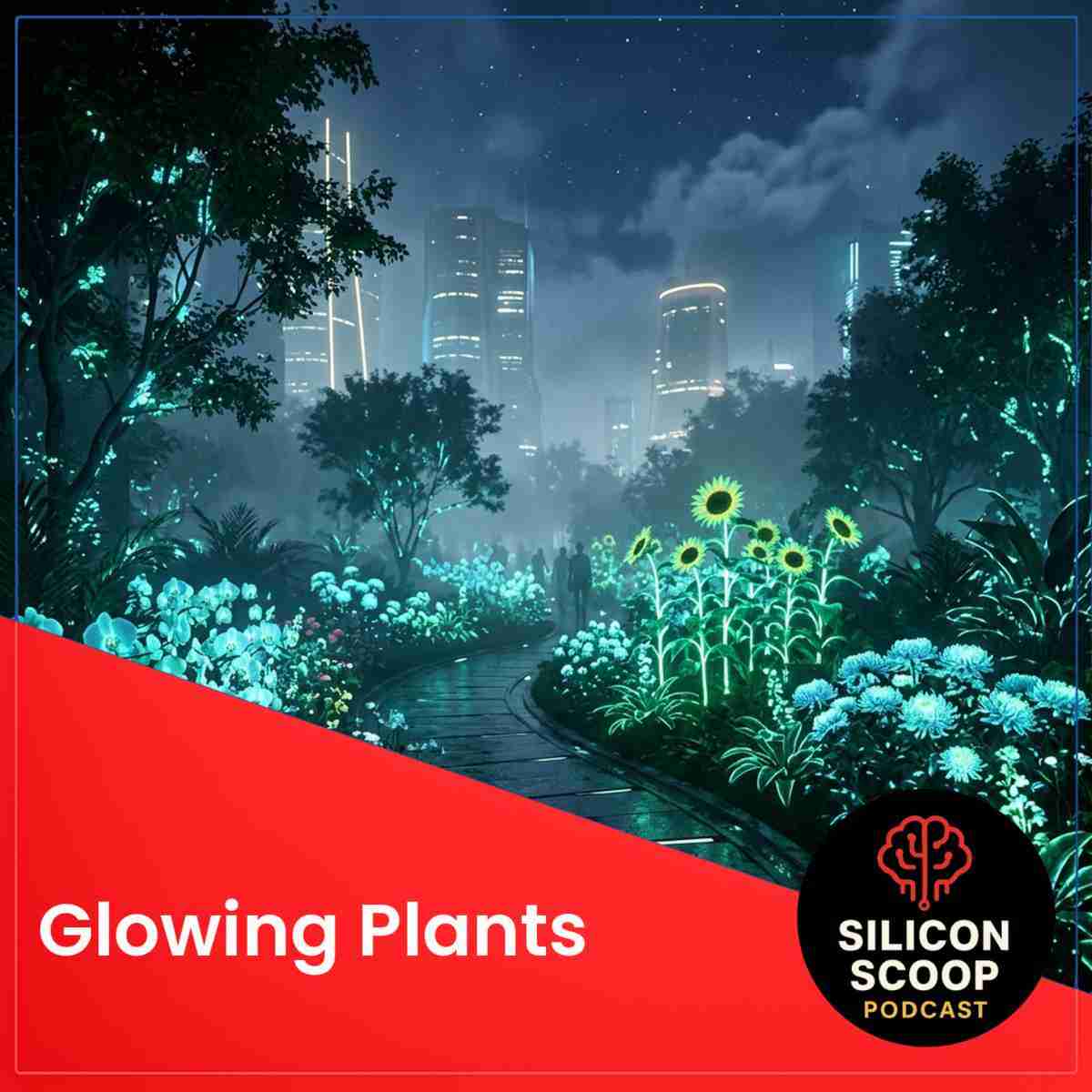
Chinese Biotech Breakthrough: Gene-Edited Glowing Plants Set to Transform Nighttime Urban Landscapes
Estimated reading time: 8 minutes
Key Takeaways
- Chinese scientists at Magicpen Bio have engineered over 20 plant species to glow using genes from fireflies and luminous fungi.
- The glow is 100 times brighter than earlier efforts after 532 technical iterations.
- These plants require only water and nutrients — no electricity needed.
- Glowing plants could reshape urban lighting, sustainable design, and nighttime tourism.
- Global competition includes Light Bio, Ginkgo Bioworks, and a nanoparticle-based approach from South China Agricultural University.
Table of contents
- Chinese Biotech Breakthrough: Gene-Edited Glowing Plants Set to Transform Nighttime Urban Landscapes
- Key Takeaways
- Introduction: Glowing Plants Are No Longer Science Fiction
- What Are Bioluminescent Gene-Edited Plants?
- How Magicpen Bio Compares to Global Competition
- Real-World Applications: Where Glowing Plants Could Change Everything
- Beyond Lighting: Gene Editing’s Broader Impact
- Challenges and What Comes Next
- FAQ: 10 Questions About Glowing Bioluminescent Plants
- Final Thoughts
Introduction: Glowing Plants Are No Longer Science Fiction
Glowing plants that light up parks, pathways, and public spaces without a single watt of electricity — this is no longer a scene from a movie. Chinese scientists have made it real.
Biotech company Magicpen Bio, led by Dr. Li Renhan, has engineered over 20 plant species to produce a soft, natural glow using genes borrowed from fireflies and luminous fungi. Orchids, sunflowers, chrysanthemums, roses, and lilies are among the species now capable of illuminating the dark on nothing but water and nutrients.
This is one of the most exciting developments in bioluminescent technology in years — and it could reshape how we think about urban lighting, sustainable design, and nighttime tourism.
What Are Bioluminescent Gene-Edited Plants?
Bioluminescent plants are living organisms that have been modified through gene-editing technology to produce light from within their own cells. This is not paint. It is not coating. The glow comes from the plant itself.
How the Science Works
Scientists insert specific genes — in this case from fireflies and glowing fungi — directly into the plant’s DNA. These genes carry instructions that cause the plant’s cells to produce light-emitting chemical reactions. The result is a living plant that glows softly in the dark.
Key facts about this breakthrough:
- Over 20 plant species have been successfully modified, including orchids, sunflowers, chrysanthemums, roses, and lilies
- The glow is 100 times brighter than earlier bioluminescent plant efforts
- It took 532 technical iterations to achieve that brightness level
- The plants require only water and nutrients — no electricity needed
- Nanoparticles used in one related method measure just 6 to 8 micrometers in size
Dr. Li Renhan’s inspiration came from a deeply personal place. Growing up in the Chinese countryside without electricity, he spent nights watching fireflies land on his arms in his grandfather’s bamboo grove. That childhood memory became the foundation of a scientific mission.
“Fireflies often landed on my arms,” recalled Dr. Li. “I was born in the countryside. Back then, my family didn’t have any money, so at night I could do nothing but lie in a hammock.”
That memory is now part of a global conversation about the future of sustainable lighting.
Showcased to the World
These gene-edited plants were publicly displayed at the 2026 Garden Conference x Garden Collection Design Week held in Suzhou. The event attracted 840 professional visitors from design, architecture, and tourism sectors — all eager to understand how glowing plant technology could be applied in real-world environments.
The display generated significant buzz and positioned Magicpen Bio as a serious competitor in the growing bioluminescent tech space.
How Magicpen Bio Compares to Global Competition
Magicpen Bio is not operating in isolation. The bioluminescent plant industry is moving fast, and several players around the world are pushing the technology forward.
The Competitive Landscape
US-based Light Bio launched its Firefly Petunias in 2024 — the first commercially available glowing plant in the United States. These petunias glow using a similar bioluminescent process and received regulatory approval for consumer sale.
Ginkgo Bioworks, a major synthetic biology company, has partnerships aimed at developing variants that are 10 times brighter than current bioluminescent offerings.
Meanwhile, researchers at South China Agricultural University are taking a different approach entirely. Rather than gene editing, they use strontium-aluminum nanoparticles inserted into succulents. These nanoparticles absorb sunlight during the day and release a multicolored afterglow at night — a rechargeable, non-genetic method that produces vivid color options.
What Sets Magicpen Bio Apart
- 532 iterations of technical refinement to achieve 100x brighter glow
- Broad species diversity — over 20 plant types modified successfully
- Natural biological mechanism — the glow comes from living cellular processes, not coatings or nanoparticles
- No electricity required — the plants are entirely self-sustaining light sources
- Directly aligned with sustainable urban design goals
The competition is healthy. Multiple approaches to bioluminescent plant technology mean faster development, better products, and a wider range of use cases.
bioengineering plants glow light cities
Stop Babysitting Busywork
If your team is stuck on copy-paste tasks, approvals, and follow-ups, automation can give you hours back every week — without hiring.
Real-World Applications: Where Glowing Plants Could Change Everything
The practical uses for bioluminescent plants go far beyond a cool science experiment. Experts across urban planning, tourism, and sustainability sectors are already paying close attention.
Urban Lighting Without Electricity
One of the most immediate and impactful applications is park and public space lighting. Bioluminescent plants could line walking paths, fill garden beds, and illuminate outdoor areas — all without drawing a single kilowatt of power from the grid.
Benefits for city planners and designers:
- Zero electricity costs for illuminated green spaces
- Reduced carbon emissions from outdoor lighting infrastructure
- Lower maintenance costs compared to traditional lamp systems
- Aesthetic improvement — organic, soft light creates a more welcoming environment than harsh artificial lighting
- Scalable across parks, plazas, botanical gardens, and rooftop spaces
While current brightness levels are not yet sufficient for street-level traffic lighting, experts agree they are well-suited for ambient park and landscape use — with brighter variants already in development.
Tourism and the Nighttime Economy
Imagine walking through a valley where every plant glows blue-green in the darkness. This is the kind of experience that drives tourism — the kind of scene previously only possible in movies like Avatar.
Glowing plant installations could become major nighttime attractions in:
- Botanical gardens and nature parks
- Eco-resorts and wellness retreats
- Urban rooftop gardens
- Public art installations
- Festival and event experiences
This directly feeds the nighttime economy, which refers to the economic activity generated after dark in cities and tourist destinations. Glowing gardens could become destination-worthy experiences in their own right — extending visitor stays and increasing local spending.
Sustainable and Eco-Friendly Design
For architects, landscape designers, and urban developers, bioluminescent plants offer a sustainable design tool that aligns with growing environmental commitments.
These plants produce light through natural biological processes. There are no bulbs to replace, no wiring to install, no power draw to manage. For green building certifications, smart city initiatives, and eco-conscious developments, that is a significant advantage.
Beyond Lighting: Gene Editing’s Broader Impact
The same gene-editing technology powering glowing plants is already being used to solve much larger global problems. This is not a narrow innovation. It is part of a broader wave of biotech breakthroughs with wide-ranging implications.
Medical Research and Drug Discovery
Bioluminescent techniques are being used by researchers to observe how diseases develop at a cellular level. When cells are engineered to glow in response to specific biological activity, scientists can watch disease progression in real time — without invasive procedures.
This is accelerating:
- Drug discovery timelines — researchers can identify what works faster
- Treatment development for previously difficult conditions
- Understanding of cellular mechanisms that drive illness
Agricultural Advancement and Food Security
In agriculture, gene-editing tools have already been used to breed disease-resistant crops. By modifying susceptibility genes in rice, scientists have created new strains that resist multiple pests simultaneously.
This is a direct contribution to global food security — particularly important as climate change creates new agricultural challenges and pest pressures around the world.
The technology behind glowing orchids and the technology behind pest-resistant rice are part of the same scientific toolkit. The breakthroughs in one area accelerate progress in the other.
bioengineering plants glow light cities
Challenges and What Comes Next
No breakthrough is without its obstacles. Here is an honest look at what still needs to be solved before glowing plants become a mainstream feature of city life.
Current Limitations
- Brightness: Current glow levels are not yet strong enough for street-level lighting or replacing conventional outdoor lamps
- Scalability: Growing and distributing gene-edited plants at city scale requires significant horticultural and logistical infrastructure
- Regulatory pathways: Different countries have different rules around genetically modified organisms. Wider adoption will require clear regulatory frameworks
- Durability: The longevity and consistency of glow over a plant’s full lifecycle still needs further research
What the Future Looks Like
Despite these challenges, the trajectory is clear. With 10x brighter variants already being pursued by companies like Ginkgo Bioworks, and with 532 iterations of refinement already behind Magicpen Bio, the technology is advancing rapidly.
The 2026 Garden Conference showcased just a glimpse of what is possible. As gene-editing tools become more precise and more accessible, bioluminescent plant technology will move from showpiece to standard feature of sustainable urban design.
Experts are not asking if glowing plants will become part of city landscapes. They are asking when.
bioengineering plants glow light cities
FAQ: 10 Questions About Glowing Bioluminescent Plants
1. What are glowing plants made of?
Glowing plants are created using gene-editing technology. Scientists insert genes from fireflies or glowing fungi into a plant’s DNA. These genes tell the plant’s cells to carry out a chemical reaction that produces light naturally.
2. Are glowing plants safe?
Current research suggests that bioluminescent plants use natural biological processes and do not produce harmful chemicals. However, as with all genetically modified organisms, regulatory bodies in each country evaluate safety before approving public or commercial use.
3. How bright are the glowing plants from Magicpen Bio?
After 532 technical iterations, Magicpen Bio’s plants now glow 100 times brighter than earlier attempts at bioluminescent plants. However, they are still best suited for ambient lighting rather than replacing street lamps.
4. Which plants have been made to glow?
Over 20 species have been successfully engineered to glow, including orchids, sunflowers, chrysanthemums, roses, and lilies.
5. Do glowing plants need electricity?
No. Bioluminescent plants produce light through natural cellular processes and only need water and nutrients to survive and glow. No electricity is required.
6. Can I buy glowing plants right now?
In the United States, Light Bio’s Firefly Petunias became commercially available in 2024. Magicpen Bio’s plants have been showcased publicly but wider commercial availability is still developing. Check regional regulations and local retailers for updates.
7. How do glowing plants help the environment?
By replacing electric lighting in parks and public spaces, bioluminescent plants reduce energy consumption and carbon emissions. They are a natural, low-maintenance alternative to conventional outdoor lighting systems.
8. What is Magicpen Bio?
Magicpen Bio is a Chinese biotechnology company founded by Dr. Li Renhan, a Ph.D. graduate of China Agricultural University. The company specializes in developing gene-edited bioluminescent plants and showcased its work at the 2026 Garden Conference in Suzhou.
9. What is the difference between the gene-editing method and the nanoparticle method?
Gene-editing inserts light-producing genes directly into a plant’s DNA, so the plant glows through its own biology. The nanoparticle method, developed by South China Agricultural University, involves inserting strontium-aluminum nanoparticles into plants. These absorb sunlight during the day and release a colored afterglow at night — no genetic modification needed.
10. Will glowing plants ever replace streetlights?
Not anytime soon. Current brightness levels are not sufficient for traffic or street-level lighting. However, researchers are actively working on significantly brighter variants. In the meantime, bioluminescent plants are ideal for parks, gardens, tourist attractions, and decorative outdoor spaces.
Final Thoughts
Glowing plants started as a childhood memory of fireflies on a summer night. Today, they are a serious scientific and commercial breakthrough with real implications for how cities are lit, how tourists experience nature, and how the world approaches sustainable design.
Magicpen Bio and its competitors are not just creating something beautiful. They are building a new category of living technology — one that works with nature instead of against it.
The plants are already glowing. The question now is how quickly the world is ready to plant them.
Sources:
Additional Links
Flowgrammer.ca – 💡 Unlock AI-Powered Automation! Let flowgrammer.ca handle complex workflows so you can focus on growing your business.
Flowgrammers.ca – 💡 Join Toronto’s Fastest Growing AI and Business Automation Community.
- SRED Funding Solutions – Maximize your R&D tax credits and secure funding for your innovation.
- Silicon Scoop Podcast – Stay Informed, Stay Ahead!
- Startup Talk Podcast
- Flowgrammer Youtube
- Startup Investor Drinks – Join Toronto’s Startup Community and connect with fellow startup enthusiasts and investors.
- TorontoStarts Startup and Entrepreneur Community – Become a part of Toronto’s thriving startup ecosystem.
- Workhaus – Discover flexible workspace solutions for your business needs.
- Work with The Startup Coach – Get expert guidance and mentorship for your startup journey.
- Reach out to Jon Irwin on LinkedIn – Connect with our co-host and technology expert.
Episode transcript
Read the full transcript
Craig: forget the energy crisis and the glare of streetlights. what if the solution to lighting our cities were actually alive? the chinese biotech just cracked the code on glowing plants that are a 100 times brighter than anything we've seen, and it's turning our avatar fantasies into a trillion dollar urban reality. so urban lighting might be going full biological. and i've been hearing these stories for years, but now it might be a reality considering these are a 100 times brighter than anything that we're able to produce before. magic pen bio has successfully gene edited over 20 plant species using firefly and fungal dna to create self sustaining glow in the dark flora. these aren't just novelties. they're high iteration biological machines designed to replace ambient municipal lighting. this marks a pivot from tech that mimics nature to that is tech that mimics nature to tech that is nature. sorry. it takes a while to get your head around that. potentially slashing urban electricity grids' carbon footprints while creating living smart cities. what do you think about this, john?
Jon: i think this is cool, because we've all we keep talking about light pollution and all that sort of stuff. so the breakthrough is, as you talked about, it lies in bioluminescence engineering, which is the process of enabling organisms to produce light through chemical reactions. so think like fireflies. right? so in this case, scientists introduced genes from fireflies and luminous fungi into plant cells, which allows them to emit visible light continuously. and so, they've already engineered more than 20 plant species including common ornamental plants like orchids, sunflowers, and chrysanthemums, which is kinda cool. and it's significant because it demonstrates that the technology is not limited to a single plant type. it can be generalized across species. so we could have a whole forest lit up at night, which is super cool, i think. so, obviously, i don't know how much light it does emit, but we're seeing a shift towards systems that are more self sustaining, environmentally integrated, low maintenance, and these glowing plants are an example of a bio integrated infrastructure where nature can replace traditional hardware. i'm excited about this. what do you think about this? are you excited?
Craig: i'm excited about this. i've been hearing about stuff like this for a while now. sorry if you could hear that. i'm trying to share this tab instead. there we go. trying to share this tab instead with showing the light plants. anyway, i'm excited about this because it's super cool. and i think, you know, moving this to more of a natural lighting instead of street lights and walking paths and even lights in your back garden, you know, that just light up where you're walking. think of the infrastructure that we don't necessarily need, you know, and the construction that doesn't need to be dug up. and now not only that, but the things that light your trees are, you know, taking the carbon out of the air and giving us fresh oxygen and doing all these good things for us. so i'm really excited about it now. this was showcased in april, this month, for the night gardens program, and it's rolling out now. while specialized initial, petunia level consumer versions like lightbio retail for around 30 to $50, large scale municipal costs are to be determined but involve zero electricity overhead. so i like to think of this update like transitioning from old school kerosene lamps to led bulbs, but the bulb is a sunflower. instead of plugging into a wall, these plants are plugged into the earth, charging themselves with water and nutrients during the day so they can broadcast a soft natural wi fi signal of light all night long. so yeah. works in any soil rich environment currently, includes orchids, sunflowers, and lilies. imagine walking your dog in a park. that's naturally illuminated by hedges and flowers rather than harsh, buzzing orange street lamps. there's no indication that any of these things would survive a harsh winter in canada, so we're probably out of luck for this being, our primary access to street lighting, but we might have it, in parks and whatnot. what do you think, john?
Jon: i'm excited for this. there's a few hidden risks and constraints. so there's obviously genetic modification concerns that people are gonna raise. there's the ecological impacts of gene spreading. there's the maintenance unpredictability, and there's the light consistency in lifespan. so i think what this means is that adoption is likely going to be regulated and gradual and not immediate. do you agree with that, or what are your thoughts? do you think this could just roll like wildfire?
Craig: well, the one thing that caught me when doing the research is, you know, tourism and the nighttime economy. so yeah. i think it'll grow slowly from a city, by city or an infrastructure perspective, but i definitely see nightclubs, village. you walk down the village square where there's a few pubs or things open, and it's naturally lit at night for these because they would invest in these kinds of things as a little community to make it a niche thing. you could see this, as a thing at the royal botanical gardens. they've even, lining plants along their walkway to light it up naturally just because that's the type of thing it is. so i could see this growing faster at the consumer level than at the municipal level, for many reasons.
Jon: yeah. yeah. for sure. yeah. maybe it's it's, it flies under the radar, and it's an underground scene first and then takes off from there. but, i like this because we're seeing biology used to produce materials, store energy, and now even generate light. and it's expanding what biology can do beyond traditional agriculture or medicine. so i think this is great.
Craig: so this uses crispr may mediated gene insertion to incorporate the luciferase enzyme. pardon?
Jon: our favorite, crispr. yeah.
Craig: crispr. yeah. from fireflies and, caffeic acid cycle from bioluminescent fungi. unlike nanoparticle coatings, light is a metabolic byproduct of the plant's own internal chemistry. so this is a model t moment for synthetic biology. we are moving from simple genetic modification for food to biological infrastructure for infrastructure. so re i'm really wondering where this is gonna go. you talked about ecological escape, so i think we've talked about the, downside of this. but if you're a hobbyist or if you're a bar looking for a unique hook to get people in, you might wanna look at this. we are witnessing the birth of the biological century where the line between a park and a power plant completely disappears. would you feel safer walking through a park lit by glowing trees, or does the idea of engineered nature feel a bit too much like sci fi dystopia? let us know in the chat.
More from Silicon Scoop
All episodes
silicon-scoop · October 16, 2026
Meta’s $18 Billion Teen Safety Settlement: Soft Guardrails, Hard Leverage Over TikTok and YouTube
Deep dive on Meta teen safety settlement, social media addiction lawsuit, new Facebook Instagram time limits and pressure on TikTok YouTube age verification.
View episode

silicon-scoop · October 15, 2026
How Claude Mythos Is Reshaping Cryptanalysis: HAWK, AES and the Rise of AI-Driven Crypto Research
Claude Mythos cryptanalysis weakens HAWK post-quantum signature, speeds AES Möbius Bridge attack, and powers CryptanalysisBench benchmark in AI-driven crypto research.
View episode

silicon-scoop · October 14, 2026
Nvidia’s $12.9 Billion Hugging Face Bet: How Controlling the Open-Source Model Hub Reshapes AI Chips, Cloud, And Competition
Nvidia Hugging Face acquisition could reshape open source AI models, AI chip dominance, and the global developer model hub, raising antitrust and neutrality questions.
View episode