
Silicon Scoop · Technology
Fruit Peel Battery Recycling Pilot Runs in Singapore
Craig Major·October 18, 2026
Fruit peel battery recycling is being tested in a Singapore battery recycling pilot. Learn how it recovers cobalt and lithium, and what is unproven.
Estimated reading time: 10 minutes
Key Takeaways
- The NTU and Se-cure Waste Management pilot plant near Pioneer in Singapore can treat up to 2,000 litres of shredded batteries mixed with fruit-peel solvent. It has run since late 2022.
- In 2020 laboratory tests, orange-peel solvent recovered about 90% or more of the cobalt, lithium, nickel and manganese. That is a lab result, not a verified factory result.
- The partners are still optimizing yields and testing technical and economic viability at pre-commercial scale. No capital cost, revenue or margin figures have been disclosed.
- Competitors set a high bar. TES reportedly processes up to 14 tonnes per day in Singapore at 90% recovery, and Redwood Materials claims over 95% for some metals.
- Fewer than 5% of spent lithium-ion batteries are recycled, and volumes are projected to hit 11 million tonnes by 2030. That is a large market for any process that proves itself.
Table of contents
- Inside the Singapore Battery Recycling Pilot Near Pioneer
- How Hydro-Organic Metallurgy Turns Orange Peel Into a Metal Extractor
- What NTU Lithium Battery Recycling Has Actually Proved So Far
- From Robots to Black Mass: What Se-cure Brings to the Plant
- A Crowded Field: TES, Redwood and the 90% Benchmark
- The Waste Problem and Policy Push Behind the Pilot
- What This Means for Startups and Small Businesses
- Frequently Asked Questions
A pilot plant near Pioneer in Singapore is designed to process up to 2,000 litres of shredded battery material at a time, mixed with a solvent made from fruit peels. The laboratory process behind it recovered more than 90% by weight of the targeted metals in 2020. That is the core of fruit peel battery recycling: a food-waste product doing the job of harsh industrial chemicals.
The idea comes from Nanyang Technological University (NTU) and Singapore recycler Se-cure Waste Management (SWM). They are testing it at a scale between a lab bench and a full factory.
For founders and operators, the project shows a possible opportunity in low-hazard, circular-economy processing. It also shows the hard part. A strong lab number is only the start. Before competing with established recyclers, a team must prove industrial yields, steady supply of raw material and workable economics.
Source: NTU Singapore, Business Today
Inside the Singapore Battery Recycling Pilot Near Pioneer
The NTU-SWM plant sits at Neythal Road, off Pioneer Road North. It has operated since the fourth quarter of 2022.
Each batch can hold up to 2,000 litres of shredded spent batteries mixed with fruit-derived solvents. The partners are using it to test how well the process works outside a university lab.
The plant is not a finished commercial launch. The partners say their work includes three tasks:
- Optimizing extraction yields
- Assessing technical performance
- Judging economic viability at pre-commercial scale
NTU and SWM had planned to commercialise the process by 2024 and sell recovered materials to battery makers worldwide. The sources reviewed do not report that this has been completed.
A modular design that could do more than batteries
The pilot is modular. Researchers can change the reaction conditions to pull out different metals. That could turn the setup into a platform for more than lithium-ion batteries, though that is a possibility, not a product.
The work is part of the NTU Singapore-CEA Alliance for Research in Circular Economy (SCARCE). The team is also studying other biomass wastes besides fruit peels.
Source: NTU Singapore, NTU press release (PDF)
How Hydro-Organic Metallurgy Turns Orange Peel Into a Metal Extractor
NTU calls its method hydro-organic-metallurgy. In plain words, it uses water-based mixtures made from organic waste, such as fruit peel, instead of strong chemicals and acids to pull valuable metals out of battery waste.
The lab recipe is simple:
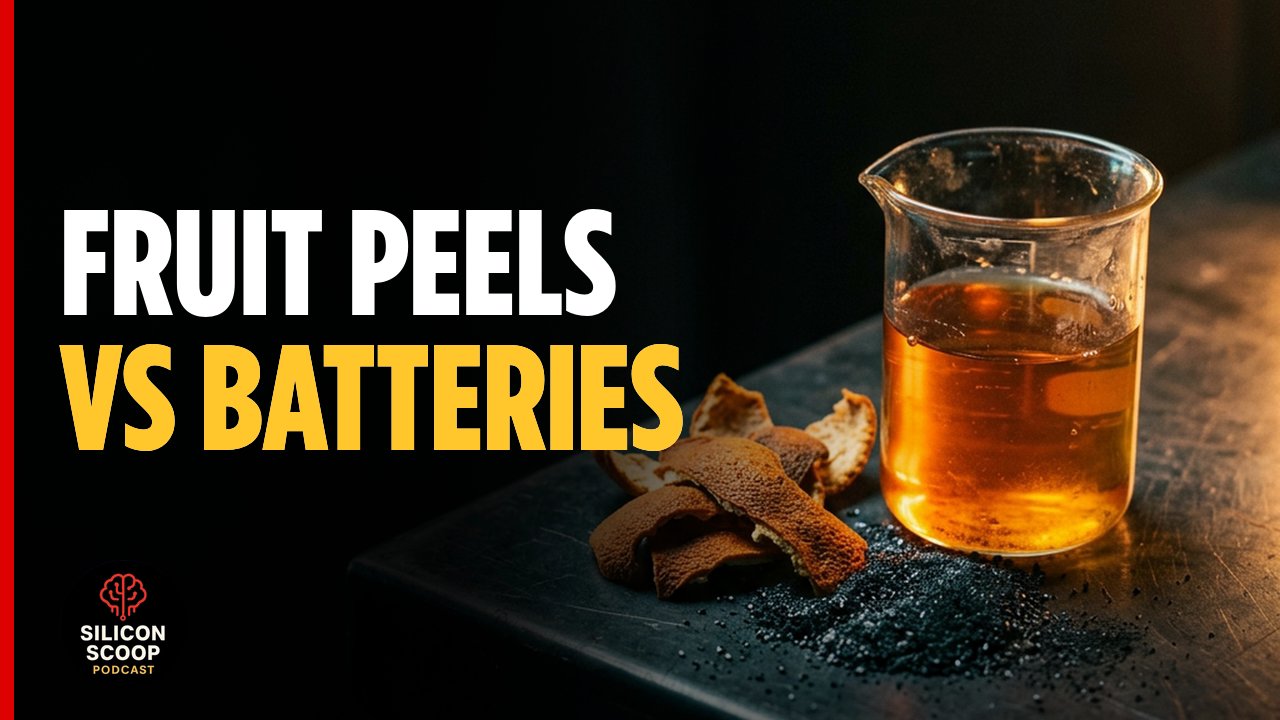
- Oven-dry orange peels.
- Grind them into powder.
- Mix the powder with citric acid, a weak acid found in citrus fruits.
- Use the mixture to dissolve metals from spent lithium-ion batteries.
Fruit peels contain sugars and natural acids that help dissolve and recover metals. The researchers reported results comparable to industrial recycling without extreme temperatures.
From dissolved metal to new battery
Once the metals are dissolved, they are recovered by precipitation. This means making the metals drop out of the liquid as solid metal salts. Those salts can be used to build new lithium-ion batteries.
The target metals are cobalt, lithium, nickel and manganese. They are the key materials in battery electrodes.
NTU says it has filed a patent covering the extraction mixtures.
Professor Madhavi Srinivasan said current e-waste recycling is "energy-intensive and emit[s] harmful pollutants and liquid waste." She added that her team "demonstrated that it is possible to do so with biodegradable substances."
Source: NTU Singapore, The Cool Down
Turn Manual Work Into a Repeatable Process
Recycling plants win by turning messy inputs into predictable steps, and your back office can work the same way. Flowgrammer builds business automation that takes over repetitive tasks like data entry, reporting and follow-ups, so your team can scale without hiring for every new workflow.
What NTU Lithium Battery Recycling Has Actually Proved So Far
The headline number is about 90%. In 2020 lab tests, NTU recovered roughly that share of cobalt, lithium, nickel and manganese from spent lithium-ion batteries using orange-peel waste. The briefing for this story puts it at more than 90% by weight.
The recovery rate was comparable to industrial methods that use hydrogen peroxide. That is a strong chemical oxidizer used in conventional processes.
The researchers also built new lithium-ion batteries from the recovered metals. Those batteries had a similar charge capacity to commercial batteries.
Why the lab number is not the factory number
The partners' own plan is the strongest reason for caution. They are still working on yields and on technical and economic viability at pre-commercial scale. That tells us the 90% figure is a laboratory benchmark, not a verified full-scale result.
The pilot is also not presented as a proven commercial-scale replacement for conventional hydrometallurgy. That term means using water-based chemistry to pull metals out of ores or waste.
No independent analyst or investor forecast valuing this technology turned up in the sources. No capital cost, revenue, sales or margin figures were disclosed either.
More fruit, easier supply
The 2020 proof of concept used oranges. The team later found that lemons and pineapples also work.
Associate Professor Dalton Tay, who led the NTU research, said a wider range of fruit waste makes the raw material easier to get. The fruit waste at the pilot comes from a partnering supplier.
Source: NTU Singapore, Business Today
From Robots to Black Mass: What Se-cure Brings to the Plant
A recycling process is only as good as what goes into it. That is where Se-cure Waste Management (SWM) matters.
SWM handles about 18 tonnes of spent lithium-ion batteries every day. Its upstream skills include robotics-enabled discharging and dismantling of electric-vehicle batteries. That gives the partnership a path from battery handling to metal recovery.
The step-by-step flow
- Used batteries are shredded.
- Plastics and metals such as copper, aluminium and iron are separated out.
- What remains is black mass, a dark powder rich in battery metals.
- The black mass is dissolved in fruit-peel mixtures that use high-acidity fruits at low heat.
- Cobalt, lithium, nickel and manganese are pulled out and turned into metal salts for reuse.
SWM Managing Director Vince Goh frames the partnership as a closed-loop solution that covers battery processing and dismantling. Tay describes the process as a way to recover and reuse battery metals. He also points to possible carbon-offsetting and green-commodity distribution opportunities.
Those are possibilities the partners have named, not results they have reported.
Source: NTU Singapore, NTU press release (PDF)
A Crowded Field: TES, Redwood and the 90% Benchmark
Fruit-peel recycling is not entering an empty market. Argus Media, which covers commodity markets, put the NTU-SWM plant next to existing players.
- TES was reported to have a Singapore facility that can process up to 14 tonnes of lithium-ion batteries per day. It reportedly extracts 90% of usable battery material.
- Redwood Materials claims recovery above 95% for lithium, nickel, cobalt and copper.
These numbers cannot be compared directly. Feedstocks, definitions of "recovery" and operating scales differ. A lab result on clean samples is not the same as a daily plant figure on mixed waste.
Still, the comparison shows the target. To win business, a fruit-peel process must at least match what established recyclers already claim. It must also show an advantage in cost, safety or environmental impact.
Traditional recycling can involve extreme heat and chemicals that create secondary pollutants, health risks and safety risks. That is the gap NTU hopes a gentler, biodegradable approach can fill.
Source: Argus Media, The Cool Down
The Waste Problem and Policy Push Behind the Pilot
The need is large. According to SWM and NTU, fewer than 5% of used lithium-ion batteries are recycled. The global volume of spent lithium-ion batteries is projected to reach 11 million tonnes by 2030.
Lithium-ion batteries store energy from solar and wind. The energy is renewable, but the lithium, copper and cobalt inside are not. Mining them causes major environmental damage and uses large amounts of water.
Singapore's policy backdrop
Singapore's wider goals help explain why the pilot exists:
- A 70% recycling target
- A Zero Waste Masterplan goal to cut waste sent to landfill per person per day by 30% by 2030
- The National Environment Agency's Environmental Services Industry Transformation Map 2025
Who paid for the research
The research was supported by Singapore's National Research Foundation and the National Environment Agency. The money came through the Closing the Waste Loop Funding Initiative, Award No. USS-IF-2018-4.
The process also aims to deal with two waste streams at once. It reduces toxic waste from discarded batteries and puts food waste to use.
Source: NTU Singapore, Argus Media
What This Means for Startups and Small Businesses
You do not need to run a battery plant to learn from this pilot. Here are the practical lessons.
- Pilot before you promise. NTU and SWM are testing at pre-commercial scale and measuring economics, not just chemistry. Prove yield and cost in small, real-world runs before you raise or sell on a lab number.
- Partner for the missing half. NTU brought the science. SWM brought daily battery volume and dismantling skills. Pair deep technology with an operator who already has the feedstock.
- Secure your inputs early. The team found that lemons and pineapples work as well as oranges, which widens supply. If your business depends on one input, look for alternatives.
- Protect what you build. The scientists filed a patent on their extraction mixtures. If your edge is a process, decide early how to protect it.
- Know your benchmark. TES and Redwood already publish strong recovery claims. Compare yourself against the best option your customers can buy today.
- Look at adjacent niches. Waste handling, sorting, logistics, reporting and compliance tools all support recyclers. A startup does not have to own the reactor to serve this market.
- Watch the missing numbers. No capital cost or margin data has been released. Any founder eyeing this space should treat costs as the biggest unknown.
The common thread is discipline. A promising process becomes a business only when the numbers hold up at scale, with steady inputs and a clear buyer.
Source: NTU Singapore, Argus Media
Frequently Asked Questions
Q: What is fruit peel battery recycling?
A: It is a method that uses solvents made from dried, ground fruit peels, often with citric acid, to dissolve metals from spent lithium-ion batteries. The metals are then recovered as salts that can be used to make new batteries.
Q: Who developed the fruit-peel method for recycling lithium batteries?
A: Scientists at Nanyang Technological University (NTU) in Singapore developed it. NTU lithium battery recycling research was led by Associate Professor Dalton Tay, with Professor Madhavi Srinivasan among the researchers involved.
Q: What is hydro-organic metallurgy?
A: It is NTU's name for using fruit-peel waste, instead of conventional strong chemicals and acids, to extract valuable metals from battery waste. "Hydro" refers to the water-based mixtures used.
Q: Which metals can the fruit-peel process recover?
A: It targets cobalt, lithium, nickel and manganese. These are the metals used in battery electrodes.
Q: How much metal did the NTU lab tests recover?
A: In 2020 laboratory tests, the team recovered about 90% of the cobalt, lithium, nickel and manganese using orange-peel waste. That was comparable to industrial methods using hydrogen peroxide.
Q: Where is the Singapore battery recycling pilot located?
A: The NTU and Se-cure Waste Management pilot plant is at Neythal Road, off Pioneer Road North, in Singapore. It has operated since the fourth quarter of 2022.
Q: How big is the Singapore battery recycling pilot?
A: The plant can process up to 2,000 litres of shredded spent batteries mixed with fruit-derived solvents in a batch. Its partner, Se-cure Waste Management, handles about 18 tonnes of spent lithium-ion batteries a day upstream.
Q: Which fruits can be used besides oranges?
A: Researchers found that lemons and pineapples also work in the extraction process. Using more kinds of fruit waste makes the raw material easier to source.
Q: Is fruit peel battery recycling ready for commercial use?
A: Not yet proven at that level. The partners are still optimizing yields and testing technical and economic viability at pre-commercial scale, and no commercial sales or cost figures have been disclosed.
Q: How does the fruit-peel method compare with other battery recyclers?
A: TES reportedly processes up to 14 tonnes per day in Singapore at 90% recovery, and Redwood Materials claims over 95% for some metals. The numbers are not directly comparable because feedstocks, definitions and scales differ.
Additional Links
Flowgrammer.ca – 💡 Unlock AI-Powered Automation! Let flowgrammer.ca handle complex workflows so you can focus on growing your business.
Flowgrammers.ca – 💡 Join Toronto's Fastest Growing AI and Business Automation Community.
- SRED Funding Solutions – Maximize your R&D tax credits and secure funding for your innovation.
- Silicon Scoop Podcast – Stay Informed, Stay Ahead!
- Startup Talk Podcast
- Flowgrammer Youtube
- Startup Investor Drinks – Join Toronto’s Startup Community and connect with fellow startup enthusiasts and investors.
- TorontoStarts Startup and Entrepreneur Community – Become a part of Toronto’s thriving startup ecosystem.
- Workhaus – Discover flexible workspace solutions for your business needs.
- Work with The Startup Coach – Get expert guidance and mentorship for your startup journey.
- Reach out to Jon Irwin on LinkedIn – Connect with our co-host and technology expert.