
Microsoft Kills HoloLens: The End of Mixed Reality for Microsoft?
Microsoft Kills HoloLens: The End of Mixed Reality for Microsoft? Introduction The world of augmented reality (AR) and virtual reality (VR) is undergoing seismic shifts, and Microsoft’s decision to discontinue HoloLens 2 underscores this transformation. Once seen as a groundbreaking innovation in mixed reality, HoloLens 2 is now entering its final chapter. Microsoft has announced […]
With Craig Major and Jon Irwin
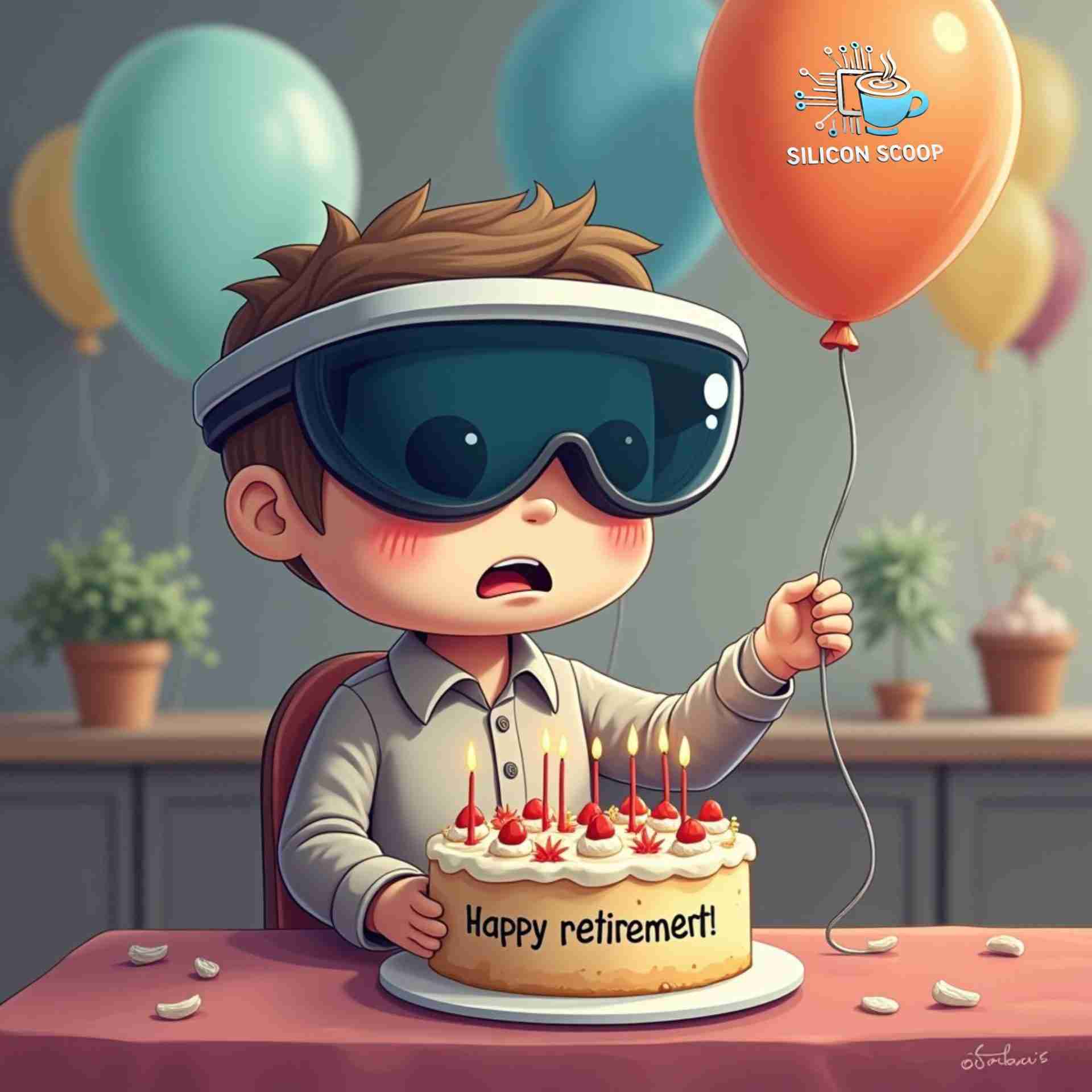
Microsoft Kills HoloLens: The End of Mixed Reality for Microsoft?
Introduction
The world of augmented reality (AR) and virtual reality (VR) is undergoing seismic shifts, and Microsoft’s decision to discontinue HoloLens 2 underscores this transformation. Once seen as a groundbreaking innovation in mixed reality, HoloLens 2 is now entering its final chapter. Microsoft has announced that it will kill HoloLens, leaving many wondering what’s next for the tech giant and its place in the AR market.
With competitors like Apple and Meta pushing forward in the AR space, Microsoft’s decision to step back raises questions about the future of the company’s role in augmented reality. What caused Microsoft to kill HoloLens, and what are the implications for the broader AR/VR market? Let’s dive deep into the rise and fall of HoloLens and explore what might be on the horizon for Microsoft’s AR strategy.
Microsoft Kills HoloLens 2: A Shift in AR Strategy
Microsoft officially announced the end of production for its HoloLens 2 headset, a significant move in the company’s augmented reality trajectory. Released in 2019, HoloLens 2 was priced at $3,500, primarily targeting enterprise customers in industries like healthcare, engineering, and military sectors. Despite high expectations, Microsoft struggled to gain broad adoption for the device, which never fully broke through to consumer markets.
According to Windows Central, internal issues and stiff competition from Apple and Meta’s AR/VR headsets contributed to Microsoft’s decision to discontinue HoloLens. While Microsoft kills HoloLens, it confirmed it will continue providing critical software updates for HoloLens 2 until 2027. However, there are no plans for a follow-up device, making it clear that Microsoft is pivoting away from hardware in the AR space for the time being.
The discontinuation of HoloLens also signals Microsoft’s shift toward a software-driven AR strategy, focusing on partnerships with companies like Meta and Apple to integrate Microsoft apps like Teams and Office into their AR ecosystems. This shift illustrates how Microsoft is refocusing on enterprise solutions and leaving consumer hardware competition to others.
For more insights into this shift, check out Engadget.
The Rise and Fall of HoloLens
When Microsoft first launched HoloLens in 2016, it was hailed as a revolutionary step in the world of augmented reality. Boasting cutting-edge technology, including hand-tracking and holographic displays, HoloLens quickly caught the attention of industries looking for practical applications in training, remote assistance, and design. Microsoft positioned HoloLens as a tool for enterprises, opting to leave consumer markets to competitors like Meta’s Quest and Apple’s Vision Pro.
The launch of HoloLens 2 in 2019 showed promise, but the high price point of $3,500 meant the device was accessible only to niche markets, primarily large corporations and government contracts. According to 9to5Mac, Microsoft’s enterprise-focused approach limited HoloLens’ market potential, making it difficult to compete with cheaper, more consumer-friendly devices from Meta and Apple.
Despite its technological advancements, HoloLens couldn’t escape internal challenges within Microsoft. Leadership changes and reports of a toxic culture within the HoloLens division, as mentioned by Upload VR, exacerbated the situation. These internal issues, coupled with shifting market dynamics, ultimately led Microsoft to make the tough decision to kill HoloLens 2. By exiting the hardware side of the AR market, Microsoft hopes to refocus its energy on enterprise software solutions and partnerships with companies like Meta.
Competitive Pressures: Apple Vision Pro and Meta Quest
One of the major factors led to the decision to cause Microsoft kills HoloLens 2 was the intense competition from other tech giants. Apple’s Vision Pro, priced similarly to HoloLens at $3,499, is aimed at providing a more immersive and consumer-friendly AR experience. Meanwhile, Meta’s Quest has made significant strides in making AR and VR accessible to a wider audience, offering affordable, user-friendly headsets geared toward both entertainment and productivity.
Microsoft’s enterprise-first strategy with HoloLens wasn’t enough to compete with these consumer-driven innovations. As noted by The Register, the augmented reality market is shifting towards more versatile, user-friendly devices that appeal to a broader demographic. HoloLens, with its focus on industrial applications, couldn’t keep pace with Apple’s and Meta’s rapid advancements in the consumer market.
The decision to kill HoloLens reflects Microsoft’s understanding that it cannot compete head-to-head with Apple and Meta in the consumer hardware space. By pulling out of AR hardware, Microsoft is effectively repositioning itself as a software provider for AR platforms developed by other companies. This allows the company to leverage its strengths in software while letting other companies take the lead in hardware innovation.
The Future of Microsoft’s AR and VR Strategy
So, where does Microsoft go from here? Although Microsoft kills HoloLens, the company isn’t completely exiting the AR/VR market. Instead, Microsoft is shifting its focus toward software, partnerships, and enterprise solutions. For example, Microsoft has partnered with Meta and Apple to bring its suite of productivity tools like Teams and Office to AR devices such as Meta’s Quest and Apple’s Vision Pro.
This strategy highlights Microsoft’s pivot from AR hardware to software integration, allowing it to stay relevant in the AR/VR industry without having to compete directly with hardware manufacturers. According to Windows Central, Microsoft remains committed to its military contract for the Integrated Visual Augmentation System (IVAS), which uses HoloLens technology for military applications. This suggests that while Microsoft may be stepping away from consumer hardware, it will continue to develop AR solutions for specific enterprise and industrial markets.
There are also rumors that Microsoft may develop a new AR headset in the future, potentially powered by Android instead of Windows. The Verge has reported that Microsoft could return to the AR hardware market as early as 2025 or 2026, though nothing has been officially confirmed. In the meantime, Microsoft appears focused on enhancing its cloud-based services and ensuring its software solutions are integrated into the AR devices developed by competitors.
Conclusion: Microsoft’s Exit from the AR Hardware Market
Microsoft’s decision to kill HoloLens marks the end of an era in its AR hardware strategy. While HoloLens was an innovative and groundbreaking device, it ultimately failed to capture a large enough market to justify continued investment. Competitors like Apple and Meta have emerged as dominant players in the consumer AR/VR space, leaving Microsoft to rethink its role in the industry.
Moving forward, Microsoft will likely focus on its strengths in software development and enterprise solutions. By partnering with companies like Meta and Apple, Microsoft can continue to play a significant role in the AR/VR market without the need to produce its own hardware. As the market evolves, it will be interesting to see whether Microsoft re-enters the AR hardware space or doubles down on its software-driven approach.
Microsoft Kills HoloLens FAQ
- Why did Microsoft kill HoloLens?
Microsoft killed HoloLens due to its limited market appeal, high competition from consumer-driven companies like Apple and Meta, and internal challenges within the company. - Will Microsoft make another AR headset?
Rumors suggest that Microsoft could release a new AR headset powered by Android by 2025 or 2026, but nothing has been confirmed. - What are the alternatives to HoloLens?
Apple Vision Pro and Meta Quest are the leading alternatives, both offering more consumer-friendly features compared to HoloLens. - When will Microsoft stop supporting HoloLens 2?
Microsoft has announced that it will continue to provide software updates and critical support for HoloLens 2 until 2027. - What industries used HoloLens?
HoloLens was primarily used in enterprise settings, including healthcare, engineering, and military applications. - How did HoloLens compare to Apple Vision Pro?
HoloLens focused on enterprise applications, while Apple Vision Pro is designed for a broader range of users, offering more immersive experiences for both consumers and professionals. - Is Microsoft abandoning the AR market?
Microsoft is shifting its focus from hardware to software, continuing to develop AR solutions in partnership with other companies. - What was the price of HoloLens 2?
HoloLens 2 was priced at $3,500, making it one of the more expensive AR headsets available, aimed at enterprise customers. - Why did HoloLens fail to reach consumers?
HoloLens’ high price and enterprise-focused design made it inaccessible to most consumers, who gravitated toward more affordable, consumer-friendly devices like Meta Quest. - What is the future of Microsoft in AR/VR?
Microsoft’s future in AR/VR lies in software integration and partnerships with other hardware manufacturers, ensuring its apps and services are available across multiple AR platforms.
For further reading, visit:
- Startup Funding in Ontario
- Angel Investors in Ontario
- Ontario Incubators and Accelerators
- Venture Capital in Ontario: Top Firms, Sectors, and Funding Strategies
- Government Grants for Ontario Startups
- Ontario’s Startup Success Stories
- Ontario Centre of Innovation (OCI)
- Bank Loans and Financing for Startups in Ontario
- Research and Development Tax Credits in Ontario
- Government Loans and Financing for Startups in Ontario
- Equity Crowdfunding for Ontario Startups
- Silicon Scoop Podcast – Stay Informed, Stay Ahead!
- Futuretech Podcast – Explore more episodes and stay updated with the latest in technology and innovation.
- Startup Talk Podcast – https://torontostarts.com/startup-talk-toronto-startup-podcast/
- Who Are These Startups Podcast
- Startup Investor Drinks – Join the community and connect with fellow startup enthusiasts and investors.
- TorontoStarts Startup and Entrepreneur Community – Become a part of Toronto’s thriving startup ecosystem.
- Workhaus – Discover flexible workspace solutions for your business needs.
- Work with The Startup Coach – Get expert guidance and mentorship for your startup journey.
- Reach out to Jon Irwin on LinkedIn – Connect with our co-host and technology expert.
Episode transcript
Read the full transcript
Craig: microsoft kills hololens two.
Jon: yeah. so this is sad. this was one of my favorite headsets back in the day. i got to mess around with it a few times. they were the first to do arvr, i believe. there might have been someone else less mainstream, but, i liked it. i like how it sat on my head, and this was back in the day when we had heavier, headsets and stuff. but this is sad because like, as far as the development that was going on and all that sort of stuff, it had great potential. and so, like, i think they started in twenty ten. they had hololens one, and then they came out with hololens two. but, yeah, like, we need them to keep doing this so that they can compete with apple. or someone else needs to step in here. i know meta has their headsets, but you gotta be a part of meta's ecosystem and all that sort of stuff. and i don't know if they have an arvr mixed reality, but yeah.
Craig: so the original hololens headset will stop getting software updates on december tenth. the hololens two headset will continue to receive updates to address critical security issues and software regressions only until two thousand and twenty eight, which will mark the end of any software updates. and back in twenty twenty two, microsoft scrapped its plans for a hololens three headset. but a lot of people were thinking that, you know, they have this design and the technology is moving forward, so they're gonna come up with something new. right? yeah. so hololens two was first launched in two thousand and nineteen, just three years after the original. so the original was launched in two thousand sixteen.
Jon: okay.
Craig: it was advertised as a device for enterprise consumer. never really went well. so are any of these things doing well?
Jon: met is our, i think. but is a straight vr. right? and i know that those well, i don't know, but, it seems like those, those ar i guess, they're not vr. just ar. you know, those classes that we covered?
Craig: they're ar. yep.
Jon: the price point is good. i think one of the biggest problems with microsoft is their price point was too high. the price tag was thirty five hundred dollars. i don't know if that's us or canada, but that's expensive. that's apple money.
Craig: yeah. the hololens was priced at thirty five hundred dollars. again, you know, this is expensive as well. and, so it looks like they're shifting maybe to an ar strategy rather than a vr strategy. like, what apple looks like they're doing and what you're mentioning meta is doing. because meta, they have a oculus style headset, but what they're pushing now is their orion and their, ray ban version where it has certain functionality, and we're gonna be talking about, the existing version in a couple of minutes. so the question becomes, you know, this has been ongoing and ongoing and ongoing, and apple, canceled their high end, apple vision two or apple vision pro headset, the next version. and they're coming out there saying, well, we're gonna go with a cheaper version, maybe a fifteen hundred dollar version. the problem is the thirty five hundred dollar version already felt cheap.
Jon: it was. yeah. it was breaking very easily. yeah.
Craig: so are these just not selling? obviously, the price is up there, but, you know, the apple vision pro, similar price to hololens, is aimed providing a more immersive consumer friendly ar experience while meta's quest has made significant strides in making ar and vr accessible to wider audience, offering affordable user friendly headsets geared towards both, entertainment and productivity.
Jon: so here's my theory is that these two, the apple vision pro and the hololens, didn't really have out of the gate, people i don't think people could see the use case for them. and then add on to the price point of it. now the hololens, i think, was more for commercial purposes, but the apple vision pro well, i guess it was commercial kind of purposes when it launched. right? but when we're talking the vr headsets, like, they had a purpose. they were for gaming. they were for different things like that. but the hololens and the vision pro didn't have that, if that makes sense. or am i off base on that?
Craig: well, i think these are still like, i've been following ar and vr, and they've been talking about them since, i don't know, years and years and years. yeah. where you would go and try a machine somewhere because it was new and cool, but you had to pay, like, twenty bucks to try it. they've come a long way, but they're still not mainstream.
Jon: yeah.
Craig: so why do you feel that's not happening? like, microsoft killed hololens, understanding it it cannot compete with head to head with apple meta in the consumer hardware space and understanding that consumer hardware is dead and microsoft is not great at that. right? they yeah. i see. again. right?
Jon: yeah. speaking of hardware and issues, like, there were a lot of rumors floating around that they're moving away from an actual hardware xbox. and if you look at what they're doing, that does make sense because now they have this cloud streaming, xbox. you can play xbox games on your samsung. i can play them on my mac now. i can stream it from the web. right? yeah.
Craig: i was playing it on my ipad for a while. you can go and pay ten bucks a month and start streaming games, like, right away. so
Jon: yeah. oh, i have the x, the ultimate, game pass, so that's all included. but,
Craig: but i don't have an xbox. i'm just saying i went and
Jon: oh, okay. oh, it's ten bucks a month for that.
Craig: yeah. and then you get a whole bunch of games or something. like, it's like, end of the streaming services. so, you don't have to have an xbox. the question becomes, though and, again, you know, hardware is expensive. and a lot of times, it's a lost leader. and microsoft is saying, hey. you know, why before, they only wanted, for an example, office on their platforms. remember, for the longest time, they didn't put it on apple or anyone else's on android. and that now that you can get them on those now because they decided, you know, well, why would we do that? why don't we wanna get our software in as many hands as possible? so they're they're effectively repositioning itself as a software provider in arvr platforms. right?
Jon: and it does make sense if you look at, if you look at their acquisitions too. they're acquiring, game studios, right, yep. who are developing the games instead of focusing. yeah. i know that microsoft lost, i think, two hundred dollars or a hundred and fifty dollars per xbox sold. so, yeah, it makes sense. if they don't have to sell and they can still make the same amount of money and even reach more people and, by just providing, an app on all the different platforms, why not? right?
Craig: well, at some point, you'll you should wise enough and say, okay. why would i get into this now? we've been doing this for years. how many billions have we lost on this arvr hardware strategy? nobody in the market's making money on this, and it's still not mainstream. let's stop. let's focus on the software. let's get all this stuff working. let's let everyone else spend the billions of dollars. and when they've got something, you know, that the hardware is advanced enough and we're moving along, then maybe we'll jump back in when consumers are ready for this.
Jon: yeah.
Craig: like, why would like, again, it's great to be early. it's great to have your own headsets to play with internally, but they started with, the connect.
Jon: yep. i still have the connect that connects to my, my xbox one s. i still have games i could play. i love the kinect.
Craig: yeah. but so many people don't, but that's okay.
Jon: i know.
Craig: it, again, was generally a consumer flop because of everything. like, it's just a lot of investment in the hardware and the arvr space that is just not we're just not ready yet. and i think that's a lot of the problems. software not being ready is okay. but hardware, you know, you this is version three. this is version four. how many billions, like i said, are you gonna throw at this? and we're ten years away from mass adoption. like, why would i do that? so i think at some point, you're you're at a decision to say, let's focus on the software because when consumers are ready, we can then do a hardware strategy. and all the hardware will be way improved by then, and we'll save ourselves billions.
Jon: yeah.
Craig: so, microsoft's partnered with meta and apple to bring its suite of productivity tools like teams and office to ar devices like meta's quest and apple's vision pro. so like i said, they wanted their software on as many platforms as possible. the verge has reported microsoft could return to the ar hardware market as early as twenty five, twenty six, though nothing has been officially confirmed.
Jon: yeah.
Craig: like yeah. you, you know, you have to look at the environment and say, is it worth it for us to be hardware people in this environment, or should we focus on having the best tools, the best development environment, the best software, the best stuff for everyone else to use, we will develop inside that. so we're already gonna be a key player that's hooked into all these things. and when the hardware is ready and the market's ready, we can then come up with our own solution.
Jon: yeah. so
Craig: this is the thing go ahead.
Jon: yeah. it's it's so weird, though, because, like, you have these companies who've developed pretty decent devices, and the price point's pretty low. so i don't see why, i don't see why microsoft can't develop
Craig: well, again, there's a big difference between vr and ar, and a lot of these things don't have the same functionality.
Jon: yeah. yeah. yeah. the second you add in vr, then you've got you need a lot more computing power than just ar. yeah.
Craig: and spatial awareness. people are walking around and turning and doing all sorts of stuff in a vr environment. they need to know where your feet are. some of these have, you know, cameras that go around that are watching you in motion, never mind the glasses, to track you. yeah. yeah. so you need dedicated space. it's just not prime time. right? and do people really wanna be sitting on the couch next to somebody with these glasses on or even out at, starbucks or mcdonald's doing this? you know, i we're not ready yet. yeah. we still are at glass hole syndrome place. i think we're gonna have heavy reactions when this starts to become public that people are wearing around cameras on their faces again.
Jon: yeah. because it's not yeah. it's not very mainstream. it's a niche market right now.
More from Silicon Scoop
All episodes
silicon-scoop · October 28, 2026
OpenAI Cuts Cursor Off After SpaceX’s $60B Deal: How Model Access Became a Strategic Weapon
OpenAI Cursor fallout: SpaceX acquisition triggers change-of-control clause, AI model access cutoff, and a new era of strategic control over developer tools.
View episode

silicon-scoop · October 27, 2026
Quantum Encryption Breakthrough: Unconditional Unclonable Encryption Explained
Unclonable encryption advances quantum cryptography with the no-cloning theorem and information-theoretic security in a one-time scheme.
View episode

silicon-scoop · October 26, 2026
Dark Matter Breakthrough? Inside LUX‑ZEPLIN’s Mysterious 248 keV Event and What Comes Next
LUX-ZEPLIN dark matter experiment reports a 248 keV nuclear recoil, a potential WIMP detection in a South Dakota xenon detector. Explore models and market impact.
View episode