
MOFs: Unleashing the Future of Porous Materials and Reticular Chemistry
MOFs: Unleashing the Future of Porous Materials and Reticular Chemistry https://torontostarts.com/2026/03/11/mofs-future-of-porous-materials/ OpenClaw Toronto - https://openclawto.com/
With Craig Major and Jon Irwin
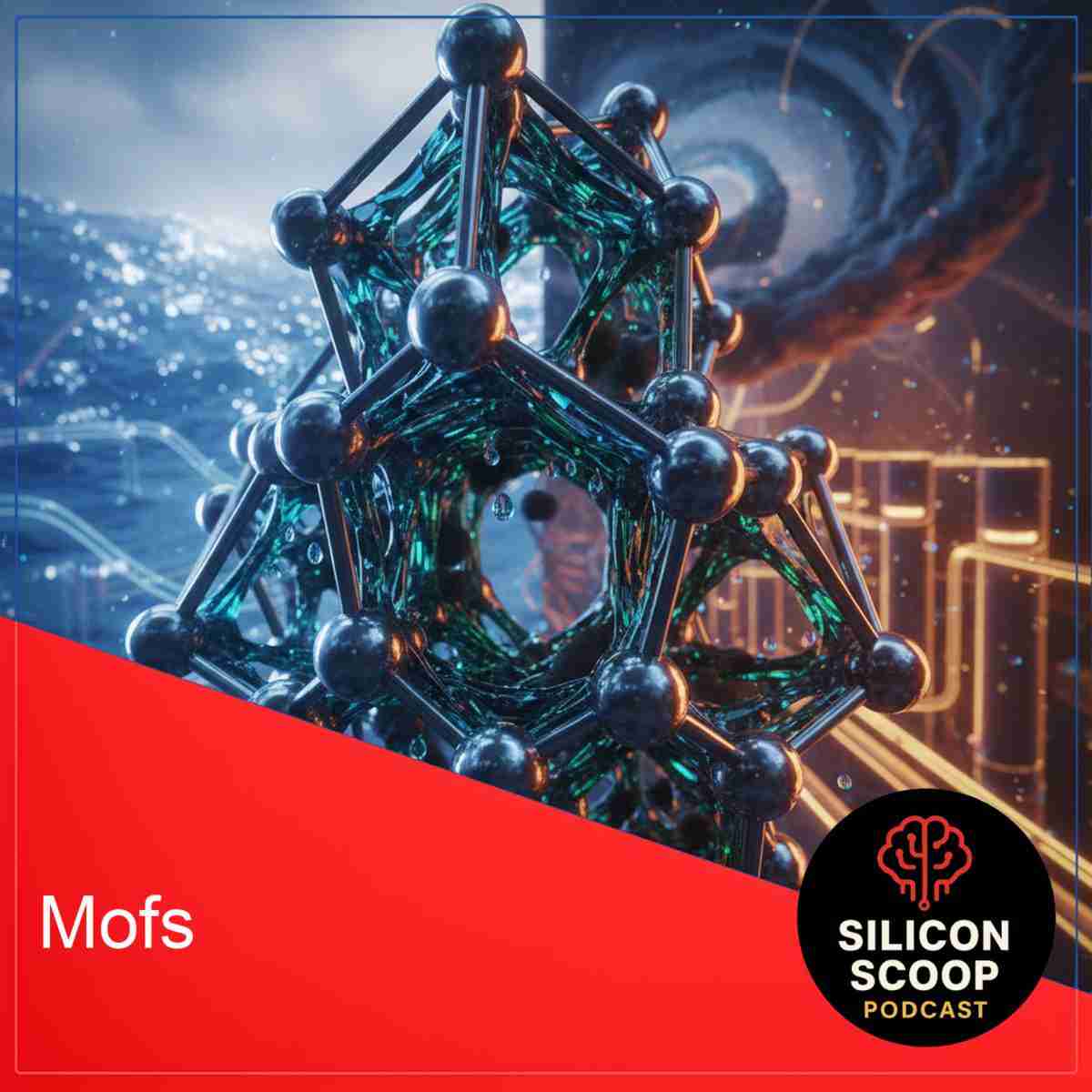
MOFs: The Future of Porous Materials and Reticular Chemistry
Estimated reading time: 20 minutes
Table of contents
- What Are MOFs and Why They Matter
- Historical Development and the Emergence of Reticular Chemistry
- Scientific Principles Behind MOFs and Reticular Chemistry
- MOF Applications: Advancing Technologies
- Yaghi’s Vision and the Next Materials Age
- Current Landscape and Future Challenges for MOFs
- Conclusion
- Frequently Asked Questions (FAQ)
What Are MOFs and Why They Matter
Metal–Organic Frameworks, or MOFs, are crystalline materials built from metal ions or clusters connected by organic linkers. Think of them as tiny architectural structures at the molecular level, with vast empty spaces inside.
What makes MOFs truly remarkable is their surface area. Just a few grams of certain MOFs can have an internal surface area comparable to an entire football field. This extreme porosity creates thousands of square meters per gram where chemical reactions, storage, and separation can occur.
MOFs also offer unprecedented tunability. By selecting different metal nodes and organic linkers, scientists can customize these materials like programming code—designing specific pore sizes, shapes, and chemical properties for targeted applications.
The field of reticular chemistry, pioneered by Omar Yaghi, provides the framework for building these materials systematically. Yaghi’s groundbreaking work earned recognition culminating in the 2025 Nobel Prize in Chemistry, cementing MOFs as one of the most significant chemical innovations of recent decades.
This recognition underscores a bold vision: that porous materials like MOFs and COFs (covalent organic frameworks) will define the next materials age, much as silicon shaped the information age.
Future-Proof Your Business Today!
Inspired by Yaghi’s vision of a ‘Next Materials Age’? Don’t let outdated processes hold you back. Embrace automation to unlock unprecedented efficiency and stay ahead of the curve.
Discover Automation Solutions >
Historical Development and the Emergence of Reticular Chemistry
Before MOFs: Traditional Porous Materials
Before MOFs revolutionized the field, scientists worked with several types of porous materials, each with significant limitations.
Zeolites were the gold standard—crystalline aluminosilicate minerals with regular pores widely used in catalysis and gas separation. However, their composition was limited to silicon, aluminum, and oxygen frameworks.
Activated carbons and silica gels offered high surface areas but lacked crystalline order. Their disordered structure made precise design nearly impossible. You couldn’t predict or control pore geometry with atomic precision.
Microporous coordination polymers existed as precursors to MOFs, but most lacked robust, permanent porosity. When you removed the solvent from these materials, their pores often collapsed.
The fundamental problem was clear: traditional porous materials offered limited tunability and design control compared to what molecular chemistry could achieve.
Yaghi’s Breakthrough: Reticular Chemistry
In the early to mid-1990s, Omar Yaghi began exploring crystalline coordination networks that would retain permanent porosity even after solvent removal. His approach was radically different.
Reticular chemistry is the design and construction of extended crystalline materials by linking metal clusters and organic linkers into predetermined frameworks using strong bonds. Think of it like assembling LEGO or Tinkertoys at the molecular level.
Instead of making random solids through traditional methods, reticular chemistry “stitches” molecules together into predictable networks with controllable pore sizes and shapes. This rules-based, almost architectural approach gave chemists unprecedented control.
The key advantages of reticular chemistry include:
- Modular design allowing fine-tuning by swapping building blocks
- Predictable pore dimensions based on linker length and geometry
- Controllable chemical environments within the pores
- The ability to “program” pores for specific guest molecules or functions
The MOF-5 Revolution
In 1999, Yaghi’s group reported MOF-5, a zinc-based framework that demonstrated the extraordinary potential of this new approach.
MOF-5 consists of Zn₄O clusters connected by 1,4-benzenedicarboxylate (BDC) linkers. Its specific surface area reached approximately 3,000 m²/g—a staggering achievement.
To put this in perspective: a couple of grams of MOF-5 offers internal surface area comparable to or exceeding an entire football field (roughly 5,000–8,000 m²). This vivid demonstration triggered worldwide interest in MOFs as a transformative class of porous materials.
MOF-5 opened a frontier beyond zeolites and activated carbons, proving that reticular chemistry could deliver materials with properties previously thought impossible.
Evolution of the Field
Following MOF-5, the field expanded rapidly. Scientists discovered numerous MOF topologies with specialized names: MOF-74, HKUST-1, UiO-66, MIL-series, and NU-series, among many others.
Early MOFs were often moisture-sensitive, limiting practical applications. Researchers addressed this by using high-valent metals like zirconium and aluminum with robust carboxylate linkers. Frameworks like UiO-66 showed dramatically improved stability in water, heat, and various chemicals.
The development of secondary building units (SBUs)—pre-assembled metal-oxo clusters acting as rigid nodes—enabled systematic design strategies. Scientists could now predict framework geometry based on the shape and connectivity of these building blocks.
In 2005–2007, Yaghi’s group extended reticular chemistry to create the first Covalent Organic Frameworks (COFs). These all-organic frameworks use dynamic covalent chemistry, such as boronate ester and imine linkages, to build crystalline porous solids without metal nodes.
COFs follow the same modular design philosophy as MOFs but offer different properties—often lighter weight and unique electronic, optical, and catalytic characteristics. Both 2D and 3D COFs have been developed with tailored pore sizes and functional groups.
By the mid-2010s, reticular chemistry had become its own recognized subfield with dedicated conferences, specialized journals, and growing industrial research programs. The paradigm shift was complete: solids could now be designed like molecules, with predictable, modular structures based on geometry and connectivity rules.
https://newscientist.com/ (based on profiles from major science outlets)
Unleash Exponential Growth Potential!
Just as MOFs offer revolutionary surface area, automation provides your business with exponential potential to scale. Stop trading time for tasks and start multiplying your impact with streamlined workflows.
Book a Free Automation Assessment >
Scientific Principles Behind MOFs and Reticular Chemistry
Understanding Reticular Chemistry
Reticular chemistry represents a systematic, almost architectural method for building crystalline materials. The process involves “stitching” together metal nodes and organic linkers using strong chemical bonds.
This approach differs fundamentally from traditional solid-state chemistry, where materials form through less controlled processes like heating mixtures at high temperatures. Reticular chemistry instead uses molecular precision.
The key principles include:
- Modular design: Scientists select metal clusters (nodes) and organic molecules (linkers) as building blocks. By changing these components, they can systematically tune material properties.
- Predictable pore dimensions: The size and shape of pores directly relate to the length and geometry of organic linkers. Longer linkers create larger pores. The connectivity of nodes determines the network topology.
- Controllable chemical environments: Functional groups on linkers or open metal sites on nodes create specific chemical environments inside pores. These environments can be designed to attract certain molecules, catalyze particular reactions, or store specific gases.
- Programmability: Reticular chemistry allows chemists to “program” pores for specific guest molecules or functions. Need to capture carbon dioxide? Design a MOF with amine groups that bind CO₂. Want to store hydrogen? Create ultra-high surface area with pores sized for H₂ molecules.
The analogy to LEGO or Tinkertoys is apt. Just as children connect standard pieces to build countless structures, chemists connect molecular building blocks to create thousands of different frameworks, each with unique properties.
What Makes MOFs Special
MOFs stand out among porous materials for several remarkable characteristics.
Permanent porosity: Unlike many coordination polymers, well-designed MOFs maintain their pore structure even after removing solvent molecules. The framework is rigid enough to stay open.
Extreme surface area: MOF surface areas range from hundreds to over 7,000 m²/g in exceptional cases. This enormous internal surface provides massive interface area for adsorption, catalysis, and reactions.
To visualize this: imagine spreading out the internal surface of a few grams of high-surface-area MOF. It would cover an area larger than a football field. All this surface is packed into a material you could hold in your palm.
Crystalline order: MOFs are crystalline, meaning their atoms arrange in perfectly repeating patterns. This allows scientists to determine their exact structure using X-ray diffraction, seeing precisely where every atom sits.
Tunability: By selecting from hundreds of possible metal nodes and thousands of possible organic linkers, researchers can create MOFs with properties tailored to specific needs. Pore size, chemical reactivity, stability, and other characteristics can all be adjusted.
Lightweight and functionalizable: Many MOFs incorporate light elements and have low density. Their organic linkers can be chemically modified before or after framework assembly, adding additional functional groups.
Comparing MOFs and COFs
Covalent Organic Frameworks (COFs) share the modular design philosophy of MOFs but with an important difference: they contain no metal atoms.
COFs are built entirely from light elements like hydrogen, boron, carbon, nitrogen, and oxygen, connected by strong covalent bonds. Common linkage types include boronate esters, imines, and other reversible covalent bonds that allow error correction during crystallization.
Key similarities:
- Both use reticular chemistry principles
- Both are crystalline porous frameworks
- Both offer tunable pore sizes and chemical properties
- Both can achieve high surface areas
Key differences:
- COFs are all-organic; MOFs contain metal nodes
- COFs tend to be lighter in weight
- COFs can show different electronic and optical properties
- COFs historically faced greater challenges in achieving crystallinity due to less reversible bond formation
Both material classes extend the toolkit of reticular chemistry, offering complementary advantages for different applications in catalysis, sensing, energy storage, and separations.
MOF Applications: Advancing Technologies
Water Harvesting from Air
One of the most compelling applications of MOFs addresses a critical global challenge: water scarcity in arid regions.
The Concept
MOFs can capture moisture directly from air, even in desert conditions with very low humidity. The process works through adsorption—water molecules stick to the MOF’s internal surfaces. Later, gentle heating releases the captured water as liquid.
This enables water production in regions with little groundwater, no infrastructure, and limited rainfall. The vast reservoir of water vapor in Earth’s atmosphere becomes accessible even in the driest climates.
Technical Principles
Effective water-harvesting MOFs have steep water adsorption isotherms at low relative humidity—often below 20% RH. This means they can grab water molecules from very dry air.
The system operates in cycles:
- Nighttime adsorption: Cool night air passes through the MOF. Water molecules adsorb onto the framework’s internal surfaces.
- Daytime desorption: Sunlight heats the MOF. The absorbed water releases and condenses as liquid.
This passive operation requires no compression refrigeration like conventional dehumidifiers. Solar energy alone can drive the cycle, making it viable for off-grid locations.
Yaghi’s Water Harvester Prototypes
Yaghi’s group developed early prototypes using MOF-801, a zirconium-based framework with excellent water adsorption properties. Field tests in Arizona desert conditions demonstrated the proof-of-principle: these devices could harvest measurable amounts of water using only ambient air and sunlight.
Performance varies with conditions, but prototypes have demonstrated collection of liters of water per kilogram of MOF per day under favorable circumstances. The devices operate without external power beyond solar heating.
Subsequent research has focused on:
- Developing MOFs with even higher water capacity
- Creating more favorable adsorption-desorption curves
- Reducing production costs
- Scaling up manufacturing
- Optimizing device design for efficiency
Current Status
Several startups and Yaghi’s research group continue advancing water-harvesting technology. Prototype devices have moved beyond laboratory demonstrations to field testing.
Engineering challenges remain significant:
- MOF production costs must decrease for large-scale deployment
- Long-term durability under repeated cycling needs validation
- Manufacturing processes must scale efficiently
- Device designs require optimization for different climates
- Integration with local water needs and distribution systems
Despite these hurdles, atmospheric water harvesting represents a niche where MOFs offer clear advantages over alternative technologies. As climate change intensifies water scarcity, this application could become increasingly vital.
Carbon Capture Technology
Climate change mitigation requires capturing carbon dioxide from industrial emissions and potentially from the atmosphere itself. MOFs offer promising solutions for both challenges.
Why MOFs for Carbon Capture
The pore chemistry of MOFs can be engineered to preferentially bind CO₂ molecules. Several strategies enable this selectivity:
- Amine-functionalized MOFs: Organic linkers decorated with amine groups chemically react with CO₂, forming carbamate bonds. This provides high selectivity for CO₂ over other gases like nitrogen.
- Open metal sites: Some MOFs feature metal atoms with vacant coordination sites. These sites attract CO₂ through electrostatic interactions with the molecule’s quadrupole moment.
- Optimal pore geometry: Pore sizes and shapes can be tailored to accommodate CO₂ molecules while excluding others, providing size-selective capture.
The high surface area of MOFs means enormous capacity for CO₂ adsorption. Some frameworks can capture their own weight or more in carbon dioxide.
Technical Advantages
MOFs offer several potential benefits for carbon capture technology:
- High capture capacity per unit volume and weight
- Selective for CO₂ over nitrogen, water vapor, and other flue gas components
- Relatively low energy required for regeneration compared to some amine solutions
- Tunability to optimize for specific capture scenarios (flue gas, direct air capture, etc.)
Water-stable frameworks based on zirconium or aluminum can operate in humid gas streams, addressing a major limitation of early MOFs.
Current Applications and Challenges
Research prototypes have demonstrated MOF-based CO₂ capture in laboratory settings. Some MOFs have been incorporated into filters or contactors for testing with simulated flue gas.
Direct air capture—removing CO₂ from ambient atmosphere rather than concentrated industrial sources—poses even greater challenges due to the low CO₂ concentration (about 420 ppm). MOFs designed for this application need extremely high selectivity and capacity at very low CO₂ partial pressures.
Significant obstacles remain before widespread deployment:
- Scalability: Carbon capture at the level needed for climate impact requires MOF production at millions of tons annually. Current production is orders of magnitude smaller.
- Cost: MOF synthesis often involves expensive organic linkers and controlled crystallization conditions. Costs must drop dramatically for economic viability.
- Stability: Industrial flue gases contain impurities (sulfur compounds, nitrogen oxides, particulates) that can degrade MOFs. Long-term stability through thousands of cycles under harsh conditions needs demonstration.
- System integration: MOFs must be incorporated into engineered systems—contactors, pressure-swing or temperature-swing adsorption units, regeneration systems—with low overall capture cost per ton of CO₂.
Despite these challenges, MOFs remain among the most promising next-generation materials for carbon capture technology. Ongoing research continues to address practical limitations while improving performance.
Gas Storage, Separations, and Catalysis
Beyond water and carbon dioxide, MOFs show promise for numerous industrial applications involving gases and chemical reactions.
Hydrogen and Methane Storage
Storing energy-dense gases like hydrogen and methane efficiently is crucial for clean energy systems. MOFs can pack these molecules more densely than empty tanks at the same pressure.
The mechanism is physisorption: gas molecules stick to the vast internal surface of the MOF through weak van der Waals forces. This allows higher volumetric storage density than compressed gas alone.
Multiple MOFs have met or approached performance targets set by agencies like the U.S. Department of Energy for hydrogen storage under specific conditions. Ongoing optimization focuses on:
- Maximizing both volumetric and gravimetric storage density
- Fine-tuning pore size for optimal packing of H₂ or CH₄ molecules
- Adjusting surface chemistry to optimize binding strength
Current limitations include the need for low temperatures or high pressures in many cases. System-level integration—incorporating MOFs into practical fuel tanks for vehicles or stationary storage—presents additional engineering challenges.
Industrial Gas Separations
MOFs excel at separating gas mixtures, a critical need in many industries.
Applications include:
- Natural gas purification: Removing CO₂ and H₂S from natural gas streams
- Hydrocarbon separations: Separating para/ortho isomers or different carbon-chain-length molecules based on subtle size and shape differences
- Air separation: Potentially separating oxygen and nitrogen more efficiently than cryogenic distillation
- Chemical plant purification: Isolating specific products or removing impurities
MOFs can discriminate between very similar molecules through:
- Size-selective exclusion (pores that fit one molecule but not another)
- Shape-selective binding (pore geometries that favor certain molecular shapes)
- Chemical selectivity (functional groups that preferentially bind specific molecules)
These capabilities could reduce the energy required for industrial separations, which currently account for a significant fraction of global industrial energy consumption.
Catalysis Applications
MOFs and COFs function as “solid reaction vessels” where the pores host catalytic sites and organize reactant molecules.
Several catalytic mechanisms are possible:
- Metal-node catalysis: The metal clusters themselves serve as catalytic centers, similar to homogeneous metal catalysts but now immobilized in a solid framework.
- Functionalized-linker catalysis: Organic linkers can bear catalytic groups—amines, acids, organometallic complexes—that promote reactions within the pores.
- Confined-space effects: The restricted environment inside pores can influence reaction selectivity, favoring certain products through size or shape selectivity.
- Photocatalysis: Some MOFs and COFs can harvest light and mediate photochemical reactions, including CO₂ reduction and water splitting for hydrogen generation.
Examples include:
- Photocatalytic reduction of CO₂ to fuels or chemical feedstocks
- Selective oxidation reactions for pharmaceutical synthesis
- Immobilization of enzymes or homogeneous catalysts for recyclability in industrial processes
The advantage of MOF-based catalysis is combining the selectivity and designability of molecular catalysts with the recyclability and ease of separation typical of heterogeneous (solid) catalysts.
Yaghi’s Vision and the Next Materials Age
Historical Patterns in Materials Ages
Human technological development has often been defined by materials. Omar Yaghi frames the potential of MOFs and COFs within this historical context.
The Stone Age saw humanity’s earliest tool use, with worked stone defining capabilities for tens of thousands of years.
Bronze and Iron Ages transformed civilization through controlled metallurgy. Metal alloys revolutionized tools, weapons, agriculture, and infrastructure.
The Silicon Age emerged in the 20th century. Semiconductor devices built from silicon now underpin all modern computing, communications, and digital technology. Silicon-based materials literally power the information age.
Yaghi proposes that porous framework materials—MOFs and COFs—could play a similarly transformative role in defining a new technological age.
Core Arguments for a Framework-Defined Age
Yaghi’s vision rests on several compelling arguments about why reticular chemistry and framework materials may shape the 21st century.
Unprecedented Surface Area and Porosity
The extreme internal surface area of MOFs—grams exposing areas comparable to football fields—creates interfaces for adsorption and reaction on a scale far surpassing traditional materials.
This isn’t just quantitatively different; it’s qualitatively transformative. The sheer magnitude of accessible surface enables applications impossible with conventional materials.
Programmability and Modularity
Just as silicon can be “programmed” through semiconductor doping and circuit design, MOFs can be “programmed” through selection of building blocks.
Need a material that captures water from dry air? Design a MOF with appropriate hydrophilic sites and pore sizes.
Need to store hydrogen? Create ultra-high surface area with pores optimized for H₂ packing.
Need to catalyze a specific reaction? Incorporate catalytic metal sites or functional groups in the framework.
This “coding” of material properties at the level of matter and chemistry represents a fundamentally new capability, analogous to programming in silicon but operating in the domains of adsorption, storage, and chemical transformation.
Direct Relevance to Global Challenges
The 21st century faces critical challenges where MOFs directly apply:
- Water scarcity: Growing populations and climate change intensify freshwater shortages, especially in arid regions. MOF-based atmospheric water harvesting offers a new water source.
- Climate change: Reducing CO₂ emissions and removing existing atmospheric CO₂ requires breakthrough capture technologies. MOFs provide promising platforms for both.
- Clean energy: Hydrogen economy, efficient fuel storage, and renewable energy systems need advanced materials. MOFs address storage, conversion, and catalysis needs.
- Sustainable chemistry: Chemical manufacturing consumes vast energy, often in inefficient separations and reactions. MOF-based separations and catalysis could dramatically improve efficiency.
Unlike some fundamental scientific discoveries that take decades to find applications, MOFs already target these pressing problems directly.
From Discovery to Technology Pipeline
Reticular chemistry has progressed remarkably quickly from basic discovery to prototype devices and potential products.
Water harvester prototypes have been field-tested in deserts. Carbon capture systems incorporating MOFs are under development. Gas storage and separation applications are moving toward commercialization.
This rapid progression suggests MOFs are on a trajectory toward broad technological penetration, much as silicon rapidly transformed from laboratory curiosity to ubiquitous technology.
Yaghi’s Philosophy and Optimism
In interviews and public presentations, Yaghi emphasizes optimism about solving environmental and resource challenges through chemistry, not just policy changes or behavioral shifts.
He frames reticular chemistry as giving humanity new “tools”—materials platforms that can be tailored for countless uses. These tools empower scientists and engineers to address problems that seemed intractable with previous materials.
Yaghi envisions an emerging “Age of Frameworks” where porous crystalline materials become as foundational to sustainability technologies as silicon is to information technologies.
This vision is bold but grounded in demonstrated capabilities. MOFs already do things impossible with other materials. The question is whether the field can overcome practical barriers—cost, scale, durability—to achieve the widespread deployment Yaghi anticipates.
The 2025 Nobel Prize recognition lends credibility to this vision, signaling the scientific community’s acknowledgment that reticular chemistry represents a fundamental advance with transformative potential.
https://newscientist.com/ (based on coverage of the 2025 Nobel Prize in Chemistry)
Current Landscape and Future Challenges for MOFs
The Research Landscape in 2024–2025
The field of MOFs and reticular chemistry has grown explosively over the past two decades.
Scale of Discovery
Thousands of different MOF and COF structures have been synthesized and characterized. Databases catalog their structures, properties, and potential applications:
- Cambridge Structural Database includes thousands of MOF crystal structures
- Specialized databases curate MOF properties for specific applications
- Computational libraries predict properties of hypothetical frameworks not yet synthesized
This vast library of porous materials provides researchers with an enormous toolkit for selecting candidates for specific applications.
Computational Design and Machine Learning
Modern MOF research increasingly employs computational methods:
- High-throughput computational screening: Simulating gas adsorption, separation, or other properties for thousands or millions of hypothetical MOFs to identify the most promising candidates.
- Machine learning models: Training algorithms on existing data to predict MOF properties or suggest new framework designs likely to excel at specific tasks.
- Molecular simulation: Modeling guest molecule behavior inside MOF pores at atomic detail to understand and optimize performance.
These computational tools accelerate discovery dramatically. Instead of synthesizing and testing hundreds of materials experimentally, researchers can narrow the search computationally and focus experimental efforts on the most promising candidates.
Interdisciplinary Collaboration
MOF research now bridges multiple disciplines:
- Chemists synthesize and characterize new frameworks
- Materials scientists study structure-property relationships
- Chemical engineers develop processes for scale-up and device integration
- Computational scientists model properties and design new materials
- Environmental scientists evaluate real-world performance and sustainability
This interdisciplinary approach is essential for moving MOFs from laboratory curiosities to practical technologies.
Industrial Interest and Commercial Activity
Growing industrial sectors are investigating or implementing MOFs for various applications.
Key Sectors
- Gas separation and purification companies explore MOFs for natural gas processing, air separation, and industrial gas purification.
- Energy storage and hydrogen economy firms investigate MOFs for fuel cell vehicles, stationary hydrogen storage, and energy storage applications.
- Water technology startups develop atmospheric water generation devices for arid regions, military applications, and emergency relief.
- Climate tech ventures pursue carbon capture and utilization using MOF-based systems.
Commercial Status
Several companies now produce MOFs at multi-kilogram to ton scale for specialized uses including gas purification, sensors, and other niche applications.
However, large-scale, commodity-level deployment—such as equipping power plants with MOF-based CO₂ capture or implementing nationwide water harvesting systems—remains emerging and not yet mature.
The gap between laboratory demonstrations and widespread industrial use reflects significant practical challenges.
Ongoing Challenges
Despite tremendous progress, several obstacles must be overcome for MOFs to achieve their full potential.
- Scaling Production: Most MOFs are synthesized using solvothermal methods: dissolving precursors in solvent, heating in sealed vessels, and growing crystals over hours or days. This batch process is difficult to scale to the millions of tons needed for major industrial applications. Researchers are developing continuous-flow synthesis, mechanochemical synthesis (grinding without solvents), and other scalable methods. However, maintaining quality and crystallinity while reducing cost remains challenging.
- Cost-Effective Synthesis: Many MOFs require expensive organic linkers synthesized through multi-step chemistry. Metal precursors may also be costly, especially for frameworks using rare or precious metals. For commodity applications like carbon capture, material costs must drop to dollars per kilogram or less. Current MOF production costs often exceed this by orders of magnitude. Solutions under investigation include:
- Using cheaper, simpler linkers
- Developing more efficient synthetic routes
- Employing earth-abundant metals
- Recycling and regenerating MOFs
- Long-Term Stability: Industrial applications demand stability through thousands or millions of cycles under harsh conditions—moisture, temperature swings, chemical contaminants, mechanical stress. While newer MOFs show dramatically improved stability compared to early frameworks, proving long-term durability under real-world industrial conditions requires extensive testing. A framework that performs well for weeks in a laboratory may degrade over years of continuous industrial use.
- Device Integration: MOFs don’t work in isolation. They must be incorporated into practical devices:
- Water harvesters need heat exchangers, condensers, and collection systems
- Carbon capture requires contactors, regeneration systems, and CO₂ compression
- Gas storage needs tanks, pressure regulation, and safety systems
Engineering these systems to exploit MOFs’ advantages while managing their limitations (fragility, cost, powder handling) poses significant challenges.
- Environmental and Safety Assessment: Large-scale production and deployment of MOFs requires understanding their environmental footprint and potential health impacts. Questions include:
- What happens to MOFs at end-of-life? Can they be recycled?
- How does large-scale production affect environment?
- Are there inhalation or exposure risks during manufacturing or use?
- What are the full lifecycle sustainability implications?
Addressing these questions is essential for responsible scale-up.
Despite these challenges, the MOF field continues advancing rapidly. Research addresses each obstacle systematically, and the trajectory suggests many practical barriers will fall as investment and attention continue to grow.
Conclusion
The evolution of MOFs represents one of the most significant advances in materials science of the past several decades. From early porous materials with limited design control, reticular chemistry has enabled the systematic construction of thousands of different frameworks with precisely tunable properties.
Omar Yaghi’s pioneering work established the principles that allow chemists to “design” solid materials with molecular precision. MOF-5’s demonstration of extraordinary surface area opened a new frontier, and subsequent developments have vastly expanded the toolkit available to researchers.
Today, MOFs address some of humanity’s most pressing challenges. Water harvesting from air offers hope for arid regions facing water scarcity. Carbon capture technology using MOFs could help mitigate climate change. Applications in gas storage, separations, and catalysis promise to make industrial processes more efficient and sustainable.
COFs extend these principles to all-organic frameworks, further broadening the possibilities of reticular chemistry. Together, MOFs and COFs provide platforms for innovation across energy, environment, and chemical manufacturing.
Yaghi’s vision of a “Next Materials Age” defined by framework technologies is bold but increasingly credible. The 2025 Nobel Prize recognition affirms that reticular chemistry represents a fundamental scientific breakthrough with transformative potential.
Unleash Exponential Growth Potential!
Just as MOFs offer revolutionary surface area, automation provides your business with exponential potential to scale. Stop trading time for tasks and start multiplying your impact with streamlined workflows.
Book a Free Automation Assessment >
Frequently Asked Questions (FAQ)
Q: What are MOFs and how do they work?
A: MOFs, or Metal–Organic Frameworks, are crystalline materials built from metal ions or clusters (nodes) connected by organic molecules (linkers). They work by forming regular, repeating three-dimensional structures with vast internal empty spaces (pores).
These pores create enormous surface area—often thousands of square meters per gram. Molecules can enter the pores and stick to the internal surfaces through adsorption. By choosing different metals and linkers, scientists can control pore size, shape, and chemical properties to target specific molecules or reactions.
Think of MOFs as molecular sponges with precisely designed holes that selectively absorb certain substances while excluding others.
Q: How does reticular chemistry differ from traditional material synthesis?
A: Traditional solid-state chemistry often involves heating mixtures of elements or compounds at high temperatures, producing materials through less controlled processes. The exact arrangement of atoms can be difficult to predict or design.
Reticular chemistry uses a modular, predictable approach. Scientists select specific molecular building blocks—metal clusters and organic linkers—that connect in predetermined ways based on their geometry and bonding preferences.
This is analogous to assembling structures from LEGO bricks rather than melting plastic into random shapes. The result is materials with precise, predictable structures that can be systematically varied by swapping building blocks.
Q: What makes MOFs particularly promising for water harvesting?
A: MOFs can capture water vapor from air at very low humidity levels—even below 20% relative humidity where desert air typically sits. Traditional dehumidifiers can’t operate effectively in such dry conditions.
The process is passive: MOFs absorb water at cooler night temperatures, then release it when heated by sunlight during the day. No electricity or mechanical compression is required.
This makes MOF-based water harvesters ideal for off-grid locations in arid regions where conventional water infrastructure doesn’t exist. The enormous surface area of MOFs provides countless sites for water molecules to adsorb, enabling substantial water collection from seemingly dry air.
Q: How do MOFs help with carbon capture technology?
A: MOFs can be engineered with chemical groups that preferentially bind carbon dioxide molecules. For example, amine-functionalized MOFs react chemically with CO₂, while MOFs with open metal sites attract CO₂ through electrostatic interactions.
Their high surface area provides enormous capacity for CO₂ adsorption—some frameworks can capture their own weight or more in carbon dioxide.
MOFs can be designed for different carbon capture scenarios: concentrated flue gas from power plants, or even dilute atmospheric CO₂ for direct air capture. They potentially require less energy to regenerate (release captured CO₂) than some traditional capture methods, making the overall process more efficient.
Q: How do MOFs compare to COFs?
A: Both MOFs and COFs use reticular chemistry principles to build porous crystalline frameworks with high surface area and tunable properties.
The key difference is composition: MOFs contain metal nodes connected by organic linkers, while COFs are built entirely from light elements (carbon, nitrogen, oxygen, boron, hydrogen) connected by covalent bonds.
COFs tend to be lighter and can show different electronic, optical, and catalytic properties than MOFs. However, COFs historically faced greater challenges achieving crystallinity because covalent bond formation is less reversible than the coordination bonds in MOFs.
Both material classes are complementary, offering different advantages for applications in catalysis, sensing, energy storage, and separations.
Additional Links
Flowgrammer.ca – 💡 Unlock AI-Powered Automation! Let flowgrammer.ca handle complex workflows so you can focus on growing your business.
- Silicon Scoop Podcast – Stay Informed, Stay Ahead!
- Startup Talk Podcast
- Flowgrammer Podcast –
- Startup Investor Drinks – Join Toronto’s Startup Community and connect with fellow startup enthusiasts and investors.
- TorontoStarts Startup and Entrepreneur Community – Become a part of Toronto’s thriving startup ecosystem.
- Workhaus – Discover flexible workspace solutions for your business needs.
- Work with The Startup Coach – Get expert guidance and mentorship for your startup journey.
- Reach out to Jon Irwin on LinkedIn – Connect with our co-host and technology expert.
Flowgrammers.ca – 💡 Join Toronto’s Fastest Growing AI and Busiess Automation Community..
Flowgramming.space – 💡 AI Agent and Workflow Marketplace..
Episode transcript
Read the full transcript
Craig: today, we're looking at a breakthrough that sounds like pure science fiction, a material that can pull drinkable water straight out of the bone dry desert air. it's called a mof. and after winning the nobel prize in 2025, it officially, being hailed as a silicon of a brand new materials age. metallic or metal organic frameworks or mofs are essentially molecular sponges that scientists can program to trap specific molecules like water, carbon dioxide, or hydrogen because they are incredibly porous with just a few grams covering the area of, size of a football field, they are likely the key to solving global water scarcity and stopping climate change. what do you think about this, john?
Jon: i think this is cool. and i like, as we started talking about it, i feel like we've covered something similar, but i don't know if it was organic and metal, merging, but this isn't that. but i anyways, we talked about water from the air in the past. but, anyways, this is something different. we're talking about metal organic frameworks. and so they're crystalline materials that are made by linking metal ions with organic, we'll call them linker molecules that, into a pattern, it's like a lattice like structure, and they have these huge internal cavities. so unlike traditional solids, most of an mof's volume, it's pretty much empty space. so it gives us this huge colossal surface area relative to its max. and so this internal porosity, that is what enables the mof to physically or chemically bind gases and liquids with high selectivity. and so other cool thing about this is that these pores can be tuned at the molecular level. so by selecting different metals, different linkers, and geometric arrangements, scientists can design mofs to target specific molecules. so for example, capturing carbon dioxide while letting other gases pass or, like you said, absorbing vapor efficiently even from dry air. and so this design flexibility, it's foundational to reticular chemistry, which is the field that yagi kind of founded, which builds complex materials from smaller components with engineered function. so i agree with him saying that, these are going to be a game changer, and they're going to change the world. i think if they're able to produce these at mass scale, and and get it into, third world countries and where we need. i think this could be a game changer for reducing carbon dioxide, and, enabling drinkable water for people. what do you think, craig?
Craig: i think this is an amazing evolution of, you know, material and a bunch of different things is gonna wrap, and they change some fields. i like to think of it as molecular lego sets. instead of plastic blocks, scientists use metal atoms and organic linkers to build tiny three d structures, with massive amounts of empty space inside. so if a normal material is like a solid brick, a mof is like a skyscraper where every single room is designed to hold a very specific guest like a water molecule or a c o two atom like you're suggesting. so the big deal is this is, you know, an unprecedented surface area. the internal floor space inside these materials is, you know, just mind blowing. and for the first time, you know, we aren't just finding materials in the nature. we're coding them at the atomic level to do specific jobs. so, you know, that's amazing. and this isn't just a lab experiment anymore with the nobel 2025, prize. it's recognized as a fundamental chemistry that will define the next century. so, yeah, i think this is crazy. and i see applications like we're suggesting cleaner air, using industrial plants, use mof filters to scrub carbon dioxide out of the air before it ever hits the atmosphere. better electric vehicles feature evs could store hydrogen or methane, much more safely and densely leading to longer ranges and faster refueling. water out of thin air, obviously, i mentioned, you could have a device at home that generates gallons of fresh water every day even if you live in a desert, using only sunlight. so, you know, just those are just some ideas.
Jon: yeah. and the thing about this is that well, i don't know if we touched on this, but he won a nobel prize for this. so the prize itself isn't about prestige. what this prize signifies is it signals that this isn't just fringe research. it's foundational science with real potential to alter how we address climate, water, and energy challenges. so his vision ties back to a social mission. material science that alters societal infrastructure and not just lab benchmarks, which i love. and so being positive, this is i'm being, really positive about this, but there's a few things. despite their promise, they're not a finished commercial product, product. and so the greatest challenges, like, i alluded to a little bit earlier was scaling synthesis to industrial volume. the other challenge is ensuring long term durability and also integrating them into processes that can compete economically with already incumbent technologies. so, the the positive on this is that the pace of research, which, obviously, they're including machine learning driven discovery, it suggests that there's gonna be rapid progress on this to a commercial viable product.
Craig: yeah. i mean, companies are already field testing water harvesters in places like the arizona desert. we'll likely see mofs appearing in specialized industrial gas sensors, and high end purifiers within the next couple of years. and then between the five to ten years, we'll see mass market consumer products like home water, generators or c o two, scrubbing hvac units are on the horizon as manufacturers starts to scale. there's still some concerns about cost. currently making the links for these frameworks is expensive, often, requiring a complex, chemical synthesis. durability, early versions were sensitive to moisture. it's kind of ironic, but, though newer, zirconium based versions are much tougher. and scaling, they need to go, from making grams in a lab to millions of tons in factory to truly save the planet and kinda reminds me of, you know, the football field in your pocket, a tiny nugget of mof five as more internal surface space than a full size football field. it's like, are we in the, frank pym the area age where we pull something out and go boom, and it becomes huge?
Jon: yeah. yeah. exactly. did you find anywhere where they talked about cost to produce this or our commercial cost or anything like that? i'm guessing not because it's still in the research feed today.
Craig: alright. the only thing i really have is that it's expensive right now. it's expensive to make them. yeah. because of, the links for these frameworks is expensive after requiring complex chemical synthesis. but once they kinda have it nailed down, i think it'll scale.
Jon: yeah. for sure. i it it it makes sense. it's not like they're inventing, new metals. it's not like they're they're creating, metals that need to be created, like, by combining others. like, it's not like they're doing things that aren't, viable or feasible, if that makes sense, with this technology.
Craig: yeah. and, like, it's really good at, say, detecting, differences between nitrogen and co two and being able to pull out the co two as an example if that's what we're aiming for. so it's really cool. and the previous versions, the, cofs, the difference basically was, they didn't have any metal, and the new ones, contain metal.
Jon: okay.
Craig: so we'll see how that goes. i'm just trying to see. do we miss anything? i don't think so.
Jon: no. we we covered everything. this is great. by the way, i think he won the nobel prize in 2025 for this. so we're this this isn't old news. this is new news. newer news, if that makes sense.
Craig: so is this the end of water scarcity or just an expensive lab dream given, the nobel win and the desert test results? i'm betting on the future. let me know in the comments. would you trust a device that makes water out of thin air? we'll keep watching this story closely.
More from Silicon Scoop
All episodes
silicon-scoop · October 16, 2026
Meta’s $18 Billion Teen Safety Settlement: Soft Guardrails, Hard Leverage Over TikTok and YouTube
Deep dive on Meta teen safety settlement, social media addiction lawsuit, new Facebook Instagram time limits and pressure on TikTok YouTube age verification.
View episode

silicon-scoop · October 15, 2026
How Claude Mythos Is Reshaping Cryptanalysis: HAWK, AES and the Rise of AI-Driven Crypto Research
Claude Mythos cryptanalysis weakens HAWK post-quantum signature, speeds AES Möbius Bridge attack, and powers CryptanalysisBench benchmark in AI-driven crypto research.
View episode

silicon-scoop · October 14, 2026
Nvidia’s $12.9 Billion Hugging Face Bet: How Controlling the Open-Source Model Hub Reshapes AI Chips, Cloud, And Competition
Nvidia Hugging Face acquisition could reshape open source AI models, AI chip dominance, and the global developer model hub, raising antitrust and neutrality questions.
View episode