
Brain-Controlled Biodrones: Pigeon Drones?
Brain-Controlled Biodrones: Unveiling the Myths and Realities of Animal-Machine Hybrids Estimated reading time: 10 minutes Key Takeaways Brain-controlled biodrones merge neurotechnology with animal abilities. You might have heard terms like Russian pigeon drones, animal-machine hybrids, or brain-controlled bird surveillance. Although there is a tale of a 2025 Moscow test, this claim remains unverified. Real experiments […]
With Craig Major and Jon Irwin
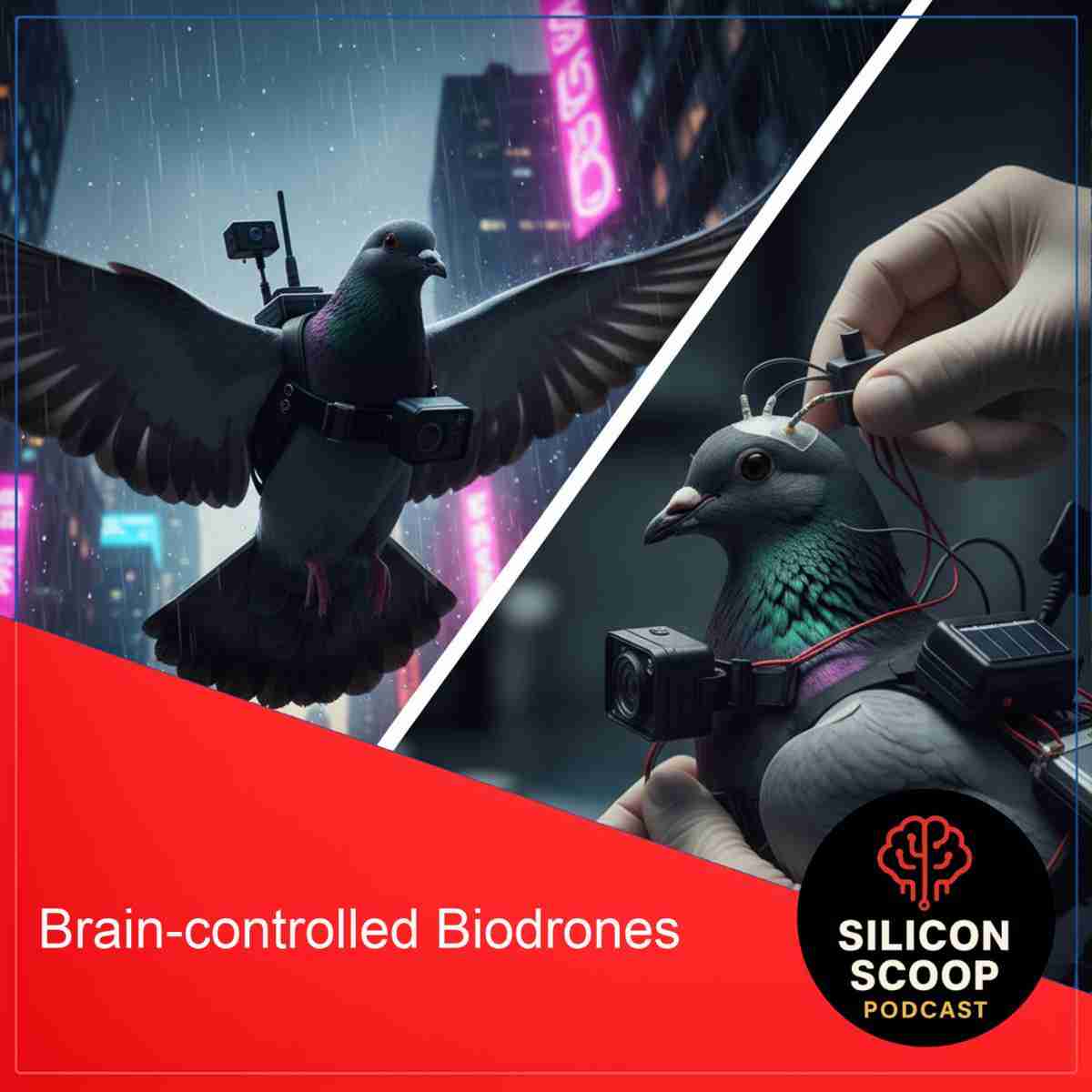
Brain-Controlled Biodrones: Unveiling the Myths and Realities of Animal-Machine Hybrids
Estimated reading time: 10 minutes
Key Takeaways
- Brain-controlled biodrones merge neurotechnology with animal abilities.
- You might have heard terms like Russian pigeon drones, animal-machine hybrids, or brain-controlled bird surveillance.
- Although there is a tale of a 2025 Moscow test, this claim remains unverified.
- Real experiments have been done on pigeons and rats using brain stimulation.
- Rules on invasive animal experiments along with airspace and privacy laws make widespread use of biodrone technology a long shot.
Table of contents
- Brain-Controlled Biodrones: Unveiling the Myths and Realities of Animal-Machine Hybrids
- Introduction
- Section 1: Background and Evolution of Neurotechnology in Drones – brain-controlled biodrones
- Section 2: Technical Perspectives – How Would Brain-Controlled Biodrones Work?
- Section 3: Feasibility, Ethics, and Regulatory Considerations – animal-machine hybrids, brain-controlled bird surveillance, PJN‑1 project, biodrone technology
- Section 4: Comparative Analysis – Traditional Drones versus Brain-Controlled Biodrones
- Section 5: Future Outlook and Concluding Thoughts – brain-controlled biodrones, biodrone technology, neurotechnology in drones
- Section 6: FAQ
- Final Call To Action
Introduction
Imagine a world where animals and machines work together in seamless harmony. Brain-controlled biodrones merge neurotechnology with animal abilities. In this article, we explore how brain-controlled biodrones could let animals like pigeons do tasks that normally need metal machines. You might have heard terms like Russian pigeon drones, animal-machine hybrids, or brain-controlled bird surveillance. We even mention the speculative PJN‑1 project story that many have discussed. Although there is a tale of a 2025 Moscow test, this claim remains unverified. Real experiments have been done on pigeons and rats using brain stimulation.
Source: story_verification
––––––––––––––––––––––––––––––––––––––––––––––––
Section 1: Background and Evolution of Neurotechnology in Drones – brain-controlled biodrones
Brain-controlled biodrones are animal–machine hybrid systems. In these systems, a living creature’s natural skills merge with electronic guidance. At its heart is neural stimulation to guide movements. Early work in this area involved pigeons and “ratbots” where small electrodes in the brain were used to study navigation.
- Early experiments in pigeons helped scientists learn about direction and spatial maps.
- Studies on rats showed that brain-controlled movement was possible, though mainly in labs.
- Researchers focused on reading brain signals instead of full control that takes place outdoors.
A speculative story has circulated about a Russian startup and its so-called PJN‑1 project. This project was said to involve brain-implanted pigeons controlled by a special GPS system. However, no reliable news sources or scientific reports confirm these specific claims.
- The narrative claims that these Russian pigeon drones could fly a full mission over Moscow.
- In contrast, the reality is that real experiments in pigeons and ratbots have had many limits.
Source: story_verification
Call To Action
Discover Flowgrammer’s cutting-edge services and let our expert team help you navigate the latest in neurotechnology and drone innovations. Upgrade your project with our insights today!
––––––––––––––––––––––––––––––––––––––––––––––––
Section 2: Technical Perspectives – How Would Brain-Controlled Biodrones Work?
Keywords: brain-controlled biodrones, Neiry bird electrodes, GPS tracked pigeons, biodrone technology, neurotechnology in drones, brain-controlled bird surveillance
This section breaks down how brain-controlled biodrones might work. The claimed system is built on many tiny components that fit together to give a living bird new abilities. The system is based on several key parts:
- Microscopic Electrodes (“Neiry bird electrodes”):
– These are tiny wires implanted in a pigeon’s brain.
– The use of stereotactic neurosurgery (a method that uses 3D coordinates to find small targets) helps place the electrodes correctly.
- Head-Mounted Stimulator and Backpack Kit:
– A small device worn by the pigeon contains a GPS module, battery, solar panels, and a chest camera.
– This allows real-time tracking and gives the operator control over the bird’s flight.
– The setup is similar to modern light GPS trackers used in wildlife research.
- Wireless Command System:
– The idea is to send signals to control turns and flight direction.
– Unlike ratbots that use training and conditioning, this system suggests control without prior dieting routines.
– However, expert opinion notes that fine control via brain stimulation in flying animals is still very hard.
Many technical experts point out that while devices like EEG headsets or mini GPS trackers work in labs, stitching them together into a live, remote-controlled biodrone has major challenges. These include implant reliability, power limits, and safe, precise controls in wild flight environments.
Source: technical_challenges
Call To Action
Ready to explore the forefront of experimental technology? Check out Flowgrammer’s innovative solutions to merge cutting-edge research with practical applications. Learn more about our services and subscribe for updates!
––––––––––––––––––––––––––––––––––––––––––––––––
Section 3: Feasibility, Ethics, and Regulatory Considerations – animal-machine hybrids, brain-controlled bird surveillance, PJN‑1 project, biodrone technology
Feasibility and Operational Limitations
The idea of a live pigeon carrying a GPS and camera looks fun on paper. But here, reality raises questions:
- Invasive Neural Implants:
– Tiny electrodes must be carefully implanted.
– The claim of 100% survival is not backed by current science.
– Source: 3_technical_plausibility
- Payload and Flight Conditions:
– Integrating GPS modules, cameras, batteries, and solar panels on a small bird is challenging.
– Weather, urban interference, and limited power are real issues.
– Regular flights over busy cities like Moscow would attract legal and safety scrutiny.
Operational issues also come up. For example, urban airspace is controlled and monitored by numerous agencies. A flying biodrone could quickly cause security alarms. Additionally, animal welfare laws stress that invasive experiments must not harm living creatures.
Ethical and Security Implications
There are serious ethical issues in using living birds as drone platforms:
- Animal Welfare Concerns:
– Invasive brain surgery can cause pain and stress in pigeons.
– The moral question of treating animals as machines is important.
- Instrumentalization and Dual-Use:
– Using animals as surveillance tools raises debates about exploitation and misuse.
– The discussion includes potential use of such systems in military settings.
Regulatory hurdles are heavy. Rules on invasive animal experiments along with airspace and privacy laws make widespread use of biodrone technology a long shot.
Source: 4_ethics_and_security
Call To Action
Want to stay ahead of emerging technology debates? Subscribe now to Flowgrammer updates and discover how our deep insights into neurotech and regulatory challenges can empower your next project.
––––––––––––––––––––––––––––––––––––––––––––––––
Section 4: Comparative Analysis – Traditional Drones versus Brain-Controlled Biodrones
Keywords: Russian pigeon drones, GPS tracked pigeons, neurotechnology in drones
Let’s compare traditional drones with the speculative brain-controlled biodrones.
Traditional Drone Advantages:
- Well-Tested Technology:
– Conventional drones rely on reliable electronics and remote control systems.
– They follow established regulations and have safety certifications.
- Proven Operational Reliability:
– Commercial drones have full test records under different conditions.
– Their navigation systems use GPS, inertial systems, and sensors for precision.
Limitations of Brain-Controlled Biodrones:
- Technical Challenges:
– Relying on natural, living animals adds unpredictability.
– The use of microscopic implants in birds to control 3D flight paths remains experimental.
- Regulatory and Ethical Barriers:
– Animal welfare laws and airspace safety rules make real-life use difficult.
– Invasive procedures bring ethical debates about using animals as machines.
Niche Possibilities:
- Covert Surveillance:
– In theory, biodrones might be harder to detect.
– They may navigate urban areas in ways traditional drones cannot.
- Urban Exploration:
– Their natural agility could be fit for tasks that require stealth.
However, the proven track record of traditional drone technology far outweighs the current theoretical benefits of biodrones.
Source: comparative_analysis
––––––––––––––––––––––––––––––––––––––––––––––––
Section 5: Future Outlook and Concluding Thoughts – brain-controlled biodrones, biodrone technology, neurotechnology in drones
The future of neurotechnology in drones is filled with possibilities and challenges. Researchers continue to work on brain–machine interfaces, looking at both animal models and human applications. Miniaturization and bioengineering may one day bridge the gap between lab experiments and real-world operation.
Future Prospects:
- Advancements in Miniaturization:
– Smaller, more efficient power sources and sensors might one day power biodrone projects.
– Future devices may reduce the need for large, heavy components, making animal flight control more feasible.
- Expanded Ethical Debates:
– As ideas evolve, so will the ethical frameworks that guide animal research.
– Public and regulatory discussions will influence what is acceptable in merging biology with technology.
- More Research Needed:
– Robust ethical oversight and clear regulatory guidelines will be needed before adoption.
– Continued research in non-invasive methods and alternative approaches is key.
Concluding Thoughts:
While brain-controlled biodrones spark excitement as a theoretical frontier, current scientific and technical conditions make them speculative at best. The PJN‑1 narrative remains unverified despite its intriguing blend of neurotech and animal behavior research. Conventional drones still lead in reliability and regulatory approval.
Source: future_outlook
––––––––––––––––––––––––––––––––––––––––––––––––
Section 6: FAQ
1. What exactly are brain-controlled biodrones and how do they work?
Brain-controlled biodrones use tiny electrodes implanted in an animal’s brain to send commands. Combined with a head-mounted device that holds GPS and camera systems, the idea is that the animal can be guided much like a traditional drone.
Source: technical_challenges
2. What are the main technical challenges in implementing the PJN‑1 project-type system?
Key challenges include the risks of invasive neural implants, power and miniaturization limits, reliable wireless communication, and the difficulty of controlling animal flight with precision.
Source: 3_technical_plausibility
3. Are there any verifiable cases of brain-controlled animal drones?
No verifiable cases exist. While experiments with pigeon navigation and ratbots have been done, the full operational system as described in the PJN‑1 narrative has not been documented in reputable sources.
Source: story_verification
4. What are the ethical concerns linked with brain-controlled biodrones?
Ethical worries include animal suffering from invasive brain implants, concerns about turning living creatures into tools for surveillance, and the broader issues of misuse in security or military settings.
Source: 4_ethics_and_security
5. How do traditional drones compare with brain-controlled biodrones?
Traditional drones use reliable electronic systems and established control methods. In contrast, biodrones would rely on living animals with unpredictable behavior and uncontrolled variables, making them less feasible today.
Source: comparative_analysis
6. What is stereotactic neurosurgery and why is it used in these systems?
Stereotactic neurosurgery is a method that uses three-dimensional coordinates to locate small targets in the brain. It is used for precise placement of microscopic electrodes in the proposed biodrone projects.
Source: technical_challenges
7. Can brain-controlled biodrones be used for urban surveillance?
While the concept suggests covert surveillance, practical challenges related to regulatory approval, technical feasibility, and animal welfare currently prevent their use in any real urban settings.
Source: future_outlook
8. What does “animal-machine hybrid” mean in this context?
It means combining living animals with mechanical or electronic systems to enhance or control their natural actions. In this case, it refers to surgically implanted devices that aim to guide a bird’s flight.
Source: story_verification
9. Why is there skepticism about the PJN‑1 project?
There is no independent evidence of its existence. Claims of brain-controlled pigeon biodrones with 100% survival after invasive surgery and full GPS control are beyond current scientific proof.
Source: story_verification
10. What should we take away from the discussion about biodrone technology?
The discussion highlights exciting potential in merging biology with technology. However, significant technical, ethical, and regulatory hurdles mean that brain-controlled biodrones remain a fascinating idea, not a current reality.
Source: future_outlook
––––––––––––––––––––––––––––––––––––––––––––––––
Final Call To Action
Interested in learning more about how cutting-edge research can shape future technology? Subscribe to Flowgrammer’s updates and explore our solutions that bring advanced technological innovations to life.
Thank you for reading our in-depth exploration of brain-controlled biodrones. Stay curious and keep innovating!
Additional Links
Flowgrammer.ca – 💡 Unlock AI-Powered Automation! Let flowgrammer.ca handle complex workflows so you can focus on growing your business.
Flowgrammers.ca – 💡 Join Toronto’s Fastest Growing AI and Busiess Automation Community..
Flowgramming.space – 💡 AI Agent and Workflow Marketplace..
-
-
- Silicon Scoop Podcast – Stay Informed, Stay Ahead!
- Startup Talk Podcast
- Flowgrammer Podcast –
- Startup Investor Drinks – Join Toronto’s Startup Community and connect with fellow startup enthusiasts and investors.
- TorontoStarts Startup and Entrepreneur Community – Become a part of Toronto’s thriving startup ecosystem.
- Workhaus – Discover flexible workspace solutions for your business needs.
- Work with The Startup Coach – Get expert guidance and mentorship for your startup journey.
- Reach out to Jon Irwin on LinkedIn – Connect with our co-host and technology expert.
-
Episode transcript
Read the full transcript
Craig: reports are circulating about project p g sorry. project pjn dash one, a russian initiative allegedly turning pigeons into brain controlled surveillance drones. while the specific project is unverified, the underlying science of neuromodulation steering animals via brain implants is very real and has been lab tested. if this is viable, this creates the ultimate stealth prone, a surveillance device that creates no electronic signature and looks exactly like nature, making it virtually impossible to detect or jam. what do you think about this, john?
Jon: so i don't know if you watch the show fallout, based on the video game, but, this reminds you of that. there's this little, input that goes on the back of people's necks, and they can be controlled and all that sort of stuff. so, that kinda reminded me of this. so this is crazy. it's kinda cruel to me. but, the so what they're doing is they're implanting these microscopic microscopic, neurosurgery. sorry. stereotactic. so it's a precision technique that coordinates in the brain to guide instruments during implantation. so once the electrodes are in place, they're connected to a tiny electronic stimulator fixed on the bird's head. and when activated, the device itself sends mild electrical impulses to targeted neurons, which are associated with motor functions, which the company says can prompt directional behavior, like turn left or turn right, by subtly influencing the bird's natural flight instincts. so thing is the neural implant doesn't fully override the bird's autonomy. instead, it nudges its motivational systems so that the controlled responses are integrated with its existing behavior patterns. so in effect, the stimulation biases the bird's choices, which is a strategy closer to behavioral steering than direct mechanical control as in electronic drones. right? so this kind of scares me. the electrodes in order to power all this, though, the electronics, they're carried in a solar powered backpack, which is strapped to the pigeon's body. and so the miniature pack itself, it contains a navigation controller, and gps hardware to pinpoint real time location and a camera on the goose's chest for mission data capture. this this just it it's me. so the gps itself, it's crucial because not only for tracking, but to feed the positional data to the controller so that the operator can monitor the bird's progress relative to predefined waypoints. so i don't like this. is, to me, this is cruel. it's cool, but cruel. what do you think about this, greg?
Craig: well, yeah, i mean, any sort of experimentation on animals that isn't furthering the longevity of humanity or the animals themselves is gotta be questionable. so i this is obviously not doing those things, so we're not trying to solve a brain problem or neurology issue in humans that we can fix. we're just hijacking someone's brain, which might lead to hijacking humans. so, you know, obviously, i'm against it. unlike rat bots, i'm not sure if you mentioned this, that use training and conditioning, this system suggests control without prior dieting routines. let's say, you know you know, here's a treat for doing your reward. here's a treat for you doing the reward. the thing is strap this thing onto a bird and off you go. they don't get that treat reward system. an expert opinion knows that fine control via brain simulation in flying animals is still very hard. i like to think of the technology like using a laser pointer with a cat. you aren't driving the animal like a remote controlled car with a steering wheel. instead, you're stimulating their brain to create a intense desire or a phantom signal that tricks them into wanting to turn left or turn right. you don't pilot pilot the bird. yeah. hijack its motivation.
Jon: yeah.
Craig: neary, micro go ahead.
Jon: go ahead.
Craig: no. go ahead.
Jon: so i need just to put this in, but there's multiple reports that, note that the independent scientific verification of near east flight and control capabilities has not been confirmed. so most of the details come from company statements rather than peer reviewed publications or independent demonstrations. so we cover a lot of stuff on here. so times, a lot of stuff is a proven or a lot of times, a lot of stuff is theoretical. so, just as a note, like, these capabilities should not be treated as claimed. it should be treated as claimed, but not proven if that helps. just to put that note in there.
Craig: yeah. that's a good note. like, again, if this is truly a, pigeon spy drone situation, they probably wouldn't be publishing papers. so take that for what it's worth. like, our military wouldn't be, would they? they'd be pretty secretive about it. so just saying. i'm not quite sure how it all leaked out and what they're saying, but it really leads you to think, you know, if they can start doing this, it's like every sci fi where they're controlling. i can't help myself, and they're controlling a person at some point. and, you know, the custom backpack containing a gps camera and solar interface, that is funny but hilarious. you know? now we've got suicide bombers in the form of, pigeons. yeah. you know, when you're close enough to the thing, they blow up. you know? it's scary. we live in this world. but i gotta wonder, except for spy maneuvers, the blow up thing, i'd probably easier to and cheaper to do cardboard drones and stuff versus trying to probably. yeah. do brain surgery, brain implant on pigeons and then train them for a short period and then do it. it's just probably easier to go, the other way.
Jon: it makes sense that they use pigeons because pigeons naturally have these homing whatever. like, you can send a message, and people used to, use pigeons to send messages. so, it makes sense that they would experiment with pigeons, but this is cruel and, scary a, from a future tech perspective as far as next steps in humans. right?
Craig: yeah. and i just wanna point out a few facts before people say you guys are crazy, conspiracy theorist, or what have you. so let's talk about some things that have happened in the past. during w w two, bf skinner developed project pigeon, which attempted to use pigeons inside missiles to guide them by pecking at targets on a screen. the military canceled it, but the birds were shockingly accurate. inside the missile, i have a pigeon that tap poked, objects on the screen that were colored a certain way that, so if things move and the target moved on the screen, the pigeon would poke at it and the missile would hit it. just saying, these things have happened in the past. fact two, the cia actually tried this in the nineteen sixties with acoustic kitty. they implanted a microphone and transmitter into a cat to spy on the soviets. the project cost millions and ended abruptly when the cat was reportedly hit by a taxi on its first field test. and, you can actually do it yourself cyborg kit legally right now. a company called backyard brain sells robo roach kit that lets students control our cockroaches movements via smartphone app via microstimulation. so, you know, doubters say what you want, but the technology is out there and has existed for a while.
Jon: that's scary. i don't like that at all. but i'm not surprised, that this is where that this is, like, that this is happening. right? so, yeah, it's just, this is one of those that just makes me uncomfortable.
Craig: bio drones or bionic pigeons are terrifying concept right now. the laws of physics and animal ethics are keeping them grounded in a lab for now, but would you ever trust a delivery service run by cyborg pigeons, or does it sound like a horror movie waiting to happen? let us know in the comments. we'd love to hear what you think.
More from Silicon Scoop
All episodes
silicon-scoop · October 16, 2026
Meta’s $18 Billion Teen Safety Settlement: Soft Guardrails, Hard Leverage Over TikTok and YouTube
Deep dive on Meta teen safety settlement, social media addiction lawsuit, new Facebook Instagram time limits and pressure on TikTok YouTube age verification.
View episode

silicon-scoop · October 15, 2026
How Claude Mythos Is Reshaping Cryptanalysis: HAWK, AES and the Rise of AI-Driven Crypto Research
Claude Mythos cryptanalysis weakens HAWK post-quantum signature, speeds AES Möbius Bridge attack, and powers CryptanalysisBench benchmark in AI-driven crypto research.
View episode

silicon-scoop · October 14, 2026
Nvidia’s $12.9 Billion Hugging Face Bet: How Controlling the Open-Source Model Hub Reshapes AI Chips, Cloud, And Competition
Nvidia Hugging Face acquisition could reshape open source AI models, AI chip dominance, and the global developer model hub, raising antitrust and neutrality questions.
View episode