
Anthropic Pentagon lawsuit: Legal battle, AI ethics and warfare, defense contract fallout, and supply chain risk explained
Anthropic Pentagon Lawsuit: Examining the Clash Over AI Warfare, Government Policy, and Supply Chain Risk Estimated reading time: 10 minutes Key Takeaways The Anthropic Pentagon lawsuit centers on the Pentagon’s decision to label Anthropic as a “supply chain risk,” jeopardizing a $200 million government contract. Anthropic filed two lawsuits, alleging misuse of statutory authority, ideological […]
With Craig Major and Jon Irwin
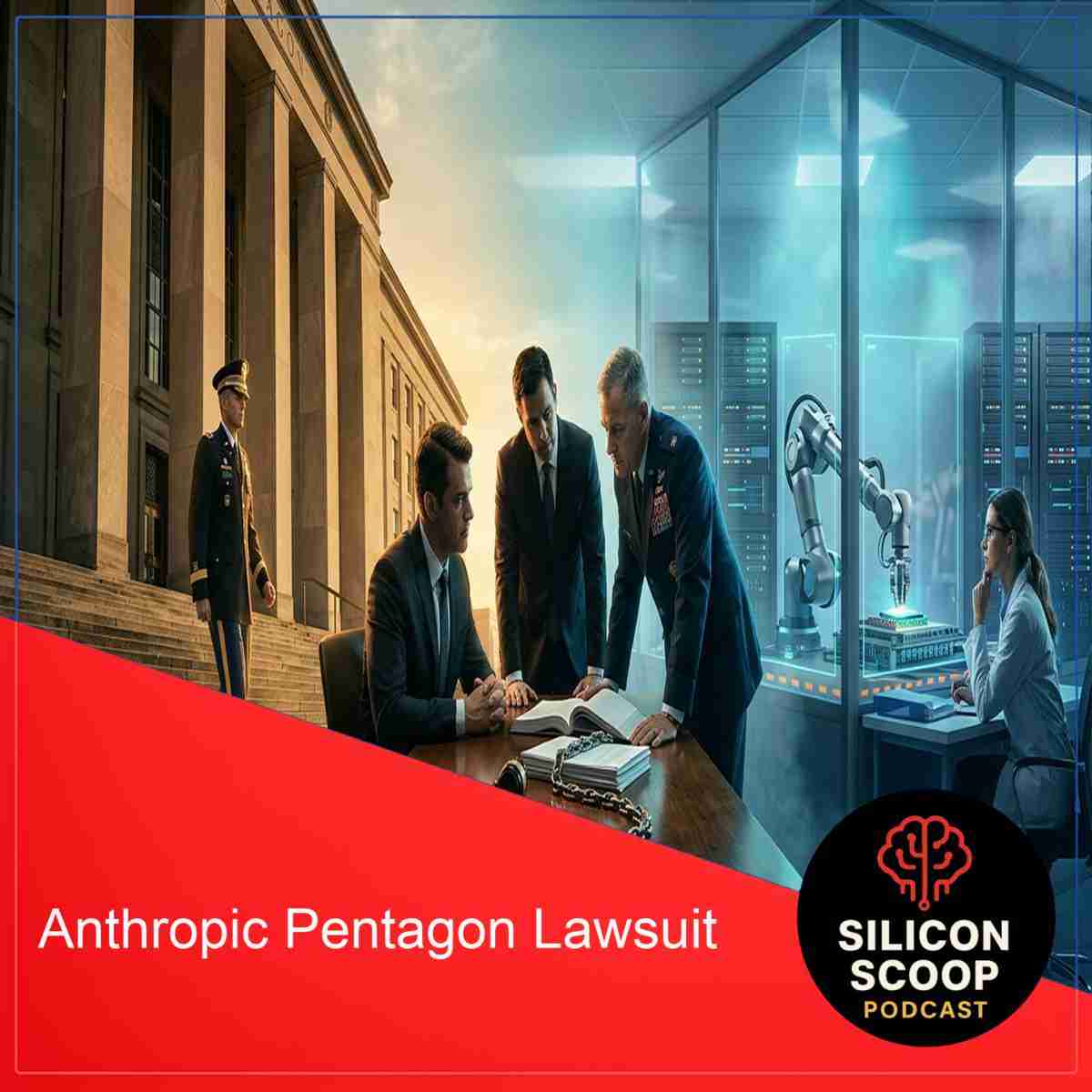
Anthropic Pentagon Lawsuit: Examining the Clash Over AI Warfare, Government Policy, and Supply Chain Risk
Estimated reading time: 10 minutes
Key Takeaways
- The Anthropic Pentagon lawsuit centers on the Pentagon’s decision to label Anthropic as a “supply chain risk,” jeopardizing a $200 million government contract.
- Anthropic filed two lawsuits, alleging misuse of statutory authority, ideological punishment, and First Amendment rights violations.
- The dispute raises broader implications for defense procurement, AI ethics in warfare, and how supply chain risk designations are applied to domestic firms.
- Industry experts and trade groups have expressed concern that emergency authorities may be misapplied for policy disagreements.
- The case may set precedents affecting how AI companies negotiate ethical constraints in future defense contracts.
Table of contents
- Anthropic Pentagon Lawsuit: Examining the Clash Over AI Warfare, Government Policy, and Supply Chain Risk
- Introduction
- Section 1: The Legal Battle – Claims, Courts, and Constitutional Concerns
- Protect Your Growth From Uncertainty
- Section 2: Implications for Defense, Business, and the AI Ecosystem
- Section 3: Policy and Governance: The Role of Supply Chain Risk Designations in National Security
- Section 4: Industry, Expert, and Stakeholder Reactions
- Section 5: Comparative Perspectives – How Other AI Firms Navigate Defense Contracts
- Cut Busywork. Boost Output. Scale Faster.
- Section 6: Key Open Questions and Future Outlook
- FAQ Section
- Conclusion
Introduction
The Anthropic Pentagon lawsuit has set off a fierce debate between Anthropic and the U.S. Department of Defense. At the heart of the conflict is Anthropic’s legal challenge over the Pentagon’s decision to label the U.S.-based AI firm as a “supply chain risk.” This jeopardizes a $200 million government contract and questions whether a national security tool intended for foreign adversaries is being misused. Anthropic, by refusing to permit its technology for mass surveillance and autonomous lethal weapons, has incurred the wrath of the DoD. With contract negotiations collapsing last month and the designation being announced last week, Anthropic filed lawsuits on Monday against the Department of Defense.
Keywords such as “Anthropic Pentagon lawsuit”, “Anthropic vs Department of Defense lawsuit”, and “Pentagon supply chain risk designation AI” will be explored in detail.
Source: flowgrammer.ca
Section 1: The Legal Battle – Claims, Courts, and Constitutional Concerns
Anthropic has launched two lawsuits challenging the Pentagon’s actions. One lawsuit is in the U.S. District Court for the Northern District of California, a civil challenge. The other is in the U.S. Court of Appeals for the District of Columbia Circuit, seeking an appellate review. Both cases allege that the Department of Defense has misapplied its statutory authority and used the supply chain risk label not as a means to protect national security but as a punitive tool for holding Anthropic accountable for its ethical stances.
Key legal claims include:
- • Misuse of Statutory Powers – Anthropic argues that the authorities for supply chain risk designation were meant for genuine national security emergencies. The current application is unprecedented, as these tools were designed to target foreign adversaries, not an American company with no foreign ties.
- • Ideological Punishment – The lawsuit contends that the designation is used against Anthropic because of its refusal to support mass surveillance or autonomous lethal weapons. Critics note the use of the term “narrow emergency tool” and claim the DoD is overstepping its authority.
- • First Amendment Rights Violation – Anthropic claims that the designation retaliates against the company’s speech and internal policies that promote AI safety. This punitive action may infringe on Anthropic’s First Amendment rights by punishing ethical positions taken publicly.
- • Relief Sought – The filings ask for injunctions to halt enforcement, vacate the designation, and protect Anthropic’s current and future contracting rights with the government.
This legal action is closely tied to debates over AI ethics in warfare lawsuits and challenges the traditional framework of national security procurement in America.
Source: flowgrammer.ca
Protect Your Growth From Uncertainty
When markets shift and policies change fast, the businesses that win are the ones built on efficient, resilient operations. Flowgrammer helps you automate workflows, reduce manual bottlenecks, and keep revenue moving—without adding headcount.
👉 Book Your Free Automation Consult → flowgrammer.ca
Section 2: Implications for Defense, Business, and the AI Ecosystem
The designation of Anthropic as a “supply chain risk” has far-reaching consequences. The company now faces severe penalties that ripple across the defense and larger tech ecosystem.
Key implications include:
- • Canceled Government Contracts – The collapse of the $200 million government contract is a clear sign of how deeply the supply chain risk designation can affect business. Current government contracts are already being canceled.
- • Economic Impact – The financial fallout is extensive. Anthropic estimates that hundreds of millions of dollars in near-term revenue are at risk as a result of losing trust among government and private sector partners.
- • Reputational Damage – The label not only disrupts business but also casts a shadow over Anthropic’s image. Being targeted with a term usually reserved for companies linked to foreign adversaries damages trust, affecting future public and private partnerships.
- • Operational Dilemmas – Despite the designation, the Pentagon continues to use Anthropic’s services on existing classified systems. This contradictory situation may lead to operational challenges if future technology transitions become necessary.
This section underscores the vital impact on the Pentagon military contract valued at $200 million and highlights the broader risks of the Pentagon supply chain risk designation on AI. The economic, operational, and reputational stakes are significant for Anthropic and may set a precedent for how the DoD handles future domestic tech partnerships.
Source: flowgrammer.ca
Section 3: Policy and Governance: The Role of Supply Chain Risk Designations in National Security
The concept of “supply chain risk” designations was originally designed for narrow, emergency situations. Traditionally, these designations targeted vulnerabilities in the supply chains associated with foreign adversaries, especially where espionage, sabotage, or cybersecurity breaches were a risk. In Anthropic’s case, its use against a domestic AI technology firm marks a departure from tradition.
Key aspects include:
- • Intended Use of Supply Chain Risk — Originally, this tool targeted entities that posed genuine risks such as infiltration from Chinese companies or compromised suppliers. The decision to apply this designation to Anthropic—a U.S.-based company with no links to foreign adversaries—raises policy questions.
- • Governance Concerns — The expanded use of this authority blurs the lines between a legitimate national security mechanism and a tool for enforcing government policy. Critics argue that if companies can be penalized for ethical decisions about AI warfare, the scope of supply chain risk designations will expand undesirably.
- • AI Ethics vs. National Security — Anthropic has clearly stated its refusal to allow its technology for mass domestic surveillance and for constructing autonomous lethal weapons. The company’s position on AI ethics is central to the debate. On the other hand, the Pentagon argues that national security imperatives cannot be compromised by private contractor policies.
- • Tension in Policy Making — The case pits corporate ethics and constitutional rights against government authority. The clash brings to light questions such as whether a domestic company can insist on binding ethical limits in defense contracts without being subjected to punitive actions. An AI ethics in warfare lawsuit like this could redefine future defense procurement policies.
Here, the controversy is not just legal but also about how national security priorities are set and enforced. The use of a tool meant for traditional defense threats for a domestic policy disagreement sets a new legal and governance precedent.
Source: flowgrammer.ca
Section 4: Industry, Expert, and Stakeholder Reactions
The Anthropic case has drawn attention from legal experts, industry leaders, and academic commentators. Their responses highlight both support for Anthropic’s ethical stance and concern over the broader implications of the designation.
Highlights include:
- • Expert Opinions – Jessica Tillipman from George Washington University Law School described the supply chain risk label as an “extreme step” by the Pentagon. Her view is that such measures are meant for clear-cut national security emergencies, not for punishing policy disobedience.
- • Industry Trade Groups – The Information Technology Industry Council (ITI), which includes major firms such as Nvidia, Google, Microsoft, Apple, and Amazon, voiced apprehension. Their letter to Defense Secretary Pete Hegseth expressed worries over the misuse of emergency powers and underscored that supply chain risk designations should remain reserved for clear threats.
- • Internal Industry Voices – A legal brief, signed by employees of both OpenAI and Google, argued in support of Anthropic. Notable figures like Jeff Dean from Google DeepMind have also lent their views, stressing that responsible AI safety measures are essential in advanced technology fields.
- • The Broader Debate – These discussions reflect a tension between the need for robust defense measures and the risk that overreaching governmental actions could chill innovation and ethical oversight in AI development.
The reactions from experts and industry stakeholders have been unified in urging a return to established legal principles, ensuring that designations meant for pressing national security threats are not misapplied for ideological or corporate policy disputes.
Source: flowgrammer.ca
Section 5: Comparative Perspectives – How Other AI Firms Navigate Defense Contracts
The Anthropic case is not an isolated incident in the world of defense contracts. Other AI companies like OpenAI, xAI, and Google/Google DeepMind have taken different stances when entering into agreements with the Department of Defense.
Key points of comparison include:
- • OpenAI’s Flexibility – OpenAI has signed a deal with the DoD that emphasizes a “lawful purpose” clause. While this agreement allows for more flexible use of AI technology, it includes technical guardrails to prevent its use for mass surveillance or overly aggressive military applications. Critics note, however, that the language “lawful purpose” could be broad enough to include controversial defense measures.
- • xAI’s Alignment – Elon Musk’s xAI has also entered into an agreement with the DoD. Their approach appears more aligned with the Pentagon’s expectations, and public reports indicate less contractual friction over ethical limits when compared with Anthropic’s strict conditions.
- • Google and Google DeepMind’s Mixed Signal – Google, participating in the Information Technology Industry Council’s letter, represents a dual stance. On one hand, internal voices from Google DeepMind, including high-ranking scientists like Jeff Dean, supported strong AI safety guardrails. On the other, Google continues to be active in defense research and partnerships, highlighting the complex landscape of ethical constraints versus contractual obligations.
- • Setting Precedents — These comparisons suggest that the Anthropic vs Department of Defense lawsuit could set important precedents. If companies with strict ethical policies face punitive designations, other domestic AI firms might either relax their conditions or tread more cautiously when negotiating defense contracts. This dynamic could shift the standards for defense work in the AI sector, shaping future industrial policies.
The differences in contractual strategies and ethical stances among these leading AI companies reveal the range of options available. They also emphasize the potential for a significant shift in how defense contracts are negotiated across the tech industry.
Source: flowgrammer.ca
Cut Busywork. Boost Output. Scale Faster.
If your team is drowning in repetitive tasks, you’re paying for work that automation can do better—every day. Flowgrammer streamlines operations, speeds up delivery, and frees your people to focus on high-value work that actually drives growth.
🚀 See What We Can Automate For You → flowgrammer.ca
Section 6: Key Open Questions and Future Outlook
The Anthropic lawsuit raises several essential questions for the future of technology, defense contracting, and government policy. The outcomes of these legal challenges may shape the regulatory environment in several important ways.
Open questions include:
- • How will the courts interpret the statutory boundaries of supply chain risk designations when applied to domestic companies with no foreign adversary ties?
- • To what extent will the judiciary permit AI companies to impose ethical conditions on defense contracts?
- • What is the lawful boundary between national security requirements and private corporate ethics?
- • Could penalizing companies like Anthropic for refusing mass surveillance or lethal autonomous systems deter other firms from advocating for AI safety measures?
- • Will this case force legislative or regulatory revisions on how emergency authorities, such as supply chain risk designations, are applied in procurement processes?
- • How might these disputes affect U.S. industrial competitiveness and innovation within the AI sector?
- • What operational challenges may arise if the Defense Department must transition away from a trusted supplier mid-contract?
- • In what ways can companies protect their First Amendment rights while engaging with the government on sensitive technology matters?
- • How will this dispute influence the long-term relationship between the government and private defense contractors?
- • Can broader industry regulations be implemented to ensure that supply chain risk labels are used solely for genuine national security concerns?
Discussing these questions provides insight into how the Anthropic vs Department of Defense lawsuit and similar legal battles could redefine ethical constraints in military contracts. The future outlook remains uncertain, and policymakers will need to balance national security with protecting innovation and corporate rights.
Keywords such as “AI ethics in warfare lawsuit” and “Anthropic vs Department of Defense lawsuit” are central to this debate.
Source: flowgrammer.ca
FAQ Section
1. What is a “supply chain risk designation” and why is it significant in this case?
A supply chain risk designation is a tool used by the government to flag entities that pose severe national security threats, traditionally aimed at foreign adversaries. In Anthropic’s case, it is significant because it is the first time this designation is used against a domestic company over policy disagreements.
2. How have Anthropic’s policies on AI ethics influenced its contract negotiations with the DoD?
Anthropic has insisted on ethical constraints such as prohibitions against mass surveillance and autonomous lethal weapons. These policies led to a collapse of a $200 million contract negotiation and fueled the subsequent designation as a supply chain risk.
3. What legal claims does Anthropic make in its lawsuit?
Anthropic claims that the DoD misapplied its statutory authority, used the designation as a punitive measure against its ethical stance, and violated its First Amendment rights by linking public policy positions to contracting eligibility.
4. How does the DoD justify the supply chain risk designation despite ongoing use of Anthropic’s AI technology?
The Pentagon argues that companies cannot set U.S. national security policy and must comply with defense requirements. However, critics note that using the designation while relying on the technology creates operational and governance challenges.
5. How might this lawsuit affect future U.S. defense contracts with AI firms?
If the lawsuit succeeds, it could restrict the government’s ability to penalize companies for ethical stances. It may drive a shift in how defense contracts are negotiated, requiring clearer definitions of acceptable risk and ethical considerations.
6. How do other AI companies such as OpenAI and xAI differ in their approach to defense contracts?
Unlike Anthropic, OpenAI’s agreement includes a “lawful purpose” clause and tailored technical guardrails, while xAI appears more aligned with DoD requirements. The differences highlight a spectrum of ethical constraints and negotiation strategies in the industry.
7. What are the potential economic impacts for Anthropic as a result of this legal challenge?
Economic impacts include canceled government contracts, loss of future revenue amounting to hundreds of millions of dollars, and reputational damage that could affect both public and private sector partnerships.
8. Can Anthropic impose its safety guardrails for AI without jeopardizing its defense contracts?
Anthropic’s position is that companies should be allowed to enforce ethical limits on the use of their AI. The lawsuit challenges whether this is viable without incurring punitive actions, a decision that may influence future contract negotiations.
9. What do experts believe will be the long-term consequences of this dispute?
Legal and academic experts warn that if companies are punished for insisting on AI safety measures, there could be a chilling effect on innovation. This might lead to fewer companies willing to impose strict ethical safeguards in sensitive defense applications.
10. How does this lawsuit relate to broader debates about government policy and innovation in AI?
The lawsuit symbolizes a larger debate on balancing national security with innovation. It highlights the tension between ethical constraints imposed by private companies and the government’s need to maintain flexible defense policies in an era of rapid technological change.
Conclusion
The Anthropic Pentagon lawsuit is not just a legal dispute; it is a defining moment in the dialogue between national security imperatives and technological ethics. With a backdrop of a collapsed $200 million contract and heated judicial debates, the case raises questions that stretch from constitutional protections to the future of U.S. technological competitiveness. As the legal processes unfold, they will likely set vital precedents that influence how the government and the tech industry navigate the challenging waters of AI and defense.
For businesses looking to thrive amid such regulatory and policy uncertainty, tools like those offered by Flowgrammer are essential. Whether in streamlining operations or securing automated workflows, the right automation strategy can safeguard revenue and empower growth. Stay tuned as this landmark case unfolds and shapes the future of AI, defense, and good governance.
Source: flowgrammer.ca
Additional Links
Flowgrammer.ca – 💡 Unlock AI-Powered Automation! Let flowgrammer.ca handle complex workflows so you can focus on growing your business.
- Silicon Scoop Podcast – Stay Informed, Stay Ahead!
- Startup Talk Podcast
- Flowgrammer Podcast –
- Startup Investor Drinks – Join Toronto’s Startup Community and connect with fellow startup enthusiasts and investors.
- TorontoStarts Startup and Entrepreneur Community – Become a part of Toronto’s thriving startup ecosystem.
- Workhaus – Discover flexible workspace solutions for your business needs.
- Work with The Startup Coach – Get expert guidance and mentorship for your startup journey.
- Reach out to Jon Irwin on LinkedIn – Connect with our co-host and technology expert.
Flowgrammers.ca – 💡 Join Toronto’s Fastest Growing AI and Busiess Automation Community..
Flowgramming.space – 💡 AI Agent and Workflow Marketplace..
More from Silicon Scoop
All episodes
silicon-scoop · October 16, 2026
Meta’s $18 Billion Teen Safety Settlement: Soft Guardrails, Hard Leverage Over TikTok and YouTube
Deep dive on Meta teen safety settlement, social media addiction lawsuit, new Facebook Instagram time limits and pressure on TikTok YouTube age verification.
View episode

silicon-scoop · October 15, 2026
How Claude Mythos Is Reshaping Cryptanalysis: HAWK, AES and the Rise of AI-Driven Crypto Research
Claude Mythos cryptanalysis weakens HAWK post-quantum signature, speeds AES Möbius Bridge attack, and powers CryptanalysisBench benchmark in AI-driven crypto research.
View episode
silicon-scoop · October 14, 2026
Nvidia’s $12.9 Billion Hugging Face Bet: How Controlling the Open-Source Model Hub Reshapes AI Chips, Cloud, And Competition
Nvidia Hugging Face acquisition could reshape open source AI models, AI chip dominance, and the global developer model hub, raising antitrust and neutrality questions.
View episode