
Dark Matter Breakthrough? Inside LUX‑ZEPLIN’s Mysterious 248 keV Event and What Comes Next
LUX-ZEPLIN dark matter experiment reports a 248 keV nuclear recoil, a potential WIMP detection in a South Dakota xenon detector. Explore models and market impact.
With Craig Major and Jon Irwin
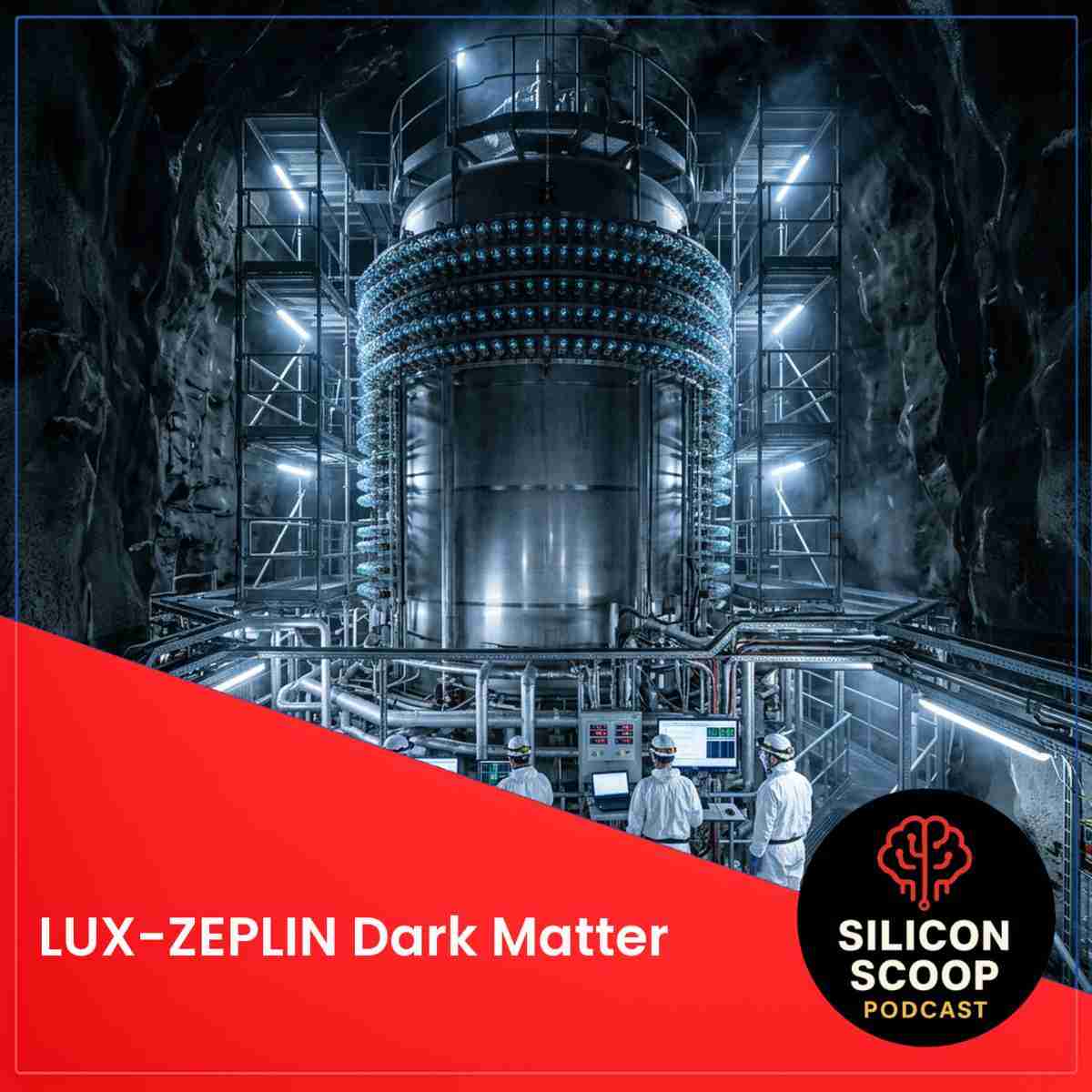
LUX-ZEPLIN Dark Matter Experiment Caught Something Strange
Estimated reading time: 12 minutes
Key Takeaways
- On June 16, 2023, LZ recorded a single unexplained nuclear recoil event at 248 keV.
- The event has a global significance of 2.6σ, corresponding to roughly a 0.5% probability of being background.
- The signal sits in a higher-energy range than most WIMP searches, opening new theoretical territory.
- Theorists rapidly proposed models including inelastic dark matter, fermionic absorption, and xenon excitation.
- More LZ data and corroboration from XENONnT and PandaX-4T will be critical next steps.
Table of contents
- LUX-ZEPLIN Dark Matter Experiment Caught Something Strange
- What Is the LUX-ZEPLIN Experiment and Why Does It Matter for WIMP Detection
- The 248 keV Nuclear Recoil Event Explained
- What the Dark Matter Models Say About a 1,000 GeV Particle
- What Scientists Actually Know About Dark Matter
- What Comes Next for the South Dakota Xenon Detector
- Why One Event Changed the Conversation in Particle Physics
- Frequently Asked Questions
Deep below the Black Hills of South Dakota, something unusual happened on June 16, 2023.
Inside a detector filled with 10 tons of ultra-pure liquid xenon, a single xenon atom received a sharp knock. Its nucleus jolted forward. The flash of light that followed was recorded, analyzed, and quietly set aside — until researchers realized it didn't fit neatly into anything they already knew.
Three years later, on September 1, 2026, the LUX-ZEPLIN dark matter collaboration stood before a packed physics conference in Tendo, Japan, and told the world what they had found.
It isn't a confirmed discovery. The scientists are the first to say so. But for a field that has spent decades searching for a particle it cannot see, a single unexplained event at 248 keV — with only a 0.5% chance of being ordinary background noise — is the most interesting thing to happen in dark matter research in years.
This post breaks down exactly what happened, what it means, and why physicists around the world are paying close attention.
What Is the LUX-ZEPLIN Experiment and Why Does It Matter for WIMP Detection
To understand the result, you first need to understand the machine.
The LUX-ZEPLIN experiment — commonly called LZ — sits roughly one mile underground at the Sanford Underground Research Facility in Lead, South Dakota. The depth is intentional. Rock acts as a natural shield, blocking the constant shower of cosmic rays that would otherwise flood the detector with false signals. Down there, the background is quiet enough to hear a whisper.
At the heart of LZ is a cylindrical tank holding approximately 10 tonnes of liquid xenon, kept at cryogenic temperatures. Surrounding the xenon are rings of photomultiplier tubes — highly sensitive light detectors that can register the faintest flicker.
Here is how the detector works:
- A dark matter particle traveling through the xenon bumps into a xenon nucleus
- That nucleus recoils — like a billiard ball that's been struck
- The recoil produces tiny flashes of light and a small electrical signal
- The photomultiplier tubes record both signals
- Scientists measure the energy of the recoil and reconstruct what hit the atom
This is called a nuclear recoil. The experiment is specifically designed to catch this kind of event.
LZ is optimized to search for WIMPs — Weakly Interacting Massive Particles. WIMPs are one of the leading candidates for dark matter. They are hypothetical particles thought to have been produced in the early universe and still drifting through space today, passing through ordinary matter almost without a trace.
The experiment is funded under the U.S. Department of Energy's Office of Science and sits within its broader High Energy Physics and Cosmic Frontier program. It represents years of engineering work, international collaboration, and hundreds of millions of dollars in investment.
The goal is simple to state, even if it is extraordinarily hard to execute: find the particle that makes up 85% of all matter in the universe.
LZ sees surprising result in search for dark matter
The 248 keV Nuclear Recoil Event Explained
Now for the event itself.
The LZ team analyzed 220 days of data collected between March 2023 and April 2024. The total exposure used for this particular analysis was 2.84 tonne-years — a measure that combines how much xenon was used and for how long.
For this search, the team extended their analysis window beyond the typical WIMP search range. Most WIMP searches focus on nuclear recoil energies below about 50 keV. The LZ team pushed the window much higher, all the way up to roughly 270 keV, looking for signs of heavier or more exotic dark matter particles that would produce more energetic collisions.
What they found:
- One single candidate event with a reconstructed nuclear recoil energy of 248 ± 23 (stat) ± 23 (sys) keV
- In the entire extended high-energy search window, the expected number of background events was only 0.0106 ± 0.0008 counts
- That is essentially saying: given everything we know about ordinary particles and detector noise, we expected to see virtually nothing here
- Instead, they saw one event
The statistical significance of this observation is:
- Local significance: up to 3.4σ (across tested theoretical models)
- Global significance: 2.6σ after accounting for what scientists call the "look-elsewhere effect" — a correction that accounts for the fact that you're searching across many possible signal models, not just one
A 2.6σ result corresponds to roughly a 0.5% probability that the event was caused by a known background fluctuation.
In particle physics, a confirmed discovery requires 5σ — a standard so strict that it leaves almost no room for a false alarm. LZ's result is nowhere near that threshold. The researchers are explicit about this.
Lead author and particle physicist Samuel Eriksen of the University of Bristol said it plainly: "We're not claiming this is dark matter at all."
But here is what makes this event stand out. It is not just the low probability of it being background noise. It is also the energy. At 248 keV, this recoil sits in territory that most previous WIMP searches never even looked at carefully. The event behaved exactly the way a WIMP interaction would be expected to behave. It just happened in an energy range that opens up entirely new theoretical territory.
LZ_Preprint_260901_Dark_Matter_EFT_Nuclear_Recoil_Search_at_Higher_Energies.pdf
LZ_Slides_260901_TeVPA_Dark_Matter_HENR_EFT_Sam_Eriksen_compressed-medium.pdf
🔬 Stop. Zoom Out for a Second.
The LZ team just demonstrated that extraordinary results can come from carefully designed systems running quietly in the background — catching rare, high-value signals that a less precise operation would completely miss.
That same principle applies directly to your business.
---
Stop Losing Hours to Work That Runs Itself
Most businesses are still doing manually what smart systems should be handling automatically. Every hour your team spends on repetitive tasks is an hour not spent on decisions, growth, and the work that actually matters.
Flowgrammer builds custom automation systems that remove manual bottlenecks, scale your operations without scaling your headcount, and free your team to focus on high-impact work.
👉 See What Automation Can Do for Your Business (Flowgrammer)
What the Dark Matter Models Say About a 1,000 GeV Particle
Here is where things get genuinely exciting for theoretical physicists — and complicated for everyone else.
If you take the 248 keV event at face value and assume it was caused by a WIMP scattering elastically off a xenon nucleus, the math points to a very heavy particle.
According to coverage in Nature and Science News, an elastic WIMP interpretation would suggest the dark matter particle has a mass greater than approximately 200 GeV — and possibly in the range of 1,000 GeV (one teraelectronvolt, or 1 TeV).
For comparison, a proton has a mass of about 0.938 GeV. A 1,000 GeV dark matter particle would be roughly 1,000 times heavier than a proton.
This is well above the "classic" WIMP mass range that most experiments have focused on. It implies that if this is dark matter, it is not the simple, textbook WIMP that theorists originally proposed decades ago. It would require non-minimal interactions — more complex models of how dark matter couples to ordinary matter.
Three main theoretical models emerged rapidly after the announcement:
- Inelastic dark matter — A scenario where the dark matter particle scatters by transitioning to a slightly heavier excited state, with the mass splitting tuned to match velocities near the galactic escape speed. This naturally produces higher-energy recoils.
- Fermionic dark matter absorption — A model where a dark matter particle is absorbed by the xenon nucleus rather than bouncing off it, producing a mono-energetic nuclear recoil signal at a fixed energy. This could neatly explain why the event appeared at such a specific energy value.
- Xenon excitation signals — An alternative reading where the xenon atom itself is left in an excited state after the interaction, modifying the expected signal pattern in a testable way.
Within days of the September 1 announcement, multiple independent preprints appeared on arXiv exploring each of these scenarios in detail. The particle theory community moved fast.
This rapid mobilization matters. It shows the event is not just a curiosity — it is specific enough, and anomalous enough, that theorists are treating it as a genuine benchmark for building and testing new dark matter models.
None of these papers claim the event is confirmed dark matter. All of them treat it as a valuable signal to model against. The scientific process is working exactly as it should.
What Scientists Actually Know About Dark Matter
It is worth stepping back to frame why this search matters so much.
Dark matter does not emit light. It does not reflect light. No telescope on Earth or in orbit can see it directly. We know it exists almost entirely because of what it does to the things we can see.
The evidence for dark matter's existence includes:
- Galaxies rotating at speeds that cannot be explained by the visible matter they contain — the outer edges spin as fast as the inner regions, which only makes sense if there is a large, invisible mass holding everything together
- Galaxy clusters bending light from distant objects more strongly than their visible mass would allow — a phenomenon called gravitational lensing
- The large-scale structure of the universe, including the way galaxies cluster into filaments and voids, which matches computer simulations only when dark matter is included
The current scientific consensus is that dark matter makes up roughly 85% of all matter in the universe. Ordinary matter — everything made of protons, neutrons, and electrons, including stars, planets, and people — accounts for only about 15%.
Yet despite decades of searching, no one has ever directly detected a dark matter particle in a laboratory setting. The LHC at CERN has not produced one. Dozens of direct detection experiments have come up empty. Indirect searches for dark matter annihilation products in space have returned inconclusive results.
Dark matter is the dominant form of matter in the universe, and we have never once seen it interact with anything in a controlled experiment.
That is the context for what LZ may have seen. A single event. At an unusual energy. That does not match the known background. That the lead scientist called "the first hint of a dark matter observation."
Dark matter is also described as the cosmic glue that enabled galaxies like the Milky Way to form. Without its gravitational pull in the early universe, ordinary matter would never have clumped together densely enough to create stars and galaxies. Our existence depends on a particle we cannot see and have never directly measured.
What Comes Next for the South Dakota Xenon Detector
A single event at 2.6σ is not a discovery. Everyone agrees on that. So what happens now?
The path forward for LZ and the broader dark matter search involves several parallel tracks.
More data from LZ itself:
The experiment continues to run. More exposure time means more data. If the 248 keV event was a genuine dark matter signal, statistically similar events should appear again as the dataset grows. If nothing appears, the single event becomes less convincing.
The LZ collaboration is preparing a full write-up for submission to Physical Review Letters, the leading journal for high-energy physics results. The technical analysis and supporting slides have already been made public through the Lawrence Berkeley National Laboratory.
Complementary experiments:
LZ is not the only xenon-based dark matter detector operating right now. The XENONnT experiment in Italy and the PandaX-4T experiment in China both use liquid xenon detectors with similar capabilities. If LZ's hint is real, these experiments should be able to confirm or rule it out with their own datasets.
Cross-experiment corroboration is the gold standard. A signal seen in one detector, confirmed in two others built on different continents with different systematic uncertainties, would be extremely hard to dismiss.
Theoretical model testing:
Each of the proposed models — inelastic dark matter, fermionic absorption, xenon excitation — makes specific, testable predictions. Future data from LZ and complementary experiments will be able to distinguish between these models or rule all of them out.
Funding and strategic implications:
Analysts note that while funding agencies and commercial technology partners will wait for corroborating data before making major programmatic shifts, a result like this tends to strengthen the case for continued investment in multi-ton liquid xenon detectors, cryogenics technology, and ultra-sensitive photodetectors.
The DOE's Cosmic Frontier program already supports this research. An intriguing result that makes international headlines is not a bad thing when budget reviews come around.
LZ sees surprising result in search for dark matter
Why One Event Changed the Conversation in Particle Physics
It might seem strange that a single data point — one xenon atom receiving one knock — could shift the direction of a global research field.
But that is how frontier science works. In a domain where the expected background rate is 0.0106 events, finding one event is not nothing. It is the difference between seeing something and seeing nothing. And seeing something unexpected is always worth investigating.
The LZ team has been careful, measured, and entirely transparent about the limits of their observation. They extended their search window beyond convention. They calculated the background meticulously. They applied the look-elsewhere correction. They presented results at a peer-reviewed conference with full technical documentation.
And then they said, clearly: this might be a background fluctuation. It probably is. But it could also be the first direct signal of a particle that makes up 85% of all matter in the universe.
The particle physics community has responded not with hype but with work. Theorists are producing models. Competing experiments are reviewing their own datasets. The LZ team is analyzing more data.
That is what science looks like when it is functioning well. One unusual event, rigorously documented, treated neither as proof nor as noise, but as a question worth answering.
The 248 keV nuclear recoil event will either fade into the background of unexplained fluctuations, or it will grow into something much larger as more data accumulates. Either outcome moves the field forward.
For now, a xenon detector one mile underground in South Dakota is still running. And physicists around the world are watching its next flash of light very carefully.
Frequently Asked Questions
1. What is the LUX-ZEPLIN dark matter experiment?
LUX-ZEPLIN, or LZ, is a direct dark matter detection experiment located about one mile underground at the Sanford Underground Research Facility in Lead, South Dakota. It uses approximately 10 tonnes of ultra-pure liquid xenon as its detection medium. When a dark matter particle passes through the xenon and collides with a xenon nucleus, it produces measurable flashes of light and small electrical signals. The experiment is designed specifically to search for WIMPs — Weakly Interacting Massive Particles — which are among the leading theoretical candidates for dark matter. LZ is funded by the U.S. Department of Energy's Office of Science.
2. What did LZ actually detect on June 16, 2023?
LZ recorded a single nuclear recoil event with a reconstructed energy of 248 ± 23 (stat) ± 23 (sys) keV. A nuclear recoil occurs when a xenon nucleus is struck by an incoming particle and jolts forward, producing light and an electrical signal in the detector. The event occurred in an energy range where the expected number of background events was only about 0.0106 counts — meaning the team expected to see essentially nothing in that region. The event was analyzed over years and publicly announced on September 1, 2026, at the TeV Particle Astrophysics conference in Tendo, Japan.
3. Does this mean dark matter has been discovered?
No. The LZ collaboration and lead author Samuel Eriksen have been unambiguous about this. The observation carries a global statistical significance of 2.6σ after correcting for the look-elsewhere effect, corresponding to roughly a 0.5% chance that the event resulted from known background processes. Particle physics requires a 5σ threshold — less than a 0.00003% chance of a false positive — before a discovery can be claimed. The LZ result, while intriguing, is well short of that standard. It is described by the researchers themselves as a "hint," not evidence of detection.
4. What is a WIMP and why is it a dark matter candidate?
A WIMP, or Weakly Interacting Massive Particle, is a hypothetical particle that interacts with ordinary matter only through gravity and the weak nuclear force — two of the four fundamental forces of nature. Because WIMPs do not interact via electromagnetism, they cannot emit or absorb light, making them invisible. Theoretical models of the early universe suggest that WIMPs could have been produced in large quantities during the Big Bang and would still be present throughout the cosmos today. Their gravitational effects on galaxies match what astronomers observe, making them one of the most studied dark matter candidates despite never having been directly detected.
5. Why was the search window extended to 248 keV when most WIMP searches look below 50 keV?
Traditional WIMP searches focus on lower nuclear recoil energies because the most commonly theorized WIMPs — with masses in the range of tens to hundreds of GeV — tend to produce recoils in the sub-50 keV range when scattering off xenon. However, heavier dark matter particles, or particles interacting through non-standard mechanisms like inelastic scattering or fermionic absorption, would produce higher-energy recoils. By extending the search window up to approximately 270 keV, the LZ team opened the analysis to a broader range of theoretical dark matter models, which is what led to the identification of the 248 keV candidate event.
6. What does 3.4σ local significance versus 2.6σ global significance mean?
Statistical significance in particle physics is measured in units called sigma (σ). The local significance of 3.4σ reflects how unlikely the observed event is given the expected background, calculated at the specific point in parameter space that best fits the observation. The global significance of 2.6σ is a corrected version that accounts for the "look-elsewhere effect" — the fact that when you search across many possible signal models and energy ranges, you are more likely to stumble on a statistical fluctuation that looks significant by chance. The global figure is the more conservative and scientifically honest number to use when assessing the strength of the result.
7. What are the leading theoretical explanations for the 248 keV event?
Three main models emerged from the theory community within days of the announcement. First, inelastic dark matter — where the dark matter particle transitions to a slightly heavier excited state during the collision, producing higher-energy recoils tuned to galactic escape speeds. Second, fermionic dark matter absorption — where a dark matter particle is absorbed by the xenon nucleus rather than bouncing off it, naturally producing a fixed, mono-energetic recoil signal. Third, xenon nuclear excitation — where the interaction leaves the xenon nucleus in an excited state, modifying the expected output signal. Multiple independent preprints on arXiv explored these models within days of the public announcement.
8. How heavy would the dark matter particle be if this event is real?
If the 248 keV event is interpreted as an elastic WIMP scattering off a xenon nucleus, the dark matter particle would likely have a mass greater than approximately 200 GeV and possibly around 1,000 GeV — roughly 1,000 times heavier than a proton. This sits well above the "classic" WIMP mass window that most previous experiments have focused on. Such a heavy particle would require non-minimal interactions with ordinary matter, pointing toward more complex theoretical models than the standard WIMP picture.
9. What other experiments could confirm or rule out LZ's observation?
Two major liquid xenon experiments are running concurrently and have the capability to either confirm or independently rule out the LZ result. XENONnT, located at the Gran Sasso National Laboratory in Italy, and PandaX-4T, located in China's Jinping Underground Laboratory, both use similar detection technology with comparable sensitivity. If LZ's observation is a genuine dark matter signal, statistically consistent events should appear in the datasets of these experiments. A signal seen across multiple independent detectors on different continents would be far more compelling than a single observation from one experiment.
10. What is dark matter, and why does it matter to everyday life?
Dark matter is a form of matter that does not emit, absorb, or reflect light. It interacts with ordinary matter only through gravity. Scientists infer its existence from the way galaxies rotate faster at their edges than visible matter alone can explain, from the way galaxy clusters bend light, and from the way the large-scale structure of the universe is arranged. Current estimates suggest dark matter makes up about 85% of all matter in the universe, while everything we can see — stars, planets, gas, you — makes up only about 15%. Without dark matter's gravitational pull in the early universe, ordinary matter would never have clumped together densely enough to form galaxies, stars, and ultimately the conditions needed for life. Understanding what dark matter actually is would fundamentally change our picture of how the universe works.
Additional Links
Flowgrammer.ca – 💡 Unlock AI-Powered Automation! Let flowgrammer.ca handle complex workflows so you can focus on growing your business.
Flowgrammers.ca – 💡 Join Toronto's Fastest Growing AI and Business Automation Community.
- SRED Funding Solutions – Maximize your R&D tax credits and secure funding for your innovation.
- Silicon Scoop Podcast – Stay Informed, Stay Ahead!
- Startup Talk Podcast
- Flowgrammer Youtube
- Startup Investor Drinks – Join Toronto’s Startup Community and connect with fellow startup enthusiasts and investors.
- TorontoStarts Startup and Entrepreneur Community – Become a part of Toronto’s thriving startup ecosystem.
- Workhaus – Discover flexible workspace solutions for your business needs.
- Work with The Startup Coach – Get expert guidance and mentorship for your startup journey.
- Reach out to Jon Irwin on LinkedIn – Connect with our co-host and technology expert.
Episode transcript
Read the full transcript
Craig: nearly a mile underground, a detector recorded one atomic collision that conventional backgrounds have not convincingly explained. it could be a particle from the invisible matter holding galaxies together or dark matter or simply an exceptionally persuasive false alarm. the luxe zeppelin or lz is a massive liquid xenon detector buried beneath south dakota to shield it from cosmic noise. researchers reanalyzed two hundred and twenty live days of data using a wider energy range and found one event consistent with a 248 kilo electron volt nuclear recoil. it is unusual enough to deserve serious attention, but the result is only 2.6 sigma globally, and nobody knows whether it was dark matter, an unidentified background, or a rare detector effect. what do you think about this, john?
Jon: yeah. like, i... i'm hoping it's dark matter, but, again, this is one of those experiments that kind of... when you dive into the details, it little, gets a little, scientific, a little complex. i don't know if you dove into it. but... so, obviously, we know that dark matter probably exists because galaxies and galaxy clusters behave as though they contain far more mass than we can see. right? and so ordinary atoms, they make up about 15% of matter. and so roughly 85% of that is inferred to be dark matter, which is crazy. we can't detect 85% of matter... of of atoms. like, that's crazy. yet despite decades of searching, nobody has been able to conclusively detect an individual dark matter particle. and so the lux zeppelin or lz experiment in south dakota, what it is, it's it's essentially the super, super sensitive underground particle trap. so it contains about 10 tons of ultra pure liquid xenon... xenon. sorry. and it sits nearly a mile underground to shield it from cosmic rays. so this is specifically what they built this to detect, essentially. and so they are hoping that, occasionally, a dark matter particle flying through earth will strike the nucleus of a xenon atom. and so such a collision would make the xenon nucleus recoil, which would produce a tiny flash of uv light and freed electrons that the detector can measure. now this article covers this event, strange event, called l z two three zero six one six because it happened on 06/16/2023. and it appears to have been a nuclear recoil of approximately 248 kilon... kilo electron volts, which is considerably more energetic than the region used for many conventional searches. now the detector's known background processes have difficulty explaining it. and so if the event really came from dark matter, the researchers say the particle would probably be at about 200 times the mass of a proton, and its interaction with matter would likely differ from the simplest model scientists have traditionally researched for. so the thing to think about with this is they've detected an unexplained event, not necessarily detected dark matter. it's too early right now because they're gonna have to go through all these different equations and, and, verifications and things like that. but what do you think? you're on mute.
Craig: i think this is really cool. you know, that this event resembles the kind of nuclear recoil we were looking for. you know, it sounds like, hey. we just detected this thing, but this region is normally so quiet, part of the detector's data that this is really an anomaly. i'm excited, but, you know, i guess i'm gonna say cautiously optimistic. i'm just going through my notes here, for this because this is really exciting. the results come from one event. we talked about that. a collision in liquid xenon produces prompt scintillating light and freeze electrons that create a second signal drifting upward. their size, timing, and ratio help researchers reconstruct a location in distinguishing a nuclear recoil from much more common electron recoils produced by an or... ordinary radioactivity. just going through some of the other stuff you might not have mentioned here. i think we got it. so, yeah, i......
Jon: talk about why... do you know why we would put this this sensor a one mile underground?
Craig: well, that's a very good question. i would assume it's just to shield it from cosmic radiation that can, yeah. be filtered out from... by the earth.
Jon: yeah. because those cosmic rays produce secondary particles that could mimic rare earth matter or rare dark matter interactions. and so by putting it this far down, you've got rock, you've got water shield, you've got outer particle veto, and then you've got the xenon detector. so, there's a bunch of things. so if you observe something unusual, you're gonna ask, could it be a cosmic ray? could it be radioactivity? could it be a neutron? could it be a neutrino? like, there's a whole bunch. so they have to go through all of these questions. could it be two unrelated signals accidentally overlap? could it be, could it have originated near the detector wall? they have to go through all of this first before asking, could it be dark matter? but being so far down under, it's more... there's a better chance it could be dark matter than not if it was just on the surface or closer than surface.
Craig: yeah. think of this like listen... like, think of this like installing thousands of microphones in a nearly soundproof room and then hearing one clean footstep and then finding no person inside. you know, it just... it's... we... we've discovered this thing, so the detector is not completely quiet. researchers infer an event type statistics from multiple observable rather than hearing an unmistakable sound. dark matter models also predict distributions, not merely identical repeated footsteps. so it's looking like dark matter, but i think people are just very cautious about saying, exactly what it is until we know more. and i don't know if we're gonna have to discover another event to know more. like, what is it that proves to us that this was a dark matter event?
Jon: exactly. yeah. who knows? this... and that's why i'm saying, like, this is very complex even though it's... it... like, when you do a deep dive into it, it's, like, there's so many different factors that can be deployed determining whether or not it's dark matter because we've never we've never been able to detect dark matter. so this is a new ground.
Craig: yeah. just to understand that 85% of the universe is unobservable to us, and we can't kind of get our hands on it or see it or touch it. who knows what happens when we can and what that means? yes. you know, lots of speculation, but the real impact is not that dark matter has been discovered. it's that the lz found a credible event where a discovery might eventually begin. one, unexplained knock is a mystery. repeated knocks become evidence. what result would move you from interesting to i believe it? we'd love to hear your thoughts in the chat below.
More from Silicon Scoop
All episodes
silicon-scoop · October 23, 2026
Graphene Oxide Inhalation Trial Signals Safe-by-Design Future for Nanomaterials
Graphene oxide inhalation study in Nature Nanotechnology shows acute nanomaterial safety, shaping nanomedicine, industrial use and future graphene regulation.
View episode

silicon-scoop · October 22, 2026
Nanodiamond Smart Cooling Textiles: From Lab Breakthrough to Next-Gen Climate-Adaptive Apparel
How nanodiamond cooling textiles and smart cooling fabrics using nanodiamond-coated cotton are reshaping thermal conductive textiles and energy-efficient apparel.
View episode

silicon-scoop · October 21, 2026
China’s Brain-Mapping Chip Redefines Real-Time Cortical Reconstruction
China’s brain mapping chip uses phase-change memristors and in-memory computing for real-time cortical reconstruction, boosting diagnosis and surgery.
View episode