
Quantum Encryption Breakthrough: Unconditional Unclonable Encryption Explained
Unclonable encryption advances quantum cryptography with the no-cloning theorem and information-theoretic security in a one-time scheme.
With Craig Major and Jon Irwin
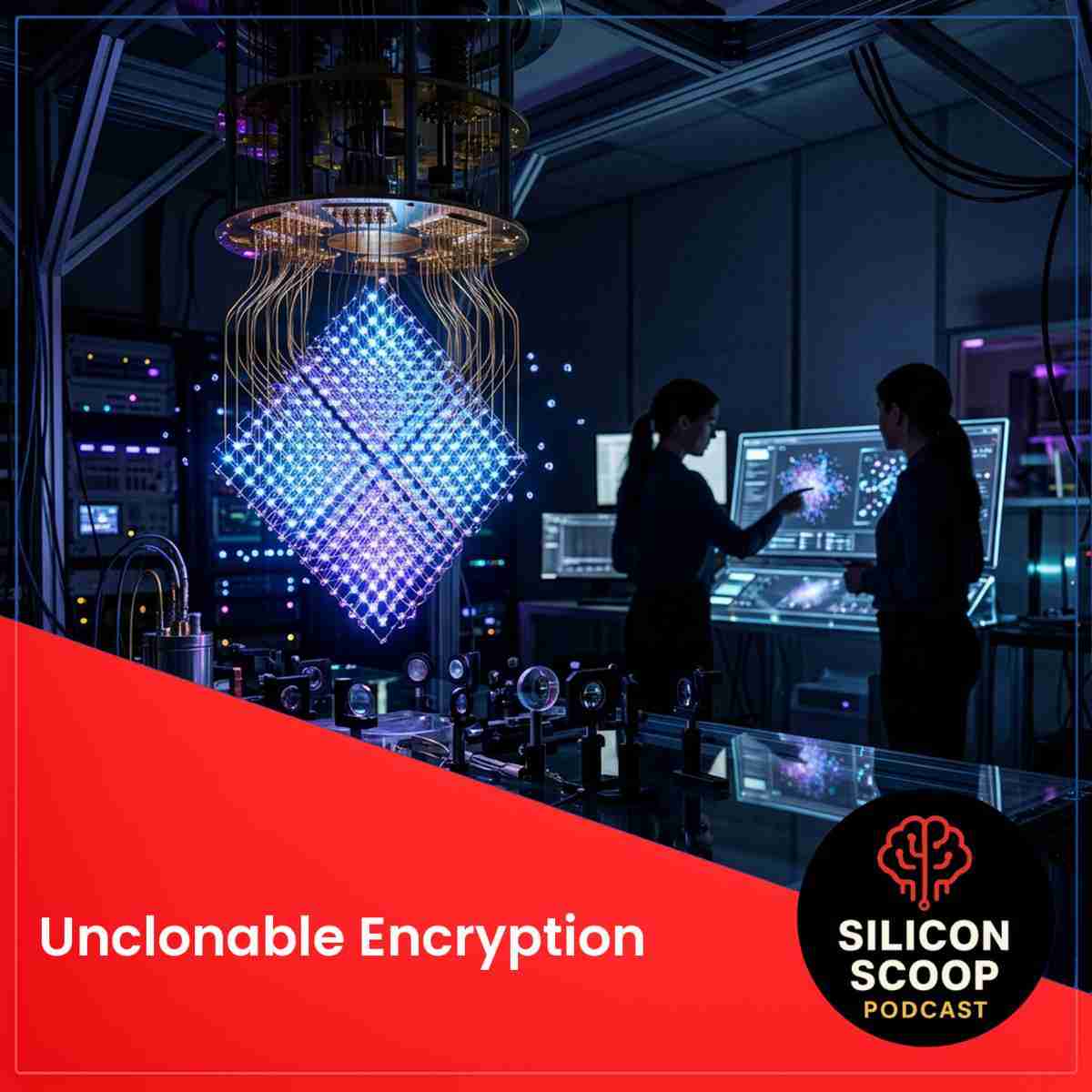
Unclonable Encryption Just Made Copied Ciphertexts Useless
Estimated reading time: 10 minutes
Key Takeaways
- Quantum cryptography has been chasing a specific goal for years: creating encrypted messages that simply cannot be copied into two working versions.
- In August 2026, researchers from the University of California, Santa Barbara (UCSB) and UCLA posted a paper on arXiv that gets closer to that goal than anyone has before.
- Their proposed unclonable encryption scheme uses classical keys, works efficiently, and delivers what cryptographers call information-theoretic security — meaning it does not rely on assuming attackers have limited computing power.
- This post breaks down what the research says, why it matters, what it does not yet do, and where this fits in the bigger story of quantum cryptography.
Table of contents
- Unclonable Encryption Just Made Copied Ciphertexts Useless
- What Is Unclonable Encryption and Why Does It Matter?
- How the New Scheme Actually Works
- The Security Proof: How They Proved It Works
- Why This Is a Big Deal in Quantum Cryptography
- What This Research Does Not Yet Do
- The Bigger Picture: What Unclonable Encryption Enables
- 10 Frequently Asked Questions About Unclonable Encryption
Quantum cryptography has been chasing a specific goal for years: creating encrypted messages that simply cannot be copied into two working versions. Not "hard to copy." Not "expensive to copy." Physically, mathematically impossible to copy — by the laws of quantum mechanics itself.
In August 2026, researchers from the University of California, Santa Barbara (UCSB) and UCLA posted a paper on arXiv that gets closer to that goal than anyone has before. Their proposed unclonable encryption scheme uses classical keys, works efficiently, and delivers what cryptographers call information-theoretic security — meaning it does not rely on assuming attackers have limited computing power. It relies on physics.
This post breaks down what the research says, why it matters, what it does not yet do, and where this fits in the bigger story of quantum cryptography.
---
What Is Unclonable Encryption and Why Does It Matter?
To understand this, you first need to know what makes quantum information different from regular digital data.
When you save a file on your computer, you can copy it perfectly. A copy of a Word document is identical to the original. This is true for encrypted files too — an attacker can copy an encrypted message and keep trying to crack both copies forever. Standard encryption protects against this by making the math too hard to break in a reasonable time.
Quantum information plays by different rules.
The no-cloning theorem is a fundamental principle of quantum mechanics. It says you cannot create a perfect copy of an unknown quantum state. This is not a technical limitation we might overcome with better hardware. It is baked into how quantum physics works.
Unclonable encryption takes that physical rule and turns it into a security feature. The idea is to encode encrypted messages as quantum states so that even if an attacker intercepts one, they cannot split it into two copies that both work independently. Even if the decryption key is later revealed, two separated recipients cannot both successfully recover the message from one intercepted ciphertext.
This has enormous implications for:
- Secure communications where you want to guarantee that a message was only read once, by one party
- Digital rights management, where preventing copying is just as important as preventing unauthorized access
- Cryptographic protocols that need physical unforgeability, not just computational hardness
The challenge has been that previous attempts at unclonable encryption all came with serious trade-offs. They required quantum decryption keys (which are much harder to distribute than classical keys), depended on idealized models like quantum random oracles that do not reflect real-world systems, or required computationally impractical algorithms to run.
The new paper from Prabhanjan Ananth (UCSB) and Amit Sahai (UCLA) addresses all three of those problems at once.
Source: arXiv paper
---
How the New Scheme Actually Works
The protocol is elegant in its construction, even if the underlying math is deep. Here is what the researchers built.
The Setup: Classical Keys, Quantum Ciphertexts
The secret key in this scheme is entirely classical — meaning it is a standard string of bits, not a quantum state. Specifically, the key is a (2n−1)-bit classical string drawn from a set defined by the condition that the first component of the key always has its first bit equal to 1.
The ciphertext — the encrypted message — is an n-qubit quantum state. So you encrypt using ordinary classical information, and the output is a quantum object.
During encryption, the protocol uses single-qubit Clifford gates. These are a well-studied, efficient class of quantum operations. During decryption, once the recipient receives the key, they perform local Pauli measurements on each qubit individually. The parity — the combined result — of those measurements reconstructs the original one-bit message with perfect accuracy.
This is what the researchers mean by "perfect correctness." If you follow the protocol honestly, you always get the right answer.
Replacing BB84 With a Random Tensor Pauli Construction
Previous unclonable encryption schemes often relied on BB84 quantum states — a foundational technique from quantum cryptography that uses two measurement bases. The UCSB and UCLA researchers replaced that with something new: a random tensor Pauli construction.
Instead of picking between two bases, the encryption randomly selects from the full family of Pauli operators — a broader set of quantum operations — and encodes the message in the parity of measurements across multiple qubits. This broader selection is key to achieving stronger security guarantees.
The researchers credit the original construction to earlier work by Pierre Botteron and colleagues. Their specific contribution is a rigorous proof that this construction achieves indistinguishability security with a negligibly small advantage for attackers.
Source: arXiv HTML version
The Security Numbers
The attacker's success probability is bounded at:
1/2 + 2^(−(n+1)/2)
Let that sink in. The baseline for any attacker — even one doing nothing clever — is already 50%, because two collaborators can agree in advance to both guess the same random answer. The protocol ensures that any improvement over that coin-flip baseline shrinks exponentially as the security parameter n increases.
The key length is 2n−1 bits. The ciphertext is n qubits. The scheme supports exactly L = 2^(2n−1) = d²/2 possible keys, where d = 2^n is the dimension of the quantum system.
These are tight, concrete numbers — not vague theoretical claims.
Source: arXiv paper
---
The Security Proof: How They Proved It Works
Most of the paper is dedicated to proving, mathematically, that the construction is secure. This is where the research gets technically dense, but the core steps are worth understanding.
The Choi–Jamiołkowski Reduction
The researchers used a standard technique from quantum information theory called the Choi–Jamiołkowski representation. This is a mathematical tool that converts any quantum operation (like an attacker's strategy) into an equivalent matrix — called a Choi operator.
By converting the attacker's strategy into this form, the researchers could express the attacker's success probability as a property of that matrix — specifically, its spectral properties, meaning its largest eigenvalues.
If you can bound those eigenvalues, you bound the attacker's advantage. This is exactly what the rest of the proof does.
The Filtered-Overlap Argument
To derive the actual bound on the Choi operator, the researchers used what they call a filtered-overlap argument. This exploits a key property of Pauli operators: they are orthogonal to each other in a specific mathematical sense.
Because the random tensor Pauli family spans the space of quantum operators in a highly structured, spread-out way, any attacker's strategy can only line up well with a tiny fraction of the possible encryption choices. The math formalizes this intuition into the exponentially small bound on attacker advantage.
Crucially, unlike a previous paper published around the same time, this proof does not rely on an unproven conjecture. It derives an explicit, closed-form bound. That is a significant distinction in a research area where theoretical security claims sometimes rest on assumed-but-unproven mathematical statements.
A Notable Detail About How the Proof Was Generated
The paper includes an unusual disclosure. The researchers state that the construction and main proof ideas were generated by Codex using GPT 5.6 Sol Ultra, using what they call the "UCLA Moonshot Harness." However, they also state clearly: "The human authors take full responsibility for the claims and proofs contained in this paper, and have carefully refined and verified them."
This is part of a growing trend in theoretical computer science where AI tools assist in generating proof strategies, while human researchers take responsibility for verifying correctness. It does not diminish the result — human verification of a proof is what matters — but it is a notable sign of how research workflows are evolving.
Source: Scientific American article
---
Stop Wasting Hours on Work That Can Run Itself
Your team's time is worth more than repetitive manual tasks. At Flowgrammer, we help businesses build automation systems that handle the routine work — so your people can focus on what actually moves the needle.
👉 See How Flowgrammer Can Automate Your Business
---
Why This Is a Big Deal in Quantum Cryptography
It Closes a Longstanding Gap
The specific security notion proven here is called indistinguishability security — considered the stronger, more practically meaningful standard for unclonable encryption. Under this model, an attacker gets a single quantum ciphertext and must divide it into two parts for two collaborators who cannot communicate with each other. After the key is revealed, both collaborators independently try to identify which message was encrypted.
If both succeed, the attack works. The protocol's job is to make that essentially impossible.
Previous schemes had proven weaker forms of security, or proven indistinguishability security only under assumptions that do not hold in standard cryptographic models. This paper proves it unconditionally — in the standard model, with classical keys, efficiently.
UCSB noted something remarkable in its own coverage: on the same day this paper was posted to arXiv, a separate team independently posted a different proof of the same result. Two separate groups solving a longstanding open problem on the same day is unusual and suggests the field had been converging toward this result for some time.
Source: UCSB announcement
What Experts Are Saying
Coverage from Scientific American and UCSB indicates that experts in the field find the proof convincing. The result removes several long-standing caveats from prior work:
- No quantum decryption keys needed
- No quantum random oracle assumptions
- No computationally impractical algorithms
- Proven in the standard cryptographic model
The consensus among third-party commentators is that this is a meaningful step forward — with the important caveat that it remains a preprint and has not yet gone through formal peer review.
Source: Phys.org coverage
---
What This Research Does Not Yet Do
It is important to be honest about the current limitations. The researchers themselves are clear about this.
Current limitations include:
- One-bit messages only. The scheme encrypts exactly one bit — a 0 or a 1 — per use. Real-world messages are millions of bits long. Extending this to longer messages is an open research problem.
- One-time use. Each key can only be used once. Reusable-key versions of unclonable encryption do not yet exist under these strong security conditions.
- No peer review yet. The paper is an arXiv preprint. While arXiv is a respected and widely used platform in physics and computer science, peer review by independent experts has not yet been completed. That process may surface refinements or corrections.
- No hardware implementation. The scheme is theoretical. Demonstrating it on real quantum hardware involves its own set of engineering challenges around qubit fidelity, gate errors, and measurement precision.
The path from "elegant theoretical result" to "deployed quantum cryptographic protocol" is long. But the theoretical foundation is now significantly stronger than it was before this paper.
Source: arXiv paper
---
The Bigger Picture: What Unclonable Encryption Enables
If unclonable encryption matures into a practical protocol, it opens doors that conventional cryptography simply cannot.
Secure one-read messages. Imagine a message that can only be successfully decrypted once, by one party — not because of a legal or contractual rule, but because physics prevents it.
Copy-proof digital assets. Digital rights management today relies on software locks, legal enforcement, and server-side controls. Unclonable encryption could make copying physically impossible at the information level.
Forward-secure quantum communications. Even if an attacker records all your encrypted quantum traffic today and obtains the key later, they cannot retroactively recover your messages — the no-cloning theorem already destroyed the copy they would have needed.
Post-quantum hardening. As quantum computers become more powerful, many classical cryptographic systems will become vulnerable. Quantum-native protocols like this one do not rely on the hardness of factoring or discrete logarithms — they rely on physics.
The commercial and national security implications of practical unclonable encryption are substantial. This is why researchers have been working on this problem for years, and why two separate teams solving it on the same day is generating attention well beyond academic circles.
---
10 Frequently Asked Questions About Unclonable Encryption
1. What is unclonable encryption in simple terms?
Unclonable encryption is a method of protecting a message by encoding it as a quantum state that cannot be perfectly copied. Even if someone intercepts the encrypted message, the laws of quantum mechanics prevent them from making two working copies — so two separate people cannot both successfully decrypt it. This is different from regular encryption, which only relies on math being hard to break.
2. What is the no-cloning theorem and why does it matter here?
The no-cloning theorem is a proven result in quantum physics stating that you cannot make a perfect copy of an unknown quantum state. It is not a technical limitation — it is a fundamental rule of nature. Unclonable encryption uses this rule as a security feature: because quantum ciphertexts cannot be perfectly duplicated, attackers cannot make backup copies to try decrypting later.
3. What makes this new scheme different from earlier unclonable encryption research?
Earlier schemes required quantum decryption keys (which are harder to distribute than classical keys), relied on idealized assumptions like quantum random oracles, or used algorithms too slow to be practical. The new scheme from UCSB and UCLA uses classical keys, works in the standard cryptographic model, and uses efficient single-qubit operations — removing all three of those previous barriers.
4. What is information-theoretic security and why is it stronger than computational security?
Computational security means an encryption scheme is safe because breaking it would take too long — even for a powerful computer. Information-theoretic security means the scheme is safe regardless of how much computing power an attacker has, because the security comes from physics and mathematics, not from difficulty. If a quantum computer solves math problems instantly, computational security breaks. Information-theoretic security does not.
5. What is indistinguishability security in this context?
Indistinguishability security is the standard that requires an attacker who gets one encrypted quantum message to be unable to divide it into two parts from which two separate collaborators can both determine which message was encrypted — even after learning the key. It is considered the stronger, more practically relevant form of security for unclonable encryption, and it is the standard this new paper proves.
6. What is the Choi–Jamiołkowski representation and why was it used in the proof?
The Choi–Jamiołkowski representation is a mathematical technique that converts a quantum operation — like an attacker's strategy — into an equivalent matrix. This makes it possible to analyze the attacker's maximum success probability using linear algebra tools, specifically by looking at the largest eigenvalues of that matrix. The researchers used this to transform a hard quantum problem into a tractable mathematical bound.
7. What does "one-time setting" mean for this encryption scheme?
One-time setting means each encryption key is intended for a single use only. Once you use a key to encrypt one bit, that key should not be reused. This is similar in concept to a one-time pad — a classical encryption method known for being unbreakable but limited by the requirement to never reuse keys. Extending this scheme to allow key reuse while keeping the same security guarantees is still an open research problem.
8. How does the random tensor Pauli construction differ from BB84?
BB84 encodes information using two specific quantum measurement bases — a limited set of choices. The random tensor Pauli construction expands this by selecting randomly from the full family of Pauli operators, a much larger set. This broader, more spread-out encoding is what makes the security proof stronger — it ensures that any attacker's strategy can only align well with a very small fraction of possible encryption choices.
9. Is this paper peer reviewed and can we trust the results?
The paper is currently a preprint on arXiv, which means it has not yet gone through formal peer review. arXiv is a reputable and widely used platform where researchers share findings for rapid feedback, and it is commonly used in physics and computer science. The result has received positive commentary from experts, and a separate independent team arrived at the same result on the same day — which adds confidence. However, peer review remains an important step that has not yet been completed.
10. What real-world applications could this eventually enable?
If unclonable encryption is extended and implemented on real quantum hardware, potential applications include: messages that can only be read once by one party, copy-protected digital media enforced by physics rather than software, forward-secure quantum communication channels, and cryptographic protocols that remain safe even against powerful quantum computers. Most of these applications are still years away from practical deployment, but the theoretical groundwork now exists.
Additional Links
Flowgrammer.ca – 💡 Unlock AI-Powered Automation! Let flowgrammer.ca handle complex workflows so you can focus on growing your business.
Flowgrammers.ca – 💡 Join Toronto's Fastest Growing AI and Business Automation Community.
- SRED Funding Solutions – Maximize your R&D tax credits and secure funding for your innovation.
- Silicon Scoop Podcast – Stay Informed, Stay Ahead!
- Startup Talk Podcast
- Flowgrammer Youtube
- Startup Investor Drinks – Join Toronto’s Startup Community and connect with fellow startup enthusiasts and investors.
- TorontoStarts Startup and Entrepreneur Community – Become a part of Toronto’s thriving startup ecosystem.
- Workhaus – Discover flexible workspace solutions for your business needs.
- Work with The Startup Coach – Get expert guidance and mentorship for your startup journey.
- Reach out to Jon Irwin on LinkedIn – Connect with our co-host and technology expert.
Episode transcript
Read the full transcript
Craig: we normally assume anything digital can be copied perfectly even when it is encrypted. researchers have now proved that a specifically constructed quantum ciphertext cannot be divided into two reliable useful versions even if both recipients later receive the secret key. the catch? right now, it protects exactly one bit. so researchers prahan anoff of uc santa barbara and amit sahai of ucla approved, an efficient one time quantum encryption scheme with a normal classical key and a quantum ciphertext. its security does not depend on assuming that an attacker lacks enough computing power. two separate attackers cannot both identify the encryption bit much better than coordinated coin flip, but nobody has demonstrated this on a hardware or extended unconditional results, to practical message. can you explain that in, plain english for us, john?
Jon: yeah. let's let's let's try the layman's term this. so imagine i give you a log digital file. okay? so with conventional encryption, you can copy that encrypted file a million times. okay? and you may not know what it says, but nothing prevents duplication. so if somebody eventually gives you the password, every surviving copy becomes readable. and so this new idea changes that assumption. so instead of encrypting information into ordinary bits, the researchers encode a classical message into a carefully chosen quantum state. so i'm getting into this magic stuff now. but quantum states obey the no cloning theorem. so an unknown quantum state cannot, in general, be duplicated perfectly. and so that rule was established mathematically decades ago and is a consequence of quantum mechanics itself rather than a technological limitation researchers expect engineers eventually to overcome. so this is a law. this is a rule of quantum mechanics. it's not something that these researchers have developed that can be broken. so the proposed protocol, what they've done is it turns that physical restriction into a cryptographic property. so an attacker gets one quantum ciphertext while the key is secret. before learning the key, the attacker can manipulate the ciphertext and divide whatever information they have between two accomplices. later, both the accomplices receive the correct key. the security goal says that they should not both be able to identify the encrypted message. and so they've proved it with this complicated equation. so it's... it... what it... what they've essentially come up with is that it does not mean someone cannot intercept the transmission. it does not mean the system is impossible to hack. it does not mean that quantum encryption has replaced cybersecurity. what it does mean is an intercepted quantum ciphertext cannot be split into two independently useful, decryptable copies with meaningful success probability under the security model considered by these researchers. does that make sense? i know. it's... it... like, even in layman's terms, it still sounds complex. does it not?
Craig: it definitely does, and that's why i figured i'd ask you for your, a layman's term version because we wanna get from a complicated debt back to a layman's version understand this. it is really interesting, how this really takes it a different approach, to encryption that people haven't taken before. i'm i'm still trying to get my head around it. so i do apologize if i'm a little, don't have a lot, specific to say, on this. but think of this like a sealed answer distributed across a row of unusual combination locks. you may tamper with locks before receiving the combination, but you cannot prepare two separate boxes that will both reveal the answer once the combination arrives. so it's kinda complicated, and i'm not quite sure how it decides who gets to open the box and who doesn't get to open the box.
Jon: yeah. and let's be let's let's be clear. this is still theoretical. they've published the paper, but it hasn't gone, peer reviewed. so, yeah.
Craig: that's why... forgive me for my ignorance, but you're right when it says, you know, when they split it and, you know, you have a key and i have a key, but only one of us can open it. but do we know when we split it which one of us is that is? or is it
Jon: i don't know. so this is more of a
Craig: lottery key situation?
Jon: the scheme about it is a onetime private key system. so, i don't know. the key reuse fundamentally changes the pro... the security problem, but i don't... i don't fully understand how the... this private key system actually works with this quantum, encryption. like i said, it's... this is very, very technical.
Craig: yeah. the... you know, it's... no cloning was already known. the achievement is converting quantum constraints into efficient cryptographic construction with strong explicit security bond. the difference between encrypting one bit and encrypting useful files is a central unsolved engineering and a theoretical gap, obviously. the two useful copies, not zero copies. the formal promise is that two separate recipients cannot both recover the bit reliably after a pre key split. the key is ordinary bits, but the ciphertext encryption and storage requirements remain quantum. unconditional has a narrow meaning when they're talking about, security does not rely on limiting the attacker's computing power, but it relies on, stated protocol, physical assumptions, and security games. so there's a lot going on behind the scenes here. this is an elegant solution to a highly constrained theoretical game with no evidence that it scales into a useful communication system. noise loss or imperfect measurement could ruin honest decryption or weaken practical security. so scaling by encryption every... encrypting every message bit independently may also fail to preserve the desired, composable guarantee as we talk about a lot of noise with quantum. so there's a lot to say here about this, and i'm a little bit skeptical about this particular solution just because, it's just a research paper that has been released that's not...
Jon: mhmm.
Craig: you know? so i'm waiting to see how this gets ripped apart, what the next version of this is, and if we're actually moving in the right direction once, the society... the community gets their hands on it. so the verdict is that researchers have solved an important mathematical problem, not launched an uncopyable digital communication. quantum physics applied the constraint. cryptographers finally turned it into an efficient proof. the distance between one protected bit and one protected movie is an entire next chapter. what application would justify building the quantum encryption hardware? what do you think? leave us, what your thoughts are in the notes below.
More from Silicon Scoop
All episodes
silicon-scoop · October 26, 2026
Dark Matter Breakthrough? Inside LUX‑ZEPLIN’s Mysterious 248 keV Event and What Comes Next
LUX-ZEPLIN dark matter experiment reports a 248 keV nuclear recoil, a potential WIMP detection in a South Dakota xenon detector. Explore models and market impact.
View episode

silicon-scoop · October 23, 2026
Graphene Oxide Inhalation Trial Signals Safe-by-Design Future for Nanomaterials
Graphene oxide inhalation study in Nature Nanotechnology shows acute nanomaterial safety, shaping nanomedicine, industrial use and future graphene regulation.
View episode

silicon-scoop · October 22, 2026
Nanodiamond Smart Cooling Textiles: From Lab Breakthrough to Next-Gen Climate-Adaptive Apparel
How nanodiamond cooling textiles and smart cooling fabrics using nanodiamond-coated cotton are reshaping thermal conductive textiles and energy-efficient apparel.
View episode