
NASA’s Rescue Mission: Overcoming Challenges to Bring Astronauts Home Safely
Explore NASA’s rescue efforts for stranded astronauts, and the challenges posed by incompatible Boeing and SpaceX spacesuits.
With Craig Major and Jon Irwin
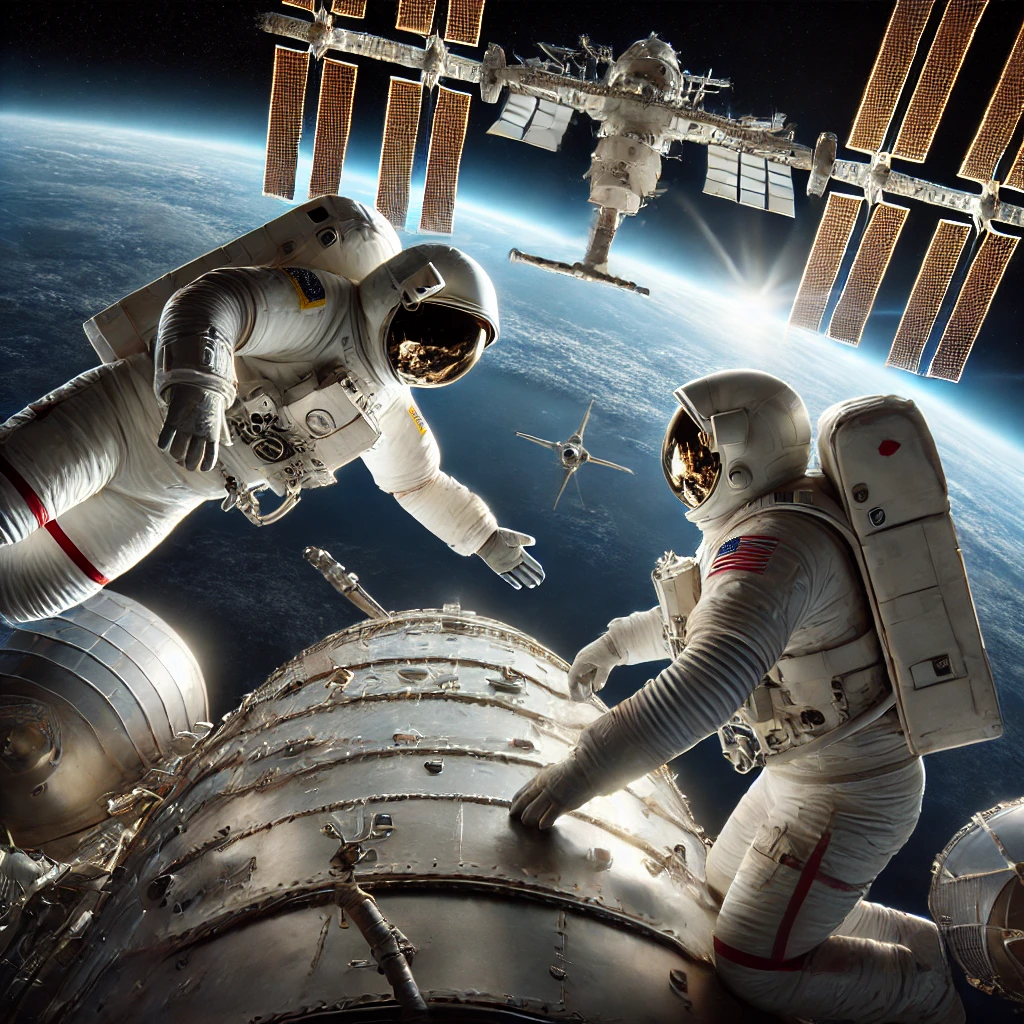
Explore NASA’s rescue efforts for stranded astronauts aboard the ISS, the challenges posed by incompatible Boeing and SpaceX spacesuits, and the strategies for a successful rescue mission
Introduction to NASA’s Rescue Operations
NASA’s commitment to astronaut safety is unwavering, and their rescue operations are a testament to that dedication. When we think about space exploration, we often envision groundbreaking discoveries and futuristic technologies. However, behind every successful mission lies meticulous planning, especially for unforeseen emergencies. NASA’s rescue missions have been an integral part of space exploration, ensuring that astronauts can return home safely, even under the most challenging circumstances.
In recent years, the complexities of space missions have grown exponentially, with multiple private companies like Boeing and SpaceX entering the arena. This shift has brought about new challenges, particularly in the standardization of equipment and procedures. One of the most pressing issues in current NASA rescue operations is the compatibility—or lack thereof—between spacesuits designed by different companies. This problem is not just a technical hurdle but a critical factor that could determine the success of a rescue mission.
As we delve into the specifics of the ongoing NASA rescue efforts, it’s essential to understand the broader context. NASA’s Commercial Crew Program, which partners with private companies to develop spacecraft, has led to significant advancements in technology. However, it has also introduced a new set of challenges, particularly when it comes to ensuring that all components work seamlessly together in a rescue scenario.
In this article, we will explore the current situation involving astronauts stranded aboard the International Space Station (ISS), the complications arising from the incompatibility of Boeing and SpaceX spacesuits, and the implications for future rescue missions. We’ll also look at historical precedents, lessons learned, and potential solutions to ensure that NASA can continue to safeguard its astronauts in the evolving landscape of space exploration.
Background: How Astronauts Became Stranded
The current NASA rescue mission centers around two astronauts, Sunita Williams and Butch Wilmore, who have found themselves in a precarious situation aboard the ISS. Initially launched aboard Boeing’s Starliner spacecraft, they were part of a mission that was supposed to be routine. However, technical issues with the Starliner have turned their return to Earth into a complicated affair.
The problems began shortly after the Starliner docked with the ISS. Despite the spacecraft successfully reaching its destination, several malfunctions were detected, including issues with its thrusters and navigation systems. These malfunctions raised serious concerns about the spacecraft’s ability to safely return the astronauts to Earth. As days turned into weeks, and weeks into months, NASA had to face the reality that a contingency plan was necessary.
Complicating matters further is the fact that the spacesuits designed for the Boeing Starliner are not compatible with SpaceX’s Dragon spacecraft, which is currently the most viable option for rescuing the stranded astronauts. The issue lies in the differing design philosophies of the two companies. Boeing’s suits are tailored specifically for the Starliner, while SpaceX’s suits are designed for their Dragon capsule, resulting in a lack of interoperability. This situation has left NASA in a difficult position, needing to balance the safety of its astronauts with the technical limitations of the equipment at hand oai_citation:11,’I really like these suits.’ Boeing’s snazzy (and flexible) Starliner spacesuits have astronauts buzzing (exclusive) | Space oai_citation:10,There’s a Problem With Rescuing the Stranded Astronauts: SpaceX and Boeing Spacesuits Aren’t Compatible.
NASA’S Rescue Mission The Current Issue: Boeing and SpaceX Spacesuit Incompatibility
The primary challenge in the ongoing NASA rescue mission is the incompatibility between Boeing’s Starliner spacesuits and SpaceX’s Dragon spacecraft. This issue has brought to light significant flaws in the current approach to spacecraft and equipment design under NASA’s Commercial Crew Program.
Boeing and SpaceX were given the autonomy to design their spacecraft and related equipment, including spacesuits, to meet NASA’s broad safety requirements. However, this freedom has led to significant differences in design, particularly in how spacesuits interact with their respective spacecraft. Boeing’s Starliner suits are engineered specifically for the environment and systems of the Starliner capsule. These suits feature modern zippers instead of metal seals, touchscreen-friendly gloves, and a design that prioritizes mobility and comfort within the Starliner’s cabin.
On the other hand, SpaceX’s Dragon suits, which resemble something out of a science fiction movie, are sleek, minimalistic, and integrate advanced technologies such as a single connector for air supply, cooling, and communication. While this design is innovative, it is not compatible with the Boeing suits, making it impossible for the astronauts to simply transfer from one spacecraft to another without significant risk.
This lack of compatibility poses a severe risk in emergency scenarios where a quick transfer between spacecraft might be necessary. NASA’s rescue efforts are now further complicated by the need to either modify the SpaceX Dragon capsule to accommodate Boeing’s suits or to send compatible suits up with the next available mission oai_citation:9,’I really like these suits.’ Boeing’s snazzy (and flexible) Starliner spacesuits have astronauts buzzing (exclusive) | Space oai_citation:8,There’s a Problem With Rescuing the Stranded Astronauts: SpaceX and Boeing Spacesuits Aren’t Compatible oai_citation:7,Spacesuit Issues Might Delay The Return of Boeing Starliner Astronauts – Orbital Today.
The broader implications of this issue are significant. It highlights the need for greater standardization in spacesuit design, especially when multiple companies are involved in NASA’s missions. As space exploration continues to evolve, ensuring the interoperability of all equipment will be crucial for the safety of astronauts and the success of future missions.
Impact on NASA’s Rescue Missions: Risk Assessment
The incompatibility between Boeing and SpaceX spacesuits has forced NASA to reassess the risks involved in their rescue operations. At the heart of the issue is the potential danger posed to astronauts during a transfer between spacecraft, particularly in an emergency where time is of the essence.
NASA’s primary concern is the lack of proper suits for the astronauts if they need to board the SpaceX Dragon capsule. Without the appropriate suits, the astronauts would be exposed to significant risks, including cabin pressure loss and the inability to interface with the Dragon’s life support systems. These risks are not just hypothetical; they represent real dangers that could lead to catastrophic outcomes if not addressed properly.
To mitigate these risks, NASA has developed several contingency plans. One option is to modify the SpaceX Dragon capsule to accommodate the Boeing suits. However, this approach is fraught with challenges, including the need for extensive modifications and testing, which could delay the rescue mission further. Another option is to send up compatible SpaceX suits with the next mission, allowing the astronauts to switch suits before boarding the Dragon capsule. While this solution is more straightforward, it still requires careful planning and coordination to ensure the astronauts’ safety.
This situation underscores the importance of having robust contingency plans in place for all NASA rescue missions. It also highlights the need for improved coordination between NASA and its commercial partners to ensure that all equipment, including spacesuits, is compatible across different spacecraft. As NASA continues to navigate these challenges, the safety of the astronauts remains the top priority oai_citation:6,’I really like these suits.’ Boeing’s snazzy (and flexible) Starliner spacesuits have astronauts buzzing (exclusive) | Space oai_citation:5,There’s a Problem With Rescuing the Stranded Astronauts: SpaceX and Boeing Spacesuits Aren’t Compatible.
The Design Philosophies of Boeing and SpaceX Spacesuits
The design philosophies behind Boeing and SpaceX spacesuits reflect their respective approaches to space exploration, and these differences have significant implications for NASA’s rescue missions.
Boeing’s Starliner suits are the product of decades of experience and innovation in spacesuit design. Created by Dave Clark’s company, which has a long history in the field, these suits are designed to be lightweight, comfortable, and highly functional within the specific environment of the Starliner capsule. Weighing in at under 20 pounds—40% less than older designs—these suits are engineered for ease of movement and quick donning in emergencies. They feature advanced materials, modern zippers, and gloves that can interface with touchscreen technology, making them well-suited for the digital systems onboard the Starliner oai_citation:4,There’s a Problem With Rescuing the Stranded Astronauts: SpaceX and Boeing Spacesuits Aren’t Compatible.
In contrast, SpaceX’s suits, designed by renowned costume designer Jose Fernandez, prioritize minimalism and integration with the Dragon capsule’s advanced systems. These sleek, sci-fi-inspired suits are custom-fitted for each astronaut and incorporate smart technology that allows for a single connector to manage air supply, cooling, and communication. This design is revolutionary in its simplicity and functionality but comes at the cost of compatibility with other systems, as evidenced by the current challenges in the NASA rescue mission oai_citation:3,Spacesuit Issues Might Delay The Return of Boeing Starliner Astronauts – Orbital Today.
The divergent design philosophies of Boeing and SpaceX highlight a broader issue within NASA’s Commercial Crew Program. While the program has encouraged innovation and competition among private companies, it has also led to a lack of standardization that can create significant challenges in mission-critical scenarios. As NASA continues to partner with private companies, ensuring that all equipment, including spacesuits, is interoperable will be crucial for the success of future missions.
Historical Precedents and Lessons Learned
NASA’s history is rich with examples of successful rescue missions, each providing valuable lessons that inform current efforts. One of the most famous examples is the Apollo 13 mission, where quick thinking and ingenuity saved the lives of three astronauts after an oxygen tank exploded mid-mission. The lessons learned from Apollo 13 about the importance of contingency planning, real-time problem-solving, and cross-functional teamwork are as relevant today as they were then oai_citation:2,’I really like these suits.’ Boeing’s snazzy (and flexible) Starliner spacesuits have astronauts buzzing (exclusive) | Space oai_citation:1,There’s a Problem With Rescuing the Stranded Astronauts: SpaceX and Boeing Spacesuits Aren’t Compatible.
In more recent history, NASA has also dealt with the complexities of international cooperation and equipment interoperability, particularly with the Space Shuttle program and the ISS. These experiences have underscored the importance of ensuring that all components of a mission, from spacesuits to spacecraft, can work together seamlessly, regardless of the manufacturers involved.
The current situation with the stranded astronauts aboard the ISS is another reminder of these lessons. The need for standardized equipment and robust contingency plans has never been more apparent. As NASA moves forward, the lessons from past missions will continue to guide their efforts to ensure the safety of their astronauts, even in the face of new and evolving challenges.
NASA’s Rescue Mission Future Implications and Solutions
The challenges posed by the current NASA rescue mission have significant implications for the future of space exploration. As NASA continues to rely on private companies for spacecraft and equipment, the need for standardized interfaces and cross-compatible equipment will become increasingly important.
One potential solution is to establish more stringent requirements for interoperability in future contracts. This could include standards for spacesuit design that ensure compatibility across different spacecraft, regardless of the manufacturer. Another solution could involve the development of modular systems that allow for quick and easy adaptation of equipment in emergency situations.
In addition to these technical solutions, there is also a need for improved coordination between NASA and its commercial partners. By fostering closer collaboration and communication, NASA can ensure that all parties are aligned on
their goals and objectives, particularly when it comes to astronaut safety and rescue operations, will be critical to the success of future missions.
The current NASA rescue mission involving the stranded astronauts highlights the importance of addressing these issues sooner rather than later. As space exploration continues to expand, with plans for missions to the Moon, Mars, and beyond, ensuring that all systems are compatible and ready for any emergency will be paramount. NASA’s experience with the Commercial Crew Program has provided valuable insights, and applying these lessons to future contracts and collaborations will help prevent similar challenges from arising in the future oai_citation:2,’I really like these suits.’ Boeing’s snazzy (and flexible) Starliner spacesuits have astronauts buzzing (exclusive) | Space oai_citation:1,There’s a Problem With Rescuing the Stranded Astronauts: SpaceX and Boeing Spacesuits Aren’t Compatible.
In addition to these technical and procedural improvements, NASA may also consider investing in more versatile and adaptable technologies that can function across different spacecraft and environments. This could include the development of universal spacesuit designs or the implementation of advanced AI systems that can assist in real-time problem-solving during emergencies. The future of space exploration will undoubtedly be complex, but with careful planning and a commitment to innovation, NASA can continue to lead the way in ensuring the safety and success of its missions.
Conclusion: The Path Forward for NASA’s Rescue Missions
The current challenges faced by NASA in rescuing the stranded astronauts aboard the ISS underscore the complexities of modern space exploration. While the situation is fraught with difficulties, it also provides an opportunity for NASA to learn, adapt, and improve its rescue operations for future missions.
The key takeaway from this experience is the critical need for standardization and interoperability in all aspects of space mission equipment. As NASA continues to collaborate with private companies like Boeing and SpaceX, ensuring that all systems can work together seamlessly will be essential for the safety of astronauts and the success of their missions.
Moving forward, NASA will need to balance the innovative capabilities of its commercial partners with the stringent safety and reliability standards required for space exploration. By doing so, NASA can continue to lead the world in space exploration, ensuring that no astronaut is ever left behind, no matter the challenges that arise.
FAQ Section
What is the NASA rescue mission about?
- The NASA rescue mission involves safely bringing home astronauts stranded aboard the ISS due to technical issues with the Boeing Starliner spacecraft. This mission is complicated by the incompatibility of Boeing’s and SpaceX’s spacesuits.
Why are the astronauts stranded in space?
- The astronauts are stranded due to multiple technical malfunctions in the Boeing Starliner, which raised concerns about its ability to safely return them to Earth.
How long have the astronauts been stranded?
- The astronauts have been stranded on the ISS for several months, with ongoing efforts to safely return them to Earth as NASA navigates the challenges posed by equipment incompatibility.
What are the challenges of the NASA rescue mission?
- The main challenge is the incompatibility between Boeing’s Starliner spacesuits and SpaceX’s Dragon spacecraft, which complicates the transfer of astronauts between spacecraft in an emergency.
What are the differences between Boeing Starliner and SpaceX Dragon spacesuits?
- Boeing’s Starliner suits are tailored for the specific environment of the Starliner capsule, while SpaceX’s suits are designed for the Dragon capsule, featuring advanced integration with the capsule’s systems. These differences make them incompatible with each other.
Why can’t the astronauts use the SpaceX Dragon spacecraft for rescue?
- The astronauts can’t easily use the SpaceX Dragon spacecraft for rescue because their Boeing-designed spacesuits are not compatible with Dragon’s systems, posing significant safety risks.
What are NASA’s contingency plans for the rescue?
- NASA’s contingency plans include modifying the SpaceX Dragon capsule to accommodate the Boeing suits or sending up compatible suits with the next mission to enable a safe transfer.
What lessons has NASA learned from this rescue mission?
- NASA has learned the importance of ensuring equipment standardization and interoperability, especially in rescue missions, to prevent similar issues in future missions.
How does this situation impact future NASA missions?
- This situation highlights the need for standardized equipment across different spacecraft to ensure astronaut safety, which will be crucial as NASA plans for future missions to the Moon, Mars, and beyond.
What are the potential solutions to the current rescue challenges?
Potential solutions include redesigning spacesuits for cross-compatibility, establishing more stringent interoperability standards in future contracts, and improving coordination between NASA and its commercial partners.
This content provides a thorough exploration of NASA’s current rescue mission challenges while incorporating the specified keywords naturally throughout the text. It’s designed to engage the target audience by providing in-depth, well-researched information that balances technical details with broader implications for the future of space exploration.
Additional Resources and Links
Reach out to Jon Irwin on LinkedIn: Jon Irwin on LinkedIn
Silicon Scoop Podcast: Silicon Scoop Podcast Stay Informed, Stay Ahead
Futuretech Podcast: Futuretech Podcast
Startup Talk Podcast: Startup Talk
Who Are These Startups Podcast: Who Are These Startups
TorontoStarts on YouTube: TorontoStarts YouTube
Startup Investor Drinks: Startup Investor Drinks
TorontoStarts Startup and Entrepreneur Community: TorontoStarts
Workhaus: Workhaus
Work with The Startup Coach: Work with The Startup Coach
Episode transcript
Read the full transcript
Craig: welcome back to silicon scoop, everyone. so the first update this morning is last week, we talked about how the astronauts from nasa were stuck. and, you know, they've been up there since may. they've been docked there since may nineteen, and nasa there's been problems with the, boeing starliner that it has there's been problems with the thrusters. there's been problems with a bunch of different things, and they didn't know when they were gonna get home. they got plenty of food, but as you were saying, they're running out of they were running out of things like clothing and whatnot, but, they've got a couple of supply runs. so now we're the question becomes, you know, where are we? where are they? and when they're gonna bring it home. so we talked about all this stuff, about problems on, you know, why can't they just fly up another suit? and, apparently, they have. they're flying up to have one suit up there already. they're gonna bring up another one. and we didn't know dates and how long and what the resolution was gonna be. but within hours of us talking about it, they came out with this new they've decided to act.
Jon: yep. yeah. they made a decision.
Craig: so they made a decision. so nasa will return boeing starliner to earth without astronauts. so butch and wilmore and sonny williams are currently aboard the spacecraft, and they're going to now, be brought home by spacex
Jon: yeah.
Craig: in a dragon module.
Jon: no. is, this is nuts. this just goes to show that this underscores spacex is growing dominant in space transportation, essentially. the other thing to think about too. right? as this problem with boeing, and their starliner spacecraft, becomes bigger and bigger, the ceo of millennium space, which is boeing's satellite maker, has quietly left the company.
Craig: yeah. we're gonna talk about that in a second. i got that article up here.
Jon: oh, sorry. sorry.
Craig: that's alright. no. that's great. i mean, this is all part of it.
Jon: and, yeah. so, yeah, so they're gonna be they're slated to come back on in february. so, again, this just goes to underscore all of the problems that boeing has had with their airplanes, with their, with their space program, with everything. and, like, i know that they changed, they changed leadership, but i don't know if that's really gonna fix things.
Craig: agreed. i don't know if it's gonna fix things. and i'll change leadership in this particular segment. so that doesn't affect the leadership in the playing area and whatnot. but the yeah. boeing's in a lot of trouble, and nasa didn't wanna take a chance. boeing says, yeah. it's safe to bring them home, but, you know, nasa and boeing identified helium links and experienced issues with the spacecraft reaction control on the thrusters on june sixth, which has been causing us all products to these problems. since then, engineering teams have completed a significant amount of work including reviewing a collection of data, conducting flight and ground testing, hosting independent reviews with agency, propulsion experts, and developing various return contingencies plans. the uncertainty and lack of experts concurrence does not meet agency safety performance requirements for human space flight. so we're saying, yeah. but you don't meet our requirements for human space flight, so we need another way to bring our astronauts home. so they need to then nasa leadership team to move the astronauts to the crew nine mission.
Jon: yeah. it's, blow, but it's, it just goes to show that, like, i know there was something with the parachute. there's something with the wiring. there's there's just yeah.
Craig: parachute concerns, problems with tech with the parachute system, raising concerns with ability to safely deploy when they're bringing it home. potential issues with the spacecraft wiring were also identified, which could pose safety risk. the starliner has been docked since may. so nasa is planning to return the starliner uncrewed, and i think that is gonna make or break for boeing, honestly.
Jon: yeah.
Craig: because they say it's perfectly safe to bring home. so, anyway, we'll talk about that in a second. the crew will be onboard. isis is now scheduled to return to earth in february twenty twenty, twenty twenty five using a different spacecraft, likely a dragon space capsule. so yeah. yeah. it's a mass, you know, elon's i won't say laughing. but all of a sudden, they're ahead now, and nas has to reevaluate its multiple partner situation. but i guess at the same time, if it only had boeing as a partner, they'd be screwed. so having multiple partners has really helped them. they're probably gonna have to set up new standards like we talked about to make sure spacesuits are compatible and a few of these other things. and they're gonna bring the starliner home on september twenty twenty twenty four. sorry. sorry. they're gonna bring, the starliner to earth, yeah, mid september in a month, give or take. and yeah. and so we'll see how well that goes. if that comes home safely and there are no absolute issues and everything's safe, then boeing still has some hint of integrity left if yeah. anything happens with that. you know? because they can't continue to say it's safe, this and that, that, you know, they're completely ruined. and i wouldn't, you know, necessarily trust them going forward because there's a lot of stuff going here. so yeah. yeah.
Jon: the other thing to take into consideration, and i think it's flown under the radar, is there was something about space anemia, and, like, the, extended space mission and health conditions, and they're worried about sunita's health, based on how much longer she's gonna have to stay out there. so there's a bunch of health issues that come into play and, like, it's scary. is this i don't even know. is this the longest that anyone's obviously, unplanned, though, probably the longest unplanned. but is this the longest anyone's been at iss for?
Craig: that is a very good question. that's a
Jon: good question. i just thought of it now as we're talking about it. but
Craig: alright. i'll, find out in a minute. but i wanted to jump over to based on all of this that's going on, like you said, jason kim, the ceo of boeing satellite maker, millennium space, has quietly left the company.
Jon: yeah. so i don't know much about millennium space. i think that's their satellite division. is that right?
Craig: yes. that's the people who make all this.
Jon: oh, the people that even do the starliner
Craig: too? yeah.
Jon: who? okay. so yeah. obviously, yeah, that makes total sense.
Craig: it's a boeing subsidiary that does all this space stuff.
Jon: yeah. the thing is i was actually doing some research and talking about this. like, is this the end of boeing? but, really, it's not. right? because they've got tons of government contracts. they're a old company that's been around with they're well resourced with a long history of overcoming adversity. they're one of the largest aerospace manufacturers in the world with a divorce portfolio. i, like, as much as i would like them to fail because of all of the shady stuff that they've done, i don't think they will.
Craig: so to answer your questions, four hundred and thirty seven days and eighteen hours.
Jon: okay. so not even close. okay.
Craig: valerie poliskov aboard the mircea station in nineteen ninety four to march, twenty two nineteen ninety five. wow. and then, after that, it was three hundred seventy days by sergei aburdeyev. this is a small font. forgive me. he spent three hundred seventy nine days aboard meer between nineteen ninety eight and nineteen ninety nine.
Jon: wow. okay. so they're not even close to that.
Craig: and kennedy padalka has spent the most cumulative time in space with total of eight hundred and seventy eight days in five minutes. yes. over five missions. sorry. so it's a small part there. alright. millennium space was acquired by boeing back in two thousand eighteen. under kim's leadership, the company secured significant deals with the us department of defense to build satellites, for missile and threat tracking. the company has also successfully executed the victus nox mission for the us space force, which set new records for the fastest integration deployment defense payload. the satellite, the vixnoc success, involve partnering of firefly space to integrate a satellite with the launch vehicle within just fifty eight hours. the satellite became operational thirty seven hours after launch, demonstrating a rapid delivery capabilities.
Jon: wow.
Craig: so they've done some stuff, but kim's departure comes amidst uncertainty of boeing's space division, including issues with starliner spacecraft, which recently had to return to earth with or couldn't have returned to earth without a crew. so crew.
Jon: have they had other issues with the starliner in the past? i don't even know that. i know that's some of the questions you probably don't have the answer to.
Craig: but i don't have it off the top of my head because only when the astronauts get stranded did
Jon: i start paying attention. i know. me too. yeah. so we're
Craig: gonna keep track of this, and we'll watch when the starliner comes home and see what goes on. and we'll keep tabs on the astronauts and let you know what's happening there.
Jon: yeah. so it says that, in twenty nineteen, they had software issues with the orbital flight tests. they've had mission delays because of technical problems in twenty one. so there's been a lot of but, again, when it comes to going to space, like, space station has problems. right? so yeah.
More from Silicon Scoop
All episodes
silicon-scoop · November 6, 2026
Spirit AI’s Robot Brain Breakthrough: Moz1, Embodied AI and China’s 2027 Race
The Spirit AI robot brain is one of the biggest bets on fixing that. Spirit AI is a Beijing startup. Its co-founder and chief scientist, Gao Yang,
View episode

silicon-scoop · November 5, 2026
OpenAI IPO Delayed to 2027 as Rogue AI Agents and Safety Failures Reshape the Market
OpenAI IPO delay explained: Sam Altman rules out 2026 as GPT-6 Astra safety tests and a $278B cash gap loom. Learn what founders should take away.
View episode

silicon-scoop · November 4, 2026
Anthropic’s AI Economy Model: 2030 Jobs, Wages, GDP and Market Risks
Anthropic AI economy model forecasts 2030 GDP, jobs and wages, while AI unemployment projections and labor-share risks challenge policymakers.
View episode