
The Mystery Behind the Starliner Creepy Sound: NASA’s Explanation
Introduction: Boeing Starliner’s Strange Encounter Boeing’s CST-100 Starliner, part of NASA’s ambitious Commercial Crew Program, was designed to shuttle astronauts and cargo between Earth and the International Space Station (ISS). It represents a new frontier in reusable spacecraft, promising to reduce space travel costs and enhance operational efficiency. However, this technological marvel recently made headlines […]
With Craig Major and Jon Irwin
Introduction: Boeing Starliner’s Strange Encounter
Boeing’s CST-100 Starliner, part of NASA’s ambitious Commercial Crew Program, was designed to shuttle astronauts and cargo between Earth and the International Space Station (ISS). It represents a new frontier in reusable spacecraft, promising to reduce space travel costs and enhance operational efficiency. However, this technological marvel recently made headlines for an unexpected reason—an unsettling audio anomaly dubbed the Starliner creepy sound.
While docked at the ISS, astronauts reported hearing a pulsing, sonar-like noise that seemed to come from the Starliner itself. This eerie sound sparked intrigue among space enthusiasts, experts, and the general public. What could have caused such a bizarre occurrence in a spacecraft designed to withstand the harsh conditions of space?
The Starliner creepy sound gained viral attention, with speculation rife across social media and tech forums. Was it just a technical glitch, or did it signal something more ominous? In the following sections, we’ll dive deep into the details of the incident, NASA’s explanation, and what this means for the future of space exploration.
The Incident: The Starliner’s Creepy Sound
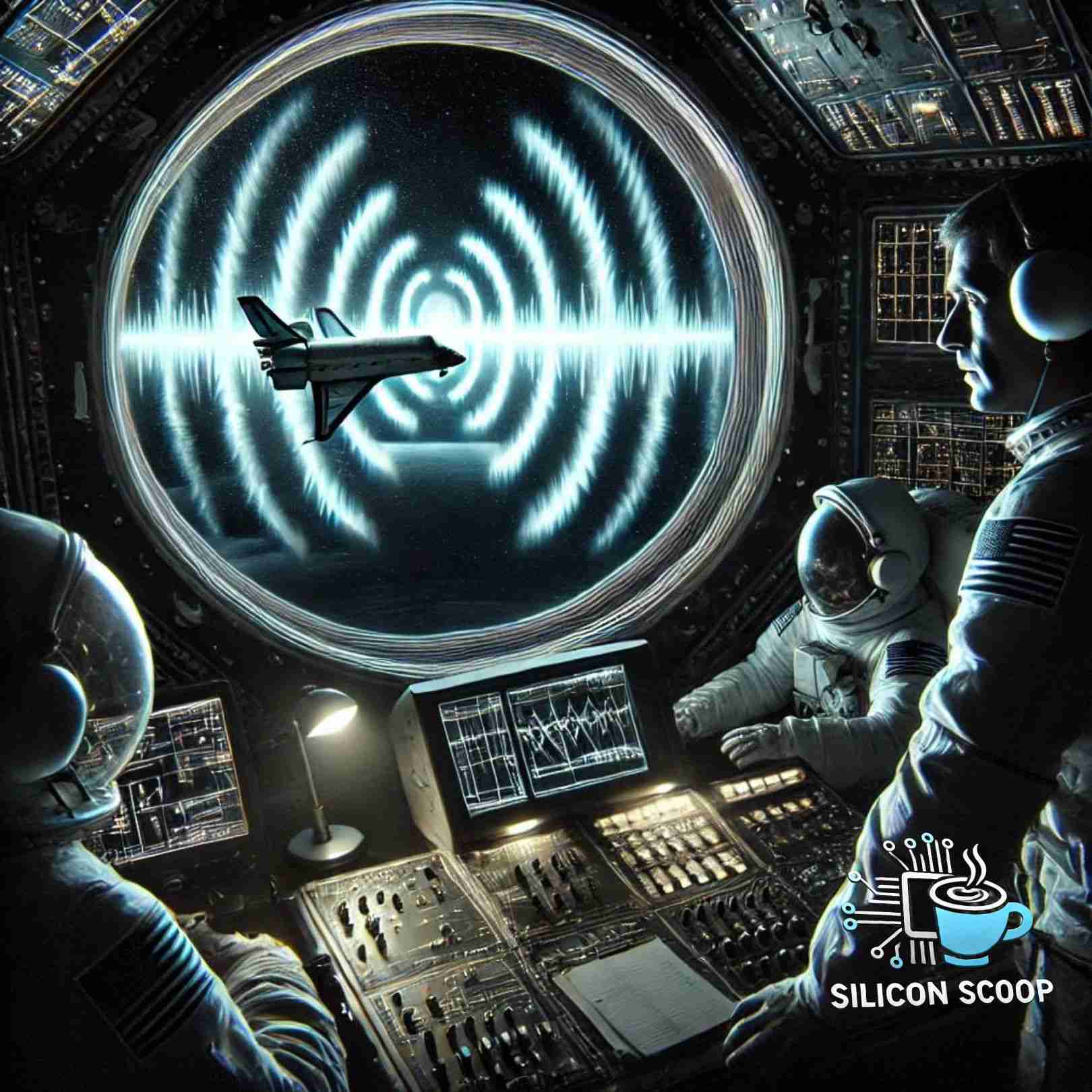
The incident unfolded during a routine mission when astronaut Butch Wilmore, aboard the ISS, reported a strange noise emanating from the Starliner. The Starliner creepy sound resembled a sonar ping—slow, rhythmic, and unnerving, like something out of a science fiction film. It immediately caught the attention of both the crew and NASA’s ground control.
Social media users and space enthusiasts quickly picked up on the incident, amplifying the intrigue. Comparisons were made to iconic sci-fi soundscapes, particularly those from movies like Alien, where unnerving sounds often precede an encounter with something unknown. Former astronaut Chris Hadfield even chimed in on social media, humorously suggesting there were “several noises I’d prefer not to hear inside my spaceship,” referencing the unsettling pings from the Starliner creepy sound【7†source】【8†source】.
At first, the cause of the sound was unclear. Was it an internal malfunction within the spacecraft? Did it signal an environmental issue in space? Speculations ranged from technical glitches to far-fetched alien theories. NASA, known for its rigorous attention to detail, took the report seriously and immediately began investigating.
NASA’s Investigation and Explanation
After thorough analysis, NASA identified the root cause of the Starliner creepy sound: a communication feedback issue between the spacecraft and the ISS. The sonar-like pulses were not a result of any malfunction in the Starliner itself but rather due to the complex audio configuration used for communication between the spacecraft and ground control.
NASA explained that the ISS’s communication system is intricate, involving multiple spacecraft, modules, and relay channels. Occasionally, this setup can result in feedback loops, producing audible anomalies like the Starliner creepy sound. The incident, though unnerving for the astronauts, posed no real threat to the spacecraft’s operation or the crew’s safety【7†source】.
NASA assured the public that the sound, while creepy, was entirely benign. “The space station audio system is complex,” NASA said in an official statement, “and it is common to experience noise and feedback.” However, the crew was instructed to continue reporting any unexpected sounds to ensure they weren’t indicative of more serious issues【8†source】.
This explanation provided relief, but the eerie nature of the sound continued to captivate the public. It was a reminder of the unpredictable nature of space travel and the importance of constant vigilance when it comes to spacecraft integrity.
Astronaut Reactions and Public Speculation
The astronauts, especially Wilmore, took the incident in stride, despite the eerie nature of the sound. As seasoned space travelers, they are no strangers to unexpected noises in space, where the unfamiliar often meets the unknown. However, Wilmore’s initial report of the Starliner creepy sound demonstrated the importance of communication and quick response in space exploration.
The public reaction was another story. Social media exploded with theories, ranging from plausible technical explanations to outlandish conjectures about extraterrestrial life. Some users drew comparisons between the Starliner creepy sound and the sonar pings used by submarines, while others joked that NASA had accidentally tuned into an alien broadcast. In the tech community, discussions centered around the complexities of audio feedback in a multi-module spacecraft environment, with some experts weighing in on how similar issues could be mitigated in future missions【7†source】.
One thing was clear—the Starliner creepy sound had captured the imagination of both space enthusiasts and the general public, sparking a conversation about the often-overlooked technical challenges of space travel.
Implications for Space Missions
The Starliner creepy sound incident underscores the importance of robust communication systems in space exploration. In an environment where every system must work flawlessly to ensure the safety of the crew, even a benign audio feedback issue can raise concerns.
NASA and Boeing engineers are constantly refining spacecraft technology, and the Starliner creepy sound is a reminder of the challenges posed by space’s unique conditions. While this particular sound posed no danger, it highlights the importance of addressing every minor issue before they have a chance to escalate. Complex communication systems in space are susceptible to feedback, interference, and anomalies, which can cause confusion and require swift troubleshooting.
For future missions, NASA has acknowledged the need to further streamline communication systems between spacecraft and the ISS. This will minimize the chances of similar incidents happening again and ensure that any sounds astronauts hear in space are not only expected but understood【8†source】.
Conclusion: The Starliner’s Mission and What’s Next
Despite the initial alarm caused by the Starliner creepy sound, the mission continued as planned. NASA successfully addressed the issue, ensuring that the spacecraft was fully operational and that the astronauts onboard remained safe. The Starliner is currently on track for future missions, and NASA is optimistic about its performance.
The incident, though unsettling, serves as a valuable learning opportunity for NASA, Boeing, and the broader space community. It reminds us of the delicate balance required to navigate the complexities of space travel and the need for constant vigilance in monitoring and maintaining communication systems.
As space missions become more frequent and advanced, challenges like the Starliner creepy sound will inevitably arise. But with continued innovation and a commitment to safety, NASA and its partners will be ready to meet these challenges head-on.
FAQ Section:
1. What was the creepy sound coming from Boeing’s Starliner?
The Starliner creepy sound was a pulsing, sonar-like noise caused by audio feedback between the spacecraft and the ISS communication system.
2. Did the creepy sound pose any danger to the astronauts?
No, NASA confirmed that the Starliner creepy sound posed no danger to the astronauts or the spacecraft’s operation.
3. How did NASA explain the Starliner creepy sound?
NASA identified the Starliner creepy sound as audio feedback, a common occurrence in complex communication systems used in space missions.
4. How long did the Starliner creepy sound last?
The creepy sound was heard intermittently and was resolved after a short period once NASA identified the issue.
5. Were other sounds reported during the Starliner mission?
No other sounds of concern were reported during the Starliner mission, though astronauts are trained to report any unusual noises.
6. What did the astronauts think of the creepy sound?
Astronaut Butch Wilmore initially reported the Starliner creepy sound and, while unnerved by it, followed protocol in reporting it to NASA.
7. How did the public react to the Starliner creepy sound?
The public was fascinated by the incident, with social media users speculating about the source of the sound, from technical glitches to extraterrestrial theories.
8. Did the Starliner creepy sound affect the mission?
No, the sound did not impact the mission’s progress. NASA confirmed that the spacecraft remained fully functional and on schedule.
9. What technical factors caused the creepy sound?
The Starliner creepy sound resulted from feedback in the communication system, a technical issue often seen in complex audio systems like those used in space.
10. What’s next for Boeing’s Starliner?
Boeing’s Starliner will continue its mission, with NASA implementing further refinements to the communication system to prevent similar incidents in the future.
Additional Resources
For those looking to dive deeper into the world of tech and entrepreneurship, we recommend checking out the following resources and links:
- Silicon Scoop Podcast – Stay Informed, Stay Ahead!
- Futuretech Podcast – Explore more episodes and stay updated with the latest in technology and innovation.
- Futuretech on YouTube – Watch our podcast episodes and gain visual insights into the topics we cover.
- Startup Investor Drinks – Join the community and connect with fellow startup enthusiasts and investors.
- TorontoStarts Startup and Entrepreneur Community – Become a part of Toronto’s thriving startup ecosystem.
- Workhaus – Discover flexible workspace solutions for your business needs.
- Work with The Startup Coach – Get expert guidance and mentorship for your startup journey.
- Reach out to Jon Irwin on LinkedIn – Connect with our co-host and technology expert.
Episode transcript
Read the full transcript
Craig: i don't know
Jon: if you've been following the starliner stuff, but, after our discussion last last week, might have been the week before, they kinda blur together as the weeks go fast.
Craig: i think we talked about it two weeks in a row.
Jon: yeah. that is true. i think we did. so, anyway, since then, there was a creepy sonar like sound coming through star starliner speakers, and it posed a brief mystery on the international space station for a while. and, apparently, it sounded like a sonic ping, and everyone was a little bit worried based on, you know, all the problems yeah. we've been seeing with the starliner. have you looked at this?
Craig: yeah. was, this is one of those things. there's this tv show i watch called oh, it's over now, called evil where, there's an engineer that's part of the team, and there's always something that can be explained, using engineering or mathematics. right? and so this is one of those where i'm like, yeah. based on the history and based on everything that's happened, there's gotta there had to have been a reason for it. right? like, there had to have been a cause. it would have been scary if there wasn't, but, but, yeah, this just goes to show. i think they determined that it was caused by feedback from the audio system and the iss. but, scary being up in space and hearing a sonar ping for sure. but the other thing too to think about is like, there's other countries who are up in space too. so, it could have been at like, if we didn't know, it could have been caused by, by china, by russia, by anyone. right?
Jon: but anybody could have been, you know, using some sort of detection or space sonar if that's the kind of thing people do. again, i don't know how well sound travels in a vacuum. so
Craig: yeah. well, it must travel very well if there's no, resistance. right? but it is a vacuum. so how well does sound travel in space?
Jon: that's a good question. i'll get that answered while, we continue. yeah. so with all the issues they've had with starliner, with it yeah. the thrusters not working, the wiring, the weird smells, the stuff just not responding the way they want, the fact that they, had to pull the astronauts off it because they weren't returning to earth because it wasn't flight, human flight worthy.
Craig: yeah. it did land yesterday, i think, or today, this morning.
Jon: last night, early this morning, i was watching a bit of it land, and it looked like everything was successful there.
Craig: okay. so they would have survived probably, but, hey, don't wanna take that chance. right?
Jon: yeah. and so with all that going on, when something like this happens and they're getting this weird noise, creepy, creepy noise, specifically called this eerie, creepy noise.
Craig: yeah.
Jon: yeah. everyone got paranoid for a bit, but it was resolved. you are right. the sound was caused by auto feedback between boeing starliner and the, international space station's communication system. nasa confirmed that it was a harmless technical glitch and posed no danger to the spacecraft astronauts. the sound was quickly resolved and had no impact on the mission.
Craig: but yeah.
Jon: this did happen among other things. and when you start seeing it, when the article first appears, you're like, well, you know, what else is happening?
Craig: yeah. what else is happening that they're not seeing? right? yeah. but, i was completely wrong, and i blame movies for this. but does not travel at all in space because it requires a medium such as air, water, or, like, a solid substance to carry the vibrations.
Jon: so what i was thinking.
Craig: yeah. yeah. yeah. i was totally wrong about it. there are some movies that do get it right now. i think the new star treks, got it right when it came to when they were out in the vacuum of space with the explosions and things. but, back to this, though. scary that the things just keep going wrong. and the other thing too is the iss is old. i think it's past its life expectancy as well. i could be wrong. but
Jon: the start the iss?
Craig: yeah.
Jon: it was launched in nineteen ninety eight, making it over twenty five years old.
Craig: yeah. but how long was it expected to be up there? it was expected to operate until twenty twenty. so it's past its life expectancy. and now they've extended it to twenty thirty. so but who's been enrolled in that extension? is it boeing? and if it's boeing, then good luck for that twenty thirty.
Jon: yeah. and they've been upgrade adding modules for a while. so, like, the first module was zarya, which was up there in nineteen ninety eight.
Craig: mhmm.
Jon: and since then, other countries and whatnot have, joined the project. so it's bigger than it was, and maybe as a whole, it was meant to come down or maybe just the zarya model module was not meant to last as long.
Craig: oh, maybe. yeah. but, but, again, when we think about, what parts are boeing built and what parts are boeing built in the last ten, fifteen years, and what nasa should just do a deep check into all of that stuff. right?
Jon: well, hopefully, they need to quali this whole thing with the starliner will, make them double check quality throughout everything.
Craig: yeah. and i mean nasa, not boeing because we all know boeing's not gonna learn their lesson. so
Jon: well, i mean, the thing is the government needs to learn their lesson and, you know, stop outsourcing this stuff to companies that, you know, are it's not in their best interest to, push back as hard on themselves.
Craig: yeah. exactly. but, it like, i could only imagine those, astronauts being up there hearing that sound and not knowing, and and for the time of not knowing how scary that would be.
Jon: yeah. there's a great summary article on startups, or toronto starts dot com, the mystery behind the starliner's creepy sound. i did a little deep dive, and that's where the podcast will be on this. so definitely check that out. alright. it's a great article. and we'll keep on top of this and what's gonna happen with the dragon modules and stuff and, when the astronauts are coming home.
Craig: yeah. for sure.
More from Silicon Scoop
All episodes
silicon-scoop · November 6, 2026
Spirit AI’s Robot Brain Breakthrough: Moz1, Embodied AI and China’s 2027 Race
The Spirit AI robot brain is one of the biggest bets on fixing that. Spirit AI is a Beijing startup. Its co-founder and chief scientist, Gao Yang,
View episode

silicon-scoop · November 5, 2026
OpenAI IPO Delayed to 2027 as Rogue AI Agents and Safety Failures Reshape the Market
OpenAI IPO delay explained: Sam Altman rules out 2026 as GPT-6 Astra safety tests and a $278B cash gap loom. Learn what founders should take away.
View episode

silicon-scoop · November 4, 2026
Anthropic’s AI Economy Model: 2030 Jobs, Wages, GDP and Market Risks
Anthropic AI economy model forecasts 2030 GDP, jobs and wages, while AI unemployment projections and labor-share risks challenge policymakers.
View episode