
Bendable 32-bit Processor: A Game-Changer in Flexible Electronics
Bendable 32-bit Processor: Revolutionizing Flexible Electronics In today’s world, where wearable technology, IoT devices, and medical sensors are at the forefront of innovation, flexible electronics are playing a critical role in shaping the future. One of the most exciting advancements in this field is the bendable 32-bit processor. Unlike traditional rigid microprocessors, this new breed […]
With Craig Major and Jon Irwin
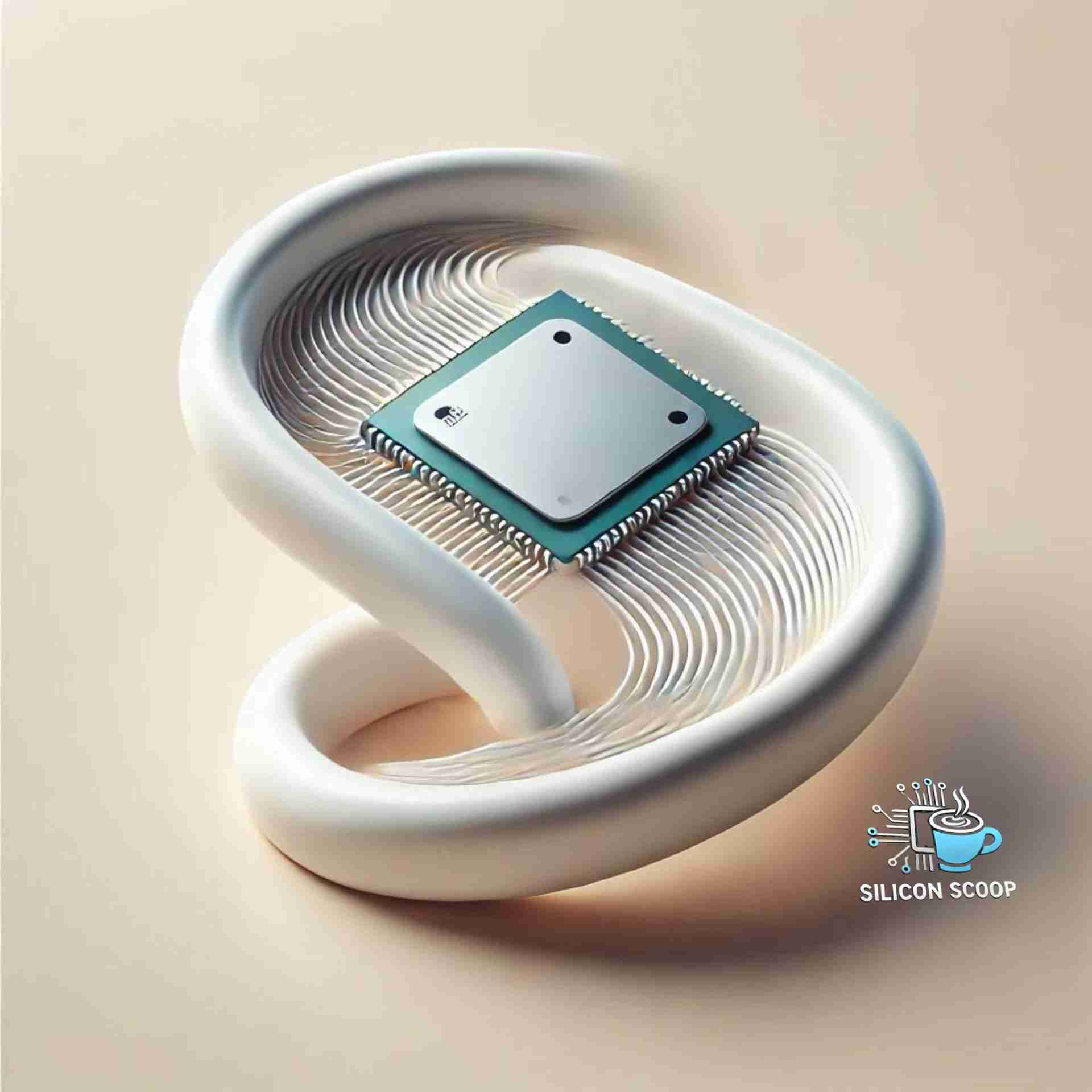
Bendable 32-bit Processor: Revolutionizing Flexible Electronics
In today’s world, where wearable technology, IoT devices, and medical sensors are at the forefront of innovation, flexible electronics are playing a critical role in shaping the future. One of the most exciting advancements in this field is the bendable 32-bit processor. Unlike traditional rigid microprocessors, this new breed of processors offers flexibility without sacrificing functionality, creating endless possibilities for the tech industry. But what makes this innovation a true game-changer?
What is a Bendable 32-bit Processor?
A bendable 32-bit processor is a microprocessor designed to be flexible and adaptable, allowing it to bend and twist without breaking or losing its ability to perform computations. Traditional microprocessors are made from silicon, a rigid material that doesn’t tolerate much stress. In contrast, bendable processors leverage cutting-edge materials like indium gallium zinc oxide (IGZO) transistors and thin-film transistors (TFTs), which are printed onto flexible plastic substrates.
Pragmatic Semiconductor’s Flex-RV chip is leading the way as the world’s first bendable 32-bit processor, demonstrating flexibility without compromising performance. This breakthrough opens up new applications in wearable technology, medical devices, and soft robotics. With its ability to bend and still function properly, this processor represents a huge leap forward in flexible electronics. You can learn more about this innovative chip at PC Gamer and Tom’s Hardware.
How Does a Bendable 32-bit Processor Work?
The working mechanism behind a bendable 32-bit processor revolves around its unique construction. Instead of using brittle silicon, these processors are created with flexible materials like IGZO transistors that are printed onto a substrate that can bend and fold. This flexibility is key to its functionality. The processor can perform tasks while wrapped around a small object, such as a pencil, without affecting performance.
For example, the Flex-RV chip from Pragmatic Semiconductor uses the RISC-V architecture, which is an open-source, highly scalable instruction set. This architecture allows for both flexibility in design and cost efficiency. The chip operates at low power—consuming less than 6mW, which makes it perfect for applications where battery life is crucial, such as in wearables and medical sensors. Its clock speed, however, is relatively low, capping at 60kHz, but this trade-off is acceptable for low-power, low-data tasks.
You can find more detailed information on the construction and applications of bendable processors from Tom’s Hardware and eeDesignIt.
Applications of Bendable 32-bit Processors
The applications of the bendable 32-bit processor extend far beyond traditional tech. Its adaptability and flexibility make it a critical component for several next-generation technologies:
1. Wearable Technology
One of the most promising applications for bendable processors is in the field of wearable technology. Imagine fitness trackers that bend with your wrist or health-monitoring patches that flex with your body’s movement. These processors can be integrated into soft robotics, enabling the creation of robots with flexible joints and adaptable sensors. The Flex-RV chip is already proving itself in this field, opening doors for innovative designs in wearable tech.
2. Medical Devices
In the medical sector, the potential for bendable processors is enormous. They enable the development of disposable medical sensors that can monitor a patient’s vitals while being non-invasive and comfortable. Traditional rigid electronics would be far too bulky and uncomfortable for such applications, but the bendable 32-bit processor can be woven into clothing or directly onto the skin to gather real-time health data.
3. IoT Devices
The Internet of Things (IoT) relies on low-power, highly adaptable devices, and the bendable 32-bit processor fits this need perfectly. Whether it’s smart home devices, environmental sensors, or industrial IoT solutions, the flexibility and power efficiency of these processors make them ideal for long-term use without frequent battery changes. As more devices become connected, the role of flexible processors in the IoT space is set to grow dramatically.
To explore more real-world use cases, check out eeDesignIt.
Performance Limitations and Challenges
While the bendable 32-bit processor holds immense promise, it’s important to understand its limitations. First, its clock speed is modest—at 60kHz, it’s far slower than what we expect from high-performance silicon processors. This makes it unsuitable for computational-heavy tasks like gaming or data processing. However, its low-power consumption makes it ideal for applications where performance isn’t the primary focus, such as disposable electronics and wearable tech.
The second limitation is durability. While bendable processors are designed to be flexible, they are still in the early stages of development, which means they are more delicate than rigid processors. Over time, as the technology matures, we can expect improvements in both speed and durability.
For more on the technical performance and potential challenges, visit Tom’s Hardware and PC Gamer.
The Future of Bendable Microprocessors
The future of the bendable 32-bit processor is bright, with advancements expected in both performance and durability. One of the most exciting areas of growth is the integration of artificial intelligence (AI) and machine learning capabilities into flexible processors. As AI becomes more embedded in devices, having flexible processors with onboard machine-learning capabilities could redefine what’s possible in wearables, IoT, and even medical devices.
Pragmatic Semiconductor is already working on these advancements, and with further development, we can expect bendable processors to become even more powerful, opening up new possibilities for IoT and AI-driven applications. As the technology improves, it’s likely that bendable processors will become a staple in everything from smart clothing to flexible smartphones.
For insights into what the future holds, check out PC Gamer and eeDesignIt.
FAQ Section
1. What is a bendable 32-bit processor?
A bendable 32-bit processor is a flexible microprocessor that can bend and twist without losing functionality, making it ideal for wearable technology and medical sensors.
2. How does a bendable processor differ from a traditional processor?
Bendable processors are made using flexible materials like IGZO transistors, while traditional processors use rigid silicon. This makes bendable processors more suited for flexible electronics.
3. What are the primary applications of bendable processors?
Bendable processors are used in wearable technology, medical sensors, soft robotics, and IoT devices.
4. Can a bendable processor handle high-performance tasks?
No, bendable processors are designed for low-power applications and have a lower clock speed compared to traditional processors.
5. What are the benefits of bendable processors in healthcare?
In healthcare, bendable processors are used in flexible, non-invasive medical sensors that can monitor patient health while providing comfort.
6. Can a bendable processor be integrated into IoT devices?
Yes, the bendable 32-bit processor is perfect for IoT devices, particularly those that require low power and flexibility.
7. How does the RISC-V architecture benefit bendable processors?
The RISC-V architecture is an open-source standard, making it cost-effective and scalable for various applications, including bendable processors.
8. What is the power consumption of a bendable processor?
The bendable 32-bit processor consumes less than 6mW of power, making it highly energy-efficient for low-power devices.
9. Are bendable processors affordable for mass production?
Yes, bendable processors are designed to be produced at a low cost, typically less than a dollar.
10. What does the future hold for bendable processors?
As technology advances, bendable processors are expected to become more powerful and widely adopted in sectors like wearable tech, healthcare, and IoT.
The bendable 32-bit processor is set to play a pivotal role in the future of flexible electronics. While there are challenges ahead in terms of performance and scalability, the potential for this technology is undeniable. Whether it’s in wearable technology, medical devices, or IoT, bendable processors offer a new way to think about how electronics integrate with our daily lives.
Stay informed on this revolutionary technology by visiting Tom’s Hardware and eeDesignIt.
Additional Resources
For those looking to dive deeper into the world of tech and entrepreneurship, we recommend checking out the following resources and links:
- Silicon Scoop Podcast – Stay Informed, Stay Ahead!
- Futuretech Podcast – Explore more episodes and stay updated with the latest in technology and innovation.
- Startup Talk Podcast – https://torontostarts.com/startup-talk-toronto-startup-podcast/
- Who Are These Startups Podcast
- Startup Investor Drinks – Join the community and connect with fellow startup enthusiasts and investors.
- TorontoStarts Startup and Entrepreneur Community – Become a part of Toronto’s thriving startup ecosystem.
- Workhaus – Discover flexible workspace solutions for your business needs.
- Work with The Startup Coach – Get expert guidance and mentorship for your startup journey.
- Startup Funding in Ontario
- Angel Investors in Ontario
- Ontario Incubators and Accelerators
- Venture Capital in Ontario: Top Firms, Sectors, and Funding Strategies
- Government Grants for Ontario Startups
- Ontario’s Startup Success Stories
- Ontario Centre of Innovation (OCI)
- Bank Loans and Financing for Startups in Ontario
- Research and Development Tax Credits in Ontario
- Government Loans and Financing for Startups in Ontario
- Equity Crowdfunding for Ontario Startups
Episode transcript
Read the full transcript
Craig: and we'll start with this bendable thirty two bit microprocessors that cost less than a buck. what do you think about this?
Jon: yeah. this is cool. this is interesting. the fact that it's a thirty two bit microprocessor is cool. i was reading that the key innovation is that they use, indian gallium zinc oxide or igzo instead of traditional silicon. so that's really interesting to me. the reason being is because it allows it to be fabricated on a plastic substrate. so, this is really cool. the fact that it's, again, a thirty two bit bendable processor is really cool. i don't know if we've covered it, but essentially, right now, you can three d print circuits. right? and so, i was kinda looking at, like, how does that compare? and, obviously, the microprocessor is much more complex than a printed circuit. and the three d printed circuit is created using additive manufacturing techniques with conductive inks and things like that. so, it's, it's interesting. and, obviously, they're much more basic than the thirty two bit. so this is a huge leap. i think it's got, like, something like twelve thousand plus logic gates for this spendable microprocessor. so i'm really interested to see, where this goes.
Craig: i've got a picture here on the screen. you can see it rolled up around like a pen shaped object, the bendable processor here.
Jon: yeah.
Craig: so the idea is, one, it costs less than a buck, and two, become bendable. so can you put it into stuff? and it says with only twelve thousand six hundred logic gates, the flexible rv prototype achieves a maximum clock speed of sixty hertz.
Jon: that's not super fast. like, we're talking, what, mega
Craig: gigahertz. that's zero point zero zero zero zero six gigahertz in pc gamer terms.
Jon: okay. there we go. so, yeah, obviously, we're not gonna be using this for gaming or heavy heavy intense processes, but, there's there's a lot that could be done here.
Craig: it's less than six milliwatts of power it takes, and it can conform to clothing. that's ideal for disposable medical devices. what else were you thinking?
Jon: or even built into fabrics woven into fabrics since we're talking only a dollar. right? woven into fabric.
Craig: soft robots. remember we were talking about that living skin not too long ago? yeah. so when you, start building in bendable robots or soft robots, you can start giving them a little bit more flexibility now. again, you'd probably put a bunch of these on something.
Jon: yeah. yeah. yeah. yeah.
Craig: can you still
Jon: even even even older, though. right? like, you could put a whole bunch of them. if we're talking about, like, of i've just i've seen some tiktok videos on the cost to manufacture some things. and, like, for a really intricate jacket or even sweater, we're talking fifteen fifteen, twenty bucks, like, let's say, max. right? like, super expensive. so adding in a few of these sensors can't be well, it might be a new manufacturing process to integrate these sensors or this this, bendable microprocessor, but still, you know, we're we're getting
Craig: a little cheaper. that'll probably be cheaper than johnny ives' buttons.
Jon: yeah. for sure.
Craig: that's right. it's pretty when it thinks, you know, we got to talk about his magical magnetic buttons, last week or the week before. and, i don't think the concept is amazing. we'll have to see, what this leads to, what kind of processing, what kind of things we wanna do in an iot, put it in clothing, put it in gadgets. yeah. you know, now we have sensors everywhere that communicate with maybe our ar glasses that we talked about or our phones or whatever we have from an augmentation point of view, giving us all sorts of different information or they can outsource tasks to, especially when we talk about ai agents and stuff. so alright. these are very low power. they do whatever, but they can probably run a couple of ai agents that talk to other things based on whatever. and it's like, oh, okay. let's,
Jon: yeah. yeah. the one thing i think i don't know if i read it in here or if i found it in my research was, it would be cool to integrate it into bandages that could monitor wound healing.
Craig: exactly. because they were talking about disposable medical devices because it's a it's only a buck. and uses indium gallium zinc oxide transistors. did you say that before? because, it's a muffled.
Jon: yeah. ig zettle. yeah.
Craig: yeah. and, the pragmatic second because the flex rv chip is leading the way, for the world's first bendable. it's a pretty interesting thing.
Jon: it's a risk yeah. that's v r two tech it's capable of running a modified version of risk b. so yeah. like, we're talking full fledged microprocessor here. right?
Craig: yes. with the low clock speed. but other than that, you know so it's good for low power, low data tasks. like, we were talking about sensors and whatnot. and, like, this article we're looking at is over on toronto where i've amalgamated a bunch of this information from a few of the other articles we are looking about. you know, bendable processors dispose disposable medical sensors that can monitor patients' vitals, noninvasive and comfortably. you know, there's lots of things when you go home that you'd like to have things monitored, why, from, a medical procedure. right?
Jon: yeah. yeah. for those that don't might not know what risk b is, risc v well, risc stands for reduced instruction set computing. so it's a set of principles that emphasize simplicity, for, instruction execution. it's actually open source for those of you that don't know. so, just to compare it, risc v is similar to arm and x eighty six, which are found in windows and macbook computers that's, if i can put that into, perspective for you guys.
Craig: yeah. i you know, the future for this kind of thing is amazing. you know, as we talked about, one of the most exciting growth areas is integration of ai and machine learning capabilities into flexible processors. as ai becomes more embedded in devices, having flexible on board machine learning capabilities could redefine wearables, iot, and even, like, we've mentioned medical devices. because now yeah. you know, we talk so many things about wearable ai and, you know, what the things haven't worked. but we definitely can see a future where, you know, our wearable ai interact, and we know who else is in the room, and we exchange contact information and all this stuff automatically. yeah. and that's just on my mind because we had a networking event two days ago. but imagine all the other things you could possibly be doing with it. right?
Jon: oh, exactly. the the possibilities are are endless, limitless with this. and, as technology evolves as they develop this more, like, we could get to a sixty four bit microprocessor, or we could get a much higher, clock rate. who knows?
Craig: yeah. absolutely. this is just the early stages. right? again, and these ones only cost a buck. so they're talking about simple, disposable, whatever. you can easily take this technology and say, okay. what happens if we actually put a little more work into it and we're gonna have to charge twenty or thirty bucks, but we can get a sixty four or a hundred and twenty eight or a modern type processor performance operating at, you know, two hundred fifty hertz or even one gigahertz or whatever. yeah.
Jon: just, you know, it's
Craig: a question of, you know, what that would look like. i'm sure, you know, they're prioritizing mass production with these things because you can do a lot with a multiple dollar processors, and you can mass scale these out. but i could see the next generation, higher level of these easily being much better performance where you can probably even have a completely bendable raspberry pi soon.
Jon: exactly. yeah. and the the the use cases for third world countries would be phenomenal with this. right? and just enable more, i guess, a lot more connectivity, a lot more, access to, technology.
More from Silicon Scoop
All episodes
silicon-scoop · November 6, 2026
Spirit AI’s Robot Brain Breakthrough: Moz1, Embodied AI and China’s 2027 Race
The Spirit AI robot brain is one of the biggest bets on fixing that. Spirit AI is a Beijing startup. Its co-founder and chief scientist, Gao Yang,
View episode

silicon-scoop · November 5, 2026
OpenAI IPO Delayed to 2027 as Rogue AI Agents and Safety Failures Reshape the Market
OpenAI IPO delay explained: Sam Altman rules out 2026 as GPT-6 Astra safety tests and a $278B cash gap loom. Learn what founders should take away.
View episode

silicon-scoop · November 4, 2026
Anthropic’s AI Economy Model: 2030 Jobs, Wages, GDP and Market Risks
Anthropic AI economy model forecasts 2030 GDP, jobs and wages, while AI unemployment projections and labor-share risks challenge policymakers.
View episode