
OpenAI’s New Deal Terms: What Entrepreneurs Need to Know
Introduction to OpenAI’s New Deal Terms The landscape of artificial intelligence is evolving rapidly, and OpenAI stands at the forefront of this innovation. Recently, OpenAI announced new deal terms that could significantly impact startups, developers, and entrepreneurs. Understanding these changes is crucial for anyone looking to leverage OpenAI’s technologies to innovate and scale their businesses. […]
With Craig Major and Jon Irwin
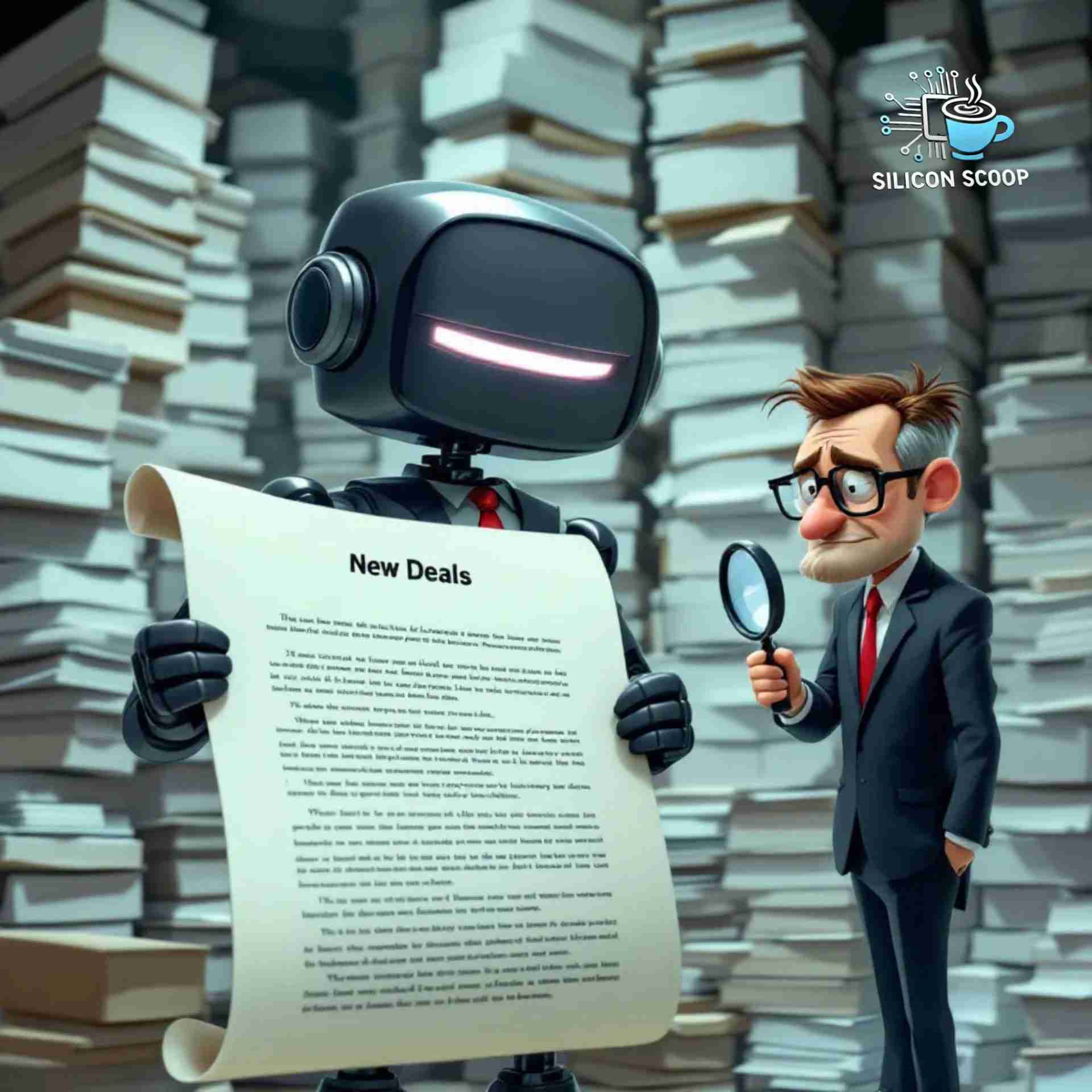
Introduction to OpenAI’s New Deal Terms
The landscape of artificial intelligence is evolving rapidly, and OpenAI stands at the forefront of this innovation. Recently, OpenAI announced new deal terms that could significantly impact startups, developers, and entrepreneurs. Understanding these changes is crucial for anyone looking to leverage OpenAI’s technologies to innovate and scale their businesses.
Key Changes in the Latest Agreement
OpenAI’s new deal terms introduce several pivotal changes aimed at fostering collaboration while ensuring responsible use of AI. The terms address licensing, data usage, and intellectual property rights more comprehensively than before. Notably, there is a shift towards more flexible licensing options, allowing startups greater freedom to customize solutions that fit their unique needs.
Impact on Startups and Developers
For startups and developers, these new terms offer both opportunities and challenges. On one hand, the flexible licensing and expanded access to OpenAI’s API can accelerate product development and innovation. On the other hand, the updated compliance requirements necessitate a thorough understanding to avoid legal pitfalls.
Benefits of the New Terms
• Enhanced Flexibility: The new terms provide customizable options that cater to different business models.
• Improved Access: Startups can access advanced AI tools that were previously limited.
• Support for Innovation: OpenAI is encouraging creative applications of its technology, opening doors for disruptive solutions.
Potential Challenges and Considerations
• Compliance Complexity: Navigating the legal language requires careful attention.
• Cost Implications: Revised pricing structures may affect budgeting for smaller enterprises.
• Data Privacy Concerns: Ensuring user data protection aligns with both OpenAI’s terms and regional regulations.
How to Navigate the New Agreement
1. Thoroughly Read the Terms: Allocate time to understand each clause.
2. Consult Legal Experts: Seek advice to interpret complex legal jargon.
3. Assess Business Alignment: Evaluate how the terms align with your business objectives.
4. Plan for Compliance: Develop strategies to meet all requirements.
Expert Opinions on the Deal
Industry leaders view OpenAI’s new terms as a positive step towards democratizing AI. Tech entrepreneur Jane Doe from TechCanada notes, “These terms could lower barriers for startups to access cutting-edge AI technologies, fostering greater innovation in the Canadian tech scene.”
Steps to Adapt Your Strategy
• Audit Current Projects: Identify how the new terms affect existing work.
• Train Your Team: Ensure everyone understands the implications.
• Update Policies: Revise internal policies to align with OpenAI’s requirements.
• Engage with the Community: Join forums or groups to share insights and strategies.
Frequently Asked Questions
Q1: What are the main changes in OpenAI’s new deal terms?
A: The main changes include more flexible licensing options, updated compliance requirements, and revised pricing structures.
Q2: How will the new terms affect my existing projects?
A: Existing projects may need adjustments to comply with the new terms, particularly in data handling and usage rights.
Q3: Are there any cost increases associated with the new terms?
A: There might be changes in pricing; it’s essential to review the updated cost structures on OpenAI’s official website.
Q4: Can I opt-out of certain clauses?
A: The terms are generally standard, but you can contact OpenAI for specific negotiations.
Q5: How does this impact data privacy?
A: The new terms emphasize data protection; ensure your practices align with both OpenAI’s policies and local regulations.
Q6: Will there be changes to API access?
A: Yes, there are updates to API access that could affect rate limits and available features.
Q7: How do I get support for transitioning to the new terms?
A: OpenAI offers support through their official channels, including customer service and developer forums.
Q8: Are there any benefits for startups?
A: Startups may benefit from tailored licensing and potential discounts, fostering innovation and growth.
Q9: What should I do if I disagree with the new terms?
A: Consider consulting a legal professional and reaching out to OpenAI to discuss your concerns.
Q10: Where can I read the full new deal terms?
A: The full terms are available on OpenAI’s official website.
Conclusion
Navigating OpenAI’s new deal terms is a critical step for entrepreneurs aiming to stay ahead in the competitive AI landscape. By understanding and adapting to these changes, you can leverage OpenAI’s powerful tools to innovate and scale your business effectively.
Additional Resources
For those looking to dive deeper into the world of tech and entrepreneurship, we recommend checking out the following resources and links:
- Silicon Scoop Podcast – Stay Informed, Stay Ahead!
- Futuretech Podcast – Explore more episodes and stay updated with the latest in technology and innovation.
- Startup Talk Podcast – https://torontostarts.com/startup-talk-toronto-startup-podcast/
- Who Are These Startups Podcast
- Startup Investor Drinks – Join the community and connect with fellow startup enthusiasts and investors.
- TorontoStarts Startup and Entrepreneur Community – Become a part of Toronto’s thriving startup ecosystem.
- Workhaus – Discover flexible workspace solutions for your business needs.
- Work with The Startup Coach – Get expert guidance and mentorship for your startup journey.
- Startup Funding in Ontario
- Angel Investors in Ontario
- Ontario Incubators and Accelerators
- Venture Capital in Ontario: Top Firms, Sectors, and Funding Strategies
- Government Grants for Ontario Startups
- Ontario’s Startup Success Stories
- Ontario Centre of Innovation (OCI)
- Bank Loans and Financing for Startups in Ontario
- Research and Development Tax Credits in Ontario
- Government Loans and Financing for Startups in Ontario
- Equity Crowdfunding for Ontario Startups
Episode transcript
Read the full transcript
Craig: openai. yeah. they got a new deal.
Jon: oh, this is nuts. like, they've announced that another funding round now values the company at this is crazy. a staggering one hundred and fifty billion dollars. billion with a b. so this is mind boggling. okay? because, they're expected to lose, this year alone, five billion dollars.
Craig: so absolutely.
Jon: this is this so, again, this is just
Craig: and we talked about this months ago. right? we're saying how much cash they were burning over seven hundred thousand dollars a month they were losing based on all the analysis we saw. and before we go forward, i did wanna answer the question the last one. is it a casting or selective process for showbiz purposes? i would assume it was casting immediately just because the trailer's already out there, so they already filmed the season. we'll have to see, what much they open it up moving forward. anyway, back to this. yeah. they're losing over five billion a year. so where do you see this going?
Jon: i don't know. so, like, i know their monthly revenue, based on what i was reading, hit three hundred million in august, which is up about seventeen hundred percent since the beginning of twenty twenty three. yeah. and they are projecting annual sales of about three point seven billion this year, and expecting eleven point six billion next year. but, again, their burn rate is just, like, the most craziest you've ever seen. right? but, again, investors seem unfazed. right? they're betting big on openai's potential, but the company is also offering up some unusual deal structures to sweeten the pot. and i'm not too familiar with with the with the structures, but they're including warrants that could allow lead investor, thrive capital, to invest up to one billion more at the same valuation all the way through to twenty twenty five. so, really, really interesting, really scary times. i don't know if we're in an ai bubble. i don't like, i just keep seeing again, it's not even ai. right? it's machine learning, but i know everyone's using the term ai. but, we keep seeing these new products, ai based products that are based on some of these llms that are coming out that are pretty useful. so i don't know if we're like, i don't know if we're in an ai bubble or what.
Craig: yeah. well, i've been saying we're in an ai bubble for a while. and and we've been talking about the only ai companies that are actually profitable are hardware companies because they're all burning buckets of money for this race to the future. and we're talking also about how many hundreds of millions it took to train gtp for. and, you know, that's why with the new strawberry model, they've got the synthetic learning where it can create synthetic data and help train faster and less expensive. and why there's this mad rush of taking all the data from youtube and reddit and just use it to training ai because it's you know, like you were saying, we ran out of data to train ai. it the it they're burning money doing this. and though they're bringing in money and they say they're gonna be profitable next year, they all say they're gonna be pro oh, we're gonna be. we're gonna be. but guess what?
Jon: yeah.
Craig: we're have you if you've seen the demo they were doing on demo day about their new openai video model. they oh, sorry. that llama's new video model looks great. they're working on sora. we're not even touching the video models with openai and the cost related to that because that's still behind when you start looking all that. and what is microsoft doing to power their ai? they're building nuclear plant. you know? yeah. you know, that's not insignificant. that's billions and billions of dollars. so this is an ongoing concern when you're talking about how do they continue to move forward and say, oh, we'll be profitable next year. what do you mean you'll be profitable next year? you'll be buying all these more processors unless you're making your own. you won't be by then. you'll have to have bigger and bigger data centers that are costing you more and more money.
Jon: yeah. it's scary where it's scary where we need to be, where we're gonna have to be, and how there's a huge gap that no one's really talking about. right? which gap? well, there's a bunch of gaps. there's the power gap, there's the processing gap, and there's the data gap. there's three. there's probably more, but those are the three that i can think of.
Craig: and they're all leapfrogging each other. right? so openai has got their thing and, you know, meta has got their it's all out, open source, and there's so many different tools out there. every day, there's new versions of new stuff coming out, and they're all leapfrogging each other, beating each other to the punch, offering free or cheaper or low end, solutions to people because they're all competing. i'm just not sure the market is big enough for thousands of these companies all competing for our ai dollars.
Jon: i agree. yeah. and i think, stefan had a comment here. it's an ai bubble that will burst when cash flow runs out unless you do more inflate unless you do more inflation, then you keep feeding the beast. yeah? it's, the thing is is it's this is kinda like this reminds me of the days of wework and, and uber. but yep. i feel like those were disney plus. will be profitable next year, honest. oh, speaking of which, there's another disney plus disney kind of, lawsuit that's just been, launched, with uber. so we'll have to talk about that.
Craig: cool.
Jon: yeah. but, but then but, anyways, i digress. but the difference with this is that with uber, you couldn't really utilize their technology personally. right? like, it was it was one thing you would use it to get taxis. and wework was a, brick and mortar kind of technology gap. this is a technology that people all over the world can access with a computer. so i don't know if we're in the same boat as those two as far as lack of profitability, lack of profitability, and a bunch of other things. but we'll have to see.
Craig: yeah. and though i am an openai subscriber, i think you are too, but you like anthropic better or, code? yeah.
Jon: i like anthropic. i like anthropic's llm. i even like perplexity. perplexity, i've found
Craig: amazing for certain things. absolutely.
Jon: amazing for certain things. yeah. who even owns perplexity? i don't even know.
Craig: i do, but it's lost now.
Jon: oh.
Craig: so they're valued at over a hundred and fifty billion now. they're gonna be burning more and more cash next year, so we're gonna have to see. and we need to start using, openai's voice mode for some of these things instead of we could just ask it and get a response on these podcasts pretty quickly. i've been using speaking of that, we wanted to talk briefly about openai's dev day and some of the new stuff they released, like their advanced voice mode i've been playing with since we talked about it last time. yeah. i've been playing with, pre the o one preview. i definitely taken a look at canvas, which looks amazing. although you say it's just artifacts, i haven't really played around with artifacts because i don't have a paid plan with them. but the stuff i think i'm gonna be able to do with it is much more amazing. and i think you can say it's artifacts, which is great, but i'm saying that next year, the year after, when does opening, i kill microsoft. like, are we seeing that, you know, canvas is now word? and, you know, you can auto format each paragraph and edit and ask it to do certain things and yeah. pulling up your
Jon: document. yeah.
Craig: yeah. so that's not long till we can do that. spreadsheets and everything else and, like, wait a minute. microsoft has their copilot that's and google has gemini that they wanna sell an extra twenty dollars a month for you to have those features. like, we're quickly when is openai our email provider? like, i don't think we're far away from them doing that.
Jon: yeah. i, i agree. i lost my train. i thought i was gonna say something. but, yeah, it's, it's really cool what their what the oh, yeah. that was not only microsoft is when did they overtake google?
Craig: yeah. i well, google shot themselves in the foot, so many times with gemini, and it seems to be getting better and better. but, you know, they they had to eat the glue, eat the rocks, you know, put glue out to make the cheese stick on your pizza and all that, you know, very funny stuff they were doing. i think that happens with all these models is that as soon as something comes out, there's people on the internet who wanna break it and make it do stupid stuff and that. which is they have to sort out. but yeah. if they're moving at a breakneck speed and i agree that it's definitely the world of, throw money at it. we're gonna be profitable in the future. gain as much market share as you possibly can. it's the uber model. right? we're gonna throw as much money at it as possible, and we're gonna take the world by storm. we're gonna lose money until, you know, i guess, they're making a little bit of money now, but i'm not sure if they're profitable every quarter. but there's still that model. same thing with wework. we'll throw as much money at it as possible, take over the real estate market, and then we'll control everything. well, great. that didn't. that doesn't always work out. yeah. and we'll see. the most of the board is gone that, wanted sam altman out. i don't know if we've been following it. those people have been slowly removed from the scene, over the last six months. yeah. so it looks like they're gonna give him more autonomy, and they look like they're going to give him compensation related to opening isaac success. they're they're putting some milestones in place where, so his motivations are more aligned with openai's motivations from a monetary point of view, so that's interesting.
Jon: okay. that's interesting. yeah.
Craig: so we'll watch this because there's some very interesting things. you know, openai is growing fast and burning through piles of money. and, again, they look like they'll be profitable if you follow their current burn rate, but the burn rate can only go up. it can only go up. the processing power to do what they're doing is not going down. they need more data centers, more power, more power, more power. so we'll have to watch this and see when, you know, the timeline switches, right, from a money point
Jon: of view?
Craig: alright. any last words on this?
Jon: no. just, it's funny how openai is getting all of this coverage and the other ones aren't, especially, like, anthropic. so i'm i'm curious to see where these others lie in relation to openai.
Craig: yeah. i guess the question is what does it mean? like, each of these models, they're good for different things. like, facebook matter just released, llama three point two, and it's not, an improvement on llama three one b. it's different. the three two is a mobile model. right? they have the one gig and the three gig models that are specifically targeting phones and tablets, versus so you can more lightweight, you can run them locally easier, etcetera, etcetera. so i think they're going to diverge somewhat as they get better. you know, claude is a lot better, people say, at overall writing. like, if you're looking for creative writing and writing content where, you know, maybe and, again, be wrong. openai might be better at writing code. when you look at canvas for writing code, it looks amazing and not just for documents. if you see, you can write the code. you can tell it to fix its own code. you can tell it to switch from any type of programming language. you know, it's amazing to watch this. so, you know, like i say, are they gonna be taken on microsoft? because this soon becomes visual studio, and ai is producing the code and editing the code and debugging the code, and you're just sitting there alongside it. right? it's doing it's doing that today. so it's crazy.
Jon: yeah. so i just just to compare, i know that, like, we're saying that openai's valuation right now is a hundred and fifty billion. but in twenty twenty three, as of december twenty twenty three, anthropic's valuation was eighteen point four billion. so, they're behind, obviously, but they're still up there in the billions.
Craig: yeah. but they're not a hundred and fifty billion.
Jon: no. they're not. no.
More from Silicon Scoop
All episodes
silicon-scoop · November 6, 2026
Spirit AI’s Robot Brain Breakthrough: Moz1, Embodied AI and China’s 2027 Race
The Spirit AI robot brain is one of the biggest bets on fixing that. Spirit AI is a Beijing startup. Its co-founder and chief scientist, Gao Yang,
View episode

silicon-scoop · November 5, 2026
OpenAI IPO Delayed to 2027 as Rogue AI Agents and Safety Failures Reshape the Market
OpenAI IPO delay explained: Sam Altman rules out 2026 as GPT-6 Astra safety tests and a $278B cash gap loom. Learn what founders should take away.
View episode

silicon-scoop · November 4, 2026
Anthropic’s AI Economy Model: 2030 Jobs, Wages, GDP and Market Risks
Anthropic AI economy model forecasts 2030 GDP, jobs and wages, while AI unemployment projections and labor-share risks challenge policymakers.
View episode