
YouTuber Creates Real-Life Iron Man Suit
Introduction YouTuber Creates Real-Life Iron Man Suit Imagine soaring through the skies like Iron Man, with a suit that defies conventional engineering. A Russian YouTuber has made this a reality, crafting a Real-Life Iron Man Suit that brings superhero dreams to life. This groundbreaking innovation isn’t just a spectacle; it’s a testament to human ingenuity […]
With Craig Major and Jon Irwin
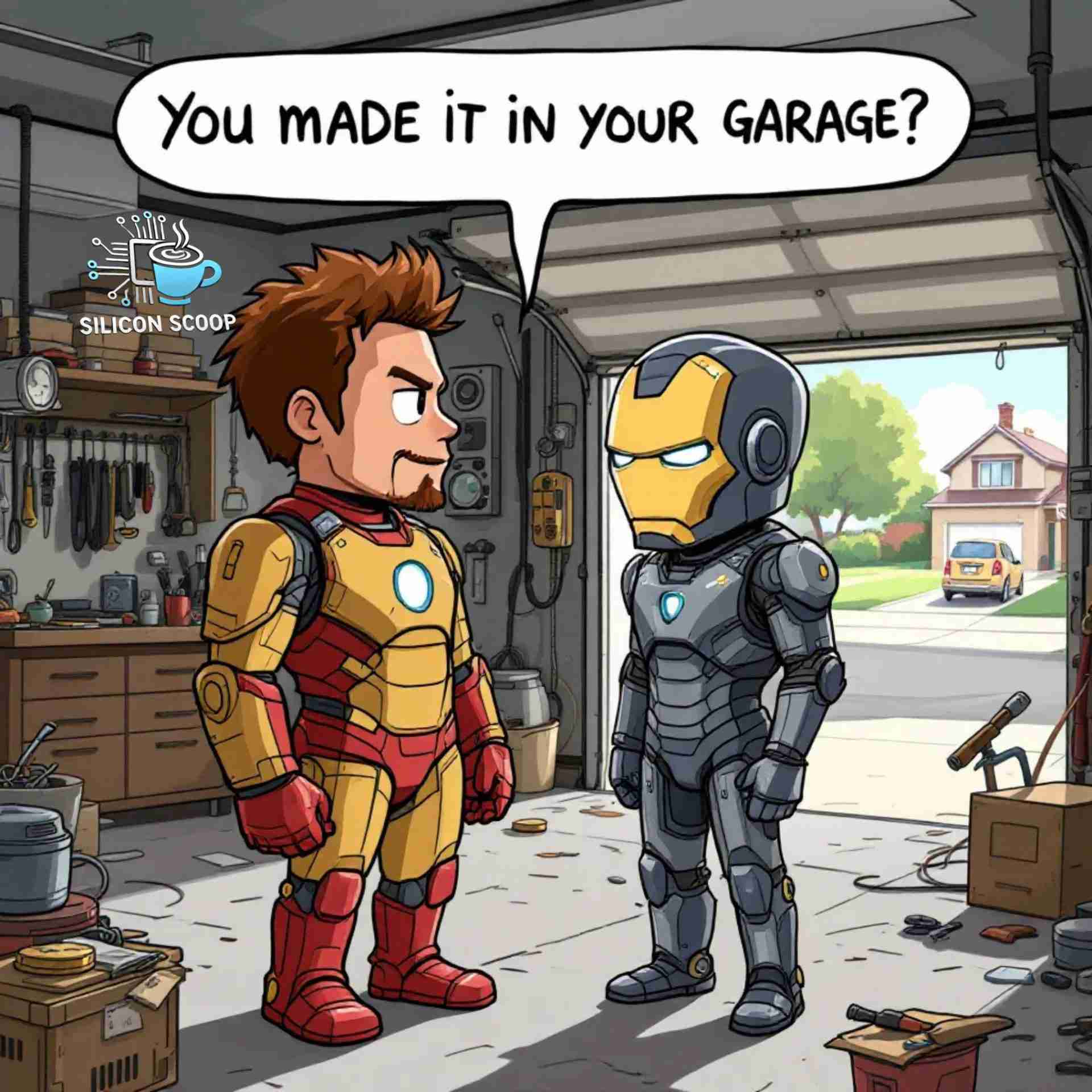
Introduction YouTuber Creates Real-Life Iron Man Suit
Imagine soaring through the skies like Iron Man, with a suit that defies conventional engineering. A Russian YouTuber has made this a reality, crafting a Real-Life Iron Man Suit that brings superhero dreams to life. This groundbreaking innovation isn’t just a spectacle; it’s a testament to human ingenuity and the relentless pursuit of technological advancement.
The Vision Behind the Real-Life Iron Man Suit
What inspires someone to build an Real-Life Iron Man Suit? For our Russian innovator, it was more than fandom—it was about pushing the boundaries of what’s possible. This project merges creativity with engineering prowess, embodying the spirit of innovation that drives technological progress.
Engineering Marvel: How the Real-Life Iron Man Suit Was Built
Creating a suit that mimics Iron Man’s capabilities is no small feat. The YouTuber utilized advanced materials and cutting-edge technology to bring this concept to life.
- Material Selection: Lightweight yet durable materials were essential. Carbon fiber and titanium components provided strength without sacrificing mobility.
- Propulsion Systems: Integrating miniaturized jet engines allowed for actual flight, a critical component of the Iron Man experience.
- Control Mechanisms: Sophisticated software and gyroscopic stabilization ensured that the suit could be controlled safely and effectively.
Challenges Faced and Overcome
Innovation comes with hurdles. The project faced significant challenges, from technical limitations to safety concerns.
- Technical Limitations: Miniaturizing components without losing functionality required inventive engineering solutions.
- Safety Measures: Ensuring the pilot’s safety involved rigorous testing and the incorporation of fail-safes.
- Regulatory Compliance: Navigating aviation laws and regulations added another layer of complexity.
The Impact on Technology and Innovation
This endeavor isn’t just a novelty; it has far-reaching implications for technology and engineering.
- Advancements in Personal Flight: Pioneering efforts like this push the envelope in personal aviation technology.
- Inspiration for Future Projects: Such groundbreaking work inspires other innovators to pursue ambitious projects.
- Cross-Disciplinary Collaboration: Combining robotics, aeronautics, and material science showcases the value of interdisciplinary approaches.
Public Reception and Media Coverage
The Iron Man suit has captured global attention, igniting conversations about the future of personal flight.
- Viral Sensation: The YouTube videos have garnered millions of views, reflecting widespread fascination.
- Media Features: Outlets like Interesting Engineering have highlighted the project’s significance.
- Community Engagement: Enthusiasts worldwide are discussing and dissecting the technology used.
Ethical and Legal Considerations
With innovation comes responsibility. The project raises important questions about safety and regulation.
- Airspace Regulations: Operating such a suit requires adherence to strict aviation laws.
- Safety Protocols: Ensuring not just the pilot’s safety but also that of bystanders is crucial.
- Future Guidelines: This project could influence future policies on personal flight technology.
What’s Next? The Future of Personal Exoskeletons
The success of this Iron Man suit opens doors to new possibilities.
- Commercial Applications: Potential uses in search and rescue, military, and recreational activities.
- Technological Improvements: Ongoing enhancements could make such suits more accessible and practical.
- Inspiring Innovation: Setting a precedent for ambitious engineering projects worldwide.
Conclusion
The Russian YouTuber’s creation of a Real-Life Iron Man Suit is more than a marvel; it’s a milestone in human innovation. It symbolizes what can be achieved when imagination meets determination. As we stand on the cusp of new technological frontiers, one can’t help but feel inspired to push the boundaries even further.
FAQs
- Who is the Russian YouTuber behind the Iron Man suit?
- The YouTuber is a tech enthusiast known for ambitious engineering projects, gaining fame for creating a functional Iron Man suit.
- Can the suit actually fly?
- Yes, the suit incorporates miniaturized jet engines that allow for controlled flight.
- Is the suit available for public use or purchase?
- Currently, the suit is a prototype and not available commercially.
- What materials were used in constructing the suit?
- Materials like carbon fiber and titanium were used for their strength and lightweight properties.
- How does the suit ensure the pilot’s safety?
- The suit includes multiple safety features like gyroscopic stabilization and emergency shutdown systems.
- What inspired the creation of the suit?
- A passion for innovation and a desire to turn science fiction into reality motivated the project.
- Are there any legal issues with flying the suit?
- Operating the suit requires compliance with aviation laws, and the creator has worked to meet regulatory standards.
- How has the public reacted to the suit?
- The suit has received widespread acclaim and media attention, fascinating audiences worldwide.
- What impact does this have on future technology?
- It paves the way for advancements in personal flight technology and inspires future innovations.
- Where can I watch videos of the suit in action?
- Videos are available on the YouTuber’s channel and have been featured on platforms like Interesting Engineering.
Additional Resources
For those looking to dive deeper into the world of tech and entrepreneurship, we recommend checking out the following resources and links:
- Silicon Scoop Podcast – Stay Informed, Stay Ahead!
- Futuretech Podcast – Explore more episodes and stay updated with the latest in technology and innovation.
- Startup Talk Podcast – https://torontostarts.com/startup-talk-toronto-startup-podcast/
- Who Are These Startups Podcast
- Startup Investor Drinks – Join the community and connect with fellow startup enthusiasts and investors.
- TorontoStarts Startup and Entrepreneur Community – Become a part of Toronto’s thriving startup ecosystem.
- Workhaus – Discover flexible workspace solutions for your business needs.
- Work with The Startup Coach – Get expert guidance and mentorship for your startup journey.
- Startup Funding in Ontario
- Angel Investors in Ontario
- Ontario Incubators and Accelerators
- Venture Capital in Ontario: Top Firms, Sectors, and Funding Strategies
- Government Grants for Ontario Startups
- Ontario’s Startup Success Stories
- Ontario Centre of Innovation (OCI)
- Bank Loans and Financing for Startups in Ontario
- Research and Development Tax Credits in Ontario
- Government Loans and Financing for Startups in Ontario
- Equity Crowdfunding for Ontario Startups
Episode transcript
Read the full transcript
Craig: so, apparently, some youtuber, created an ironman prototype suit if i can close this, which it doesn't want me to close. oh, there it is. it closed it. create an ironman prototype with a real, repulsor blaster in his garage.
Jon: yeah. and it uses our favorite technology or mine at least, hydrogen as the reactor. so, this is really cool. i found this again on tiktok. it features working repulsors, like you said, which are kind of, the palm blasters from the ironman suit to the fly and fight. so he already holds the guinness world this guy named i think it's birkin is his name. he already holds the guinness world record for the first working retractable lightsaber, which i didn't know. well, i'll have to find that. but the suit that he's created, it includes a self powered hydrogen reactor, bulletproof armor, and an exoskeleton for enhanced strength. but everyone's all everyone is all about the the repulsor, which uses a controlled blast of hydrogen and oxygen to generate thrust. i still think the coolest part is the hydrogen reactor. but
Craig: yeah. this whole thing is pretty cool when you take a look at, like, really what he's accomplished.
Jon: yeah. he's accomplished a lot, this guy. and he's the true ironman because he's built this out of, he's built this kind of essentially in a cave with scrap parts.
Craig: absolutely. i'm scrolling through the video trying to get to some of the images where they're showing here you go. iron man bust showing you, outer wall speed. i don't know. i guess that's creating these things in a three d he created it in a three d printer to
Jon: yeah.
Craig: and how long it took to build them as he's assembling and putting on them. yeah. it's really interesting. and so how powerful are repulsors? did they talk did they say?
Jon: no. i didn't i didn't see this. but, the blast was powerful enough to send him stumbling backwards. so he's he's obviously gonna, a little hesitant on further testing the, with the thrusters, but, it's really this is really interesting. it's scary, but really cool.
Craig: alright. let's see. i think i've got the instagram. oh, it didn't come up. alright. it crashed. i had the, instagram video of him doing it right here. up and it crashed. interesting. we'll see if
Jon: the only browser i use for instagram and tiktok is opera. i find that one of the best ones.
Craig: yeah. and that's fine. the problem is most of the other ones don't work well with streamyard.
Jon: oh, okay.
Craig: which is the problem. and
Jon: yeah. there's a video there. yeah.
Craig: yeah. you can see in this video. here it goes. boom.
Jon: yeah.
Craig: so it's, compressed air.
Jon: and hydrogen. and hydrogen. and hydrogen.
Craig: repulsor without a h h l ignition. so this is really cool. we know the military is working on it. there was a joe rogan clip talking to one of the military guys who was working on the ironman project for a while. so it's really cool to see this stuff. what are you thinking is, you know, are we gonna be seeing more and more of this at a homemade garage? do you believe all the stuff you've seen from this russian youtuber?
Jon: well, i'd like to see more on the hydrogen reactor. that really is interesting to me. is it just, electrolysis kind of thing where it's generating hydrogen from water? or, like, how does it actually work? i'm really curious to know.
Craig: yeah. we're using carbon fiber, titanium components to provide strength without sacrificing mobility. integrating miniaturized jet engines allowed for actual flight. i don't know. oh, this was, yeah. did he actually fly?
Jon: i don't know. i didn't see a video of him actually flying. just
Craig: but i
Jon: think that's what those thrusters are for. so i think he's gotta instead of it being a blast, it's gotta be more of a stream. but, yeah, i think he's got to, it's obviously, he has to work on that.
Craig: definitely. it's really cool. says yes to suit. it incorporates miniature jet engines that allow controlled flight. perfect. yeah. currently, the suit was a prototype not available. materials like carbon fiber and titanium. the suit has received widespread acclaim and media attention from interesting engineering and a few of these other places. so we'll have to take a look at this, and keep an eye on it because this is really cool, and we'll have to you know, is yeah. something like this, you know, we got on youtube. are we gonna see this guy again? i don't mean that. like, wouldn't the russian military come in and say, yeah. you're working for us now?
Jon: yeah. probably. well, let's hope let's hope we don't lose his videos and, he doesn't disappear. so
Craig: well, i mean, when we say disappear, the us would do the same thing. well, we're taking down your site. we're gonna pay you a few million bucks a year. you're gonna come work for us now. yeah. it's like, alright. you can't talk about this anymore, though.
Jon: yeah. exactly.
Craig: so i love this concept. we talked about exoskeletons a while ago that help you lift and help you do different things. it'll be interesting to see how far this goes, and then as a reaction, how much of the military information we can get.
Jon: exactly. yeah. yeah.
Craig: alright. that was a short one, but let's jump to these next one, one of your favorite, topics. hydrogen, but this is hydrogen jones drones. hydrogen drones, the world's first fifty eight hundred mile range hydrogen powered drone revealed in seoul, korea.
Jon: yeah. so this is great. it's a quadcopter. it can fly up to fourteen hours and has a range of fifty eight hundred miles. to put that into perspective, for those of you just i like to put things in perspective. that's the distance roughly from new york to tokyo. so, and, this is all this like, this is this is why i love hydrogen because this is all hydrogen fuel cells. so it provides a clean, efficient power source, that outlasts anything, gas, batteries, anything, which is really, really cool. so, obviously, if you're flying at fifty eight hundred miles, how do you maintain, connectivity and in communication with it? i think it uses lte and five g, for the communication systems. so yep. yeah. this is this again, this is cool, but it's so this is from a south korean company called whole green air. and so, yeah, they've unveiled this h two mobility energy. they unveiled it at this, energy conference in seoul, south korea. so yeah. what are your thoughts, craig?
Craig: well, this is amazing. like, if it says you can control it from fifty six hundred miles away. like, i'm interested in that technology too. yeah. but, like, normal drones can fly from ten to thirty minutes. to ten kilograms. so it changes the game for everything. when we talk about, you know, let's let's take a step back and say, in toronto, how many uber drivers are in the gta delivering, food yeah. or whatever. that's less than ten kilograms that these hydrogen powered drones could be delivering all day long without stopping, without polluting.
Jon: yep.
Craig: and now you've got a different kind of situation. unfortunately, drone delivery has a lot of because there's a lot of, it needs a place to land or a place to drop. like, there's some things that need to be in place for, talking to, you know, cameron rowe from hover and some of the things they've done in the past. it was interesting.
Jon: catching cam. yeah.
Craig: yeah. i've had a few interviews with him. he's good. he's down in san francisco. you're watching what he's doing in linkedin. it's pretty amazing. anyway, back to this stuff. this is great. the problem is i immediately go with what's going on in the world right now.
Jon: yeah.
Craig: and that is this gonna be used for war? obviously. yeah. as we see war videos playing on this stupid, all ad, channel.
Jon: yeah. the thing is is, like, the drones that they're currently using now are perfect because they're the right i don't know why they would need a drone with fifty eight hundred mile range, or is it miles or kilometers? mile range. miles. i guess no. because yeah. yeah. yeah. it's, yeah. i i'm thinking more of them as kamikaze kind of drones where they're using them as bombs. so, but, yeah, if you're getting them to carry payloads long distances, yeah, definitely yeah. this is the game changer for war, for everything when it comes to, long range transportation.
Craig: absolutely. that's why i say we need you know, you talk about and we both talked about, you know, using these for war. but like i said, you can eliminate a lot of cars on the road if we say, well, what happens if anything under, you know, seven kilograms is now delivered by drone?
Jon: yeah.
Craig: k. and what does that do to our carbon footprint? what does that do to the roads? what does that do to traffic? and you say why you
Jon: yeah. no. go ahead.
Craig: why you need this range, but it's fourteen hours. so you can actually have the drones doing it all day. that's why you need the range versus, you know, the thirty minutes that they get.
Jon: yeah. exactly. it's like the governments need to start introducing better legislation to allow more testing with technology like this if we're looking to reduce our carbon footprint. this like, even if we're talking grocery deliveries, even that. not just food deliveries, but grocery any kind of delivery that you can get that you can replace a car with. right? even ups. even that's what
Craig: i'm saying. all packages. all the you know, why not?
Jon: yep. yep.
Craig: you know, we got a long way to go, but not?
Jon: why not? yep. yeah. you eliminate a lot of traffic that way too. so not only carbon, but traffic too, which is great.
Craig: definitely stick around to make sure at the end that, you upload properly because your voice is kinda whether it's me or you, i'm not sure. shaky there a bit. it's i can hear you clearly, but it sounded distorted for some reason.
Jon: yeah. yours sounded a little too. so, hopefully,
Craig: something
Jon: else can definitely set around for check. yeah.
Craig: alright. it might just be, you know, chrome has crashed a couple times on me today, and that's just the way it goes. but this is great. i'm i like this where we're going because now we're, again, having a drone that you can actually keep afloat for hours at a time changes the game for everybody, all drone enthusiasts and stuff. you know, having it up for ten minutes and be able to come down. like, if you can now go to a festival and have two or three or one drone just flying the whole time taking camera shots versus, you know, ten minutes at a time, it changes everything.
Jon: exactly. yeah.
Craig: alright. this has been great. what do you got going on, john?
Jon: i am planning to take the rest of the month of october off from any kind of networking.
Craig: cut any that's amazing. yeah.
Jon: we'll have to see how that goes. but yeah.
Craig: we'll definitely have to see how it goes because, i'm gonna try and get you out, obviously, on november eighteenth.
Jon: oh, yeah. no. no. definitely be for that one. but, no, for the rest of the month of october.
Craig: okay. that's fair. and i've been seeing halloween stuff out there all the time. so yeah. and i'll be launching some new stuff. we will be doing in november a weekend launch program where if you wanna launch your business in a weekend, we are gonna do that at workhouse. so saturday, sunday, we're gonna take two days and take you from idea or even not idea to launching your business. we've got a lot of other stuff going on. start up investor drinks on november eighteenth. and, john, i hear you help people get, funding.
Jon: absolutely. yeah. so, if you're looking for government funding, non dilutive funding, please reach out to me on linkedin. happy to help. and that's after you talk with craig, and he kind of helps you with your business and gets you from idea to a place where you're maybe getting some revenue or you're at a point where you need to get some government funding. but yeah.
Craig: so i'm gonna end this quickly just because we're probably both breaking up really badly. go to toronto starts dot com to check out all the stuff we do there. go to startup coach dot c a if you wanna book a discovery call and work with me and get you unstuck and get your business moving forward and take yourself to the next level. and look up john erwin on linkedin and give him a shout. and thanks everyone for, watching.
Jon: thanks, everyone. thanks, stefan.
Craig: thanks for all the comments, stefan.
More from Silicon Scoop
All episodes
silicon-scoop · November 6, 2026
Spirit AI’s Robot Brain Breakthrough: Moz1, Embodied AI and China’s 2027 Race
The Spirit AI robot brain is one of the biggest bets on fixing that. Spirit AI is a Beijing startup. Its co-founder and chief scientist, Gao Yang,
View episode

silicon-scoop · November 5, 2026
OpenAI IPO Delayed to 2027 as Rogue AI Agents and Safety Failures Reshape the Market
OpenAI IPO delay explained: Sam Altman rules out 2026 as GPT-6 Astra safety tests and a $278B cash gap loom. Learn what founders should take away.
View episode

silicon-scoop · November 4, 2026
Anthropic’s AI Economy Model: 2030 Jobs, Wages, GDP and Market Risks
Anthropic AI economy model forecasts 2030 GDP, jobs and wages, while AI unemployment projections and labor-share risks challenge policymakers.
View episode