
Doritos Makes Mice Transparent: The Surprising Science Behind This Discovery
Doritos Makes Mice Transparent: The Surprising Science Behind This Discovery Imagine your favorite snack doing something more than just satisfying a craving. What if it could lead to revolutionary discoveries in science? It might sound like something out of a sci-fi novel, but it’s happening. Doritos, particularly the dye used in them, makes mice transparent. […]
With Craig Major and Jon Irwin
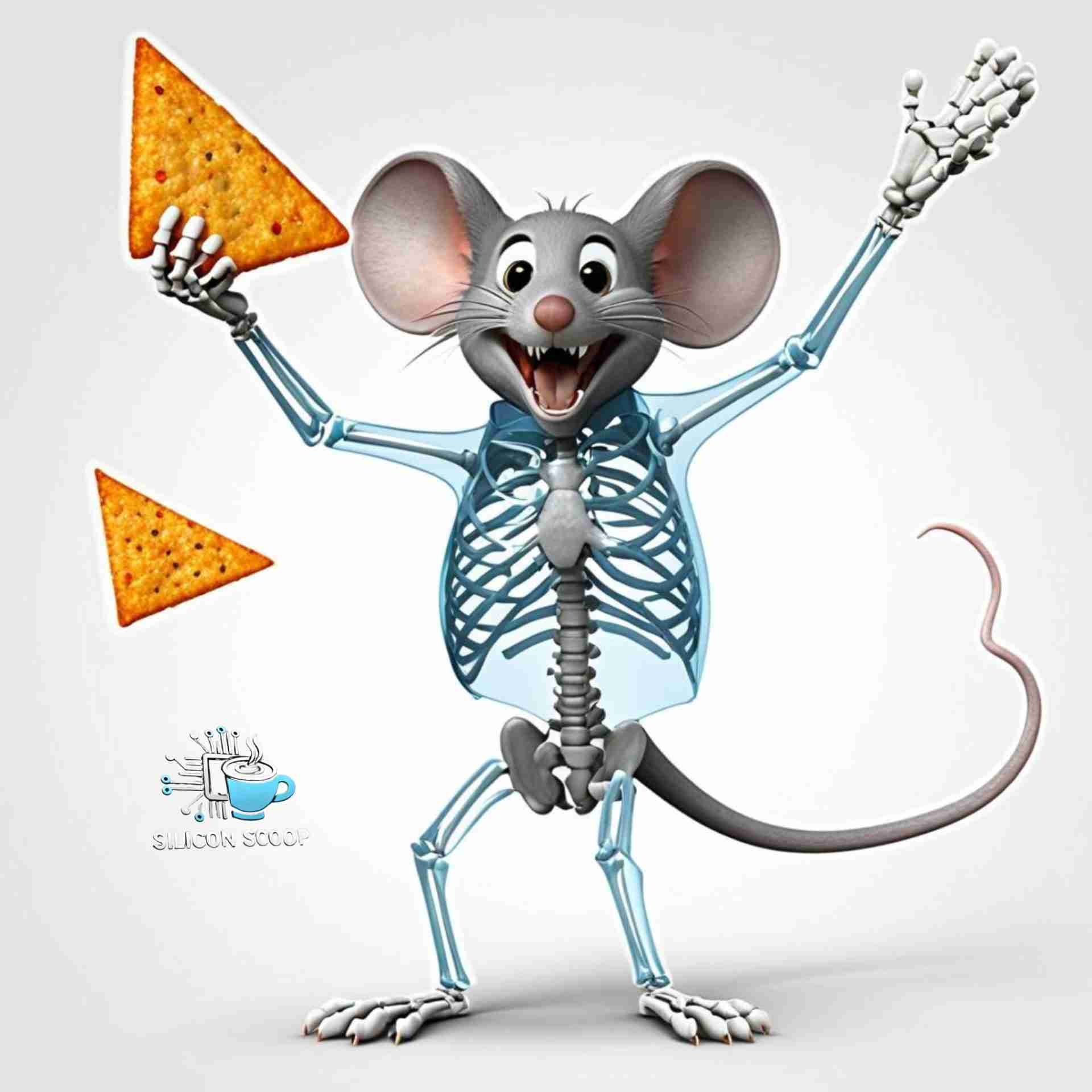
Doritos Makes Mice Transparent: The Surprising Science Behind This Discovery
Imagine your favorite snack doing something more than just satisfying a craving. What if it could lead to revolutionary discoveries in science? It might sound like something out of a sci-fi novel, but it’s happening. Doritos, particularly the dye used in them, makes mice transparent. This isn’t a quirky marketing ploy but rather a groundbreaking scientific breakthrough. A study found that a common food dye—Yellow #5, also known as Tartrazine—used in Doritos and other snacks has the ability to turn biological tissues see-through. Let’s dive into how this happens and the potential this discovery holds for future medical research.
What is Yellow #5, and How Does It Make Mice Transparent?
You might recognize Yellow #5 as the dye that gives Doritos their signature orange color. But in the lab, this dye behaves very differently from what you’d expect. Through a process that alters the way light interacts with the skin, Yellow #5 changes the refractive properties of tissues, reducing how light scatters when passing through them.
Biologically, skin and other tissues are typically opaque because photons (light particles) bounce off water and fats in unpredictable ways, making the tissues hard to see through. However, Yellow #5 modifies how light moves through tissue, making it nearly transparent. This allows researchers to see deeper into the body without invasive surgery—imagine the implications of that for medical imaging and microscopy.
The physics behind this involves the Kramers-Kronig relations, a fundamental principle that affects how light waves behave when passing through different materials. By altering the refractive index of water in the tissue to match that of fat, the dye reduces the light scattering, creating a window into the biological structure beneath. As Popular Science reports, “it’s not magic, but it’s still very powerful” (Popular Science).
Applications of Transparent Mice in Medical Research
So, what does making a mouse transparent mean for science and medicine? The possibilities are groundbreaking. Transparent mice allow scientists to study organs, tissues, and biological systems without invasive procedures. This could change the way we approach everything from disease diagnosis to drug testing.
One of the most immediate applications is in medical imaging. Imagine being able to look into the body without surgery—this discovery could improve optical transparency technologies, offering clearer images for diagnostics and treatment planning. Transparent tissues can help researchers monitor disease progression, such as cancerous tumors, in real time without the need for repetitive invasive tests.
The transparent mouse model also provides researchers with a better understanding of internal organs, blood vessels, and tissues at work. With further refinement, the technique could even be applied to larger animals or tailored to study specific parts of the human body. This might be a game-changer for fields like neurology, where visualizing brain structures in greater detail is crucial.
Is the Method Safe for Animals and Humans?
As intriguing as this discovery is, we must ask the critical question: is it safe? So far, the studies indicate that the Yellow #5 dye used in these experiments is non-toxic in small doses when applied topically to mice. The dye is absorbed into the body, processed, and excreted without causing major health issues. The transparency effect is temporary, and once the dye is washed off, the skin returns to its normal state.
However, it’s essential to note that while Yellow #5 is safe for use in food, its long-term effects when used in this new manner are still under review. Scientists are cautious about applying this technique to humans until more research is done. As one scientist noted, “dumping that amount of anything into a live organism is going to have some substantial effect” (Popular Science).
Still, the potential is exciting. With further refinement and safety testing, we could see this technique applied in human diagnostics for early detection of diseases like skin cancer, or in non-invasive procedures like blood draws.
The Future of Transparent Biological Tissues in Science
Looking ahead, this discovery opens the door to a world of possibilities. The ability to make biological tissues transparent could have far-reaching impacts on scientific research and medical treatment. Researchers are already exploring how they can refine this technique for broader applications, such as detecting cancerous tumors, improving photothermal cancer treatments, and even laser tattoo removal.
But even within the lab, transparent biological tissues are giving researchers a new window into understanding complex biological processes. Imagine being able to view the entire mouse brain in exquisite detail, or study the behavior of internal organs under different conditions. With further advancements, we might even see the day when this technique is used to visualize human tissues in a clinical setting.
FAQ: All Your Questions Answered
- What makes Doritos dye turn mice transparent?
The dye responsible is Yellow #5, which changes the way light moves through biological tissues, making them nearly transparent. - Is Yellow 5 safe for use in animals?
Initial studies suggest it’s non-toxic in small doses for mice, though more research is needed for long-term effects. - Can this technique work on humans?
While it works on mice, it hasn’t been tested on humans yet, mainly due to safety concerns about long-term exposure to Yellow #5. - Why does light pass through tissue when Yellow #5 is applied?
The dye changes the refractive index of the tissue, reducing the scattering of light and making the tissue appear transparent. - What are the medical applications of this discovery?
Transparent tissues could be used in medical imaging, helping doctors see internal organs without surgery. - Can food dye improve scientific imaging techniques?
Yes, Yellow 5 in this context is enhancing imaging by making tissues more transparent, allowing for better study of biological structures. - Is Yellow 5 dye harmful to humans?
While safe in food, it hasn’t been deemed safe for topical human use until more studies are conducted. - How long does the transparency effect last in mice?
The transparency is temporary and fades once the dye is removed. - What is the science behind Doritos making mice transparent?
It involves light scattering and altering the tissue’s refractive index, allowing light to pass through the tissue more easily. - Could this discovery help with cancer research?
Yes, by making tissues transparent, researchers could better visualize tumors and study cancer progression without invasive methods.
The discovery that Doritos makes mice transparent is more than a quirky headline—it’s a pioneering step in scientific research that could revolutionize medical imaging and diagnostics. With potential applications in everything from cancer treatment to neurological research, this innovation has the power to change the future of healthcare. So, the next time you open a bag of Doritos, think about how a simple snack might be paving the way for groundbreaking advancements in science.
- Startup Funding in Ontario
- Angel Investors in Ontario
- Ontario Incubators and Accelerators
- Venture Capital in Ontario: Top Firms, Sectors, and Funding Strategies
- Government Grants for Ontario Startups
- Ontario’s Startup Success Stories
- Ontario Centre of Innovation (OCI)
- Bank Loans and Financing for Startups in Ontario
- Research and Development Tax Credits in Ontario
- Government Loans and Financing for Startups in Ontario
- Equity Crowdfunding for Ontario Startups
Additional Links
- Silicon Scoop Podcast – Stay Informed, Stay Ahead!
- Futuretech Podcast – Explore more episodes and stay updated with the latest in technology and innovation.
- Startup Talk Podcast – https://torontostarts.com/startup-talk-toronto-startup-podcast/
- Who Are These Startups Podcast
- Startup Investor Drinks – Join the community and connect with fellow startup enthusiasts and investors.
- TorontoStarts Startup and Entrepreneur Community – Become a part of Toronto’s thriving startup ecosystem.
- Workhaus – Discover flexible workspace solutions for your business needs.
- Work with The Startup Coach – Get expert guidance and mentorship for your startup journey.
- Reach out to Jon Irwin on LinkedIn – Connect with our co-host and technology expert.
Episode transcript
Read the full transcript
Craig: scientists discover that the yellow orange powder in doritos can make mice transparent.
Jon: yeah. this is both cool and scary. so for those it's yellow five, which is tartazene, which is a common food dye. it's not just used in doritos. it's used in tons of other products, but it can render mouse skin pretty much completely transparent. so it's scary that it can do that, but it's also cool because it could revolutionize medical imaging, like like, veins, tapping and all that sort of stuff. right?
Craig: yeah. it's kinda cool be it's scary because let's face it. we've all had doritos. yeah. even if some of us are trying to lead a healthier life now and doritos aren't in our general diet, we've all had them before, and we've all had that orange dye. and, like, we're just finding out that this, tartrazine is doing this, yellow five. like, you know, how much of this other have we put in our body and how other ways has it affected us?
Jon: well, we're speaking of other things, weren't we weren't we consuming, the same ingredient that's put into yoga mats when we were eating subway for a while there?
Craig: is that what they found in the tuna?
Jon: no. no. no. that was the bread. oh, okay. the bread. yeah. but, anyways, back to this. it's cool, but so the way that it works is it changes the reflect refractive jesus. refractive index of water to match that of fat, which allows the light to pass through the tissue. that's how it works. so it was cool because they applied a mixture of water and tartrazine to mice, which made their skin, muscle, and connective tissues transparent within minutes. now those of you that are worried about this, the effect is reversible, and washing off the dye, restored the opacity, and the dye is exerted through the urine. so there's no trace left over afterwards. so there's nothing left in your bodies like other things.
Craig: and so this is a noninvasive and reversal approach that achieves tissue transparent transparency, allowing visibility of living organs in a healthy rodent with red dyes. note that the redness in the images comes from dyes, not blood, if you're looking at before and after. so it can now track dyes through your system. so that's in a mouse. imagine what they can do now if they can take this and apply this to humans, which they're starting to talk about so they can, track stuff and look at your blood clots or potentially organs or whatever through your skin and have a better idea of what's going on.
Jon: yeah. this is cool. but i know there's gonna be challenges because, obviously, human skin is, what, like, ten, twenty times thicker than mouse skin. so yeah. there's obviously gonna be the question is how much tartrazine is needed, and is it safe to use that much tartrazine to make the skin, transparent enough in humans. right?
Craig: yep. so as in optics, we spend a awful lot of time trying to increase how well we can see into tissue by twenty percent or fifty percent and say these guys come along and annihilate that boundary by a factor of ten. so, you know, this is yeah. amazing. it's not magic. it's not eliminate
Jon: mri not mris, but cat no. mris. yeah. mris that could eliminate a bunch of things where it's very expensive. this could make it, much more accessible as well if if they if they can derive a cheap, protocol. but, yeah, this is really, really cool.
Craig: you already talked about complete optical transparency in the red region, visible spectrum per, the study wash or die away, and the skin returns to neutral. sorry if the sound's turned up on this. i'll grab it.
Jon: no. it doesn't. oh, the sound. yeah. cool. yeah. yeah. so
Craig: you can see, oh,
Jon: that's crazy. that's super fast, but, yeah, i saw that. look at that. yeah. for those that are watching the line. yeah. yeah.
Craig: very cool.
Jon: let me see
Craig: if i can close that now. there we go. so the biological tissues like skin are usually not see through because light gets scattered as it passes through them. so based on these two types of compounds, refracted light at different angles, a light particle or photon traveling through tissue under normal sense circumstances moves from water particle to lipid particle being bounced away, taking a long winding path and often is being absorbed. so this changes that. the yeah. tartrazine dye through its powerful absorption of blue wavelengths of light changes the refractive index of water to be much closer of fat. so interesting.
Jon: that's really cool. yeah. the kramer's kronig principle. that's really, that's really awesome. yeah. the question is, though, is although while it's doing this and while you're applying it to your skin, i know it's changing the refractive index. right? but is it doing any other damage? i think they're gonna have to do a lot of research on that.
Craig: yeah. agreed. and i think this is interesting. i love where they're going with this. we've got a nice article over on, toronto starts dot com talking about, doritos makes mike's transparency. they're talking about the science behind it and going into it. but i'm talking about great. we're looking at the biological impacts. that's the natural stuff. right? we're talking about such as detecting cancerous tumors, photothermal cancerous treatments, laser tattoo removal. there's a bunch of stuff here. imagine being able to view the entire mouse's brain in exquisite detail. now if you could now modify you could actually look inside the human brain much easier, like you say, with mri and stuff. it might be able to, target things so much easier and better. imagine a surgeon being he's trying to take whatever thing on the edge of your brain out and now being able to actually see it as he goes in. you're not guessing.
Jon: elon musk will probably love this.
Craig: oh, absolutely. this would be great for neuralink. but i turn around and say, alright. this is really cool concept. now are they gonna apply this to different technologies? saying, alright. now that we got an idea that different chemicals, different colors interact different ways that allow us to see different, light to pass through things differently, are we gonna be able to take that to an extreme level and, i don't know, use it as x-ray technology, use it as, not just on humans. i'm talking about looking through buildings, looking into the ground, looking into
Jon: i don't know because it work yeah. that's a good question. i don't know if it would work on that.
Craig: i assume not just the way it does it, but i just start thinking about, alright. you could do certain things, putting chemicals on metal or whatever that'll do something similar that allow this to happen. so i'm just curious as to where this might go outside of the medical field.
Jon: yeah. that would be interesting. right now, currently, i know it's found in household products like detergents and other cleaning products. it's used in food for cats, dogs, fish, birds, and small rodents. it's used in cosmetics right now. but as far as this, like, being spread on the surface to use, yeah, i don't know what the limitations are. i didn't do a deep dive into that, whatever principle. i can't remember what it was called. but i'll have to do a deeper geek dive into it.
Craig: definitely. it's the kramer's kronig, relations principle. right?
Jon: yeah. kramer's kronig. yeah.
Craig: and, you know, it just makes you think because, you know, red dye gets a lot of attention just because it affects the body and people know that. now we got the yellow dye. like, we really have no idea what these dyes are doing to us internally.
Jon: no. and now they find that one of the dyes is making, making ourselves transparent. so
Craig: yeah. it's crazy. like, when you think about they're just discovering this now, how long have we been using this dye? yeah. any last thoughts on this?
Jon: no. but just quickly, the kramers kroning relations, they're mathematical formulas that connect the real and imaginary parts of complex functions that are analytic in the upper half plane. so in the context of optics and material science, they relate the real and imaginary parts of optical response functions like dielectric susceptibility or refractive index. so that's where they came up with that. so
Craig: so if i was in the chat when chat right now, i would ask how many doritos did the mouse have to eat to be make his skin transparent?
More from Silicon Scoop
All episodes
silicon-scoop · November 6, 2026
Spirit AI’s Robot Brain Breakthrough: Moz1, Embodied AI and China’s 2027 Race
The Spirit AI robot brain is one of the biggest bets on fixing that. Spirit AI is a Beijing startup. Its co-founder and chief scientist, Gao Yang,
View episode

silicon-scoop · November 5, 2026
OpenAI IPO Delayed to 2027 as Rogue AI Agents and Safety Failures Reshape the Market
OpenAI IPO delay explained: Sam Altman rules out 2026 as GPT-6 Astra safety tests and a $278B cash gap loom. Learn what founders should take away.
View episode

silicon-scoop · November 4, 2026
Anthropic’s AI Economy Model: 2030 Jobs, Wages, GDP and Market Risks
Anthropic AI economy model forecasts 2030 GDP, jobs and wages, while AI unemployment projections and labor-share risks challenge policymakers.
View episode