
AI Bots Beat CAPTCHA: How Machine Learning Is Changing Online Security
AI Bots Beat CAPTCHA: How Machine Learning Is Changing Online Security The world of artificial intelligence (AI) is advancing at a breakneck pace, and nowhere is this more apparent than in the ongoing battle between AI bots and CAPTCHA systems. As security challenges grow increasingly complex, AI bots are stepping up their game, often beating […]
With Craig Major and Jon Irwin
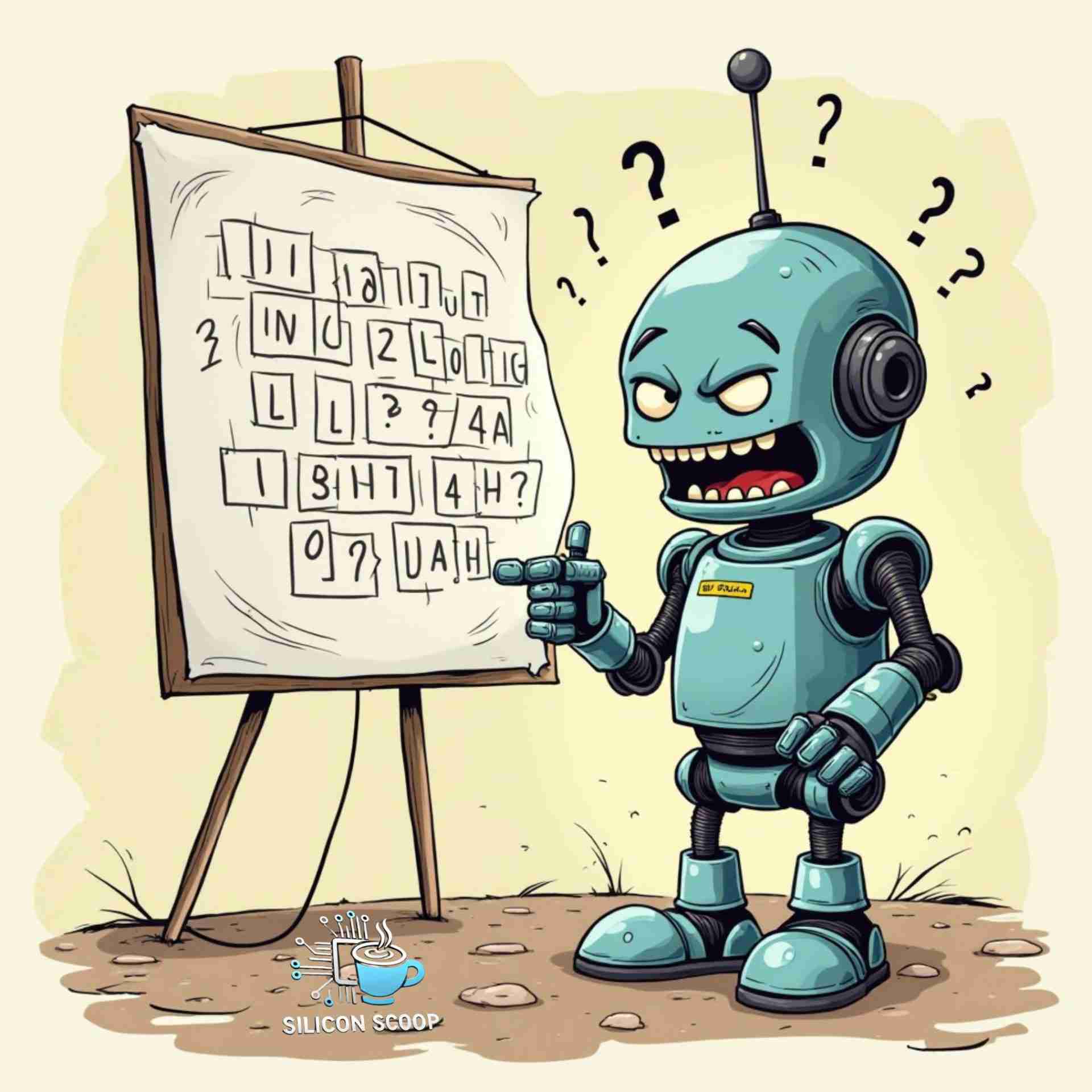
AI Bots Beat CAPTCHA: How Machine Learning Is Changing Online Security
The world of artificial intelligence (AI) is advancing at a breakneck pace, and nowhere is this more apparent than in the ongoing battle between AI bots and CAPTCHA systems. As security challenges grow increasingly complex, AI bots are stepping up their game, often beating CAPTCHA tests with startling efficiency. But what does this mean for the future of online security? In this article, we’ll explore how AI bots beat CAPTCHA, the technology behind it, and what this means for the future of the internet.
What is CAPTCHA? Understanding Its Role in Internet Security
To fully grasp the implications of AI defeating CAPTCHA, it’s essential to understand what CAPTCHA is and why it has been so critical to internet security. CAPTCHA, or Completely Automated Public Turing test to tell Computers and Humans Apart, was designed as a security measure to distinguish between human users and bots. It works by presenting challenges that are easy for humans but difficult for machines to solve, such as recognizing distorted text or identifying objects in images.
But what began as a simple solution to thwart bots quickly evolved. As bots became more sophisticated, CAPTCHA systems had to keep up, leading to the development of more complex image-based and behavior-based CAPTCHA challenges. Yet, even with these advancements, AI CAPTCHA solvers have continued to progress, finding ways to crack even the most difficult CAPTCHA tests.
How AI Bots Beat CAPTCHA: Breaking Down the Technology
So, how exactly do AI bots beat CAPTCHA? The answer lies in the use of advanced machine learning algorithms and neural networks. These systems are capable of processing vast amounts of data and learning from it in ways that were once unimaginable. For instance, image recognition AI can now analyze CAPTCHA images, recognizing patterns and making decisions faster than a human ever could.
A recent article on Ars Technica explains how AI bots have learned to defeat even traffic image CAPTCHAs, which were once thought to be particularly challenging. These bots use deep learning CAPTCHA bypass techniques to interpret and solve visual puzzles that are designed to trick them. The ability to recognize subtle details in images, such as the difference between a bicycle and a car, has given AI an upper hand in this battle Ars Technica.
But it’s not just image CAPTCHAs that are at risk. Text-based CAPTCHAs, audio CAPTCHAs, and even more sophisticated systems are all vulnerable to AI-powered attacks. The machine learning CAPTCHA methods used by these bots involve training algorithms on thousands of examples of CAPTCHAs, allowing them to “learn” the most effective ways to solve them.
Impact of AI Defeating CAPTCHA on Cybersecurity
The fact that AI bots beat CAPTCHA poses a significant challenge to online security. CAPTCHA has long been a cornerstone of preventing automated bot attacks on websites, from preventing spam to stopping brute force login attempts. But now, with AI’s ability to bypass these security measures, companies need to rethink their strategies.
The implications are widespread. CAPTCHA vulnerability opens the door for bots to carry out malicious activities, such as scraping data from websites, spamming forums, and even launching more sophisticated attacks on financial systems. As reported by TechCrunch, several industries, including e-commerce and banking, are feeling the effects of this newfound vulnerability TechCrunch.
Furthermore, AI vs CAPTCHA is just one piece of a much larger puzzle. As AI continues to evolve, the cybersecurity landscape will need to adapt quickly to counter these threats. It’s not just about creating harder CAPTCHAs—it’s about developing entirely new forms of bot protection that can keep pace with AI advancements.
Exploring CAPTCHA Alternatives and Future Solutions
Given the growing concern over AI CAPTCHA solvers, it’s clear that the traditional CAPTCHA model needs an upgrade. But what could that look like? One potential solution is the use of biometric verification. Rather than asking users to solve puzzles, websites could require fingerprint scans, facial recognition, or other biometric data to prove that a real person is behind the screen.
Another solution is invisible CAPTCHA, which works in the background by analyzing user behavior. These systems are designed to detect whether a user is a human or a bot based on factors like mouse movements, typing speed, and interaction with the page. Google’s reCAPTCHA has already started implementing this kind of technology, requiring little to no interaction from users.
Additionally, some researchers are exploring the idea of AI-powered CAPTCHA systems that can evolve alongside AI bots. By leveraging the same machine learning technologies that bots use, these systems could stay one step ahead, continuously adapting to new AI strategies.
Ultimately, the future of CAPTCHA may lie in combining multiple forms of verification—behavioral analysis, biometrics, and even AI itself—to create a security solution that is both user-friendly and highly effective.
The Ethical and Practical Implications of AI Bots Beating CAPTCHA
With great technological advancements come equally significant ethical considerations. Should AI bots be allowed to beat CAPTCHA? And if so, under what circumstances? On one hand, the development of AI CAPTCHA bypass techniques has driven significant progress in the field of AI. But on the other hand, these same advancements could be misused for malicious purposes, threatening the very foundation of online security.
There’s also the question of regulation. Governments and tech companies alike are grappling with how to manage the rapid pace of AI development. Some believe that stricter regulations are needed to control the use of AI in cybersecurity, while others argue that innovation should not be stifled by too many rules.
As AI bots beat CAPTCHA more frequently, it’s crucial that we strike a balance between fostering innovation and protecting users from harm. The challenge will be to create systems that allow AI to be used for good, without opening the door to widespread abuse.
Conclusion: AI Bots, CAPTCHA, and the Future of Online Verification
The fact that AI bots beat CAPTCHA is a wake-up call for anyone concerned with online security. As bots become more powerful, the traditional methods of distinguishing between humans and machines are no longer sufficient. But while this may seem like a daunting challenge, it’s also an opportunity for innovation.
Businesses must begin to explore new ways of securing their websites, from AI-powered CAPTCHA solutions to more advanced biometric systems. As the arms race between AI and CAPTCHA continues, the companies that are most successful will be those that stay ahead of the curve, leveraging the latest technologies to protect their users.
At the end of the day, AI breaking CAPTCHA is just one chapter in the larger story of AI’s role in reshaping the internet. By embracing new security solutions and continuing to innovate, we can build a future where both humans and machines can coexist safely online.
FAQ Section
- What is CAPTCHA?
CAPTCHA is a security test used to distinguish between human users and bots by presenting challenges that are easy for humans but difficult for machines. - How do AI bots beat CAPTCHA?
AI bots beat CAPTCHA using machine learning algorithms and neural networks that can recognize patterns in CAPTCHA challenges and solve them faster than humans. - What are the implications of AI defeating CAPTCHA?
AI defeating CAPTCHA undermines a key security measure used to prevent automated attacks, increasing the risk of data breaches, spam, and other malicious activities. - Are there alternatives to CAPTCHA?
Yes, alternatives include biometric verification, behavioral analysis, and invisible CAPTCHA systems that don’t require user interaction. - How does invisible CAPTCHA work?
Invisible CAPTCHA works by analyzing user behavior, such as mouse movements and typing speed, to determine if the user is human without requiring them to solve puzzles. - Can CAPTCHA systems be AI-proof?
While no CAPTCHA system is completely AI-proof, more advanced methods like biometric verification and adaptive AI-powered CAPTCHA systems can offer better protection. - Why is CAPTCHA important for cybersecurity?
CAPTCHA prevents bots from accessing websites, protecting against automated attacks like spam, brute force login attempts, and data scraping. - What industries are most affected by AI bots beating CAPTCHA?
E-commerce, banking, and social media are particularly vulnerable to bot attacks as they rely heavily on CAPTCHA for security. - What is biometric verification?
Biometric verification uses unique biological traits like fingerprints or facial recognition to verify a user’s identity, offering a more secure alternative to CAPTCHA. - Will AI eventually make CAPTCHA obsolete?
It’s possible. As AI continues to evolve, CAPTCHA systems will need to adapt or be replaced by more advanced security measures like biometric verification or behavioral analysis.
This article combines deep insights into how AI is reshaping CAPTCHA technology and cybersecurity, while offering practical solutions and forward-thinking approaches to staying ahead in an increasingly AI-dominated world.
- Startup Funding in Ontario
- Angel Investors in Ontario
- Ontario Incubators and Accelerators
- Venture Capital in Ontario: Top Firms, Sectors, and Funding Strategies
- Government Grants for Ontario Startups
- Ontario’s Startup Success Stories
- Ontario Centre of Innovation (OCI)
- Bank Loans and Financing for Startups in Ontario
- Research and Development Tax Credits in Ontario
- Government Loans and Financing for Startups in Ontario
- Equity Crowdfunding for Ontario Startups
Additional Links
- Silicon Scoop Podcast – Stay Informed, Stay Ahead!
- Futuretech Podcast – Explore more episodes and stay updated with the latest in technology and innovation.
- Startup Talk Podcast – https://torontostarts.com/startup-talk-toronto-startup-podcast/
- Who Are These Startups Podcast
- Startup Investor Drinks – Join the community and connect with fellow startup enthusiasts and investors.
- TorontoStarts Startup and Entrepreneur Community – Become a part of Toronto’s thriving startup ecosystem.
- Workhaus – Discover flexible workspace solutions for your business needs.
- Work with The Startup Coach – Get expert guidance and mentorship for your startup journey.
- Reach out to Jon Irwin on LinkedIn – Connect with our co-host and technology expert.
Episode transcript
Read the full transcript
Craig: we all get frustrated by these captcha images. now ai bots beat captcha all the time. so are we just gonna be able to install a one click thing to solve this for us and this is over?
Jon: before we dive into this, i've got a question for you. sure. so when you do this capture, right, and it says, choose all whatever squares that contain a motorcycle. yeah. do you pick the square that has the tiny little handle in it, or do you pick just the majority motorcycle and nothing else?
Craig: if i can see part of something, like, it's the light post question. right? you know, you don't actually see the light, but you can see a three feet of the post sticking out in the thing that goes up. and i'm saying, yeah. that's a light post. sorry.
Jon: yeah.
Craig: i don't know if i'm getting that right from, whether it wants me to call that a light post. but
Jon: i know. and, like, i pick the same thing every time. i pick anything that has even a tiny little bit. right, and sometimes it's wrong. i don't get it. it's so frustrating.
Craig: yeah. some of these are, you know, crazy, so how hard they are. was, this is one of my favorites of all time, obviously. select the square that matches the klingon bird of prey.
Jon: i've never seen that. that's funny. click the wall.
Craig: it's like, oh, crap. alright. so let's get back to
Jon: yeah. so
Craig: the ai bots now beat a hundred percent of those traffic image captchas. thank you
Jon: so much.
Craig: so looking at this one in the middle, for example, you can see, like, if it's a motorcycle, i would take this little fraction of a tire and say that's part of a motorcycle or this little fraction.
Jon: yeah. yeah. i would too.
Craig: and even that top so i would take
Jon: the yeah. yeah. that one so four
Craig: the four squares and then the one
Jon: up top is what i would take.
Craig: yeah. exactly. and, you know, i do that, and all of a sudden, they would tell me, no. you're wrong. it's like, oh, okay. yeah.
Jon: i know. it's so dumb.
Craig: and then pull up another one. i think they just want you to click it on they're just getting you to do stuff for them.
Jon: so i read somewhere that you're selecting it to train ai.
Craig: absolutely.
Jon: yeah. okay.
Craig: so anyone who's been caught surfing the web for a while is probably used to clicking through these captchas. and you, you know, if you do any sort of multi google searching, they pull up captcha to make you, sure you're human once you go past page ten and stuff. it just so, like, the captcha has been around a long time, but google's began phasing up the system years ago in favor of the new invisible captcha version three. i mean, versus the, like, the image captcha where you're doing they've got a version three, which i don't know. i automatically use it on my site, but it's not great?
Jon: what is version three?
Craig: it's an invisible. it analyzes user interactions rather than, so you don't ever see it. it just determines whether you're buying it or not on its own.
Jon: i like that. yeah. i like cloudflare. i like cloudflare's ones is, click here if you're a human. and i think they've got obviously, there's a lot more behind it, but, cloudflare, they've got a lot of great solutions as far as, cryptography and, and different things. so i'm sure the the way they built it is phenomenal.
Craig: yeah. so here's the question. do they think that click here if you're human is, full spots now? like, i mean, maybe the first time it was implemented, then you go, oh, shit. it's not doing its job. let me add that click the human button. or do you somehow think that there's some ai rule that says ai will click the i have human button because it's not human?
Jon: that's a good question. like but, like
Craig: it doesn't exist, people. let's just click it away, man.
Jon: yeah. well, the thing is is i don't think it's as simple as just clicking here. i think there's a lot more behind the scenes with cloudflares. i don't think it's just a click here for you.
Craig: what they're clicking here, and that's the whole point is that it's trying to as part of capture version three, you can have it invisible. you can have it click here. i'm human. that kind of stuff. or even just put that in there. and by the fact that you have to click that thing, basically, it's it's tracking your mouse movements, how long you take, all that kind of stuff to determine whether the human bots move with a certain i wait two seconds, then i click. and then i wait two seconds. i go click. like, if there's no, i move from here to there. all of a sudden, the mouse is here. it was over there. now it's on this button, clicking, or tab through or whatever depending on the tool you're using.
Jon: yeah. the one i don't mind is where you have to drag the puzzle piece and fit it in. that one i don't mind.
Craig: i haven't seen that one recently. so
Jon: i've seen it. yeah. but yeah. so back to this. yep. so this is we're talking about recapture version two image puzzles. and, researchers at eth zurich have developed the ai system that's that beats it a hundred percent of the time.
Craig: they use the fine tune version of the open source, you only look once object recognition model, to program this.
Jon: yeah. so this yolo is really interesting. like, so it divides the input image into a grid of cells, and for each cell, it predicts the probability of an object's presence, the bounding box coordinates, and class probabilities. so, it's it really takes a methodical, mathematical approach, which makes complete sense. and so, i know there's multiple iterations, but this was first introduced, i think, in twenty fifteen yolo. and it's not you only live once yolo.
Craig: yeah. and i'm curious. like, i would like to try there's a bunch of models now that will analyze images for you. they're not text to image, but they're you can put pdfs and images in, and it can be part of its knowledge base and scan them and understand what they are and stuff. i wonder if you put those in whether it to say, jati two b four as we were talking about pizza touring test, would it it would be able to identify those squares or not or whether you'd need us bear this very specifically tuned model.
Jon: i think you'd need the specifically tuned model.
Craig: the ollo model was able to actually identify individual captcha images anywhere from sixty nine percent of the time for motorcycles to a hundred percent of the time for fire hydrants.
Jon: so it's the same accuracy as a human. yeah.
Craig: do we click on that little bit of that motorcycle? do we not click on that little bit of the motorcycle? it doesn't even know. so, yeah, it doesn't even know. so
Jon: they need to rejig that captcha bullcrap.
Craig: so the battle continues. while there have been, previous academic studies attempting new dynamic recognition models to solve recaptchas, they're only been able to success between sixty eight and seventy one percent of the time. the rise of a hundred percent success rate shows that we are now officially in the age of beyond captcha. so i guess it's getting there.
Jon: yep.
Craig: and we'll have to see where the next one goes. right? like, what's the like, where does it go? what's captcha version four, or we pass that now?
Jon: yeah. no. especially now that we've got bots or ais beating the touring test. we've got, ais that can beat the, the recaptchas. yeah. where do we go from here?
Craig: so take a look at that, and i'm sure pretty soon there'll be bots that'll, detect captchas and solve them for you. like, it just did, like, natural next step that you would just have a plug in on your, browser that would just defeat that for you automatically.
Jon: yeah.
Craig: so go over and check out, the toronto starz dot com article that's attached to this podcast, ai bots beat captcha. they've got all the links in there and a deep dive on what's going on and how this is changing online security.
Jon: yeah.
Craig: even if you're not going
Jon: to read the articles, guys, go to check the images because they're really cool images on, on toronto stars dot com.
More from Silicon Scoop
All episodes
silicon-scoop · November 6, 2026
Spirit AI’s Robot Brain Breakthrough: Moz1, Embodied AI and China’s 2027 Race
The Spirit AI robot brain is one of the biggest bets on fixing that. Spirit AI is a Beijing startup. Its co-founder and chief scientist, Gao Yang,
View episode

silicon-scoop · November 5, 2026
OpenAI IPO Delayed to 2027 as Rogue AI Agents and Safety Failures Reshape the Market
OpenAI IPO delay explained: Sam Altman rules out 2026 as GPT-6 Astra safety tests and a $278B cash gap loom. Learn what founders should take away.
View episode

silicon-scoop · November 4, 2026
Anthropic’s AI Economy Model: 2030 Jobs, Wages, GDP and Market Risks
Anthropic AI economy model forecasts 2030 GDP, jobs and wages, while AI unemployment projections and labor-share risks challenge policymakers.
View episode