
Meta Auto-Doxing Smart Glasses: Privacy Concerns and Ethical Implications
Meta Auto-Doxing Smart Glasses: Privacy Concerns and Ethical Implications In a world where technology is pushing boundaries, Meta Auto-Doxing Smart Glasses represent both innovation and controversy. These AI-powered glasses, equipped with facial recognition capabilities, offer real-time identification of strangers, raising significant privacy concerns. With the ability to auto-dox—automatically expose personal information—these glasses have ignited debates […]
With Craig Major and Jon Irwin
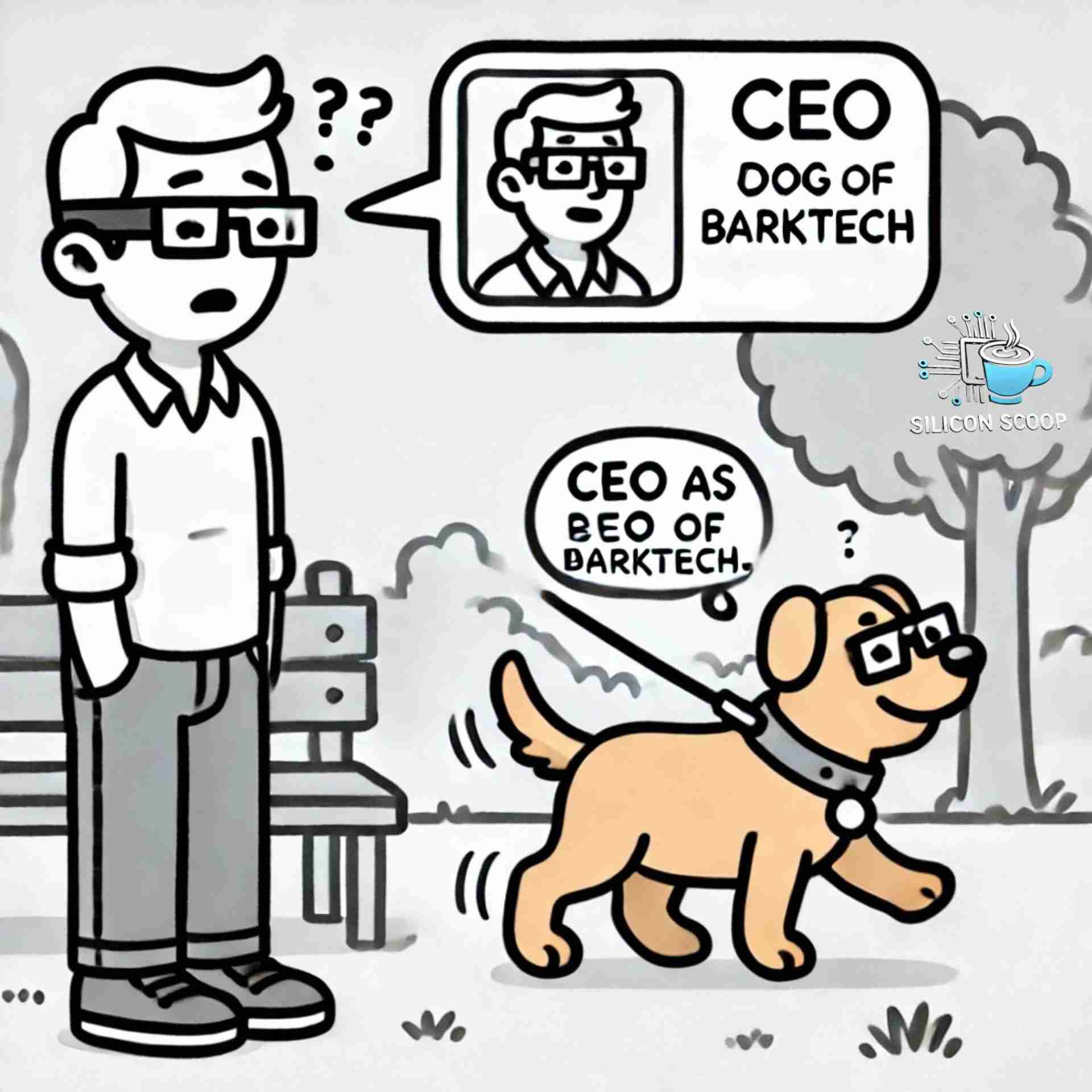
Meta Auto-Doxing Smart Glasses: Privacy Concerns and Ethical Implications
In a world where technology is pushing boundaries, Meta Auto-Doxing Smart Glasses represent both innovation and controversy. These AI-powered glasses, equipped with facial recognition capabilities, offer real-time identification of strangers, raising significant privacy concerns. With the ability to auto-dox—automatically expose personal information—these glasses have ignited debates about ethical technology use and data protection.
What Are Meta Auto-Doxing Smart Glasses?
Meta Auto-Doxing Smart Glasses are the latest in wearable tech, pushing beyond the functionality of earlier smart glasses with advanced AI-driven facial recognition. The key concern here lies in the auto-doxing feature, which allows the glasses to automatically identify individuals in public and stream their personal information without consent. This poses an unprecedented privacy threat, as ordinary people could find their personal data exposed without their knowledge or control. As Meta continues to innovate, it must address the implications of blending real-time facial recognition with public privacy concerns.
How Meta Auto-Doxing Technology Works
Meta’s smart glasses use AI to scan and identify faces from a built-in camera, matching them against vast online databases, including social media profiles. The result? Strangers can be automatically doxed—have their personal information revealed—via platforms like Instagram. Imagine walking down the street, and someone using Meta’s glasses can identify you, see where you work, live, and potentially access more sensitive data. This goes beyond merely recognizing someone in a crowd; it fundamentally changes our expectations of privacy in public spaces. Articles like this one from MacRumors have highlighted how quickly this kind of data exposure can escalate in everyday scenarios.
Privacy and Ethical Concerns Surrounding Meta Auto-Doxing Smart Glasses
The most alarming issue with Meta Auto-Doxing Smart Glasses is the violation of personal privacy. Individuals have a reasonable expectation of anonymity in public, yet these glasses strip that away. Imagine walking into a cafe and instantly being recognized, not by a friend, but by a stranger wearing Meta’s glasses who now knows your full name, Instagram profile, and perhaps more. This kind of tech presents ethical dilemmas, as companies like Meta could be enabling mass surveillance on a scale never seen before.
Several articles, like the one from Engadget, detail how Meta’s Auto-Doxing Smart Glasses have been used in experiments by students to identify and stream personal data in real time, showcasing the stark reality of its capabilities. This raises the question: where do we draw the line between innovation and the violation of personal privacy?
Legal Implications of Meta Auto-Doxing Smart Glasses
Legal experts are already examining the implications of Meta’s new technology, particularly in regions with stringent data privacy laws like Europe’s GDPR. Auto-doxing could be in direct violation of data protection regulations, as it reveals private information without explicit consent. Moreover, the unauthorized use of someone’s likeness for real-time recognition, combined with Meta’s vast database of personal profiles, could lead to lawsuits around privacy infringement.
Legal precedents in the United States are also shaky on the subject of facial recognition, especially when it comes to consent. MacRumors has pointed out how regulatory bodies might intervene to curtail the use of this technology, but current laws haven’t caught up with the reality of what this kind of wearable can do.
How to Safeguard Against Privacy Invasion by Meta Auto-Doxing Smart Glasses
For users concerned about their privacy, it’s important to understand what safeguards, if any, are available. Meta claims to be working on privacy controls that allow users to disable certain features, but for now, most of the responsibility lies on the individual. Avoiding highly publicized social media accounts, limiting personal data online, and using privacy tools can help minimize exposure.
However, the real solution needs to come from policy makers and tech companies. There needs to be a stronger regulatory framework that limits how much personal information can be accessed through such wearable technologies. Until then, Engadget and other tech media outlets are urging both the public and private sectors to take stronger stances on safeguarding privacy in the face of evolving AI capabilities.
The Future of Meta Auto-Doxing Smart Glasses and Wearable Technology
Meta Auto-Doxing Smart Glasses represent just the beginning of what’s possible with AI-driven wearables. As these technologies evolve, privacy will continue to be a central concern. Balancing the benefits of advanced facial recognition—such as personalized services and enhanced security—with the protection of individual privacy rights will require significant innovation and regulation.
According to predictions from TechRadar, wearables like these could become mainstream in a few short years, meaning now is the time to shape the legal and ethical frameworks around their use. We need to push for innovation that respects privacy, rather than undermining it.
FAQ Section
What are Meta Auto-Doxing Smart Glasses?
Meta Auto-Doxing Smart Glasses are wearable devices that use AI and facial recognition to identify strangers in real time, potentially exposing personal data.
How does auto-doxing work?
Auto-doxing refers to the automatic identification of people using AI, coupled with the exposure of personal information, often without the subject’s consent.
Are Meta Auto-Doxing Smart Glasses legal?
The legality depends on the region. In areas with stringent privacy laws, like the EU, these glasses could face legal challenges. In other places, the lack of clear regulation creates a gray area.
Can I protect myself from auto-doxing?
Limiting the amount of personal information you share online and using privacy settings on social media can help reduce exposure, but there is no foolproof method.
Are there any safeguards built into Meta Smart Glasses?
Meta claims to be developing safeguards, but currently, most privacy protection lies in user settings and the responsible use of the technology.
Why are Meta Auto-Doxing Smart Glasses controversial?
They raise significant privacy and ethical concerns because they allow users to identify and expose strangers without their consent.
What are the ethical issues surrounding facial recognition in wearable tech?
The primary ethical concerns include the violation of privacy, the potential for misuse, and the broader societal implications of mass surveillance.
Can facial recognition technology be used in a positive way?
Yes, facial recognition can enhance security, improve personalized services, and aid in law enforcement, but it must be used responsibly and ethically.
What is Meta’s response to privacy concerns?
Meta has stated that they are working on more robust privacy protections, but critics argue that these measures are insufficient for addressing the technology’s potential misuse.
What’s next for wearable technology?
As wearables become more advanced, the focus will need to shift toward balancing technological innovation with personal privacy protections.
By addressing these privacy concerns and pushing for both innovation and regulation, we can shape a future where technology serves the public interest without compromising individual rights.
References:
- Startup Funding in Ontario
- Angel Investors in Ontario
- Ontario Incubators and Accelerators
- Venture Capital in Ontario: Top Firms, Sectors, and Funding Strategies
- Government Grants for Ontario Startups
- Ontario’s Startup Success Stories
- Ontario Centre of Innovation (OCI)
- Bank Loans and Financing for Startups in Ontario
- Research and Development Tax Credits in Ontario
- Government Loans and Financing for Startups in Ontario
- Equity Crowdfunding for Ontario Startups
Additional Links
- Silicon Scoop Podcast – Stay Informed, Stay Ahead!
- Futuretech Podcast – Explore more episodes and stay updated with the latest in technology and innovation.
- Startup Talk Podcast – https://torontostarts.com/startup-talk-toronto-startup-podcast/
- Who Are These Startups Podcast
- Startup Investor Drinks – Join the community and connect with fellow startup enthusiasts and investors.
- TorontoStarts Startup and Entrepreneur Community – Become a part of Toronto’s thriving startup ecosystem.
- Workhaus – Discover flexible workspace solutions for your business needs.
- Work with The Startup Coach – Get expert guidance and mentorship for your startup journey.
- Reach out to Jon Irwin on LinkedIn – Connect with our co-host and technology expert.
Episode transcript
Read the full transcript
Craig: when we talk about, what we call it before, glass holes yeah. and people not get people not wanting cameras on people's faces in public places, just walking around streaming or recording or whatever. yeah. so these students go ahead.
Jon: this is what i wanted. this is what you and i talked about. i know this is scary as shit, but sorry. scary. but, like, this is what i've been looking for. so go ahead.
Craig: no. students have, used meta's smart glasses to automatically dock strangers via instagram streams. they blended facial recognition tech, a large language model, and publicly available data to, do some pretty creepy things. so why don't you take it over, and then we'll just talk about it.
Jon: yeah. this is cool. so what they did was it streams video from the glasses to instagram, and then the computer program uses facial recognition and ai to pull information from various online sources. so the ai can potentially retrieve a person's name, home address, phone number, and details about relatives just by looking at them. and for those of you that don't know, there actually is a, you need blue glasses that let you identify. you need what's that? sorry.
Craig: keep going. i just play in the video where they're talking about it.
Jon: oh, so actually for those of you that don't know, there's a tool called sherlock that finds matching usernames across four hundred different social media networks. it's it's quite a extensive install for you to do, but, just so people are like, oh, that can't be done. like, that's that takes a lot of work. no. there's open source, solutions that and public record lookups and all that sort of stuff that they can use to do this. so the project uses off the shelf smart glasses. it uses facial recognition models similar to those in public face search engines. it uses llms for data extraction and public record lookup services. so now the researchers do emphasize that their goal is to raise awareness about privacy concerns and not to create a commercial product. so blah blah blah blah. but, yeah, you and i have talked about this many times. i would love something like this only for if i'm going to a networking event, i have the name of the person and how i know them. that would be great.
Craig: yeah. so in this video here, i just paused it at this one spot so we can see. they're testing it live on a real person in the subway, and i'll talk us through it as we go through this. we're seeing the results that this person works at the cambridge community foundation, and he walks up to her and says, hi, ma'am. are you betsy and username, not staged, never met before? yeah. said, i think i met you at the cambridge community foundation. right? yeah. it's great to meet you. i'm blah blah blah. so he just walked up for and started talking and didn't know her at all. and all of a sudden, he's in saying, we met before blah blah blah. it's pretty scary stuff when you start thinking about what kind of stalker tools these could be. it's great, for example, though, if you're thinking about, you know, where does it draw the line? right? you walk into an event and you turn it on and say, search linkedin for these people, and the ones i'm connected to show me, and the ones i'm not connected to show me their their a little information or use my ai to tell me whether i should be connected to them or not, and get that information. okay. now so now you have a hundred people, images, and whatever in your thing and know who they are and you haven't met them. is that creepy or cool?
Jon: it can be both. it's a schrodinger cat. it's it's creepy and cool both at the same time until someone determines whether or not it's creepy or cool. yeah. it's invasive for sure, but the the the underlying thing too is that if this does become mainstream, i think it's going to make people finally wake up and take control of their data with all of these sites and make things more private. and maybe it might even encourage people to just get offline. who knows?
Craig: but, like, everything well, this is one of those things. if it becomes mainstream, with the internet and the world as it is now, the cat's out of the bag. information, you know, the theory was back in seventies, eighties. maybe you remember this. information wants to be free. information wants to be out there, all that stuff. it's funny thinking about it now. but once it's out, you can't take it back. like
Jon: no. you you know, people are
Craig: gonna say, oh, this is great. let where can i download the paper? where can i get the code? it's probably gonna get hub somewhere. and pretty soon, we're gonna have this. and if we're not this code, someone else will have figured this out. and they're just walking around talking to people. they're and they're getting their names and info. they're getting photos. they're pulling it all into their phone, and now they have a database on this individual, where they work yeah. what they did. some of you got a summer scholarship. oh, hey. they walked up to somebody and said, hey. you know, their name. you work with this stuff. oh, your work is great. i love it. blah blah blah. you know, this is interesting.
Jon: so, you know you know, like, you and i could even build this. i was just thinking about it right now because all you're doing is you're essentially interfacing with apis. so, the toughest part, i think, would be to get the accuracy of the facial recognition, and then all you're doing is then you're you're you're calling the api for linkedin, right, and getting a bunch of information and then displaying that on the phone. that's pretty much it. not?
Craig: well, what they're doing is right here in this technical document that is publicly available on the links in our website at toronto starts dot com and the eye ones, the eye x-ray, the ai glass that reveals everyone's personal details. and it specifically talks about, their llms, what software they use, removal of reverse face search engines. it's pretty interesting on what they do here now. i mean, they don't give you the code or anything, but you can
Jon: yeah.
Craig: get to it, i would imagine, eventually. so take a look at it. they're doing some interesting stuff, but you can see here that, you take his picture with this eye x-ray, and you get all these pictures. you get educational aids, where they go, address, phone number, potential email, and a whole bunch of stuff around about their profile. i'm like, wow.
Jon: yeah.
Craig: so it's amazing.
Jon: crazy. yeah. like, if used properly, i think there's there's some great use cases for it, but, obviously, there's a lot of nefarious use cases as well. but with everything, there's always that. right?
Craig: yeah. so let me ask a question. if you could get that code today, would you be running out and getting some, meta glasses and trying it out?
Jon: absolutely. no. i don't know. because i would want glasses that could display the information on the glasses themselves.
Craig: oh, fair enough.
Jon: yeah. so, actually, there is an article we can cover next time i put it in our list. okay. there are glasses that do that. what are they called? even realities. you'd actually like them. they're g one even realities. but, anyways, we could talk about them or not. i don't know if they have cameras built in, so i'd have to look into that. but, yeah.
Craig: alright. any last words on this? oh, by the way, go over to trona starts dot com where this podcast is located on check out the metal auto doxing smart glasses. we've got a whole bunch of links and stuff in there so you can follow that, rabbit hole.
Jon: yeah.
More from Silicon Scoop
All episodes
silicon-scoop · November 6, 2026
Spirit AI’s Robot Brain Breakthrough: Moz1, Embodied AI and China’s 2027 Race
The Spirit AI robot brain is one of the biggest bets on fixing that. Spirit AI is a Beijing startup. Its co-founder and chief scientist, Gao Yang,
View episode

silicon-scoop · November 5, 2026
OpenAI IPO Delayed to 2027 as Rogue AI Agents and Safety Failures Reshape the Market
OpenAI IPO delay explained: Sam Altman rules out 2026 as GPT-6 Astra safety tests and a $278B cash gap loom. Learn what founders should take away.
View episode

silicon-scoop · November 4, 2026
Anthropic’s AI Economy Model: 2030 Jobs, Wages, GDP and Market Risks
Anthropic AI economy model forecasts 2030 GDP, jobs and wages, while AI unemployment projections and labor-share risks challenge policymakers.
View episode