
Elon Musk Optimus Robot Unveiling: Tesla’s Game-Changing Humanoid Revolution
Elon Musk Optimus Robot Unveiling: Tesla’s Game-Changing Humanoid Revolution Introduction Elon Musk Optimus Robot unveiling at Tesla’s ‘We, Robot’ event was more than just a tech demo—it offered a glimpse into a future where AI and robotics seamlessly integrate into everyday life. Although these humanoid robots are capable of performing tasks autonomously, Musk revealed that, […]
With Craig Major and Jon Irwin
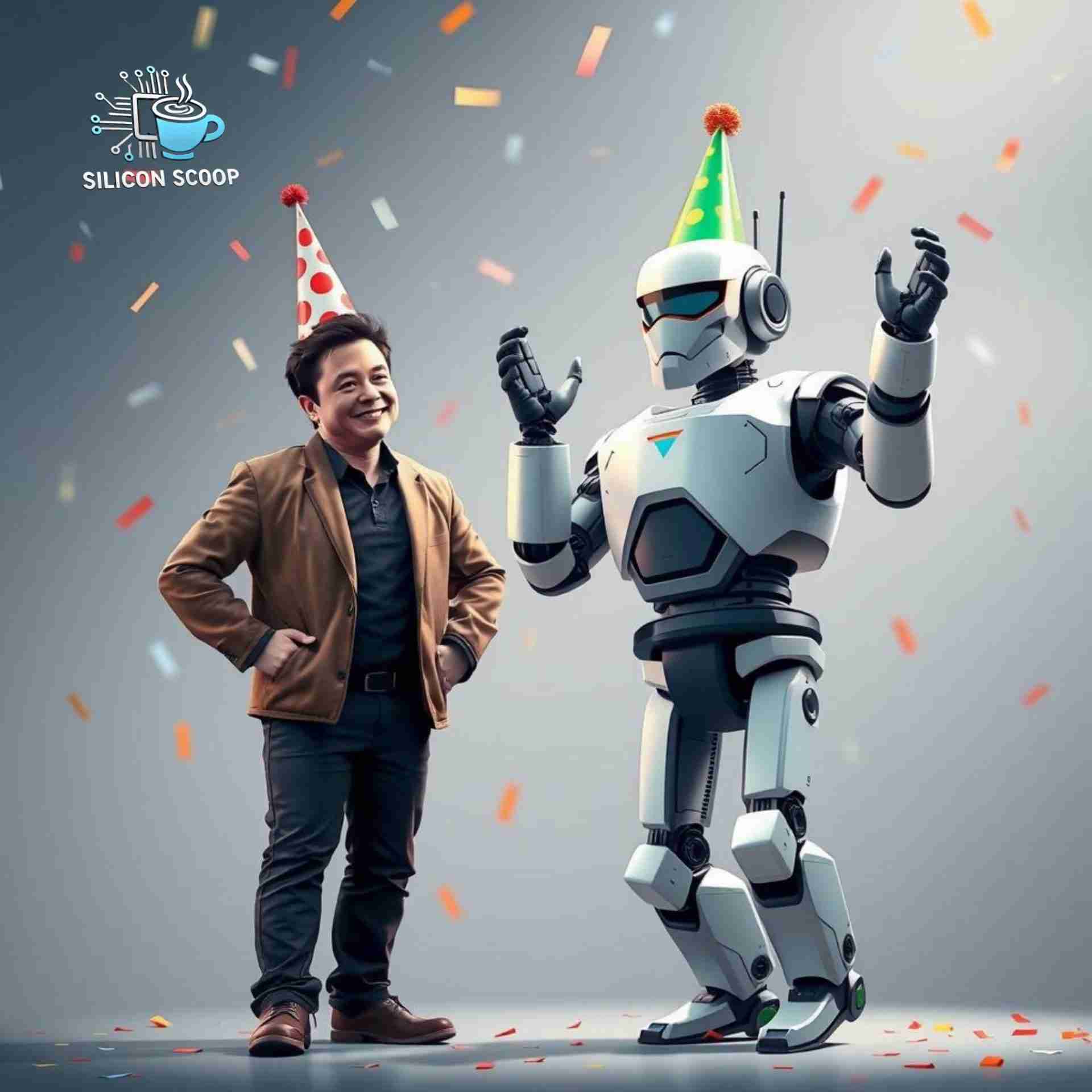
Elon Musk Optimus Robot Unveiling: Tesla’s Game-Changing Humanoid Revolution
Introduction
Elon Musk Optimus Robot unveiling at Tesla’s ‘We, Robot’ event was more than just a tech demo—it offered a glimpse into a future where AI and robotics seamlessly integrate into everyday life. Although these humanoid robots are capable of performing tasks autonomously, Musk revealed that, for now, they are partially controlled by humans remotely, allowing operators to guide their actions in real time. This hybrid approach combines the efficiency of AI with the precision of human oversight, making the Optimus Robot a powerful tool for everything from household chores to industrial operations. Tesla’s ultimate goal? To mass-produce these robots, reshaping how we work, live, and innovate.
Musk’s track record with disruptive technologies—from Tesla’s electric cars to SpaceX’s reusable rockets—has shown that he doesn’t just predict the future, he builds it. The Optimus Robot is no different. According to Musk, this humanoid robot has the potential to revolutionize industries by replacing tedious, repetitive tasks with a more efficient and scalable workforce.
This isn’t just a tech showcase for the curious. The Optimus Robot could be a game-changer for anyone looking to optimize operations, scale their business, or introduce cutting-edge technology into their daily lives. As Tesla pushes forward, the question isn’t whether robots like Optimus will be part of our lives—it’s how soon.
Event Overview
The Optimus Robot wasn’t unveiled in just any setting—it was the centerpiece of Tesla’s ‘We, Robot’ event, held in Los Angeles on October 10, 2024. The event drew innovators, tech professionals, and entrepreneurs from around the globe, all eager to witness the future of robotics firsthand. While Tesla has always been at the forefront of automation, this event marked a new chapter, where the lines between science fiction and reality began to blur.
From the moment Musk took the stage, the anticipation was palpable. He introduced the Optimus Robot not as a futuristic fantasy, but as a near-term reality—one that Tesla plans to mass-produce. “We’re not talking about a distant future. This is happening now,” Musk said, as he emphasized the practical applications of the robot.
And it wasn’t just talk. The Optimus Robot performed several live demonstrations, showcasing its dexterity, autonomy, and human-like movements. The robot’s ability to move smoothly and adapt to different tasks made it clear that this wasn’t a simple prototype but a highly functional, advanced AI-powered system.
Elon Musk Optimus Robot Highlights
The Optimus Robot isn’t just an impressive display of advanced engineering—it’s a glimpse into a future where humanoid robots could be as common as smartphones. Musk emphasized three main capabilities that make Optimus stand out.
Advanced Capabilities of Elon Musk Optimus Robot
Optimus demonstrated a significant leap in AI and robotics technology. Its human-like dexterity was one of the most talked-about aspects. The robot can walk, lift objects, and handle various tasks autonomously. Tesla’s innovations in AI allow Optimus to make decisions in real time, from stacking shelves to interacting with humans.
Elon Musk Optimus Robot Human-like Movements
The human-like design of Optimus makes it more adaptable for environments where robots need to integrate seamlessly with people. Its joints move with a fluidity that replicates human movement, a breakthrough in robotics that allows for more natural and precise actions.
Practical Applications
From industrial tasks like assembling products on a factory floor to potential household roles like serving as a personal assistant, the Optimus Robot has vast applications. It can help businesses reduce costs and increase efficiency by handling repetitive and mundane tasks.
Elon Musk Optimus Robot Vision and Future Plans
Elon Musk laid out Tesla’s plan for mass production, estimating that Optimus could be available for businesses and individuals in the next few years. Musk aims to bring the price down to $20,000-$30,000, making it more affordable than current humanoid robots. The robot is designed to assist both in industrial settings and eventually in homes.
Other Announcements at the Event
Tesla Robotaxi Service
In addition to the Optimus Robot, Tesla announced the development of an autonomous robotaxi service. This fleet of driverless cars will be powered by Tesla’s full self-driving (FSD) technology. This move represents a significant shift for urban transportation and is expected to lower costs for ride-hailing services.
Impact on Transportation Industry
Tesla’s robotaxi service could disrupt the traditional transportation industry by eliminating the need for human drivers. It promises lower costs, improved safety through AI, and a more efficient way to travel in urban areas. Companies in logistics, ride-sharing, and public transportation will need to adapt quickly.
Tesla Energy Solutions
Another major announcement was Tesla’s expansion of its energy solutions, particularly its solar energy projects and Powerwall advancements. These innovations are designed to offer more sustainable, affordable energy solutions for both businesses and homes.
Impact on the Energy Sector
Tesla’s energy solutions are expected to have a long-lasting impact on the renewable energy industry. With growing concerns about climate change, companies adopting Tesla’s solar panels and Powerwall systems can reduce their carbon footprint while saving on energy costs.
Conclusion
The unveiling of the Optimus Robot, along with Tesla’s other innovations, signals a future where AI and automation play integral roles in everyday life. Musk’s vision is clear: a world where machines take over repetitive, mundane tasks, freeing humans to focus on creativity and innovation. The impact of the Optimus Robot on industries like manufacturing, healthcare, and even households could be transformative.
With the added announcements of the autonomous robotaxi service and advancements in Tesla Energy, it’s evident that Tesla is not only leading the charge in transportation but also contributing significantly to a more sustainable future. For entrepreneurs, innovators, and tech professionals, now is the time to consider how these breakthroughs can be leveraged for business and personal growth.
Additional Resources
For those looking to dive deeper into the world of tech and entrepreneurship, we recommend checking out the following resources and links:
- Silicon Scoop Podcast – Stay Informed, Stay Ahead!
- Futuretech Podcast – Explore more episodes and stay updated with the latest in technology and innovation.
- Startup Talk Podcast – https://torontostarts.com/startup-talk-toronto-startup-podcast/
- Who Are These Startups Podcast
- Startup Investor Drinks – Join the community and connect with fellow startup enthusiasts and investors.
- TorontoStarts Startup and Entrepreneur Community – Become a part of Toronto’s thriving startup ecosystem.
- Workhaus – Discover flexible workspace solutions for your business needs.
- Work with The Startup Coach – Get expert guidance and mentorship for your startup journey.
- Startup Funding in Ontario
- Angel Investors in Ontario
- Ontario Incubators and Accelerators
- Venture Capital in Ontario: Top Firms, Sectors, and Funding Strategies
- Government Grants for Ontario Startups
- Ontario’s Startup Success Stories
- Ontario Centre of Innovation (OCI)
- Bank Loans and Financing for Startups in Ontario
- Research and Development Tax Credits in Ontario
- Government Loans and Financing for Startups in Ontario
- Equity Crowdfunding for Ontario Startups
Episode transcript
Read the full transcript
Craig: about this next one, elon musk's we robot event.
Jon: yeah. so i watched some videos on it. i've heard some tiktok videos on it. some people are saying it was faked, which they're not totally wrong because it was all done at a hollywood studio in a controlled environment, which that's fine. right? step by step. but elon musk is all what's go ahead.
Craig: let's take a step back and say, when you say people say it was fake. so it wasn't a hollywood studio, but when you say controlled environment, most of those robots were being remotely controlled and the voice was a person talking through the robot.
Jon: oh, i didn't see any information on that. that's interesting. i believe it, though. i thought see, what i thought was that, obviously, was it universal studios? is that where they did it? universal studios or whatever hollywood studio they did it in, it's got a a, like, a set map of roads and stuff like that. so i figured that they just programmed in that map so that it could handle it.
Craig: but i can't speak to the cars. i can only speak to the robots because
Jon: the robots were yeah.
Craig: k. so
Jon: they were remotely controlled. sorry. i thought you meant
Craig: speak to the cars, but the robots were being remotely controlled in the conversation.
Jon: heard that too. yeah. yeah.
Craig: well, you know, there's a bunch of videos, because people were there at the party with a bartender making drinks taco tool, and they kept asking them, are you completely or are you human controlled? and they'd be like, tonight, i am human assisted or whatever. and it's yippy. you know? and i say, from the different voices, you could tell it was human yeah. from the conversation. and, you know, he's passing the touring test and stuff because you heard, like, the conversation going back and forth and stuff. it was way more natural. the voice was way more natural than, you know, what i have seen in a lot of these other tools, and i've seen a lot.
Jon: yeah. so my question to you is, did he present it as that these robots were autonomous, or did he just present it as here are our robots kind of thing? like, was it misinformation, or was it genuine?
Craig: i honestly didn't watch the whole presentation of him. i was reading the articles and then watching the videos of people. so he did say at one point, we've come a long way because when they first started this, it was just a human in a suit. and so i would assume that he was being honest about it.
Jon: but we've come a long way because we've had surgical robots for years that are remote.
Craig: yeah. i'm just you know? but yeah. you say surgical. these are surgical robots that are remote are very specific things. they're not walking around, talking to people, serving drinks, taking your hat, opening doors, picking up envelopes, doing random stuff. so saying that you have robots that can do that, probably with some safety stuff so it doesn't automatically doesn't accidentally punch somebody.
Jon: yeah.
Craig: true. that they have come a long way. but it did come across to people and that, you know, me that, oh, these are the new optimus robots. amazing. let's look at this. like and they're complete oh, no. you know, took a while. i'm like, no. these are controlled. or at least somebody was talking through them, and that makes a lot more sense. and i guess this is exact again, how you train these ais. right? you train them by, the ais yeah. showing them. the ai is there watching them, what you're doing, and all that kind of stuff. so yeah. so he's talking about there was a lot of stuff unveiled at this event, and elon suggests that the robots are, going to be the biggest product ever. i think so. humanity. you know? and he's expecting them to be twenty to thirty thousand dollars, and everyone will have one. well, everyone who can afford it, i guess.
Jon: yeah. and it reminds me of irobot. what was the company? yeah. because they are a real company in real life. who was the company that they used in irobot? do you remember?
Craig: not sure, but i did see that, tweet that was saying, hey, elon. we want our designs back, and they were showing the movie and the comparison. and i don't think elon has been, like, literally called the we robot event. like, he's not being shy about, you know, we've we've taken these things. but those things are public images now. it was in a movie. you know, people can hey. i want my design back. well, it's sorry. you know?
Jon: yeah. us robotics. that's what it was.
Craig: oh, really?
Jon: us robotics? yeah. yeah. that was the company that was used, that was depicted in the film.
Craig: oh, interesting. they were, the best modem company for a long time.
Jon: yeah. they were.
Craig: i know. that's, you know, that's what i remember that as yeah. my age here. so these robots looked really impressive, but we still don't know when.
Jon: no. we don't. obviously, we built them. right? by the autonomy side of things, i think that's years away.
Craig: they're impressive looking. they fold down to nothing. they look like they have a lot of capabilities. so when the ai is there and that's the question is when will the ai be there that you can just and then when will he they'd be able to mass produce them?
Jon: yeah. like, we we obviously have autonomous robots now in manufacturing, but those are specific. that's a specific there's specific limits. there's specific instructions on movements and things like that. this is taking that one step further or way further. right? so i think that if you implement some of those basic principles from those manufacturing robots into this, i'm i'm sure that's what they're doing, or maybe not. maybe i'm wrong.
Craig: so i take a step back, and there's a great article here on toronto slides dot com that talks about not only the robot, but the tesla robotaxi and a couple other things that were announced. and it does a little bit of a deep dive. so i take and, you know, the impact on transportation industry and whatnot. but i'm saying if if as a individual or as a company, i can now, hire ai robots or buy them for twenty to thirty thousand dollars, what jobs do they replace?
Jon: mowing the lawn, but then you can also get mowing the lawn.
Craig: retail, doing the dishes, bartending?
Jon: bartending for sure. yep. bartending.
Craig: booking and the,
Jon: sorry. bartenders. sorry.
Craig: no. well, you know, i used to try to take a step back and say, alright. you know, for thirty grand, i can get a robot that works twenty four hours a day or, you know, whatever period of time. i'm assuming twelve hours a day, but, you know, i have power sources and whatnot, instead of paying someone a salary. so what's my return on investment? and then people say our productivity is gonna go up, and it's gonna lose all this stuff. but is this gonna come a better economy? sorry. is are we robots gonna result in a better economy where we're all gonna have more, or is it gonna result in the fact that the rich will get richer because they're not paying people because they have robots, and the poor won't have jobs, so they're gonna get poorer, and we're gonna have this bigger divide?
Jon: well, it's just like it's just like as we evolve here, like, with ai taking jobs and and, and these potentially taking jobs, these people who are currently in these jobs are gonna have to pivot. either they are the ones who are when it comes to ai, who are the ones who are embracing ai and can leverage it, or they lose their jobs or they find another job. or with robots, that's different. right? so bartender, i don't know. like, you could have someone who stalks the bar automatically. you could have the robot who serves. i don't know if there's a use case for a human interaction. maybe a supervisor, a human supervisor. right?
Craig: what i was thinking. a bar would have a bar manager just to make sure, but you'd have, like, a robot bartender and a robot in the kitchen. you have them running. you don't need staff.
Jon: i think, honestly, in japan or china, they already have that. they already have concierge check ins. they already have hotel robots for you to check-in with. i think the biggest challenge for these robots is, social acceptance.
Craig: yeah. it'll be interesting. will we rebel, or will we, you know, accept them? and, you know, a lot of people looked at this and said skynet is here. right? you throw ai under these bots, that's probably updated from a central server somewhere. and, you know, elon musk has made one of the biggest ai things on the planet. what do we computers.
Jon: didn't he build the first supercomputer with these gpus?
Craig: yeah. i think he finds it at the biggest, the most powerful.
Jon: yeah. most powerful. yep. so watch out. stay on elon musk. good time. we love you, elon.
Craig: yeah. what did you think about the, robotaxi?
Jon: so, well, obviously, made me think of irobot. it's very similar. same with the vehicles. so the bus i bus, i don't mind. a lot of people have heat on it, but, hey. you're enclosed. have not having glass. you can have cameras that show that like, you're safer in that kind of thing. so, i don't mind it. i think it's futuristic. i think, i didn't mind the design at all. but, obviously, calling it we robot and having these designs that align with the i robot movie, there were some parallelisms and similarities, obviously, that he was going for. but, yeah, i thought it was great. i don't mind full autonomy as long as all cars end up being fully autonomous. because if you have full autonomy on the road without all cars being fully autonomous, you're you're not alleviating traffic. you're actually could potentially be causing more traffic jams because of the the mix of the two. but, for the, yeah.
Craig: it's called the monkey at the wheel problem. look it up.
Jon: what's that?
Craig: it's called the monkey at the wheel problem. look it up for those people who want to, follow-up. it is why, you know, we can't have nice things like this is that it only takes one human in the mix to f things up.
Jon: yeah. honestly so i think that there is a technology that is needed to be integrated into these, autonomous driving vehicles that has not been integrated yet. in order for it to be fully safe and secure or pieces, but i think there's a bunch of things missing.
Craig: they're getting there.
Jon: with the current tech that they're using, even if it's lidar, cameras, whatever, i don't think they can achieve the autonomy that they're looking to achieve without integrating and i don't know what it is. i'm not an expert. i don't know what it is, but i think there's a missing piece or missing pieces.
Craig: they still have problems. i wanna get off this one, but they still have problems. you can tell, you can read the stories where it doesn't know what to do in emergency situations, doesn't know what to do when there's police or sirens or, fire trucks or whatever. it just kinda stops and ends up blocking traffic and then, you know, it's chaos for people. so there are a lot of situations where it doesn't know what it to do. so i think we
Jon: don't have a find, though. like, when it comes to emergency services, and i had this idea years ago, is put a chip into this is before smart, like, the displays, but put a chip into all radios that when there is a vehicle emergency vehicle approaching, it automatically mutes everything in the car so that you can hear it. all you need to do is do that with the with the vehicles, something like that.
More from Silicon Scoop
All episodes
silicon-scoop · November 6, 2026
Spirit AI’s Robot Brain Breakthrough: Moz1, Embodied AI and China’s 2027 Race
The Spirit AI robot brain is one of the biggest bets on fixing that. Spirit AI is a Beijing startup. Its co-founder and chief scientist, Gao Yang,
View episode

silicon-scoop · November 5, 2026
OpenAI IPO Delayed to 2027 as Rogue AI Agents and Safety Failures Reshape the Market
OpenAI IPO delay explained: Sam Altman rules out 2026 as GPT-6 Astra safety tests and a $278B cash gap loom. Learn what founders should take away.
View episode

silicon-scoop · November 4, 2026
Anthropic’s AI Economy Model: 2030 Jobs, Wages, GDP and Market Risks
Anthropic AI economy model forecasts 2030 GDP, jobs and wages, while AI unemployment projections and labor-share risks challenge policymakers.
View episode