
Nuclear Power for AI Energy Demands: How Amazon and Google are Leading the Way
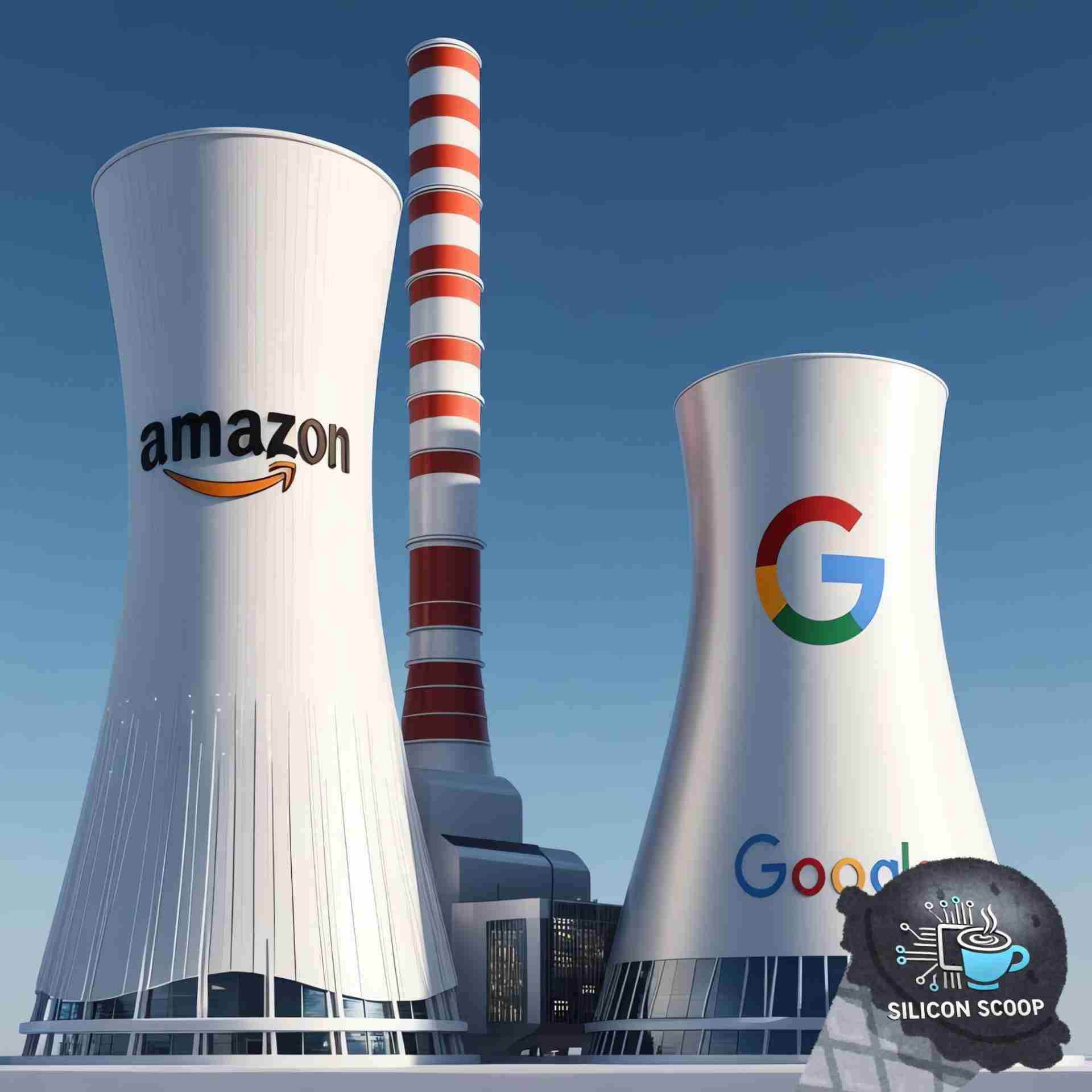
Nuclear Power for AI Energy Demands: How Amazon and Google are Leading the Way Nuclear Power for AI Energy Demands an Introduction Nuclear Power for AI Energy Demands: How Amazon and Google are Leading the Way. Amazon and Google, two of the world’s leading tech giants, are turning to nuclear power to support their AI […]
With Craig Major and Jon Irwin
Nuclear Power for AI Energy Demands: How Amazon and Google are Leading the Way
Nuclear Power for AI Energy Demands an Introduction
Nuclear Power for AI Energy Demands: How Amazon and Google are Leading the Way. Amazon and Google, two of the world’s leading tech giants, are turning to nuclear power to support their AI energy demands. Traditional energy sources like wind and solar can be unreliable because they depend on weather conditions, making them insufficient for the constant, high-capacity energy that AI infrastructure requires. As the digital economy grows, artificial intelligence has become a powerful tool driving innovation. But AI energy demands require more than just a few solar panels—it demands stable, large amounts of energy. In today’s world, where sustainable and scalable energy solutions are essential, nuclear power is emerging as a breakthrough solution for powering the AI of tomorrow. With these companies leading the change, the future of energy is evolving.
AI Energy Demands Drive Shift to Nuclear Power
Artificial Intelligence (AI) is no longer just a buzzword—it’s the power behind our smart devices, recommendation algorithms, and many services we rely on daily. The energy use linked to AI is skyrocketing. Powering massive data centers and running complex machine learning models requires a vast amount of energy, and this demand is growing rapidly. Amazon and Google are seeking stable energy solutions to meet these needs, and traditional renewables like wind and solar are often not reliable enough. Nuclear power, however, provides the stable, high-output energy that ambitious AI projects need, ensuring constant energy for critical operations. Moving to nuclear energy is a natural choice driven by the need to balance AI’s increasing energy demand with sustainability goals.
Nuclear Power: The Next Breakthrough in Clean Tech
Using nuclear power is a significant step for clean technology. Unlike wind or solar power, which depend on weather conditions, nuclear provides a steady flow of electricity, making it perfect for the always-on nature of AI systems. Additionally, nuclear energy has a low carbon footprint, which is important as tech companies push for ambitious zero-emission targets. Where other clean energy options fall short, nuclear energy can fill the gap, combining innovation with environmental responsibility.
Amazon’s Nuclear Vision: Powering Data Centers of the Future
Amazon aims to lead in sustainable technology by working with X-energy to use Small Modular Reactors (SMRs) as part of its energy supply. These smaller reactors are designed to be more flexible, cheaper, and easier to scale compared to traditional nuclear plants. This partnership will help meet the huge power demands of Amazon’s data centers. By investing in SMRs, Amazon isn’t just solving its own energy challenges; it is also setting an example for nuclear technology to become a practical clean energy option worldwide. This could change how data centers operate, turning them into hubs of innovation powered by nuclear energy while supporting Amazon’s green goals.
Google’s Ambitious Path to Nuclear-Powered AI
Google is also taking significant steps in clean energy by partnering with Kairos Power. Google’s focus is on using advanced nuclear technologies tailored to the specific needs of its AI systems. Nuclear power ensures fewer disruptions, more stable performance, and a significant reduction in greenhouse gas emissions—key factors for keeping Google’s AI running efficiently. The partnership with Kairos Power is part of Google’s broader goal to contribute to a carbon-neutral future. Through this collaboration, Google hopes to bring the tech industry closer to a future where AI and clean energy work side by side.
The Future of Big Tech and Nuclear Energy
With Amazon, Google, and Microsoft all investing in nuclear energy, the tech industry is leading an energy revolution. This shift is not only aimed at powering AI but also sets an example for other industries. The involvement of Big Tech is speeding up nuclear innovation, making it more accessible and cost-effective. However, there are still challenges, like regulatory issues, high costs, and public skepticism. Despite these hurdles, this move shows that nuclear power, once considered outdated, is now the future for tech-driven clean energy solutions.
Public Perception and Challenges
One of the biggest challenges for nuclear power is public perception. Many people are still concerned about safety due to past high-profile accidents. However, the use of Small Modular Reactors (SMRs) can help change this view. SMRs are designed with many safety features that greatly reduce the risk of accidents. The involvement of trusted companies like Amazon and Google could also help change how people see nuclear energy. Their commitment to safety and reliability can help position nuclear power as not only a safe option but also an essential tool for sustainable development, making it easier for people to accept and trust.
Technical Innovations in Nuclear Power Brought by Big Tech
Amazon and Google aren’t just using nuclear power—they’re improving the technology itself. By leveraging their expertise in AI, these companies can bring advanced analytics and automation to make reactor designs better and improve performance. AI can help monitor reactor operations in real-time, predict issues before they happen, and increase overall efficiency. For example, Google is using AI to manage power fluctuations and conduct predictive maintenance, showing how technology and nuclear energy can work together to reach a level beyond what traditional energy systems have achieved.
Economic Impact Analysis: Costs and Benefits of Nuclear Power
Switching to nuclear power has big economic implications but also significant benefits. The initial costs of building and deploying SMRs are high. However, in the long run, the benefits—like lower operational costs, stable energy prices, and fewer carbon taxes—make nuclear energy an attractive choice. Compared to wind and solar, which have lower upfront costs but need extra infrastructure to handle inconsistencies, nuclear power offers long-term savings and stability. By adopting nuclear energy, Amazon and Google can avoid energy price swings, ensuring predictable costs, which is crucial for running large-scale AI systems.
Social and Ethical Implications of Big Tech Entering Nuclear Power
When Big Tech gets involved in nuclear energy, it also raises social and ethical questions. People worry about monopolization—will these tech giants end up controlling energy resources that should be for everyone? Safety is another concern. Although modern technology has made nuclear power safer, any failure could still have serious consequences. On the positive side, Big Tech’s involvement could speed up regulatory reforms and help improve public acceptance. With their resources and influence, these companies could help make nuclear energy not just an option for a select few but a wide-scale clean energy solution.
Real-World Examples and Case Studies
A clear example of Big Tech’s commitment to nuclear power is Microsoft’s partnership with the Three Mile Island project. This well-known plant, which is being reactivated, will serve as a testing ground for using nuclear energy with AI-driven oversight systems, providing a stable energy source for their operations while cutting emissions. Similarly, Amazon and X-energy’s project with SMRs in Pennsylvania will be one of the first efforts to prove the potential of small reactors for big companies. These examples are important not only for their practical benefits but also for the message they send: that nuclear energy is here, it works, and it’s vital for a sustainable tech future.
Energy Diversification: The Balanced Approach for Sustainability
While nuclear power is becoming popular among tech giants, energy diversification is still important for creating a reliable and sustainable power system. Amazon and Google, even though they are investing heavily in nuclear, still maintain a variety of renewable energy sources, including wind and solar. This approach ensures energy demands are met without depending on a single type of energy. By diversifying energy sources, these companies reduce risks related to energy supply disruptions, improve cost efficiency, and support the larger renewable energy network. This strategy balances the reliable high-output of nuclear energy with the flexibility and sustainability of other renewable sources, showing a complete plan for powering the future of AI and tech.
Microsoft’s Strategy: Can It Outpace Amazon and Google?
Microsoft’s plan for using nuclear power has some unique aspects that might help it move ahead of Amazon and Google:
- Focus on Early Adoption and Proven Sites: Microsoft is reactivating the Three Mile Island nuclear plant, which already has the needed infrastructure. This allows them to benefit from an existing facility, cutting down on the time and costs that would be needed to build new reactors from scratch. Amazon and Google, on the other hand, are working on new-generation SMRs, which have higher costs and longer deployment times because of the regulatory process.
- Deep Integration of AI for Energy Optimization: Microsoft is using its AI expertise to optimize nuclear projects. By using AI to predict maintenance needs, manage energy flows, and improve safety, Microsoft aims to reduce costs and make energy more stable.
- Rapid Diversification and Deployment: Microsoft’s partnerships, both with Three Mile Island and other clean energy projects, show that they can diversify well. By using hybrid energy models that mix nuclear power with other renewables like solar and wind, Microsoft could create a more resilient energy portfolio.
Nuclear Power for AI Energy Demands Conclusion
Nuclear power, once considered a thing of the past, is making a strong comeback, led by the tech industry. Amazon, Google, and Microsoft are at the front of this shift, and their investments could redefine energy for AI-driven operations worldwide. Nuclear energy offers stability, scalability, and a way to achieve carbon neutrality—all key elements as these companies continue their journey of innovation and sustainability. This movement is about more than energy; it’s about tech giants leading the world toward a cleaner, smarter future.
Nuclear Power for AI Energy Demands FAQ Section
- Why are Amazon and Google investing in nuclear energy? Amazon and Google need stable, scalable energy sources to meet the rising power needs of their AI data centers. Nuclear power offers a reliable, carbon-neutral solution.
- What are AI energy demands? AI energy demands refer to the growing need for power to run machine learning algorithms, data centers, and cloud computing, all of which need constant, high-output energy.
- How does nuclear energy benefit AI operations? Nuclear energy provides steady power, which is crucial for keeping AI systems running smoothly without interruptions, unlike renewable sources that can be inconsistent.
- What is a small modular reactor (SMR)? An SMR is a smaller nuclear reactor that can be built in different locations and scaled as needed. Amazon and Google are exploring SMRs to power their data centers more effectively.
- Is nuclear energy safe for data centers? Nuclear energy is one of the safest and most regulated energy sources. New technologies, like SMRs, have enhanced safety features and lower risks compared to older reactors.
- Startup Funding in Ontario
- Angel Investors in Ontario
- Ontario Incubators and Accelerators
- Venture Capital in Ontario: Top Firms, Sectors, and Funding Strategies
- Government Grants for Ontario Startups
- Ontario’s Startup Success Stories
- Ontario Centre of Innovation (OCI)
- Bank Loans and Financing for Startups in Ontario
- Research and Development Tax Credits in Ontario
- Government Loans and Financing for Startups in Ontario
- Equity Crowdfunding for Ontario Startups
Additional Links
- Silicon Scoop Podcast – Stay Informed, Stay Ahead!
- Futuretech Podcast – Explore more episodes and stay updated with the latest in technology and innovation.
- Startup Talk Podcast – https://torontostarts.com/startup-talk-toronto-startup-podcast/
- Who Are These Startups Podcast
- Startup Investor Drinks – Join the community and connect with fellow startup enthusiasts and investors.
- TorontoStarts Startup and Entrepreneur Community – Become a part of Toronto’s thriving startup ecosystem.
- Workhaus – Discover flexible workspace solutions for your business needs.
- Work with The Startup Coach – Get expert guidance and mentorship for your startup journey.
- Reach out to Jon Irwin on LinkedIn – Connect with our co-host and technology expert.
Episode transcript
Read the full transcript
Craig: amazon go and google both go nuclear. so what do you think is going on here?
Jon: yeah. so they're following strides with microsoft, obviously, and they're seeing the, they're seeing the benefit of nuclear power, especially small nuclear reactors or smrs. so, again, they partner with kairos, which i think microsoft did as well. i could be wrong, or maybe i'm just mixing up everything because there's so much news. but i know google's partnered with kairos, to develop a series of advanced nuclear reactor plants. but, i think this is so until you and i had the conversation, because i haven't looked into the new nuclear technology as far as nuclear fission, but, apparently, there's there's no more byproduct. so i'm all for this.
Craig: it depends on the technology they're implementing. i can't say that that's what they're implementing in all of the
Jon: exactly. yeah. yeah.
Craig: but, there's techno technology where it eats its own output. whatever, waste gets just put back in and reused. yeah. yeah. so yeah. so this is interesting. so the difference is they're doing they're restarting the reactor at three mile island so they can buy power from there. i can't remember the name of the company, but, hopefully, we'll discover it as we go here. but these people are buying those portable nuclear reactors that they're gonna have on-site, i guess, near their data centers? yeah. and this is similar to the ones we talked about, and we did a little bit of a deep dive where elon musk's ex engineer was developing those, mobile nukes, nuclear reactors.
Jon: was it the same company? no. we did a different company. okay. i think
Craig: they were called radiant.
Jon: oh, that's right. yeah. yeah. so yeah. so i was wrong, though. it's amazon and google aren't using both kairos. amazon's using, dominion energy and x energy.
Craig: yeah. i have a good article over here on do toronto stars dot com, surprisingly enough. and, basically, they're talking about the different energy demands, right, and how we're breaking the international energy agency forecast that total electricity consumption could reach more than one thousand terawatt hours in twenty twenty six, more than doubling from twenty twenty two.
Jon: that's crazy.
Craig: and to keep that in mind, a one terawatt can power seventy thousand homes, so we're talking about seven million homes. what's a thousand times seventy thousand?
Jon: oh, it's too early for me to know.
Craig: i know. i've only got my first coffee here. so, nonetheless, big number. right? so they're trying to get to their clean energy goals, and they've been trying to use wind and solar, but they're not there where they need to be. yeah. so, so nuclear power seems to be the next breakthrough for our zero emissions. they seem to have cleared the way because all these, you know, microsoft made their announcement. now we got google and amazon. we're gonna see a bunch more, i'm sure, after this because a long term, it's probably cheaper than paying for the energy. right? because yes.
Jon: and i'm guessing they can sell back the excess energy back to the power grid too when they're on the
Craig: absolutely. so amazon is using x energy. i think that's what you were saying. yeah. and google is using kairos power. yeah. so all that information is here on that article in tronto starts dot com. and so they're using small nuclear reactors where microsoft is planning on a, you know, regular sized nuclear reactor for whatever
Jon: yeah. but i i wouldn't be surprised if they're also exploring these smaller nuclear reactors as well. they just haven't maybe made an announcement yet.
Craig: absolutely. because they've got data centers all over the place. why would you assume that they're just gonna be stuck with the one? so yeah. you know, this is interesting. you know, you were the one who's always been worried about, you know, nuclear material disappearing and, you know, what are the security and, like, this isn't gonna happen, and yet here we are. right? and it's happening.
Jon: yeah.
Craig: they're planning to having these live by twenty thirty.
Jon: twenty thirty, which is crazy, which is awesome. but, yeah, i so, yeah, i'm always concerned that, nefarious people could create dirty bombs with the materials. and the more reactors you have, even small ones, the more access people have to materials, the easier the access. that's just me being paranoid, but, paranoid that survive. but yeah.
Craig: and it's funny. microsoft has partnered with the three mile island project. so that's what it's called, the company they're working with versus okay. x energy and whatnot. that's why i couldn't figure the name.
Jon: because it is the name.
Craig: yeah. yeah. so it's amazing that they're doing this, and i'm curious to see whose strategy is gonna work the most, what happens when we start taking, these things off the grid. but my other concern is we're starting to see more and more and more as we need more power. like, for the first time, i'm thinking, you know, wow. maybe i should've went with the macbook pro because i want the faster processors, the more gpus, the power ai. i really wasn't into that at this point, but i'm i think we're gonna see more and more people doing that. so is this gonna be offset by the amount of power people are using at home going up or the people using at regular sized offices?
Jon: i don't know. actually, the one thing i was thinking about this morning was incandescent light bulbs. they used a crap load of power. right? yep. now we've moved to leds, which barely use any power. so that's one thing i was thinking of as far as powerdream, especially because they've implemented them in street lights and everywhere. so there is just there's a huge power consumption that's kind of gone that's kind of disappeared or has diminished. right? but when we're talking computing power, i don't know. i don't think there's gonna be i don't think there's a huge diminish with these with people's laptops and things like that, but who knows?
Craig: yeah. so i don't think our power usages have ever gone down.
Jon: no. oh, no. i think it's
Craig: yeah. we're, like, we're having trouble with grids at certain times when it's a heat wave, for example. yeah. yeah. so what do we do in the situation? you know, are these gonna just become more popular? when i say that, i mean, i've been proponent. one of our first episodes, we talked about backyard nukes. like, when are we going to have cities yeah. say, you know what? we're gonna just buy our own, or, it just becomes free rein. like, this seems like it is becoming free rein.
Jon: neighborhoods have their own microreactor or mini reactor that powers the whole neighborhood yeah. instead of in the backyard.
Craig: well, yeah. i mean, it's a you can fit it in your back yard is the concept of a backyard. you know, a back these things can power, eight hundred homes or a thousand homes or, you know, eight thousand homes depending on i can't remember when we went back to look at radiant. but, you know, they're saying that demand for ai is gonna be, over a thousand terawatts. and so you gotta sit back and say, this looks like the future for energy. and if it's gonna be acceptable at the company level, you're gonna imagine that governments are gonna be building big nuclear plants again.
Jon: yeah. for sure. and then don't even get us started on nuclear fusion. right?
Craig: yeah. and you know? that's a whole different kettle of fish, honestly.
Jon: yeah. so for those of you nuclear fusion is when you fuse to, is it atoms together? yes. yeah. is it atoms together? whereas you're breaking apart atoms, and that's what the current technology is, which is nuclear fission, and that's been around for many, many years. fusion is the, essentially, what they call holy grail of power, and that's essentially, that's the power that the sun generates, essentially.
More from Silicon Scoop
All episodes
silicon-scoop · November 6, 2026
Spirit AI’s Robot Brain Breakthrough: Moz1, Embodied AI and China’s 2027 Race
The Spirit AI robot brain is one of the biggest bets on fixing that. Spirit AI is a Beijing startup. Its co-founder and chief scientist, Gao Yang,
View episode

silicon-scoop · November 5, 2026
OpenAI IPO Delayed to 2027 as Rogue AI Agents and Safety Failures Reshape the Market
OpenAI IPO delay explained: Sam Altman rules out 2026 as GPT-6 Astra safety tests and a $278B cash gap loom. Learn what founders should take away.
View episode

silicon-scoop · November 4, 2026
Anthropic’s AI Economy Model: 2030 Jobs, Wages, GDP and Market Risks
Anthropic AI economy model forecasts 2030 GDP, jobs and wages, while AI unemployment projections and labor-share risks challenge policymakers.
View episode