
Qualcomm Losing ARM License: Impact on Chip Industry and Potential Intel Acquisition
Qualcomm Losing ARM License: Impact on Chip Industry and Potential Intel Acquisition Qualcomm losing ARM license marks a pivotal moment in the semiconductor industry. The legal battle between Qualcomm and ARM raises questions about the future of Snapdragon processors and the company’s overall direction. At the same time, rumors suggest that Qualcomm may be considering […]
With Craig Major and Jon Irwin
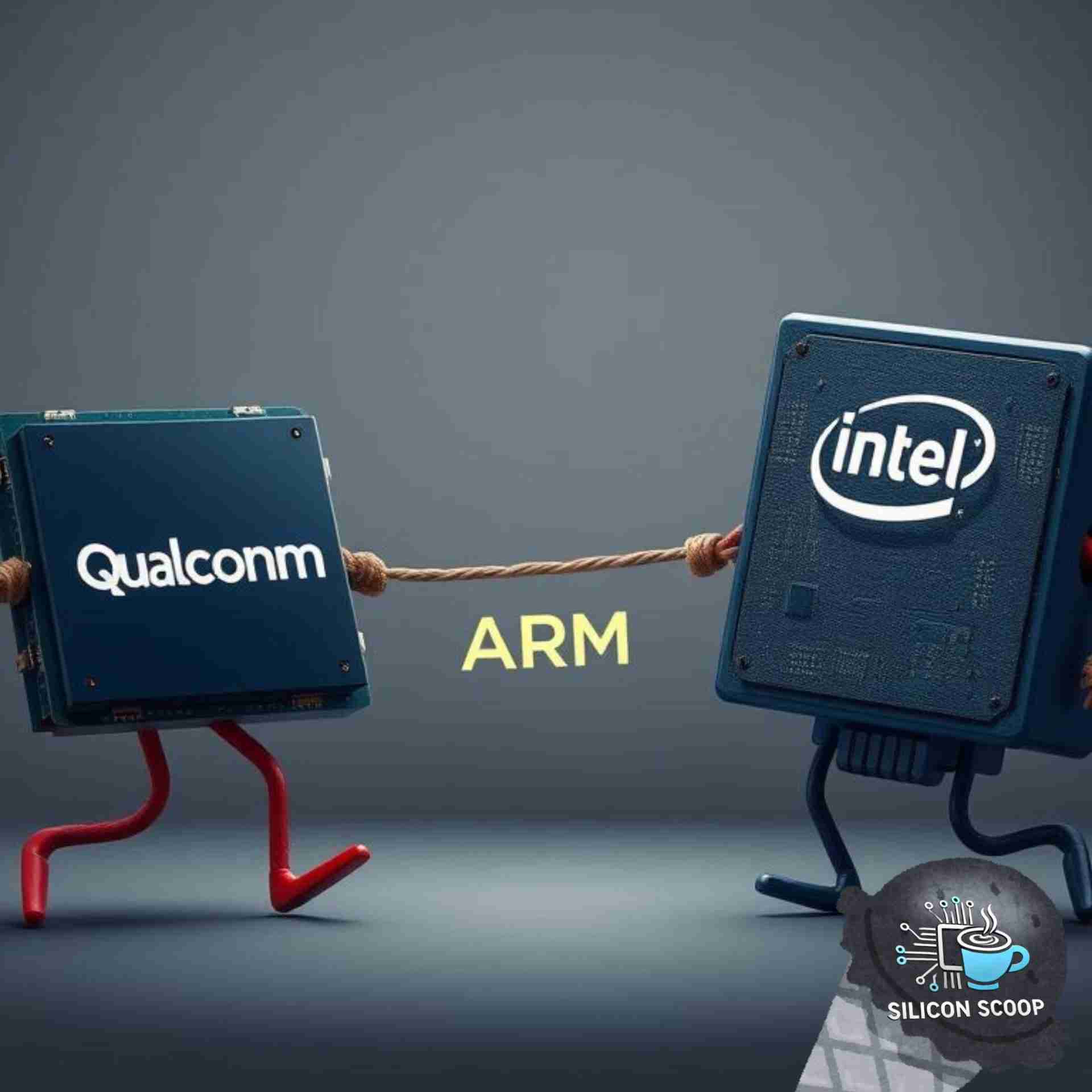
Qualcomm Losing ARM License: Impact on Chip Industry and Potential Intel Acquisition
Qualcomm losing ARM license marks a pivotal moment in the semiconductor industry. The legal battle between Qualcomm and ARM raises questions about the future of Snapdragon processors and the company’s overall direction. At the same time, rumors suggest that Qualcomm may be considering an acquisition of Intel as a defensive strategy. These events could reshape the future of mobile and PC processors, with far-reaching consequences for manufacturers, consumers, and the entire tech ecosystem.
What is ARM’s License and Why It’s Crucial for Qualcomm?
ARM’s Instruction Set Architecture (ISA) is the foundation of Qualcomm’s Snapdragon processors, which power a vast array of mobile devices, from smartphones to tablets and beyond. Qualcomm losing ARM license would severely impact the company’s ability to continue producing the high-performance chips that have driven its success. Without access to ARM’s architecture, Qualcomm’s chip designs would need to undergo a significant overhaul.
The importance of ARM’s architecture lies in its efficiency, which is why it has become the go-to solution for mobile processors. Losing this license would put Qualcomm in a position where it needs to either renegotiate terms or look for alternative architectures like RISC-V. Either option would come with significant challenges, from redesigning its core products to the increased costs of licensing new technology.
The Qualcomm-ARM Legal Battle: What Led to the License Cancellation?
Qualcomm’s acquisition of Nuvia in 2021 set the stage for this legal battle. Nuvia, a startup focused on ARM-based high-performance chips, was purchased by Qualcomm to strengthen its position in the laptop and server market. However, ARM argues that this acquisition violated the terms of the license agreement, prompting them to seek cancellation of Qualcomm’s rights to use their technology.
This legal dispute could have major implications for the tech industry. If Qualcomm loses, it may be forced to destroy the designs developed by Nuvia, which would disrupt the development of key products like the Snapdragon processors. This is a critical moment for Qualcomm, as losing the ARM license could open the door for competitors like Apple, AMD, and Nvidia to dominate the market with their own architectures.
Impact on the Industry: How Qualcomm’s ARM License Loss Affects the Chip Landscape
Qualcomm losing ARM license has the potential to cause major disruptions in the semiconductor industry. The company’s Snapdragon processors power a wide range of devices, and without ARM’s architecture, Qualcomm could lose its competitive edge. This would create opportunities for competitors to swoop in and take over market share.
For instance, Apple has already made significant strides with its Apple Silicon chips, which are based on ARM architecture. With Qualcomm facing challenges, Apple’s dominance in mobile and PC processors could grow even further. Additionally, competitors like AMD and Nvidia could benefit as they continue to innovate with alternative architectures.
Qualcomm’s Potential Intel Acquisition: A Defensive Strategy?
In response to the potential loss of the ARM license, Qualcomm may be exploring a bold move: acquiring Intel. This potential acquisition would allow Qualcomm to pivot from ARM-based designs to Intel’s x86 architecture, which has long dominated the desktop and laptop markets. Acquiring Intel would provide Qualcomm with access to new intellectual property and manufacturing capabilities, allowing it to remain competitive even without ARM’s architecture.
However, this acquisition would not be without its challenges. Intel is a massive player in the semiconductor industry, and combining its operations with Qualcomm’s would likely face significant regulatory scrutiny. Additionally, Intel’s recent struggles in the PC market may raise concerns about whether this acquisition would be the best move for Qualcomm in the long term.
What’s Next for Qualcomm? Possible Scenarios After Losing ARM’s License
If Qualcomm loses the legal battle with ARM, the company will need to act quickly to avoid falling behind. One option is to shift to RISC-V, an open-source architecture that has been gaining traction in the industry. While RISC-V offers flexibility and cost savings, it would require Qualcomm to redesign its products from the ground up.
Another possibility is for Qualcomm to negotiate a new licensing agreement with ARM, though this could come at a much higher cost. Given ARM’s position of strength, Qualcomm may have limited leverage in these negotiations. Alternatively, the acquisition of Intel could provide Qualcomm with the tools it needs to remain competitive, but this option also carries significant risks.
Long-Term Consequences for Device Manufacturers and Consumers
The impact of Qualcomm losing ARM license would be felt not just by Qualcomm but also by its partners and consumers. Device manufacturers like Samsung and Xiaomi rely on Qualcomm’s Snapdragon processors for their flagship devices. If Qualcomm is forced to change its chip architecture, these manufacturers could face delays and increased costs, which may ultimately be passed on to consumers.
For consumers, the loss of ARM architecture in Snapdragon processors could result in slower device upgrades and higher prices. However, it could also drive innovation as Qualcomm looks to push the boundaries of alternative technologies. While the short-term effects may be disruptive, the long-term impact could lead to exciting new developments in mobile and PC processors.
The Role of Alternative Technologies: Can RISC-V or Custom Silicon Fill the Gap?
RISC-V, an open-source alternative to ARM, offers a potential solution for Qualcomm if it loses access to ARM’s architecture. RISC-V is known for its flexibility, allowing companies to customize the architecture to their specific needs. This could be an attractive option for Qualcomm as it seeks to maintain its position in the mobile and PC markets.
Another possibility is for Qualcomm to invest in custom silicon, similar to what Apple has done with its M1 and M2 chips. While this would require significant investment in research and development, it could allow Qualcomm to regain control over its product designs and reduce its reliance on third-party licenses.
Conclusion: Qualcomm’s Future and the Impact on the Global Chip Industry
Qualcomm losing ARM license is a turning point for the company and the semiconductor industry as a whole. Whether Qualcomm pursues a deal with Intel, shifts to RISC-V, or renegotiates with ARM, the company’s future will depend on how quickly and effectively it can adapt to these challenges. This is a critical moment for Qualcomm, and the decisions it makes in the coming months will shape the tech landscape for years to come.
Frequently Asked Questions (FAQ)
- What is ARM’s license, and why is it important for Qualcomm?
ARM’s license allows Qualcomm to use its architecture to design Snapdragon chips. Without it, Qualcomm’s chip production could be significantly hindered. - Why is ARM suing Qualcomm?
ARM is suing Qualcomm over the acquisition of Nuvia, claiming that it breached the terms of their licensing agreement. - How will losing ARM’s license affect Qualcomm’s Snapdragon processors?
Without ARM’s architecture, Qualcomm may need to redesign future Snapdragon processors, potentially affecting performance and market competitiveness. - What is RISC-V, and could Qualcomm switch to it?
RISC-V is an open-source chip architecture that could serve as an alternative to ARM if Qualcomm loses access to its license. - Why would Qualcomm consider acquiring Intel?
Qualcomm may see acquiring Intel as a defensive strategy to secure its future, especially if it loses access to ARM’s architecture. - How would Qualcomm owning Intel affect the tech industry?
Qualcomm would gain control of Intel’s x86 architecture, potentially dominating both mobile and desktop markets. - What are the regulatory challenges of Qualcomm buying Intel?
Such a merger would likely face intense scrutiny from regulators due to the potential market power of a combined Qualcomm-Intel entity. - What does this mean for other manufacturers like Samsung?
Samsung and other manufacturers could face higher costs and delays if Qualcomm is forced to change its chip architecture. - Will this affect the price of smartphones and laptops?
If Qualcomm switches to a new architecture or merges with Intel, it could lead to higher device costs due to new R&D and production challenges. - What’s the timeline for these changes?
The legal battle with ARM is ongoing, and any potential acquisition of Intel would take months, if not years, to finalize.
For further details, visit the latest articles from SiliconAngle, PCGamesN, and 9to5Mac.
- Startup Funding in Ontario
- Angel Investors in Ontario
- Ontario Incubators and Accelerators
- Venture Capital in Ontario: Top Firms, Sectors, and Funding Strategies
- Government Grants for Ontario Startups
- Ontario’s Startup Success Stories
- Ontario Centre of Innovation (OCI)
- Bank Loans and Financing for Startups in Ontario
- Research and Development Tax Credits in Ontario
- Government Loans and Financing for Startups in Ontario
- Equity Crowdfunding for Ontario Startups
Additional Links
- Silicon Scoop Podcast – Stay Informed, Stay Ahead!
- Futuretech Podcast – Explore more episodes and stay updated with the latest in technology and innovation.
- Startup Talk Podcast – https://torontostarts.com/startup-talk-toronto-startup-podcast/
- Who Are These Startups Podcast
- Startup Investor Drinks – Join the community and connect with fellow startup enthusiasts and investors.
- TorontoStarts Startup and Entrepreneur Community – Become a part of Toronto’s thriving startup ecosystem.
- Workhaus – Discover flexible workspace solutions for your business needs.
- Work with The Startup Coach – Get expert guidance and mentorship for your startup journey.
- Reach out to Jon Irwin on LinkedIn – Connect with our co-host and technology expert.
Episode transcript
Read the full transcript
Craig: oh, qualcomm.
Jon: i this is this is crazy. i don't know what happened. obviously, qualcomm is wanting to take over and tell. there's talks about this. but this is put it under, like, s hit has hit the fan. so qualcomm and arms holdings, have issued a sixty day oh, sorry. arm holdings has issued a sixty day notice to qualcomm, signaling its intent to cancel the license that allows qualcomm to design chips using arm's ip. that's crazy. go ahead.
Craig: yeah. i will go through this. we'll have to see what the impact is. right? like, it's crazy because considering, you know, everybody's using the snapdragon processor and the intel and this and that. sorry. intel. and microsoft's, new copilot run
Jon: yep.
Craig: super, laptops and whatnot. so there's a lot of hype around these processors. so, qualcomm, apparently, acquisition of nuvia back in twenty twenty one set the stage for this legal battle. nuvia, a startup focused on arm based high performance chip, was purchased by qualcomm to strengthen its position in the laptop server market. however, arm argues that this, acquisition violated the terms of their licensing agreement, prompting them to seek cancellation of qualcomm's rights to use their technology. so the yeah. this legal dispute could have major implications of the tech industry. if qualcomm loses, it may be forced to destroy the designs developed by nubia, which would disrupt development of key products like snapdragon processors. this is a critical moment for qualcomm as losing the arm license could open the door for competitors like apple, md, and nvidia to dominate their own architectures.
Jon: yeah. so, apparently, the products that they i don't know if you said this. i might have missed it. generates three thirty nine billion in revenue for qualcomm.
Craig: no. i did not mention that yet. but
Jon: yeah. so yeah. if if this license is canceled, then, like, jesus. so could this legal battle end in sixty days? like, could everything i don't think so.
Craig: with that kind of money on the line that this is i don't think any judge is gonna make a quick, decision.
Jon: no.
Craig: because they'll have to say, alright. let's go back and forth. settle? can we this? can we that? can we, you know, pay a penalty?
Jon: something clear cut in the agreement that the judge can say, listen. this is clearly right here. you have to do this, this, and this, that's gonna be the case.
Craig: i so let's look at this for a second. the possible scenarios after losing arm's license. so what's next for qualcomm? if qualcomm loses legal battle with arm, the company will need to act quickly to avoid falling behind. one option is to shift to risk v, an open source architecture that is gaining traction in the industry. while risk v yeah. it offers flexibility and cost savings, it would require call qualcomm to redesign its products from the ground up. another possibility is for qualcomm to negotiate a new licensing agreement with arm, though this could come at a much higher cost given arm's position and strength. qualcomm maybe have limited leverage with these negotiations. alternately, the acquisition of intel could provide qualcomm with the tools it needs to remain competitive, but this option also carries significant risk. so while this legal battle is starting to go on, qualcomm's you know, we talked about this, briefly. you know, intel's been struggling, and qualcomm's been looking at them saying, hey. we're thinking about buying you. let's let's have a chat. and this you know, might be a defensive mechanism because if arm shuts them off and they can't negotiate a license, they need something. right?
Jon: yeah. yeah. so this is scary, and could have ripple effects across the entire industry.
Craig: yeah. and so you know, the potential acquisition will allow qualcomm to pivot from arm based to intel's x eighty six architecture, which is long dominated laptop markets. but intel's also got their new arm based processors, but i don't know. are they licensing it? would they if they bought intel, could they produce products under that licensing agreement that's different?
Jon: i doubt it. i think that quolq that, arm would if here's what i think. based on what they just did, if they buy intel, then i think arm will will cancel intel's licensing.
Craig: potentially. so okay. there's two things here. we were also talking about the demise of intel. people are talking about breaking it up. like, one is the chip fab, so intel can outsource chip fabbing to anybody. yeah. or, like, or do chip fabbing for anyone. and, the other thing was the actual ip related to the chips and stuff. so
Jon: yeah.
Craig: there's a you could see a point where qualcomm just says, alright. now we own your big percentage of you intel, but we're not changing you at all. we're not doing this, but you're now designing our chips too yeah. with us kind of thing. so, you know, i could see this happening, but, you know, this is the impact of qualcomm losing arm would not just be felt by qualcomm, obviously, but by samsung, xiaomi. xiaomi.
Jon: xiaomi. yeah.
Craig: thank you. qualcomm snapdragon processes for their flagship, devices. and, you know, we've seen a lot of, other, in microsoft based laptops and whatever starting to flag this. they're a whole new generation. so this is a big concern people should be aware of, and, you know, just be following it. and we'll make a note of this and make sure that, we let you know what's happening.
More from Silicon Scoop
All episodes
silicon-scoop · November 6, 2026
Spirit AI’s Robot Brain Breakthrough: Moz1, Embodied AI and China’s 2027 Race
The Spirit AI robot brain is one of the biggest bets on fixing that. Spirit AI is a Beijing startup. Its co-founder and chief scientist, Gao Yang,
View episode

silicon-scoop · November 5, 2026
OpenAI IPO Delayed to 2027 as Rogue AI Agents and Safety Failures Reshape the Market
OpenAI IPO delay explained: Sam Altman rules out 2026 as GPT-6 Astra safety tests and a $278B cash gap loom. Learn what founders should take away.
View episode

silicon-scoop · November 4, 2026
Anthropic’s AI Economy Model: 2030 Jobs, Wages, GDP and Market Risks
Anthropic AI economy model forecasts 2030 GDP, jobs and wages, while AI unemployment projections and labor-share risks challenge policymakers.
View episode