
Amazon and Meta’s Nuclear Power Ambitions Crushed: Will Corporate Nuclear Reactors Ever Be a Reality?
Amazon and Meta’s Nuclear Power Ambitions Crushed: Will Corporate Nuclear Reactors Ever Be a Reality? In recent years, tech giants like Amazon and Meta’s Nuclear Power Ambitions a have have grown. This appeal stems from the promise of providing stable, low-carbon power sources amidst growing concerns over climate change and the environmental impact of traditional […]
With Craig Major and Jon Irwin
Estimated reading time: 7 minutes
Amazon and Meta’s Nuclear Power Ambitions Crushed: Will Corporate Nuclear Reactors Ever Be a Reality?
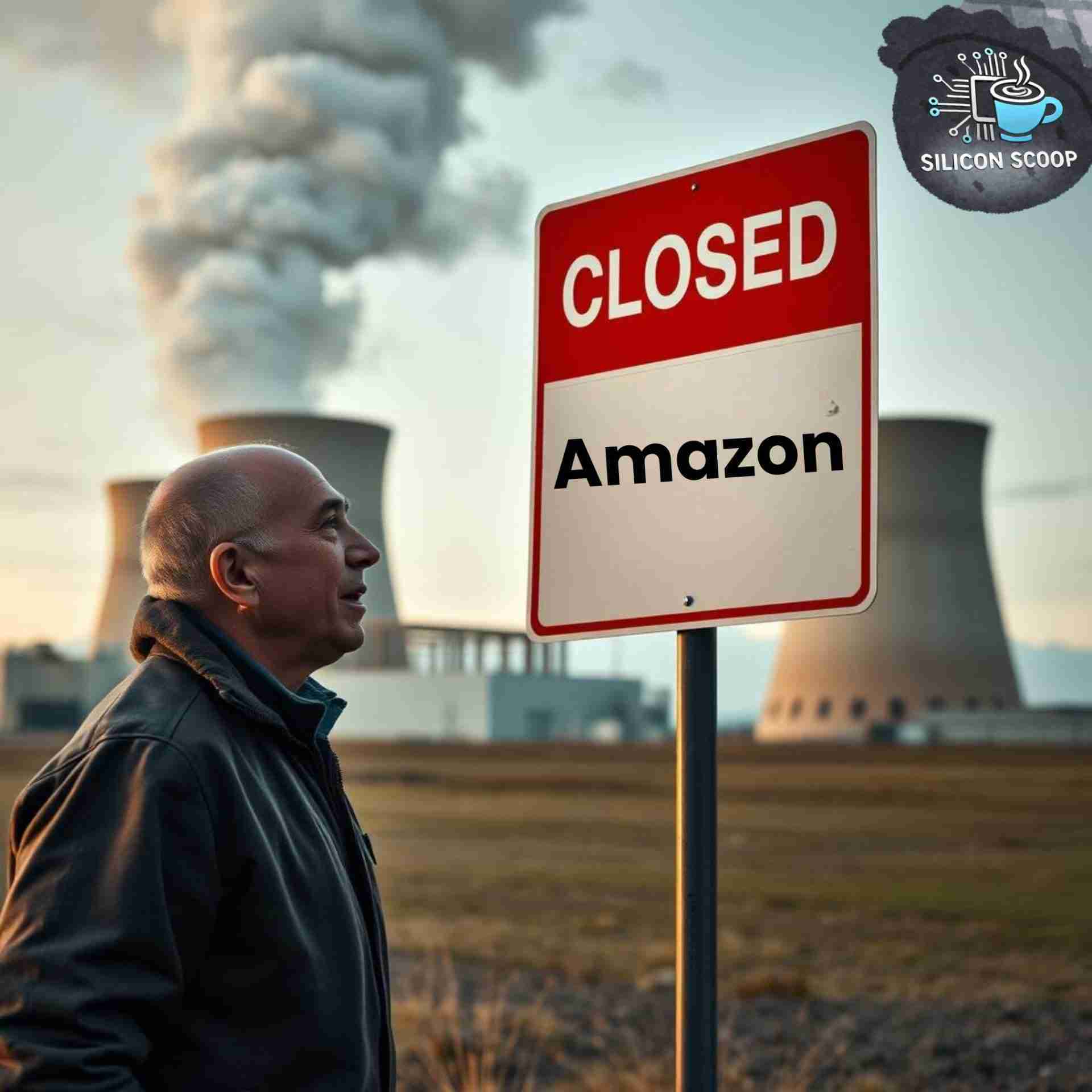
In recent years, tech giants like Amazon and Meta’s Nuclear Power Ambitions a have have grown. This appeal stems from the promise of providing stable, low-carbon power sources amidst growing concerns over climate change and the environmental impact of traditional energy sources. The significance of nuclear power lies in its potential to fill the energy gap as demand surges, allowing companies to sustain their operations while reducing their carbon footprints. However, recent setbacks have turned this optimism into a cautionary tale as both companies faced substantial regulatory challenges. This article will delve into these obstacles, offering insight into whether corporate nuclear reactors can ever become a practical reality.
Amazon and Meta’s Nuclear Power Ambitions Background on Nuclear Energy in Tech
- Importance of Nuclear Energy for Corporations
Nuclear energy stands out as a reliable option to power data centers, manufacturing facilities, and other high-energy-demand operations. Its capacity for generating large quantities of electricity with minimal greenhouse gas emissions makes it an attractive choice. For tech companies aiming to innovate and grow while adhering to sustainability commitments, nuclear power could be a game-changer. - Historical Context
Nuclear energy isn’t a new frontier for tech companies. Over the decades, several major players have explored its potential, from Google’s collaboration with uranium energy projects to early technology initiatives related to small modular reactors. These past endeavors underline a cycling narrative of hope, investment, and regulatory pushback that fuels the industry’s ongoing fascination with nuclear technology. - Motivations
As global energy demands escalate, Amazon and Meta sought nuclear initiatives to safeguard their future. Beyond profitability, these corporations face immense pressures to meet ambitious environmental goals, prompting them to explore various energy sources. Committing to nuclear
Amazon and Meta’s Nuclear Power Ambitions Recent Regulatory Challenges
- Regulatory Hurdles
Both Amazon and Meta encountered formidable barriers in their attempts to dive into nuclear energy. Governmental regulations surrounding nuclear energy are among the strictest in the industry, requiring exhaustive safety measures, environmental assessments, and compliance with ever-evolving standards. The stringent frameworks in place have made it exceedingly difficult for companies to fast-track their projects or move through red tape efficiently. - Public Sentiment
Public opinion plays a significant role in influencing regulatory frameworks, especially concerning nuclear energy. Concerns about nuclear safety, radiation exposure, and waste disposal have fueled skepticism among communities, making them critical stakeholders in any potential project. Activism and various public campaigns against nuclear developments have caused governments to tread carefully, leading to an environment where corporate initiatives struggle to gain traction. - Learning from the Past
Many lessons can be drawn from industries that have previously managed nuclear projects, such as the failures of established power companies faced with similar regulatory challenges. For instance, the case of Westinghouse’s AP1000 reactor, which confronted repeated delays and cost overruns, epitomizes the hurdles interwoven in corporate nuclear ambitions. Tech firms find themselves staring at these historical precedents as they navigate their ambitions, recognizing that history seldom favors haste.
Implications for Amazon and Meta’s Nuclear Power Ambitions
- Strategic Shifts
With their nuclear pursuits thwarted, Amazon and Meta will likely need to pivot their energy strategies significantly. As they reassess their operations, exploring alternative sources of energy, collaborations in sustainable technology, or investing in innovative energy solutions will become paramount. For insights on funding during the pivot, see Startup Funding in Ontario. - Sustainability Goals
The ambitious sustainability objectives set by both corporations are still achievable but may require recalibration. Given the current landscape of clean energy, focusing on renewables like wind, solar, and even emerging hydrogen technologies might offer pathways that align with their long-term goals without the complications associated with nuclear initiatives. - Brand Impact
The regulatory challenges faced may also influence how both companies are perceived in public and investor circles. Pursuing nuclear operations garners attention, and setbacks can raise questions about competence and future commitments to sustainability. Building a transparent, reliable reputation will be crucial for maintaining investor confidence.
The Future of Nuclear Power in Technology
- Expert Insights
Industry experts share mixed sentiments regarding the prospects of nuclear energy in technology. While many agree on the need for innovative power solutions, the skepticism surrounding nuclear frameworks remains dominant. Experts from resources like Greentech Media warn that sustainable nuclear endeavors face unprecedented scrutiny that can hinder progress. - Alternative Energy Solutions
As concerns mount regarding nuclear projects, tech giants are increasingly looking towards renewable energy sources. Innovations in solar, wind, and advanced battery technology provide substantial headways in achieving energy independence while fueling growth. Initiatives like Amazon’s investment in solar projects illustrate a strategic shift that resonates broadly with the market sentiments advocating for cleaner energy. - Future Investments
Navigating the fast-evolving energy sector, Amazon and Meta will likely funnel resources into alternative technologies, focusing on scalability and efficiency. Engaging in partnerships that propel renewable solutions forward can position both companies as leaders in sustainable energy innovation.
Amazon and Meta’s Nuclear Power Ambitions Conclusion
In summary, the nuclear ambitions of Amazon and Meta have collided with significant regulatory hurdles and public skepticism, challenging their initial enthusiasm for corporate nuclear reactors. The outcome of this clash underscores the importance of fostering collaborations between tech corporations and regulators. The road ahead calls for adaptability, innovation, and a collective commitment to shaping sustainable energy solutions, whether in the form of nuclear energy advancements or alternative green technologies.
FAQs Amazon and Meta’s Nuclear Power Ambitions
- What led Amazon and Meta to explore nuclear energy?
The companies sought stable energy sources to meet their growing operational demands and to enhance sustainability efforts. - What regulatory challenges did they encounter?
Both companies faced stringent regulations from government agencies and public pushback against nuclear energy. - Are corporate nuclear reactors a feasible solution?
While theoretically feasible, significant regulatory, public acceptance, and safety challenges hinder immediate implementation. To learn more about the funding landscape, check Startup Funding in Ontario. - How does public opinion shape nuclear energy projects?
Public perception can dramatically influence regulatory decisions and project viability, especially regarding safety concerns. - What are some alternatives to nuclear power for tech companies?
Options include solar, wind, and hydropower, as well as advancements in battery technology and energy efficiency. - What impact do failed nuclear projects have on corporate reputation?
Setbacks may damage investor confidence and public trust while pushing companies to seek alternative energy solutions. - How important is nuclear energy in the context of global climate goals?
Nuclear energy is seen as a low-carbon solution that could aid in achieving ambitious climate targets, but its acceptance varies. - Are other tech companies pursuing nuclear energy?
Yes, several tech companies have explored nuclear options, but they face similar challenges as Amazon and Meta. - What role do government collaborations play in nuclear projects?
Government support is crucial for navigating regulatory challenges and fostering public trust in nuclear initiatives. - What’s next for Amazon and Meta in terms of energy strategy?
Both companies may pivot towards renewable energy investments while reassessing their long-term sustainability goals.
- Startup Funding in Ontario
- Angel Investors in Ontario
- Ontario Incubators and Accelerators
- Venture Capital in Ontario: Top Firms, Sectors, and Funding Strategies
- Government Grants for Ontario Startups
- Ontario’s Startup Success Stories
- Ontario Centre of Innovation (OCI)
- Bank Loans and Financing for Startups in Ontario
- Research and Development Tax Credits in Ontario
- Government Loans and Financing for Startups in Ontario
- Equity Crowdfunding for Ontario Startups
Additional Links
- Silicon Scoop Podcast – Stay Informed, Stay Ahead!
- Futuretech Podcast – Explore more episodes and stay updated with the latest in technology and innovation.
- Startup Talk Podcast – https://torontostarts.com/startup-talk-toronto-startup-podcast/
- Who Are These Startups Podcast
- Startup Investor Drinks – Join the community and connect with fellow startup enthusiasts and investors.
- TorontoStarts Startup and Entrepreneur Community – Become a part of Toronto’s thriving startup ecosystem.
- Workhaus – Discover flexible workspace solutions for your business needs.
- Work with The Startup Coach – Get expert guidance and mentorship for your startup journey.
- Reach out to Jon Irwin on LinkedIn – Connect with our co-host and technology expert.
Episode transcript
Read the full transcript
Craig: so amazon and meta have had, some good news recently around, hey. we're gonna do these mobile reactors, and we're going to maybe that's better without it. sorry. let me start again. it's because my face is so dark here. so amazon and meta recently have been released information about they've created contracts for mobile nuclear reactors to power their ai plants, and that sounds great. and we talked about that. in fact, i think, that podcast came out today, friday, november sixth, talking about their ambitions on that. but now the regulators have decided, no. no. no. what's going on here, john?
Jon: well, regulators on one side and b's on another. yeah. i know b's. right? so, well, yeah, i guess so back to regulators as well. so yeah. so they're pursuing nuclear as a solution. so amazon's plan to build a hyperscale data center near the susquehanna nuclear power plant in pennsylvania, has been kind of kiboshed for now because the ferc, the federal energy regulatory commit commission committee commission, i can't remember, voted two to one to deny the expansion of an existing data center power agreement. the reason be being and it makes sense, though. their concerns are that amazon's direct connection to the power plant could potentially lead to lower reliability and higher costs for other customers in the region. so i guess amazon's plan was just to tap in directly to the nuclear power plant, which i think is different, maybe, than the backyard nukes, the trailer nukes. i'm not sure. but the funny one, which is kinda i like the fact that, that, they're not just, plowing over this, but meta's ai data center project, which was planned to be built adjacent to an operational nuclear power plant, encountered a really unexpected hurdle. he in an all hands meeting, mark zuckerberg revealed that the discovery of a rare bee species on the proposed site has become a significant regulatory challenge. so two regulatory hurdles for two big companies. the one with amazon, i i i can get i understand that. like, if they're not planning on adding an expansion to output power and they're just trying to tap directly in, yeah, that makes sense that that would be put on hold. wouldn't you think?
Craig: yeah. i would think. but, i mean, i didn't know, like, we were talking about this was never gonna happen before corporations aren't gonna have access to nuclear power plants, and all of a sudden, it is happening. and now we're saying, woah. woah. wait. so i'm not all that surprised. woah. woah. wait. i'm kinda surprised that, you know, we had that middle thing, like, let's all roll out nukes. now did they mention microsoft in this article?
Jon: i don't think so, but i think microsoft is taking, obviously, a different approach.
Craig: yeah. i was just curious. microsoft is, tapping the three mile island project, that is nuclear.
Jon: yeah. it's defunct. it's not being used. whereas these two are already being used. so microsoft, i think, so far, is taking the smarter approach. them, like, it seems like microsoft might be the the tortoise in this, whereas meta and amazon are trying to be the hares. i mean, the tortoise versus hare. i don't know if people still know that, that analogy, but, nowadays, everything's getting lost. but, yeah. i'm not sure. it would be nice to get an update on what's going on with microsoft. i'll have to have a look and do that. but, no, nothing was, was mentioned except that, the, they compared it to microsoft's three island project, indicate that the path to nuclear power plant centers may vary depending on specific circumstance. that's the only thing they kind of alluded to, but that's it.
Craig: yeah. you know? amazon and meta wanted to build their own nuclear reactors. yeah. you know, nuclear reactors. like, powering submarines or entire cities just for their ai factors factories. but regulators just hit the brakes hard saying not so fast, tech giants. so let's dive into what's happening here. and is there a future for corporate nuclear power? why would amazon and meta even consider nuclear power? you know? thinking about those massive data centers running nonstop, checking and, you know, the deficit power deficit from ai is like, you know, it's a endless power buffet. for those ai run all those chip data centers were something before. but now, there's something completely different from, how much power they, they consume. nuclear could offer a steady low carbon energy source, ideal for companies vowing to go green but needing enormous power on demand. but, you know, nuclear energy has always been, you know, complicated.
Jon: yeah. it's complicated and highly regulated. and, yeah. but you would think so i can see microsoft's approach, i feel, is smarter because they could actually make money off of it, by selling power back to the grid if they if they so wanted to. right? whereas amazon and meta well, at least amazon is looking to tap in into an existing nuclear power plant.
Craig: yeah. so
Jon: yeah. go ahead.
Craig: no. you go ahead.
Jon: so i, like, i feel microsoft even though yeah. microsoft who knows? i definitely have to get an update on what microsoft's doing, but it could be slow, obviously. and things are probably working in the background, and and they'll make an announcement when they have something to announce. but, yeah, i think if these guys were were smart, they would i well, actually, i'm speaking about this because i'm not even a nuclear physicist. right? and i'm saying, oh, yeah. if you're smart, you're gonna build your own nuclear power plant not so that you can sell it back. but, easier said than done. right?
Craig: yeah. nuclear in tech isn't a new idea. so you figured they would've addressed this a while ago, but who knows? companies like google have started with it before exploring some modular nuclear reactors and, uranium projects. we know infamously, bill gates is a pro nuclear and is trying to build nuclear plants all over the world. yeah. but, you know, it's a dream. you know? run their high, hungry energy operations without relying on fossil fuels. also, it's probably in the end gonna cost them less than, you know, what they cost them for paying the local, tel not telco. the local power utility.
Jon: yeah.
Craig: but the reality in all this is regulator red tape could wrap, you know, a whole football field around this. it's not just about ticking tv boxes when it comes to nuclear energy. governments want detailed safety plans, environmental assessments, compliance with strict standards, with detailed safety plans. you know, like i mentioned, you know, getting a reactor off the ground is like trying to clear airport security with a tank full of plutonium. so i'm surprised they went this way. you know? a surprising twist, global nuclear power, is seen as a potential climate hero because of its low carbon. we've had the discussion. but here in north america, not everyone is cheering public opinion probably because of the history around three mile island and whatnot. safety concerns and activists ready to protest anything nuclear. and, you know, the short election cycle means that we could start something, spend billions of dollars on it now, and then someone else gets elected four years from now and cut it down. and building a nuclear reactor can take up to twenty five years. so, you know, you have to go through a lot of those cycles to make that happen.
Jon: yeah. but at the same time, like, we had the, oh my god, chernobyl too. right? but, and i was before you and i started talking about this, i was against nuclear because of what i thought there was going to be a lot of nuclear waste, and you corrected me on that. and i think maybe that's what they need to do is they need to undertake a marketing campaign to to show people that, no, that there's not gonna be these huge landfills or or sites with, excess nuclear waste anymore. it's going to be eaten up. and, it it seems to i was against it, right, because of the nuclear waste. but, if there's gonna be zero or very little nuclear waste, then i think this is the best option for now until we get to fusion.
Craig: absolutely. you know, again, i haven't taken a deep dive into fusion. you're the fusion expert of the two of us. i will have to do some more analysis. but, you know, we're gonna talk a little bit about fusion in a few minutes. yep.
Jon: so
Craig: if amazon and meta went nuclear, we could see a ripple effect. imagine energy savings from these tech giants trickling down into services, maybe even cheaper cloud storage. you know, fingers crossed. yeah. if they hit and if they hit their sustainability targets, that's fewer emissions impacting our environment. but now it looks like they're gonna have to pivot to wind and solar, and nuclear's gonna have to wait for maybe another decade.
Jon: i don't know. who knows? but, like, i guess i don't know. i i've seen this as a positive, but i could see why people would see this as a negative, with tech companies having just like tesla. tesla with their batteries. right? i think we covered this. we might have talked about this. they own a lot of the power that's being put onto the grid. and so i could see why they're like, the the regulatory commissions are having hesitations. right? what do you do when these private companies we're getting into like, these dystopian future type scenarios now with these companies. no joke. like like, this is where we're headed.
Craig: well, just look at a couple of the articles we have upcoming, and you know that's a fact. so i'll keep going, here. so what does the future hold? tech companies may start pulling resources for renewable energy projects. think mega solar farms. we've talked about that. you're talking about what elon musk is doing. and next gen battery storage. we've talked about in the past the new solar technologies that is massively more efficient, gets up to ninety, ninety six percent efficiency. we've talked about beaming solar light from space, and we talked about bringing power from space. so these are obviously renewable energy types. and who knows what advancements in hydrogen that we talk about infusion tech that we're gonna talk about. the race for green energy might be getting more interesting.
Jon: yeah. yeah.
Craig: so we'd love to hear what you guys think out there for sure. should big tech companies keep pushing for nuclear energy despite the challenges, or is it time to focus on renewables? drop us a comment, with your thoughts or predictions.
Jon: yeah.
More from Silicon Scoop
All episodes
silicon-scoop · November 6, 2026
Spirit AI’s Robot Brain Breakthrough: Moz1, Embodied AI and China’s 2027 Race
The Spirit AI robot brain is one of the biggest bets on fixing that. Spirit AI is a Beijing startup. Its co-founder and chief scientist, Gao Yang,
View episode

silicon-scoop · November 5, 2026
OpenAI IPO Delayed to 2027 as Rogue AI Agents and Safety Failures Reshape the Market
OpenAI IPO delay explained: Sam Altman rules out 2026 as GPT-6 Astra safety tests and a $278B cash gap loom. Learn what founders should take away.
View episode

silicon-scoop · November 4, 2026
Anthropic’s AI Economy Model: 2030 Jobs, Wages, GDP and Market Risks
Anthropic AI economy model forecasts 2030 GDP, jobs and wages, while AI unemployment projections and labor-share risks challenge policymakers.
View episode