
AI Textbooks Come Alive with Interactive Technology
AI Textbooks Come Alive: Will This Really Help Us Learn? AI Textbooks in Education AI Textbooks Come Alive: Will This Really Help Us Learn? In today’s rapidly evolving educational landscape, Artificial Intelligence (AI) is becoming a pivotal force in reshaping how we approach learning. The integration of AI in educational resources is not merely a trend but […]
With Craig Major and Jon Irwin
Estimated reading time: 6 minutes
AI Textbooks Come Alive: Will This Really Help Us Learn?
AI Textbooks in Education
AI Textbooks Come Alive: Will This Really Help Us Learn? In today’s rapidly evolving educational landscape, Artificial Intelligence (AI) is becoming a pivotal force in reshaping how we approach learning. The integration of AI in educational resources is not merely a trend but a necessity to meet the diverse needs of today’s learners. With traditional classroom settings being augmented by digital tools, the potential to reform traditional learning experiences is greater than ever. AI technologies promote personalized learning journeys, enabling students to engage with content in ways that resonate with their individual learning styles. This innovative approach to education empowers both teachers and students, driving academic achievement and enthusiasm for learning.
The Concept of AI Textbooks
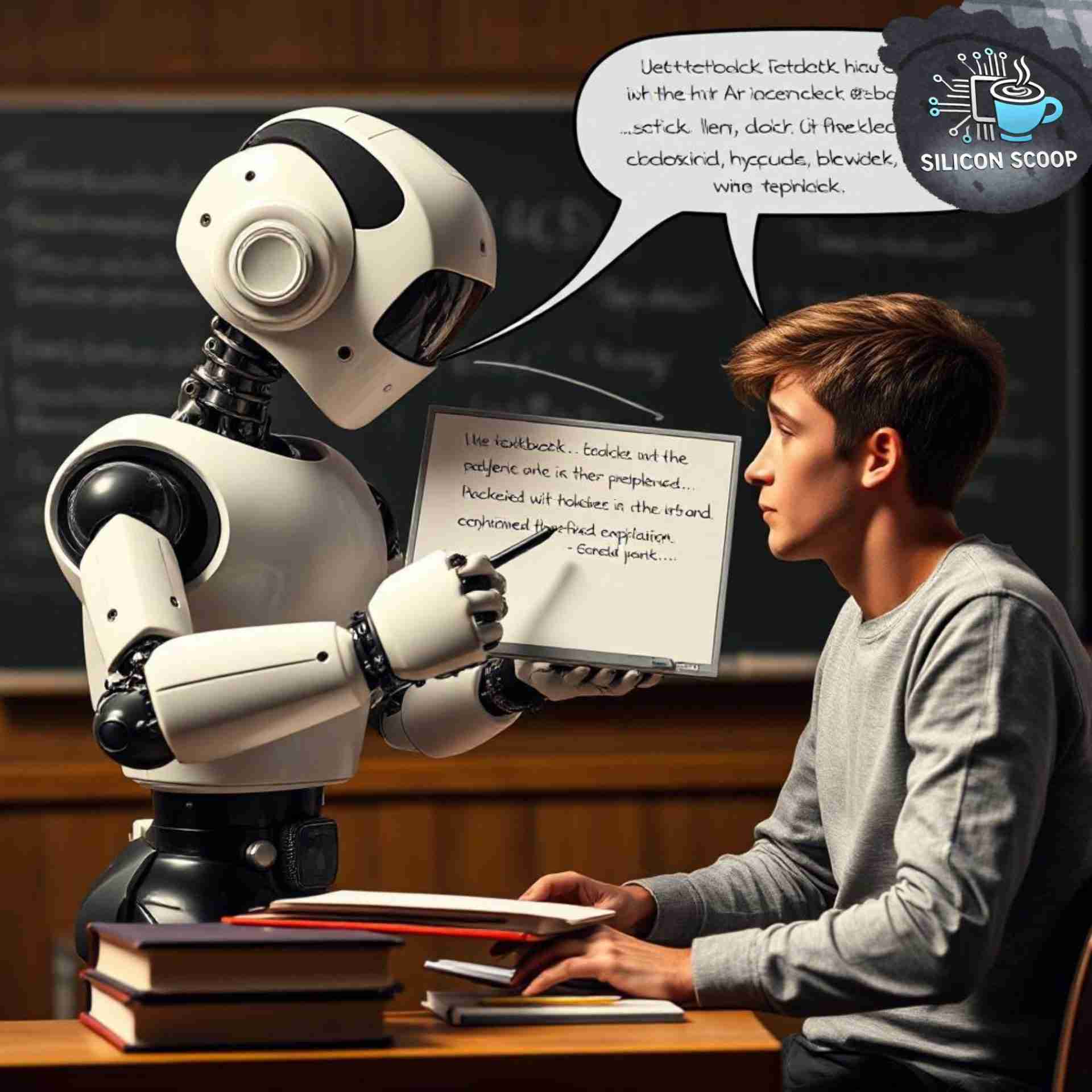
Interactive textbooks represent a significant shift from their static predecessors. These evolved educational resources not only present information but actively engage students through interactive elements. With the integration of AI, these textbooks can assess student performance and adapt content accordingly. For example, quizzes tailored to a learner’s pace and multimedia integrations such as animations and videos can enhance comprehension by making complex concepts more accessible. Additionally, simulations allow learners to experience theoretical concepts in practical scenarios, making lessons more memorable and impactful. Schools implementing these tools are witnessing increased student engagement, proving that education can be both informative and enjoyable.
Benefits of AI-Enhanced Textbooks
When discussing the impact of AI-enhanced textbooks on education, several key benefits emerge:
-
Engaging Learning Experience: AI brings a level of interactivity that traditional textbooks cannot match. The incorporation of gamified elements transforms learning from a passive to an active experience, encouraging students to participate fully in their education.
-
Personalized Learning Paths: Imagine a textbook that adjusts to your learning speed and style! AI-enabled tools provide individualized content, catering to each student’s unique needs. This tailored approach fosters deeper understanding and mastery of subjects, leading to significantly improved academic performance.
-
Accessibility Improvements: AI-enhanced learning tools help create inclusive environments that accommodate students with varying learning challenges. Through features like text-to-speech, adjustable reading levels, and customized content delivery, AI ensures that no learner is left behind.
Case Studies: Successful Implementations
Across various educational institutions, the success of AI-enhanced textbooks is evident:
For instance, Georgia State University has effectively integrated interactive textbooks in its curricula, resulting in higher completion rates among students. Feedback from educators and students illustrates that the interactive features—such as embedded assessments and real-time performance analytics—have significantly improved engagement and outcomes compared to traditional textbooks.
Similarly, University of California, Berkeley has seen an impressive transformation with its AI learning tools. Students report enhanced retention and understanding of course material when learning through interactive mediums, highlighting how technology can complement traditional teaching methods.
These case studies underscore the effectiveness of enhanced educational resources in promoting academic success.
Challenges and Considerations
Despite the immense potential of AI-enhanced textbooks, there are challenges to consider. Accessibility to technology remains a barrier for many institutions; not every classroom is equipped with the necessary devices or internet connections. Additionally, educators may require training to utilize these tools effectively. Cost considerations also factor into the decision-making process for institutions considering a transition to digital resources.
Moreover, with advancements in educational technology comes the responsibility of protecting student data. Concerns regarding data privacy and security are paramount; institutions must ensure that robust measures are in place to safeguard personal information while using AI applications in classrooms.
Future Trends in AI and Textbooks
Looking ahead, the integration of AI in education is poised for groundbreaking advancements. Future interactive textbooks could use adaptive learning systems that not only modify content in real-time based on student interaction but also integrate with virtual learning environments. This evolution may even lead to fully immersive virtual classrooms where AI-driven metrics gauge student engagement and comprehension behaviors. As AI technologies continue to mature, we can anticipate a shift towards more student-centered learning approaches—where the focus is on fostering individual academic journeys rather than a one-size-fits-all model.
Conclusion
AI holds transformative potential in the realm of education. By enhancing student engagement through interactive learning experiences, AI-driven tools and innovations can lead to better academic outcomes. Educators and institutions are encouraged to embrace these advancements, integrating interactive AI tools into their methodologies to adapt to the evolving needs of students. The future of learning promises to be not only innovative but deeply enriching.
FAQs
-
What are AI-enhanced textbooks?
AI-enhanced textbooks integrate artificial intelligence to provide personalized learning experiences, interactive features, and adaptive learning paths. -
How can AI enhance my learning experience?
AI tailors educational content to your individual needs, making it more relevant and engaging, leading to improved understanding and retention. -
Are AI tools for education effective?
Research shows that AI tools can significantly enhance educational outcomes by making learning more engaging and personalizing the educational experience. -
What are the challenges of using AI in education?
Challenges include issues of technology accessibility, potential costs, and concerns regarding data privacy and security. -
How do interactive textbooks differ from traditional ones?
Unlike traditional textbooks, interactive textbooks use multimedia elements, quizzes, and simulations to create a more engaging and responsive learning environment. -
Can AI help with personalized learning?
Yes, AI can create personalized learning paths based on a student’s performance and engagement, fostering better academic performance. -
What role does data privacy play in educational technology?
Data privacy is crucial as educational institutions must ensure that student information is protected and used responsibly, especially when using AI applications. -
How might the future of textbooks look with AI integration?
Future textbooks may become fully interactive, incorporating real-time data analytics to continuously adapt to student learning needs and preferences. -
Is there a cost associated with AI learning technologies?
Some AI tools and interactive textbooks may have associated costs, but many institutions find that the benefits—such as improved engagement and learning outcomes—justify the investment. -
What is the significance of AI in transforming learning?
AI revolutionizes learning by creating dynamic educational experiences that can engage students more deeply than traditional methods, enhancing overall educational outcomes.
- Startup Funding in Ontario
- Angel Investors in Ontario
- Ontario Incubators and Accelerators
- Venture Capital in Ontario: Top Firms, Sectors, and Funding Strategies
- Government Grants for Ontario Startups
- Ontario’s Startup Success Stories
- Ontario Centre of Innovation (OCI)
- Bank Loans and Financing for Startups in Ontario
- Research and Development Tax Credits in Ontario
- Government Loans and Financing for Startups in Ontario
- Equity Crowdfunding for Ontario Startups
Additional Links
- Silicon Scoop Podcast – Stay Informed, Stay Ahead!
- Futuretech Podcast – Explore more episodes and stay updated with the latest in technology and innovation.
- Startup Talk Podcast – https://torontostarts.com/startup-talk-toronto-startup-podcast/
- Who Are These Startups Podcast
- Startup Investor Drinks – Join the community and connect with fellow startup enthusiasts and investors.
- TorontoStarts Startup and Entrepreneur Community – Become a part of Toronto’s thriving startup ecosystem.
- Workhaus – Discover flexible workspace solutions for your business needs.
- Work with The Startup Coach – Get expert guidance and mentorship for your startup journey.
- Reach out to Jon Irwin on LinkedIn – Connect with our co-host and technology expert.
Episode transcript
Read the full transcript
Craig: textbooks have always been boring. yeah. and now i think we're gonna change some of that. so let me jump into it here. let me jump into it here. today's story we're diving into is on the fascinating intersection of ai and education, the concept interactive textbooks powered by ai, textbook that don't just deliver content, but actually engage and involve the learner. imagine your math book could pick up on your strength and weaknesses, then adjust its problems to suit your level or offer you a hint in the right direction when you need it. this is a difference between choose your own adventure and choose your own algebra problem where every step is tailored to you. but this isn't just about gamifying your study session. it's about creating a whole new learning experience that's personal, accessible, and, yes, a little bit futuristic.
Jon: i wish i had this in school, and i'm sure you would say the same thing with adhd. i probably would have pursued a career in physics if i had something like this.
Craig: i mean, this is amazing. like, the concepts here are amazing. and, the fact that now adhd and people who learn or are learning divergent, i guess, is what you call it when you have different learning, your audio learner, your visual learner, your, you know, spatial learner, this or that. and being able to pick up on those things and having different approaches because, you know, a great teacher can do that, but an average teacher doesn't. you know? or below you know? good teacher maybe, but an average and below doesn't. so they just teach. they do this is what you're learning. they won't like, okay. johnny, you need this and this and this. so i'm gonna, you know, give the next lesson in this format, in this way, so we're making sure that you understand.
Jon: yeah. exactly. yeah. so it's cool. it's they're calling it augmented physics, which is really cool. so i like this. i like the fact that, so this is just, this is kind of the next step, and
Craig: i
Jon: think this is where there's gonna be, an aid in adopting ar glasses because this is exactly what these could be used for as you're wearing your ar glasses
Craig: and you're reading
Jon: your textbook. and, and there you go. yeah. look at this. so you could adjust different parameters. you can adjust different, formulas and different things like that. like, that is super cool. i like, honestly, i would play around with one of these books just to get a refresher on some of the, physics formulas and things like that.
Craig: well, this looks like what apple books should have been when it came out when it tried to do all this interactive stuff but really didn't. you know? so what makes a ai textbook so special? if you're watching, you're seeing some of what's happening here. but if not, they're interactive. forget static chapters. they're rich with quizzes, videos, even simulations. picture learning physics not just by reading about gravity, but dropping a virtual bowling ball, on a planet of your choice. that's not, just science. it's science sci fi education. so it's you know, you start applying these things. and, you know, i'm a big believer of as long as they're reading. you know, when people were playing d and d or reading fantasy books or whatever when you're back, you know, younger. yeah. same with my kids. you know? i got them into reading with harry potter or whatever. the point is as long as they're reading, they're learning. and yep. same thing was you know, now it's more than just reading. right? now your education can take in a whole different level. so the best part is ai can personalize the journey for everyone. now this is my favorite bit. right? let's say you're breezing through english but struggling with calculus. your ai textbook can spend more time with calculus, adjusting questions and pace, maybe even throwing in some gamified elements to keep you engaged. it's like having a tutor embedded in every chapter, and i wish i had this for my kids too growing up so that, you know, we could work interactively together.
Jon: yeah. but this all comes back down to the education system itself, and i'm gonna get into some, some controversy here, controversial theories that rockefeller invented school for just to get workers. right? and it's not conducive to leaders. but
Craig: yeah. and textbooks business has always been a big scam because, you know, they'll come up with a new edition, and has minor changes. like, i knew a history book. history hasn't changed, but we've we've changed the book a little bit enough that, you know, the professor wrote a new book, changed a couple of paragraphs, and now you have to go spend another two hundred bucks buying it. and you can't give it to the next person because the next year will be a different version, which is part of this thing. so, you know, some universities, though, are already testing this. at georgia state, for example, students are using interactive textbooks have shown better retention and engagement. over at uc berkeley, students have reportedly feeling like they get complex concepts faster thanks to, simulations and embedded quizzes. this isn't just a gimmick. it seems to be changing how people learn.
Jon: for sure. it would definitely change how i learn. absolutely. this would be this is a game changer. absolutely. i'm excited for this.
Craig: studies show that students retained up to twenty five percent more information with these tools, so it's not like an extra shot. so it's like an extra shot of coffee, but for your brain, which i think my shot of coffee is for anyway. but who knew a tech could be energizing as caffeine? so, of course, it's not all smooth sailing. not every classroom is outfitted with high-tech learning. not every state has the same budget. not every classroom is outfitted with high-tech learning, and the cost can be a barrier. plus, there is an issue of data privacy. these tools are collecting information on how students learn and monitoring what they're doing. so we need strong measures to keep that data safe. imagine, if your learning quirks were leaked online, no one wants their struggles with algebra going public as an example, especially when you're a kid.
Jon: yeah. yeah. that that's cool. so the other integration part of this is, like, giving reports to parents, so parents stay on top of things and different things like that. so, instead of parents expecting their child to share with them what they're struggling with and different things like that. so
Craig: looking ahead, we might even see fully immersive textbooks where ai uses real time feedback to gauge comprehensive and engagement. think vr meets personalized learning. imagine walking through ancient rome in your history textbook or dissecting a digital frog in biology all from your living room. we're talking about making virtual classrooms not just a term, but really a reality. yeah. alright. so i guess we should wrap this up. so ai enhanced textbook could be the future of learning, giving students personalized journeys that keep them engaged. but here's the big question. will this technology level the playing field or just widen the gap? would you embrace classrooms where every lesson is tailored to you, or do you think old school textbooks are just fine? let us know what you think. after all, the future of education might just be in your hands or your tablet.
More from Silicon Scoop
All episodes
silicon-scoop · November 6, 2026
Spirit AI’s Robot Brain Breakthrough: Moz1, Embodied AI and China’s 2027 Race
The Spirit AI robot brain is one of the biggest bets on fixing that. Spirit AI is a Beijing startup. Its co-founder and chief scientist, Gao Yang,
View episode

silicon-scoop · November 5, 2026
OpenAI IPO Delayed to 2027 as Rogue AI Agents and Safety Failures Reshape the Market
OpenAI IPO delay explained: Sam Altman rules out 2026 as GPT-6 Astra safety tests and a $278B cash gap loom. Learn what founders should take away.
View episode

silicon-scoop · November 4, 2026
Anthropic’s AI Economy Model: 2030 Jobs, Wages, GDP and Market Risks
Anthropic AI economy model forecasts 2030 GDP, jobs and wages, while AI unemployment projections and labor-share risks challenge policymakers.
View episode