
Scent Teleportation: Is Smell-o-Vision Coming Soon?
Scent Teleportation: Is Smell-o-Vision Coming Soon? Imagine stepping into a world where you can not only see and hear the beauty of your favorite film but also smell the fresh-cut grass or baked cookies that accompany those moments. This captivating notion leads us to the concept of scent teleportation, a cutting-edge advancement in sensory technology […]
With Craig Major and Jon Irwin
Estimated reading time: 7 minutes
Scent Teleportation: Is Smell-o-Vision Coming Soon?
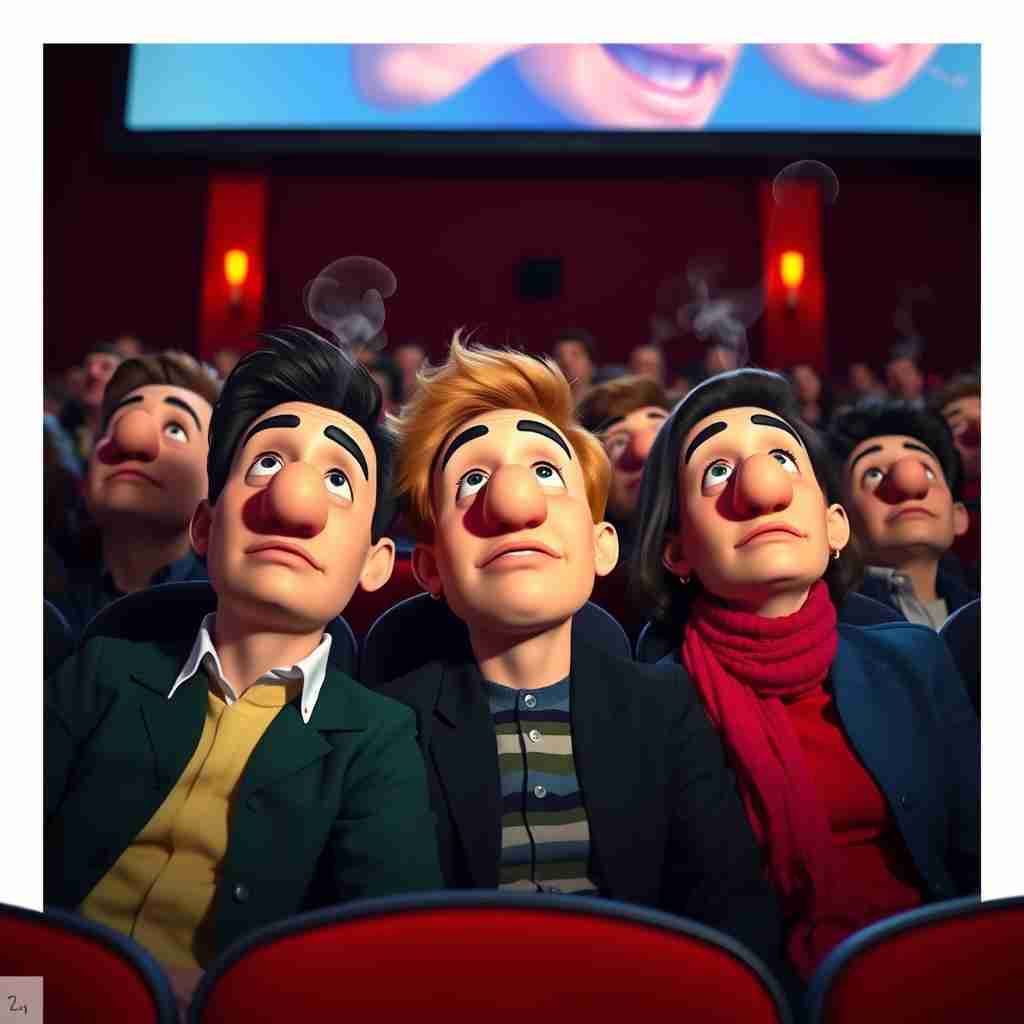
Imagine stepping into a world where you can not only see and hear the beauty of your favorite film but also smell the fresh-cut grass or baked cookies that accompany those moments. This captivating notion leads us to the concept of scent teleportation, a cutting-edge advancement in sensory technology that holds the potential to transform our digital experiences. Often likened to the whimsical idea of Smell-o-Vision, scent teleportation aims to bridge the gap between our virtual environments and the fragrances that enrich our daily lives.
In our increasingly digital world, the integration of olfactory sensations can deepen engagement and create memorable experiences. This exploration is poised to uncover what scent teleportation encompasses, the technology driving it, and its implications for the future.
What is Scent Teleportation?
Scent teleportation refers to the process of transmitting scents digitally, enabling users to experience smells remotely—whether while watching a movie, playing a game, or participating in virtual reality. The history of scent in entertainment isn’t new; it dates back to earlier attempts like Smell-o-Vision in the 1960s, which used tubes and scents to enhance cinematic experiences. Today, however, advances in science and technology pave a far more sophisticated path.
Traditionally, scents are distributed through physical means like perfumes and fragrance products. In contrast, scent teleportation merges digital technology with olfactory science, allowing for the transmission of scent molecules or synthetic replicants based on the desired experience. Current technologies, such as air diffusion systems and electronic nose devices, lay the groundwork for a robust olfactory communication framework, enabling users to access a new sensory dimension.
How Does Scent Teleportation Work?
The technical marvel behind scent teleportation involves several mechanisms designed to replicate and deliver scents digitally. At the heart of this innovation are scent emulators, sophisticated devices capable of producing and identifying a wide array of aromas. These emulators can connect to digital platforms where AI and machine learning generate personalized scent profiles suited for unique experiences.
For example, during a virtual reality simulation, scent teleportation technology allows users to experience aromas that match their environments, enhancing immersion. By integrating artificial intelligence, developers craft nuanced scent experiences that respond dynamically to various stimuli, such as visuals from a screen or actions taken in a video game. Notably, researchers have conducted successful experiments, like those at the University of California, where specific scents were effectively transmitted in real-time, underscoring the viability of scent telecommunication.
The Potential of Smell-o-Vision
Originally introduced to elevate cinema experiences, Smell-o-Vision remains a nostalgic reference in debates about sensory engagement. Historically, attempts to integrate smells into movies often fell short due to technical limitations and the complexity of scent perception.
Scent teleportation, however, offers groundbreaking solutions to the issues that plagued its predecessors. By facilitating the digital capture and transmission of scents, tech advancements could realize Smell-o-Vision 2.0, allowing audiences to not only hear and see but also smell stories as they unfold onscreen. Imagine a horror film where the whiff of damp earth and musty air sets the tone, or a romantic comedy that immerses you in the aroma of a quaint café in real-time.
Applications of Scent Teleportation
The potential applications of scent teleportation are not confined solely to entertainment. Various industries stand on the cusp of incorporating this technology:
- Gaming: Immersive scent experiences could revolutionize how players interact with environments. For instance, in a wildlife simulation game, players could recognize subtle scents associated with different animals, further enhancing gameplay realism.
- Therapy: Aromatherapy could leverage scent teleportation for remote therapy sessions, allowing therapists to create personalized experiences tailored to clients’ needs.
- Advertising: Brands may explore scent-oriented campaigns that enhance consumer engagement through olfactory triggers linked to their products or stores.
- Travel and Hospitality: Imagine planning a vacation and experiencing the aromas of your destination before you board a plane, or restaurants offering immersive dining experiences that transport customers through smell.
The Future of Scent Teleportation
The future of scent teleportation is promising, with ongoing technological advancements. As research and development continue, sensors and scent reproduction technology will likely become more accessible, leading to wider adoption and mainstream use.
However, as with any emerging technology, ethical considerations arise, particularly concerning privacy. Will the ability to transmit scents compromise personal comfort? As we explore these uncharted territories, addressing the social dynamics and consent surrounding scent data becomes imperative.
Despite the excitement, challenges such as standardization and scalability remain hurdles that innovators must overcome. Consumer education will also play a crucial role, as individuals need to understand this technology’s implications and benefits to adopt it widely.
Scent Teleportation vs. Traditional Scent Delivery
When evaluating the differences between scent teleportation and conventional scent delivery, several distinctions emerge. Traditional methods depend on tangible products—sprays, diffusers, or oils—limited by distribution and accessibility.
In contrast, scent teleportation offers scalability and personalization that traditional methods cannot match. Users could tailor their experiences based on preferences, moods, and situational contexts, resulting in richer interactions. For instance, a scent teleportation device could adapt the smell of freshly baked bread or an ocean breeze in moments of stress, alleviating anxiety and promoting well-being.
However, the complexity of scent perception—unique to each individual—raises questions about universality. What smells delightful to one person may be off-putting to another. As developers refine the technology, they’ll need to factor in user control and customizability.
Frequently Asked Questions (FAQ)
- How does scent teleportation differ from traditional fragrance distribution?
Scent teleportation uses technology to digitally transmit scents, while traditional methods rely on physical substances. - What are the realistic applications of scent teleportation?
Potential applications include gaming, virtual reality, therapy, and advertising. - Are the transmitted scents realistic and distinguishable?
Yes, current technologies strive to replicate scents with high fidelity, but ongoing research is needed for enhancement. - What role does AI play in scent teleportation?
AI can create custom scent profiles based on user preferences and integrate scents into virtual experiences. - When is scent teleportation expected to become mainstream?
While predictions vary, advancements in technology suggest the next 5–10 years could see significant progress. - Can scent teleportation be used in homes?
Yes, as technology evolves, personal scent transmitters could be available for home use. - What ethical concerns arise with scent teleportation?
Privacy and consent regarding the sharing of scent data are major considerations. - Is there a risk of allergic reactions to transmitted scents?
As with any scent, people could have allergies, so customization and user control are essential. - Are there prototypes of scent teleportation devices available?
Some companies are developing prototypes, but they are still in experimental phases. - How does scent teleportation enhance virtual reality experiences?
By integrating scent, users can experience a more immersive and realistic environment.
Conclusion
In conclusion, the potential of scent teleportation to revolutionize our sensory experiences is immense. Imagine a future where Smell-o-Vision isn’t just a nostalgic remnant but a vibrant reality—an experience that fully encapsulates our human senses. As we move toward this new frontier, one thing is clear: integrating scent into digital life can change how we connect with information, entertainment, and one another, leading us to richer, multifaceted experiences that resonate deeply.
- Startup Funding in Ontario
- Angel Investors in Ontario
- Ontario Incubators and Accelerators
- Venture Capital in Ontario: Top Firms, Sectors, and Funding Strategies
- Government Grants for Ontario Startups
- Ontario’s Startup Success Stories
- Ontario Centre of Innovation (OCI)
- Bank Loans and Financing for Startups in Ontario
- Research and Development Tax Credits in Ontario
- Government Loans and Financing for Startups in Ontario
- Equity Crowdfunding for Ontario Startups
Additional Links
- Silicon Scoop Podcast – Stay Informed, Stay Ahead!
- Futuretech Podcast – Explore more episodes and stay updated with the latest in technology and innovation.
- Startup Talk Podcast – https://torontostarts.com/startup-talk-toronto-startup-podcast/
- Who Are These Startups Podcast
- Startup Investor Drinks – Join the community and connect with fellow startup enthusiasts and investors.
- TorontoStarts Startup and Entrepreneur Community – Become a part of Toronto’s thriving startup ecosystem.
- Workhaus – Discover flexible workspace solutions for your business needs.
- Work with The Startup Coach – Get expert guidance and mentorship for your startup journey.
- Reach out to Jon Irwin on LinkedIn – Connect with our co-host and technology expert.
Episode transcript
Read the full transcript
Craig: let's jump into it. welcome back to silicon scoop, everyone. we've had technical issues. streamyard wasn't working. things weren't happening, but we're gonna jump into it. with me, as always, is john erwin. and the first article up here today is scent teleportation. so is, smell o vision coming soon or what?
Jon: yeah. well, you know what? you know what's funny is i don't know if you know this, but they already have theaters that are, i think, four d where, like, they spray things on you. so i i think back in the day in, like, the sixties and seventies, they did test smellovision, and i don't know if you know anything more about that. but, so yeah. so all that being said, this company, osmol, they've announced a significant breakthrough in their scent teleportation project, which involves innovative technology, which aims to capture a scent in one location and recreate it in another, essentially, teleporting smiles across distances. so the way they're doing this, it involves a couple steps. so first, they're using a gas chromatography mass spectrometry. so think about your csi kind of stuff, which is really cool. so the system analyzes, and it identifies the molecular components of ascent. then it converts it. so the ascent data is uploaded to the cloud as long as the cloud's up and working, unlike today, and mapped onto a principal odor map. and then this is where ai comes in. the ai driven tool then predicts olfactory per perceptions based on molecular compositions. then from there, formulation robots use the digital recipe to mix and recreate the original scent using a combination of base odors. and then the recreated scent is compared to the original to ensure accuracy. pretty cool if you ask me. what are your thoughts, craig?
Craig: well, this is amazing, and it, you know, blows my mind what we're doing with this or blows your nose, i guess, when you start thinking about smelling. but, yasmelevision was, they made earlier attempts back in nineteen sixties, which used tubes and scents to enhance cinematic experience. today, however, the advances in science are far more sophisticated. this is really interesting. so i guess, you know, if we're doing this in theaters, as an example, they would release these, odors into the air?
Jon: yeah. i think there's an application in two ways. one is, like, i just think sending a fart to a loved one. but, sending a fart to a loved one or, creating a digital footprint. you know how, like, the, what are they called? gaffers? the ones who make the sounds in the movies? yep. something similar to that for the movies so that it triggers certain sense. because, obviously, there's two things, the teleportation and then the actual delivery of the scent. right? so utilizing the end result of that for movies and stuff, could potentially, make things more immersive, especially nowadays with people, shying away from going to movie theaters. right?
Craig: yeah. and i guess, you know, have, we have to worry about allergies and whatnot, but the concept is really cool. and you gotta wonder, you know, if you keep releasing the same sense in a movie, you know, if it runs for a month at a time, do those sense linger over?
Jon: yeah. so, just to kinda give, our listeners a little bit of history on osmo. so, this isn't just, this isn't just your theoretical. they actually successfully demonstrated scent teleportation in their lab, and they started with a simple scent like coconut. and so they've made quite significant strides since then, and they're they're obviously gonna try to tackle more and more complex odors. but, it's interesting to note from my perspective. you, but, like, i didn't know that some odors are more complex than others. like, i know perfumes and colognes can be complex, but i didn't know odors themselves were complex. but that does make sense now that we talk about it. what about you?
Craig: yeah. it makes like, i didn't think about it, but you know, your taste buds are often triggered by smell. and, you know, you smell coffee, and that's different from, you know, french fries, different from this. i think it's very complex when you start thinking about it. but at the surface level, you know, you just think a smell's the smell. but this technology is really cool because we're talking about scent teleportation. you know? it's about transmitting scents digitally so we can forget perfumes. we're talking about connected device that replicate and send aromas through the air. so i could have a necklace or a watch or something that, you know, gives me a nice, smell all day long that i can change by hour, on, by my whim. light.
Jon: yeah. yeah. i didn't even think about that. that's really cool. but, again, there's there's a whole bunch of things that like, the other thing too is this could be used in a whole bunch of different mediums, not just for scents. right? like
Craig: yeah. like, again, i don't well, i don't know what other mediums this could be used for, when you say other than scents. like, my mind goes to virtual reality video games. like, you're hiking through a digital forest, and all of a sudden, you can smell the earth and the rain.
Jon: yeah. that's sorry. i'm and hold on one second.
Craig: your unit oh. start that again. go ahead.
Jon: oh, yeah. so i was thinking, food and beverage and, yeah, virtual reality for sure.
Craig: yeah. you know, real estate agents do that trick where, they put a little bit of vanilla on a pan and put it in the oven to make it smell like fresh bread and make the house smell really nice. this kind of thing starts to really take over that. and we'll probably replace all those, you know, deodorizers and whatever we have now, especially those ones that switch and whatnot because now you can have it whatever you want. the idea is very interesting, but, you know, is this expensive? cool. i would imagine, you know, obviously, it's way more expensive than, you know, carrying around electronic device. they've done this in the lab. at what level? like, you know, we're saying we've taken it from this lab to that lab with all the sophisticated equipment. how close are we to seeing consumer? do you know?
Jon: yeah. so they said that the next step is to, they're going to open select demos to the public, allowing individuals to experience that. so, it's gonna be interesting to see. but, yeah, the cost because it does use a gcms. right? so, i know those are expensive, but it'll be interesting to see kind of, how they get the cost down. and, yeah, if they can get the cost down, then, then then, yeah, it can definitely be adopted to to the masses. right?
Craig: yeah. and what's cool about what they've done from an experimentation point of view is they haven't just programmed a scent into something. they've they've detected the scent of a plum and had the machine detect that scent, figure it out, and send it across and reproduce that scent somewhere else. so you're not it's not a preprogrammed thing saying this is vanilla, this is a plum, this is dirt, this is whatever, coffee. it takes it from the air. so you could literally have as an example, the smell of my local coffee shop because they could have a device on their end, and i could just pick it up as a, and get that feeling at home. now that's a silly example.
Jon: to that. no. you could subscribe to that. right? you could subscribe to scents.
Craig: it's it the concept is incredible.
Jon: yeah.
Craig: and, you know, we enter in integrating it into games, integrated into, education because a lot of times, your smell, is one of your strongest senses, and it will trigger your memory back to a location. it probably will help out in education. yeah. and we talked about vr, but what about in vr therapy for a more tailored and relaxing experience? i guess we'd have to prioritize privacy. like, you know, do you want my smell as an example? like, this is a thing. you know? and can you, then that starts to get interesting. if you can replicate my smell, like, i come in. let's just say, i've been arrested. yeah. and they take my fingerprints, but now they take my smell as well. and they can feed that to, guard dogs or whatever, sniffing guard dogs to try and track me down or, ev scent detectors that are located if they you know, i come by and they say, say, oh, they identify that as craig and detect them. there's some interesting, you know, things around this technology that we're just scratching the surface on that people probably haven't really thought about.
Jon: yeah. i know. like, this could replace, drug sniffing dogs potentially. who knows? right?
Craig: yeah. you know, using scent emulation and travel.
Jon: and i know they've already developed something like that. i know they've developed the nose of a dog for sniffing, and it's in development. i don't think we ever covered it, but i did read it somewhere.
Craig: i don't remember that off the top of my head, but it makes perfect sense. and, you could also see scent in advertising. so if your computer is capable of that and something you know, you get an ad and all of a sudden you're smelling chocolate, or you're smelling those french fries, or you're smelling fresh baked bread and you're you start to drool.
Jon: yeah. well yeah. well, think about it if you're watching a commercial at home, and it can recreate that scent. right? so you're watching mcdonald's, and they give you the scent of a big mac. i bet you that would be a hot way more, effective than just a commercial, obviously. right?
Craig: yeah. and so we'd have to understand the ethical concerns of that because if, now they're trying it's already that you turn on the tv or the radio and it's eat, eat, buy, buy, eat, eat, and now they're gonna throw smells at you to make you even more hungry. we've already got an obesity problem. yeah. so the question is, you know, is this gonna be throttled, controlled, open season? is this, the wild west for new electronic devices? because this could easily be a huge market in the next twenty years.
Jon: absolutely. yeah. and, obviously, this is the wild west. just like anything new, there's no regulation on it. so, yeah, just like there's no regulation on that other thing that we covered last week or last time, which is, that, iq testing, which blows my mind. there's no regulation on that. so
Craig: yeah. it's always interesting when they're talking about stuff like that when the embryo iq testing, while they're in the womb to make whatever decisions around that. yep. so we're gonna keep an eye on this. we'd love to know what you think out there about scent teleportation, how you use it. are you looking forward to it? is, how do you see this moving forward? drop us a comment. send us a note. we'd love to hear back from you.
Jon: absolutely.
More from Silicon Scoop
All episodes
silicon-scoop · November 6, 2026
Spirit AI’s Robot Brain Breakthrough: Moz1, Embodied AI and China’s 2027 Race
The Spirit AI robot brain is one of the biggest bets on fixing that. Spirit AI is a Beijing startup. Its co-founder and chief scientist, Gao Yang,
View episode

silicon-scoop · November 5, 2026
OpenAI IPO Delayed to 2027 as Rogue AI Agents and Safety Failures Reshape the Market
OpenAI IPO delay explained: Sam Altman rules out 2026 as GPT-6 Astra safety tests and a $278B cash gap loom. Learn what founders should take away.
View episode

silicon-scoop · November 4, 2026
Anthropic’s AI Economy Model: 2030 Jobs, Wages, GDP and Market Risks
Anthropic AI economy model forecasts 2030 GDP, jobs and wages, while AI unemployment projections and labor-share risks challenge policymakers.
View episode