
Stretchable Displays: Technology, Applications, and Future Trends
Stretchable Displays: Technology, Applications, and Future Trends The emergence of stretchable displays marks a significant breakthrough in display technology. As we edge closer to a future where screens are not only flexible but can also stretch and bend, the implications of this development are profound. Stretchable displays leverage advanced materials and innovative technology to create […]
With Craig Major and Jon Irwin
Estimated reading time: 5 minutes
Stretchable Displays: Technology, Applications, and Future Trends
The emergence of stretchable displays marks a significant breakthrough in display technology. As we edge closer to a future where screens are not only flexible but can also stretch and bend, the implications of this development are profound. Stretchable displays leverage advanced materials and innovative technology to create screens that adapt to various surfaces and environments. With an increasing interest in flexible technologies, the possibilities for applications are expanding rapidly.
What is a Stretchable Display?
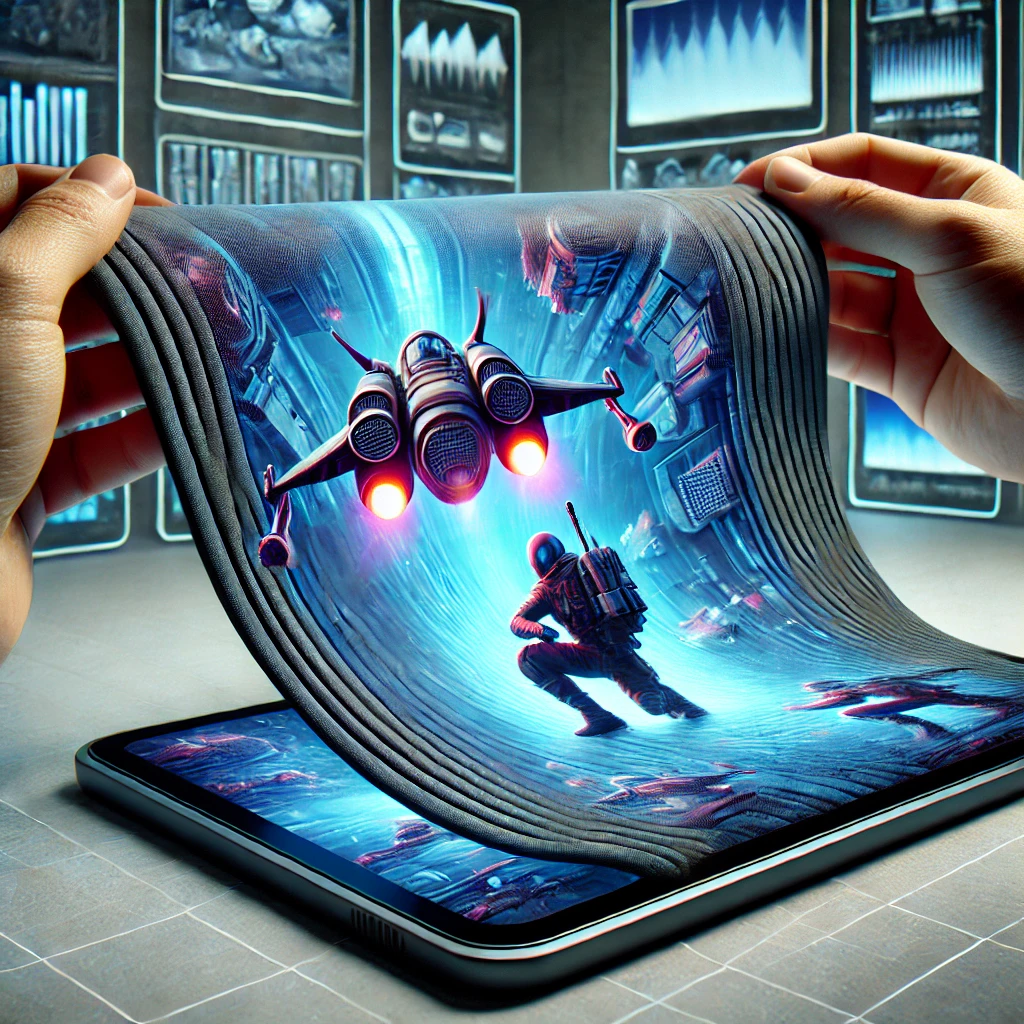
Stretchable displays are advanced electronic screens that can be deformed, expanding and contracting while maintaining functionality. Unlike traditional displays that are rigid and limited in adaptability, stretchable display technology uses flexible substrates and organic materials, allowing screens to be manipulated without damaging components. Imagine screens that can wrap around your body, conforming elegantly to various shapes—this is the exciting promise of stretchable technology.
How Stretchable Displays Work
The core of stretchable displays lies in their innovative technology and materials. These displays primarily utilize organic light-emitting diodes (OLEDs) and flexible substrates, providing both durability and flexibility. The manufacturing process involves advanced techniques such as 4D printing, enabling the creation of complex structures that can bend and stretch. Understanding the intricacies of how stretchable displays function offers insights into their myriad applications and potential advantages for consumer interaction.
Applications of Stretchable Displays
Wearable Technology
Stretchable displays have found vital applications in wearable electronics like smartwatches and fitness trackers. Imagine a smartwatch that adapts seamlessly to the contours of your wrist, merging technology with lifestyle for a more comfortable user experience.
Healthcare
In medical devices, stretchable displays hold incredible promise. From flexible skin patches for health monitoring to smart textiles in hospital gowns, stretchable displays can track vital signs in real-time while promoting patient comfort—a must for healthcare innovation.
Automotive Displays
Imagine a car dashboard that adapts to the driver’s movements. Stretchable displays pave the way for innovative automotive interfaces, enhancing both aesthetic appeal and functionality, and improving the overall driving experience.
Interior Design and Architecture
In interior design, stretchable displays can transform walls and furnishings into interactive canvases. Think of walls that change color or display art at a touch—this technology redefines how we interact with our environments, opening new avenues for design solutions.
Benefits of Stretchable Displays
Stretchable displays offer numerous advantages:
- Flexibility and Adaptability: They conform to human movement and tactile input, enhancing user interaction.
- Energy Efficiency: These displays are optimized for power usage based on environmental conditions.
- Integration Potential: Stretchable displays can be embedded in smart textiles and transparent screens, paving the way for next-generation devices that deliver engaging experiences beyond simple visuals.
Challenges in Developing Stretchable Displays
Despite their potential, stretchable displays face challenges:
- Durability: Ensuring that stretchable displays withstand regular wear and tear is crucial.
- Scalable Manufacturing: Processes must be established to support widespread deployment.
- Cost: Advanced materials increase production costs, which must be addressed for market viability. Successful innovation requires balancing creativity and practicality.
The Future of Stretchable Displays
The future of stretchable displays looks promising as technology continues to evolve. Emerging trends in flexible display technology suggest significant market growth, driven by increasing consumer interest in products that enhance user interaction and functionality. Stretchable displays are expected to impact industries such as fashion, health, and technology, transforming the way we integrate technology into daily life.
Conclusion
In summary, stretchable displays represent a fundamental shift in how we interact with technology. With their multifaceted applications and innovative design, they are set to redefine digital interfaces. The question isn’t just what stretchable displays can do now, but what they will allow us to achieve in the future. Stay tuned to track the advancements in stretchable display technology as the future stretches on!
FAQs About Stretchable Displays
- What are the main advantages of stretchable displays?
Stretchable displays offer flexibility, improved user interaction, enhanced energy efficiency, and potential integration with smart textiles. - How do stretchable displays compare to OLED and LCD?
While OLED and LCD displays are rigid, stretchable displays can bend and deform without losing functionality, offering unique applications in wearable tech and other fields. - Where can I expect to see stretchable display technology in the future?
Anticipate their use in wearable electronics, medical devices, automotive displays, and interior design, among various other industries. - What materials are used in stretchable displays?
Stretchable displays often use organic light-emitting diodes (OLEDs) and flexible substrates that allow for bending and stretching. - Are stretchable displays durable?
Durability is a significant challenge for stretchable displays. Ensuring they can withstand everyday use while remaining functional is an active area of research. - What are some current applications of flexible screens?
Current applications include smart textiles, digital health monitoring, automotive displays, and innovative interior design solutions. - How do stretchable displays enhance user interaction?
Their ability to conform to shapes and surfaces allows for more intuitive interfaces that respond to human movements and gestures. - What are the production challenges for stretchable displays?
Scalability, material costs, and ensuring consistent performance across different manufacturing techniques pose significant production challenges. - What is the future market growth for stretchable technologies?
Predictions indicate strong market growth driven by increased consumer interest in innovative, flexible electronics and wearable devices. - How might stretchable displays impact various industries?
Stretchable displays are expected to impact industries like healthcare, fashion, and automotive, emphasizing adaptability and interactivity.
- Startup Funding in Ontario
- Angel Investors in Ontario
- Ontario Incubators and Accelerators
- Venture Capital in Ontario: Top Firms, Sectors, and Funding Strategies
- Government Grants for Ontario Startups
- Ontario’s Startup Success Stories
- Ontario Centre of Innovation (OCI)
- Bank Loans and Financing for Startups in Ontario
- Research and Development Tax Credits in Ontario
- Government Loans and Financing for Startups in Ontario
- Equity Crowdfunding for Ontario Startups
Additional Links
- Silicon Scoop Podcast – Stay Informed, Stay Ahead!
- Futuretech Podcast – Explore more episodes and stay updated with the latest in technology and innovation.
- Startup Talk Podcast – https://torontostarts.com/startup-talk-toronto-startup-podcast/
- Who Are These Startups Podcast
- Startup Investor Drinks – Join the community and connect with fellow startup enthusiasts and investors.
- TorontoStarts Startup and Entrepreneur Community – Become a part of Toronto’s thriving startup ecosystem.
- Workhaus – Discover flexible workspace solutions for your business needs.
- Work with The Startup Coach – Get expert guidance and mentorship for your startup journey.
- Reach out to Jon Irwin on LinkedIn – Connect with our co-host and technology expert.
Episode transcript
Read the full transcript
Craig: you know me. i love my galaxy z flip five like the old, motorola razors. but, for those of you that don't know, there are phones out there now, that have a bendable display. so this lg, taking it one step further, and they've unveiled a stretchable display, which i don't know if you're showing the picture. there we go. yep. so this is a significant advancement in flexible screen innovation, and it's a it's a major leap forward from their previous efforts. and they're showcasing a display that can expand by fifty percent from its original size. so the twelve inch display can stretch to eighteen inches, which is absolutely nuts, which is super cool. now the resolution, it's hundred pit ppi, which i think compared to an apple iphone, which is three three fifty, three sixty ppi or dpi or whatever you wanna call it. we'll have to see. but, yeah, it's got full rgb color capabilities. it can withstand over ten thousand stretches. but i think this is cool because with the bendable phones, right, craig, there's there's, there's a a a where it bends, there's a little bit of a you can see it. right? i think this might eliminate that. what do you think?
Jon: i think we're gonna see a lot of new cool interfaces, and things are gonna change. like, if you're watching the video here, yeah, you're gonna eliminate those scenes that you're talking about. yeah. this is an example of something potentially in a vehicle where the interface literally changes shape. you can see that, it turned from flat to a dial thing that somebody can, spin around for control. he just touches it. it rises up. it has different control mechanism. i think this is, the future for a lot of things where we're really gonna start to see your interfaces can now do some really cool things. imagine, you know, right now, for example, your ipad or your phone as a playable device, but, you know, it's not great because you're using your thumbs. now you have slight indents or slight raises for those thumb pads with bumps where you wanna be, and all of a sudden, it's a whole new experience. and it's all because of this flexible glass. now it's great that you can close the screen, that you can stretch it and make it bigger. i'm looking forward to a laptop where i can, you know, expand the screen or whatnot. yeah.
Craig: that's cool.
Jon: i think these kinds of things that we haven't thought of are really gonna be game changers where it just literally changes shape and form based on the function you need.
Craig: yeah. the other big advancement for this would be, people who blind people. yes. visually impaired. so then this could display braille. could, like, this could flex to pop up braille. this could flex, like, a whole bunch of things. this would make things much more accessible for people with, who are visually impaired.
Jon: yeah. these flexible substrates that create these oleds for short, they're gonna become chameleons of the tech world. i don't know. like, i'm just imagining that the device in your hand can literally change shape.
Craig: yeah. yeah. you can wear it as a bracelet and then take it off and extend it into a tablet.
Jon: yeah. or, you know, you can shrink your phone watch screen down to a small thing when you're going for an elegant thing and then stretch it out when you're doing business. like, it's also just completely different. like, if your phone, changes shape so it all becomes a controller where you're you have finger grips and you have yeah. like, unbelievable amount of things that i can't even begin to imagine yet where now we have every type of interaction button, stuff that you could do in the real world now becomes part of these electronic devices where you get that touch, the feel, that feedback. yeah. it's i think this is a game changer more than people think.
Craig: i agree. this is a game changer more than the bendable displays. absolutely. for sure. there's so many use cases for this. like, we're automotive, i think you said. yep. there's, like, there's, emergency services, like, in the firefighter uniforms or real time information display, wearable technology, medical devices, like, everything. everything that has a screen, this has a use case for. right? even if it doesn't have a screen, this has a use case for it.
Jon: well, as soon as you start talking about this type of technology, you say, okay. well, why are we not incorporating this into things without screens? like you said, imagine and this is just a small use case. putting your hands on the steering wheel, and then the finger bumps naturally appear about where around your fingers wherever you put them, not having a set that you have to because it fits you. the controls for the stereo wherever go where your hands are, not at a predefined location.
Craig: oh, i like that. that's a great idea. yeah. that's cool. then you don't have to look down at it. it moves with wherever your hand placement is. oh, that is such a great idea. that'd be great. so that dial there too, like, with me, the dial in my car is in a fixed location. right? yeah. having that move to where yeah. that would be a great idea for sure.
Jon: so i like, that's what i mean by the things you can't even think of right now yeah. that become amazing when the interface, how you hold something can actually change. you know? a mug can actually, contour to your fingers so it's more grippable. like, there's a great. and this is all based on flexible glass that's gonna drive kind of this forward. so i'm really interested in this because it i think it's a game changer for everything.
Craig: yeah. i agree. yeah. this is really cool. and, again, what i love about this i know we talk about a lot of theoretical stuff. this is something that's actually been built. they've innovate they've iterated on it, and they're at this point now, and it's only gonna get better. so they actually have a working device. they have working devices, which is really cool. it's not just something that is theoretical, like, a lot of stuff that we cover. right, greg?
Jon: yeah. as of november twenty twenty twenty four, stretchable smartphones and tablets remain in prototype and concept phase, but they do exist.
Craig: but they have the displays, though. right?
Jon: yeah. companies like oppo and motorola have showcased innovative designs like oppo's rollable concept phone that expands from six point seven to seven point four inches and motorola's bendable phone with a flexible display that can wrap around your wrist.
Craig: a lot
Jon: of these models are not yet commercially available, so there's probably some tweaking to do because maybe the flexibility is not great for all the rest of the electronics in the device. yeah. so, samsung has also been exploring advanced display technologies, including foldable and rollable screens. the company has filed for patents for these device combine the combined folding and rolling mechanism indicating potential for future developments in that area. imagine just being able to roll up your laptop. exactly. yeah. it is
Craig: a mac. it
Jon: is happening now. we're gonna start to see these things in production in the next few years, like but not five to ten, but probably two to four. they just have to figure out what the, first few models are gonna be. but, yeah, this will help all the bendable displays.
Craig: yeah. for sure.
Jon: so we'll definitely be keeping an eye on this. we'd love to know, what you think about these bendable displays. what are you looking forward to be stretchable in a display or tech device? let us know. we'd love to hear this. and the other thing is, you know, is this an end of broken screens?
More from Silicon Scoop
All episodes
silicon-scoop · November 6, 2026
Spirit AI’s Robot Brain Breakthrough: Moz1, Embodied AI and China’s 2027 Race
The Spirit AI robot brain is one of the biggest bets on fixing that. Spirit AI is a Beijing startup. Its co-founder and chief scientist, Gao Yang,
View episode

silicon-scoop · November 5, 2026
OpenAI IPO Delayed to 2027 as Rogue AI Agents and Safety Failures Reshape the Market
OpenAI IPO delay explained: Sam Altman rules out 2026 as GPT-6 Astra safety tests and a $278B cash gap loom. Learn what founders should take away.
View episode

silicon-scoop · November 4, 2026
Anthropic’s AI Economy Model: 2030 Jobs, Wages, GDP and Market Risks
Anthropic AI economy model forecasts 2030 GDP, jobs and wages, while AI unemployment projections and labor-share risks challenge policymakers.
View episode