
The First Painting Created by a Humanoid Robot: Revolutionizing Art and Technology
The First Painting Created by a Humanoid Robot In an unprecedented moment in the world of art, the first painting created by a humanoid robot has made waves, not only for its artistic value but also for the monumental achievements it signifies in technology. This pioneering piece, generated by a humanoid robot named Ai-Da, signifies […]
With Craig Major and Jon Irwin
Estimated reading time: 7 minutes
The First Painting Created by a Humanoid Robot
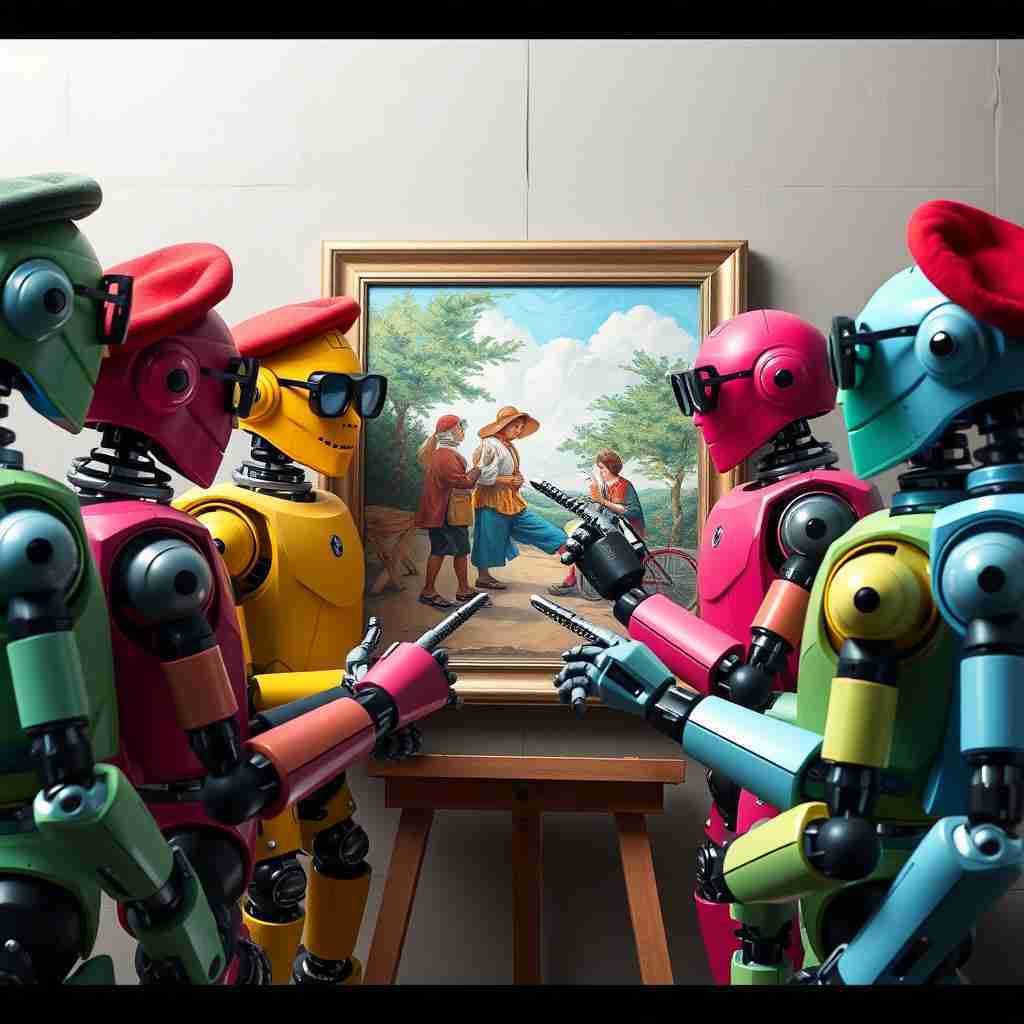
In an unprecedented moment in the world of art, the first painting created by a humanoid robot has made waves, not only for its artistic value but also for the monumental achievements it signifies in technology. This pioneering piece, generated by a humanoid robot named Ai-Da, signifies a historical milestone in the intersection of artificial intelligence and creativity. Ai-Da was created by a team of engineers and artists, who have pushed the boundaries of what machines are capable of. The emergence of robotic art challenges our traditional views on creativity and raises profound questions about authorship and artistry itself.
The Robotic Painting Process
The painting process utilized by Ai-Da combined advanced technology with artistic principles. At its core, the robot employs a blend of sophisticated algorithms and machine learning techniques to analyze artistic styles and develop unique outputs. Equipped with specially designed robotic arms and painting tools, Ai-Da mimics the movements of human artists, translating coded instructions into brush strokes. This robotic painting process was influenced heavily by data gathered from famous artists, allowing the robot to draw on a vast reservoir of styles and techniques while creating its own interpretation.
Moreover, this innovative artwork showcases the seamless integration of cognitive robotics in creative fields. As Ai-Da paints, it perceives the changing colors and textures, a testament to how machines can learn and adapt in real-time, much like a human artist would during the creative process. The fusion of machine learning in art exemplifies the transformative potential of technology in expanding the definitions of creativity and artistic expression.
History of Robotic Art
The journey of robotic art dates back several decades, evolving alongside advancements in artificial intelligence. Early experiments with AI-generated artwork laid the groundwork for the hybridization of technology and artistry. Programs in the late 20th century attempted to simulate artistic styles through algorithms, paving the way for contemporary projects that now include full-fledged robotic artists like Ai-Da. This evolution has witnessed an increasing acceptance and appreciation of robot artists within both the tech sphere and public consciousness.
In past years, AI-generated artwork has sparked contentious debates among critics and the art community, leading to mixed reactions. On one side, skeptics often argue about the lack of genuine creativity and emotional connection in robotic creations. Conversely, advocates highlight the unique perspectives and challenges that robotic creativity introduces to the art landscape. The public reception of these innovative artistic ventures has undeniably shifted, indicating a growing recognition of the value that AI can contribute to human culture.
Auction Results and Market Impact
A turning point for robotic art arrived when Ai-Da’s first painting was auctioned, fetching an astounding price of over $1 million. This auction not only showcased the drawing power of art created by robots but also highlighted an emerging trend within the art market. As collectors and investors start to appreciate the potential of non-human art creation, traditional boundaries that once defined artistic valuation are rapidly blurring.
The implications of this landmark sale are profound. It challenges the conventional metrics of art valuation and suggests a future where art created by robots may hold equal footing alongside human-created masterpieces. Future art auctions are likely to incorporate robotic creations into their catalogs with more seriousness, ushering in a new era of gallery exhibitions and collections featuring artworks produced by machines.
The Future of Artistic Expression
Looking forward, the implications of Ai-Da’s painting transcend mere market dynamics. The introduction of the first painting created by a humanoid robot invites an evolution in our understanding of creativity and authorship. As robots become increasingly sophisticated, the lines between artist and machine may continue to blur, fostering collaborative opportunities where human creativity intertwines with robotic precision.
The potential collaborations between humans and machines promise to redefine the artistic landscape. As AI in art progresses, the AI-human collaborative model could become a mainstay, fostering a unique blend of inspiration and execution. This evolving relationship may well lead to innovative forms of expression that we have yet to imagine, signaling a future where art and technology coalesce harmoniously.
Ethical Considerations and Controversies
However, with innovation comes ethical responsibilities. The rise of AI art necessitates a critical examination of issues surrounding ownership and attribution. Questions arise: Who owns the rights to an artwork created by a robot? Can a machine be attributed the title of ‘artist’? These inquiries will spark ongoing debates within the art community regarding the fundamental essence of creativity, raising concerns about the implications for traditional artists and their rights in an increasingly automated world.
Additionally, the impact of AI on art raises vital questions about originality and authorship. As robotic creativity becomes more prevalent, discussions about the depth and authenticity of non-human contributions will intensify. Balancing these ethical considerations will be crucial as we navigate this new creative frontier.
Conclusion
In summation, the significance of Ai-Da’s painting transcends the canvas; it represents a bold step forward in the realm of robotic art and serves as a reflection of the advanced integration of technology in creative expression. As we continue to explore the implications of AI-driven art, we can envision a rich future punctuated by incredible artistic innovations led by our artificial counterparts. The landscape of artistic expression is evolving dramatically, and the threads of creativity will soon weave together the efforts of humans and machines alike.
FAQs
- What is the first painting created by a humanoid robot?
- The first painting created by a humanoid robot is an art piece generated by Ai-Da, pushing the boundaries of traditional art forms.
- How did the humanoid robot create its painting?
- The humanoid robot utilizes machine learning algorithms and robotic arms to simulate human-like painting techniques.
- What were the auction results of the robot’s painting?
- Ai-Da’s first painting was auctioned for over $1 million, indicating the value being placed on non-human art creation.
- How is AI in art changing the art market?
- The acceptance of AI-generated artwork is reshaping valuation metrics and expanding the scope of what is considered art.
- What are the implications of robotic art on creativity and authorship?
- Robotic art invites debates about the definitions of creativity and originality, challenging conventional notions of authorship.
- Are there ethical considerations regarding AI-generated artwork?
- Yes, issues such as ownership rights, attribution, and the authenticity of AI creations are raised in discussions about ethics in robotic art.
- How has public reception of robotic artists evolved?
- The public is increasingly recognizing and accepting robotic artists, reflecting a shift in perceptions towards AI in creative sectors.
- What technology is used by humanoid robots in creating art?
- Humanoid robots like Ai-Da employ advanced sensors, machine learning algorithms, and robotic arms designed for painting.
- How do art auctions value non-human art creation?
- Auctions are beginning to incorporate robotic art into their valuation practices, recognizing its market potential and cultural impact.
- What does this event indicate about the future of creativity and technology?
- This event suggests an exciting merging of creativity and technology, hinting at transformative changes in the artistic domain in the years to come.
- Startup Funding in Ontario
- Angel Investors in Ontario
- Ontario Incubators and Accelerators
- Venture Capital in Ontario: Top Firms, Sectors, and Funding Strategies
- Government Grants for Ontario Startups
- Ontario’s Startup Success Stories
- Ontario Centre of Innovation (OCI)
- Bank Loans and Financing for Startups in Ontario
- Research and Development Tax Credits in Ontario
- Government Loans and Financing for Startups in Ontario
- Equity Crowdfunding for Ontario Startups
Additional Links
- Silicon Scoop Podcast – Stay Informed, Stay Ahead!
- Futuretech Podcast – Explore more episodes and stay updated with the latest in technology and innovation.
- Startup Talk Podcast – https://torontostarts.com/startup-talk-toronto-startup-podcast/
- Who Are These Startups Podcast
- Startup Investor Drinks – Join the community and connect with fellow startup enthusiasts and investors.
- TorontoStarts Startup and Entrepreneur Community – Become a part of Toronto’s thriving startup ecosystem.
- Workhaus – Discover flexible workspace solutions for your business needs.
- Work with The Startup Coach – Get expert guidance and mentorship for your startup journey.
- Reach out to Jon Irwin on LinkedIn – Connect with our co-host and technology expert.
Episode transcript
Read the full transcript
Craig: the first painting created by a humanoid robot has been sold for over a million dollars. so, so i guess the difference is it's not just a robot. it's a humanoid looking robot who stood there and painted it versus, you know, we've had robots at our event paint.
Jon: yes.
Craig: and they did some very interesting things, but it was just basically, you know, a computer or ai generating art and putting it on a plotter and painting it. this is, you know, a robot, i guess. this looks like the robot here. i assume it's this one who actually painted the picture. but is it worth over a million dollars? does this actually change art? do we is the art definition changed because a robot took a brush and went like this?
Jon: i think the art industry is up in arms probably about this. again, i'm curious to know who paid a million dollars for it. it could be a tech guy, tech geek. so what i really liked about this, though, is that the painting is a portrait of alan turing.
Craig: yes.
Jon: i don't know if you know that. so, so it's a culturally culturally significant piece getting a humanoid robot to paint a picture a portrait of alan turing, who, for those that don't know, is a pioneer in computer science and artificial intelligence. so i could see that. again, when it comes to art, its value is in the eye of the beholder. is that the seeing or whatever?
Craig: but yes. yeah.
Jon: yeah. so this is interesting. i guess the high valuation could suggest that collectors and art enthusiasts are beginning to view ai created artworks as valuable and collective. but yeah. so it's the way that it did it is it uses it used cameras in its eyes, ai algorithms, and a robotic arm. so i don't know how much preprogramming was done versus real time thought, if that makes sense.
Craig: yeah. it makes perfect sense. so the robot who painted it was called ada, and the person who bought it has not been publicly disclosed. okay. but this is really interesting. so is robot art valuable, or is it because it's the first one that makes it valuable? like, there's a lot of people who buy the first one of anything just because they you know, who knows what it'll turn out to be. right?
Jon: yeah. well, who knows? could this be the same route that it goes with, what was that? the non fungible tokens. what was that stuff?
Craig: nfts. yeah.
Jon: nfts. right? who knows? the the problem we have here is now we have not problem, but what we have here is technology getting involved in something that is subjective.
Craig: yeah. and so some of our critics are scratching their heads arguing that there's no emotional connection in ai creativity. meanwhile, others have a fresh perspective saying that adds a new layer to the art scene. and i've seen, you know, i guess, ai artists are different than other artists and, you know, would you call an ai artist? i make a lot of ai art. i would not call myself an ai artist. i only make, ai art for podcasts and promotional stuff, not for, hey. look at this artistic, thing i'm doing. so you know, when does a art a i r, other than, like, nfts become valuable? they just become a unique thing, or are we trending towards, at some point, it'll be worth more if a human did it?
Jon: ah, yeah. that's a good point. so is this gonna raise the cost of, or is this gonna raise the value of human, made art versus this? so it's gonna i think that, obviously, this is gonna be a roller coaster in the next few years going up and down, up and down, probably, with a lot of critics and a lot of back and forth with people. but, yeah, it's it's interesting. it's like, i i get why it was covered and, i love that it was sotheby's that auction house that auctioned it off, which makes it more of a legit kind of news piece, if that makes sense, as opposed to just some random auction house, if that makes sense.
Craig: yep.
Jon: so, yeah.
Craig: so yeah.
Jon: i know. craig, you create some art using ai. yep. have you tried to create a portrait of alan turing?
Craig: no. but, you know, i might afterwards because i have no idea what he looks like. but, you know, we start to get into weird ethics here. right? who owns a i d dawes painting? you know?
Jon: so if i have
Craig: a robot
Jon: of ada. what's his name? aidan miller.
Craig: creator gets a check. so is it convoluted, or does ada deserve a cut? just raises questions. like, hey. my art is ai generated, and i give my robot royalties.
Jon: yeah. and then the robot goes and spend it online on amazon.
Craig: yeah. and, you know, as we're looking at a renaissance in the world right now it's an ai renaissance that people really i don't understand that we're in right now where we're revolutionizing music and art and creative writing and all these things, but it begs the question when we sit back and said, you know, we want robots and ai to do our dishes and clean the house and fix things, not, you know, music and art because and writing and philosophy. isn't those the things we should be exploring as humans versus yeah. and yet we're giving that over to ai, it seems, because it's easier.
Jon: where my brain goes with this too is so if it can do this, how far is it away from looking at an original, say, mona lisa, right, and recreating the exact paint strokes so that even, the most expert forager couldn't tell the difference.
Craig: i know. that's, you know, that is an interesting thing. you know? maybe next week, we'll be able to open our own art gallery called techno picasso featuring, me and my ai sidekick. yep. this is interesting in a lot of ways. i like how we're progressing, but at the same time, we're breaking industries left and right. we see disney's going, full on in ai. all hollywood is starting to embrace ai for all sorts of reasons. it's, you know, youtube and everyone else is being inundated with videos created by ai. and there's a question, at what point do they become just spam, which a lot of them are, but some of them are actually good. so, you know, will it naturally just filter out and the garbage will be to the bottom, or are we just not gonna be able to find it because peep it's just ai can build this stuff fast way faster than we can consume it.
Jon: yeah. yeah. it's interesting. what i'm curious about, right, is if let's get ada to do another alan turing painting and see what it comes out with.
Craig: yeah. that would be interesting.
Jon: does it come out with it very similar, or does it come out with something completely different?
Craig: yeah. that would be interesting. i would assume it would come up with something different, but just by the nature of, timing and such. but i don't know. would it be the exact same? this is a great question. so we'd love to hear what you think about ai and the future of art and a humanoid robot selling art worth over a million bucks. and, you know, what's your take on robot artists? would you hang a painting made by a robot in your living room? drop us your thoughts in the comments and
Jon: hit
Craig: us up on social medias to let us know.
More from Silicon Scoop
All episodes
silicon-scoop · November 6, 2026
Spirit AI’s Robot Brain Breakthrough: Moz1, Embodied AI and China’s 2027 Race
The Spirit AI robot brain is one of the biggest bets on fixing that. Spirit AI is a Beijing startup. Its co-founder and chief scientist, Gao Yang,
View episode

silicon-scoop · November 5, 2026
OpenAI IPO Delayed to 2027 as Rogue AI Agents and Safety Failures Reshape the Market
OpenAI IPO delay explained: Sam Altman rules out 2026 as GPT-6 Astra safety tests and a $278B cash gap loom. Learn what founders should take away.
View episode

silicon-scoop · November 4, 2026
Anthropic’s AI Economy Model: 2030 Jobs, Wages, GDP and Market Risks
Anthropic AI economy model forecasts 2030 GDP, jobs and wages, while AI unemployment projections and labor-share risks challenge policymakers.
View episode