
Are Quantum Computers Beating RSA and AES Data Encryption?
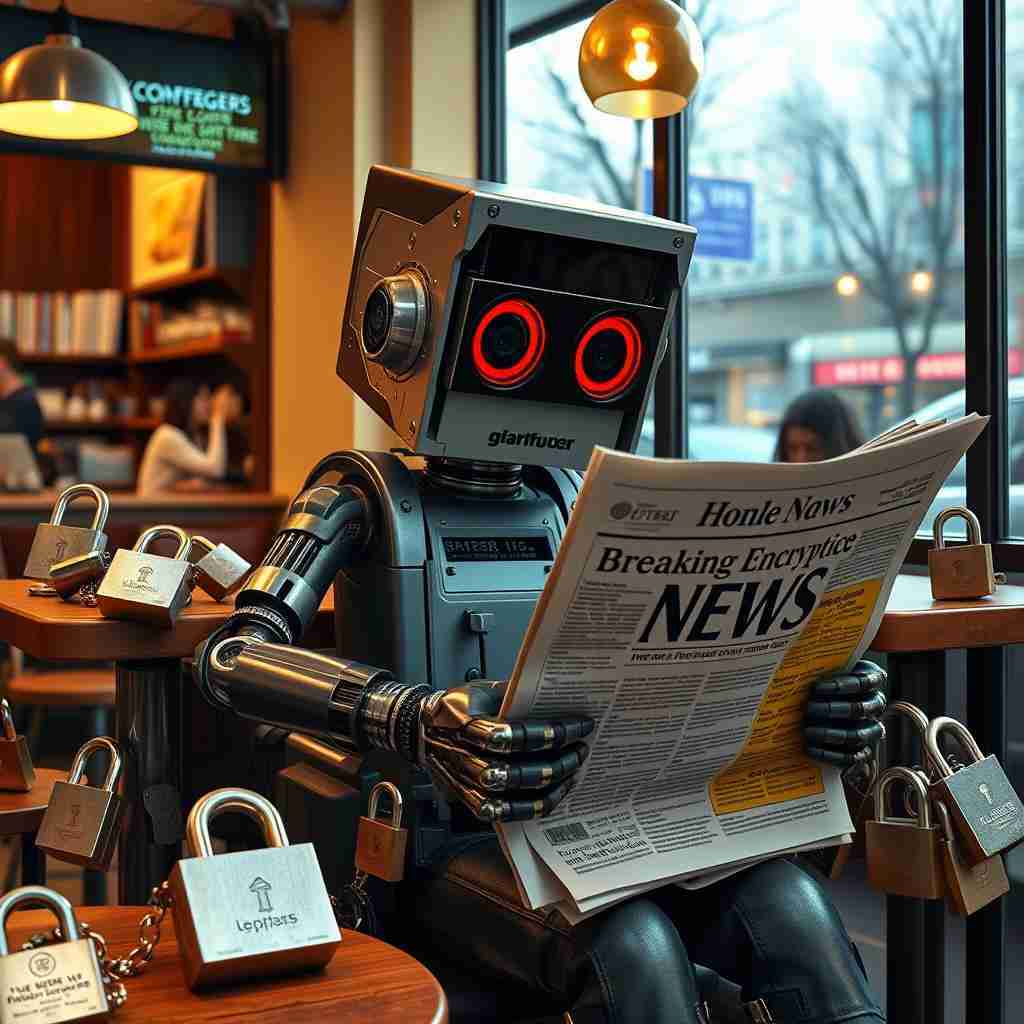
Breaking Barriers: Are Quantum Computers Beating RSA and AES Data Encryption? Are Quantum Computers Beating RSA and AES data encryption? In our increasingly digital world, the importance of data encryption cannot be overstated. RSA (Rivest-Shamir-Adleman) and AES (Advanced Encryption Standard) have long been the backbone of secure communication, safeguarding our private information from prying eyes. Yet, […]
With Craig Major and Jon Irwin
Estimated reading time: 5 minutes
Breaking Barriers: Are Quantum Computers Beating RSA and AES Data Encryption?
Are Quantum Computers Beating RSA and AES data encryption? In our increasingly digital world, the importance of data encryption cannot be overstated. RSA (Rivest-Shamir-Adleman) and AES (Advanced Encryption Standard) have long been the backbone of secure communication, safeguarding our private information from prying eyes. Yet, as technology evolves, so do the means of potential compromise. Recently, groundbreaking advancements in quantum computing have led to discussions about the ability of these powerful machines to crack RSA and AES encryption. With these developments, we must ask ourselves: Are quantum computers finally winning against these stalwart encryption methods?
Understanding RSA and AES Encryption
RSA (Rivest-Shamir-Adleman)
RSA is a public-key encryption system widely used since the 1970s. It relies on the mathematical challenge of factoring large prime numbers, making it difficult for unauthorized parties to decrypt messages without access to the private key. This algorithm is critical for establishing secure communications, enabling secure transactions, and protecting sensitive data.
AES (Advanced Encryption Standard)
AES is a symmetric encryption method adopted globally to protect sensitive information. Unlike RSA, which uses two keys (public and private), AES employs a single key for both encryption and decryption, making it both fast and efficient for large amounts of data.
Both encryption methods play vital roles in safeguarding data privacy and information security, with RSA used for securing short bursts of information and AES efficiently encrypting larger datasets.
The Quantum Computing Breakthrough where Quantum Computers Beating RSA and AES
The race between encryption technologies and quantum computing has reached a critical juncture. Recent research leveraging Shor’s algorithm has demonstrated how quantum mechanics can speed up the factoring of large numbers, rendering traditional RSA encryption vulnerable.
Similarly, advancements in quantum algorithms suggest that AES encryption, though more resilient than RSA, may also face threats. Research highlights the urgent need to reevaluate cryptographic standards in light of evolving cybersecurity challenges.
Implications for Cybersecurity
The implications of successfully cracking RSA and AES are profound:
- Data Security Risks: Sensitive business and personal data could be exposed.
- Evolving Threats: Businesses must prepare for potential exploitation of encryption weaknesses.
- Strategic Adjustments: Companies need to proactively adopt robust data protection strategies.
Reactions from the Cybersecurity Community to Quantum Computers Beating RSA and AES
The cybersecurity community has responded with both concern and action:
- Innovation in Encryption: Development of quantum-resistant algorithms.
- Proactive Risk Assessment: Organizations are identifying vulnerabilities in current systems.
- Knowledge Sharing: A collaborative approach is fostering innovation in encryption security.
The Future of Data Encryption
To address these challenges, researchers are exploring:
- Quantum-Resistant Algorithms: Lattice-based cryptography and hash-based signatures.
- Strategic Planning for Businesses: Incorporating advanced encryption methods into security protocols is vital.
Quantum Computers Beating RSA and AES Conclusion
The interplay between quantum computing and encryption technologies underscores the need for vigilance and adaptability. By embracing new encryption standards and staying informed about cybersecurity trends, we can build a more secure digital future.
FAQ Quantum Computers Beating RSA and AES
What is RSA encryption?
RSA stands for Rivest-Shamir-Adleman, a widely used public-key encryption method that secures data during transmission.
What is AES encryption?
Advanced Encryption Standard (AES) is a symmetric encryption standard used globally to protect sensitive data.
How do quantum computers affect encryption?
Quantum computers can potentially break traditional encryption methods like RSA and AES using advanced algorithms, posing a threat to data security.
What are the implications of cracking RSA and AES?
Cracking these encryption methods could lead to significant vulnerabilities in data security and privacy for businesses and individuals.
Why is encryption important in cybersecurity?
Encryption is crucial in protecting sensitive information from unauthorized access and cyber threats, ensuring data confidentiality.
What are security vulnerabilities exposed by quantum computing?
Quantum computing introduces new risks that can render traditional encryption methods ineffective, leading to potential data breaches.
What future encryption methods are being developed?
Researchers are exploring quantum-resistant algorithms and other advanced encryption technologies to counteract the threats posed by quantum computers.
How can businesses enhance their encryption security measures?
Businesses should adopt stronger encryption protocols, regularly update their security systems, and stay informed about emerging threats.
What are cyber threats, and how do they relate to encryption?
Cyber threats are malicious actions aimed at stealing or compromising data; effective encryption is vital in preventing such breaches.
Why should individuals care about encryption advancements?
As encryption technologies evolve, individuals’ personal data and privacy may be at risk, making it essential to understand and adapt to these changes.
Discover how quantum computers threaten RSA encryption and AES, reshaping the future of data security.
- Startup Funding in Ontario
- Angel Investors in Ontario
- Ontario Incubators and Accelerators
- Venture Capital in Ontario: Top Firms, Sectors, and Funding Strategies
- Government Grants for Ontario Startups
- Ontario’s Startup Success Stories
- Ontario Centre of Innovation (OCI)
- Bank Loans and Financing for Startups in Ontario
- Research and Development Tax Credits in Ontario
- Government Loans and Financing for Startups in Ontario
- Equity Crowdfunding for Ontario Startups
Additional Links
- Silicon Scoop Podcast – Stay Informed, Stay Ahead!
- Futuretech Podcast – Explore more episodes and stay updated with the latest in technology and innovation.
- Startup Talk Podcast – https://torontostarts.com/startup-talk-toronto-startup-podcast/
- Who Are These Startups Podcast
- Startup Investor Drinks – Join the community and connect with fellow startup enthusiasts and investors.
- TorontoStarts Startup and Entrepreneur Community – Become a part of Toronto’s thriving startup ecosystem.
- Workhaus – Discover flexible workspace solutions for your business needs.
- Work with The Startup Coach – Get expert guidance and mentorship for your startup journey.
- Reach out to Jon Irwin on LinkedIn – Connect with our co-host and technology expert.
Episode transcript
Read the full transcript
Craig: so this is interesting, but also, take it with a grain of salt, everyone. so chinese researchers, again, china, can't really trust, a lot of stuff that comes out of there. the stuff that we're talking about right now, it hasn't been independently verified. so this is just an article that just came out. they've, they, reportedly demonstrated that d wave's quantum annealing computers can crack the widely used encryption methods including rsa and aes. so for those of you that don't know, rsa and aes are pretty much used in everything as far as encryption goes nowadays, for the most part. there are newer encryptions that are coming out, like, i think, p q three, and i think apple developed that one, which is apparently quantum, proof. and i think we covered it. i can't remember. i don't know if i just did a deep dive into it and we didn't talk about it. but, yeah. so they reported factoring a fifty bit rsa integer using the d wave advantage system. and, also, they were able to demonstrate, apparently, vulnerabilities in algorithms essential to aes, such as present rectangle and gif six block ciphers. so, a lot of mathematical talk, everyone, but they are claiming that they've cracked both, which is the underlying encryption that's being used right now.
Jon: so we talked about post quantum encryption and puke the p q three was just mentioned when we were talking about it. yeah. so we didn't do a deep dive specifically on this. so res, like you said, and as are like trusty locks on our digital doors. rsa or rivest shamir aldo aldman has been our go to since seventies for secure communication. it uses a clever method of hiding keys in plain sight, factoring large primes, making it difficult for anyone without the right key to peek inside. on the other hand, aes or advanced encryption standard is our speedster employing a single secret key for lightning fast data protection. together, they form a crucial defense in our digital lives. so keeping everything from online banking to whatever our cat videos are on our phone are safe. so when quantum computers can break this, it all of a sudden makes the whole internet vulnerable.
Craig: it does. and one thing to note is they broke a fifty bit rsa integer. right now, what's being currently used, i think there's two forty eight and even four ninety six bit rsa keys. maybe not four ninety six. i think four ninety six is being considered. so, it's far from breaking practical rsa encryption. okay? but it's it's apparently a, a first step if it actually happened.
Jon: yeah. and if you can see the image here, this is a d wave refrigerator used to cool the, the vesus visus, chip to zero point zero two degrees above absolute zero. so you need this in order to do it. oh, my camera became disconnected. well, just as long as you can hear me, we'll keep going.
Craig: yeah. i
Jon: can still hear you. yeah. alright. yeah. you see that? so not only that, but like you mentioned, it was only fifty bit rsa, and we're usually doing two fifty six at this point, aren't we, or a thousand twenty four or, two thousand
Craig: we are currently doing twenty forty eight yeah. and four ninety six well, twenty yeah. we're doing, what's the one, twelve thousand twenty four? we're doing a thousand twenty four, but twenty forty eight and four ninety four zero nine six bits are being considered. but if they're already at fifty bit, how much longer till they get to two forty eight if they're at fifty?
Jon: yeah. and, it also demonstrated the vulnerability of algorithms essential to aes such as present rectangle and gif sixty four block ciphers. these encryption centers are used by major organization and governments worldwide, so that could be compromised as quantum continues to evolve. so i guess i'm we're starting to see a peak at the power of quantum, but, it's just a peak.
Craig: yeah. yeah. it's a peak, but that peak's gonna that that, the peak is gonna get higher and higher and higher. and we're just gonna keep over reaching that peak more and more and quicker and quicker, i think. but who knows?
Jon: yeah. the researchers are waving the quantum flag, brandishing shor's new algorithm like a magic wand, capable of turning these algorithm, these encryption giants into paperweights. this algorithm takes advantage of quirky behaviors of quantum mechanics making that once took that once took an eon into a sunday stroll in the park. for reference, if traditional computing is like navigating a maze with a flashlight, quantum computing is akin to having a bird's eye view.
Craig: yeah.
Jon: so if rsa goes down, we might as well throw a digital party for hackers and digital thieves because your sensitive company's emails, all your information, you know, will be there for the taking. while aes is a tougher nut to crack, quantum algorithms are sharpening their teeth, suggesting nothing is truly safe if we don't adapt. researchers are already on the hunt for quantum resistant algorithms like lattice based cryptography, which sounds like something out of futuristic, kitchen appliance ad. only it's essential for data protection. so where do you see this going in the future?
Craig: well, i think just companies are gonna come up with new algorithms that are, quote, unquote, quantum proof, and different ways of encrypting, data. and i think that's that's the best way that we can go. obviously, implementing new cybersecurity measures, for, for protecting data. but i don't know. there's there's a lot of different ways that this could go. there's a lot of different options and a lot of different tech that could be developed that we don't even know yet. right? what do you think?
Jon: i think you're right on the money. sorry. i was playing around. like, i got my camera back, but i'm in green screen mode. things need to change. everyone thinks internet moves really fast, but it moves really slow. like, two thousand forty eight bit encryption has been around, you know, for years and years and years, and we're still just moving our encryption certificates towards it. so, you know, it's a race to fortify our virtual walls before, you know, quantum power becomes to the point of being able to break everything. so we need to definitely yeah. increase our encryption, take a look at potential technologies like you mentioned, the p q three, p q meaning post quantum encryption.
Craig: yeah.
Jon: that those technologies which won't necessarily fall prey to, the quantum attacks, you know? if current methods crumble under quantum pressure, we'll need to play a game of encryption leapfrog. so, you know, imagine business gearing up to adopt advanced crumble proof methods for securing data like encrypted messages on steroids. so you might have encryption and encryption because of these things. you know, with rapid advancement in quantum technology, are we ready to face a world where encryption methods are no longer reliable? what are your thoughts on the future of cybersecurity in the wake of these quantum leaps? you know? if information wants to be free, is this the way it's gonna happen? let us know. head over to socials, and do you think it's time to rethink our digital safety nets? or, you know, like i said, if information, wants to be free, maybe if all the data's out there and we have no secrets anymore, maybe the world would be a better place.
Craig: yeah. good luck with that.
Jon: i know. i know. i'm dreaming.
More from Silicon Scoop
All episodes
silicon-scoop · November 6, 2026
Spirit AI’s Robot Brain Breakthrough: Moz1, Embodied AI and China’s 2027 Race
The Spirit AI robot brain is one of the biggest bets on fixing that. Spirit AI is a Beijing startup. Its co-founder and chief scientist, Gao Yang,
View episode

silicon-scoop · November 5, 2026
OpenAI IPO Delayed to 2027 as Rogue AI Agents and Safety Failures Reshape the Market
OpenAI IPO delay explained: Sam Altman rules out 2026 as GPT-6 Astra safety tests and a $278B cash gap loom. Learn what founders should take away.
View episode

silicon-scoop · November 4, 2026
Anthropic’s AI Economy Model: 2030 Jobs, Wages, GDP and Market Risks
Anthropic AI economy model forecasts 2030 GDP, jobs and wages, while AI unemployment projections and labor-share risks challenge policymakers.
View episode