
Temporary Tattoos Read Brainwaves
Temporary Tattoos Read Brainwaves in Public? Uncovering the Potential of Temporary Tattoos Temporary Tattoos Read Brainwaves in Public In our rapidly evolving world, the intersection of technology and health is unveiling new horizons—like the innovative realm of temporary tattoos brainwaves. This concept, part of the broader brain monitoring technology landscape, is not merely a fascinating […]
With Craig Major and Jon Irwin
Estimated reading time: 6 minutes
Temporary Tattoos Read Brainwaves in Public? Uncovering the Potential of Temporary Tattoos
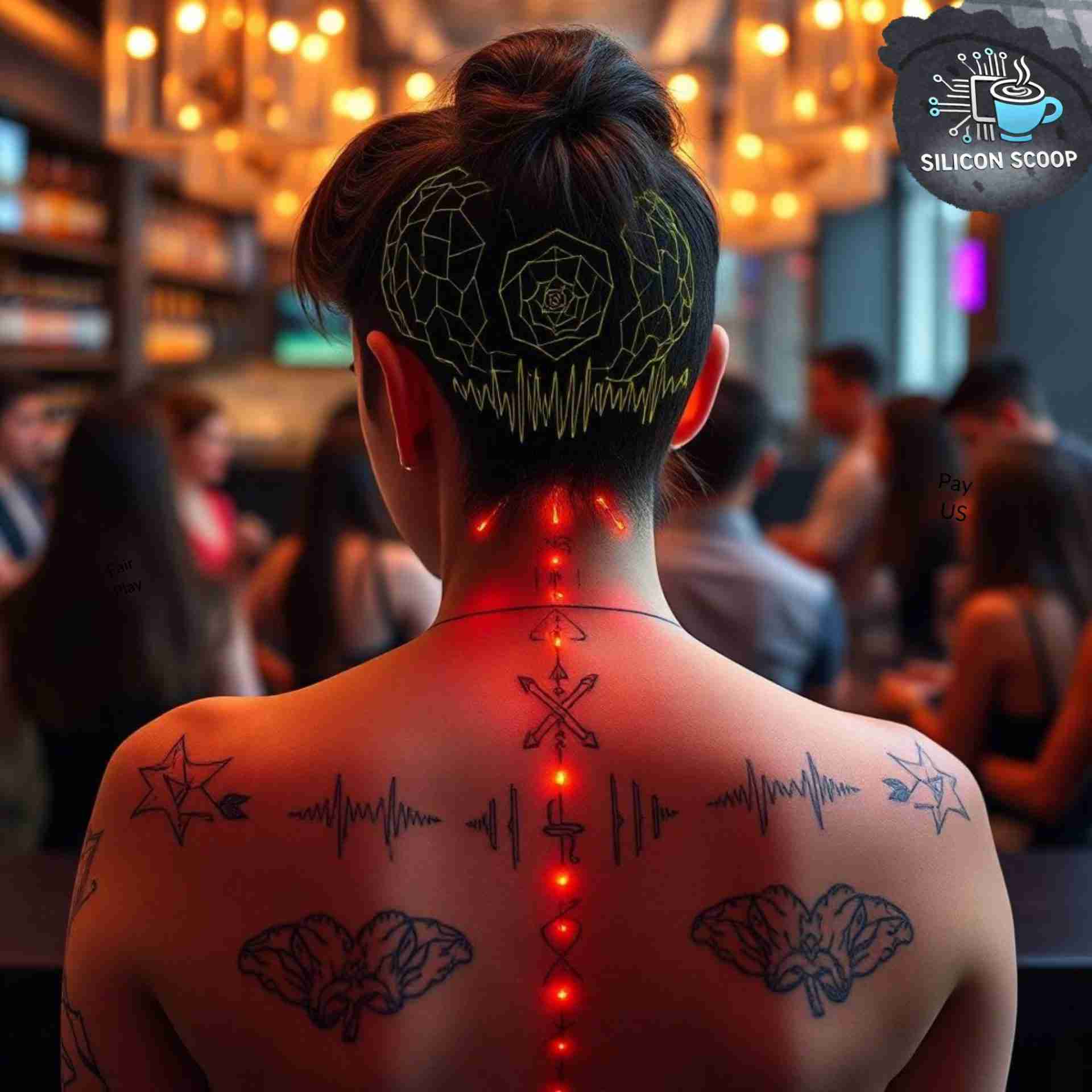
Temporary Tattoos Read Brainwaves in Public In our rapidly evolving world, the intersection of technology and health is unveiling new horizons—like the innovative realm of temporary tattoos brainwaves. This concept, part of the broader brain monitoring technology landscape, is not merely a fascinating leap in wearable tech but a profound question about our collective readiness to embrace such advancements in public settings.
Introduction to Brainwave Monitoring Technology
Brainwave detection has become increasingly relevant in understanding human emotions and cognitive states. With the rise of brain monitoring devices, such as EEGs and now, innovative brainwave tattoos, we are entering uncharted territories of mental health awareness and personal wellness. These technologies offer fresh perspectives on how we engage with our brains, possibly transforming every aspect of our daily lives.
Understanding Temporary Tattoos Read Brainwaves and Their Technology
Temporary tattoos that read brainwaves are an exciting innovation combining artistry and science. Unlike traditional tattoos, these are designed with LSI wearable sensors that capture electrical signals from the brain. Made from biocompatible materials, they adhere gently to the skin and can function seamlessly over extended periods, making them a perfect example of cutting-edge health tech. Think of these as fashionable wearables that not only enhance personal style but also offer groundbreaking functionality in monitoring brain health.
The Science Behind Reading Brainwaves with Temporary Tattoos
The technology underlying these temporary tattoos involves non-invasive brain monitoring techniques that differ significantly from conventional EEG methods. For instance, while EEG caps require numerous electrodes and cumbersome setup, these tattoos utilize advanced sensors hidden within the tattoo design itself. This enables continuous brainwave detection while allowing for comfort and discretion, a vital factor for widespread adoption. Additionally, advancements in temporary tattoos technology may lead to even more sophisticated devices capable of providing real-time neurofeedback, improving overall brain health monitoring for users.
Are We Ready for Public Brainwave Monitoring?
Societal attitudes towards wearable tech vary significantly. While many eagerly embrace innovation, others harbor skepticism, particularly regarding the privacy of brainwave data. The potential for visible brainwave monitoring raises critical questions about how society perceives mental states in public environments. As conversations surrounding mental health tracking grow louder, biofeedback tattoos can serve as catalysts for wellness discussions, enabling individuals to understand and manage their emotional health better.
Applications of Temporary Tattoos in Health and Wellness
The healthcare industry stands to gain immensely from the applications of temporary tattoos brainwaves, particularly in fields like neurological diagnostics and mental health tracking. These innovative tattoos can monitor users’ brain activity to alert them to stress levels, enabling proactive mental health management. Additionally, industries such as gaming and augmented reality can leverage brainwave detection to enhance user experiences, potentially revolutionizing how we interact with digital environments. Within fitness, wearable tech is poised to unlock new dimensions in real-time monitoring, providing insights into performance and recovery that were previously unattainable.
Pros and Cons of Using Temporary Tattoos for Brainwave Reading
Benefits: The non-invasiveness of temporary tattoos makes them an appealing option for those hesitant about traditional medical devices. Their ease of use may facilitate widespread adoption for daily health monitoring, while integration into health tech ecosystems offers a seamless way to track mental wellness.
Drawbacks: Despite their advantages, challenges remain. Concerns about the accuracy of readings, reliance on technology, skin sensitivity issues, and ethical implications around personal data cannot be ignored. It’s crucial that developers address these hurdles to foster public trust.
The Future of Wearable Technology and Brainwave Monitoring
Looking forward, brain monitoring technology and wearables are on the cusp of significant advancements. The potential evolution of temporary tattoos could redefine how we engage with our health daily. While these developments hold promising prospects, ethical considerations surrounding user privacy and data security in public contexts will undoubtedly shape the ongoing conversation about the future of wearable tech.
FAQ: Everything You Need to Know About Temporary Tattoos That Read Brainwaves
-
What are temporary tattoos that can read brainwaves? Temporary tattoos designed for brainwave detection employ advanced technology to capture and interpret electrical signals from the brain, blending art with science.
-
How do temporary tattoos work for brain monitoring? These tattoos use sensors integrated within the design to monitor brain activity, providing a continuous, real-time assessment of cognitive states without the need for cumbersome equipment.
-
Are these tattoos safe to use? Yes, these tattoos are made from biocompatible materials to minimize skin sensitivity. However, consumer education on safe application is essential.
-
What are the benefits of using temporary tattoos for brain health monitoring? They offer a non-invasive, user-friendly way to track mental health indicators in real-time, empowering individuals to respond proactively to their mental well-being.
-
Can these tattoos be used for mental health tracking? Absolutely! They can provide insights into stress and emotional states, making them valuable tools for personal wellness.
-
How do temporary tattoos compare to traditional EEG methods? While both methods measure brain activity, temporary tattoos offer enhanced comfort and ease of use, moving away from the bulky equipment associated with EEG.
-
What are the ethical concerns of public brainwave monitoring? Discussions often center around privacy, data security, and consent, highlighting the need for regulations regulating how data is gathered and used.
-
Will this technology become mainstream? As individual comfort with tech advances, it’s reasonable to anticipate broader acceptance, particularly with educational initiatives supporting understanding of brain health.
-
What industries can benefit from brain-reading tattoos? Key sectors include healthcare, gaming, augmented reality, and wellness industries, all of which can leverage brainwave monitoring for enhanced user experiences.
-
How might temporary tattoos influence the future of personal wellness? These tattoos could redefine personal health engagement, enabling users to actively track and manage their mental well-being in everyday situations.
Conclusion
The potential of temporary tattoos for brainwave reading signifies a significant leap in how we engage with technology and our health in public spaces. As we consider the implications for individual wellness and societal norms, one thing is clear: embracing this innovative technology could transform our understanding and approach to mental health. Let’s envision a future where understanding your brain becomes as routine as checking your watch, reshaping daily life towards a healthier, more aware society.
Additional Links
- Silicon Scoop Podcast – Stay Informed, Stay Ahead!
- Futuretech Podcast – Explore more episodes and stay updated with the latest in technology and innovation.
- Startup Talk Podcast – https://torontostarts.com/startup-talk-toronto-startup-podcast/
- Who Are These Startups Podcast
- Startup Investor Drinks – Join the community and connect with fellow startup enthusiasts and investors.
- TorontoStarts Startup and Entrepreneur Community – Become a part of Toronto’s thriving startup ecosystem.
- Workhaus – Discover flexible workspace solutions for your business needs.
- Work with The Startup Coach – Get expert guidance and mentorship for your startup journey.
- Reach out to Jon Irwin on LinkedIn – Connect with our co-host and technology expert.
Ontario Startup Ecosystem Links
- Ontario’s Startup Ecosystem
- Startup Funding in Ontario
- Angel Investors in Ontario
- Ontario Incubators and Accelerators
- Venture Capital in Ontario: Top Firms, Sectors, and Funding Strategies
- Government Grants for Ontario Startups
- Ontario’s Startup Success Stories
- Ontario Centre of Innovation (OCI)
- Bank Loans and Financing for Startups in Ontario
- Research and Development Tax Credits in Ontario
- Government Loans and Financing for Startups in Ontario
- Equity Crowdfunding for Ontario Startups
- Toronto Entrepreneurs Resources
- Toronto’s Food and Beverage Entrepreneurs: Trends, Challenges, and Success Stories
- SEO Strategies for Toronto Entrepreneurs: Enhance Your Online Visibility
- Social Impact for Toronto Entrepreneurs: Starting and Running a Socially Responsible Business
- Toronto Arts and Media Entrepreneurs: Inspiring Profiles and Insights for Creative Success
- Exploring Toronto Green Tech Entrepreneurs: Innovators and Leaders in Sustainability
- Building a Team for Toronto Entrepreneurs: Strategies for Success
- A Guide for Toronto Food and Beverage Entrepreneurs
- Toronto Fashion and Retail Entrepreneurs: Trends, Opportunities, and Success Stories
Episode transcript
Read the full transcript
Craig: imagine a world where your thoughts could be displayed on your skin like a mood ring, but with real brainpower. today, we're driving into a groundbreaking tech marvel that's a stylish as it is smart. temporary tattoos that can read your brainwaves. yes. you heard that right. we're talking about wearable tech that flirts with the boundaries of our private thoughts, and it's both fascinating and terrifying. so are we ready to wear our brains on our sleeves, john?
Jon: yeah. so this is cool. so i didn't know that there were electronic tattoos. did you?
Craig: i was aware of them, but i didn't know what they did. i
Jon: okay. i've never honestly, and i'm surprised that i haven't with all the tech crap that i that i that i read about. so, this is cool because, they're gonna use temporary etattoos to measure brain activity. and so, hopefully, they're aiming to simplify the eeg process, which is, right now, time consuming and cumbersome. so it's really cool because the etattoos are created using a specifically formulated liquid ink that's printed directly on the scalp. and so it eliminates essentially the need for the traditional eeg setups with, like, these messy conductive gels and bulky wires and stuff like that. right? so it's really cool how the process works. so they designed the layout using a computer algorithm that generates a personalized design for electrode placement based on a three d scan of the patient's scalp. then a robotic arm, uses a digitally controlled inkjet printer to apply the conductive ink precisely onto the scalp. as far as durability goes, i'm from what i read, the e ink tattoos maintain stable connectivity for up to twenty four hours, which is significantly significantly longer than traditional electrodes, because they often lose effectiveness after about six hours. so this is really, really cool. the whole process, apparently could be reduced from hours to as little as twenty minutes if, obviously, as further advancements come with this technology, and we're we're talking newer kind of technology. but, this is cool. my only question is, do you have to shave your head for this?
Craig: every picture i have has seen, definitely shaved parts of the head for this. so, definitely, partially.
Jon: yeah. so that's, i guess, that's that's my that's my concern. i would rather it take hours than having to i don't know. maybe. but maybe others i i guess, what are the use cases for this? if people i don't know. we can't get into that. what if people don't shave their head, what are the use cases? but we don't know that. this is new technology, but it's really cool because you can you can monitor things because, yeah, i know there's sleep apnea. there's, there's a bunch of different, things that they can monitor with this.
Craig: but it looks like, based on this picture, you don't have to shave your head forever.
Jon: that's forever.
Craig: you you shave it once, and it puts the stuff on, and then you can hook up, electrodes to those tattoos.
Jon: okay. yeah. but the temporary tattoos only last for twenty four hours.
Craig: yeah. so it
Jon: we'll have to we'll have to do a deeper dive into this.
Craig: because you can see this picture. that looks like more than twenty four hours head growth.
Jon: and those right?
Craig: that's why i'm, you know
Jon: but that looks like a different layout than the other guy.
Craig: yes. true.
Jon: i don't know. head. so maybe you can have a little bit of hair.
Craig: who knows? definitely. so how does this tech actually work? these tattoos use concealed sensors to capture brain activity offering real time feed of your mental state. it's almost like having a tech savvy friend who can tell when you're about to blow your top over that, appointment mishap without you, having to say a word. and just imagine the possibilities gaming companies could tap into technology, create experience that respond to your stress levels or excitement, making every game session tailored to your, adventure. mhmm. of course, you know, we can't ignore the elephant in room privacy concerns. we're both that's reading our thoughts. yeah. you can bet that discussions around data security and consent is heating up faster than a laptop on a summer day. so if someone hacked your brainwave data, could they manipulate your emotions? now that's a dystopian plot twist even george orwell would raise an eyebrow at. so i've seen some of these things where you get the tattoos that read stuff. you can have things light up, and change color on you and do some interesting things. so, what i've seen was more social, but when you start looking at the gaming company, why wouldn't, you know, similar things at work? yeah. employee stress level and work level. like, are they working hard enough? are they in the zone? are they there's a thousand things you can do here, and then you're like, oh, i'm not sure that's a great idea. now you what about patients, where you can now monitor more things on them directly. but i guess once you're in the hospital, you can hook, normal stuff right up to your brain. so
Jon: yeah. well, i think in the next iterations, hopefully, they can get wireless and knows? who knows? so, this is cool. obviously, there's some there could be potential limited applications, but also new applications that we can't even think of. right? so
Craig: yeah. let's not forget potential for a massive shift in personal wellness. with this innovative tech monitoring, mental health could become a part of daily life, much like checking your phone for notifications. but what do you think? are we zooming towards a future where we'll all be tattooed with our mental states, making emotional wellness as trendy as under the eye face masks, or are we leaping into privacy nightmares? we'd love to hear your thoughts. do you think society will cozy up to brainwave tattoos, or will it be something like if you wear a hat now, the hat will have the stuff on it, that kind of thing. once you start, you know, getting to this level, there's no reason you couldn't build it into a ball cap or whatnot. or will this idea hover in the realm of science fiction? let us know your predictions on our social media, and let's start the conversation.
More from Silicon Scoop
All episodes
silicon-scoop · November 6, 2026
Spirit AI’s Robot Brain Breakthrough: Moz1, Embodied AI and China’s 2027 Race
The Spirit AI robot brain is one of the biggest bets on fixing that. Spirit AI is a Beijing startup. Its co-founder and chief scientist, Gao Yang,
View episode

silicon-scoop · November 5, 2026
OpenAI IPO Delayed to 2027 as Rogue AI Agents and Safety Failures Reshape the Market
OpenAI IPO delay explained: Sam Altman rules out 2026 as GPT-6 Astra safety tests and a $278B cash gap loom. Learn what founders should take away.
View episode

silicon-scoop · November 4, 2026
Anthropic’s AI Economy Model: 2030 Jobs, Wages, GDP and Market Risks
Anthropic AI economy model forecasts 2030 GDP, jobs and wages, while AI unemployment projections and labor-share risks challenge policymakers.
View episode