
AI vs Academia: Landmark Ruling on AI Use in Assignments and Its Future Impact on Learning
AI vs Academia : Landmark Ruling on AI Use in Assignments and Its Future Impact on Learning AI vs Academia, As we navigate the complexities of modern education, the intersection between artificial intelligence (AI) and academia has sparked crucial conversations. The recent landmark ruling allowing schools to enforce strict policies against AI use in assignments […]
With Craig Major and Jon Irwin
Estimated reading time: 8 minutes
AI vs Academia : Landmark Ruling on AI Use in Assignments and Its Future Impact on Learning
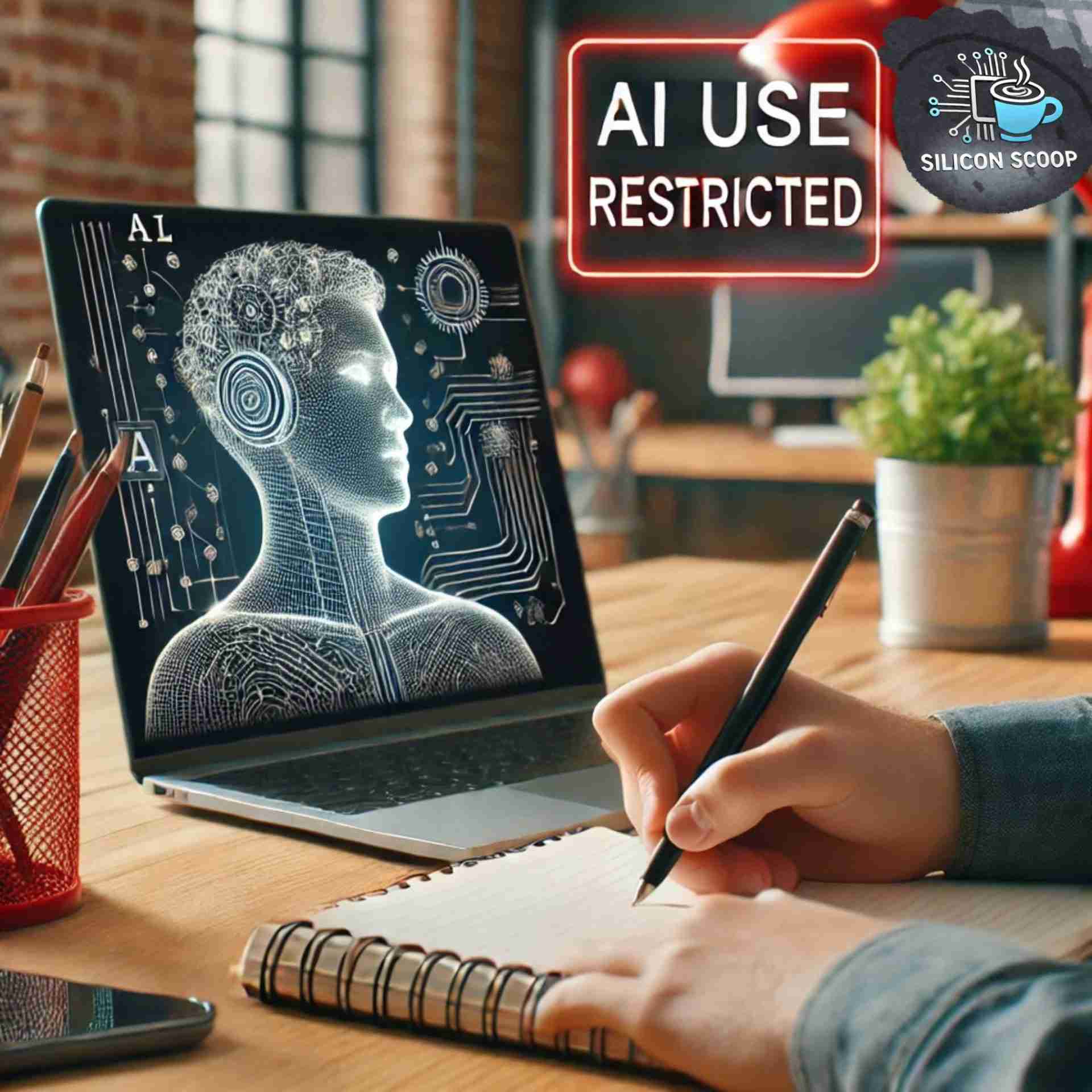
AI vs Academia, As we navigate the complexities of modern education, the intersection between artificial intelligence (AI) and academia has sparked crucial conversations. The recent landmark ruling allowing schools to enforce strict policies against AI use in assignments represents a significant turning point for educators and students alike. This ruling stands as a beacon of academic integrity and calls into question the relationship students have with technology in their learning processes. In this article, we will dissect the implications of this ruling on the educational landscape, ensuring that the motivations behind such policies align with both ethical considerations and the potencies of innovative learning methodologies. Together, we will explore how this decision shapes the future of academic integrity and the educational journey of students worldwide.
AI vs Academia The Rise of AI in Education
Artificial intelligence is redefining every sector, and education is no exception. AI can be described as the simulation of human intelligence processes by machines, especially computer systems. In the context of education, AI encompasses a diversity of tools that can assist in grading, tutoring, and enhancing the overall learning experience. For instance, grading software analyzes student submissions, facilitating quicker turnaround times, while chatbots resolve queries in real-time, allowing for a more engaged student body.
In recent years, we have seen rapid advancements in AI adoption within academic institutions. Schools that embrace these technologies often experience increased efficiencies and enhanced student engagement. However, the initial reactions from educators have been mixed. While many recognize AI’s potential for personalized learning, concerns surrounding academic dishonesty and the erosion of critical thinking skills remain prevalent. The dialogue around AI’s role in education continues to evolve as we balance innovation with the foundational values of academic integrity.
AI vs Academia Academic Integrity and the Landmark Ruling
The recent ruling that curtails AI usage in academic assignments has underscored the vital importance of academic integrity. This ruling serves as a protective measure against the misuse of AI technologies that may facilitate cheating or plagiarism. It emphasizes the necessity for students to engage with their assignments genuinely, ensuring that their educational journey truly reflects their knowledge and effort.
As educators and institutions adjust to this new paradigm, the impact on student behavior and engagement becomes evident. With stricter policies against AI assistance, students are prompted to revisit their study methods, turning to fundamental research, critical thinking, and original thought processes. Exploring real-life case studies of academic dishonesty, we see significant instances where students have relied on AI tools to produce work that doesn’t reflect their own understanding of the material.
The academic community’s response to these stricter standards has been largely supportive, recognizing the potential consequences of unrestricted AI use. However, the challenge remains: how will educators maintain student engagement while upholding rigorous academic standards?
AI vs Academia Adjusting Teaching Methods in Light of AI Policies
In light of AI restrictions, educators find themselves at a crucial crossroads where teaching methodologies must evolve. Adapting practices to foster genuine student engagement and critical thinking becomes imperative. Creative solutions can include project-based learning, where students collaboratively solve real-world problems rather than relying on software to generate answers.
The shift towards more traditional methods has its benefits and potential drawbacks. On one hand, this can lead to a more profound understanding of core subjects. On the other, it may introduce resistance from students accustomed to AI-driven assistance. However, many educators view this as an opportunity to foster deeper discussions and enhance analytical skills by encouraging students to articulate their thought processes and rationale.
The perspectives among educators display a shared goal: to create an engaging learning environment that nurtures critical thinking, teamwork, and innovation while responding to the ruling’s challenges.
Challenges Posed by Implementing AI Restrictions
Implementing strict restrictions on AI usage within schools does not come without challenges. Institutions are tasked with developing reliable measures to oversee compliance while simultaneously encouraging academic growth. One significant challenge arises around the reliability and potential biases associated with AI tools. Even if schools move away from AI for assignments, issues like biased grading within existing AI technologies still merit attention.
Moreover, an ethical dilemma emerges regarding the balance between holding onto traditional standards of academia while striving for innovation. How do we foster an environment that embraces technological advancement without compromising the integrity of education? These critical conversations must continue, as the future of learning rests on navigating this intricate balance.
The Future of Learning Post-Ruling
Looking forward, the educational landscape post-ruling is set to transform. Predictions suggest a rising trend in embracing innovative digital resources that align with academic integrity. With AI use curtailed in traditional assignments, educators can implement novel teaching methodologies that prioritize creativity and collaboration. For instance, project-based learning can flourish as students work on tangible problems while developing interpersonal skills.
However, this transformation isn’t merely about limiting AI but also about harnessing its potential ethically and responsibly. A call to action for collaboration among educators, technologists, and policymakers is vital. By working together, we can preserve the essence of academic integrity while leveraging technological advancements that enhance the learning experience.
AI vs Academia Conclusion
In summary, the landmark ruling on AI’s role in educational assignments prompts a reevaluation of academic standards amidst technological advancement. The evolution of teaching and learning practices provides an opportunity to foster deeper intellectual engagement among students, rooted in authentic learning experiences. As we continue to navigate this dynamic relationship between AI and education, the discourse remains crucial. We must emphasize the importance of maintaining rigorous academic standards while embracing the innovations that can enhance our educational systems. By fostering a supportive dialogue among educators and leveraging AI’s benefits ethically, we can ensure that students thrive in an ever-changing academic landscape.
Frequently Asked Questions
What is AI’s role in education? AI plays a transformative role in education, enhancing personalized learning and assessment methodologies. These applications can adapt to individual learning styles, providing tailored resources and support. For instance, AI-driven platforms can offer real-time feedback and adjust content based on student progress, ensuring a more effective learning experience.
What does the landmark ruling mean for students? The ruling signifies that schools now have the authority to enforce strict policies against AI usage in assignments, promoting academic honesty. This restriction requires students to engage more deeply with course materials, fostering original thought and critical engagement with their education.
Can AI enhance learning without compromising integrity? Absolutely, AI can be a powerful tool for enhancing learning experiences when used ethically. By employing AI for tasks such as personalized learning plans and administrative efficiencies, while still encouraging students to undertake assignments independently, we can harness technology’s benefits without jeopardizing academic integrity.
How will teachers adapt their methods under strict AI policies? Teachers will likely adopt methods that promote critical thinking, collaboration, and problem-solving abilities. By integrating project-based learning and encouraging discussions, educators can ensure students remain engaged and motivated, all while navigating these new restrictions.
What are the challenges of enforcing strict AI use policies in schools? Enforcing these policies presents various challenges, including resistance from students accustomed to AI assistance and the ongoing reliability of AI in grading systems. Schools must also provide clear guidelines and support to help students comply with the restrictions seamlessly.
How does AI influence student behavior in assignments? The availability of AI tools can significantly affect how students approach assignments, often leading to a reliance on technology for quick answers. This shifting paradigm emphasizes the need for policies that foster independent thought and personal engagement with educational materials.
What ethical considerations arise with the use of AI in education? AI in education raises several ethical concerns, including issues of fairness, bias, and transparency. Educators must be vigilant about how these tools are implemented and ensure they enhance rather than hinder equity in educational outcomes.
What might the future of education look like post-AI ruling? Following the ruling, we can expect educational practices to continue shifting towards more traditional, engaging methods of learning. The integration of innovative digital resources will drive both curriculum and pedagogical developments that prioritize genuine academic engagement.
How can collaboration improve outcomes in the debate over AI? Collaboration among educators, technologists, and policymakers is essential in addressing the challenges posed by AI restrictions. By sharing insights, resources, and best practices, all stakeholders can ensure that student education remains relevant, integral, and engaging.
What support is available for schools transitioning away from AI tools? Various organizations offer resources for schools looking to adapt to new teaching methodologies without relying on AI. This includes training sessions for educators on project-based learning, workshops on enhancing critical thinking, and access to supportive teaching communities.
Additional Resources and Links:
- Silicon Scoop Podcast – Stay Informed, Stay Ahead!
- Futuretech Podcast – Explore more episodes and stay updated with the latest in technology and innovation.
- Startup Talk Podcast – https://torontostarts.com/startup-talk-toronto-startup-podcast/
- Who Are These Startups Podcast
- Startup Investor Drinks – Join the community and connect with fellow startup enthusiasts and investors.
- TorontoStarts Startup and Entrepreneur Community – Become a part of Toronto’s thriving startup ecosystem.
- Workhaus – Discover flexible workspace solutions for your business needs.
- Work with The Startup Coach – Get expert guidance and mentorship for your startup journey.
Ontario Startup Ecosystem Links
- Ontario’s Startup Ecosystem
- Startup Funding in Ontario
- Angel Investors in Ontario
- Ontario Incubators and Accelerators
- Venture Capital in Ontario: Top Firms, Sectors, and Funding Strategies
- Government Grants for Ontario Startups
- Ontario’s Startup Success Stories
- Ontario Centre of Innovation (OCI)
- Bank Loans and Financing for Startups in Ontario
- Research and Development Tax Credits in Ontario
- Government Loans and Financing for Startups in Ontario
- Equity Crowdfunding for Ontario Startups
- Toronto Entrepreneurs Resources
- Toronto’s Food and Beverage Entrepreneurs: Trends, Challenges, and Success Stories
- SEO Strategies for Toronto Entrepreneurs: Enhance Your Online Visibility
- Social Impact for Toronto Entrepreneurs: Starting and Running a Socially Responsible Business
- Toronto Arts and Media Entrepreneurs: Inspiring Profiles and Insights for Creative Success
- Exploring Toronto Green Tech Entrepreneurs: Innovators and Leaders in Sustainability
- Building a Team for Toronto Entrepreneurs: Strategies for Success
- A Guide for Toronto Food and Beverage Entrepreneurs
- Toronto Fashion and Retail Entrepreneurs: Trends, Opportunities, and Success Stories
Episode transcript
Read the full transcript
Craig: welcome back, tech enthusiasts. picture this, a classroom filled with students, but instead of textbooks, they're glued to their screens, typing away while leveraging artificial intelligence to complete their assignments. sounds like a futuristic utopia, but maybe not. a recent landmark ruling might just rain on this ai parade. a judge has ruled in favor of schools enforcing strict policies against the use of ai in academic assignments. so let's just say things are about to get interesting. what do you think's gonna happen with this, john?
Jon: yeah. so just for some context here, this is a federal ruling. so the federal judge ruled in favor of a massachusetts school, i hate math i hate saying that state, that took disciplinary action against a student for using generative ai to complete an assignment. so the judge determined that hingham and high school likely acted within its authority, finding no evidence of impulsive behavior by school officials in their assessment of academic dishonesty. so some key points here is that the consequences imposed were not severe enough to exceed the school's discretion in such cases. another student involved in the project, they also face similar disciplinary measures, but did not file a lawsuit. and the ruling suggests that schools have significant latitude in enforcing academic integrity policies using ai. so this like you said, it's a landmark case. like, this could influence high school policies, and school policies within north america, for sure. to what extent? i don't know. so just to kinda give you guys some details. right? so the evidence suggests that they copied and pasted text produced by grammarly dot com. not really i guess grammarly is an ai, but, like, not jagdt or anything like that. but the problem was this kid just copy and pasted it, and it gave references to fictitious books. so, he just copy and paste it, didn't check his work or anything like that. so, the ap english language teacher conducted a lesson on academic integrity and expectations regarding ai and use at the beginning of the course. so students knew. right? so they were advised against using ai without authorization or copying and pasting substantial text into their assignments. so i'd like to focus on that for a second. it says substantial. so i'm guessing that and this is just me and i'd love to know your thoughts. but, i'm guessing that, like, just like how we use it. like, if you use it for your entire output, that's not okay. like, use little bits and then make it your own. i feel like that's going to be what is going to be the norm going forward and not this, and they're gonna crack down a little bit more. but what do you think, craig?
Craig: well, the copied text included citations for nonexistent books, which appears to be one of the things that ai is best at generating, you know, references to things that don't exist and whatnot, including a book supposedly written by the author jane doe. so you sit back and say, you know, my notes say that they don't say you can't. they don't explicitly say, you can't use ai. but you gotta draw the line somewhere. right? like yeah. when it's homework, you have to do it. so, yeah, it's for you and your brain to process and understand and research and to think through how you're gonna structure your thoughts, how you're gonna put the stuff on paper or on the computer. that is the value of doing that, not throwing it over to an ai unit. so my thoughts are you have to draw the line somewhere, and it's starting now that, it's obviously not grammarly just recorrecting it like we're used to on the page. there's obviously got some functionality where it's actually creating content. yeah. so go ahead.
Jon: go ahead. no. go ahead.
Craig: so once it's creating your content, you're like, okay. or is this not? and i think, at some point, schools have to get on top of the fact that we're really trying to prepare you for the real world. so there has to be a switch from not allowed to use ai tools to using ai tools.
Jon: yeah.
Craig: i just don't know where that happens. yeah. does it happen when you leave high school and go to college where you're allowed to use that? because, you know, once you start getting out of there in the real world, you need to be using these tools to succeed. so where do you draw the line? so, you know, this is essentially a nod to academic integrity, reminding students that using ai as a quick fix for their assignments might not put them on the honor roll, but on a fast track to academic dishonesty. you know, we have plagiarism rules. how much of this is plagiarism? is it plagiarism when it just randomly made up stuff that doesn't exist, like references to books? like, we had chat gtp a while ago. somebody submitted it as whatever evidence in a court case, and, it cited all these cases that didn't exist in case law. you know? you get in trouble when the content isn't right. so is it because it made up stuff? if it was accurately produced and it would look good, would it be okay? or is it just any use of ai? like, we have to start figuring it out so people can know. i'm not up for somebody saying, wait a minute. you can't lower my grade because no one said i can't use somebody, a ai or someone else or whatever to write this. it doesn't explicitly say somewhere that you can't take it home and have your dad write it for you, but that's not what's supposed to happen. so where do you think that line should be drawn?
Jon: well, it's that's the thing. this opens up a whole can not just where the line should be drawn, but, like, because of gen ai, because of all this technology, there needs to be a new approach to education. like, they i i'm sorry. the way that it's been going until now is not the right way. and, like like, we covered those interactive textbooks, the augmented reality textbooks and stuff. right? so the question where the line should be drawn is just scratching the surface of this whole issue of gen ai in education and gen ai or ai or machine learning in our lives, because it's changing the world as we know it. why should it not change the education system as we know it?
Craig: yeah. absolutely. and changing the education system being a teacher is different than ai, being the student. this is the problem, i think, when, you know, you start it having ai help teach you because it can give quick examples, give customized learning experience, you know, help you much further along would really help, like, eas in the classroom and might help with some of our teacher deficit problems. however, it's not an end all and be all, and the content and the ai has to be good for that to happen. so plagiarism has always been an issue. you know? while it's fantastic if student get personalized learning experiences, educators are seeing a troubling trend that reliance on ai tools is eroding critical thinking skills faster than people's patience in a dmv line. so let's highlight the irony for a second. we bred ai to assist us in learning, and now we're grappling with it sabotaging the very essence of learning itself. yeah. so with these stricter policies, students might have to shockingly hit the books and engage in actual research. what a novel concept. it's like telling a smartphone addict to go outside and play.
Jon: yeah.
Craig: so i really i we have to grapple with this, and i think, you know, we need to learn critical learning skills that we need to understand ourselves because we need to challenge the i ai. we need to be able to go and create, content outside of these things. but at some point, the education needs to switch to include those tools to create something better and bigger and go beyond what you can do as a individual.
Jon: absolutely. yeah. for sure.
Craig: as we look to the future, it's not about throwing ai out altogether. it's about taming it like a wild stand stallion. the goal is to find a way to embrace technology responsibly, hands on learning experiences, and maintain the charm of academic integrity every parent dreams of their children should have. if we play our cards right, the educational landscape could thrive where creativity meets critical thinking, and we might actually do away with the term study buddy giving birth to, collaborative learning partner. but here's a question for you, dear listeners. with the new restrictions on ai and academics, do you think it will lead to a renaissance in genuine learning or simply a rebellion where students find more creative ways to cheat? drop your thoughts below, and let's, keep the conversation rolling because in the world of education and technology, the plot is just beginning to thicken.
More from Silicon Scoop
All episodes
silicon-scoop · November 6, 2026
Spirit AI’s Robot Brain Breakthrough: Moz1, Embodied AI and China’s 2027 Race
The Spirit AI robot brain is one of the biggest bets on fixing that. Spirit AI is a Beijing startup. Its co-founder and chief scientist, Gao Yang,
View episode

silicon-scoop · November 5, 2026
OpenAI IPO Delayed to 2027 as Rogue AI Agents and Safety Failures Reshape the Market
OpenAI IPO delay explained: Sam Altman rules out 2026 as GPT-6 Astra safety tests and a $278B cash gap loom. Learn what founders should take away.
View episode

silicon-scoop · November 4, 2026
Anthropic’s AI Economy Model: 2030 Jobs, Wages, GDP and Market Risks
Anthropic AI economy model forecasts 2030 GDP, jobs and wages, while AI unemployment projections and labor-share risks challenge policymakers.
View episode