
Quantum Computing Error Threshold
Quantum Computing Error Threshold: Overcoming Challenges in Quantum Systems Quantum computing represents a revolutionary leap in computational capability, harnessing the principles of quantum mechanics to process information in ways that classical computers cannot. This technology utilizes qubits, the quantum equivalent of classical bits, which can exist in multiple states simultaneously thanks to superposition. The importance […]
With Craig Major and Jon Irwin
Estimated reading time: 6 minutes
Quantum Computing Error Threshold: Overcoming Challenges in Quantum Systems
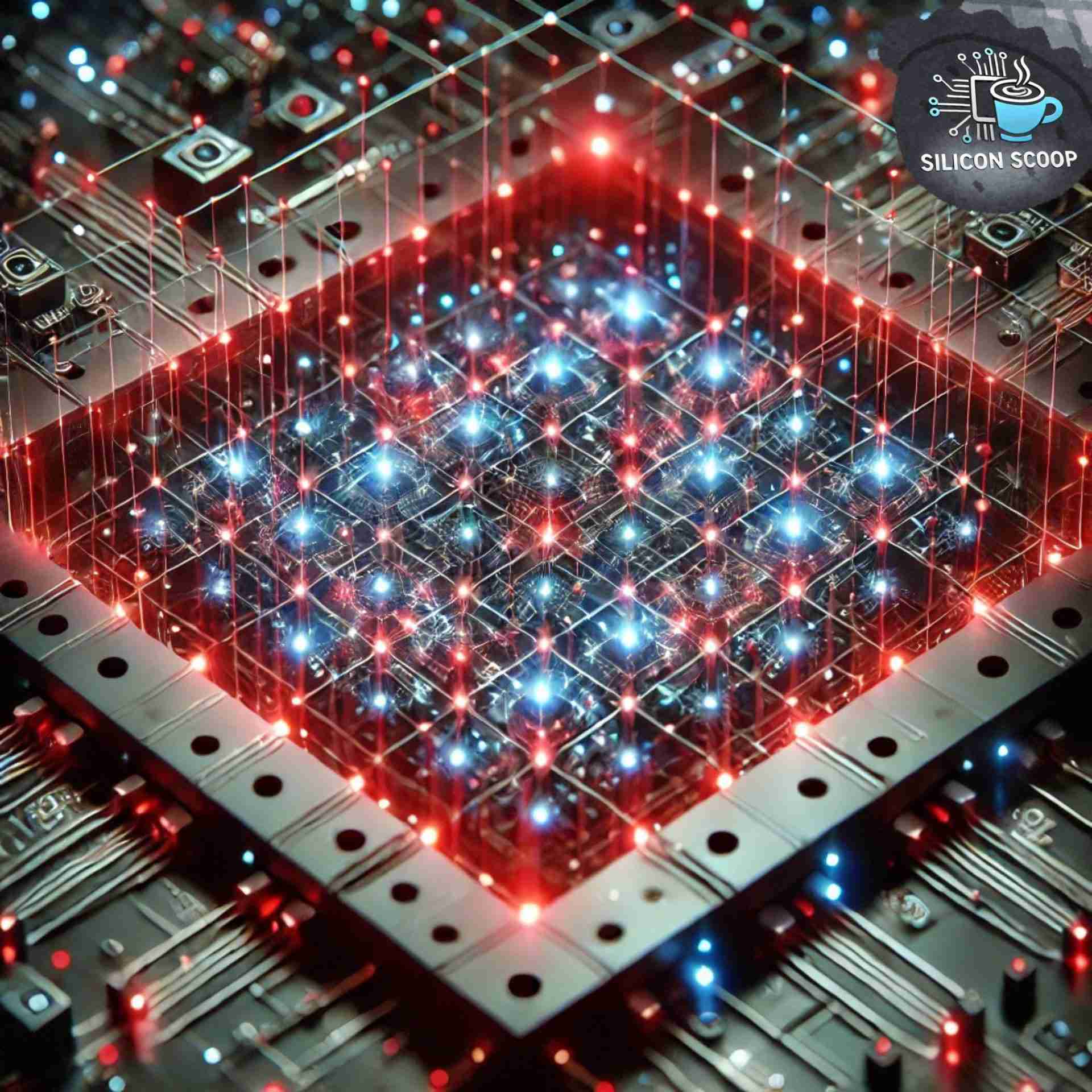
Quantum computing represents a revolutionary leap in computational capability, harnessing the principles of quantum mechanics to process information in ways that classical computers cannot. This technology utilizes qubits, the quantum equivalent of classical bits, which can exist in multiple states simultaneously thanks to superposition. The importance of quantum computing lies not only in its ability to solve complex problems more efficiently than classical computers but also in its potential to transform fields such as cryptography, materials science, and artificial intelligence. However, a significant challenge persists: the quantum computing error threshold. This concept serves as a pivotal focus for researchers and technologists alike because it influences the performance and reliability of quantum systems.
What is the Error Threshold in Quantum Computing?
At its core, the quantum computing error threshold is defined as the maximum error rate that qubits can tolerate while maintaining successful quantum error correction. When the error rates exceed this threshold, quantum computations become unreliable, resulting in incorrect outputs. The historical context of the error threshold development has evolved through foundational work in quantum error correction theory, first proposed by Peter Shor. Shor identified that although qubits are fragile, systematic methodologies could be deployed to correct errors and ensure functionality. Understanding this threshold is paramount because it determines the feasibility of building practical quantum systems capable of delivering on their promise of superior computational power. Hence, maintaining error rates below this threshold is fundamental for successful quantum applications.
The Significance of the Error Threshold
The significance of the error threshold extends beyond its conceptual boundaries, impacting quantum error correction directly. Maintaining error rates below this threshold allows quantum algorithms to function accurately, enabling reliability in quantum systems. Qubit reliability hinges on several factors such as coherence time and gate fidelity, which are crucial for executing complex algorithms. Missteps in these areas can drastically alter the outcome of computations, proving detrimental for industries relying on quantum solutions. As we delve deeper into the implications of error thresholds on quantum algorithms and their applications, we uncover how this pivotal concept serves as a linchpin for the ongoing development of quantum technologies.
Recent Advancements in Overcoming the Error Threshold
In recent years, substantial advancements have been made in overcoming the quantum computing error threshold. Researchers have unveiled innovative techniques and methods designed to bolster quantum error correction capabilities. Noteworthy studies have demonstrated how various quantum systems—ranging from superconducting qubits to trapped ions—are achieving error rates well below the critical threshold. For instance, surface codes and fault-tolerant quantum computation are gaining traction in practical applications, allowing for robust error correction protocols that can effectively manage qubit errors. These advancements signify a critical juncture in quantum computing research, showcasing that as we press forward, emerging technologies can significantly extend the capabilities of quantum systems.
Challenges and Limitations
Despite these promising advancements, challenges and limitations still permeate the quest for practical error thresholds. The need for high qubit coherence while minimizing error rates poses a unique balancing act for researchers and developers in the field. Current limitations include technological constraints pertaining to qubit fabrication and operational stability, which must be addressed to further enhance scalability in quantum systems. With competing technologies continually emerging, it is vital for scientists to evaluate the trade-offs involved in different approaches to quantum computing. Addressing these challenges head-on through innovative solutions is essential for actualizing the full potential of quantum technology.
Future Implications of the Quantum Error Threshold
Looking ahead, the implications of the quantum error threshold span various industry applications. Predictions for the next decade indicate rapid growth in quantum computing, as advancements in error correction techniques promise reduced error thresholds. These developments will unlock new frontiers in applications across finance, pharmaceuticals, and materials science, ultimately reshaping how information is processed in our world. However, as technological capabilities expand, ethical considerations also emerge, prompting responsible practices in quantum research. As an engaged community, we must remain vigilant in ensuring that the advancements in quantum computing align with societal values and promote equitable access to transformative technologies.
Conclusion
In summary, the quantum computing error threshold represents a fundamental challenge that researchers must overcome to realize the full promise of quantum technology. As we navigate this complex landscape, it is crucial to foster a dialogue surrounding innovation, responsibility, and access. The future of quantum computing rests heavily on our ability to not only push the boundaries of what is possible but also to ensure that this revolutionary technology is employed ethically and effectively to benefit society as a whole. Collectively, we can champion research and exploration in this exciting domain, navigating towards a promising future shaped by the principles of quantum computing.
FAQ Section
Q1: What is the quantum computing error threshold? A1: The quantum computing error threshold refers to the maximum error rate for qubits at which quantum error correction can successfully maintain computations.
Q2: Why is the error threshold important for quantum computing? A2: It is crucial because surpassing this threshold can lead to unreliable calculations, undermining the benefits of quantum technology.
Q3: How do researchers overcome error thresholds in quantum systems? A3: Researchers develop advanced error correction techniques and implement technologies like surface codes and fault-tolerant methods to maintain coherence.
Q4: What are qubit reliability and its challenges? A4: Qubit reliability pertains to the operational fidelity of qubits. Challenges include maintaining coherence while minimizing error rates.
Q5: What advancements have been made recently in quantum error correction? A5: Breakthroughs include improved surface codes, better qubit designs, and innovative error correction protocols that enhance system robustness.
Q6: What impact does better error correction have on quantum algorithms? A6: Improved error correction can significantly enhance the efficiency and reliability of quantum algorithms, expanding their practical applications.
Q7: How does the error threshold affect industries using quantum computing? A7: Industries such as finance, pharmaceuticals, and materials science are poised to benefit from advancements in error correction, facilitating real-world quantum applications.
Q8: What future developments can we expect in quantum computing? A8: Expect developments in error correction techniques to achieve lower error thresholds, which will empower more extensive and complex quantum systems.
Q9: Are there ethical considerations with advancing quantum computing technologies? A9: Yes, ethical considerations include responsible research practices, data security, and implications of quantum computing capabilities on society.
Q10: How can I stay updated on advancements in quantum computing? A10: Follow academic journals, tech news websites, and industry blogs focused on quantum technology to stay informed about the latest research and developments.
Additional Resources and Links:
- Silicon Scoop Podcast – Stay Informed, Stay Ahead!
- Futuretech Podcast – Explore more episodes and stay updated with the latest in technology and innovation.
- Startup Talk Podcast – https://torontostarts.com/startup-talk-toronto-startup-podcast/
- Who Are These Startups Podcast
- Startup Investor Drinks – Join the community and connect with fellow startup enthusiasts and investors.
- TorontoStarts Startup and Entrepreneur Community – Become a part of Toronto’s thriving startup ecosystem.
- Workhaus – Discover flexible workspace solutions for your business needs.
- Work with The Startup Coach – Get expert guidance and mentorship for your startup journey.
Ontario Startup Ecosystem Links
- Ontario’s Startup Ecosystem
- Startup Funding in Ontario
- Angel Investors in Ontario
- Ontario Incubators and Accelerators
- Venture Capital in Ontario: Top Firms, Sectors, and Funding Strategies
- Government Grants for Ontario Startups
- Ontario’s Startup Success Stories
- Ontario Centre of Innovation (OCI)
- Bank Loans and Financing for Startups in Ontario
- Research and Development Tax Credits in Ontario
- Government Loans and Financing for Startups in Ontario
- Equity Crowdfunding for Ontario Startups
- Toronto Entrepreneurs Resources
- Toronto’s Food and Beverage Entrepreneurs: Trends, Challenges, and Success Stories
- SEO Strategies for Toronto Entrepreneurs: Enhance Your Online Visibility
- Social Impact for Toronto Entrepreneurs: Starting and Running a Socially Responsible Business
- Toronto Arts and Media Entrepreneurs: Inspiring Profiles and Insights for Creative Success
- Exploring Toronto Green Tech Entrepreneurs: Innovators and Leaders in Sustainability
- Building a Team for Toronto Entrepreneurs: Strategies for Success
- A Guide for Toronto Food and Beverage Entrepreneurs
- Toronto Fashion and Retail Entrepreneurs: Trends, Opportunities, and Success Stories
Episode transcript
Read the full transcript
Craig: the error threshold on quantum computing has always been so high that it was sometimes hard to distinguish whether you got something right or it was just another error. have you ever wondered what happens when a computer starts pulling off magic tricks? now i'm talking about pulling rabbits out of hats. i'm referring to dazzling the world of quantum computing. today, we're diving into the quantum realm to understand critical challenge that has researchers buzzing the quantum computing error threshold. this is jumping on the superhighway. we used to be on a gravel road, and as soon as we can eliminate these errors, we're we're driving with gas now, and we can hit the speed limit. what do you think is, this gonna be a major breakthrough?
Jon: i think so. yeah. i think this is a significant milestone. and just so you guys know, this is google's quantum ai that's achieved this. so they can create more reliable logical qubit from multiple error prone physical qubits, which is really crazy. so, what it's called the, surface code. it's a quantum error correction method, and it's based on two overlapping grids of qubits. so one grid contains data qubits that collectively encode a single logical qubit. and the other grid, what it has is measurement qubits, which allow for indirect error detection without disturbing the computation, which is key here. right? so this is crazy because it has a higher error threshold of around one percent compared to earlier quantum codes. and it only requires interaction between neighboring qubits, which simplifies the implementation. so i feel like they've got a breakthrough here, to get us to a quantum future. and they've demonstrated scaling in this too. so moving from a distance three to a distance five surface code, it reduced the logical qubits error rate by fifty percent. and further scaling it, have the error rate again. so, this has huge implications. there are still some challenges, but, but yeah. so you're showing it there. what do you think about the impact on the timeline based on this breakthrough, craig, for quantum? do you think that this is the, the game changer that we're waiting for, or what are your thoughts?
Craig: well, it is a game changer. is fifty percent enough? and, are they gonna be able to tweak it to get it down to an acceptable level? we are moving very quickly in the world of quantum where i would have said a few years ago, we were moving very slowly. yeah. we're starting to see huge leaps. i think it was last week we talked about, the willow chip from google yeah. and, from the sycamore branch and whatnot and how they'd answered a problem that would have taken hundreds of years in very short period of time. and they believe that it leveraged the power of the multiverse in order to solve this problem. meaning, that it tapped into whatever compute power in these other multiverses, talked to them, and came back and said, okay. this is how it works. so that's what the scientists are thinking is happening. and as soon as we can start getting a handle on these error, thresholds and we start looking at that, we're the whole universe potentially could change.
Jon: yeah. yeah. and yeah. and we were just talking about this beforehand. there was a podcast that i was watching or listening to, and they were talking about the calculation to, when quantum will break the, bitcoin or crypto encryptions. and, they calculated it to be two point five years based on where we're at. that's scary. and that's a whole other can that we, that we don't need to open right now. but yeah.
Craig: absolutely. this is crazy. navigating the quantum journey isn't all smooth sailing. you know, they've researchers have faced a tricky balancing act of like trying to carry a stack of paper while walking a type of tightrope. they've got to ensure high qubit coherence while also taming those pesky error rates. while they're charged up for potential business applications, from revolutionizing pharmaceuticals to transforming finance, it's also crucial to remember that with great power again comes great responsibility. i gotta stop using this quote. we must tread carefully to ensure that this technology does not fly off the rails in terms of ethical implications. we just talked about elon musk xai. we talked about skynet. you know, i honestly think when quantum computing meets ai and robots, we're all doomed. so this is when, you know, we take that leap forward. but until then, and we don't have those things working together, this quantum computing is really going to change the way we look at the universe. yeah. how physics works, how the universe puts together, are we gonna we're gonna discover what dark matter really is? does it really exist? does it not exist? because i've seen some recent articles suggesting that it doesn't. so i'm amazed at where this is going, and i think this is the breakthrough that's gonna help us take to the next level as we start looking at these types of different things for error correction, more and more are gonna come to light. we're gonna be able to use quantum computing to solve quantum computing problems. yeah. so as quantum computing teeters on the brink of revolutionizing our world, how do you believe these advancements will shape our daily lives? will it bring us closer to utopia? are we opening pandora's box in the tech world? share your predictions. let's spark the conversation about a fascinating journey of quantum computing.
More from Silicon Scoop
All episodes
silicon-scoop · November 6, 2026
Spirit AI’s Robot Brain Breakthrough: Moz1, Embodied AI and China’s 2027 Race
The Spirit AI robot brain is one of the biggest bets on fixing that. Spirit AI is a Beijing startup. Its co-founder and chief scientist, Gao Yang,
View episode

silicon-scoop · November 5, 2026
OpenAI IPO Delayed to 2027 as Rogue AI Agents and Safety Failures Reshape the Market
OpenAI IPO delay explained: Sam Altman rules out 2026 as GPT-6 Astra safety tests and a $278B cash gap loom. Learn what founders should take away.
View episode

silicon-scoop · November 4, 2026
Anthropic’s AI Economy Model: 2030 Jobs, Wages, GDP and Market Risks
Anthropic AI economy model forecasts 2030 GDP, jobs and wages, while AI unemployment projections and labor-share risks challenge policymakers.
View episode