
Security Regulations Startups Need to Know with Alex Morsink of Equivesto
Security Regulations Startups Need to Know with Alex Morsink of Equivesto Show Notes In this insightful episode of the Startup Talk Podcast, host The Startup Coach sits down with Alex Morsink, Managing Director of Equivesto, to discuss security regulations every Canadian startup must understand when raising capital. This episode unpacks complex topics such as prospectus […]
A TorontoStarts podcast
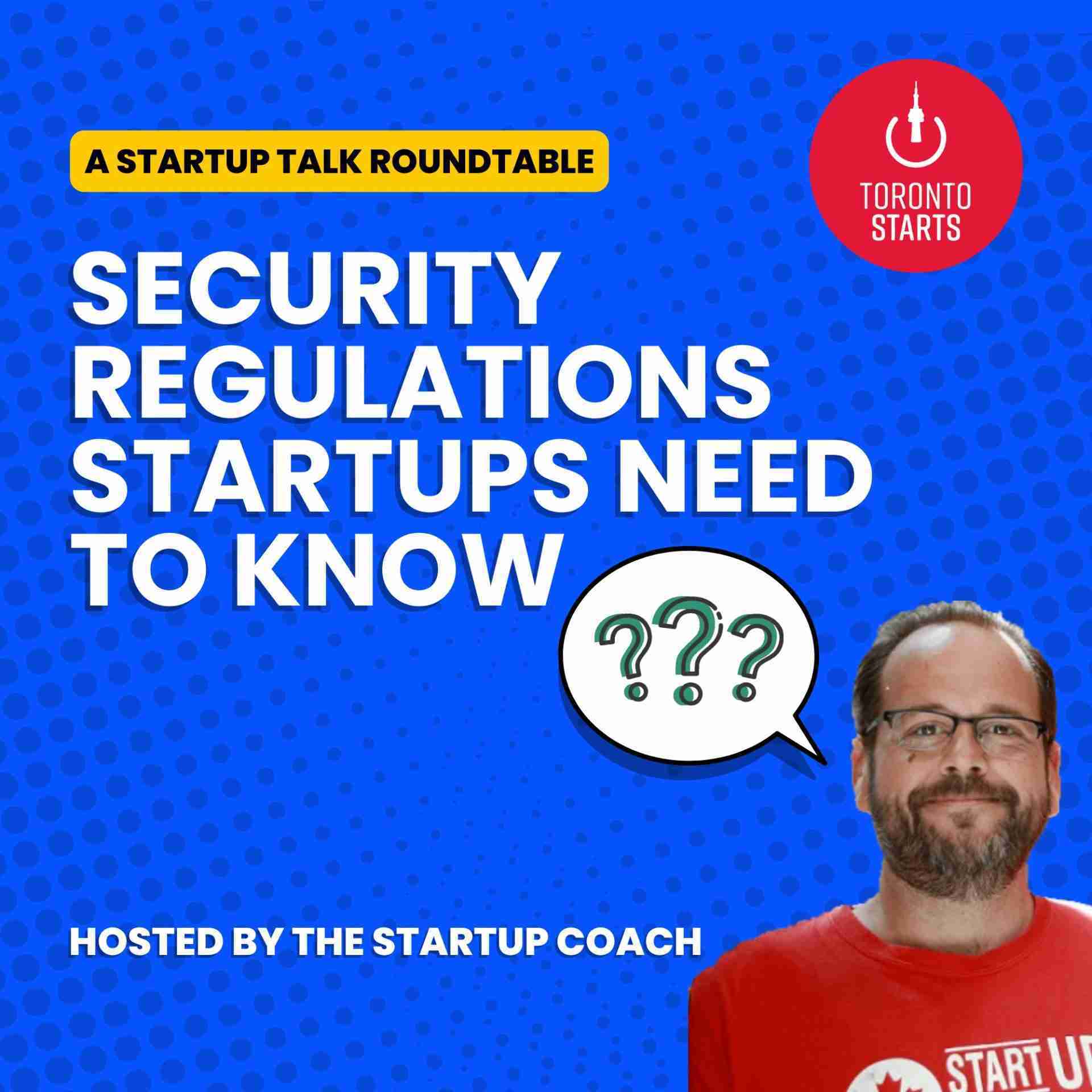
Security Regulations Startups Need to Know with Alex Morsink of Equivesto
Show Notes
In this insightful episode of the Startup Talk Podcast, host The Startup Coach sits down with Alex Morsink, Managing Director of Equivesto, to discuss security regulations every Canadian startup must understand when raising capital. This episode unpacks complex topics such as prospectus exemptions, the difference between private and public companies, and the role of equity crowdfunding in modern fundraising.
Key Takeaways:
- What Are Security Regulations?: A security refers to an investment, including shares in a private company. Security regulations govern how startups raise funds legally.
- Key Prospectus Exemptions:
- Private Issuer Exemption: Allows raising money from friends, family, and accredited investors without regulatory filings, provided you have fewer than 50 shareholders.
- Other Exemptions: Even if you exceed 50 shareholders, options like the accredited investor exemption and equity crowdfunding are available.
- Misconceptions About 50 Shareholders:
- Having more than 50 shareholders does not make your company public or require audited financial statements—it simply disqualifies you from using the private issuer exemption.
- Navigating Equity Crowdfunding:
- Alex highlights how equity crowdfunding offers startups a new legal avenue to raise capital while complying with security regulations.
This episode is a must-listen for startup founders navigating Canada’s regulatory environment.
Featured Guest: Alex Morsink
Alex Morsink is the Managing Director of Equivesto, an equity crowdfunding platform empowering startups and small businesses to raise capital while adhering to security regulations. With expertise in the intersection of finance and technology, Alex brings actionable insights to help startups fundraise effectively.
Resources Mentioned:
- Equivesto Learning Center: Explore detailed guides on prospectus exemptions and equity crowdfunding at Equivesto Learning Center.
- Securities Laws Overview: Understand the basics of Canadian securities regulations at Equivesto.
Contact Information:
- Alex Morsink: LinkedIn Profile | Twitter @AlexMorsink
- Equivesto: Website | LinkedIn | Twitter @EquivestoInc
Tune In:
Listen to the full episode to gain an in-depth understanding of security regulations and how to leverage them effectively for your startup’s fundraising journey. Subscribe to the Startup Talk Podcast for more episodes packed with entrepreneurial insights.
Additional Links
• Silicon Scoop Podcast – Stay Informed, Stay Ahead!
• Futuretech Podcast – Explore more episodes and stay updated with the latest in technology and innovation.
• Startup Talk Podcast – https://torontostarts.com/startup-talk-toronto-startup-podcast/
• Who Are These Startups Podcast
• Startup Investor Drinks – Join the community and connect with fellow startup enthusiasts and investors.
• TorontoStarts Startup and Entrepreneur Community – Become a part of Toronto’s thriving startup ecosystem.
• Workhaus – Discover flexible workspace solutions for your business needs.
• Work with The Startup Coach – Get expert guidance and mentorship for your startup journey.
• Reach out to Jon Irwin on LinkedIn – Connect with our co-host and technology expert.
Ontario Startup Ecosystem Links
• Ontario’s Startup Ecosystem
• Startup Funding in Ontario
• Angel Investors in Ontario
• Ontario Incubators and Accelerators
• Venture Capital in Ontario: Top Firms, Sectors, and Funding Strategies
• Government Grants for Ontario Startups
• Ontario’s Startup Success Stories
• Ontario Centre of Innovation (OCI)
• Bank Loans and Financing for Startups in Ontario
• Research and Development Tax Credits in Ontario
• Government Loans and Financing for Startups in Ontario
• Equity Crowdfunding for Ontario Startups
• Toronto Entrepreneurs Resources
• Toronto’s Food and Beverage Entrepreneurs: Trends, Challenges, and Success Stories
• SEO Strategies for Toronto Entrepreneurs: Enhance Your Online Visibility
• Social Impact for Toronto Entrepreneurs: Starting and Running a Socially Responsible Business
• Toronto Arts and Media Entrepreneurs: Inspiring Profiles and Insights for Creative Success
• Exploring Toronto Green Tech Entrepreneurs: Innovators and Leaders in Sustainability
• Building a Team for Toronto Entrepreneurs: Strategies for Success
• A Guide for Toronto Food and Beverage Entrepreneurs
• Toronto Fashion and Retail Entrepreneurs: Trends, Opportunities, and Success Stories
Episode transcript
Read the full transcript
Speaker 0: are the most important security regulations that canadian start ups should be aware of when raising capital? yeah. so regarding the securities regulatory environment, just as a quick definition for everybody, security means investment, essentially, very simply stated. and shares in your private company, ownership of your private company and does qualify as an investment as a security. so if you're selling shares in your company, that's you selling those securities to people. essentially, there's, a number of different rules that private companies have to follow. so when you're raising capital, whether you're a private company or a public company, you do have to follow canadian securities law. so the regulations apply to everybody. even if you're a private company, you're not exempt from regulations. the easy thing to keep in mind, a good sort of rule of thumb is if you're raising money from immediate friends and family or if you're raising money from accredited investors, so called angel investors, those two types of individuals can invest into your company without having to do any sort of big paperwork or filings with the regulators. so going out pitching angel groups, all that sort of stuff that you've been doing, going to pitch competitions, that's all totally fine. and, you know, there's a reason why that's what the industry does. that's all totally acceptable. the only time you'll need to start thinking about, you know, a greater regulatory burden is when you start having more than fifty shareholders. now, one misconception is having more than fifty shareholders makes you a public company or what some people call a reporting issuer. that is not correct. so it's not, oh, now that i have fifty shareholders, i'm suddenly a public company. i have to do audit and financial statements and all this stuff. that is not the case. without getting to in the weeds, essentially, every time a company raises money, that's a private company, it uses a legal doorway, which is called a prospectus exemption. and there's a full list, of prospectus exemptions on the acrovista website in the learning center if you really wanna, you know, fall asleep while reading something. but essentially, a prospectus exemption is a legal doorway that allows you to raise money. the doorway that lets you raise from friends and family and accredited investors without doing any reporting is called the private issuer exemption. and you can use that as long as you have less than fifty shareholders. if you have more than fifty shareholders, that doesn't make you a public company. it just means you can't use the private issuer exemption anymore. there is still a standalone friends and family exemption. you can keep using that. and there's a standalone accredited investor exemption. you can keep using that. there's a new exemption called equity crowdfunding. you can use that. there's a bunch of other doorways that exist that allow you to raise capital without going public or being a public company or requiring audited financial statements. it just means the one set of rules that lets you raise money without having to tell the government or do any filings called the private issuer exemption, you can no longer use after you have more than fifty shareholders. i think that's the main misconception for capital raising in the canadian space. people think, oh, i have fifty one. i'm a public company now, which is not true.
More from Startup Talk
All episodes
startup-talk · April 10, 2025
10x Revenue Exit
Discover actionable insights for achieving a 10x Revenue Exit through strategic scaling, profitability, and smart bootstrapping. https://torontostarts.com/2025/04/10/10x-revenue-exit/ Apple -> https://podcasts.apple.com/us/podcast/startup-talk/id1763804003 Spotify -> https://open.spotify.com/show/1siJMILILidHAiAsrX2VBU YouTube: https://youtube.com/playlist?list=PLj4v-RoA7A-jxV5FHs5e61oIsuvUJYmT_&si=LYegRe5GYLKNQ7xL Flowgrammer Apple -> https://podcasts.apple.com/us/podcast/flowgrammer-podcast/id1804155588 Spotify -> https://open.spotify.com/show/0wv3feR00iaVpE8zn7niNf Flowgrammer.ca -> https://flowgrammer.ca/ AI News and Resources -> https://flowgrammer.ca/resources/ Silicon Scoop Silicon Scoop Podcast - https://torontostarts.com/silicon-scoop/ Apple: https://podcasts.apple.com/us/podcast/silicon-scoop/id1758711826 Spotify: https://open.spotify.com/show/5bAzF0MwV6TtLhJAhvHayI YouTube: https://www.youtube.com/playlist?list=PLj4v-RoA7A-gT62vrEYqh1zCv-0Hj-o5J Startup Investor Drinks Toronto - https://startupdrinksto.com/ Toronto’s Startup Community - https://torontostarts.com/
View episode
startup-talk · April 8, 2025
Product Market Fit with Lauft
Product Market Fit with Lauft Welcome to Episode 217 of the Startup Talk Podcast, where we explore Product Market Fit in a conversation with Graham Wong, Founder and CEO of Lauft. Listen in as the Startup Coach uncovers how Lauft transformed a personal need into a thriving flexible workspace solution and discovered exactly what their […]
View episode
startup-talk · April 6, 2025
Know Yourself – Unlocking Entrepreneurial Potential
Discover how to Know Yourself as an entrepreneur to unlock your potential and overcome challenges in today's startup world. https://torontostarts.com/2025/04/06/know-yourself-unlocking-entrepreneurial-potential/ Apple -> https://podcasts.apple.com/us/podcast/startup-talk/id1763804003 Spotify -> https://open.spotify.com/show/1siJMILILidHAiAsrX2VBU YouTube: https://youtube.com/playlist?list=PLj4v-RoA7A-jxV5FHs5e61oIsuvUJYmT_&si=LYegRe5GYLKNQ7xL Flowgrammer Apple -> https://podcasts.apple.com/us/podcast/flowgrammer-podcast/id1804155588 Spotify -> https://open.spotify.com/show/0wv3feR00iaVpE8zn7niNf Flowgrammer.ca -> https://flowgrammer.ca/ AI News and Resources -> https://flowgrammer.ca/resources/ Silicon Scoop Silicon Scoop Podcast - https://torontostarts.com/silicon-scoop/ Apple: https://podcasts.apple.com/us/podcast/silicon-scoop/id1758711826 Spotify: https://open.spotify.com/show/5bAzF0MwV6TtLhJAhvHayI YouTube: https://www.youtube.com/playlist?list=PLj4v-RoA7A-gT62vrEYqh1zCv-0Hj-o5J Startup Investor Drinks Toronto - https://startupdrinksto.com/ Toronto’s Startup Community - https://torontostarts.com/
View episode