
Tractor Beam Technology: From Sci-Fi Fantasy to Real-World Innovation
Tractor Beam Technology: From Sci-Fi Fantasy to Real-World Innovation Sci-fi enthusiasts have long marveled at the concept of tractor beam technology—a device that can attract and hold objects from a distance. Imagined in universes like Star Trek, this once far-fetched technology is now taking its first steps into reality. Thanks to groundbreaking research at MIT, […]
With Craig Major and Jon Irwin
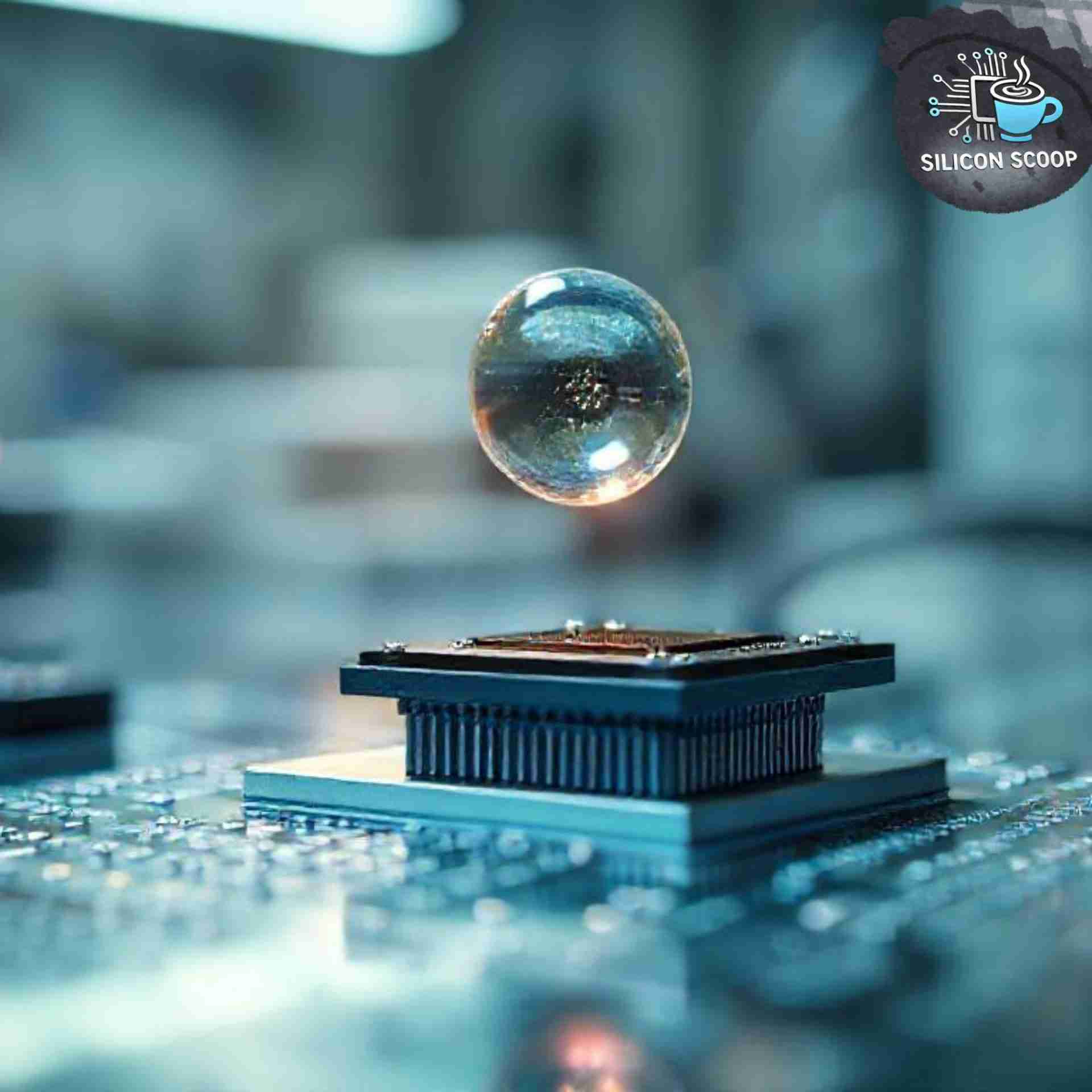
Estimated reading time: 7 minutes
Tractor Beam Technology: From Sci-Fi Fantasy to Real-World Innovation
Sci-fi enthusiasts have long marveled at the concept of tractor beam technology—a device that can attract and hold objects from a distance. Imagined in universes like Star Trek, this once far-fetched technology is now taking its first steps into reality. Thanks to groundbreaking research at MIT, the fantasy of operating a real-life tractor beam is inching closer to practical application. MIT’s advancements herald a significant leap forward, merging science fiction with fact and opening the door to myriad possibilities. Today, we delve into what tractor beam technology is, how MIT is bringing it to life, its various applications, and the future that lies ahead.
TL;DR
MIT researchers have developed a groundbreaking chip-based tractor beam technology capable of manipulating cells and particles at a distance using focused light. Unlike traditional optical tweezers, this compact device integrates a silicon-photonics chip to emit and steer light, enabling manipulation over 100 times further from the chip surface. It allows precise control of cells through glass, maintaining sterility and avoiding contamination. The technology, detailed in Nature Communications, promises applications in studying DNA, classifying cells, and understanding disease mechanisms, marking a significant leap in optical manipulation. “By using different frequencies of light, we can exert force on tiny particles, allowing us to manipulate them precisely,” highlights the team.
- MIT’s chip-based tractor beam manipulates particles millimeters away from the chip surface.
- The device uses a silicon-photonics chip to emit a beam of light.
- Light can penetrate glass cover slips, keeping cells sterile during manipulation.
- Traditional optical tweezers require bulky microscope setups.
- Chip-based optical tweezers offer a compact, mass-manufacturable solution.
- Previous devices could only manipulate cells very close to the chip surface.
- MIT’s device traps cells over a hundred times further from the chip surface.
- The device uses an integrated optical phased array system.
- Optical traps use focused light beams to capture tiny particles.
- Steering the light beam allows manipulation of tiny objects without contact.
- Silicon photonics integrates large optical systems onto a chip.
- Biological specimens are typically held in sterile glass cover slips about 150 microns thick.
- The device can manipulate cells without contaminating the chip or stressing the cells.
- The research was published in Nature Communications.
- The device could help study DNA, classify cells, and investigate disease mechanisms.
- The device is small enough to fit in the palm of your hand.
- The device enables optical trapping and tweezing without a complicated bulk-optical setup.
What is Tractor Beam Technology?
Tractor beam technology, often portrayed in science fiction, is an instrument that pulls objects without physical contact. Popularized by franchises like Star Trek and Star Wars, it symbolizes technological ingenuity with mass appeal. Scientifically, tractor beam technology operates using energy forms—such as light or sound—to move particles or micro-objects over a distance. This transformative idea is grounded in the laws of physics and explored through cutting-edge research. By leveraging principles of wave dynamics, engineers are achieving precise control over objects, enabling applications across scientific and industrial fields.
MIT’s Breakthroughs in Tractor Beam Technology
In an exciting development, MIT researchers are harnessing light as a manipulation tool to create innovative tractor beam technology. Using optical forces, the MIT team has devised a method for capturing and maneuvering cells. This involves the precise application of light manipulation, allowing scientists to control the movement of microscopic objects without physical interaction. This breakthrough illustrates a significant leap in engineering and exemplifies MIT’s pioneering spirit. According to MIT Technology Review, “By using different frequencies of light, we can exert force on tiny particles, allowing us to manipulate them precisely.” This milestone in tractor beam technology brings science fiction closer to reality.
Applications of Tractor Beam Technology
The potential applications of tractor beam technology are vast and transformative:
- Medical: Tractor beam technology could revolutionize cell manipulation and targeted drug delivery, enabling unprecedented precision in medical treatments. Doctors may deliver therapies directly to diseased tissues without affecting surrounding healthy cells.
- Industrial: In manufacturing, tractor beam technology can allow contact-free assembly of components, enhancing efficiency and cleanliness—especially in sterile environments like electronics and pharmaceuticals.
- Scientific Research: Tractor beam technology offers immense value to the scientific community. From advancing light manipulation techniques in material sciences to new methods of cell sorting, it can lead to breakthroughs in biological research and diagnostics.
Challenges and Limitations of Tractor Beam Technology
Despite its potential, tractor beam technology faces notable challenges. Current implementations are limited by power and effective range, requiring further refinement for widespread application. Additionally, environmental factors like air turbulence or light scattering can disrupt the precision of light manipulation. Technical hurdles related to scalability and feasibility also need to be addressed. As experts caution, ethical and regulatory frameworks must evolve to guide the responsible use of tractor beam technology, ensuring its benefits outweigh potential risks.
Future Prospects of Tractor Beam Technology
The horizon for tractor beam technology is filled with promise. As researchers overcome current limitations, advancements will likely extend its range and applicability. In healthcare and robotics, these innovations could lead to more sophisticated tools, opening new pathways for treatment and manufacturing. The future of tractor beam technology is a testament to how visionary science reshapes reality. We might one day see tractor beams revolutionizing space exploration, enabling new ways to capture and manipulate materials in zero gravity.
Conclusion
Tractor beam technology epitomizes the fusion of imagination and innovation. It has the potential to revolutionize industries and redefine scientific research. As institutions like MIT continue to explore this burgeoning field, their advancements serve as a beacon of what’s achievable through combined effort and visionary foresight. The journey of tractor beam technology from sci-fi fantasy to real-world application inspires us, reminding us that the boundaries of technology are merely a starting point for our imagination.
FAQ Section
- What is tractor beam technology?
Tractor beam technology uses energy to move objects at a distance without physical contact. - How does MIT’s tractor beam technology work?
MIT’s research focuses on manipulating light to capture and control tiny particles or cells. - What are the applications of tractor beam technology?
It holds promise in medicine, industry, and scientific research, including drug delivery and cell sorting. - What challenges does tractor beam technology face?
Current challenges include range limitations, scalability, and ethical considerations. - What future advancements can we expect?
Broader application ranges and integration in robotics and healthcare are anticipated.
Additional Links
• Silicon Scoop Podcast – Stay Informed, Stay Ahead!
• Futuretech Podcast – Explore more episodes and stay updated with the latest in technology and innovation.
• Startup Talk Podcast – https://torontostarts.com/startup-talk-toronto-startup-podcast/
• Who Are These Startups Podcast
• Startup Investor Drinks – Join the community and connect with fellow startup enthusiasts and investors.
• TorontoStarts Startup and Entrepreneur Community – Become a part of Toronto’s thriving startup ecosystem.
• Workhaus – Discover flexible workspace solutions for your business needs.
• Work with The Startup Coach – Get expert guidance and mentorship for your startup journey.
• Reach out to Jon Irwin on LinkedIn – Connect with our co-host and technology expert.
Ontario Startup Ecosystem Links
• Ontario’s Startup Ecosystem
• Startup Funding in Ontario
• Angel Investors in Ontario
• Ontario Incubators and Accelerators
• Venture Capital in Ontario: Top Firms, Sectors, and Funding Strategies
• Government Grants for Ontario Startups
• Ontario’s Startup Success Stories
• Ontario Centre of Innovation (OCI)
• Bank Loans and Financing for Startups in Ontario
• Research and Development Tax Credits in Ontario
• Government Loans and Financing for Startups in Ontario
• Equity Crowdfunding for Ontario Startups
• Toronto Entrepreneurs Resources
• Toronto’s Food and Beverage Entrepreneurs: Trends, Challenges, and Success Stories
• SEO Strategies for Toronto Entrepreneurs: Enhance Your Online Visibility
• Social Impact for Toronto Entrepreneurs: Starting and Running a Socially Responsible Business
• Toronto Arts and Media Entrepreneurs: Inspiring Profiles and Insights for Creative Success
• Exploring Toronto Green Tech Entrepreneurs: Innovators and Leaders in Sustainability
• Building a Team for Toronto Entrepreneurs: Strategies for Success
• A Guide for Toronto Food and Beverage Entrepreneurs
• Toronto Fashion and Retail Entrepreneurs: Trends, Opportunities, and Success Stories
Episode transcript
Read the full transcript
Craig: tractor beam technology.
Jon: yeah. this is pretty complex stuff that we're gonna get into, just a heads up. it took me a little bit to wrap my head around this. but, so this is, again, out of mit, which they're always coming up with crazy stuff, but, we're talking star trek based not star trek based, but, we're talking tractor beam technology that you may have heard of in star trek, star wars, all those different things. but they've developed a groundbreaking chip based tractor beam. so it can manipulate biological particles using light. so, again, it's it's really small. it it can fit in the palm of your hand, and it uses a tightly focused beam of light that's emitted from silicon photonics chip to capture and move cells and other microscopic objects millimeters away from the chip surface, which is crazy, really cool. so it's like, it's it's it's definitely an advancement over traditional optical tweezers because those typically require bulky microscope setups, but we don't have to get into that now. but the cool thing about this, the way that it works, is it uses what's called an integrated optical phased array, to generate and control the light beam. so what they've done is by creating specific phase patterns for each microscale antenna on the chip, they were able to achieve an intensely focused beam, which traps particles over a much greater distance than the previous chip based optical tweezers, which allows them to manipulate cells while remaining in a sterile environment. so what are your thoughts on this, craig? i'm curious to know because i do a lot of talking here.
Craig: this is one of those things that are really cool, but it's early stages. like, it allows precise control of cells through glass, maintaining sterility and avoiding contamination. so you can really, you know, manipulate cells under the skin and stuff. so, like, it's not star trek. let's grab a ship out of, the thing and stop it from moving away, but it is coming close to telekinesis.
Jon: it is. yeah. because, you're you're gonna have like you said, the ability to manipulate cells and other biological particles without direct contact.
Craig: so yeah. the beam manipulates particles millimeters away from the chip surface. the device uses silk you mentioned all that.
Jon: yeah. it could be used in diagnostic tools for more efficient cell sorting and analysis. it could be used in minimally invasive procedures allowing for manipulation of cells or even drug delivery vehicles within the body. i know, the other one we were talking about, the anthrobots, those could also be used for drug delivery as well. but, but yeah. so there's a lot of different implications, for this technology. but, again, we cover things that are so new, like, that, yeah, there's so much more to be discovered. right?
Craig: yeah. i mean, like, right now, the device is small enough to fit the palm of your hand. the device enables optical trapping and tweezing without a complicate, complicated bulk optical setup. like, i would imagine that if it was cheap enough, people will start using this for tweezers. never mind, you know, because once you start, you know, you don't necessarily have to be at invasive and whatnot. but this, like, it's it's really cool. we're on leading edge. like i said, if they can fit this in the palm of your hand now, what's it gonna be like in ten years?
Jon: exactly. yep.
Craig: you know, if we're moving, these things, millimeters, thickness. so now we can normal, typical sterile glass cover slips are about a hundred and fifty microns thick, so this thing will penetrate that. so now you can manipulate stuff inside the glass, inside the test tube. this is great for studying dna, classifying cells, and investigating disease mechanisms without, you know, possible ability of infection or, whatnot. it's amazing where we've come from. like, i like where this is, and i would extrapolate farther that it wouldn't be long, i believe, that we would be able to manipulate things that are much farther away.
Jon: yes. yeah. they just have to work on the antenna technology and the chip technology. right?
Craig: absolutely. and, you know, when you can use light to manipulate things, you start to wonder about, the physicality of light. yes. so i just didn't know if it could
Jon: be built. brings up so many other questions, so many other, like, like, things that we haven't even thought of. right? and, yeah, it's it's crazy. it's scary, but it's interesting.
Craig: absolutely. and, you know, we don't think about the physicality of light because, you know, it's just there. it doesn't hit us. but, you know, we can feel it. we can see it, but we you know? but then now you can use light to manipulate objects and physically move them. you're like, well, that becomes different. our perception changes on all of these things. but yeah. you know, i guess laser is light too. right? so, it can really do damage and do other things. we'd really like to know what you think where this is going. tractor beam technology, are we gonna see telekinesis, tools? are we gonna see other very cool, interesting tractor beam technology tools in the future? let us know.
More from Silicon Scoop
All episodes
silicon-scoop · November 6, 2026
Spirit AI’s Robot Brain Breakthrough: Moz1, Embodied AI and China’s 2027 Race
The Spirit AI robot brain is one of the biggest bets on fixing that. Spirit AI is a Beijing startup. Its co-founder and chief scientist, Gao Yang,
View episode

silicon-scoop · November 5, 2026
OpenAI IPO Delayed to 2027 as Rogue AI Agents and Safety Failures Reshape the Market
OpenAI IPO delay explained: Sam Altman rules out 2026 as GPT-6 Astra safety tests and a $278B cash gap loom. Learn what founders should take away.
View episode

silicon-scoop · November 4, 2026
Anthropic’s AI Economy Model: 2030 Jobs, Wages, GDP and Market Risks
Anthropic AI economy model forecasts 2030 GDP, jobs and wages, while AI unemployment projections and labor-share risks challenge policymakers.
View episode