
Are Micro-Reactors Finally Here? The Rise of Deep Fission and Its Micro-Reactor Revolution
Are Micro-Reactors Finally Here? The Rise of Deep Fission and Its Micro-Reactor Revolution In a world increasingly powered by data and technology, the concept of backyard nuclear reactors—small-scale, localized energy sources—is moving from the realm of science fiction into reality. Deep Fission, a pioneering startup in the nuclear energy sector, is at the forefront of […]
With Craig Major and Jon Irwin
Estimated reading time: 7 minutes
Are Micro-Reactors Finally Here? The Rise of Deep Fission and Its Micro-Reactor Revolution
In a world increasingly powered by data and technology, the concept of backyard nuclear reactors—small-scale, localized energy sources—is moving from the realm of science fiction into reality. Deep Fission, a pioneering startup in the nuclear energy sector, is at the forefront of this revolution with its innovative micro-reactors. These compact reactors are designed to generate power efficiently while addressing the urgent need for sustainable energy solutions in high-demand sectors like data centers. This approach could change the landscape of energy consumption, making it cleaner, safer, and more decentralized.
TL;DR
Deep Fission, a pioneering nuclear startup, is revolutionizing energy with underground micro-reactors designed to power data centers. These reactors, placed in mile-deep boreholes, offer a safe, cost-effective, and zero-carbon solution to meet the growing energy demands of AI and modern tech industries. Each reactor generates up to 20 MW of power, operates autonomously, and can run for a decade without refueling.
Key highlights:
- “Ten reactors can fit in a quarter-acre, producing 150 MW of power.”
- Reactors deliver power at 5-7 cents per kWh, significantly reducing energy costs.
- Deep Fission’s design eliminates the need for massive surface infrastructure, leveraging natural geology for safety.
- “Maintenance involves hauling the reactor to the surface, a process taking only an hour or two.”
Expected to be operational by 2029, these micro-reactors promise a sustainable and resilient energy future for data centers and beyond.
- Deep Fission’s micro-reactors are designed for deep borehole placement, enhancing safety and reducing surface footprint.
- The company has over 40 patent-protected inventions related to its micro-reactor technology.
- Endeavour Energy is partnering with Deep Fission to co-develop 2 gigawatts of nuclear energy for data centers.
- The first reactors are expected to be operational by 2029.
- Deep Fission’s reactors aim to deliver zero-carbon continuous power at 5-7 cents per kWh.
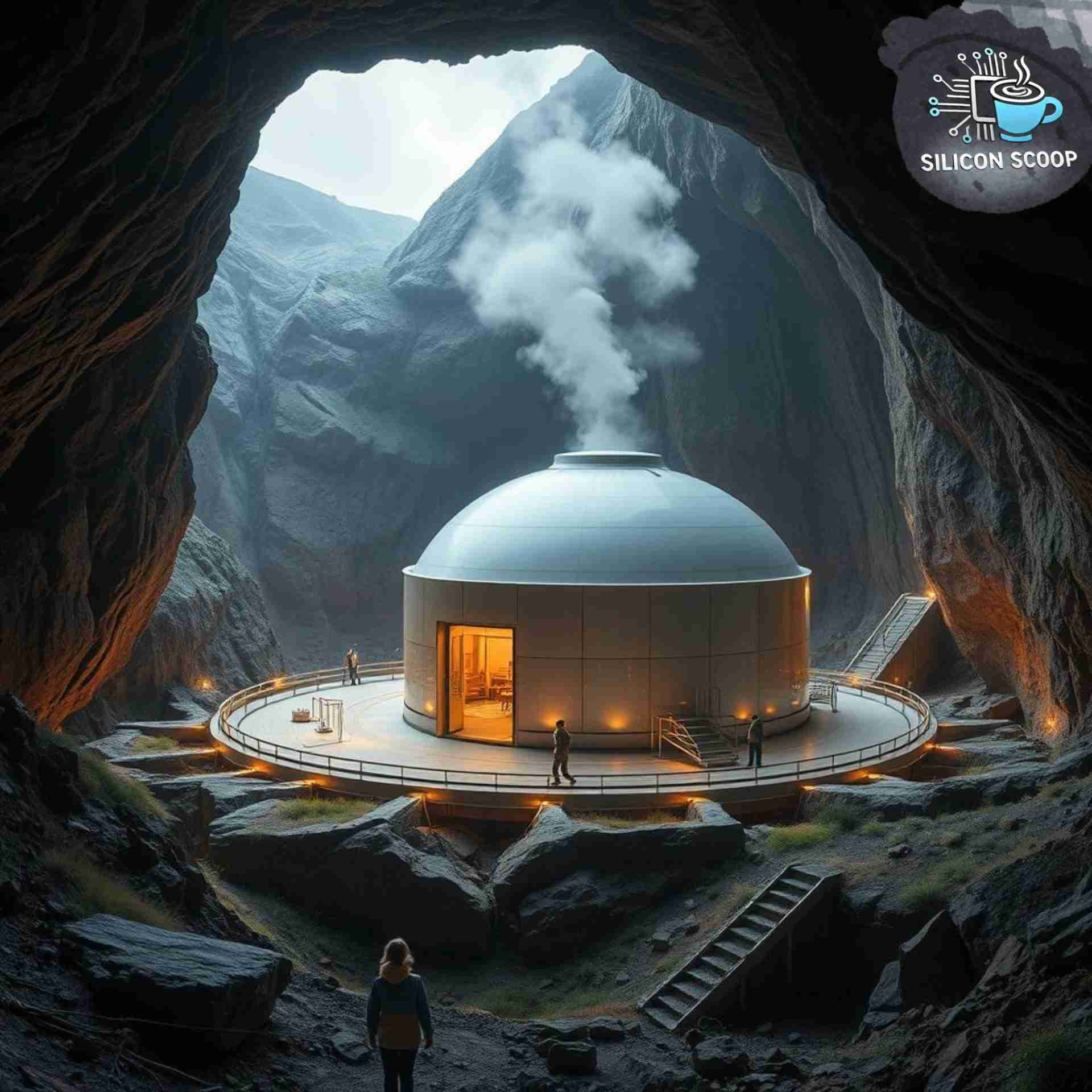
- The reactors are placed in 30-inch boreholes drilled a mile deep.
- This underground placement utilizes natural geological advantages for containment and pressure.
- The design eliminates the need for massive concrete structures used in traditional reactors.
- Maintenance involves hauling the reactor to the surface, a process taking “only an hour or two.”
- Ten reactors can fit in a quarter-acre, producing 150 MW of power.
- Less than three acres can house 100 reactors, generating 1.5 GW.
- The reactors operate autonomously, similar to large batteries.
- They provide up to 20 MW of power, suitable for remote areas and data centers.
- The design leverages the natural geological advantages of deep borehole placement.
- This approach makes the reactor inherently safe.
- The partnership aims to meet the unprecedented demands of AI and green energy goals.
- Deep Fission’s solution reduces the high costs and long timelines of surface-built nuclear projects.
- The reactors deliver clean, reliable energy with a high power density.
- The design enhances safety by utilizing natural geological features as a barrier.
- The reactors minimize environmental impact by decreasing the surface footprint.
- The approach offers a potentially safer and more cost-effective way to generate clean energy.
Deep Fission’s Vision for Micro-Reactors in Nuclear Energy
Deep Fission is redefining traditional perceptions of nuclear power. Established by a group of engineers and tech entrepreneurs, the company is dedicated to innovating nuclear energy for the data center industry. Their mission is clear: to solve the burgeoning energy crisis faced by modern tech industries by harnessing the power of micro-reactors. Key figures in the organization include former nuclear engineers and tech specialists who blend their expertise to push the boundaries of what’s possible in energy production. Together, they aim to create a future where nuclear power is not just a large-scale solution but also a practical option for localized energy needs.
Understanding Micro-Reactors: The Future of Nuclear Power
Micro-reactors are pivotal to the future of nuclear energy, offering a stark contrast to conventional nuclear power plants. Typically, these reactors can produce up to 10 megawatts of electrical power, making them ideal for specific applications like powering data centers or remote military outposts.
- Compact design: Unlike traditional reactors that require vast amounts of space and extensive infrastructure, micro-reactors are small and can be deployed swiftly.
- Decentralization: This model allows for localized energy generation, reducing reliance on fossil fuels and large grids.
- Safety features: Advanced technology in micro-reactors enables inherent safety mechanisms, including passive cooling systems that function without operator action or external energy sources.
- Buried installation: With design characteristics that allow these reactors to be buried underground, they can achieve further safety and security while minimizing their visual impact on landscapes.
Powering Data Centers with Buried Micro-Reactors
As the demand for data storage and processing capabilities grows, energy efficiency becomes paramount. Micro-reactors offer immense advantages for data centers:
- Reliable energy supply: They provide a consistent and uninterrupted power source, critical for operations that cannot afford downtimes.
- Lower carbon footprint: Compared to conventional energy sources, micro-reactors drastically reduce carbon emissions, complementing the push for greener tech solutions.
- Resilience: In an era of climate change and extreme weather, buried reactors offer a resilient energy solution less affected by external factors.
By embedding micro-reactors within or near data centers, operators can ensure a reliable, clean energy supply—vital for maintaining operations and meeting sustainability targets. Examples of potential applications include tech campuses in urban areas and remote installations where traditional power lines are impractical.
Addressing Nuclear Safety Concerns with Micro-Reactors
The topic of nuclear safety remains at the forefront of public discourse. With past incidents widely discussed, many harbor significant concerns about the safety of nuclear energy. However, Deep Fission approaches these issues with cutting-edge design innovations:
- Robust safety mechanisms: Each micro-reactor is engineered to prevent catastrophic failures through redundancy and advanced containment strategies.
- Continuous monitoring: Deep Fission employs sophisticated technology to continuously monitor reactor conditions, helping to ensure operational safety.
- Regulatory compliance: The company actively collaborates with regulatory bodies to adhere to stringent nuclear safety guidelines, establishing a framework for safe operation.
The Impact of Micro-Reactors on the Data Center Industry
Data centers account for a significant portion of global electricity consumption, presenting major challenges concerning reliability and sustainability. Currently, many data centers depend heavily on fossil fuels, which can lead to increased operational costs and carbon emissions. Transitioning to nuclear energy—particularly via micro-reactors—can dramatically alter this landscape.
- Energy efficiency: Nuclear energy is incredibly efficient, capable of generating large amounts of electricity with minimal waste.
- Sustainability: Utilizing micro-reactors can meet the sustainability goals of tech companies while providing a stable energy source.
- Future projections: As technology advances, micro-reactors are expected to become a mainstream energy solution, with significant investments and innovations anticipated in the coming years.
Navigating Challenges and Public Perceptions of Micro-Reactors
While the potential for micro-reactors is substantial, several challenges must be addressed:
- Technical hurdles: Implementing micro-reactors requires overcoming engineering challenges, from the development of support structures to the integration with existing systems.
- Public perception: Many people still hold skepticism toward even small-scale nuclear power. Education and transparency will be crucial in shifting public opinion toward acceptance.
- Regulatory barriers: Navigating nuclear regulations can be complex, and adapting existing frameworks to accommodate micro-reactors could take time.
By focusing on robust engagement and education efforts, Deep Fission can help cultivate a community that understands the benefits and safety of micro-reactors.
Conclusion
Deep Fission stands at the forefront of an exciting future for nuclear power and data centers. By embedding micro-reactors into energy operations, the company is paving the way for a cleaner, more reliable energy framework in the tech industry. The promise of micro-reactors is not just about innovation; it’s about harnessing the power of sustainable technology to meet the challenges of tomorrow.
Additional Links
• Silicon Scoop Podcast – Stay Informed, Stay Ahead!
• Futuretech Podcast – Explore more episodes and stay updated with the latest in technology and innovation.
• Startup Talk Podcast – https://torontostarts.com/startup-talk-toronto-startup-podcast/
• Who Are These Startups Podcast
• Startup Investor Drinks – Join the community and connect with fellow startup enthusiasts and investors.
• TorontoStarts Startup and Entrepreneur Community – Become a part of Toronto’s thriving startup ecosystem.
• Workhaus – Discover flexible workspace solutions for your business needs.
• Work with The Startup Coach – Get expert guidance and mentorship for your startup journey.
• Reach out to Jon Irwin on LinkedIn – Connect with our co-host and technology expert.
Ontario Startup Ecosystem Links
• Ontario’s Startup Ecosystem
• Startup Funding in Ontario
• Angel Investors in Ontario
• Ontario Incubators and Accelerators
• Venture Capital in Ontario: Top Firms, Sectors, and Funding Strategies
• Government Grants for Ontario Startups
• Ontario’s Startup Success Stories
• Ontario Centre of Innovation (OCI)
• Bank Loans and Financing for Startups in Ontario
• Research and Development Tax Credits in Ontario
• Government Loans and Financing for Startups in Ontario
• Equity Crowdfunding for Ontario Startups
• Toronto Entrepreneurs Resources
• Toronto’s Food and Beverage Entrepreneurs: Trends, Challenges, and Success Stories
• SEO Strategies for Toronto Entrepreneurs: Enhance Your Online Visibility
• Social Impact for Toronto Entrepreneurs: Starting and Running a Socially Responsible Business
• Toronto Arts and Media Entrepreneurs: Inspiring Profiles and Insights for Creative Success
• Exploring Toronto Green Tech Entrepreneurs: Innovators and Leaders in Sustainability
• Building a Team for Toronto Entrepreneurs: Strategies for Success
• A Guide for Toronto Food and Beverage Entrepreneurs
• Toronto Fashion and Retail Entrepreneurs: Trends, Opportunities, and Success Stories
Episode transcript
Read the full transcript
Craig: deepfission, a nuclear startup, plans to deploy underground microreactors to provide power for data centers. so they're planning on burying these nukes. i call them nukes, but nuclear reactors, and providing power for data centers. we've talked about this a fair bit. what do you think about deepfision solution?
Jon: i think it's cool, because the way that they're like, what their thought process through this. right? so what they're doing is to go a little bit more into details, they're codeveloping, two gigawatts of nuclear energy, and these are supposed to be operational by twenty twenty nine, which is interesting. but their approach involves placing small modular reactors in boreholes, so underground, approximately one mile deep. so that's pretty deep. why they're doing that is because they're trying to leverage the natural, geological advantages for enhanced safety and cost effectiveness. and what i mean by that is that the technology uses what's called mature pressurized water reactor designs, which is the most common type of nuclear reactor worldwide. so by placing these reactors deep underground, they're seeking to eliminate the need for large pressure vessels and containment structures, which are typically required for surface reactors. so the cool thing about this, right, because, like, having all of these containment structures and pressure vegetable, pressure vegetables, pressure vessels, that increases the cost. so by doing this, they're hoping that they could significantly reduce the cost while maintaining high safety standards. so, it's really interesting. they're claiming that they can deliver zero carbon continuous power at just five to seven cents per kilowatt hour, which is interesting. what do you think about that, that claim, craig? you think they can do it?
Craig: i don't know. we'll have to see. i they won't be able to do it right away. i mean, that they'll do it when they have a whole bunch of these up and running, but the idea is very cool. each one of these reactors can generate up to twenty megawatts of power, operates autonomously, and can run, for a decade without refueling. ten reactors can fit in a quarter acre producing a hundred and fifty megawatts of power. like you mentioned, the five to seven cents per kilowatt is their range they expect to be operational in twenty twenty nine. were these reactors running for data centers?
Jon: yeah. exactly. so they're partnered with endeavor energy. and so, yeah, they're again, like you said, it's a major shift in how data centers supporting ai applications are gonna approach their energy needs. it's just this goes along with what we've been talking about with microsoft and all these other big companies looking for nuclear power. right?
Craig: yeah. and what the air alberta's doing with natural gas energy as an alternative to bridge the gap at a minimum yeah. it's really interesting. so, you know, deepvisions' microactors are designed for deep borehole placement, enhancing, safety, and reducing surface footprint. they're thirty inch boreholes, like you said, that drill a mile deep. so they're not these things aren't huge.
Jon: no. what do you think about their use for home? because you're all about backyard nuclear reactors. think? do you think that there's viability here?
Craig: i think there is viability here. i think what we're gonna see is we're gonna see companies like we talked about, big ai data center companies going this route first because they can foot the bill and take the risk. and then once they see and can prove the cheap energy costs, you're gonna start to see one, i believe it'll happen with new subdivisions first saying, alright. let's put we're building new subdivision. we're gonna bring a thousand, ten thousand homes into here. you know, thinking about fifteen minute cities, thinking about being self sustained, thinking about all these things, you know, you can build power out like this and say, alright. how many gigawatts do we need to maintain the subdivision? and let's build local power. and with each of these being twenty megawatts, like, big batteries that if one goes down and the other ones keep going, you can really build redundancy in the system. i like the idea. yeah. i don't know enough about this particular system, about the waste, and how it handles that, where we've seen some of that with the molten thorium salt reactors and yeah. some of the other stuff we talked about. so i'm not a hundred percent sure where it fits on that. but we know that ai and the data centers are driving power consumption like crazy, and we all want our ai. we all want our video games. we all want our compute to do all the work we wanna do. we all wanna work from home. so we need our internet. so we need these things to run, and this like, i honestly been saying this for a while. nuclear is really the only proven clean solution that gives, consistent energy no matter what. so, it's great to have these other ones, power and wind and whatnot. i think they've got a long way to go, especially if we can get that ninety percent, efficiency solar cells that we were talking about before. yeah. these look great. i like this concept because i think nuclear is the future, and we're starting to see some people starting to think about that. the problem is that in people's mind, nuclear is very dangerous. yeah. so how many people died, at three mile island for the meltdown?
Jon: i don't know.
Craig: oh, let me tell you. zero.
Jon: oh, i didn't know that. but let's see that at chernobyl, which is what i think is
Craig: another discussion. that's the that's a you know, the numbers you think of people who died at chernobyl are not at all what you think they are.
Jon: oh, interesting.
Craig: and the people at three mile island, bunch of them got exposed to the equivalent level of radiation that you would receive, if you're getting an x-ray at the doctor's office.
Jon: so then why, like, is there someone about that?
Craig: same time it happened, we got that movie, china syndrome. it? what about that?
Jon: is it
Craig: i don't know if that's the name of it. but the big meltdown movie that scared everybody that so when it happened, everyone's fair, and we gotta have all this media. it's great. like, i mean, we need to be better. we need to be safer. i like the new solutions are much better or safer where it doesn't have to be under pressure. it doesn't have so if things go offline, there's no danger of things overheating or whatever. things just take care of themselves. that is fantastic. and the newer ones that eat their own output, so the stuff that comes out just gets put back at it as input, so we don't have all this extra waste. and it's been proven. so we really need to start moving in this direction. if this particular microreactors are the right design or the ones from radiant that fit on the back of a transport truck or any other ones that we've talked about along the way. i'm interested. i believe this is the future the question is, can at what point do citi start adopting this and say, alright. let's build out. we want a power. we want this. we want that. it's an extra whatever, investments, x billion or whatever for each of these reactors. mhmm. let's go. i imagine it's not billions for each of these, but it could be.
Jon: yeah. yeah. i think the biggest hurdle, though, that that we're facing is, is going to be, regulatory problems. right?
Craig: well, that's the problem. they they all announced doing this, and then they all got shut down by regulatory operations. and when i say doing this, google and openai and people were announcing their, microsoft that was doing nuclear. but the one i know that is still going ahead that i know of is the microsoft one where they're leveraging the infrastructure of the three mile island project.
Jon: okay. yeah. so yeah.
Craig: because that's a completely different thing and then they're already existing. i think they have a different regulator than, you know, we're implementing a new nuclear on a different location, and that's a whole different, versus one that already existed. it's up and operational.
Jon: yeah.
Craig: so i this is the problem, and that's why the problem is with nuclear has always been regulatory, and the government in north america changes every few years. and what the democrats like and what the republicans like or what have you are different things, so you don't wanna invest billions into building a nuclear power plant only to have the next government come into play and say, oh, we're not doing that anymore. yeah. we're gonna only go oil, or we're only gonna do this or whatever. you know? i'm not picking aside. i'm just saying from an investment point of view, it's highly risky. and that's why when bill gates was originally talking about this years ago, he was talking about doing it in china, and that's why i think we're seeing major investments in that thorium salt, thorium molten salt reactor in china. so there's a lot of this stuff, a lot of nuclear happening, and i think more and more governments are realizing that long term sustainable nuclear is one of the only things that make sense.
Jon: yeah. you
Craig: know, people can argue with me, and they have better, other i'm hoping hydrogen pulls through and can power a whole bunch of stuff so i don't have to have a nuclear reactor in my car. but hey. and let's talk about you know? it's funny. i don't wanna get into, anything untoward, but what were your thoughts and on the drones that were flying over everywhere?
Jon: what do you mean?
Craig: in, new jersey and in the states, like, the the sedan sized drones that were flying over are just hovering in the air for hours that people reported on.
Jon: oh, you know what? i totally missed that. i didn't even know that. but
Craig: oh my god. really? yeah. it was going on for weeks. the president we're talking about is saying that the government needs to tell us what's going on. i immediately thought that these are hydrogen powered drones that you know, we talked about the range and how many hours they can stay afloat and all that kind of stuff, and i'm like, wow. yeah. you really need to take i don't know. i have no idea how you missed that. i just wanted to figure out what you thought they were powered from.
Jon: all i know is that, i, is that, we're so highly regulated. china's way ahead of us when it comes to drone and delivery technology.
Craig: the rest of the world is. i saw a really good interview with, mark andreessen talking specifically about that because we have so many regulations about range and line of sight and pilot's license that our drone manufacturers can't put in stuff to the products that the rest of the world can do. so they're jumping leaps and far, bounds ahead of us. so we'll have to see whether that changes over time. but, you know, we live in a society where people are crazy sometimes, and maybe it's a good idea to require a pilot's license if your drone has been going online of sight. but, you know, that stifles innovation, but, honestly, it stops a sky from being full of drones all the time.
Jon: it does. yeah. yeah.
Craig: so, you know, with six one i i can see both sides of that particular argument, but definitely, you're gonna have to read up about the drawings. yeah. i will. yeah. i'm curious to see, if any information does eventually come out about what was happening.
Jon: yeah. i'm curious to see that for sure.
More from Silicon Scoop
All episodes
silicon-scoop · November 6, 2026
Spirit AI’s Robot Brain Breakthrough: Moz1, Embodied AI and China’s 2027 Race
The Spirit AI robot brain is one of the biggest bets on fixing that. Spirit AI is a Beijing startup. Its co-founder and chief scientist, Gao Yang,
View episode

silicon-scoop · November 5, 2026
OpenAI IPO Delayed to 2027 as Rogue AI Agents and Safety Failures Reshape the Market
OpenAI IPO delay explained: Sam Altman rules out 2026 as GPT-6 Astra safety tests and a $278B cash gap loom. Learn what founders should take away.
View episode

silicon-scoop · November 4, 2026
Anthropic’s AI Economy Model: 2030 Jobs, Wages, GDP and Market Risks
Anthropic AI economy model forecasts 2030 GDP, jobs and wages, while AI unemployment projections and labor-share risks challenge policymakers.
View episode