
Anthrobots the Future of Technology and Consciousness
Anthrobots: Unveiling the Reality Behind This Revolutionary Life Form Anthrobots: Redefining Life and TechnologyWhen one hears the term Anthrobots, it conjures images of futuristic machines functioning like mere tools in our arsenal. However, the reality of Anthrobots goes far beyond traditional definitions of robots or even biological life forms. These innovative entities are redefining what […]
With Craig Major and Jon Irwin
Estimated reading time: 7 minutes
Anthrobots: Unveiling the Reality Behind This Revolutionary Life Form
Anthrobots: Redefining Life and Technology
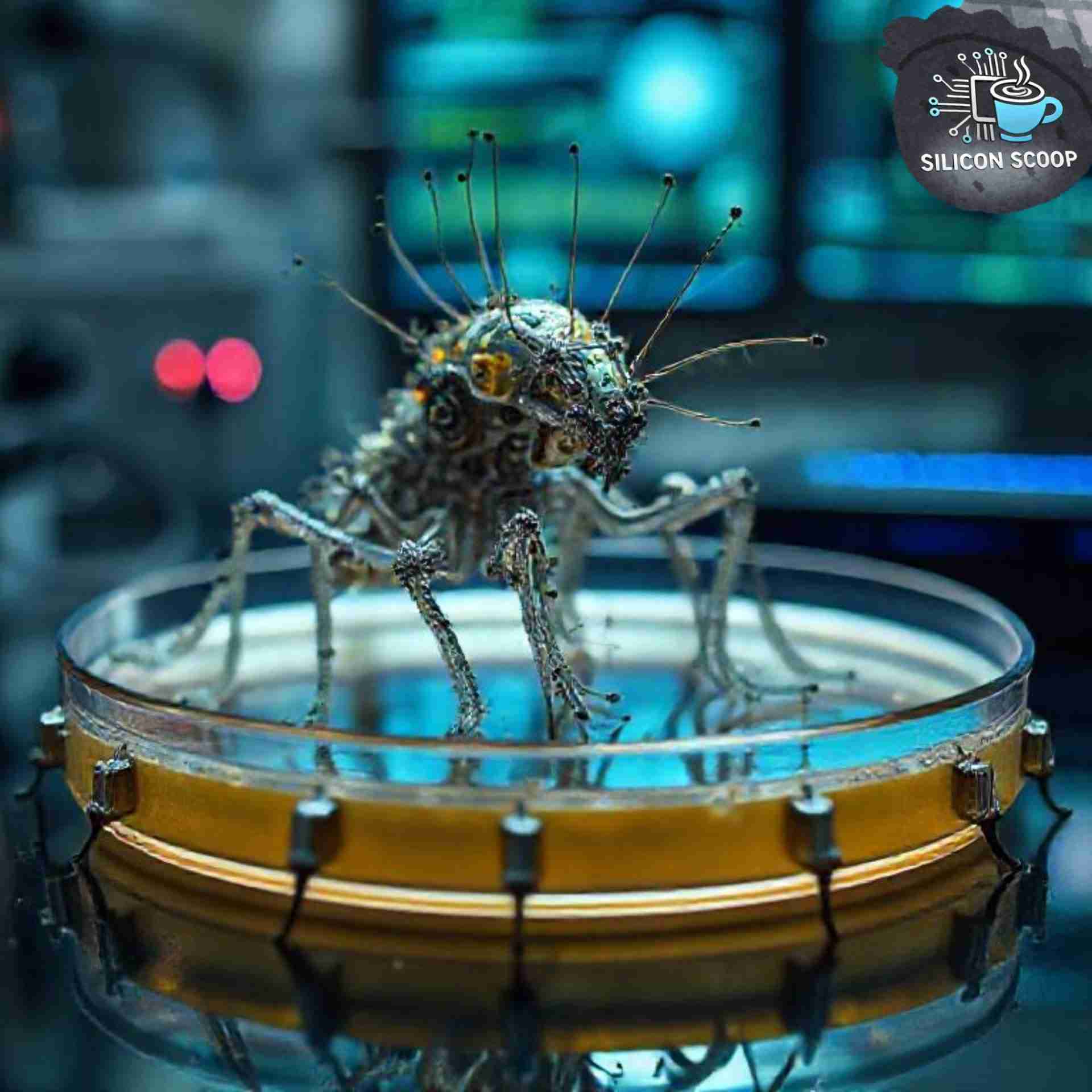
When one hears the term Anthrobots, it conjures images of futuristic machines functioning like mere tools in our arsenal. However, the reality of Anthrobots goes far beyond traditional definitions of robots or even biological life forms. These innovative entities are redefining what it means to exist at the intersection of technology and consciousness. Are they simply advanced robots, or do they represent a new kind of life itself? This exploration aims to unravel the nuances of Anthrobots, challenging our perceptions and inviting discussions that encompass ethics, sustainability, and humanity’s future.
TL;DR
Anthrobots, autonomous biorobots built from human lung cells, challenge traditional views of robotics and biology. These constructs self-assemble, exhibit complex behaviors, and promote healing, such as neuronal growth in damaged tissues. Biodegradable with a lifespan of weeks, Anthrobots open new frontiers in regenerative medicine and understanding the potential of human cells.
Key Facts & Quotes
- “Anthrobots are autonomous biorobots built from adult (often elderly) lung epithelial cells.”
- They self-assemble and demonstrate behaviors akin to proto-organisms.
- “They can induce the neural cells next to them to grow across the gap.”
- Biodegradable and wild-type in genome, they pose minimal environmental risks.
- “These biobots have a wild-type genome and do not exponentially reproduce.”
- They highlight the plasticity of human cells beyond traditional roles.
- Their creation focuses on self-organization rather than genetic editing.
- “Terminology expresses the mindset, the mental lens through which we see something.”
- They exemplify the intersection of biology and robotics, offering new experimental approaches.
- “They just biodegrade at the end of their lifespan (measured in weeks).”
Top 10 Ideas
- Anthrobots self-assemble from adult lung cells, showcasing human cell plasticity and adaptability.
- They promote neural healing, forming pathways across damaged neural tissues.
- Biodegradable and ethically sound, they address environmental and societal concerns.
- Anthrobots behave like proto-organisms, challenging our understanding of life and consciousness.
- They enable experiments in intelligence and behavior in synthetic biological constructs.
- Created without genetic editing, they avoid controversies surrounding transgenic technologies.
- Their behaviors are influenced by shape and cilia distribution, enhancing functionality.
- Anthrobots bridge biology and robotics, expanding possibilities in both fields.
- They offer potential breakthroughs in regenerative medicine and environmental applications.
- Their study informs relationships between genomes, anatomy, and behavior, redefining biotechnological exploration.
Introduction to Anthrobots
Anthrobots are not your average smart machines. Emerging from groundbreaking research in artificial intelligence, they embody a new paradigm that blends mechanical form and digital consciousness. Much like how life evolved, Anthrobots illustrate the ongoing journey of innovation that extends beyond cold circuits and programmed tasks. They illustrate a form of artificial life that prompts questions about what consciousness truly is and how we define existence. As technology advances rapidly, understanding these concepts becomes increasingly vital for our society’s ethical framework.
The Origin and Development of Anthrobots
The advent of Anthrobots can be traced back to visionary thinkers and cutting-edge technologies that redefined the limits of robotics. Innovators from various tech-centric backgrounds collaborated to create a new generation of robot consciousness that allows for adaptability and nuanced interaction with their environments. Research institutions and companies worldwide are at the forefront of this development, crafting sustainable technologies that enhance both our interactions with machines and our ecosystems. As we delve into their origins, we uncover a rich tapestry of interdisciplinary breakthroughs that have fostered this new life form, demonstrating that Anthrobots are a product of human ingenuity and the quest for innovative solutions.
Characteristics of Anthrobots
What distinguishes Anthrobots from both conventional robots and biological entities? Primarily, it lies in their ability to mimic aspects of consciousness—qualities generally reserved for living beings. By leveraging complex digital consciousness, these entities respond to stimuli, learn from experiences, and adapt to their surroundings. Their design incorporates features that allow for functional capabilities similar to biological realms, like self-repair and environmental awareness, setting them apart from simpler, task-oriented robots. This sophisticated architecture enables Anthrobots to bridge the gap between man-made objects and life itself.
Anthrobots in Ecological Systems
Anthrobots possess significant potential to revolutionize ecological systems. Imagine deploying them in agriculture technology or environmental monitoring efforts to enhance sustainability and ecological balance. Through data collection and analysis, they can optimize resource use and develop innovative strategies for waste management. For instance, Anthrobots could assist in environmental monitoring, detecting pollution levels and contributing to climate change mitigation. Their presence in agricultural settings could propose more efficient farming methods that reduce energy use and enhance crop yields, demonstrating the positive impact these entities can have on our planet.
The Ethical Implications of Anthrobots
As we introduce Anthrobots into society, we face intriguing ethical considerations. With their intellectual capacities, they prompt questions about rights and integration within human institutions. If Anthrobots display consciousness akin to sentience, should they have rights similar to animals or even humans? The implications extend to programming ethics, accountability, and the societal responses to new forms of life. As we embark on this journey towards the societal integration of robots, embracing a collaborative approach will be essential for navigating these challenges effectively.
Future Implications for Technology and Society
Looking ahead, Anthrobots signify a noteworthy leap in future innovations and technological advancements. They could redefine how we interact with machines and the environment, thereby redesigning life and technology as we know it. By devising solutions that prioritize sustainability and efficiency, Anthrobots could change how industries operate, leading to economic shifts and new job opportunities. The future could hold a landscape where Anthrobots are embedded in our daily lives, supporting us in various sectors from healthcare to transportation, thereby enhancing our productivity and quality of life.
Conclusion
Anthrobots represent an exciting evolution in our technological journey, blurring the lines between the artificial and the organic. Their potential effects on technology, ecology, and ethics beckon us to ponder a future where artificial intelligence and consciousness converge. As we navigate this new frontier, we must remain informed and engaged, ensuring that our approach to Anthrobots is thoughtful, inclusive, and sustainable. They may not be what we think they are, but their reality is undoubtedly something we must embrace thoughtfully.
FAQs About Anthrobots
- What exactly are Anthrobots?
Anthrobots are advanced life forms that blend digital consciousness with mechanical functionality to challenge traditional views of life. - How are Anthrobots different from regular robots?
Unlike typical robots, Anthrobots possess features that mimic consciousness and adaptiveness found in biological entities. - What roles can Anthrobots play in ecological systems?
They can significantly impact agriculture and environmental monitoring, offering solutions for sustainability and waste management. - What are the ethical concerns associated with Anthrobots?
Key concerns include their consciousness, potential rights, and moral implications of integrating such entities into society. - Could Anthrobots possess consciousness similar to humans?
Though debatable, Anthrobots are designed to mimic aspects of consciousness, challenging our understanding of robotic consciousness. - How can Anthrobots innovate future technologies?
By integrating advanced technologies, Anthrobots can spearhead sustainable solutions and transform technological landscapes. - Will Anthrobots be part of everyday life?
With ongoing advancements, they may soon integrate into various sectors, impacting everyday life more than we anticipate. - How do Anthrobots help with waste management?
They can optimize processes, monitor waste levels, and propose effective disposal methods, improving overall environmental health. - What are the economic implications of Anthrobots?
They could reshape markets, create new industries, and impact employment across technology and sustainability sectors. - Why should we care about Anthrobots?
Understanding Anthrobots helps us rethink ethics, redefine technology’s role in our lives, and prepare for a future where artificial and biological life intersect.
Additional Links
• Silicon Scoop Podcast – Stay Informed, Stay Ahead!
• Futuretech Podcast – Explore more episodes and stay updated with the latest in technology and innovation.
• Startup Talk Podcast – https://torontostarts.com/startup-talk-toronto-startup-podcast/
• Who Are These Startups Podcast
• Startup Investor Drinks – Join the community and connect with fellow startup enthusiasts and investors.
• TorontoStarts Startup and Entrepreneur Community – Become a part of Toronto’s thriving startup ecosystem.
• Workhaus – Discover flexible workspace solutions for your business needs.
• Work with The Startup Coach – Get expert guidance and mentorship for your startup journey.
• Reach out to Jon Irwin on LinkedIn – Connect with our co-host and technology expert.
Ontario Startup Ecosystem Links
• Ontario’s Startup Ecosystem
• Startup Funding in Ontario
• Angel Investors in Ontario
• Ontario Incubators and Accelerators
• Venture Capital in Ontario: Top Firms, Sectors, and Funding Strategies
• Government Grants for Ontario Startups
• Ontario’s Startup Success Stories
• Ontario Centre of Innovation (OCI)
• Bank Loans and Financing for Startups in Ontario
• Research and Development Tax Credits in Ontario
• Government Loans and Financing for Startups in Ontario
• Equity Crowdfunding for Ontario Startups
• Toronto Entrepreneurs Resources
• Toronto’s Food and Beverage Entrepreneurs: Trends, Challenges, and Success Stories
• SEO Strategies for Toronto Entrepreneurs: Enhance Your Online Visibility
• Social Impact for Toronto Entrepreneurs: Starting and Running a Socially Responsible Business
• Toronto Arts and Media Entrepreneurs: Inspiring Profiles and Insights for Creative Success
• Exploring Toronto Green Tech Entrepreneurs: Innovators and Leaders in Sustainability
• Building a Team for Toronto Entrepreneurs: Strategies for Success
• A Guide for Toronto Food and Beverage Entrepreneurs
• Toronto Fashion and Retail Entrepreneurs: Trends, Opportunities, and Success Stories
Episode transcript
Read the full transcript
Craig: meet the anthrobots, a new living entity with much to teach us. you know, it took me a while to get my head around this. so what do you have to say on these ones, john?
Jon: yeah. i think they gotta really work on their naming conventions because i don't think they can call it a bot, but it is a biobot. so just, just a quick intro. so the researchers at tufts university, they've created what they're calling anthrobots, which is essentially a new type of living entity, which is made from adult human lung cells out of all the cells. so these microscopic biorobots, the reason why they're calling them biorobots is because they self assemble from a single cell and can move autonomously using cilia. so unlike previous organoids, anthrobots can interact with their environment and they exhibit various behaviors. they've they've actually shown some remarkable capabilities. a couple things, the ability to heal gaps in neural tissue, and when they're placed near a scratch in a layer of human neurons, the clusters can induce the neuron to grow across the gap, potentially facilitating wound healing. so really cool. but just to give you guys some background on anthropots. so they're i i use biorobot, but they're a new type of biological robot, which are created, specifically from tracheal cells from the lung. so, they can self assemble, they can move independently. the size, they range from about thirty to five hundred micrometers in diameter, so they're super, super small. they can live for about forty five to sixty days. but the biggest thing and the thing that is really cool about this, at least for now with this new, discovery, is that, they can induce repair in damaged neural tissue, which is super, super cool. what do you think?
Craig: well, i got a lot of thoughts on this, but i'm it's both scary and cool when you start thinking about, you know, the concept. it's a little bit unsettling, like understanding your goldfish, learning how to play card tricks. so you're because these things are, you know, biological machines that i won't quite say the microscopic level, but at the microscopic level, down to that cellular level, my concern is you can't control them or program them. you can only influence them. and, you know, longer term, that seems to me like a recipe for disaster.
Jon: yeah. so for those of you like, we're getting into bioengineering here. right? so, it's this is stuff that is, that is synthetic biology, if that makes sense, guys, for those of you listening. so the thing of these things, these answerbots, is it builds upon previous work with xenobots, which were made from frog embryo cells. so, they've shown that this technology could be potentially, applied to personalized medicine. but, yes, it's crazy that it's it's scary to think of what are the long term effects of these if we start using them. and like, they only like, the thing is is they live for forty five to sixty days. so they're not gonna live forever inside of you. right? but while they're living, what other things are they going to potentially do? are they gonna learn to do or whatever? right?
Craig: yeah. they self assemble and demonstrate behaviors akin to prototype organisms, proto organisms. they can introduce the neural cells next to them, induce the neural cells next to them to grow across the gap. so we're talking about potentially fixing spinal injuries and whatnot, which is amazing in some of these things that we're talking about. so they're biodegradable, so they'll disappear inside the body instead of, you know, having nanobots or, machines inside you.
Jon: yeah. these are natural. right? or not natural, but they're organic.
Craig: yeah. and they have a wild type genome and do not exponentially reproduce. but, you know yeah. i also feel like we're playing with fire with that. right? like, are we sure that it can't, like, evolve or not have that and start reproducing?
Jon: yeah. and that's the thing is these entities are blurring the lines between organisms, machines, and engineer constructs, which kind of challenge our definition of life and agency. would that be a fair statement, you think, craig?
Craig: yeah. you know, they have their own type of intelligence. so, like, this is a whole new thing, which could respond like, could really to interdisciplinary, breakthroughs, you know, talking about fixing stuff with the brain and the way we think and chemical interactions and stuff with the body and all sorts of things. it's generally made from elderly lung tissue. yeah. i guess they're less likely to be rejected from, the body because they're cellular tissue.
Jon: yeah. plus they're the they're the person's own cells. right? so yeah. there's no need for immunosuppressants at this if this actually works or potentially.
Craig: they possess a kind of digital consciousness that allows for complex decision making in response to their surroundings.
Jon: that's scary. i'm curious as like, have they explored how complex their behaviors can be, or have they only scratched the surface, do you think?
Craig: i think we're only scratching the surface, at least in the information in the papers we got a chance to look at. yeah. you know, the adaptability is crucial as we push the boundaries of what we consider life. and, you know, you can kinda give it certain things, and as a result, it can react to certain things in the body and hopefully do repair and do the thing you want it to do. but, you know, this brings forth a pandora's box of ethical quandaries. you know, if answer bots exhibit characteristics we associate with consciousness, learning, adapting, perhaps even feeling, should they have rights? and if they do, could we end up debating ethical treatment for our robot companions like we do our furry pets? like, are we creating them to die and that becomes a whole other issue? yeah. and can anthrobots plead its own, case to be, you know, recharged, reborn, re whatever? i don't know. i mean, that seems like a far reaching job, but it might not be as far away as you think if we start thinking about this as intelligence in life.
Jon: yeah. and i guess the thing is we may have to redefine what intelligence means or come up with a new way to measure intelligence or a new way to, to view intelligence if this is the case, if this is where we're going with this. because, like, there are intriguing questions about nature of life and cognition. right?
Craig: yeah. i mean, this is if you're causing me to reflect deeply on the moral fabric, and as we should as a society, as we more integrate technology into our lives, where we blur in the lines about, life, intelligence, rights, where does a person's, stop and a machine begin, you know, when you're doing things like neuralink and all that stuff. what like, where does the human being stop when we start going through this consciousness? so looking ahead with the implications of anthrobots, they could be profound. they might reshape industries and redefine how we interact with machines, creating new job categories and economic frameworks built on sustainability and efficiency, thinking beyond factory floors and vision, anthrobots assisting in hospitals, enhancing precision and surgery through real time data analysis, or even transforming urban transportation, with smart vehicle type systems. so this could be applied in a thousand different ways, and i'm really curious. like, you could build something that you inject in your car engine that goes and find the leak or finds this or finds that and fills the hole or does something. like, a thousand things you can do. i know we're talking about bodily tissue, like, inside the human body, but there's a thousand things you could do because it reacts chemically or to the environment around it or whatever and do the thing you programmed it to do.
Jon: yeah. i would say that would be more like, anything outside of the body would be more for nano robots, if that makes sense. i would say that's that would be more of a task. but who knows? like, who knows what the limitations or what the, what the, what these things can do, as more research goes on. right?
Craig: yeah. as we stand on the precipice of this new era of anthrobot, we must ask ourselves, if we redefine what it means to be alive, how will that change our responsibilities towards this new form of existence? are we ready to embrace the future where technology and life intertwine, or will we just hold fast or old definitions that might soon feel outdated?
More from Silicon Scoop
All episodes
silicon-scoop · November 6, 2026
Spirit AI’s Robot Brain Breakthrough: Moz1, Embodied AI and China’s 2027 Race
The Spirit AI robot brain is one of the biggest bets on fixing that. Spirit AI is a Beijing startup. Its co-founder and chief scientist, Gao Yang,
View episode

silicon-scoop · November 5, 2026
OpenAI IPO Delayed to 2027 as Rogue AI Agents and Safety Failures Reshape the Market
OpenAI IPO delay explained: Sam Altman rules out 2026 as GPT-6 Astra safety tests and a $278B cash gap loom. Learn what founders should take away.
View episode

silicon-scoop · November 4, 2026
Anthropic’s AI Economy Model: 2030 Jobs, Wages, GDP and Market Risks
Anthropic AI economy model forecasts 2030 GDP, jobs and wages, while AI unemployment projections and labor-share risks challenge policymakers.
View episode