
The Uk Apple Backdoor Debate
U.K. Orders Apple to Allow Government Backdoor Access to Encrypted Data: The Uk Apple Backdoor Debate Published February 2025 In a move that has ignited a global debate over privacy and national security, the U.K. government has reportedly demanded that Apple create a backdoor into its encrypted iCloud service. This order—widely referred to in media […]
With Craig Major and Jon Irwin
Estimated reading time: 8 minutes
U.K. Orders Apple to Allow Government Backdoor Access to Encrypted Data: The Uk Apple Backdoor Debate
Published February 2025
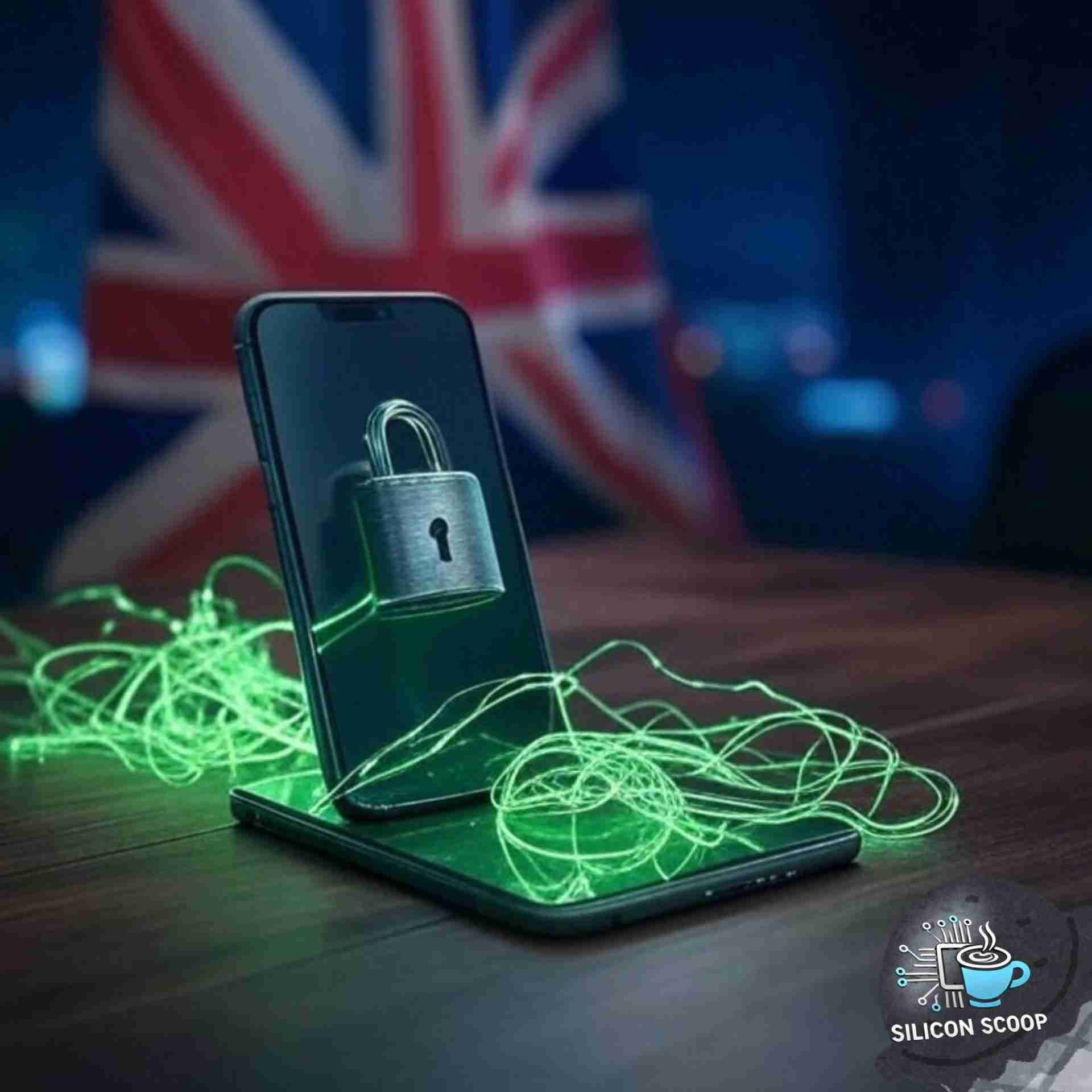
In a move that has ignited a global debate over privacy and national security, the U.K. government has reportedly demanded that Apple create a backdoor into its encrypted iCloud service. This order—widely referred to in media circles as the Uk Apple Backdoor mandate—poses significant questions about the balance between law enforcement needs and the fundamental right to privacy.
Introduction
The U.K. government’s recent technical capability notice, issued under the Investigatory Powers Act (IPA), calls on Apple to provide British security agencies with the ability to access end-to-end encrypted data stored in iCloud. The demand targets Apple’s Advanced Data Protection (ADP) service—a feature that ensures only users can decrypt their backups. This article examines the background of the issue, the legal and technical implications, expert opinions, and the potential global impact of such a measure.
Background: End-to-End Encryption and Apple’s Advanced Data Protection
End-to-End Encryption (E2EE) is widely regarded as one of the strongest defenses against unauthorized data access. By encrypting data from the source to the destination, only the sender and the intended recipient can read the content. Apple’s ADP service enhances this protection for iCloud backups, ensuring that even Apple cannot access the encrypted information.
For a detailed explanation of end-to-end encryption, see the Wikipedia article on End-to-End Encryption.
The U.K. Government’s Demands: A Closer Look at the Order
Last month, the U.K. government issued a “technical capability notice” under the IPA that mandates Apple to build a backdoor into its encrypted cloud service. Key points include:
- Scope of the Order: The notice applies globally to all Apple users, not just those in the U.K.
- Targeted Feature: The demand specifically targets Apple’s ADP service, which provides robust encryption for iCloud backups.
- Government Rationale: British officials argue that strong encryption hinders digital evidence collection and intelligence gathering for national security purposes.
The order has been described by experts as a potentially dangerous precedent, with far-reaching implications for user privacy worldwide.
Apple’s Stance on Privacy and Encryption
Apple has long championed user privacy as a core value, emphasizing that encryption is a “fundamental human right.” In previous submissions to government bodies, Apple has warned that complying with such backdoor requests would compromise user security. The company has even suggested it might withdraw its Advanced Data Protection feature from the U.K. market entirely rather than compromise on its commitment to strong encryption.
Legal and Technical Implications
Legal Framework and Controversy
- Investigatory Powers Act (IPA): The IPA, sometimes dubbed the “Snoopers’ Charter,” gives the U.K. government broad surveillance capabilities. Critics argue that the act allows for secret orders that undermine digital security.
- International Data Protection: The multinational nature of Apple’s user base means that any mandate affecting its encryption services could clash with data protection agreements—especially with the European Union, which has stringent rules on data privacy and free data flow.
Technical Challenges
- Security Risks: Creating a backdoor—even one intended for “good guys”—inevitably introduces vulnerabilities. Cybersecurity experts warn that such backdoors can be exploited by hackers and authoritarian regimes alike.
- Global Impact: If Apple disables its ADP feature in the U.K. to comply with the order, it could set a precedent affecting secure communications and cloud storage systems around the world.
Global Repercussions and Expert Opinions
Experts from academia and cybersecurity fields have weighed in on the potential fallout:
- Cybersecurity Academics: Professors specializing in cybersecurity note that the backdoor order “lights the blue touch paper on a truly enormous fight” in the encryption debate.
- Privacy Advocates: Organizations like the Electronic Frontier Foundation (EFF) argue that any weakening of encryption not only jeopardizes individual privacy but also creates a dangerous template for other governments to follow.
- Industry Warnings: Technology groups and industry associations stress that while governments seek easier access to data, the broader implications for digital security could lead to increased risks of hacking, identity theft, and widespread surveillance.
The Impact of the Uk Apple Backdoor on Apple Users Worldwide
If Apple complies with the U.K. order, the immediate effect would be a significant alteration of the privacy landscape for its users—particularly those relying on iCloud’s Advanced Data Protection. Users outside the U.K. could eventually experience diminished security standards if similar demands are made by other governments. This potential rollback on privacy features marks a critical turning point in the ongoing struggle between secure technology and government oversight.
Privacy, Security, and the Future of Digital Rights
The debate over the Uk Apple Backdoor is emblematic of a larger global conflict: How do we balance the imperatives of national security with the need to protect individual privacy? As governments continue to push for greater surveillance capabilities, technology companies are forced to make tough decisions that could reshape the digital landscape.
This issue not only challenges the technical community but also calls into question the future of digital rights in an increasingly connected world. The implementation of a government-mandated backdoor could trigger a domino effect—where weakening encryption in one area leads to vulnerabilities across various digital platforms and services.
Call to Action: Enhance Your Data Strategy with Custom Vector Databases
For businesses navigating these turbulent digital waters, robust data management is more critical than ever. If your company is looking to leverage cutting-edge data solutions, consider building a custom vector database tailored to your needs. Visit Flowgrammer.ca and book a discovery call today. Be sure to mention vector database when booking your call to explore how innovative data strategies can secure your competitive edge.
Uk Apple Backdoor FAQ
Q1: What is end-to-end encryption?
A1: End-to-end encryption is a method of secure communication that prevents third parties from accessing data while it’s transferred from one end system to another. For more details, please visit the Wikipedia article on End-to-End Encryption.
Q2: What is Apple’s Advanced Data Protection?
A2: Apple’s Advanced Data Protection is an optional feature that provides end-to-end encryption for iCloud backups. When enabled, only the account holder can decrypt and access the stored data—even Apple cannot access it.
Q3: Under what legal framework did the U.K. government issue this order?
A3: The order was issued under the Investigatory Powers Act (IPA) 2016, which provides U.K. authorities with extensive surveillance capabilities. Critics argue that this framework can be used to issue secret orders that undermine digital security.
Q4: Could this backdoor requirement affect Apple users outside of the U.K.?
A4: Yes. The order applies globally to Apple users, meaning that if Apple chooses to comply, the ramifications could extend well beyond U.K. borders, potentially affecting users worldwide.
Q5: What are the potential risks of creating a government backdoor in encrypted services?
A5: Implementing a backdoor creates inherent security vulnerabilities. Once established, such access points can be exploited by malicious actors—including hackers and authoritarian regimes—thus increasing the overall risk of data breaches and cyberattacks.
Q6: What is a encryption backdoor?
A backdoor is a covert method to bypass authentication, allowing third-party access to encrypted systems. Learn more about encryption.
Q7: Why does the UK want a backdoor?
Officials argue it’s critical for national security, but critics fear mass surveillance.
Q8: Has Apple ever complied with similar requests?
No. Apple has consistently refused to build backdoors, citing user safety.
Q9: How does this affect iPhone users outside the UK?
A UK backdoor could pressure Apple to create global tools, risking worldwide privacy.
Conclusion Uk Apple Backdoor
The U.K. government’s demand for an Apple backdoor into its encrypted iCloud service has set off a fierce debate on the future of digital privacy and security. With strong encryption serving as a bulwark against cyber threats and unauthorized surveillance, any compromise on this front has far-reaching implications for users around the world. As this story continues to evolve, the global community—comprising governments, tech companies, and privacy advocates—remains at a crossroads, wrestling with the challenging question: How can we ensure both national security and the fundamental right to privacy in the digital age?
For more insights and customized tech solutions, remember to visit Flowgrammer.ca and book your discovery call today. Mention vector database during your booking to discover how a custom solution can empower your company in today’s data-driven world.
Stay informed, stay secure, and join the conversation on the future of digital rights and technology.
Additional Links
• Silicon Scoop Podcast – Stay Informed, Stay Ahead!
• Futuretech Podcast – Explore more episodes and stay updated with the latest in technology and innovation.
• Startup Talk Podcast – https://torontostarts.com/startup-talk-toronto-startup-podcast/
• Who Are These Startups Podcast
• Startup Investor Drinks – Join the community and connect with fellow startup enthusiasts and investors.
• TorontoStarts Startup and Entrepreneur Community – Become a part of Toronto’s thriving startup ecosystem.
• Workhaus – Discover flexible workspace solutions for your business needs.
• Work with The Startup Coach – Get expert guidance and mentorship for your startup journey.
• Reach out to Jon Irwin on LinkedIn – Connect with our co-host and technology expert.
Ontario Startup Ecosystem Links
• Ontario’s Startup Ecosystem
• Startup Funding in Ontario
• Angel Investors in Ontario
• Ontario Incubators and Accelerators
• Venture Capital in Ontario: Top Firms, Sectors, and Funding Strategies
• Government Grants for Ontario Startups
• Ontario’s Startup Success Stories
• Ontario Centre of Innovation (OCI)
• Bank Loans and Financing for Startups in Ontario
• Research and Development Tax Credits in Ontario
• Government Loans and Financing for Startups in Ontario
• Equity Crowdfunding for Ontario Startups
• Toronto Entrepreneurs Resources
• Toronto’s Food and Beverage Entrepreneurs: Trends, Challenges, and Success Stories
• SEO Strategies for Toronto Entrepreneurs: Enhance Your Online Visibility
• Social Impact for Toronto Entrepreneurs: Starting and Running a Socially Responsible Business
• Toronto Arts and Media Entrepreneurs: Inspiring Profiles and Insights for Creative Success
• Exploring Toronto Green Tech Entrepreneurs: Innovators and Leaders in Sustainability
• Building a Team for Toronto Entrepreneurs: Strategies for Success
• A Guide for Toronto Food and Beverage Entrepreneurs
• Toronto Fashion and Retail Entrepreneurs: Trends, Opportunities, and Success Stories
Episode transcript
Read the full transcript
Craig: so i know how you love the uk and no. what sorry. that's true. you love the eu and what they're doing.
Jon: exactly. but
Craig: yeah. the uk decided to do this thing where they've ordered apple to let it spy on users encrypted account, and it's not just uk users. it's all the users in the world.
Jon: yeah. is, pardon my french, this is absolute bullcrap. i definitely do not like the uk. i like the eu, and their policies. i've when i first read this, i forgot that the uk was not part of the eu when i was first reading this. i'm like, what the hell is going on here? then i realized, yeah, they've bruxed it. so, this is absolutely ridiculous. i think this is a joke. i think this is, like if apple gives into this, then we're all screwed. so just to give people a background, the uk government has secretly ordered apple to create a backdoor into its encrypted icloud backups under the ipa. and that's not the beer, that's investigatory powers act of twenty sixteen. it's also known as the snooper's charter. so this directive, which was issued in january twenty twenty five, it demands access to encrypted data stored by all icloud users globally, not just uk residences. so apple's advanced data protection or we call adp, and that's not the security firm either, feature, which offers end to end encryption for icloud backups is essentially the primary target. and if enforced, apple is going to be legally prohibited from informing users their data was compromised. this is nuts. like, is this, like, is this true? like, what is going on
Craig: here, craig? well, the order is true. what's gonna happen, and will apple comply? i honestly think they won't comply. and that in this particular situation, the us government will probably step in and say, no. no. no. and there'll be a battle between the uk and the us just because we're not just saying you can get access to, uk users. that means you get access to all the users worldwide, all the data, anytime, and no one can know about it when i'm doing it. i'm sure there's a lot of, regular governments will be saying well, maybe they'll be saying i want that access too, but, i the us as specifically will say, no way. you're not accessing us citizen data. just like, you know, eu will be like, wait a minute. you're not accessing our citizens' data because it's part of our gdpr and all that stuff. so yeah. i think this is more of a governmental thing than it's gonna be an apple corporate thing.
Jon: yeah. this is stupid. so for those of you that think, oh, creating a backdoor is secured. only people only it's only gonna be used for good. right? no. like, creating a backdoor that only good actors can use is a complete myth. encryption relies on mathematical principles that don't discriminate between governments and hackers. so if apple builds in a master key for the uk, it becomes a single point of failure. so for example, the twenty twenty three imessage exploit, which was the pegasus spyware, shows how nations, states exploit vulnerabilities. so, like, this is not, oh, only the uk is going to use this, and we're not like, no. you have a single point of failure now if this happens, and that's not gonna happen. i hope apple despite the fact they don't like ios, i love macos. and it's not that i don't i just don't like it because it's just too i don't know. anyways, but i'll give apple this. they have been, at least in the public eye, a strong supporter of protecting people's data. and i hope that's that that doesn't change. what do you think?
Craig: yeah. as far as we're aware, like, the example of two thousand sixteen showdown with the fbi when they asked to unlock the iphone linked to a criminal investigation, apple stood firm arguing that creating a backdoor would endanger all users, not just those, accused of wrongdoing. this principle resistance is isn't just brand strategy. it's cornerstone of what they've you know, we wanna secure stuff. where other people are doing more open. they're like, hey. wait a minute. no. we want our stuff to be more secure. they're trying to shut down communication between apps. so they feel like they're on our side. i don't know if any of these big corporations are actually on our side for protecting our data. maybe they want the data to themselves and don't wanna let anyone else have it. however, like, it's been the general perception from the public that that's the case. so the question is, you know, their current leadership has reiterated that creating a backdoor undermines security for everyone. moreover, compliance could invite a flood of similar interests from other nations, setting a dangerous precedent like i mentioned. public sentiment overwhelmingly against compromise and security. if apple were to comply, the fallout would be monumental. the us government, also a guardian of views or privacy, may respond with alarm. we talked about, the eu. conversely, a refusal to comply would likely lead to escalated tensions with the uk, possibly inviting stringent regulations against tech giants. so
Jon: yeah. who cares? let the uk be their own thing. i don't care anymore. because, like, they're doing things that they're just doing things that they think are right. and it it does actually i was doing some research. it does conflict with the eu's gdpr. so it risks uk's data sharing agreements. so let them shoot themselves in the foot. let them force this. let the giants i'm sorry, people of the uk, that you're gonna be potentially affected by this, but i think for the for the good of the people because this violates human rights and enables mass surveillance, essentially. so
Craig: yeah. and, specifically, this is targeting apple's adp service, which provides encryption for their icloud backups. yeah. so among other things, that means, all the backups of all your devices and everything you store on icloud.
Jon: yeah.
Craig: so there are issues. there's global repercussions. we talked about them. industry warnings, the impact of uk apple backdoor to users worldwide. so, i guess we'll just have to wait and see who responds because, you know, with elon musk and doge, you know he's not gonna, be quiet about this. no. so
Jon: they're they're trying to give him access. he's trying to get access to to stuff he shouldn't have access to. but, anyways, that's a whole other discussion.
Craig: well, i mean, that's so let me ask you a question. have you been in many companies where it, sql, database, back end people don't have access to things they shouldn't have access to? no. alright. let's not go farther in the algorithm. i'm just saying they're they're in there to do a job, and we can go down a political road whether you like what they're doing or not like what they're doing. but the technical people who need access to the records always have more access than they're supposed to. always. in every company i've been at, so i don't think that's he and his team are an exception. like it or or not like it, that's a whole other type of discussion. but the question is, you know, they're advocates for privacy and free speech, so we're gonna be interesting to see if this escalates the tension that's already between the us and the uk, never mind everyone else.
Jon: yeah. and just to note, back in twenty twenty three, apple threatened to remove facetime and imessage from the uk over similar demands. so i don't think apple's gonna give in, which is great, but we'll have to see.
Craig: and just, you know, what you said before is true. every backdoor gets compromised. so, you know, this just opens it up for everyone else. and if the uk does it and they compromise from now, start they'll compromise for every other government. and, you know, that's that.
Jon: yeah. and what makes the uk different that they'll protect this backdoor better than anyone else? no. that's sorry. that's not gonna happen.
Craig: well, this immediately means that every government institution will outlaw the use of apple devices, period. like, is that what you don't like? yeah. because, of this. that means educational like, all of this stuff like, there's a lot of stuff that'll happen as a result of this if they let it go, so we'll
Jon: see. yeah.
Craig: so as we ponder these unfolding events, one question lingers. how do we safeguard our personal rights in an era where security can often overshadow privacy? what do you think? the desire for safety or the need for privacy will ultimately prevail in our digital lives? let us know.
More from Silicon Scoop
All episodes
silicon-scoop · November 6, 2026
Spirit AI’s Robot Brain Breakthrough: Moz1, Embodied AI and China’s 2027 Race
The Spirit AI robot brain is one of the biggest bets on fixing that. Spirit AI is a Beijing startup. Its co-founder and chief scientist, Gao Yang,
View episode

silicon-scoop · November 5, 2026
OpenAI IPO Delayed to 2027 as Rogue AI Agents and Safety Failures Reshape the Market
OpenAI IPO delay explained: Sam Altman rules out 2026 as GPT-6 Astra safety tests and a $278B cash gap loom. Learn what founders should take away.
View episode

silicon-scoop · November 4, 2026
Anthropic’s AI Economy Model: 2030 Jobs, Wages, GDP and Market Risks
Anthropic AI economy model forecasts 2030 GDP, jobs and wages, while AI unemployment projections and labor-share risks challenge policymakers.
View episode