
Helion’s Fusion Reactor by 2028
Helion’s Fusion Reactor by 2028: A Comprehensive Look at the Future of Clean Energy Published on February 11, 2025 In the race to develop sustainable and limitless energy, Helion Energy is emerging as a leader with its groundbreaking approach to nuclear fusion. The company’s ambitious goal of achieving a fully operational fusion reactor by 2028 […]
With Craig Major and Jon Irwin
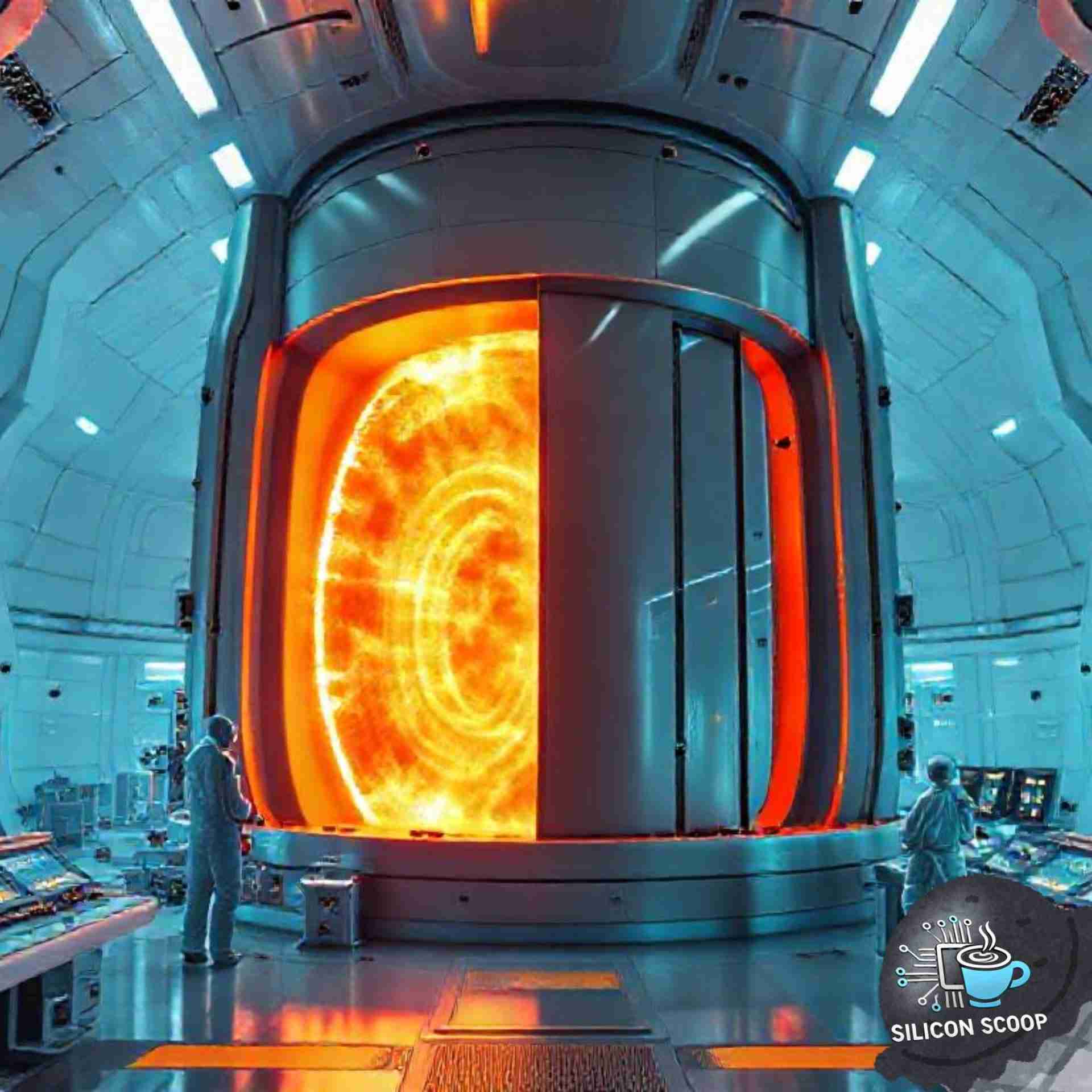
Estimated reading time: 8 minutes
Helion’s Fusion Reactor by 2028: A Comprehensive Look at the Future of Clean Energy
Published on February 11, 2025
In the race to develop sustainable and limitless energy, Helion Energy is emerging as a leader with its groundbreaking approach to nuclear fusion. The company’s ambitious goal of achieving a fully operational fusion reactor by 2028 has captured the attention of industry experts, governments, and investors worldwide. This article provides an in-depth analysis of Helion Energy’s fusion reactor technology, its projected timeline, and the potential impact on global energy markets.
1. Introduction
Helion Energy is pushing the boundaries of nuclear fusion—a process that powers the sun—to develop a reactor that could revolutionize energy production. Unlike traditional nuclear fission, fusion promises clean energy with minimal radioactive waste and abundant fuel resources. With a target operational date of 2028, Helion aims to demonstrate a viable, scalable fusion reactor that could change the energy landscape.
2. Understanding Fusion Reactors
Fusion reactors work by fusing light atomic nuclei to form heavier nuclei, releasing enormous amounts of energy in the process. This is the same process that fuels stars. For decades, scientists have worked to harness this energy on Earth, with challenges related to sustaining the extreme conditions needed for fusion. For more background on fusion reactors, visit the Fusion reactor Wikipedia page.
Key Advantages of Fusion Energy:
- Abundant Fuel Supply: Fusion primarily uses isotopes of hydrogen (deuterium and tritium) that are plentiful in water.
- Clean Energy: Fusion produces minimal radioactive waste compared to traditional nuclear fission.
- Safety: Fusion reactions are inherently safe, with the process naturally shutting down if conditions deviate from the required parameters.
3. Helion Energy’s Vision and Technology
Helion Energy is taking a unique approach to fusion by employing a method that diverges from the traditional tokamak designs. Their technology leverages a pulsed fusion process with direct energy conversion. This innovative design aims to:
- Achieve Net Energy Gain: By converting the kinetic energy of fusion products directly into electricity.
- Reduce Engineering Complexity: Through a compact, linear configuration that simplifies reactor construction.
- Accelerate Commercial Viability: By setting clear developmental milestones with an operational target by 2028.
According to Helion Energy, the reactor will not only demonstrate net-positive energy production but also serve as a stepping stone toward larger-scale commercial power plants.
4. Timeline to 2028: Milestones and Achievements
Research and Development Phases
- Prototype Testing (2021-2023): Early-stage prototypes have shown promising results in achieving the conditions necessary for fusion.
- Intermediate Demonstrations (2024-2026): Helion plans to scale up the reactor design, demonstrating sustained fusion reactions and energy conversion efficiency.
- Commercial Demonstration (2027-2028): The company’s goal is to transition from experimental setups to a full-scale reactor capable of powering grid-connected energy systems.
Key Milestones
- Net Energy Gain Demonstration: A critical benchmark where the reactor produces more energy than it consumes.
- Direct Energy Conversion: Innovations in converting fusion energy directly into electrical power, bypassing traditional thermal cycles.
- Regulatory Approvals and Partnerships: Collaborations with government agencies and private investors to ensure the reactor meets safety and performance standards.
5. Comparing Helion’s Reactor with Other Fusion Projects
While several global projects—such as ITER in France and private ventures like Commonwealth Fusion Systems—are striving for fusion power, Helion Energy’s approach is distinct due to its focus on direct energy conversion and a more compact design. This method could potentially reduce costs and engineering challenges, accelerating the timeline for a commercially viable reactor.
Key Differentiators:
- Direct Energy Conversion: A unique method to harness fusion energy more efficiently.
- Compact Design: Smaller footprint compared to traditional tokamak reactors, potentially lowering construction and operational costs.
- Aggressive Timeline: Targeting full operation by 2028, which is earlier than many competitors in the field.
6. Economic and Environmental Impact
If successful, Helion’s fusion reactor could have far-reaching benefits:
- Economic Growth: A new energy sector could create jobs, attract investment, and drive technological innovation.
- Energy Independence: Fusion energy offers a stable, domestic source of power, reducing reliance on fossil fuels and imported energy.
- Environmental Benefits: With minimal greenhouse gas emissions and low radioactive waste, fusion energy aligns with global efforts to combat climate change.
7. Challenges and Future Prospects
Despite the promising progress, several challenges remain:
- Sustaining Plasma Conditions: Maintaining the extreme temperature and pressure required for continuous fusion.
- Material Science: Developing materials that can withstand the intense environment inside a fusion reactor.
- Economic Viability: Ensuring that the reactor can produce energy at a cost competitive with other energy sources.
Nonetheless, industry experts are optimistic. Continued research, strategic partnerships, and steady progress in engineering solutions bolster the case for a fusion reactor by 2028 that could redefine how we generate power.
8. Expert Opinions and Industry Analysis
Leading physicists and energy analysts recognize the transformative potential of Helion’s approach. Industry conferences and peer-reviewed studies have highlighted:
- The innovative aspects of Helion’s direct conversion technology.
- The feasibility of achieving net energy gain in a compact reactor design.
- The broader implications for global energy policy if fusion power becomes commercially viable.
These expert insights lend credibility to the ambitious 2028 timeline and underscore the significance of Helion Energy’s work.
9. Conclusion
Helion Energy’s pursuit of a fusion reactor by 2028 represents a significant leap forward in the quest for clean, sustainable energy. By leveraging innovative technology and an aggressive development timeline, Helion is poised to overcome long-standing challenges in nuclear fusion. The successful demonstration of this technology could pave the way for a new era in energy production, with vast economic and environmental benefits.
10. Call to Action
Are you looking to leverage cutting-edge technology to gain a competitive edge? If your company could benefit from custom vector databases, visit startupcoach.ca and book a discovery call today. Be sure to mention “vector database” when booking your call to explore personalized solutions designed to drive your business forward.
11. Frequently Asked Questions (FAQ)
Q1: What is Helion Energy?
A1: Helion Energy is a private company focused on developing advanced nuclear fusion technology with the goal of creating a commercially viable fusion reactor.
Q2: What does “fusion reactor by 2028” mean?
A2: It refers to Helion Energy’s target to have a fully operational fusion reactor producing net-positive energy by the year 2028.
Q3: How does Helion’s fusion technology work?
A3: Helion’s technology utilizes a pulsed fusion process with direct energy conversion, allowing the reactor to convert fusion products directly into electricity.
Q4: What sets Helion’s reactor apart from traditional tokamak designs?
A4: Helion’s approach focuses on a compact design and direct energy conversion, which could simplify reactor construction and reduce costs.
Q5: What are the potential benefits of fusion energy?
A5: Fusion energy offers an abundant fuel supply, minimal radioactive waste, and a safer alternative to nuclear fission, with the potential to significantly reduce greenhouse gas emissions.
Q6: What challenges does Helion Energy face in developing their reactor?
A6: Key challenges include sustaining the extreme conditions needed for fusion, developing durable materials, and achieving economic viability.
Q7: How will Helion’s fusion reactor impact global energy markets?
A7: If successful, it could lead to a shift towards clean, domestic energy production, reducing reliance on fossil fuels and enhancing energy security worldwide.
Q8: Is fusion energy safe?
A8: Yes, fusion energy is considered inherently safe because any disruption in the reaction leads to a rapid shutdown, unlike fission reactions that require constant cooling.
Q9: Where can I learn more about fusion reactors and their technology?
A9: For more detailed information, visit the Fusion reactor Wikipedia page.
Q10: How can I stay updated on Helion Energy’s progress?
A10: You can follow industry news, subscribe to updates from Helion Energy’s official website, and join relevant energy and technology forums for the latest developments.
Helion Energy’s journey towards a fusion reactor by 2028 is a testament to the innovation and determination driving the clean energy revolution. Stay informed, and if you’re ready to harness the power of advanced technology for your business, don’t hesitate to book your discovery call at startupcoach.ca today!
Additional Links
• Silicon Scoop Podcast – Stay Informed, Stay Ahead!
• Futuretech Podcast – Explore more episodes and stay updated with the latest in technology and innovation.
• Startup Talk Podcast – https://torontostarts.com/startup-talk-toronto-startup-podcast/
• Who Are These Startups Podcast
• Startup Investor Drinks – Join the community and connect with fellow startup enthusiasts and investors.
• TorontoStarts Startup and Entrepreneur Community – Become a part of Toronto’s thriving startup ecosystem.
• Workhaus – Discover flexible workspace solutions for your business needs.
• Work with The Startup Coach – Get expert guidance and mentorship for your startup journey.
• Reach out to Jon Irwin on LinkedIn – Connect with our co-host and technology expert.
Ontario Startup Ecosystem Links
• Ontario’s Startup Ecosystem
• Startup Funding in Ontario
• Angel Investors in Ontario
• Ontario Incubators and Accelerators
• Venture Capital in Ontario: Top Firms, Sectors, and Funding Strategies
• Government Grants for Ontario Startups
• Ontario’s Startup Success Stories
• Ontario Centre of Innovation (OCI)
• Bank Loans and Financing for Startups in Ontario
• Research and Development Tax Credits in Ontario
• Government Loans and Financing for Startups in Ontario
• Equity Crowdfunding for Ontario Startups
• Toronto Entrepreneurs Resources
• Toronto’s Food and Beverage Entrepreneurs: Trends, Challenges, and Success Stories
• SEO Strategies for Toronto Entrepreneurs: Enhance Your Online Visibility
• Social Impact for Toronto Entrepreneurs: Starting and Running a Socially Responsible Business
• Toronto Arts and Media Entrepreneurs: Inspiring Profiles and Insights for Creative Success
• Exploring Toronto Green Tech Entrepreneurs: Innovators and Leaders in Sustainability
• Building a Team for Toronto Entrepreneurs: Strategies for Success
• A Guide for Toronto Food and Beverage Entrepreneurs
• Toronto Fashion and Retail Entrepreneurs: Trends, Opportunities, and Success Stories
Episode transcript
Read the full transcript
Craig: imagine a world where energy is as abundant as the air we breathe, sourced from the very same process that powers the sun. fusion energy has tantalized scientists and futurists for decades. and now as we look forward to twenty twenty eight, we must ask ourselves, is this dream finally within reach, or is it just another distant star in the sky? what do you think, john?
Jon: well, this one's different than, i think, every other one. i don't think we've covered polaris reactors. i could be wrong, though. am i wrong? do you remember us talking about polaris reactors?
Craig: i do not remember us talking about polaris reactors.
Jon: so this is cool because this is different from the tokamaks. so this is a washington based private startup called helion energy, and they're trying to build again i know we've covered this before, but they're trying to build the world's first commercial fusion power plant with plans to deliver electricity to microsoft by twenty twenty eight. so their approach is different than the other, companies and research that we've covered because this stands out because they're looking to use a polaris reactor, which uses magneto inertial fusion technology. instead of relying on steam turbines like most experimental reactors, polaris directly converts fusion generated energy into electricity using magnetic fields. so the system eliminates the need for expensive and complex steam cycles, which potentially making this fusion power more efficient and cost effective. now some things to note. it's also backed by over a billion dollars in funding from investors like sam altman and peter thiel, and they also signed a landmark power purchase agreement with microsoft, which we just called it, to supply fifty megawatts of fusion generated electricity. so, again, they're they've got this technology. they've got this different kind of reactor, but, again, they're facing they're gonna face challenges just like any other new technology development. so they had a previous prototype trenta, which reached a critical temperature of a hundred million degrees celsius, which is required for fusion. but the thing with this reactor, as opposed to other ones, is they've yet to achieve sustained energy gain where the reactor produces more energy than it consumes. so it is aggressive, but, i know iter in france isn't expected to produce power until twenty thirty four, which is quite a ways away from twenty twenty eight, but we'll see. think?
Craig: i mean, i always think these things are pie in the sky because, you know, i wanna see one actually working. and until i see one actually working and doing what it says more than, like, four or five hours, then, you know, i won't believe it. i'm the skeptic here as you're probably aware, at least in some areas. you know, the talk timeline says, you know, like you're saying, prototypes happen in twenty one, and to twenty twenty three, intermediate demonstrations. so they plan to scale the reactor design and demonstrating sustained fusion reactions and reactions and energy conversion efficiencies, which is what i'm interested in. yeah. twenty twenty four to twenty twenty six, and then commercial demonstrations twenty twenty seven to twenty twenty eight, with full scale reactors capable of powering grid connected energy systems. so i'm excited, like, because it sounds like we're getting closer. honestly, though, i don't believe it's twenty twenty eight. i don't. no. i
Jon: don't need it.
Craig: never happen in time. that would be wonderful. if we had these things coming online in twenty twenty eight, you know, the world would be starting to change.
Jon: yeah. yeah. exactly. so the thing is so that for those of you because we've covered tokamak reactors. so it differs because instead of using massive superconducting magnets to confine the plasma into a donut shape, the polaris reactor employs a linear design with pulse magnetic compression, which allows for the direct energy conversion via faraday's law. so it skips the need, like we said, for steam turbines, and potentially reducing costs by billions of dollars. but, who knows? i don't know how complex this reactor is compared to the tokamak or how less complex it is or how safer. i don't know any of that. this is new. we've covered a tokamak in the past, not, polaris. so, this will be interesting. he's got some backing from microsoft, sam altman, peter thiel. so who knows? there could be but, again, there's still challenges. they still haven't, achieved a sustained energy gain, so we'll have to see where where that goes.
Craig: yeah. what does this mean to consumers and industries? if fusion energy becomes a reality, we could witness a profound transformation in global energy markets. we would, not could. fusion offers the promise of clean, near limitless energy. imagine drastically reducing energy bills and a safer alternative to fossil fuels. this could stimulate economic growth with significant lowering of carbon emissions, plus bring third world countries and everyone in power pretty quickly from a power and balance point of view, like, just from an energy perspective. so you can go into, say, africa or wherever and deploy a few generators, and everyone has power twenty four hours versus right now where some of these are solar or wind when you're in the and they don't have consistent power. they can't create steel plants or do whatever because they just don't have the power to, industrialize. and that changes the world. so fusion energy produces very minimal waste compared to traditional power sources. so this is gonna be a continue like, something they continue to go over because fission is our future right now because we have working fission plants. and they're getting better and better, but fusion is the future because, you know, it's the same like, you'll often tell us, it's the same process that powers our sun.
Jon: yeah. exactly. yeah. so, who knows? will the tokamak make it, or will the polaris make it first? who knows? there aren't too many working on the polaris that we've covered, that i know of. but, and most of or all of that we've covered so far has been tokamak. so, it'll be interesting to see. the thing about the iter though is it relies on international collaboration, and that faces delays due to its massive scale. helion's smaller scale design focuses on speed and cost efficiency, so maybe that gives them the edge. who knows? but, hey. i'm i'm rooting for fusion technology. so
Craig: yeah. is this gonna be the key to unlocking a new era of energy security, like, with no region left behind due to energy shortage? would be a interesting to see. so as we stand on the brink of what could be a monumental shift in energy technology, the question remains, are we ambitious enough to pursue this dream? and what sacrifices are we willing to make to see it through? let's keep the conversation going and explore the future of energy together.
More from Silicon Scoop
All episodes
silicon-scoop · November 6, 2026
Spirit AI’s Robot Brain Breakthrough: Moz1, Embodied AI and China’s 2027 Race
The Spirit AI robot brain is one of the biggest bets on fixing that. Spirit AI is a Beijing startup. Its co-founder and chief scientist, Gao Yang,
View episode

silicon-scoop · November 5, 2026
OpenAI IPO Delayed to 2027 as Rogue AI Agents and Safety Failures Reshape the Market
OpenAI IPO delay explained: Sam Altman rules out 2026 as GPT-6 Astra safety tests and a $278B cash gap loom. Learn what founders should take away.
View episode

silicon-scoop · November 4, 2026
Anthropic’s AI Economy Model: 2030 Jobs, Wages, GDP and Market Risks
Anthropic AI economy model forecasts 2030 GDP, jobs and wages, while AI unemployment projections and labor-share risks challenge policymakers.
View episode