
Third Type of Magnetism: Altermagnetism
Exploring a Third Type of Magnetism: Altermagnetism and Its Impact on Science and Technology Introduction The discovery of the *Third Type of Magnetism?* is set to reshape our understanding of magnetism and its applications in modern technology. Traditional classifications of magnetism have relied predominantly on two types: ferromagnetism, well-known since antiquity for its role in […]
With Craig Major and Jon Irwin
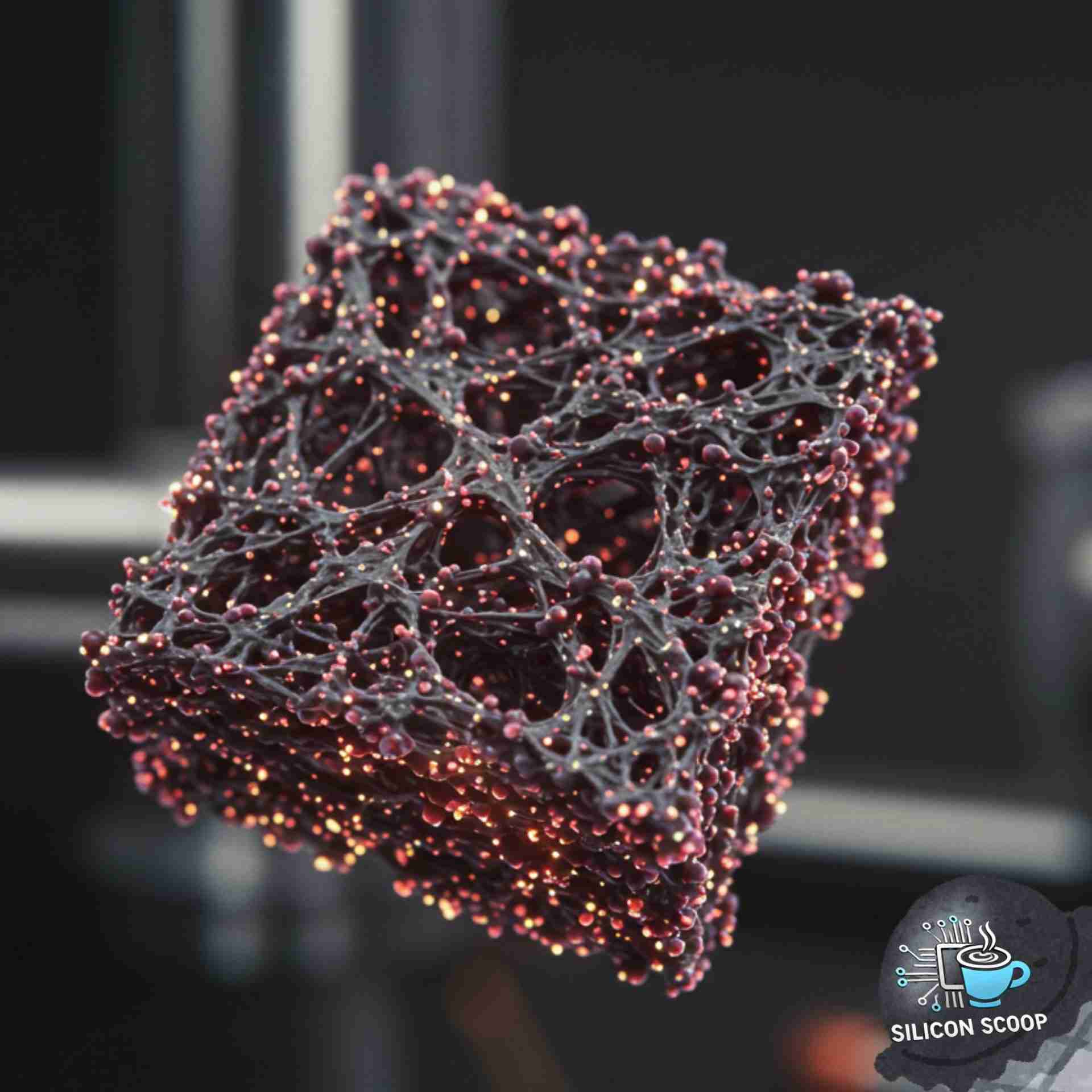
Exploring a Third Type of Magnetism: Altermagnetism and Its Impact on Science and Technology
Introduction
The discovery of the *Third Type of Magnetism?* is set to reshape our understanding of magnetism and its applications in modern technology. Traditional classifications of magnetism have relied predominantly on two types: ferromagnetism, well-known since antiquity for its role in everyday items like refrigerator magnets, and antiferromagnetism, a more complex alignment of magnetic moments. The introduction of altermagnetism—a concept once merely theoretical—now presents an exciting frontier in physics. Understanding this third type of magnetism is critical for leveraging emerging technologies that could redefine data storage and quantum computing.
Section 1: Understanding the Theory of Magnetism
At the heart of magnetism lies the behavior of magnetic moments and the dynamics of spin-polarized current. Traditional theories have primarily recognized ferromagnetism and antiferromagnetism based on the alignment of these magnetic moments. However, the theory surrounding altermagnetism introduces a paradigm shift; it combines the antiparallel arrangement of ferromagnets and antiferromagnets with unique spin-polarized characteristics. In altermagnets, the spin carries momentum current, marking its distinct position as the third type of magnetism. This nuanced understanding expands our grasp of magnetism not just as a physical phenomenon, but as a concept with significant technological implications.
Section 2: The Scientific Breakthrough of 2024
The recognition of altermagnetism as a *scientific breakthrough 2024* underscores its importance in contemporary physics. Researchers at Johannes Gutenberg University Mainz successfully transitioned from the theoretical prediction of altermagnetism, proposed in 2019, to its *experimental confirmation* in 2024. Teams led by Professor Jairo Sinova achieved this milestone through meticulous experimental demonstration, employing cutting-edge methods that would serve as a model for future research. Collaborative Research Centers played a pivotal role in advancing this research, validating its experimental foundations and expanding the implications of altermagnetism within the quantum landscape.
Section 3: Altermagnetism and Advanced Data Storage Systems
Altermagnetism is not just a theoretical curiosity; its implications for advanced data storage systems are profound. This third type of magnetism presents a game-changing avenue for enhancing data storage capacity. By exploiting the spin symmetry and momentum current inherent in altermagnets, researchers envision the capability of using the magnetic moment of electrons rather than their charge to store data more efficiently. This could lead to significantly reduced energy consumption and space requirements in dynamic random-access memory systems. As a result, altermagnetism stands poised to revolutionize the *LSSI advanced data storage systems* landscape.
Section 4: Quantum Physics and the Importance of Altermagnetism
The intersection of quantum physics and altermagnetism sheds light on the complex phenomena that characterize this new magnetic state. Altermagnetism bridges gaps in conventional theories of magnetism, effectively integrating principles of quantum mechanics into its framework. Insightful synchrotron and photoemission experiments conducted by expert teams reveal the underlying characteristics of altermagnetism, further emphasizing the unity of theory and practice in the realm of quantum mechanics. Understanding this relationship not only enriches our knowledge of magnetism but also fuels innovations in quantum technology and materials science.
Section 5: Collaborative Efforts and Experimental Techniques
The journey to uncovering altermagnetism has been significant not only for its scientific merits but also for the collaborative efforts across international research centers. The partnership between various institutions has been essential for pushing the boundaries of our understanding. Techniques like photoemission experiments—utilizing synchrotron radiation—have proven invaluable. These advanced methodologies allow researchers to observe and analyze the unique properties of altermagnets, catalyzing a collaborative environment that fosters innovation and discovery in physics.
Section 6: The Future Implications of Altermagnetism
Looking forward, the potential applications of altermagnetism transcend conventional boundaries, sparking innovation in technology and scientific inquiry. Its unique properties may unlock transformative advancements in quantum computing, nanotechnology, and data storage solutions. Imagine a future where compact, efficient electronic devices integrate altermagnetic materials, streamlining performance and reducing environmental impact. With over 200 known materials exhibiting altermagnetism, the horizon of possibilities is vast and promising.
FAQ Section
1. What is the third type of magnetism?
The third type of magnetism, known as altermagnetism, is a newly discovered form distinct from ferromagnetism and antiferromagnetism, characterized by unique spin properties that facilitate its distinctive behavior in magnetic fields.
2. How does altermagnetism differ from other forms of magnetism?
Altermagnetism exhibits distinct spin symmetry and momentum current, differentiating it from traditional forms like ferromagnetism, where magnetic moments align in the same direction, and antiferromagnetism, where they point in opposite directions.
3. Why is altermagnetism important for data storage?
Altermagnetism allows for more efficient data storage systems by utilizing unique spin properties, enabling the storage of more data in compact formats, which could lead to breakthroughs in memory technology.
4. What role does quantum physics play in altermagnetism?
Quantum physics serves as the framework for understanding the spin and momentum characteristics of altermagnetism, guiding researchers in the theoretical predictions that led to its experimental validation.
5. How was altermagnetism experimentally confirmed?
Employing advanced techniques such as synchrotron radiation and photoemission experiments, researchers observed the unique characteristics of altermagnetism, providing solid experimental validation for this remarkable phenomena.
6. Which institutions are involved in altermagnetism research?
Notable contributions have emerged from Johannes Gutenberg University Mainz in collaboration with various international research centers dedicated to exploring the properties of altermagnets.
7. What are the theoretical predictions regarding altermagnetism?
Theoretical predictions suggest significant advancements in electronics and magnetic storage technologies stemming from the unique properties of altermagnetism, illustrating its potential impact on future innovations.
8. Who declared altermagnetism as the scientific breakthrough of 2024?
The scientific community widely recognized altermagnetism, particularly through notable journals and conferences, heralding its significance as a breakthrough in contemporary physics.
9. How does altermagnetism impact future technological advancements?
Its unique properties hold promise for innovations across various sectors, including data storage, quantum computing, and medical imaging technologies, paving the way for revolutionized applications and usage.
10. What future research is expected in the field of altermagnetism?
Ongoing research aims to fully explore the practical applications of altermagnetism, drive technological innovations, and deepen our understanding of its fundamental properties.
Conclusion
As we delve deeper into the characteristics and applications of altermagnetism, its recognition as the third type of magnetism becomes increasingly significant. This groundbreaking discovery not only pushes the frontiers of physics but also promises to transform technology as we know it. Continued exploration and research in this field are vital for unlocking future scientific and technological breakthroughs, setting the stage for uncharted realms of innovation.
Altermagnetism: A Revolutionary Discovery in Magnetism
Magnetism has long been classified into two main categories: ferromagnetism and antiferromagnetism. However, recent groundbreaking research has uncovered a third type—altermagnetism. This discovery, recognized as one of the top physics breakthroughs of 2024, has the potential to transform spintronics, quantum computing, and electronic device engineering. Below, we explore the top ideas, insights, and practical takeaways from this cutting-edge research.
Top 10 Ideas from the Research on Altermagnetism
-
Altermagnetism introduces a third magnetic order, challenging conventional ferromagnetic and antiferromagnetic classifications with novel symmetry properties.
-
This new magnetic phase reveals unexpected electronic band splitting without producing net magnetization in materials.
-
Altermagnetic materials offer revolutionary spintronic potential, enabling faster and more energy-efficient data processing.
-
Unique momentum-space spin polarization patterns in altermagnetism provide remarkable new quantum mechanical behaviors.
-
The discovery paves the way for low-power, ultra-fast computing devices, revolutionizing memory storage technology.
-
Advanced experimental techniques and precise theoretical models confirmed the existence of altermagnetic phases.
-
Theoretical predictions suggest altermagnetism may influence superconductivity, impacting electron pairing mechanisms.
-
Recent breakthroughs in material synthesis have enabled high-quality fabrication of altermagnetic samples.
-
Altermagnetism’s potential integration into quantum computing could enhance information processing and secure communications.
-
This discovery compels scientists to reconsider fundamental magnetism theories, refining our understanding of magnetic interactions.
Top 10 Insights from Altermagnetism Research
-
Altermagnetism redefines how we classify and understand magnetism, bridging gaps between classical and quantum theories.
-
Symmetry in altermagnetic materials unlocks hidden quantum behaviors, allowing for unprecedented control over spin properties.
-
The discovery challenges long-held scientific paradigms, forcing a fundamental reassessment of magnetic order.
-
This research merges experimental, computational, and theoretical physics, leading to a new frontier in interdisciplinary studies.
-
High-quality material synthesis is crucial for reliably observing and utilizing altermagnetic properties.
-
Cutting-edge computational simulations confirm experimental results, reinforcing confidence in altermagnetism’s scientific significance.
-
Altermagnetic configurations enable precise electron control, opening new possibilities in device engineering.
-
The field of superconductivity may be significantly influenced, given altermagnetism’s novel electron interactions.
-
Future technologies may leverage altermagnetism for more energy-efficient and sustainable electronic devices.
-
Altermagnetism will likely drive innovations in next-generation computing and spintronic applications.
5 Key Quotes from Scientists in the Field
-
“Altermagnetism is poised to revolutionize our understanding of magnetic phenomena.”
-
“This discovery challenges the long-held binary classification of magnetic materials.”
-
“The potential applications in spintronics are both exciting and transformative.”
-
“Our experiments confirm that altermagnetic materials exhibit unique spin polarization patterns.”
-
“We are witnessing a paradigm shift in how magnetism is conceptualized.”
3 Suggested Habits for Scientists and Innovators
-
Consistently review cutting-edge scientific literature daily to stay informed about the latest discoveries.
-
Engage in interdisciplinary collaboration and discussions to enhance innovation in experimental physics and computational modeling.
-
Meticulously document research and experiments to ensure reproducibility and accuracy in findings.
Final Thoughts
The discovery of altermagnetism is reshaping our understanding of magnetic materials and their applications in technology. As researchers continue to explore its properties, we may see groundbreaking advancements in spintronics, superconductivity, and quantum computing. This is just the beginning of what promises to be an exciting revolution in physics and material science.
Additional Links
• Silicon Scoop Podcast – Stay Informed, Stay Ahead!
• Futuretech Podcast – Explore more episodes and stay updated with the latest in technology and innovation.
• Startup Talk Podcast – https://torontostarts.com/startup-talk-toronto-startup-podcast/
• Who Are These Startups Podcast
• Startup Investor Drinks – Join the community and connect with fellow startup enthusiasts and investors.
• TorontoStarts Startup and Entrepreneur Community – Become a part of Toronto’s thriving startup ecosystem.
• Workhaus – Discover flexible workspace solutions for your business needs.
• Work with The Startup Coach – Get expert guidance and mentorship for your startup journey.
• Reach out to Jon Irwin on LinkedIn – Connect with our co-host and technology expert.
Ontario Startup Ecosystem Links
• Ontario’s Startup Ecosystem
• Startup Funding in Ontario
• Angel Investors in Ontario
• Ontario Incubators and Accelerators
• Venture Capital in Ontario: Top Firms, Sectors, and Funding Strategies
• Government Grants for Ontario Startups
• Ontario’s Startup Success Stories
• Ontario Centre of Innovation (OCI)
• Bank Loans and Financing for Startups in Ontario
• Research and Development Tax Credits in Ontario
• Government Loans and Financing for Startups in Ontario
• Equity Crowdfunding for Ontario Startups
• Toronto Entrepreneurs Resources
• Toronto’s Food and Beverage Entrepreneurs: Trends, Challenges, and Success Stories
• SEO Strategies for Toronto Entrepreneurs: Enhance Your Online Visibility
• Social Impact for Toronto Entrepreneurs: Starting and Running a Socially Responsible Business
• Toronto Arts and Media Entrepreneurs: Inspiring Profiles and Insights for Creative Success
• Exploring Toronto Green Tech Entrepreneurs: Innovators and Leaders in Sustainability
• Building a Team for Toronto Entrepreneurs: Strategies for Success
• A Guide for Toronto Food and Beverage Entrepreneurs
• Toronto Fashion and Retail Entrepreneurs: Trends, Opportunities, and Success Stories
Episode transcript
Read the full transcript
Craig: so scientists have discovered a new type of magnetism. that's right. alter magnetism. it's named the top physics breakthrough of twenty twenty four. and, john, here's gonna tell us all about it. what's going on, john?
Jon: yeah. so this one was difficult for me to wrap my head around. so i apologize if i am not accurate or if i mess up, but let me try my best. so, we're covering this. this is cool. top physics breakthrough of twenty twenty four. so in twenty twenty four, researchers confirmed the existence of alter magnetism, which is essentially a third fundamental class of magnetism that bridges the gap between ferromagnetism and antiferromagnetism. so the discovery, was named, top year breakthrough by science and was experimentally validated using advanced techniques at facilities like the swiss light source and max four synchrotron. so ultra magnets exhibit antiparallel electron spins like antiferromagnets, but with a unique crystal symmetry twist. so that results in spin polarized currents and zero net magnetism. so the experiments themselves focused on long, these manganese telluride, which have been long misclassified as an antiferromagnet. and what they did was they analyzed its electronic band structure and observed a splitting of spin states, which is a hallmark of ultra magnetism. so using spin resolved photo emission spectroscopy so the breakthrough challenges the old binary view of magnetism and unlocks new possibilities potentially for ultra fast energy efficient technologies. now it goes beyond so just to let everyone know, this isn't something new. it was first theorized in twenty nineteen, so relatively new, who noticed unexplained spin polarized current in antiferromagnet, and then con confirmed in twenty twenty four. so, really interesting. so just for those of you that don't know, ferromagnets have a strong spin effect. antiferromagnets have no net magnetism, which the alter magnets make them ideal for spintronics where spin polarized currents can transmit data without magnetic interference. that's the key part here. so it could potentially accelerate memory devices by a thousand x.
Craig: so we're not a lot. we're not gonna get the microphones and, you know, making that no interference noise with your, phones about the rig or whatever.
Jon: they don't make those anymore because they now, they have them, like, they're protected now.
Craig: yeah. it's better than it was. let's just say that. i know there's places where they're still affected by it, but it's better than it was.
Jon: oh, yeah. okay. yeah. yeah. this is really high up there. go ahead.
Craig: yeah. this is really interesting. i don't, again, don't understand everything related to this, but, you know, the electromagnetic materials offer a revolutionary spintronic potential. and, you know, this kinda starts blowing my mind when you start thinking about the magnets, that are used in the dark motor engine we were just talking about. yep. and the placement of those, you say, okay. well, what happens if we use this alter magnetic that helps with the spin cycle and all this? will it be better performance, faster, better? i know koenig is probably looking at this saying, how do i design my dark matter, motor now?
Jon: yeah. well, yeah, here's the thing, though. what for if we're talking about next gen technology, right, we talked about how alternating it's zero net magnetization eliminates stray fields that plague ferromagnets. so this will enable ultra dense memory arrays without crosstalk. so for example, a terahertz spintronic chip could process data a thousand times faster than the current silicon based tech. additionally, their compatibility with superconductors opens doors for lossless power grids and quantum computing components. and i don't know if you know this, during my research, i kind of read that intel and samsung are already exploring ultramagnetic materials for next gen hardware. so, hopefully, we can add coding zig to that list, but we'll see. bye.
Craig: yeah. and let's face it. like, all memory, is usually magnetic based of some sort. yeah. and as a result, you know, having this ultra will enable ultra fast computing devices, revolutionizing memory storage and technology. so yeah. it has an
Jon: impact switch from a one to a zero. right?
Craig: absolutely. that's why i'm, you know, pointing this out to people like, okay. great. what does that mean? well, it means faster everything. faster phones, faster computers, faster all this stuff because we're switching to potentially, like you're saying, samsung, and those are already talking about putting these in their hard drives, but talk about memory and all that kind of stuff. when you can start using this theory to make things faster, we're starting a really lower power, faster will really change, you know, things as we go forward.
Jon: yeah. exactly. yeah.
Craig: i really like go ahead.
Jon: oh, go ahead. nope.
Craig: no. go ahead.
Jon: no. it's, it's i'm exciting to see, like, we've already got companies who are who are experimenting with this, so i'm curious to see how quickly this gets implemented.
Craig: yeah. when are we gonna see this in actual devices. so i this is you know, i haven't seen anything in that yet, but, they've been experimentaling on this for a while now.
Jon: yeah.
Craig: this first proposed in two thousand nineteen, battle validated experimentally in twenty twenty four, particularly in data storage. yeah. that's why we're talking about the performance. should i'm really looking forward to this. i know people are experimenting with it now. i'm hoping if they're experimenting now, we're two to four years away, from that happening, i would assume.
Jon: yeah. i would say that. yeah. or two to four years before they get a prototype, i would say. maybe. or maybe sooner.
Craig: definitely, maybe sooner. and as we talk about this, the implications of ultra magnitudes extend beyond just enhanced data storage. u unique properties could lead to breakthroughs in areas like quantum computing, nanotechnology, providing us, treasure trove of research areas to explore, cutting edge devices that not only perform better but also occupy less space and consume less energy. the future is increasingly within reach thanks to alter magnetism. so we must ask ourselves, how will alter magnetism influence the tech landscape of tomorrow? will we see smarter, more efficient devices capable of transforming our everyday lives, or will it just go past the wayside like many other, hopeful performance increases that we see coming down the pipe, i guess. let us know
More from Silicon Scoop
All episodes
silicon-scoop · November 6, 2026
Spirit AI’s Robot Brain Breakthrough: Moz1, Embodied AI and China’s 2027 Race
The Spirit AI robot brain is one of the biggest bets on fixing that. Spirit AI is a Beijing startup. Its co-founder and chief scientist, Gao Yang,
View episode

silicon-scoop · November 5, 2026
OpenAI IPO Delayed to 2027 as Rogue AI Agents and Safety Failures Reshape the Market
OpenAI IPO delay explained: Sam Altman rules out 2026 as GPT-6 Astra safety tests and a $278B cash gap loom. Learn what founders should take away.
View episode

silicon-scoop · November 4, 2026
Anthropic’s AI Economy Model: 2030 Jobs, Wages, GDP and Market Risks
Anthropic AI economy model forecasts 2030 GDP, jobs and wages, while AI unemployment projections and labor-share risks challenge policymakers.
View episode