
Mastering Your Pricing Strategy for Profitability
Mastering Your Pricing Strategy for Profitability IntroductionIn this episode, we dive into the challenges and opportunities of a pricing strategy that balances volume and profit. Our discussion with Ujwal Arkalgud, Cultural Anthropologist & Tech Entrepreneur, explores how to navigate the choice between selling more with lower margins or selling fewer units at a higher price—all […]
A TorontoStarts podcast

Estimated reading time: 4 minutes
Mastering Your Pricing Strategy for Profitability
Introduction
In this episode, we dive into the challenges and opportunities of a pricing strategy that balances volume and profit. Our discussion with Ujwal Arkalgud, Cultural Anthropologist & Tech Entrepreneur, explores how to navigate the choice between selling more with lower margins or selling fewer units at a higher price—all through an effective pricing strategy.
Guest: Ujwal Arkalgud, Cultural Anthropologist & Tech Entrepreneur
Ujwal Arkalgud is a Canadian cultural anthropologist turned tech entrepreneur who recently achieved an impressive 10x revenue exit from his B2B tech company. Drawing from his personal journey of navigating growth challenges, Ujwal has developed the “Tension Alignment Framework”—a practical tool designed to help growth-stage companies align products, customers, and market dynamics for breakthrough sales results.
With his unique blend of anthropology and entrepreneurial expertise, Ujwal shares actionable insights and strategies to empower startups and business leaders striving for sustainable growth.
Links to Learn More About Ujwal:
LinkedIn: linkedin.com/in/ujwalarkalgud
Investment Company: Investment Ark
Newsletter: Decision Lab
Understanding the Pricing Strategy
The conversation centers on determining the ultimate business goal. Is it to achieve impact with moderate profit, or to build a highly profitable venture? By refining your pricing strategy, you can decide whether to target underserved markets with lower-priced products or to focus on profitability with a niche, premium offering.
Evaluating Market Goals and the Pricing Strategy
Our speakers highlight that the right pricing strategy depends on your mission. For startups seeking to create a sustainable business model, a careful analysis of manufacturing costs, inventory, and market demand is essential. Adopting a pricing strategy that emphasizes profitability from the outset may allow you to later expand into lower-income markets once you have built financial stability.
Leveraging a Niche with Your Pricing Strategy
A targeted approach is recommended for startups. By finding a micro niche, you can fine-tune your pricing strategy to maximize returns, ensuring that even if you sell fewer units, each sale contributes significantly to the bottom line. This focused pricing strategy can open opportunities for further market expansion and impact.
Conclusion
Ultimately, the key takeaway is that your pricing strategy must align with your overall business objectives. Whether prioritizing profitability or market impact, a well-defined pricing strategy is crucial for long-term success in challenging markets.
Additional Links
• Silicon Scoop Podcast – Stay Informed, Stay Ahead!
• Futuretech Podcast – Explore more episodes and stay updated with the latest in technology and innovation.
• Startup Talk Podcast – https://torontostarts.com/startup-talk-toronto-startup-podcast/
• Who Are These Startups Podcast
• Startup Investor Drinks – Join the community and connect with fellow startup enthusiasts and investors.
• TorontoStarts Startup and Entrepreneur Community – Become a part of Toronto’s thriving startup ecosystem.
• Workhaus – Discover flexible workspace solutions for your business needs.
• Work with The Startup Coach – Get expert guidance and mentorship for your startup journey.
• Reach out to Jon Irwin on LinkedIn – Connect with our co-host and technology expert.
Ontario Startup Ecosystem Links
• Ontario’s Startup Ecosystem
• Startup Funding in Ontario
• Angel Investors in Ontario
• Ontario Incubators and Accelerators
• Venture Capital in Ontario: Top Firms, Sectors, and Funding Strategies
• Government Grants for Ontario Startups
• Ontario’s Startup Success Stories
• Ontario Centre of Innovation (OCI)
• Bank Loans and Financing for Startups in Ontario
• Research and Development Tax Credits in Ontario
• Government Loans and Financing for Startups in Ontario
• Equity Crowdfunding for Ontario Startups
• Toronto Entrepreneurs Resources
• Toronto’s Food and Beverage Entrepreneurs: Trends, Challenges, and Success Stories
• SEO Strategies for Toronto Entrepreneurs: Enhance Your Online Visibility
• Social Impact for Toronto Entrepreneurs: Starting and Running a Socially Responsible Business
• Toronto Arts and Media Entrepreneurs: Inspiring Profiles and Insights for Creative Success
• Exploring Toronto Green Tech Entrepreneurs: Innovators and Leaders in Sustainability
• Building a Team for Toronto Entrepreneurs: Strategies for Success
• A Guide for Toronto Food and Beverage Entrepreneurs
• Toronto Fashion and Retail Entrepreneurs: Trends, Opportunities, and Success Stories
Episode transcript
Read the full transcript
Speaker 0: our friend here from africa who wants to understand our take on this. apparently, i'll take it off and i'll tell you, he's selling rechargeable tvs to serve areas that unstable power supply. however, these areas are mostly rural areas with low income households. so would you recommend making a product cheaper to meet demand at the expense of profitability, or should we make a high price by, higher priced and prioritize profits?
Speaker 1: it's a tough question to answer without really understanding the business. of course. yeah. maybe we can take it in two directions. one is, what is your goal? is your goal to build a profitable sustaining business, or is your goal to have impact and have some profit along the way? so if it's impact and have some profit along the way, you take a hit on your profit and you scale. if your goal is to build a highly profitable business, then, yeah, you can figure out ways to reduce costs, and, that's one route to go or figure out ways to increase quality and only prioritize certain areas to go. but i think everything will depend on what you ultimately wanna achieve, and you align, you know, your own goals to whatever the business framework is that you wanna apply.
Speaker 0: yeah. adam, just for my two cents, you're in the business to make money. so i look back and say, i would focus on profitability, focus on selling less tvs to make more money. and as you cannot then drive either a cheaper product or through manufacturing and demand. you can bring your cost down, then you can start servicing a lower model version or the lower price, areas. the problem is inventory stuff costs money, manufacturing costs money. and if you're carrying this stuff and you have low margins, you're very unlikely to succeed. so focus on profitability first so that you have a profitable line even if it's, a less number.
Speaker 1: yeah. i think that's a good point, and and i'm a big fan of finding a niche, really, really small niche, a micro niche, if you will. do really well there exactly to your point. because once you do really well, your options open up.
Speaker 0: yeah. and i know a lot of people who want to offer things to the underserved areas and stuff. and i said, okay. that's great. but, you know, maybe we wanna sell into enterprises and get money from them. and once you're making that sale, you can do whatever you want. like, you know, you're in the business because now you have the money, you have the revenue, you have the time to serve these other industries that you're really looking forward to.
Speaker 1: mhmm.
Speaker 0: just ways of looking at it depending on, you know, the company and what they're doing. hopefully, that answers your question.
More from Startup Talk
All episodes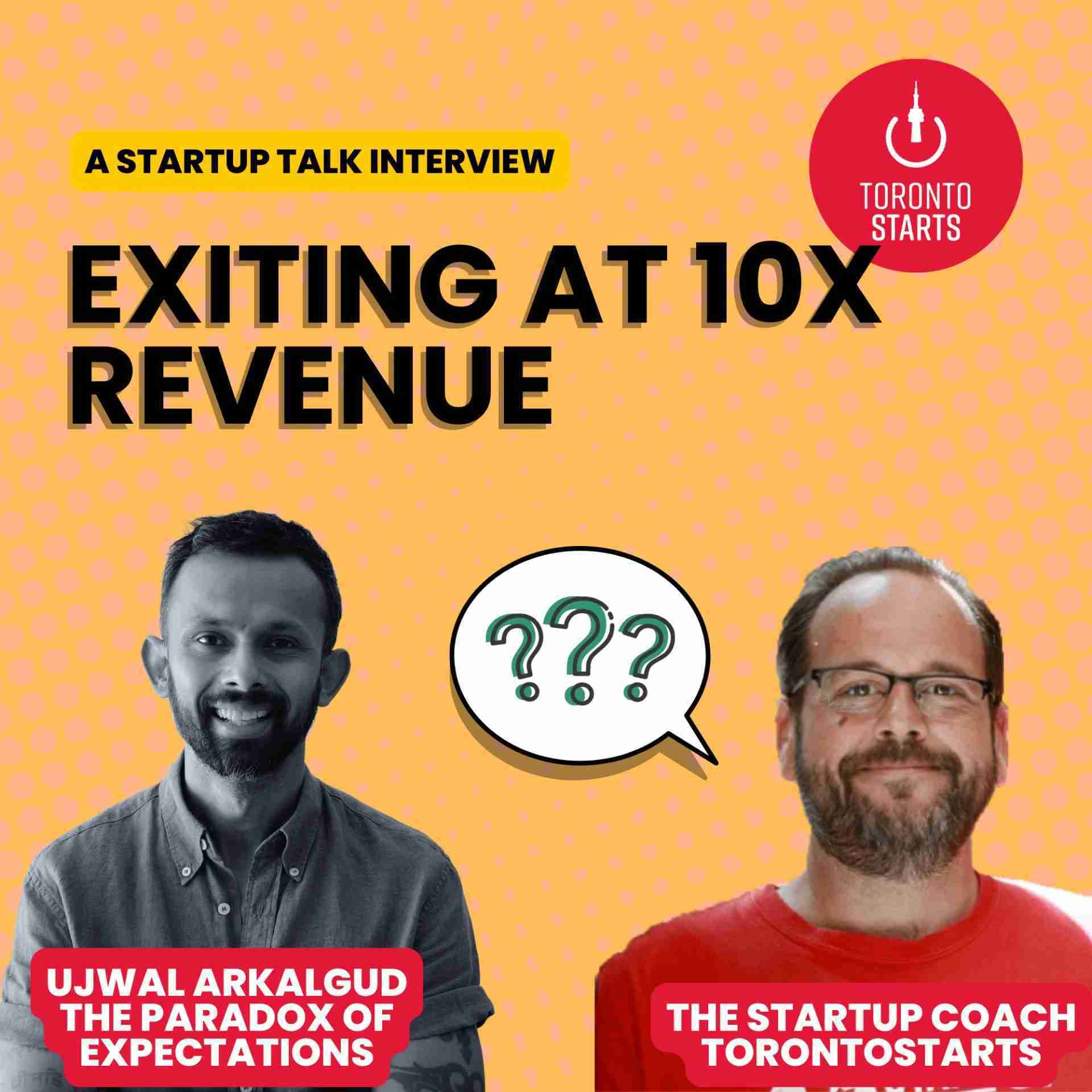
startup-talk · April 10, 2025
10x Revenue Exit
Discover actionable insights for achieving a 10x Revenue Exit through strategic scaling, profitability, and smart bootstrapping. https://torontostarts.com/2025/04/10/10x-revenue-exit/ Apple -> https://podcasts.apple.com/us/podcast/startup-talk/id1763804003 Spotify -> https://open.spotify.com/show/1siJMILILidHAiAsrX2VBU YouTube: https://youtube.com/playlist?list=PLj4v-RoA7A-jxV5FHs5e61oIsuvUJYmT_&si=LYegRe5GYLKNQ7xL Flowgrammer Apple -> https://podcasts.apple.com/us/podcast/flowgrammer-podcast/id1804155588 Spotify -> https://open.spotify.com/show/0wv3feR00iaVpE8zn7niNf Flowgrammer.ca -> https://flowgrammer.ca/ AI News and Resources -> https://flowgrammer.ca/resources/ Silicon Scoop Silicon Scoop Podcast - https://torontostarts.com/silicon-scoop/ Apple: https://podcasts.apple.com/us/podcast/silicon-scoop/id1758711826 Spotify: https://open.spotify.com/show/5bAzF0MwV6TtLhJAhvHayI YouTube: https://www.youtube.com/playlist?list=PLj4v-RoA7A-gT62vrEYqh1zCv-0Hj-o5J Startup Investor Drinks Toronto - https://startupdrinksto.com/ Toronto’s Startup Community - https://torontostarts.com/
View episode

startup-talk · April 8, 2025
Product Market Fit with Lauft
Product Market Fit with Lauft Welcome to Episode 217 of the Startup Talk Podcast, where we explore Product Market Fit in a conversation with Graham Wong, Founder and CEO of Lauft. Listen in as the Startup Coach uncovers how Lauft transformed a personal need into a thriving flexible workspace solution and discovered exactly what their […]
View episode

startup-talk · April 6, 2025
Know Yourself – Unlocking Entrepreneurial Potential
Discover how to Know Yourself as an entrepreneur to unlock your potential and overcome challenges in today's startup world. https://torontostarts.com/2025/04/06/know-yourself-unlocking-entrepreneurial-potential/ Apple -> https://podcasts.apple.com/us/podcast/startup-talk/id1763804003 Spotify -> https://open.spotify.com/show/1siJMILILidHAiAsrX2VBU YouTube: https://youtube.com/playlist?list=PLj4v-RoA7A-jxV5FHs5e61oIsuvUJYmT_&si=LYegRe5GYLKNQ7xL Flowgrammer Apple -> https://podcasts.apple.com/us/podcast/flowgrammer-podcast/id1804155588 Spotify -> https://open.spotify.com/show/0wv3feR00iaVpE8zn7niNf Flowgrammer.ca -> https://flowgrammer.ca/ AI News and Resources -> https://flowgrammer.ca/resources/ Silicon Scoop Silicon Scoop Podcast - https://torontostarts.com/silicon-scoop/ Apple: https://podcasts.apple.com/us/podcast/silicon-scoop/id1758711826 Spotify: https://open.spotify.com/show/5bAzF0MwV6TtLhJAhvHayI YouTube: https://www.youtube.com/playlist?list=PLj4v-RoA7A-gT62vrEYqh1zCv-0Hj-o5J Startup Investor Drinks Toronto - https://startupdrinksto.com/ Toronto’s Startup Community - https://torontostarts.com/
View episode