
How to Motivate Return to Office
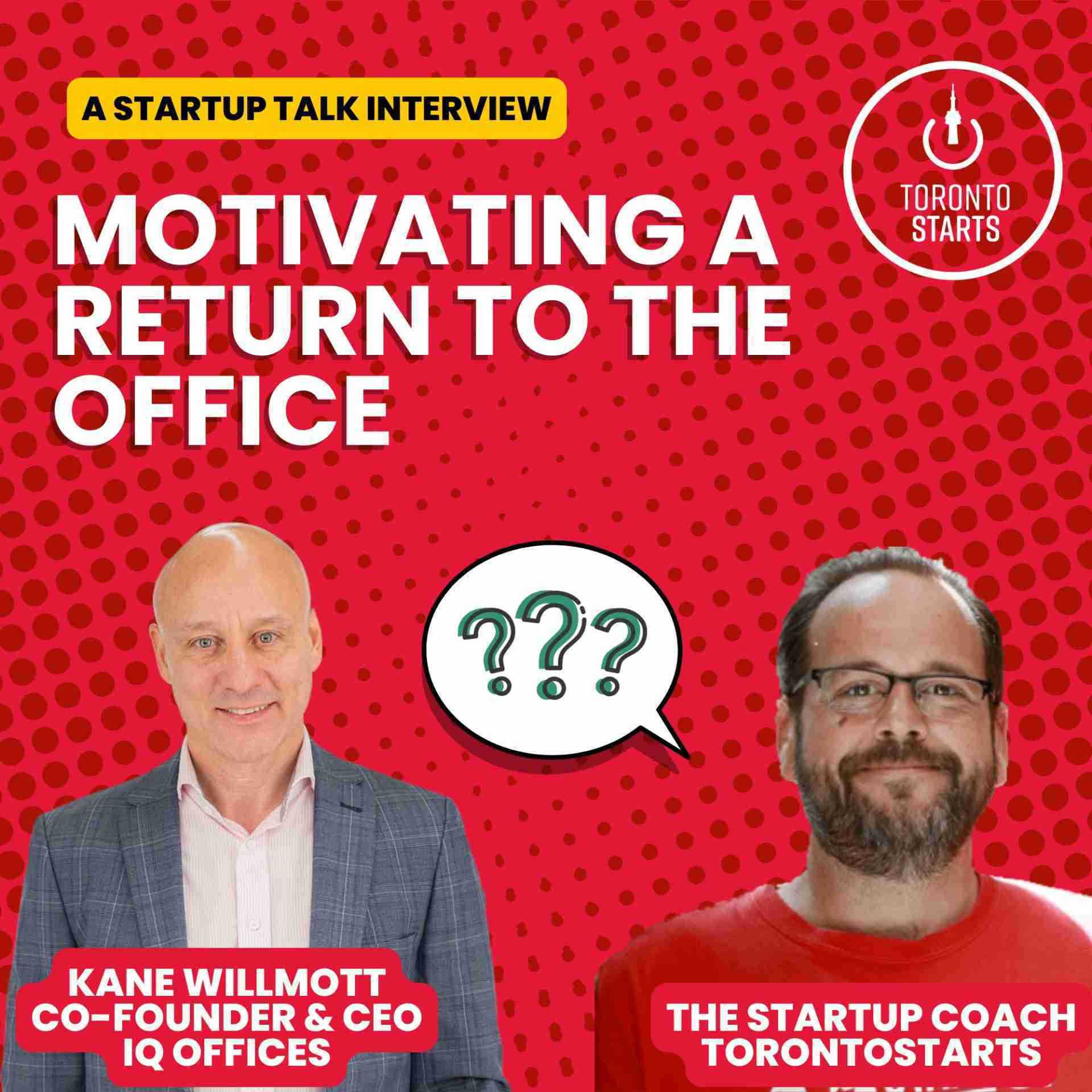
Motivate Return to Office: Innovative Strategies for Modern Workspaces IntroductionIn this episode, we uncover key insights to motivate return to office. Survey results show that modern workspaces combined with curated food experiences can transform outdated environments and build community. These strategies are designed to truly motivate return to office by aligning workspace design with the […]
A TorontoStarts podcast
Estimated reading time: 3 minutes
Motivate Return to Office: Innovative Strategies for Modern Workspaces
Introduction
In this episode, we uncover key insights to motivate return to office. Survey results show that modern workspaces combined with curated food experiences can transform outdated environments and build community. These strategies are designed to truly motivate return to office by aligning workspace design with the evolving needs of today’s workforce.
Guest: Kane Willmott, Co-Founder & CEO of iQ Offices
Kane Willmott is the Co-Founder and CEO of iQ Offices, Canada’s largest independent Canadian-owned coworking operator. With a background in real estate brokerage, Kane has leveraged his expertise to build and scale iQ Offices into a leader in the coworking space.
A trusted voice on the future of work, workplace dynamics, and building purpose-driven teams, Kane offers valuable insights at a time when return-to-office requirements are reshaping the workforce. His perspective is highly relevant to both entrepreneurs and the broader Canadian workforce.
Links to Learn More About Kane & iQ Offices:
- Website: iqoffices.com
- Instagram: @iqoffices
- LinkedIn: iQ Offices
- Facebook: iQ Offices Canada
Additional Resources:
- Survey Findings: What Motivates Canadians to Return to the Office
Key Insights to Motivate Return to Office
Our survey reveals that nearly 54% of respondents feel their current workspace is outdated, and 47% believe it no longer meets their needs. These findings emphasize the need to modernize offices with amenities and design improvements that directly motivate return to office.
Design Strategies to Motivate Return to Office
Creating environments that foster connection is critical. By incorporating elements such as open layouts, ergonomic furniture, and multisensory experiences—like shared breakfast offerings and vibrant communal spaces—employers can effectively motivate return to office.
Practical Takeaways
- Reassess and upgrade outdated workspaces.
- Invest in unique food and beverage experiences that naturally motivate return to office.
- Foster community through thoughtfully designed common areas that motivate return to office.
- Ensure that every design choice, from layout to amenities, works to motivate return to office.
Conclusion
By focusing on these innovative strategies, organizations can create a workplace environment that not only meets modern needs but also continues to motivate return to office.
Additional Links
• Silicon Scoop Podcast – Stay Informed, Stay Ahead!
• Futuretech Podcast – Explore more episodes and stay updated with the latest in technology and innovation.
• Startup Talk Podcast – https://torontostarts.com/startup-talk-toronto-startup-podcast/
• Who Are These Startups Podcast
• Startup Investor Drinks – Join the community and connect with fellow startup enthusiasts and investors.
• TorontoStarts Startup and Entrepreneur Community – Become a part of Toronto’s thriving startup ecosystem.
• Workhaus – Discover flexible workspace solutions for your business needs.
• Work with The Startup Coach – Get expert guidance and mentorship for your startup journey.
• Reach out to Jon Irwin on LinkedIn – Connect with our co-host and technology expert.
Ontario Startup Ecosystem Links
• Ontario’s Startup Ecosystem
• Startup Funding in Ontario
• Angel Investors in Ontario
• Ontario Incubators and Accelerators
• Venture Capital in Ontario: Top Firms, Sectors, and Funding Strategies
• Government Grants for Ontario Startups
• Ontario’s Startup Success Stories
• Ontario Centre of Innovation (OCI)
• Bank Loans and Financing for Startups in Ontario
• Research and Development Tax Credits in Ontario
• Government Loans and Financing for Startups in Ontario
• Equity Crowdfunding for Ontario Startups
• Toronto Entrepreneurs Resources
• Toronto’s Food and Beverage Entrepreneurs: Trends, Challenges, and Success Stories
• SEO Strategies for Toronto Entrepreneurs: Enhance Your Online Visibility
• Social Impact for Toronto Entrepreneurs: Starting and Running a Socially Responsible Business
• Toronto Arts and Media Entrepreneurs: Inspiring Profiles and Insights for Creative Success
• Exploring Toronto Green Tech Entrepreneurs: Innovators and Leaders in Sustainability
• Building a Team for Toronto Entrepreneurs: Strategies for Success
• A Guide for Toronto Food and Beverage Entrepreneurs
• Toronto Fashion and Retail Entrepreneurs: Trends, Opportunities, and Success Stories
Episode transcript
Read the full transcript
Speaker 0: your recent survey uncovered insights about what motivates canadians to return to the office. can you share some of the most surprising findings?
Speaker 1: yeah. absolutely. okay. so i'll just i'll just read a couple of these out to you. so we did this survey. what we wanted let me tell you why we did the survey. so there's a lot in the paper about people not wanting to come back to the office and, you know, like, the fed and, know, amazon. and there's a number of large occupiers that have said they wanna have everybody back to the office five days a week. and there was a lot of people saying that they didn't wanna do it for a lot of different reasons. but what we hadn't heard and when i looked in the media, i just did not see a lot of tangible, quantifiable information that would lead us to understand why. like, why do people not wanna go to the office? you can make the assumption that's because they wanna work out of their pajamas or walk their dog in the middle of the day and all those sort of things. and, like and maybe that's true to some extent. but i believe that there may be a supply side issue, right, that we're not recognizing here. and maybe there is a way to get people back to the office, and maybe may when office, assumptions that we know why they're saying they don't wanna come back to the office. and i think it's easy to jump to conclusions on that. so we put this survey together to understand and ask people, what is it about your workspace? you're coming back to the office space, mandated, whatever the case may be. what is it about your workspace that makes it attractive, not attractive? what would get you there? so we did this. it was an independent survey. we commissioned it and a couple of things. so fifty four percent, said of of the survey respondents said that their workspace was outdated, and forty seven percent say that it's out of touch with their existing needs. so when you look at that, that's, you know, the fifty four percent that is outdated, and it doesn't work for their needs. you're you're essentially cutting out half of your workforce saying that it's a supply side problem. the workspace doesn't work. you're asking me to come back to the workspace, but the workspace doesn't work. in addition to that, when you when you take it a step further and say, like, what would okay. fine. but what would draw you back to the office? what are the elements? we talked about going back to the earn the commute. like, what is it that would draw you back to the office? and this was really interesting. so seventy six percent of canadians say a well designed office space with perks, snacks, beverages, central location, and amenities would entice them to return to the office. so over three quarters said, yeah. i would go if it was worth going, basically. right?
Speaker 0: yeah. you know, it funny. i just wanna interrupt for a second. it yeah. i've talked about this on several occasion, and there's always listeners who come at me when i talk about food is one of the most motivating things to get people in the office. you know? it's not money. it's food. and i because, you know, you assume you're already getting paid a certain amount. right? enough to make you work and stuff. so there's at that level. but yeah. the donuts, the snacks, so this and that. and your survey just proves my point yet again. but a lot of times people come out and say, no. money is not gonna motivate me whatever, but maybe there's a case individually, but what makes people happy is that shared experiences, and that food brings people together.
Speaker 1: so you nailed it, craig. so that is one of the things that was surprising to me. like, it wasn't intuitive. like, the, you know, the people that we have in our space, these are all high income earners. okay? so a free sandwich doesn't really matter to them. you know? they don't care about saving ten bucks. right? but i will tell you that people congregate around food. so we have a breakfast offering in the morning where we put out, you know, bagels and pastries and and juice and, and yogurt. and people go because they want the food, but the food becomes what connects the people together because everybody comes down to get the food. right? the, you know, it's the concept of breaking bread together. right? you connect with someone when you break bread together. right? and it it takes that and multiplies it into, like, into a community where people are getting together around the food. so when you create this curated food experience, it is really interesting to look at, like, the human behavior, like, how that works. so we have snacks, like, like, healthy snacks that we put out in all of our kitchens, and we call them, like, a trail mix snack bar. so people can get these things all day long. so you can so if you're you're a little bit hungry in the afternoon, you can grab that or throughout the day, that's not what does it. like, not the snacks. what does it is when we put the food out in the morning, we say breakfast is available in the morning, come on in the morning. what does it is when we do happy hour on thursdays, it's for one hour, and we have everybody come down between three thirty and four thirty, and our lounges are bumping. right? and it's because we have food and we have, you know, we have we have couple of drinks available to them when they come down. and peep again, people congregate around that. the food and beverage offering is just so important, and it's something that we have very much invested in heavily, especially on the other side of covid, even more so. so you talk about trends and the future, the food and beverage offering very much is is very important. and markets that are leading the coworking industry, like london and sydney, two places i've been in the last year, they all have extensive food and beverage offerings. at our new location at three zero two bay street, we have a full time barista at that location that provides complimentary coffee and and snacks. and and we have a full time barista in montreal, and they create this really connected, really great experience.
Speaker 0: yeah. every time something like it where there is a full time barista there, there's a lot of conversations happening in the line waiting for their coffee. people don't mind waiting that five minutes or whatever it takes for because one, it's the experience, and two, it's a connection. they're not walking up and walking away. it's taking the time to connect with people and having that experience. and, honestly, i think people really haven't analyzed this enough. it's the multisensual experience of the food, the drink, the people, the emotion that really gets the endorphins flowing for humans and makes that connection matter and happen. and it's a combination of those things. people don't realize it's not the food. it's the endorphin rush you get from having that, the bite of that first donut as well as, you know, talking to these people and the good vibe and all this stuff happening connects you to that workplace and that culture.
Speaker 1: a hundred percent. and, like, you talk about all the things together. i like, i always think about five senses. right? like like, all these things. and to relate that to events, craig, like, think about all the things that you have going all they do is they walk in and they see lots of people there. that's like as an attendee to an event. right? i walk in. i see lots of people there. i thought, oh, you know, the organizer did a good job on this because they got so many people here. right? that's it. what you don't realize is that there's a huge budget on av, right, to create this music, to those big screens that you see. they, know, and then and then, you know, in some instances, like, you're piping in some custom sense into the to the area, like like, they do that at hotels. right? and there's so much going on behind the curtain. it's not one thing. it's all the things, right, that create that experience. then when you put on one of these events and in iq, we're putting on that event every day. and it's always about, like it's a lot of times, it's what you don't see that that creates that cultivating environment, right, in terms of, like, bringing that food in. but designing spaces so that they're you don't have choke points and where people get left out on their own and, you know, creating spaces so that they encourage the connection when people get into that space. so there's just all those elements that you really have to put together to make it a, you know, a successful event and for us to make it a successful workday.
More from Startup Talk
All episodes
startup-talk · April 10, 2025
10x Revenue Exit
Discover actionable insights for achieving a 10x Revenue Exit through strategic scaling, profitability, and smart bootstrapping. https://torontostarts.com/2025/04/10/10x-revenue-exit/ Apple -> https://podcasts.apple.com/us/podcast/startup-talk/id1763804003 Spotify -> https://open.spotify.com/show/1siJMILILidHAiAsrX2VBU YouTube: https://youtube.com/playlist?list=PLj4v-RoA7A-jxV5FHs5e61oIsuvUJYmT_&si=LYegRe5GYLKNQ7xL Flowgrammer Apple -> https://podcasts.apple.com/us/podcast/flowgrammer-podcast/id1804155588 Spotify -> https://open.spotify.com/show/0wv3feR00iaVpE8zn7niNf Flowgrammer.ca -> https://flowgrammer.ca/ AI News and Resources -> https://flowgrammer.ca/resources/ Silicon Scoop Silicon Scoop Podcast - https://torontostarts.com/silicon-scoop/ Apple: https://podcasts.apple.com/us/podcast/silicon-scoop/id1758711826 Spotify: https://open.spotify.com/show/5bAzF0MwV6TtLhJAhvHayI YouTube: https://www.youtube.com/playlist?list=PLj4v-RoA7A-gT62vrEYqh1zCv-0Hj-o5J Startup Investor Drinks Toronto - https://startupdrinksto.com/ Toronto’s Startup Community - https://torontostarts.com/
View episode
startup-talk · April 8, 2025
Product Market Fit with Lauft
Product Market Fit with Lauft Welcome to Episode 217 of the Startup Talk Podcast, where we explore Product Market Fit in a conversation with Graham Wong, Founder and CEO of Lauft. Listen in as the Startup Coach uncovers how Lauft transformed a personal need into a thriving flexible workspace solution and discovered exactly what their […]
View episode
startup-talk · April 6, 2025
Know Yourself – Unlocking Entrepreneurial Potential
Discover how to Know Yourself as an entrepreneur to unlock your potential and overcome challenges in today's startup world. https://torontostarts.com/2025/04/06/know-yourself-unlocking-entrepreneurial-potential/ Apple -> https://podcasts.apple.com/us/podcast/startup-talk/id1763804003 Spotify -> https://open.spotify.com/show/1siJMILILidHAiAsrX2VBU YouTube: https://youtube.com/playlist?list=PLj4v-RoA7A-jxV5FHs5e61oIsuvUJYmT_&si=LYegRe5GYLKNQ7xL Flowgrammer Apple -> https://podcasts.apple.com/us/podcast/flowgrammer-podcast/id1804155588 Spotify -> https://open.spotify.com/show/0wv3feR00iaVpE8zn7niNf Flowgrammer.ca -> https://flowgrammer.ca/ AI News and Resources -> https://flowgrammer.ca/resources/ Silicon Scoop Silicon Scoop Podcast - https://torontostarts.com/silicon-scoop/ Apple: https://podcasts.apple.com/us/podcast/silicon-scoop/id1758711826 Spotify: https://open.spotify.com/show/5bAzF0MwV6TtLhJAhvHayI YouTube: https://www.youtube.com/playlist?list=PLj4v-RoA7A-gT62vrEYqh1zCv-0Hj-o5J Startup Investor Drinks Toronto - https://startupdrinksto.com/ Toronto’s Startup Community - https://torontostarts.com/
View episode