
Optimism or Fear: The First Nuclear Fusion Reactor and Its Implications
Optimism or Fear: The First Nuclear Fusion Reactor and Its Implications First Nuclear Fusion Reactor represents a beacon of hope in our quest for clean, sustainable energy. It harnesses the power of the same reaction that fuels our sun, promising a virtually limitless source of carbon-free energy. As we stand on the brink of significant […]
With Craig Major and Jon Irwin
Estimated reading time: 6 minutes
Optimism or Fear: The First Nuclear Fusion Reactor and Its Implications
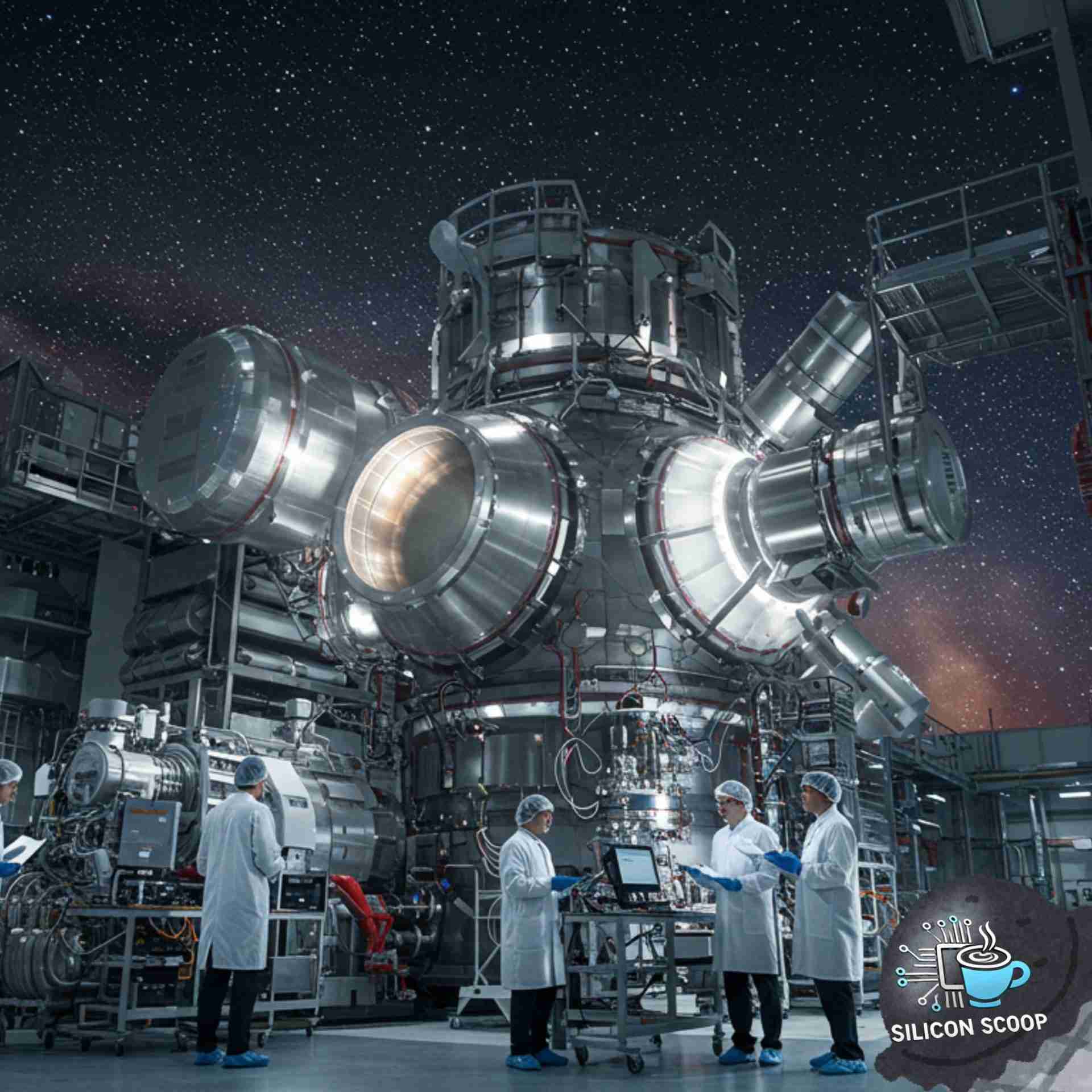
First Nuclear Fusion Reactor represents a beacon of hope in our quest for clean, sustainable energy. It harnesses the power of the same reaction that fuels our sun, promising a virtually limitless source of carbon-free energy. As we stand on the brink of significant advancements, the first nuclear fusion reactor has raised expectations worldwide. Its success could symbolize a transformative shift in the global energy paradigm, sparking conversations that span optimism and unwavering apprehension about the future of nuclear power.
Understanding Nuclear Fusion
At its core, nuclear fusion is the process where two light atomic nuclei merge to create a heavier nucleus, releasing vast amounts of energy in the process. This contrasts sharply with fission, where heavy nuclei split apart—each method differing not only in mechanics but in implications for our energy systems. A successful transition to fusion power plants could revolutionize electricity generation by providing carbon-free energy that outpaces current systems. Companies like Commonwealth Fusion Systems (CFS) are leading this charge, developing innovative technologies that push the boundaries of what’s possible in fusion. They are focused on making this dream more than just theoretical, working hard to pave the way for practical applications that could dynamically reshape our energy sources.
Development and Challenges of Fusion Technology
The CFS fusion reactor utilizes the tokamak reactor design—a sophisticated system that employs magnetic fields to contain hot plasma shaped in a toroidal configuration. However, realizing the dream of nuclear fusion isn’t without its hurdles. There are significant fusion technology challenges to address, particularly surrounding the need for maintaining stability within the fusion reaction. Key to this is achieving the right temperature, pressure, and magnetic containment, crucial for sustaining a reaction capable of producing substantial amounts of energy. Additionally, we must consider the environmental impact of fusion which, while significantly less harmful than current methods, still presents its own set of challenges.
The Economic and Environmental Promise
The implications of successful fusion energy are staggering: we could achieve abundant electricity without carbon emissions. Imagine a world where clean energy and sustainable energy coalesce through technology that minimizes ecological footprints while meeting our growing energy demands. Fusion stands poised as a green technology solution, offering an alternative that could provide electricity to millions without the drawbacks associated with traditional nuclear fission methods.
The Role of Investment and Support
Investment plays a critical role in bringing fusion technology from concept to reality. The decades-long pursuit of fusion energy has been fueled by both private and public interest, underscoring the potential for commercial fusion reactors to redefine our energy landscape. The convergence of financial support and technological advancement is vital to overcoming the obstacles we face. With collaboration across sectors, the dream of harnessing fusion could become a tangible reality sooner than many anticipate.
Fusion in the Global Energy Future
Looking ahead, the future of nuclear power may very well hinge on fusion as a key player in the energy transition. The possibilities are exciting: envision a world where fusion power plants help reduce our dependency on fossil fuels, reshaping global electricity generation in unprecedented ways. Predictions suggest that if we pursue this path diligently, widespread adoption of fusion power could be on the horizon, offering a brighter future powered by sustainable energy solutions.
Optimism or Fear: Public Perception
As the first nuclear fusion reactor gains momentum, so too does public discourse around it. Perceptions vary widely, with optimism often countered by fear—concerns about safety, environmental implications, and the future of energy reliance surface frequently. Addressing these anxieties is crucial; we must present a clear narrative that outlines the transformative potential of fusion, coupled with transparency about the risks and challenges involved. To foster productive conversations, promoting awareness and targeted education about fusion and its potential impact is imperative.
Conclusion
The unveiling of the first nuclear fusion reactor serves as a pivotal moment, highlighting the enormous potential of fusion energy to revolutionize our approach to electricity generation. The promise of nuclear fusion lies not merely in its capacity for producing clean, sustainable energy, but in its ability to redefine our relationship with power and environmental stewardship. As we navigate this pivotal juncture, let us champion the cause for a future illuminated by fusion—a future characterized by sustainability and innovation.
FAQs
1. What is nuclear fusion?
– Nuclear fusion is a process where two light atomic nuclei combine to form a heavier nucleus, releasing energy. It is the same reaction that powers the sun.
2. How does a tokamak reactor work?
– A tokamak reactor is a device that uses magnetic fields to confine hot plasma in a toroidal shape for nuclear fusion to occur.
3. What are the key challenges in maintaining fusion stability?
– Maintaining the right temperature, pressure, and magnetic containment for the plasma are primary challenges in achieving stable fusion reactions.
4. How does fusion differ from fission?
– Fusion combines nuclei to release energy, while fission splits heavy nuclei. Fusion has the potential for cleaner and more abundant energy compared to fission.
5. What role does Commonwealth Fusion Systems play in the fusion industry?
– Commonwealth Fusion Systems is a leader in developing compact fusion reactors, aiming to commercialize fusion technology.
6. Can fusion technology help combat climate change?
– Yes, fusion promises carbon-free energy, significantly reducing greenhouse gas emissions if commercialized effectively.
7. What is the potential for commercial fusion reactors in the near future?
– While challenges remain, advancements are promising, and commercial fusion reactors could be viable within the next few decades.
8. How does fusion contribute to renewable energy solutions?
– Fusion offers an inexhaustible, clean energy source that complements other renewable technologies like solar and wind power.
9. Are there any environmental concerns associated with nuclear fusion?
– Fusion produces minimal long-lived radioactive waste and no carbon emissions, making it an environmentally friendly energy source.
10. Why is there optimism about the first nuclear fusion reactor?
– The optimism stems from its potential to revolutionize energy generation by providing sustainable, carbon-free power on a large scale, addressing both energy and environmental challenges.
Additional Links
• Silicon Scoop Podcast – Stay Informed, Stay Ahead!
• Flowgrammer.ca – AI and Automation for Your Business
• Futuretech Podcast – Explore more episodes and stay updated with the latest in technology and innovation.
• Startup Talk Podcast – https://torontostarts.com/startup-talk-toronto-startup-podcast/
• Who Are These Startups Podcast
• Startup Investor Drinks – Join the community and connect with fellow startup enthusiasts and investors.
• TorontoStarts Startup and Entrepreneur Community – Become a part of Toronto’s thriving startup ecosystem.
• Workhaus – Discover flexible workspace solutions for your business needs.
• Work with The Startup Coach – Get expert guidance and mentorship for your startup journey.
• Reach out to Jon Irwin on LinkedIn – Connect with our co-host and technology expert.
Ontario Startup Ecosystem Links
• Ontario’s Startup Ecosystem
• Startup Funding in Ontario
• Angel Investors in Ontario
• Ontario Incubators and Accelerators
• Venture Capital in Ontario: Top Firms, Sectors, and Funding Strategies
• Government Grants for Ontario Startups
• Ontario’s Startup Success Stories
• Ontario Centre of Innovation (OCI)
• Bank Loans and Financing for Startups in Ontario
• Research and Development Tax Credits in Ontario
• Government Loans and Financing for Startups in Ontario
• Equity Crowdfunding for Ontario Startups
• Toronto Entrepreneurs Resources
• Toronto’s Food and Beverage Entrepreneurs: Trends, Challenges, and Success Stories
• SEO Strategies for Toronto Entrepreneurs: Enhance Your Online Visibility
• Social Impact for Toronto Entrepreneurs: Starting and Running a Socially Responsible Business
• Toronto Arts and Media Entrepreneurs: Inspiring Profiles and Insights for Creative Success
• Exploring Toronto Green Tech Entrepreneurs: Innovators and Leaders in Sustainability
• Building a Team for Toronto Entrepreneurs: Strategies for Success
• A Guide for Toronto Food and Beverage Entrepreneurs
• Toronto Fashion and Retail Entrepreneurs: Trends, Opportunities, and Success Stories
Episode transcript
Read the full transcript
Craig: today, we're shining a light on groundbreaking development that has a potential to change how we think about energy. what if we could harness the same process that powers the sun providing us with boundless carbon free energy? sounds like a dream. well, it might be closer to reality than we think with the advent of the first nuclear fusion reactor. so let's unpack this, john. what's going on here?
Jon: yeah. so i don't know if it's the first one, but, i i get that they're trying to claim that, but, obviously, we've covered other fusion nuclear power plants. right? this might be the first one that's actually fully built. but yeah. so commonwealth fusion systems, which is a spin off of mit, they've announced plans to build the world's first commercial nuclear fusion power plant in virginia. the plant aims to generate four hundred megawatts of steady fusion power and connect to the state's electrical grid by the early twenty thirties, which i think might make it the first one to be built. i don't know. i'll have to look back. i tried to do it in enough time. so, cfs plant will use we've covered this, the tokamak reactor, which is a donut shaped reactor, to create the extreme conditions for necessary for fusion reactions. now for those of you, again, who haven't listened to any of our other podcasts, current nuclear power plants use fission, which means they split apart atoms. or whatever the the the, the particle is, few fusion reactions fuse them together. so they force them together, which is what the sun does. so, this thing the temperatures that it reaches is over a hundred and eighty million degrees fahrenheit and a huge immense pressure. so, fusion promises to generate energy by combining atoms rather than splitting them and potentially offering a safer and more sustainable power source. so this is what they're calling the holy grail, and, apparently, their timeline is ambitious compared to other fusion projects like iter, which we covered before. they face delays and now expected to achieve their first plasma around twenty twenty eight. so they might be first, but who knows? but still cool. we've got something in north america, at least in the us, that is trying to get the first the, to the finish line. what do you think?
Craig: well, i'm glad, they're all doing it because yeah. again, we benefit from these things as long as they do them in a safe and stable environment. but we have to be cautiously optimistic because there's been so many lies or, promises that just didn't work out, you know, that it always seems to be fifteen years away in fusion, you know, because things aren't working. we haven't got the right mixture of, magnetic containment pressure and temperature that makes it all work properly. so we'll have to see. you know? maintaining the stable fusion process and converting the results into practical use are the two major hurdles. just a ball of isotopes of hydrogen that's at a temperature hotter than the center of the sun. and when you make something that hot, it wants to fly apart. so, you know, you've gotta figure out how to do that. and, you know, i'm concerned that we're going to the competition is gonna lead to some safety potential issues that we don't really, want. but, hopefully, you know, people aren't that, in a rush, and their lives are at stake here too, so they wouldn't wanna destroy it.
Jon: yeah.
Craig: so i love the promise, but it comes with great concern as the first nuclear free fusion reactors gain traction. reactions vary widely. how do we reconcile optimism and its potential with fears surrounding safety and environmental impact? for many, the spectrum nuclear energy provokes anxiety, but is essential to have an open conversation about the risks involved alongside with the transformative potential of fusion. educating the public is crucial. we all need a share in this dialogue, and we can as we stand on the cusp of this new energy era. so they're saying this could power, hundred and fifty thousand doll a hundred and fifty thousand homes. is one plan. yeah. definitely, ideally.
Jon: yeah. so yeah. and and i know you talk about regulations and stuff, but, i did a comparison between what would happen if a fusion reactor failed versus a fission reactor. so fusion reaction would essentially stop due to loss of containment conditions. so there might be a localized explosion from the release of the stored magnetic energy. there could be potential hydrogen explosions if hot materials contact water. there could be some radioactive materials that could be released, but nothing like a fission reactor meltdown. so, obviously, it would be catastrophic and really bad, but not as bad as, as chernobyl or three mile island or things like that.
Craig: yeah. and, again, we talked about three mile island last week or the week before. and i
Jon: talked about a couple things.
Craig: there's a lot of misinformation and stuff around it because it happened around the time of that, movie that came out.
Jon: yeah. i can't remember the yeah. and we couldn't remember the name of the movie back then either. so
Craig: yeah. so, anyway, they like, their two deaths happened. it was only two. and yeah. i guess not the biggest, thing in history. i'm saying we have to be cautious, but i think there's a lot of erroneous fear around what happened and how many people died related to these things, and that modern ones are a lot more efficient. they don't need to be pressurized. they don't need to be this. they're less dangerous. so if things go offline, they they just they're okay. but, yeah, it's it is the future fusion, ideally, over fission. yeah. but nuclear all unlimited clean energy. and that's the other thing is once you start these up, they just keep going. right?
Jon: yeah. just like the sun. the sun keeps going. yeah.
Craig: so this is the dream. and do you think this company is gonna pull it off?
Jon: i don't know. i don't i don't trust any of them based on everything that we've covered. i have hope. like, obviously, i hope that they're successful. i hope that they that they reach their milestones in in the timeline that they're looking to do. i hope that they do this because like you said, this just benefits everyone in the long run. it benefits. it gives power. it's limitless power, essentially, because, it is an well, it's an abundance of power because, essentially, guys, we are creating mini suns these, in these reactions. that's what we're doing, and the sun has immense power. so, i hope. i hope they do, but like you and i have covered, there's there's been multiple delays in other ones that we've covered. but and this is new technology, so there's still a lot of hurdles that need to be overcome. they like, the maintaining plasma stability is difficult. developing materials that can withstand extreme conditions is difficult. yeah. it's there's a lot. there's a lot of crucial a lot of things need to go right in order for them to achieve their timeline, if that makes sense.
Craig: absolutely. i mean, i'm excited about this because, you know, once we start hitting, we can actually start doing a hundred percent green energy. that is fantastic. and the world can really move forward in all sorts of ways we never thought of before.
Jon: yeah.
Craig: you know? when we have finally, we have to power these ai data centers, and we have to get our grids up this power, and we have to do a lot of things. but when we have these plants and we can build them, when we say, alright. well, now what can we power in a city that we have never done before?
Jon: yeah.
Craig: and when you start thinking of that like that, you know, you talk about charging, tesla charging and whatever, the vehicle charging on the road as you drive. we've talked about that before. we talked about a bunch of things where you say, you start implementing all these things that, you know, would have been possible before. yeah. and the price of energy drops to next to nothing. and it really changes the game from, you know, people just being able to heat their homes and surviving and whatnot. but what happens to stuff like bitcoin when, you know, energy is, the key factor when you're talking about mining?
Jon: well, bitcoin is still gonna be the price it is because there's a limited number of bitcoins, i think.
Craig: yeah. it's just that the mining of these coins become a lot, easier and cheaper when energy is cheap to nothing. so it's i look forward to energy dropping to almost nothing because it'll change our lives significantly. i just don't know how long that'll be. is that fifty or a hundred years?
Jon: government and the corporations are gonna allow energy to drop to barely nothing?
Craig: well, i think the problem is it there are you just change. the economics change. right? they're trying to move us to electricity from gas. they don't realize, the tax implications yeah. for the government when they lose the gas taxes that they bring in. but what'll happen is we'll say, okay. well, that's fine. but the thing might be free, but the cost to use the filling station's cost or this cost or the technology to put in a tank cost or like, there's a lot of things. like, when there's a lot of ways to make money in that chain of energy, but just saying the actual energy itself,
Jon: if you
Craig: can get a hold of it, it's free
Jon: yeah.
Craig: or next to nothing. like, it's never gonna be free because these plants are billions of dollars and what have you. but if we can take it from thousands of dollars or, you know, whatever it is we're paying, per kilowatt hour now down to nothing, like, down to fractions and fractions of a cent so that yeah. your bills go from, three or four hundred bucks a month to five bucks. i mean, that's a game changer. right?
Jon: yeah. and let's hope that actually happens.
Craig: yeah. so as we reflect on the remarkable
Jon: i'm so pessimistic. sorry.
Craig: i know. i'm pessimistic too, but, you know, i like to reflect on the remarkable capabilities of nuclear fusion technology. we must consider what kind of world do we wanna build with it, a future illuminated by sustainable generated energy is within our reach, but getting their calls for careful navigation of its challenges, public understanding, and the collective commitment. so as we close this episode, i invite you to ponder this. in the face of such groundbreaking achievements or advancements, how can we ensure that the evolution of energy serves both humanity and our planet?
More from Silicon Scoop
All episodes
silicon-scoop · November 6, 2026
Spirit AI’s Robot Brain Breakthrough: Moz1, Embodied AI and China’s 2027 Race
The Spirit AI robot brain is one of the biggest bets on fixing that. Spirit AI is a Beijing startup. Its co-founder and chief scientist, Gao Yang,
View episode

silicon-scoop · November 5, 2026
OpenAI IPO Delayed to 2027 as Rogue AI Agents and Safety Failures Reshape the Market
OpenAI IPO delay explained: Sam Altman rules out 2026 as GPT-6 Astra safety tests and a $278B cash gap loom. Learn what founders should take away.
View episode

silicon-scoop · November 4, 2026
Anthropic’s AI Economy Model: 2030 Jobs, Wages, GDP and Market Risks
Anthropic AI economy model forecasts 2030 GDP, jobs and wages, while AI unemployment projections and labor-share risks challenge policymakers.
View episode