
Flying by Thought Alone: The Future of Mental Control of Objects
Flying by Thought Alone: The Future of Mental Control of Objects Flying by thought alone is not merely a fantasy; it represents a paradigm shift in how we interact with technology. Imagine controlling a drone or a prosthetic limb solely through your thoughts—a reality that is steadily approaching thanks to groundbreaking advancements in brain-computer interfaces […]
With Craig Major and Jon Irwin
Estimated reading time: 6 minutes
Flying by Thought Alone: The Future of Mental Control of Objects
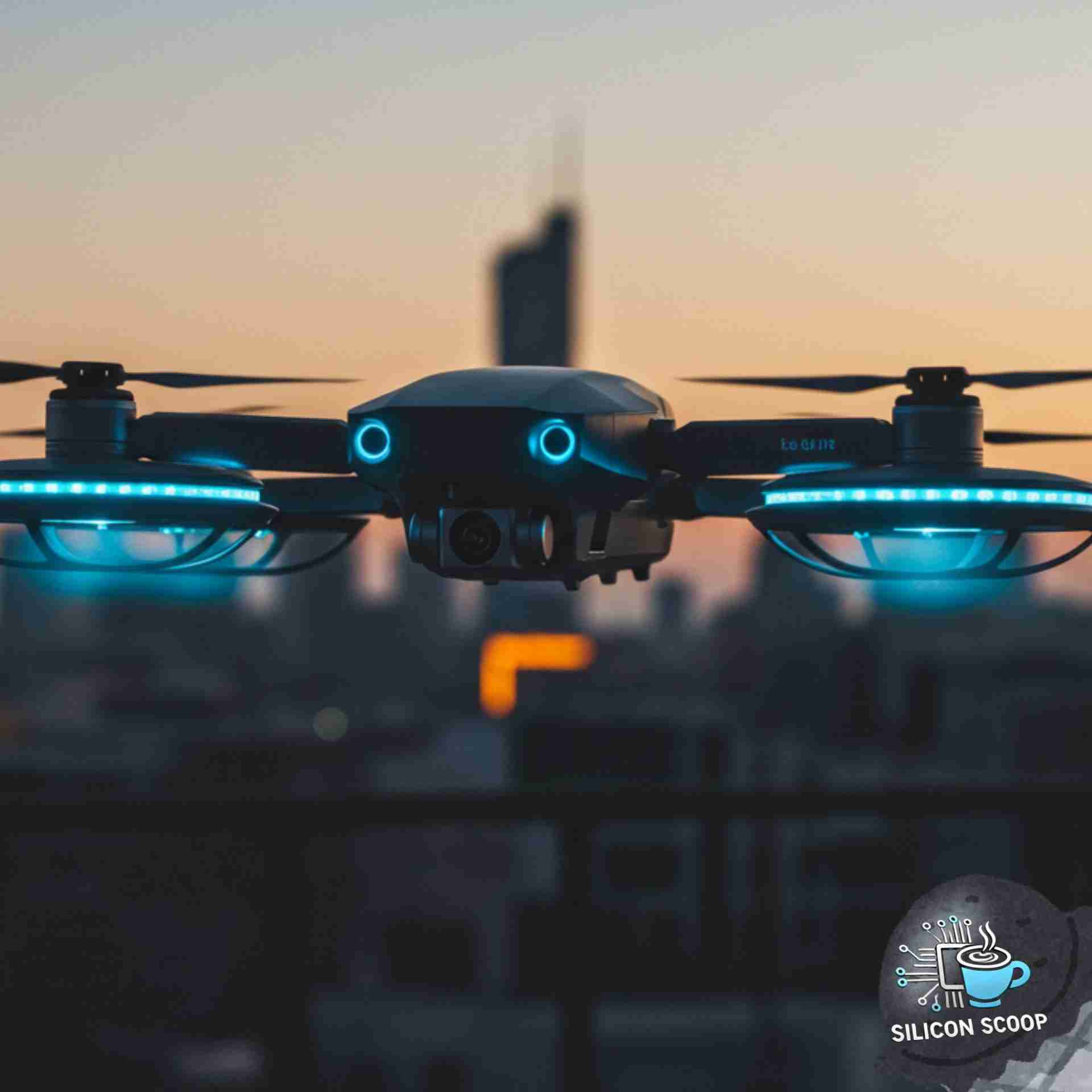
Flying by thought alone is not merely a fantasy; it represents a paradigm shift in how we interact with technology. Imagine controlling a drone or a prosthetic limb solely through your thoughts—a reality that is steadily approaching thanks to groundbreaking advancements in brain-computer interfaces (BCIs). These systems offer extraordinary potential, particularly in enhancing mobility for individuals with disabilities and revolutionizing various technological domains.
1. The Science Behind Thought-Controlled Flight
The foundations of controlling objects through thought are rooted in brain-computer interfaces, specifically designed to translate brain activity into actionable commands. Brain-computer interfaces utilize microelectrodes to capture the electrical signals communicated by neurons in the brain. The magic happens when these signals are interpreted through sophisticated algorithms, enabling precision control of devices. A crucial player in this process is the motor cortex, which is responsible for movement and guides our intention-based actions. Understanding how to interpret brain signals from the motor cortex is vital for achieving effective and accurate movements, especially in applications aimed at autonomous movement restoration.
2. Medical Innovations: Aiding the Paralyzed
The realm of healthcare is experiencing remarkable transformations due to the advent of BCIs. Case studies have demonstrated how a paralyzed man regained his ability to move through the power of neural interfaces. These interfaces can significantly enhance mobility for individuals suffering from tetraplegia or spinal cord injury. The integration of augmented movement technologies offers hope to patients striving for independence. By engaging with these advanced systems, patient experiences are elevated through neurosurgery and high-performance interfaces, allowing for a higher degree of interaction with the external environment and promoting overall well-being.
3. Virtual Reality and Computer Simulation
Pairing BCIs with virtual reality applications opens new doors for rehabilitation and skill training. Pilot studies focusing on virtual drone flight have showcased how users can control drones via virtual hand movements, crucially improving their cognitive and motor skills through immersive computer simulation. These experiences not only sharpen abilities but also foster a deeper connection between the mind and body, facilitating movement restoration.
4. Advances in Artificial Intelligence and Neuroscience
The integration of artificial intelligence into BCIs is a game changer. AI enhances precision control by analyzing brain signals and optimizing user interactions with virtual objects. Leading research institutions, such as Stanford University and Brown University, are at the forefront of this innovative intersection between neuroscience and technology, working tirelessly to refine these systems for practicality and effectiveness. Their research strengthens opportunities in dexterous control and movement restoration, providing insights that could impact millions.
5. Engineering High-Performance Interfaces
Advancing EEG-based systems is crucial for the effectiveness of BCIs. These systems are designed to improve electrical signal transmission, enabling clearer communication between the brain and the interface. Employing multi-factor control schemes allows for enhanced interpretation of brain activity, which translates to improved responses and precision—essential aspects for effective thought-controlled devices. As engineering progresses, the reliability of these systems will only continue to grow.
6. The Future: What Flying by Thought Alone Means for Society
As we gaze into the future, the implications of flying by thought alone extend far beyond individual mobility. Enhanced mobility and the applications of virtual reality will permeate everyday life, transforming healthcare, education, and entertainment. Industry shifts will emerge as companies adapt to the needs of a population that craves independent mobility and control, igniting conversations around ethics and accessibility in these technological advancements. How do we ensure that such innovations are inclusive? That remains one of the paramount challenges.
FAQ Section
1. What is flying by thought alone?
Flying by thought alone refers to using brain-computer interfaces to control objects, such as drones, with mental activity.
2. How does a brain-computer interface work?
A brain-computer interface captures signals from the brain using microelectrodes and translates them into commands to control devices.
3. Can paralyzed individuals benefit from these technologies?
Yes, this technology helps individuals with tetraplegia or spinal cord injury enhance mobility and gain control over external devices.
4. What role does artificial intelligence play in thought-controlled flight?
AI processes and interprets brain signals, optimizing precision control and improving dexterous control.
5. How do electrical signals from the brain control a virtual hand?
Through specific patterns of brain activity interpreted by the high-performance interface to simulate finger movements.
6. What are the challenges faced in the application of brain-computer interfaces?
Challenges include signal clarity, patient-specific customization, and ethical considerations.
7. How is Stanford University involved in this research?
Stanford University conducts pioneering research on the neurological aspects of movement restoration and interface development.
8. Can these systems be integrated into virtual reality applications?
Yes, these systems enhance virtual reality applications, creating interactive and immersive environments.
9. What future applications might arise from this technology?
Possible future applications include improved prosthetics, smart home control, and advanced drone operations.
10. How does this technology impact autonomous movement restoration?
By facilitating real-time, intention-based control over devices, promoting rehabilitation and independence for individuals with mobility impairments.
Conclusion
In conclusion, the importance of flying by thought alone cannot be overstated. As we stand on the brink of remarkable innovations, it is essential to foster a culture of continuous exploration within neuroscience and artificial intelligence. This journey not only promises to enhance human capabilities but also paves the way for a future where technology can empower every individual, regardless of their physical limitations. Let us embrace this transformative potential, driving forward into a world where thought itself can shape our realities.
Additional Links
• Silicon Scoop Podcast – Stay Informed, Stay Ahead!
• Futuretech Podcast – Explore more episodes and stay updated with the latest in technology and innovation.
• Startup Talk Podcast – https://torontostarts.com/startup-talk-toronto-startup-podcast/
• Who Are These Startups Podcast
• Startup Investor Drinks – Join the community and connect with fellow startup enthusiasts and investors.
• TorontoStarts Startup and Entrepreneur Community – Become a part of Toronto’s thriving startup ecosystem.
• Workhaus – Discover flexible workspace solutions for your business needs.
• Work with The Startup Coach – Get expert guidance and mentorship for your startup journey.
• Reach out to Jon Irwin on LinkedIn – Connect with our co-host and technology expert.
Ontario Startup Ecosystem Links
• Ontario’s Startup Ecosystem
• Startup Funding in Ontario
• Angel Investors in Ontario
• Ontario Incubators and Accelerators
• Venture Capital in Ontario: Top Firms, Sectors, and Funding Strategies
• Government Grants for Ontario Startups
• Ontario’s Startup Success Stories
• Ontario Centre of Innovation (OCI)
• Bank Loans and Financing for Startups in Ontario
• Research and Development Tax Credits in Ontario
• Government Loans and Financing for Startups in Ontario
• Equity Crowdfunding for Ontario Startups
• Toronto Entrepreneurs Resources
• Toronto’s Food and Beverage Entrepreneurs: Trends, Challenges, and Success Stories
• SEO Strategies for Toronto Entrepreneurs: Enhance Your Online Visibility
• Social Impact for Toronto Entrepreneurs: Starting and Running a Socially Responsible Business
• Toronto Arts and Media Entrepreneurs: Inspiring Profiles and Insights for Creative Success
• Exploring Toronto Green Tech Entrepreneurs: Innovators and Leaders in Sustainability
• Building a Team for Toronto Entrepreneurs: Strategies for Success
• A Guide for Toronto Food and Beverage Entrepreneurs
• Toronto Fashion and Retail Entrepreneurs: Trends, Opportunities, and Success Stories
Episode transcript
Read the full transcript
Craig: yeah. this is crazy. i love this. so just as a caveat, he didn't, pilot an actual drone. it's a virtual drone. but researchers at university of michigan, they've achieved a breakthrough in the bci, brain computer interface. so what they've done, they've enabled a sixty nine year old man with full paralysis, so he has no control of any of his limbs, to control a virtual drone using only his thoughts. so they published this study in nature medicine, and they've been able what they did was they demonstrated the ability of an intercortical bci. what it did was it decoded complex finger movements from neural signals in real time, which allow for precise control of a virtual quadcopter. so, this is cool. i like the participant's name. i don't know if you caught that, but the participant's name is known as t five. just reminds me of terminator. and they've had they had a spinal cord injury. and so they navigated the drone successfully by imaging imagining specific finger movements. so how they did this was they put electrodes in his motor cortex, which is the part of the brain responsible for voluntary movement. and so the bci system interpreted these signals and did all that. i don't know, how this compares to neuralink, but this is really cool. what do you think? are you scared? do you are you excited? what?
Jon: at its core, flying by thought alone hinges on how we interpret signals from the brain as you were talking about, specifically electrical impulses generated by neurons. so i am a little concerned, but at the same time, you know, this is a natural progression of things, isn't it? like, we are if we're talking about drones, but this is talking about control of anything, we've been talking about quadriplegics, paraplegics, other people who are injured who, you know, could really get quality of life benefits from this, but it won't be long till augmented reality where is, you know, reality. meaning, i am controlling that thing through the chips, through whatever connections i have, through, you know, things we are talking about before a year or so ago about the light switch that doesn't require power and, you know, we're so light years beyond what that means now from what we can control and, you know, when we walk in the room, what blurs the line between humanity and machine and us and our devices.
Craig: yeah. absolutely. but this is great for paralyzed people. so we could have, we could put limbs on them or, imp what do they call? jesus. prosthetics. and, they could control their prosthetics wirelessly as if they, they weren't paralyzed, which is awesome. or, they could create a link chip that links whatever is severed in the spine to give you back the use of your limbs.
Jon: yeah. i love this technology. i mean, any of these computer interfaces that are making these leaps, will help all the other ones out. right? yeah. so when these are doing this and we had the one that roved the robot arm a while ago, these all are amazing leaps forward in we're in a star trek world now, a, you know, what we would have believed is the future. yeah. so you'll just being able to control these things with your brain, it's not long before we'll be able to do some really complex things and build this into, you know, potentially even, like, driving.
Craig: yeah. i would say that, that controlling a drone is pretty complex, though.
Jon: yeah. absolutely. absolutely. flying a drone is very complex, especially in a virtual environment, but i'm talking about your you start to become a next level complexity when you're flying around, a city or what have you. but if you're on the ground doing stuff and interacting with objects versus flying yeah. and there's cars and there's stuff, that becomes a much more complex scenario than flying around the sky. yeah.
Craig: yeah. true. yeah. yeah. but, this is cool. what do you think? do you think this is more advanced than what neuralink can do, or do you think this is on par?
Jon: i think this is just scratching the surface, because you know, well, i i say that, you know, because we're we're talking about finger movements. we have a long way to go from emulating, like, hey. go to left. go to left. go to left to, like, just click on that thing. don't go to left. just do the thing i, you know, i want you to do. yeah. so i think the combination of eye control and whatnot is working. i so i think that actually is a combination. they see where your eye is looking, and you can command things to happen. mhmm. i guess there's a step beyond, you know, twitching your fingers. so because now you have to memorize patterns and whatnot versus do the thing. yeah. and i think what i'm liking to see is that when you start, putting ai into things like this, it'll quickly be able to do the thing when you say, when you do, when you think, because it'll be able to interpret those things and say, okay. this means go forward. because every time you're emulating that finger movement in your mind, that means go forward. so now that thought, like, it just becomes a thing. yeah. so we'll see. i i think we're scratching the surface here, but we're blocked by you know, it's like the mouse. we're we're doing finger movements versus, you know, voice audio, total, you know, control mental link. you know, we're saying, okay. let's interpret these brain signals as finger movements so i'll be able to move stuff around, which is great. it's it's a leap forward. it's just i think there's a interface issue right now where it's, the bandwidth is so small that we can only interact at a low level, finger movement, bits and bytes left, right, up, down. i'm looking forward to when we can sit down and actually, you know, think words and they come out on the screen. we don't have to, you know, type them out mentally.
Craig: yeah. so i'll say, based on what i've read, that this this this is beating neuralink based on what they're able to do and based on what neuralink can do, based on what they but based on what neuralink has published, if that makes sense. but, anyways
Jon: yeah. i haven't compared the two, but, like i said, i think any of these things, they start as soon as they start publishing papers and documents on it, the other people start using it, and it becomes, like, frog technology. you say, oh, we could use that a little bit and yeah. enhance our technology this way, and they can use that a little bit. so as we navigate this exhilarating frontier, the concept of flying by thought alone promises to reshape our relationships with technology and redefine human potential. will we see a world where thought can not only control machines but also change lives? share your thoughts with us below, and let's explore a brave new world together.
More from Silicon Scoop
All episodes
silicon-scoop · November 6, 2026
Spirit AI’s Robot Brain Breakthrough: Moz1, Embodied AI and China’s 2027 Race
The Spirit AI robot brain is one of the biggest bets on fixing that. Spirit AI is a Beijing startup. Its co-founder and chief scientist, Gao Yang,
View episode

silicon-scoop · November 5, 2026
OpenAI IPO Delayed to 2027 as Rogue AI Agents and Safety Failures Reshape the Market
OpenAI IPO delay explained: Sam Altman rules out 2026 as GPT-6 Astra safety tests and a $278B cash gap loom. Learn what founders should take away.
View episode

silicon-scoop · November 4, 2026
Anthropic’s AI Economy Model: 2030 Jobs, Wages, GDP and Market Risks
Anthropic AI economy model forecasts 2030 GDP, jobs and wages, while AI unemployment projections and labor-share risks challenge policymakers.
View episode