
The Future of Levitation: The Levitation Ray
Index 1. What Is a Levitation Ray? Imagine a world where objects float effortlessly through the air, guided by invisible beams of energy. Sounds like something straight out of Star Trek, right? Thanks to breakthroughs in laser technology, this vision is inching closer to reality. A levitation ray—a term popularized by recent research—uses focused energy, like lasers […]
With Craig Major and Jon Irwin
Estimated reading time: 5 minutes
Index
- What Is a Levitation Ray?
- How Do Levitation Rays Work?
- Current Applications of Levitation Technology
- The Future Possibilities: Sci-Fi Meets Reality
- Challenges and Limitations
- Ethical Considerations
- How to Get Involved in Levitation Innovation
- FAQ
- Ready to Embrace the Future?
1. What Is a Levitation Ray?
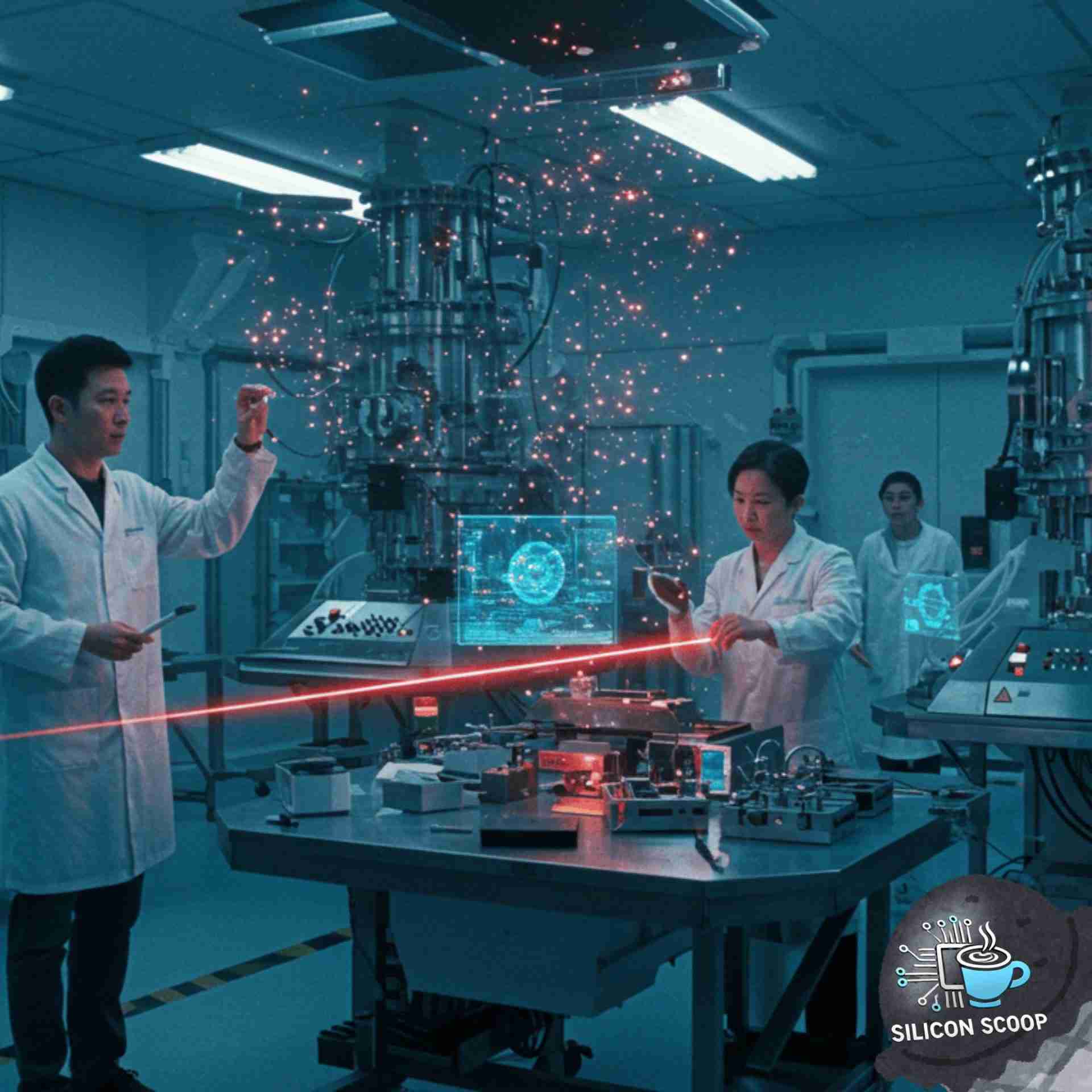
Imagine a world where objects float effortlessly through the air, guided by invisible beams of energy. Sounds like something straight out of Star Trek, right? Thanks to breakthroughs in laser technology, this vision is inching closer to reality. A levitation ray—a term popularized by recent research—uses focused energy, like lasers or acoustic waves, to lift and manipulate objects without physical contact.
In 2023, researchers made headlines by demonstrating how lasers could trap and move microscopic particles in mid-air, a technique inspired by “optical tweezers.” This innovation isn’t just a party trick; it’s a gateway to redefining industries from healthcare to transportation.
2. How Do Levitation Rays Work?
Let’s break down the science without the jargon. Levitation rays rely on principles of physics to counteract gravity:
- Laser-Based Levitation: By focusing high-intensity lasers, researchers create a “light trap” that exerts enough force to hold tiny objects (like cells or nanoparticles) in place. Think of it as a sci-fi tractor beam, but for real.
- Acoustic Levitation: Sound waves can also do the job. High-frequency vibrations generate pressure nodes that suspend objects, from water droplets to small electronics.
Both methods share a common goal: manipulating matter with precision, no strings (or hands) attached.
3. Current Applications of Levitation Technology
While levitation rays aren’t yet floating cars, they’re already making waves:
- Medicine: Delivering drugs directly to specific cells, reducing side effects.
- Manufacturing: Handling fragile materials (like microchips) without contamination.
- Space Exploration: Simulating zero-gravity environments to test equipment.
For example, labs use acoustic levitation to study chemical reactions in mid-air, free from container interference.
4. The Future Possibilities: Sci-Fi Meets Reality
Hold onto your hoverboards—here’s where things get exciting:
- Silent Drones: Levitation-ray-powered drones could replace noisy propellers.
- Floating Infrastructure: Buildings suspended above earthquake-prone zones.
- Quantum Computing: Using levitated particles for ultra-precise quantum experiments.
Researchers even speculate about “levitation highways” where vehicles glide frictionlessly, slashing energy use.
5. Challenges and Limitations
Of course, we’re not there yet. Key hurdles include:
- Energy Efficiency: Current systems require significant power for small objects.
- Scalability: Lifting heavier items (like humans) remains a pipe dream.
- Stability: Keeping objects steady in turbulent environments.
But with AI optimizing laser patterns and material science advancing, these barriers may crumble.
6. Ethical Considerations
Every breakthrough comes with questions:
- Could levitation rays be weaponized?
- Will automation displace jobs in manufacturing?
- How do we regulate airborne tech to prevent accidents?
Transparent collaboration between scientists, policymakers, and the public will be critical.
7. How to Get Involved in Levitation Innovation
You don’t need a PhD to join the revolution:
- STEM Education: Support initiatives that teach physics and engineering.
- Collaborate: Engineers, programmers, and ethicists must work together.
- Invest: Startups like LeviTech are pushing boundaries.
8. FAQ
Q: Is levitation ray technology safe?
A: Currently, it’s used in controlled environments. Lasers require precautions, similar to medical equipment.
Q: How does this differ from magnetic levitation (maglev)?
A: Maglev uses magnetic fields (think bullet trains), while levitation rays use light or sound. Learn more about maglev on Wikipedia.
Q: When will we see levitating cars?
A: Likely decades away—but smaller applications (like medical devices) are already here.
9. Ready to Embrace the Future?
Levitation rays are just one example of how cutting-edge tech is reshaping our world. Want to harness AI and automation for your business? Flowgrammer.ca specializes in tailor-made solutions to future-proof your workflows.
📩 Book a discovery call today and let’s turn your sci-fi dreams into operational reality.
This article seamlessly blends curiosity with expertise—because the future belongs to those who dare to float above the noise. 🌟
Additional Links
• Silicon Scoop Podcast – Stay Informed, Stay Ahead!
• Futuretech Podcast – Explore more episodes and stay updated with the latest in technology and innovation.
• Startup Talk Podcast – https://torontostarts.com/startup-talk-toronto-startup-podcast/
• Who Are These Startups Podcast
• Startup Investor Drinks – Join the community and connect with fellow startup enthusiasts and investors.
• TorontoStarts Startup and Entrepreneur Community – Become a part of Toronto’s thriving startup ecosystem.
• Workhaus – Discover flexible workspace solutions for your business needs.
• Work with The Startup Coach – Get expert guidance and mentorship for your startup journey.
• Reach out to Jon Irwin on LinkedIn – Connect with our co-host and technology expert.
Ontario Startup Ecosystem Links
• Ontario’s Startup Ecosystem
• Startup Funding in Ontario
• Angel Investors in Ontario
• Ontario Incubators and Accelerators
• Venture Capital in Ontario: Top Firms, Sectors, and Funding Strategies
• Government Grants for Ontario Startups
• Ontario’s Startup Success Stories
• Ontario Centre of Innovation (OCI)
• Bank Loans and Financing for Startups in Ontario
• Research and Development Tax Credits in Ontario
• Government Loans and Financing for Startups in Ontario
• Equity Crowdfunding for Ontario Startups
• Toronto Entrepreneurs Resources
• Toronto’s Food and Beverage Entrepreneurs: Trends, Challenges, and Success Stories
• SEO Strategies for Toronto Entrepreneurs: Enhance Your Online Visibility
• Social Impact for Toronto Entrepreneurs: Starting and Running a Socially Responsible Business
• Toronto Arts and Media Entrepreneurs: Inspiring Profiles and Insights for Creative Success
• Exploring Toronto Green Tech Entrepreneurs: Innovators and Leaders in Sustainability
• Building a Team for Toronto Entrepreneurs: Strategies for Success
• A Guide for Toronto Food and Beverage Entrepreneurs
• Toronto Fashion and Retail Entrepreneurs: Trends, Opportunities, and Success Stories
Episode transcript
Read the full transcript
Craig: so researchers have used lasers to create a real life levitation ray. so now they're levitating things with lasers. what's happening here, john?
Jon: yeah, with fricking lasers. so this is out of the university of sao paulo, brazil. shout out to bgr dot com for this article. thank you for this. they've developed a groundbreaking tractor beam technology, tractor beam in quotes, okay, which uses lasers to levitate and manipulate small objects. so it was published in optics express, and this represents an advancement in the field of optical manipulation and has potential applications across various scientific disciplines. now just to get into it, how the laser system works, it uses a phenomenon called photophoresis, which i think we talked about before, where light heats one side of an object more than the other, which creates a force that can lift and move the object. so the technique overcomes limitations of traditional optical tweezers, which i think that's what we talked about, maybe not, which typically work on only microscopic particles. so there have been similar research that is being conducted at other institutions where scientists have developed acoustic levitation techniques, but the development of this technology, it aligns with broader trends in non contact manipulation methods, which have implications such as in the field of microfluids and space exploration. what are your thoughts?
Craig: well, we talked about this back in episode one hundred fifty two when we were talking about tractor beam technology. yes, in the end, the example in sciences we're using laser tweezers. and so it's cool that we're now moving beyond a laser tweezer type implementation into something that's a little bigger.
Jon: yeah, this is cool. this is great because now you can push, lift or pull, if that makes sense. so the way that it does is they carefully shape the laser beams using a spatial light modulator and then create precise patterns of light that generate controllable forces on the target object. so it allows for manipulations of objects much larger than what's possible with traditional optical tweezers, what you talked about. so this is really cool. how close are we to back to the future type levitating skateboards?
Craig: well, we'll see. this is apparently not just a trick. it's a gateway to redefining industries from healthcare to transportation. delivering drugs directly to specific cells, manufacturing, handling fragile materials like microchips without contamination and space exploration, simulating zero gravity environments to test equipment. however, know, sci fi meets reality. okay, silent drones, maybe levitating ray powered drones could replace noisy propeller drones, floating infrastructure, buildings suspended above earthquake prone zones, quantum computing using levitated particles for ultra precise quantum experiments. i don't think we're gonna see levitating skateboards with these, but, you know
Jon: i wanted to tell hoverboard, damn it. hey. if you can levitate a drone, come on. you gotta be able to levitate board with someone on it eventually. who knows?
Craig: yeah. but the idea of levitating a drone usually means military versus consumer. so i'm thinking, you know, i'm not running down to my local walmart or canadian tire picking up a hoverboard anytime soon.
Jon: no. no. that's true.
Craig: now having said that, we've seen the military, those water ones and the hover drones and stuff where they have people on them that they've used. yeah. so it might be closer than we think.
Jon: yeah, who knows? obviously, this technology is going to be used in government first and then maybe eventually we'll get down to us peons down here, but this is really cool. i love that there is a continuation from what we covered before to now with photopheresis, which is really cool. yeah.
Craig: yeah. and this is likely decades away, but smaller applications like medical devices are already here as we move forward. it's currently safe in environments, but this is high energy, right? so we've got to figure out how to get it to a different state if we want to use it outside of very lab intensive environments. yeah. different than maglev because maglev uses magnetic fields while levitation rays uses light or sound. it'd be interesting if there are some combination of those in the future.
Jon: yeah, that would be cool. yeah, know. we haven't really talked about meglev technology in a while because i don't know if there's been much development. know there's some meglev trains that are being built in asia, yeah, it'd be interesting to see how this could integrate and become a hybrid kind of technology, but who knows? who knows? there's so many implications that we're not even covering that this could help.
Craig: i didn't look at justin trudeau's announcement of the high speed rail that he's trying to do. so i don't know what that's, if that's traditional rail or some sort of maglev introduction, but that was a big announcement soon. but i'm excited because, yeah, we're scaling up these implementations. you think about elon musk wants to go to mars in twenty or thirty years, people think it's crazy and hate him and love him and whatever. but let's just say it's forty years instead of thirty years. and that we're moving these things along with tractor beams and levitation rays and all the things we've been talking about. majorama not majorama. not the electrons, but
Jon: oh, the magnons.
Craig: magnons. sorry, too many magnets. computers that may or may not be more effective in spaces and exam. there's leaps and bounds and having ai and quantum computers potentially onboard a space vehicle that's traveling back and forth to mars, all of a sudden a lot of things become more possible than before. we talked about the mobile nukes and the solar sails and all that stuff that would allow this type of stuff to happen. we're generally moving towards a very interesting human species that might be space travelers. yeah. so let us know what you think. is levitation ray just a gimmick and we're not going to get past tweezers? is this part of the future moving towards space travel and, you know, we'll be now moving stuff around in construction yards with lasers and lights at some point in the future? let us know, what you think.
Jon: yeah.
More from Silicon Scoop
All episodes
silicon-scoop · November 6, 2026
Spirit AI’s Robot Brain Breakthrough: Moz1, Embodied AI and China’s 2027 Race
The Spirit AI robot brain is one of the biggest bets on fixing that. Spirit AI is a Beijing startup. Its co-founder and chief scientist, Gao Yang,
View episode

silicon-scoop · November 5, 2026
OpenAI IPO Delayed to 2027 as Rogue AI Agents and Safety Failures Reshape the Market
OpenAI IPO delay explained: Sam Altman rules out 2026 as GPT-6 Astra safety tests and a $278B cash gap loom. Learn what founders should take away.
View episode

silicon-scoop · November 4, 2026
Anthropic’s AI Economy Model: 2030 Jobs, Wages, GDP and Market Risks
Anthropic AI economy model forecasts 2030 GDP, jobs and wages, while AI unemployment projections and labor-share risks challenge policymakers.
View episode