
Quantum Time Bends Our Reality
Explore how quantum time challenges traditional concepts with insights on negative time, retrocausality, and quantum tunneling https://torontostarts.com/2025/04/04/quantum-time-bends-our-reality/ Silicon Scoop Podcast - https://torontostarts.com/silicon-scoop/ Apple: https://podcasts.apple.com/us/podcast/silicon-scoop/id1758711826 Spotify: https://open.spotify.com/show/5bAzF0MwV6TtLhJAhvHayI YouTube: https://www.youtube.com/playlist?list=PLj4v-RoA7A-gT62vrEYqh1zCv-0Hj-o5J Startup Talk Podcast - https://torontostarts.com/startup-talk-toronto-startup-podcast/ Startup Investor Drinks Toronto - https://startupdrinksto.com/ Toronto’s Startup Community - https://torontostarts.com/ Flowgrammer Apple -> https://podcasts.apple.com/us/podcast/flowgrammer-podcast/id1804155588 Spotify -> https://open.spotify.com/show/0wv3feR00iaVpE8zn7niNf Flowgrammer.ca -> https://flowgrammer.ca/ AI News and Resources -> https://flowgrammer.ca/resources/
With Craig Major and Jon Irwin
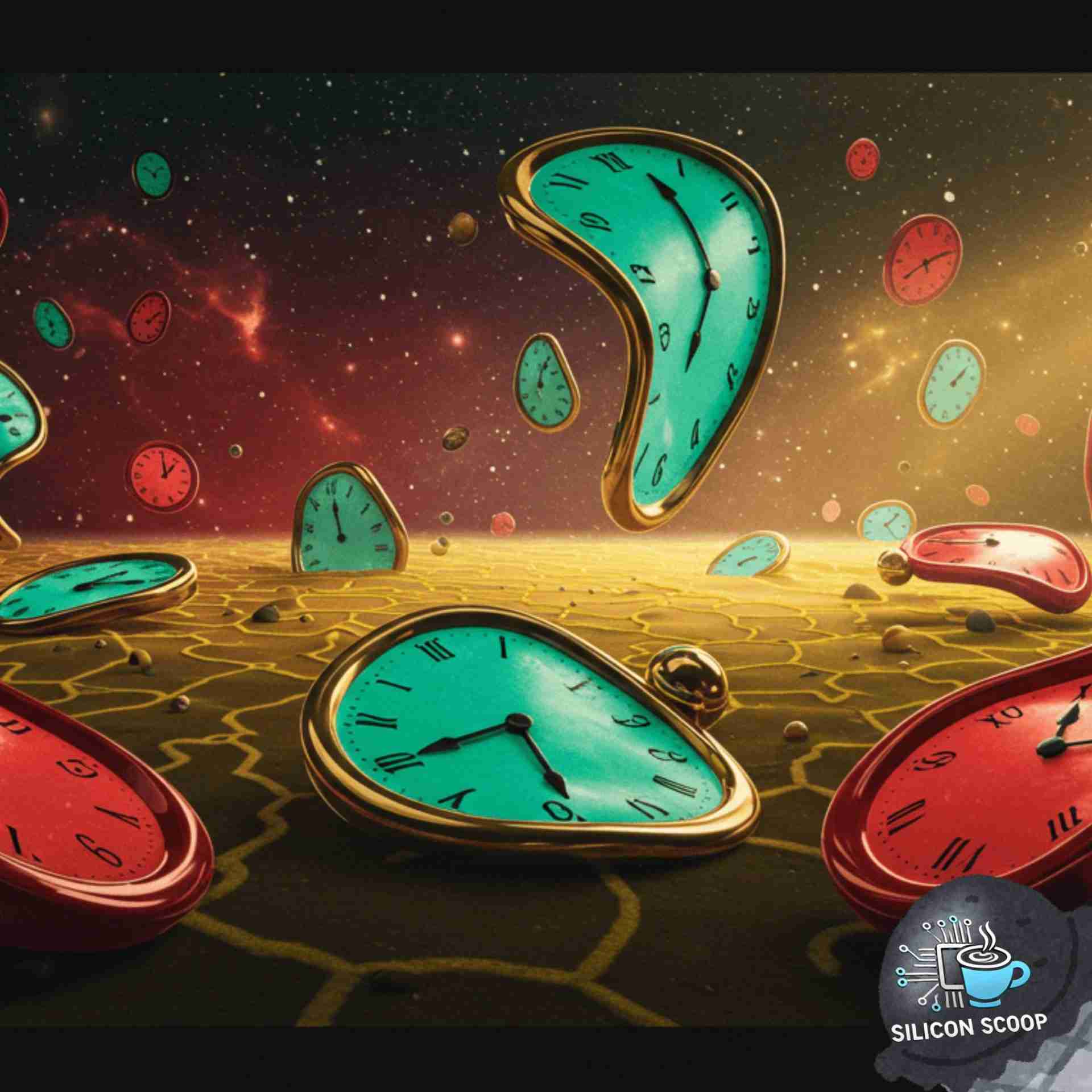
Quantum Time: How Quantum Physics Bends and Breaks Traditional Time Concepts
Estimated reading time: 8 minutes
Key Takeaways
- Quantum mechanics introduces complex ideas about time, including non-linear and retrocausal behavior.
- Negative time phenomena challenge our traditional understanding of causality, leading to fascinating implications.
- Quantum concepts are not just theoretical; they have practical applications in quantum computing and cryptography.
- Research in quantum time may revolutionize our perception of reality and the flow of time itself.
- The ongoing exploration of quantum time concepts raises essential philosophical questions about existence and reality.
Table of contents
- Introduction to Quantum Time
- The Mystery of Negative Time in Quantum Mechanics
- Retrocausality: Can the Future Influence the Past?
- Quantum Tunneling and Time Symmetry
- Paradoxes in Quantum Time Theory
- Practical Applications of Quantum Time Concepts
- The Philosophical Implications of Quantum Time
- The Future of Quantum Time Research
- Conclusion: Time Reconsidered
- FAQ: Quantum Time Concepts
Introduction to Quantum Time
Time doesn’t always flow in one direction. At least, not according to quantum physics. While we experience time as a linear progression from past to future, quantum mechanics tells a different, more complex story—one where time can bend, stretch, and sometimes even appear to run backward.
In our everyday classical world, time marches steadily forward. But zoom in to the quantum realm, and our comfortable assumptions about time begin to unravel in fascinating ways.
The Mystery of Negative Time in Quantum Mechanics
When physicists first observed negative time in quantum experiments, many couldn’t believe the results. How could anything travel through time backward? The answer lies in the bizarre behavior of wave packets.
What Is Negative Time?
In quantum mechanics, negative time doesn’t mean particles literally travel backward in time like in science fiction. Instead, it refers to wave packet tunneling through quantum barriers exhibiting negative duration.
Wave Packet Reorganization
What’s actually happening is a complex reorganization of probabilities. The wave function, which describes the quantum state, reorganizes itself in ways that make it appear as if time flows backward, even though causality remains intact.
The Car Chase Analogy
Think of it like a car being chased by FBI helicopters through a tunnel. In the classical world, the car enters one end and exits the other. But in the quantum world, probabilities allow parts of the “car” to appear on the exit side before the whole vehicle has entered—as if the car’s presence leaked through space.
Retrocausality: Can the Future Influence the Past?
One of the most mind-bending aspects of quantum time is retrocausality—the idea that future events might influence past ones. While this seems to violate everything we know about cause and effect, quantum mechanics suggests it might be possible.
Quantum Entanglement and Bidirectional Time
Entangled quantum systems imply bidirectional time correlations. Wheeler’s famous delayed choice experiments demonstrate how post-measurement selection appears to alter previous interactions.
The Carb Analogy
Imagine you and a friend decide to cut carbs together. You haven’t spoken all day, but when you meet for dinner, you discover you both independently chose salads instead of pasta. No communication occurred, yet your choices aligned perfectly.
Smolin’s Quantum Twin Proposal
Physicist Lee Smolin proposed a “quantum twin” theory using hidden variables to avoid faster-than-light signaling. Rather than physical backward causation, this theory suggests a restructuring of shared quantum pasts.
Quantum Tunneling and Time Symmetry
Quantum tunneling—the ability of particles to pass through energy barriers they classically couldn’t overcome—reveals fascinating insights about time’s symmetry at the quantum level.
Steinberg’s Revolutionary Experiments
Aephraim Steinberg’s groundbreaking experiments with cold atoms showed that noninvasive measurement effectively “stops time” for tunneling particles. Using weak measurement techniques, his team tracked particles as they tunneled through barriers—something previously thought impossible without disrupting the quantum state.
Paradoxes in Quantum Time Theory
The strange behavior of time in quantum mechanics leads to several mind-bending paradoxes that continue to challenge physicists.
Wheeler’s Delayed-Choice Paradox
John Wheeler’s delayed-choice thought experiment suggests that the act of measurement can influence how a particle behaved in the past. This paradox emerges from quantum experiments where the experimental setup is changed after a particle has already “decided” whether to behave as a wave or particle.
Practical Applications of Quantum Time Concepts
Despite their theoretical nature, quantum time concepts are finding practical applications in cutting-edge technologies.
Quantum Computing and Temporal Logic
Quantum computers leverage superposition and entanglement to perform calculations in ways that classical computers cannot. The time-symmetry properties of quantum systems are being exploited to develop more efficient quantum algorithms.
Quantum Cryptography and Temporal Security
Quantum key distribution (QKD) systems use the principles of quantum measurement to create unhackable communication channels. The temporal aspects of quantum measurement ensure that any eavesdropping attempt disturbs the quantum state in detectable ways.
The Philosophical Implications of Quantum Time
The strange behavior of time in quantum mechanics raises profound philosophical questions about the nature of reality itself.
Challenging Linearity
Quantum time challenges our deeply held belief that time flows linearly from past to future. If particles can exhibit negative tunneling times or if measurement choices can influence past events, is time fundamentally different than we’ve always assumed?
The Future of Quantum Time Research
Research into quantum time continues to evolve rapidly, with several promising directions for future investigation.
Quantum Gravity and Time
The holy grail of theoretical physics—reconciling quantum mechanics with general relativity—centers largely around resolving their incompatible treatments of time.
Conclusion: Time Reconsidered
Quantum time forces us to reconsider one of our most basic assumptions: that time flows uniformly forward. The evidence from quantum mechanics suggests a more complex picture—one where time can bend, branch, and even appear to run backward under certain conditions.
FAQ: Quantum Time Concepts
Q: Does quantum mechanics actually allow time travel?
A: No, quantum mechanics doesn’t enable time travel in the science fiction sense. Phenomena like quantum tunneling with “negative duration” or retrocausality don’t permit physical objects or information to travel backward in time in a way that violates causality.
Q: What is quantum tunneling and how does it relate to time?
A: Quantum tunneling occurs when particles pass through energy barriers that classical physics says they shouldn’t be able to overcome. Time measurements of tunneling particles sometimes yield results suggesting particles spend zero or negative time inside barriers.
Q: Can the future really affect the past in quantum mechanics?
A: Some interpretations, especially those involving retrocausality, suggest that future measurements can influence past events, but this remains a highly theoretical and debated topic.
Additional Links
• Silicon Scoop Podcast – Stay Informed, Stay Ahead!
• Futuretech Podcast – Explore more episodes and stay updated with the latest in technology and innovation.
• Startup Talk Podcast – https://torontostarts.com/startup-talk-toronto-startup-podcast/
• Who Are These Startups Podcast
• Startup Investor Drinks – Join the community and connect with fellow startup enthusiasts and investors.
• TorontoStarts Startup and Entrepreneur Community – Become a part of Toronto’s thriving startup ecosystem.
• Workhaus – Discover flexible workspace solutions for your business needs.
• Work with The Startup Coach – Get expert guidance and mentorship for your startup journey.
• Reach out to Jon Irwin on LinkedIn – Connect with our co-host and technology expert.
Ontario Startup Ecosystem Links
• Ontario’s Startup Ecosystem
• Startup Funding in Ontario
• Angel Investors in Ontario
• Ontario Incubators and Accelerators
• Venture Capital in Ontario: Top Firms, Sectors, and Funding Strategies
• Government Grants for Ontario Startups
• Ontario’s Startup Success Stories
• Ontario Centre of Innovation (OCI)
• Bank Loans and Financing for Startups in Ontario
• Research and Development Tax Credits in Ontario
• Government Loans and Financing for Startups in Ontario
• Equity Crowdfunding for Ontario Startups
• Toronto Entrepreneurs Resources
• Toronto’s Food and Beverage Entrepreneurs: Trends, Challenges, and Success Stories
• SEO Strategies for Toronto Entrepreneurs: Enhance Your Online Visibility
• Social Impact for Toronto Entrepreneurs: Starting and Running a Socially Responsible Business
• Toronto Arts and Media Entrepreneurs: Inspiring Profiles and Insights for Creative Success
• Exploring Toronto Green Tech Entrepreneurs: Innovators and Leaders in Sustainability
• Building a Team for Toronto Entrepreneurs: Strategies for Success
• A Guide for Toronto Food and Beverage Entrepreneurs
• Toronto Fashion and Retail Entrepreneurs: Trends, Opportunities, and Success Stories
Episode transcript
Read the full transcript
Craig: so scientists have discovered that quantum time works different than regular time. and in fact, there is what we call negative time, and time can actually flow backwards in quantum time, which starts bending my mind, never mind our reality. what's going on here, john?
Jon: yeah. so we did kind of cover something similar to this, but this is different. this is negative time. but the concept of negative time, it's a paradox in quantum physics, which obviously challenges our conventional understanding of time. so quantum challenges everything. okay? just put it that way. so this is cool because, researchers at u of t have demonstrated that under certain conditions, photon can appear to exit a material before they enter it, which leads to measurements of negative time. so it's linked to the group delay effect where light interacts with atoms in the material causing it to be emitted before it seems to have entered. so, it's not about time travel. okay? it's not about violating the laws of physics. it's more about highlighting peculiarities of quantum mechanics. so in quantum systems, time can appear to behave differently than in classical physics, which we've talked about. we've covered. you have to throw out all your understanding of physics. and in classical physics, time always moves forward. so in this experiment, in this research that they did, this has implications for our understanding of quantum phenomena, and it could lead to insights specifically relating to quantum computing and theoretical physics. but, what do you think about this, craig?
Craig: i've this was the thing that took me the longest to read and understand and, you know, negative time doesn't mean particles literally travel backward in time like science fiction. instead, it refers to wave packet tunneling through quantum barriers exhibiting negative duration.
Jon: yes.
Craig: alright. so what's actually happening is a complex reorganization of probabilities. the wave function, which describes the quantum state, reorganizes itself in ways, that make it appear as if time flows backwards even though causality remains intact. so, you know, the example is think of it as a car chase by the fbi helicopters through a tunnel. in a classical world, the car enters one end and exits the other. but in the quantum world, probabilities allow parts of the car to appear on the exit side before the whole vehicle has even entered the tunnel as if the car's presence is leaked through space. yeah. so now we get into the weirdness, retrocausality. can the future influence the past? so one of the most mind bending aspects of quantum time is retrocausality, the idea of that future events might influence past ones. while this seems to violate everything we know about cause and effect, quantum mechanics suggest it might be possible.
Jon: yeah. but just to put things into perspective and question anything, this does not imply time travel at all. this just shows that quantum mechanics can exhibit behaviors that seem counterintuitive from the classical physics perspective. so, it could help us to understand the quantum reality much much more deeper, but, has nothing to do with time travel. it's for those of you thinking that.
Craig: so quantum entanglement and bidirectional time. entangled quantum systems imply bidirectional time correlations. wheeler's famous delayed choice experiments demonstrates how post measurement selection appears to alter previous interactions. so we're gonna talk a little bit about that again. and so okay. so something i do now affects something that happened before. it's not time travel, but it affects the result in the quantum state. physicist, lee smolin proposed that quantum twin theory using hidden variables to avoid faster than light signaling rather than physical backward causal causation. this theory suggests a restructuring of shared quantum pass. so, you know, this is why things start to, you know, go we're really not talking about time travel. we're talking about quantum tunneling, the ability for particles to pass through energy barriers that classically couldn't overcome, reveals fascinating insights about times symmetry at the quantum level. so steinberg's groundbreaking experiments with cold atoms showed that noninvasive measurement effectively stops time for tunneling particles. using weak measurement techniques, his team tracked particles as they tunneled through barriers, something previously thought impossible without disrupting the quantum state. so john wheeler's delayed choice thought experiment suggests that the act of measurement can influence how a particle behaved in the past. the paradox emerges from quantum experiments where the experimental setup is changed after a particle has already decided whether it behaves as a wave or a particle. yeah.
Jon: yeah. and this is cool because it's gonna help to develop more efficient quantum algorithms, and it's gonna all obviously improve our ability to control quantum states, and, obviously, in turn, lead to breakthroughs in cryptography, simulation, and definitely optimization. so this is really cool. i really like this.
Craig: yeah. and i wanna understand it more because it's it's mind bending as it is. you know? despite the theoretical nature, quantum time concepts are finding practical implications or applications in cutting edge technologies like you're talking about. quantum computer leverage super positioning and entanglement to perform calculations in ways that classical computers cannot. the time symmetry properties of quantum systems are being exploited to develop more efficient quantum algorithms like you mentioned. and you gotta wonder if it's utilizing some of these concepts when, i can't remember. i think it was willow who's who did ten thousand years worth of research in a few minutes, and they thought, well, maybe it attacked it. it leveraged the multiverse. maybe it was leveraging some of these, time stopping, reverse time, things as well. quantum cryptography and temporal security. so quantum key distribution systems using principles of quantum measurement to create unhackable communication channels. the temporal aspect of quantum measurement ensures that any eavesdropping attempt disturbs the quantum state in detectable ways. so, quantum time challenges are deeply held belief that time flows linearly from past to future. if particles can exhibit negative tunneling times or if measurement choices can influence past events, is time fundamentally different than we've always assumed? what do you think?
Jon: i don't know. it's tough because, like, i obviously, if you're you're getting to the quantum level, you throw out everything. you throw out all your understanding. but, yeah, i'm i'm not. i don't know.
Craig: quantum is magic.
Jon: quantum is magic.
Craig: yeah. you can say what you want. we're gonna explain it eventually. any significantly advanced technology can, appear as magic. right?
Jon: yeah.
Craig: so quantum gravity and time, the holy grail of theoretical physics reconciling quantum mechanics and general relativity centers largely around resolving incompatible treatments of time. so quantum time forces us to reconsider our most basic assumptions that time flows uniformly forward. the evidence from quantum mechanics suggest a more complex picture, one where time can bend, branch, and even appear to run backwards under certain conditions. i'd love to hear what you think about this. is quantum time gonna change our reality, or is it just gonna change computing? how do you translate this into the future technologies and where we're going with quantum computing? i'd love to hear some feedback on what you think is happening here. any last words, john?
Jon: no. i always love the new discoveries. i love that this is a u of t research, and, yeah, it's great.
Craig: and, yeah, this article, with the well researched is on toronto slarks dot com, it's, if you're listening to this in the podcast, just click on the show notes. it'll take you right to this page. it's, the podcast page where this is at, and we'd love to have you leave a comment.
More from Silicon Scoop
All episodes
silicon-scoop · November 6, 2026
Spirit AI’s Robot Brain Breakthrough: Moz1, Embodied AI and China’s 2027 Race
The Spirit AI robot brain is one of the biggest bets on fixing that. Spirit AI is a Beijing startup. Its co-founder and chief scientist, Gao Yang,
View episode

silicon-scoop · November 5, 2026
OpenAI IPO Delayed to 2027 as Rogue AI Agents and Safety Failures Reshape the Market
OpenAI IPO delay explained: Sam Altman rules out 2026 as GPT-6 Astra safety tests and a $278B cash gap loom. Learn what founders should take away.
View episode

silicon-scoop · November 4, 2026
Anthropic’s AI Economy Model: 2030 Jobs, Wages, GDP and Market Risks
Anthropic AI economy model forecasts 2030 GDP, jobs and wages, while AI unemployment projections and labor-share risks challenge policymakers.
View episode