
AstroForge’s Odin Asteroid Mining Mission
AstroForge's Odin Asteroid Mining Mission: Unlocking the Future of Space Resources https://torontostarts.com/2025/04/16/astroforge-asteroid-mining-mission/ Silicon Scoop Podcast - https://torontostarts.com/silicon-scoop/ Apple: https://podcasts.apple.com/us/podcast/silicon-scoop/id1758711826 Spotify: https://open.spotify.com/show/5bAzF0MwV6TtLhJAhvHayI YouTube: https://www.youtube.com/playlist?list=PLj4v-RoA7A-gT62vrEYqh1zCv-0Hj-o5J Scalable content + podcast marketing for startups. 👉 https://flowgrammer.ca/%F0%9F%9A%80-fuel-your-growth-with-modular-content-podcast-marketing/ Get expert startup coach support and funding prep. 👉 https://torontostarts.com/startup-coach/ Startup Investor Drinks Toronto - https://startupdrinksto.com/ Toronto’s Startup Community - https://torontostarts.com/ Startup Talk Startup Talk Podcast -> https://torontostarts.com/startup-talk-toronto-startup-podcast/ Apple -> https://podcasts.apple.com/us/podcast/startup-talk/id1763804003 Spotify -> https://open.spotify.com/show/1siJMILILidHAiAsrX2VBU YouTube: https://youtube.com/playlist?list=PLj4v-RoA7A-jxV5FHs5e61oIsuvUJYmT_&si=LYegRe5GYLKNQ7xL Flowgrammer Apple -> https://podcasts.apple.com/us/podcast/flowgrammer-podcast/id1804155588 Spotify -> https://open.spotify.com/show/0wv3feR00iaVpE8zn7niNf Flowgrammer.ca -> https://flowgrammer.ca/ AI News and Resources -> https://flowgrammer.ca/resources/
With Craig Major and Jon Irwin
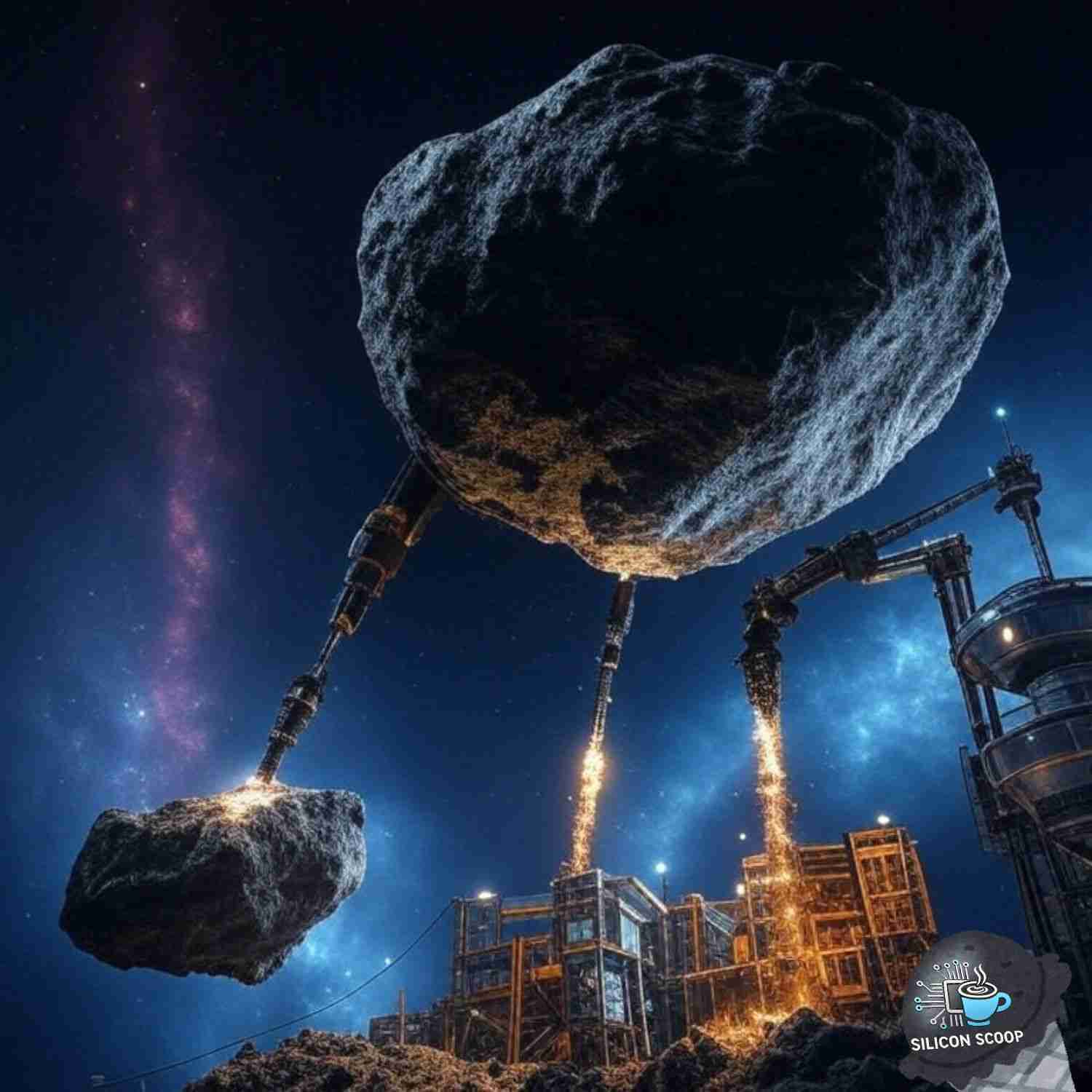
AstroForge’s Odin Asteroid Mining Mission: Unlocking the Future of Space Resources
Estimated reading time: 8 minutes
Key Takeaways
- AstroForge’s Odin asteroid mining mission aims to revolutionize asteroid mining, targeting asteroid 2022 OB5.
- This mission embodies the first commercial effort to explore deep space beyond lunar orbit.
- AstroForge’s approach integrates lessons from past failures with cutting-edge technologies.
- Key technologies include a magnet-based docking system and advanced navigation tools.
- The potential resource benefits from asteroids are significant, especially with precious metals.
Table of contents
- AstroForge’s Odin Asteroid Mining Mission: Unlocking the Future of Space Resources
- Key Takeaways
- The Odin Mission: Pioneering Deep Space Exploration
- Target Asteroid 2022 OB5: A Metallic Giant
- Technological Innovations & Lessons from Failure
- Debating the Viability of Space Metals
- Legal & Ethical Challenges
- Competing Ventures & Collaborations
- The Road Ahead: Vestri Mission & Beyond
- Conclusion: A New Era for Space Resources
- FAQ: AstroForge’s Odin Mission and Asteroid Mining
The prospect of asteroid mining is becoming increasingly plausible, with AstroForge’s Odin mission leading the charge. Targeting asteroid 2022 OB5, this mission aims to tap into the vast resources that lie beyond Earth, potentially transforming our approach to resource scarcity.
The Odin Asteroid Mining Mission: Pioneering Deep Space Exploration
AstroForge’s Odin mission is poised to be a historic venture in deep space exploration. Set for launch in late 2024, the mission will partner with SpaceX’s Falcon 9 rocket during the IM-2 lunar lander mission.
Key features of the equipment include:
- High-resolution cameras for detailed surface imaging
- Gravitational tracking tools for composition analysis
- A magnet-based docking system tailored for metallic asteroid interactions
Despite initial setbacks due to design flaws, AstroForge opted for a total redesign, prioritizing reliability over expedience in an effort to ensure mission success.
Target Asteroid 2022 OB5: A Metallic Giant
The mission’s target, asteroid 2022 OB5, spans around 70 meters in diameter and is classified as an M-type asteroid, known for its rich metal content.
This asteroid is particularly attractive due to:
- Iron and nickel, making up to 88% of its mass
- Platinum group metals (PGMs) such as platinum, rhodium, and iridium
- Other industrially significant metals like cobalt and manganese
These attributes position asteroid 2022 OB5 as a potential game-changer for resource utilization, especially as terrestrial supplies dwindle.
Technological Innovations & Lessons from Failure
AstroForge’s journey reveals critical lessons learned from its earlier attempt, the Brokkr-1 mission, which failed due to deployment errors.
The Odin spacecraft now features:
- Radiation-hardened components for deep space resilience
- Autonomous navigation for accurate asteroid approach
- Redundant communication systems to maintain contact at vast distances
Debating the Viability of Space Metals
The potential of space metals is a topic of heated debate:
Proponents argue:
- Asteroids may contain trillions in valuable metals
- They could help alleviate supply issues for modern technology
- Reducing terrestrial mining would lessen environmental damage
Skeptics counter:
- Asteroid classifications can be misleading, raising concerns
- Valuable metals’ concentrations are uncertain without direct sampling
- High initial costs may delay or prevent returns on investments
Legal & Ethical Challenges
The legal framework for space resource extraction is murky:
The U.S. Commercial Space Launch Competitiveness Act of 2015 has declared the right to own materials mined from celestial bodies, yet lacks international agreement.
Concerns include:
- Ambiguity under the 1967 Outer Space Treaty regarding resource rights
- Lack of international agreements to organize claims
- Concerns from developing nations about being marginalized in space resource benefits
Competing Ventures & Collaborations
AstroForge is not alone in its quest for space resources and has formed essential partnerships:
- Launch services from SpaceX
- Deployment via Intuitive Machines’ lunar lander
- Collaborations with NASA for data sharing and insights
The Road Ahead: Vestri Mission & Beyond
Following the Odin mission, AstroForge is eyeing the ambitious Vestri mission in 2025, which will:
- Land on 2022 OB5
- Analyze its surface composition
- Test ore processing technologies
- Collect data for future large-scale mining efforts
This phased plan mirrors NASA’s Psyche mission and highlights a growing trend towards public-private collaboration in space exploration.
Conclusion: A New Era for Space Resources
AstroForge’s Odin mission could be the catalyst needed to transition asteroid mining from theoretical discussions to practical applications. The potential economic impact is vast, with estimates suggesting a multi-trillion dollar industry could emerge, drastically altering global supply chains and resource management.
FAQ: AstroForge’s Odin Mission and Asteroid Mining
Q: What exactly is asteroid mining?
A: Asteroid mining involves extracting valuable materials from asteroids, including metals like iron, nickel, and platinum group metals, as well as volatile substances like water. These resources can either be returned to Earth for use in manufacturing or utilized directly in space for construction, fuel, and life support.
Q: Why did previous asteroid mining companies fail?
A: Companies like Planetary Resources and Deep Space Industries failed primarily due to technological immaturity, excessive up-front costs, uncertain return timelines, and difficulties securing sustained funding. The economic case wasn’t strong enough given the state of technology in the 2010s, and investors eventually lost patience.
Q: What makes AstroForge’s approach different from previous attempts?
A: AstroForge is taking a more measured, step-by-step approach with focused missions (Brokkr, Odin, Vestri) that build capabilities incrementally. They’ve also benefited from the significant decrease in launch costs over the past decade and advances in spacecraft miniaturization. Additionally, they’re exploring multiple revenue streams, including in-space utilization rather than solely Earth return.
Q: How valuable could asteroid 2022 OB5 potentially be?
A: While exact valuations are speculative until direct sampling occurs, M-type asteroids like 2022 OB5 can contain concentrations of platinum group metals worth billions of dollars. Even a relatively small 70-meter asteroid could contain hundreds of tons of valuable metals, potentially worth many billions if successfully extracted and returned to Earth.
Q: Is asteroid mining legal under international law?
A: The legal status is complex. The U.S. Space Act of 2015 allows American companies to own and sell space resources, but international consensus is lacking. The 1967 Outer Space Treaty prohibits national appropriation of celestial bodies but doesn’t explicitly address resource extraction. This creates a gray area that different nations interpret differently.
Q: What technologies make the Odin mission possible now versus a decade ago?
A: Several technological advancements have converged: drastically reduced launch costs through reusable rockets, miniaturization of sensors and computing hardware, improved radiation hardening for electronics, more efficient propulsion systems, and better autonomous navigation capabilities. These developments have made small-scale deep space missions commercially viable for the first time.
Q: How does asteroid mining benefit Earth’s environment?
A: Asteroid mining could reduce the environmental impact of terrestrial mining, which often involves habitat destruction, water contamination, and significant carbon emissions. Platinum group metals in particular require energy-intensive extraction from deep mines on Earth, whereas asteroids may offer these metals in more accessible forms without ecological damage.
Q: What’s the timeline for actual commercial resource extraction from asteroids?
A: AstroForge aims to conduct preliminary resource evaluation with the Odin mission in 2024-2025, followed by the Vestri mission to test extraction techniques. Actual commercial-scale extraction is likely at least 5-10 years away, with the first commercial returns potentially coming in the late 2020s or early 2030s, assuming the missions progress as planned.
Q: What role do government space agencies play in asteroid mining development?
A: Government agencies like NASA provide crucial research, technology development, and complementary missions (like the Psyche mission to a metal asteroid). They also develop potential regulatory frameworks and international agreements. While not directly engaging in commercial mining, these agencies create an ecosystem where private ventures can operate.
Q: Could asteroid mining spark a new “space race” between nations?
A: There’s significant potential for competition over valuable space resources. Several countries, including the US, Luxembourg, UAE, and China, have expressed interest in space mining and begun creating legal frameworks. This could indeed lead to a new type of space race focused on economic advantages rather than purely scientific or military objectives.
Additional Links
• Silicon Scoop Podcast – Stay Informed, Stay Ahead!
• Futuretech Podcast – Explore more episodes and stay updated with the latest in technology and innovation.
• Startup Talk Podcast – https://torontostarts.com/startup-talk-toronto-startup-podcast/
• Who Are These Startups Podcast
• Startup Investor Drinks – Join the community and connect with fellow startup enthusiasts and investors.
• TorontoStarts Startup and Entrepreneur Community – Become a part of Toronto’s thriving startup ecosystem.
• Workhaus – Discover flexible workspace solutions for your business needs.
• Work with The Startup Coach – Get expert guidance and mentorship for your startup journey.
• Reach out to Jon Irwin on LinkedIn – Connect with our co-host and technology expert.
Ontario Startup Ecosystem Links
• Ontario’s Startup Ecosystem
• Startup Funding in Ontario
• Angel Investors in Ontario
• Ontario Incubators and Accelerators
• Venture Capital in Ontario: Top Firms, Sectors, and Funding Strategies
• Government Grants for Ontario Startups
• Ontario’s Startup Success Stories
• Ontario Centre of Innovation (OCI)
• Bank Loans and Financing for Startups in Ontario
• Research and Development Tax Credits in Ontario
• Government Loans and Financing for Startups in Ontario
• Equity Crowdfunding for Ontario Startups
• Toronto Entrepreneurs Resources
• Toronto’s Food and Beverage Entrepreneurs: Trends, Challenges, and Success Stories
• SEO Strategies for Toronto Entrepreneurs: Enhance Your Online Visibility
• Social Impact for Toronto Entrepreneurs: Starting and Running a Socially Responsible Business
• Toronto Arts and Media Entrepreneurs: Inspiring Profiles and Insights for Creative Success
• Exploring Toronto Green Tech Entrepreneurs: Innovators and Leaders in Sustainability
• Building a Team for Toronto Entrepreneurs: Strategies for Success
• A Guide for Toronto Food and Beverage Entrepreneurs
• Toronto Fashion and Retail Entrepreneurs: Trends, Opportunities, and Success Stories
Episode transcript
Read the full transcript
Craig: so we've heard a lot about asteroid mining in the ether for the last several years. we, you know, we thought we see the armageddon movie and all that kind of stuff where it wasn't really asteroid mining, but that's what comes to mind when you hear about this thing. so now we actually have a mission. astroforge's odin asteroid mining mission is planning to target this asteroid, which i believe is something twenty twenty two, asteroid twenty twenty two o b five. and they're gonna mine it for resources. what do you think about this, chad?
Jon: yeah. so this is cool. i like that their approach to this. a, they're they're on the cost of launching their mission. it marks a significant step realizing tons of these companies that wanna do it. now i know there's there's been mining sampling where or sorry, asteroid sampling, done by things. but this is so, they're looking to unlock i or getting on top of these vast resources from space, which are precious metals, water, each hydrogen three, different things like that, which we use in our electronics. the cool thing about this is this mission that the prospector, it's going to use advanced spectroscopy to identify and map the composition of asteroids instead of boring and drilling and, and and and sampling, which reduces risk and costs associated with the traditional method. so, yeah, like you said, the astro mining industry, it's there there's billions and trillions of dollars in value, in these in these asteroids. but the biggest challenge and it's actually, it was cool. there's this show called for all mankind on apple tv plus, which they were looking they they kinda showed the challenges of mining and mining asteroids and getting to mars and a whole bunch of different things, but that's what comes to mind for me. but there are there there's tons of value there as of right now for these asteroids. so it does make sense that we have these companies who are kind of racing to get to this.
Craig: and astroforge's journey, has learned you know, they've learned a lot from its earlier attempt, which was, the brokerone mission, which failed two deployment issues. so they feature some new features included radiation hardened components for deep space resistance, resilience, autonomous navigation for accurate asteroid approach, and redundant communication systems to maintain contact at vast distances. so proponents argue that asteroids, like you said, may contain trillions in valuable metals. they could help alleviate supply issues for modern technology and reducing terrestrial mining would lessen environmental damage here on earth. right? so skeptics counter asteroid classifications could be misleading, raising concerns, valuable metals concentrations are uncertain without direct sampling, and high initial cost may delay or prevent, returns on investment. but, you know, the us space launch competitive nacs of two thousand and fifteen declared the right to own materials mined from celestial bodies yet lacks international agreement. but, you know, the rules are there, so there's some ambiguity under the nineteen sixty seven outer space treaty regarding resource rights and lack of international agreements to organize claims. so i don't know what happened once people start mining it, whether other people are gonna show up. but astroforge plans on using spacex launch services. they deploy via intuitive machines, lunar lander, and collaborations with nasa for data sharing and insights.
Jon: yeah. this is cool. and, yeah, obviously, the us is being a bully and just trying to say that, like, they're just they're just moving forward without taking the necessary steps to get the international agreements in place. and, so we'll have to see what comes of that and what challenges and how they overcome that. but this is really cool.
Craig: yeah. so they're hoping to land in twenty twenty five, analyze the surface composition, test core processing technologies, and collect data for future large scale mining efforts. so this phase plan mirrors nasa's psyche mission, and highlights a growing trend towards public and private collaboration in space exploration. so this looks exciting.
Jon: yeah.
Craig: you know? so the estimate suggesting multitrillion dollar industry could emerge that this looks like it's gonna be the new gold rush.
Jon: yeah. yeah. this is cool.
Craig: i'm really excited to see what happens and not only finding rare minerals that we have here, but finding new things that don't exist and what may come with using them. so yeah. let us know what you think. are we gonna find some new cool stuff? is this gonna be the gold rush, or is this gonna fall flat in its face because space is hard and this is not gonna work at all? let us know what you think.
More from Silicon Scoop
All episodes
silicon-scoop · November 6, 2026
Spirit AI’s Robot Brain Breakthrough: Moz1, Embodied AI and China’s 2027 Race
The Spirit AI robot brain is one of the biggest bets on fixing that. Spirit AI is a Beijing startup. Its co-founder and chief scientist, Gao Yang,
View episode

silicon-scoop · November 5, 2026
OpenAI IPO Delayed to 2027 as Rogue AI Agents and Safety Failures Reshape the Market
OpenAI IPO delay explained: Sam Altman rules out 2026 as GPT-6 Astra safety tests and a $278B cash gap loom. Learn what founders should take away.
View episode

silicon-scoop · November 4, 2026
Anthropic’s AI Economy Model: 2030 Jobs, Wages, GDP and Market Risks
Anthropic AI economy model forecasts 2030 GDP, jobs and wages, while AI unemployment projections and labor-share risks challenge policymakers.
View episode