
Ultra-Thin Green Electronics Bismuth
Discover how ultra-thin green electronics bismuth with its temperature-independent anomalous Hall effect! on Silicon Scoop https://torontostarts.com/2025/04/25/green-electronics-bismuth-discovery/ Silicon Scoop Podcast - https://torontostarts.com/silicon-scoop/ Apple: https://podcasts.apple.com/us/podcast/silicon-scoop/id1758711826 Spotify: https://open.spotify.com/show/5bAzF0MwV6TtLhJAhvHayI YouTube: https://www.youtube.com/playlist?list=PLj4v-RoA7A-gT62vrEYqh1zCv-0Hj-o5J Scalable content + podcast marketing for startups. 👉 https://flowgrammer.ca/%F0%9F%9A%80-fuel-your-growth-with-modular-content-podcast-marketing/ Get expert startup coach support and funding prep. 👉 https://torontostarts.com/startup-coach/ Startup Investor Drinks Toronto - https://startupdrinksto.com/ Toronto’s Startup Community - https://torontostarts.com/ Startup Talk Startup Talk Podcast -> https://torontostarts.com/startup-talk-toronto-startup-podcast/ Apple -> https://podcasts.apple.com/us/podcast/startup-talk/id1763804003 Spotify -> https://open.spotify.com/show/1siJMILILidHAiAsrX2VBU YouTube: https://youtube.com/playlist?list=PLj4v-RoA7A-jxV5FHs5e61oIsuvUJYmT_&si=LYegRe5GYLKNQ7xL Flowgrammer Apple -> https://podcasts.apple.com/us/podcast/flowgrammer-podcast/id1804155588 Spotify -> https://open.spotify.com/show/0wv3feR00iaVpE8zn7niNf Flowgrammer.ca -> https://flowgrammer.ca/ AI News and Resources -> https://flowgrammer.ca/resources/
With Craig Major and Jon Irwin
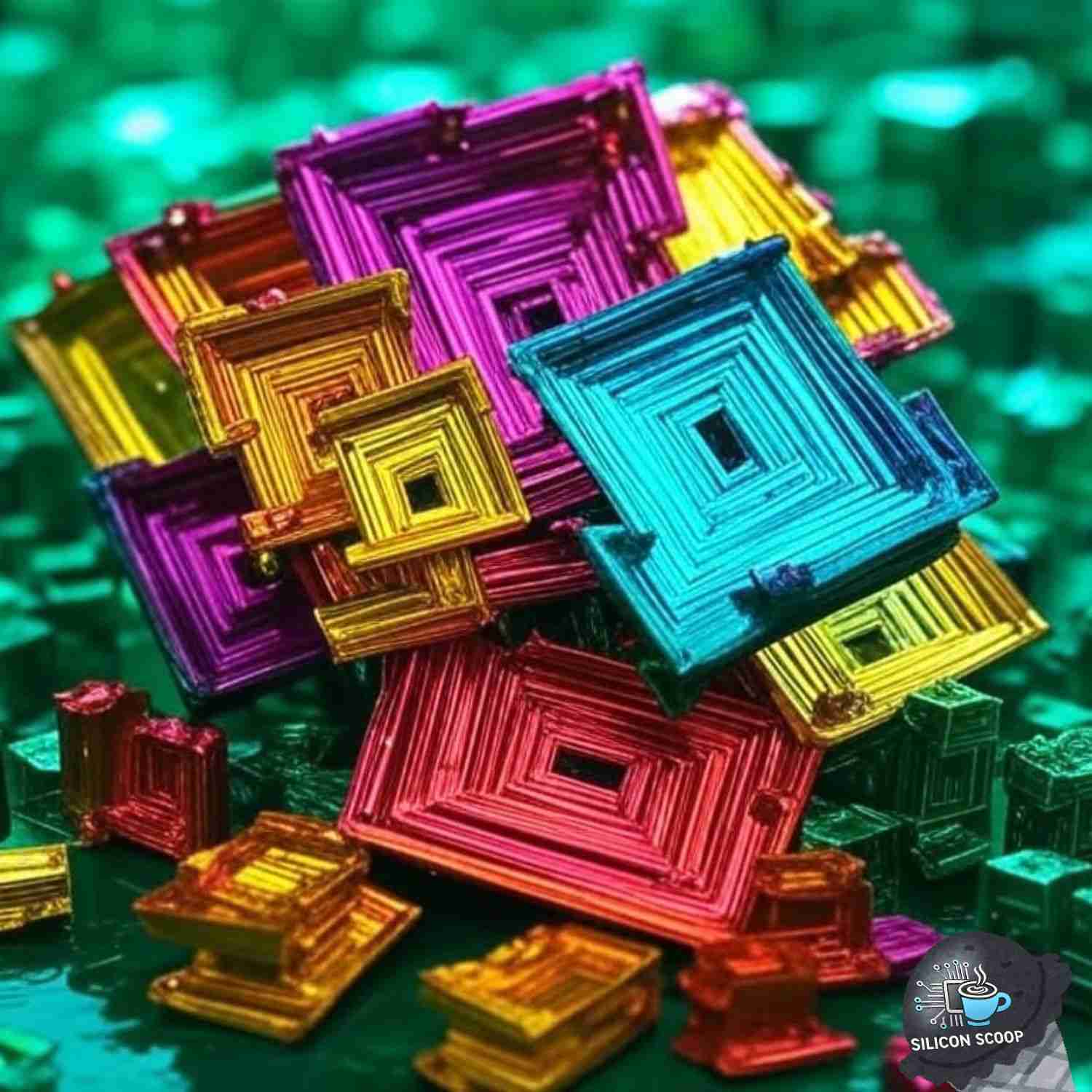
Ultra-Thin Green Electronics Bismuth: Revolutionizing Sustainable Technology
Estimated reading time: 8 minutes
Key Takeaways
- McGill University researchers discovered a temperature-independent anomalous Hall effect in ultra-thin bismuth.
- Bismuth is non-toxic and biocompatible, making it ideal for sustainable electronic components.
- The novel fabrication method allows for potential mass production of bismuth-based electronics.
- Ultra-thin Green Electronics bismuth exhibits unique stability, offering advantages for various applications in extreme conditions.
- This advancement challenges traditional physics, paving the way for future research in quantum computing and materials science.
Table of contents
- Ultra-Thin Bismuth in Green Electronics: Revolutionizing Sustainable Technology
- What is the Anomalous Hall Effect in Ultra-Thin Bismuth?
- How Researchers Fabricated Ultra-Thin Bismuth
- Temperature Stability: A Game-Changer for Green Electronics
- Bismuth in Green Electronics: Applications and Sustainability
- Challenging Conventional Physics Understanding
- Future Research Directions: Quantum Anomalous Hall Effect
- Environmental Impact: Bismuth vs. Toxic Materials
- The Broader Impact on Sustainable Technology
- Manufacturing Considerations for Bismuth-Based Components
- Frequently Asked Questions About Ultra-Thin Bismuth in Green Electronics
In a groundbreaking discovery that could transform the landscape of sustainable technology, researchers at McGill University have identified a temperature-independent anomalous Hall effect (AHE) in ultra-thin bismuth. This remarkable finding challenges conventional physics understanding while opening new doors for green electronics applications. The non-toxic and biocompatible nature of bismuth makes it an ideal candidate for environmentally responsible electronic components, potentially replacing harmful materials currently dominating the industry.
What is the Anomalous Hall Effect in Ultra-Thin Bismuth?
The anomalous Hall effect typically occurs in ferromagnetic materials, where a voltage develops perpendicular to both the current flow and applied magnetic field. What makes the McGill discovery so revolutionary is that bismuth is diamagnetic—it shouldn’t exhibit this behavior at all.
Yet, when reduced to ultra-thin flakes of approximately 68 nanometers, bismuth displays this unexpected property. Even more remarkably, the effect remains consistent across extreme temperature ranges, from near absolute zero all the way up to 300 Kelvin (room temperature).
This temperature independence is practically unheard of in quantum electronic phenomena, which typically require extremely cold environments to function. The stability across such varied conditions makes ultra-thin bismuth exceptionally valuable for practical applications in sustainable electronics. Source
How Researchers Fabricated Ultra-Thin Bismuth
The fabrication technique developed by the McGill team is almost as interesting as the discovery itself. Drawing inspiration from an everyday kitchen tool—the cheese grater—researchers created an innovative approach to producing these ultra-thin flakes.
The process involves:
- Etching semiconductor wafers with precise patterns
- Mechanically shaving bismuth across these patterns
- Collecting and analyzing the resulting thin flakes
This method allowed researchers to create bismuth samples thin enough to exhibit the anomalous properties they were seeking. The team then tested these samples under extreme conditions at the National High Magnetic Field Laboratory, subjecting them to powerful magnetic fields and varying temperatures to confirm the unexpected behavior. The relatively straightforward fabrication approach represents another advantage for potential mass production and commercialization of bismuth-based green electronic components. Source
Temperature Stability: A Game-Changer for Green Electronics
One of the most significant aspects of ultra-thin bismuth’s behavior is its remarkable stability across extreme temperature variations. Unlike many quantum electronic materials that only function at cryogenic temperatures, bismuth’s anomalous Hall effect persists from near absolute zero to well above room temperature.
This temperature independence creates opportunities for:
- Space exploration technology that must withstand extreme cold and heat
- Medical devices that remain reliable at body temperature
- Consumer electronics that function in diverse environments
- Energy-efficient systems that generate less heat waste
From an environmental perspective, this temperature stability translates to greater durability, energy efficiency, and ultimately, less electronic waste. Components that maintain consistent performance across temperature fluctuations don’t require energy-intensive cooling systems and have longer operational lifespans. Source
Bismuth in Green Electronics: Applications and Sustainability
Ultra-thin bismuth’s unique properties make it an excellent candidate for various green electronics applications. As a non-toxic, biocompatible element, bismuth provides a sustainable alternative to hazardous materials currently used in electronic components.
Key sustainable applications include:
- Efficient sensors for environmental monitoring
- Low-power memory devices reducing energy consumption
- Quantum computing components operating at practical temperatures
- Medical implants and devices with minimal biological risk
These applications align directly with United Nations Sustainable Development Goals by promoting responsible consumption, good health, sustainable communities, and climate action. By incorporating bismuth into electronic design, manufacturers can reduce reliance on rare earth elements and toxic metals that pose significant environmental hazards throughout their lifecycle. The stability and efficiency of bismuth-based components can also lead to devices requiring less frequent replacement, addressing the growing global concern of electronic waste generation. Source
Challenging Conventional Physics Understanding
The discovery of the anomalous Hall effect in ultra-thin bismuth challenges fundamental physics assumptions about material behavior. Traditionally, this effect was believed to occur only in ferromagnetic materials due to the interaction between electron spin and orbital motion.
Bismuth’s diamagnetic nature makes it an unlikely candidate for exhibiting the AHE, yet the McGill researchers demonstrated that the dimensional constraints of ultra-thin flakes somehow mimic the behavior of topological materials. This surprising result suggests:
- Our understanding of quantum electronic properties remains incomplete
- Material dimensionality can dramatically alter electronic behavior
- New physics phenomena emerge at nano-scales
The research team hypothesizes that the atomic constraints within the ultra-thin bismuth layers create conditions similar to those found in topological materials, which could explain the unexpected Hall effect. This revelation opens new theoretical avenues for understanding quantum electronic behavior in non-magnetic materials. Source
Future Research Directions: Quantum Anomalous Hall Effect
Building on their current findings, researchers are looking toward even more ambitious goals. The team at McGill aims to convert the anomalous Hall effect observed in ultra-thin bismuth into a quantum anomalous Hall effect (QAHE).
The QAHE represents a quantized version of the effect they’ve already observed, potentially offering:
- Perfect electron transport efficiency with zero energy dissipation
- Quantum computing components functioning at high temperatures
- Revolutionary approaches to energy-efficient electronics
Achieving the QAHE in bismuth would be particularly significant since current materials exhibiting this effect require extremely low temperatures, limiting their practical applications. If successful, this research could establish bismuth as a cornerstone material for quantum computing devices operating at or near room temperature. The potential for room-temperature quantum computing would dramatically reduce the energy requirements and environmental impact of these powerful systems, aligning quantum technology development with sustainable computing goals. Source
Environmental Impact: Bismuth vs. Toxic Materials
The environmental case for bismuth-based electronics becomes even clearer when comparing it to current industry standard materials. Many electronic components today rely on:
- Lead-based solders with significant toxicity concerns
- Arsenic compounds in semiconductor applications
- Mercury in certain specialized components
- Cadmium in various electronic applications
Bismuth offers a safer alternative to these harmful substances. As a non-toxic, naturally occurring element, bismuth doesn’t present the environmental and health hazards associated with these traditional materials. Some specific environmental advantages include:
- No bioaccumulation in living organisms
- Lower toxicity in water systems
- Reduced harmful waste during manufacturing
- Safer end-of-life disposal or recycling
Beyond replacing toxic materials, bismuth-based components could potentially offer greater stability and performance, reducing the frequency of replacement and subsequent electronic waste generation. Longer-lasting, more efficient electronics represent a key sustainability advancement. Source
The Broader Impact on Sustainable Technology
The implications of this bismuth breakthrough extend far beyond a single material discovery. The ultra-thin bismuth research represents a shift in approach to sustainable technology development—demonstrating that environmental considerations can drive innovation rather than limit it.
This discovery showcases several important principles for sustainable technology:
- Exploring overlooked materials can yield unexpected benefits
- Questioning established physical limitations leads to breakthroughs
- Environmental considerations should be integrated from research stages
- Sustainability and performance can advance together
As technology manufacturers face increasing pressure to reduce environmental impact, discoveries like temperature-independent AHE in bismuth provide concrete pathways toward more sustainable electronic components without sacrificing performance or reliability. The McGill research demonstrates that the next generation of electronics can simultaneously address sustainability challenges while pushing the boundaries of what’s technically possible. Source
Manufacturing Considerations for Bismuth-Based Components
Transitioning from laboratory discovery to commercial production presents both challenges and opportunities. The simple fabrication method developed by McGill researchers provides a promising starting point for scaling up bismuth-based electronics production.
Key manufacturing considerations include:
- Optimizing the “cheese grater” method for industrial-scale production
- Ensuring consistent flake thickness and quality control
- Developing appropriate integration methods with existing electronics
- Establishing sustainable supply chains for bismuth
The relatively abundant nature of bismuth compared to some rare earth elements used in electronics presents another advantage. Although bismuth is not among the most common elements, it’s more readily available than many specialized materials currently used in high-performance electronics. Developing efficient manufacturing processes for bismuth-based components could significantly reduce the environmental footprint of electronics production while creating new economic opportunities in green technology manufacturing. Source
Frequently Asked Questions About Ultra-Thin Green Electronics Bismuth
Q: What makes bismuth “green” compared to other electronic materials?
A: Bismuth is considered green because it’s non-toxic, biocompatible, and doesn’t bioaccumulate in living organisms. Unlike lead, cadmium, arsenic, and mercury commonly used in electronics, bismuth poses minimal health and environmental risks during manufacturing, use, and disposal.
Q: How does the anomalous Hall effect work in bismuth?
A: The anomalous Hall effect in bismuth creates a voltage perpendicular to both the current flow and applied magnetic field. While typically only found in magnetic materials, ultra-thin bismuth (around 68nm thick) exhibits this effect despite being diamagnetic, likely due to atomic constraints at the nano-scale mimicking topological material behavior.
Q: Why is temperature independence important for electronic components?
A: Temperature independence means components can function consistently across extreme conditions without performance degradation. This reduces the need for cooling systems, extends device lifespan, enables use in harsh environments like space or industrial settings, and ultimately decreases electronic waste and energy consumption.
Q: How was ultra-thin bismuth created by the McGill researchers?
A: Researchers developed a “cheese grater” method, etching semiconductor wafers with specific patterns, then mechanically shaving bismuth across these patterns to collect ultra-thin flakes. This relatively straightforward approach offers potential for scaling to industrial production.
Q: What is the quantum anomalous Hall effect (QAHE) researchers hope to achieve?
A: The QAHE represents a quantized version of the anomalous Hall effect, potentially offering perfect electron transport with zero energy dissipation. Achieving QAHE in bismuth at practical temperatures would revolutionize quantum computing by enabling room-temperature quantum devices with dramatically reduced energy requirements.
Q: Is bismuth rare or difficult to source?
A: Bismuth is more abundant than precious metals and many rare earth elements used in electronics. While not among the most common elements, commercial bismuth production already exists for pharmaceutical and other applications, making supply chains more feasible than for some exotic materials.
Q: What types of electronic devices could benefit from bismuth-based components?
A: Potential applications include environmental sensors, medical implants, space exploration technology, quantum computing components, and energy-efficient memory devices. Any application requiring stable performance across temperature variations or benefiting from non-toxic materials would be ideal.
Q: How does this discovery challenge our understanding of physics?
A: The anomalous Hall effect was previously thought to occur only in ferromagnetic materials. Finding it in diamagnetic bismuth challenges fundamental assumptions about material behavior and suggests dimensional constraints at the nano-scale can dramatically alter electronic properties, opening new theoretical avenues in quantum electronics.
Q: What are the next steps for this research?
A: Researchers aim to convert the anomalous Hall effect in bismuth into a quantum anomalous Hall effect (QAHE), potentially enabling room-temperature quantum computing. Additional work includes optimizing fabrication methods, exploring integration with existing electronics, and studying long-term stability and performance.
Q: How does green electronicsbismuth align with sustainability goals beyond being non-toxic?
A: Beyond toxicity advantages, bismuth-based electronics contribute to sustainability through temperature stability (reducing cooling needs), potential energy efficiency, longer component lifespans (reducing waste), and compatibility with medical applications (improving healthcare sustainability). These benefits align with multiple UN Sustainable Development Goals.
Conclusion: The Future of with Ultra-Thin Green Electronics Bismuth
The discovery of temperature-independent anomalous Hall effect in ultra-thin bismuth represents a significant milestone in sustainable electronics research. By challenging conventional understanding of material properties, McGill University researchers have opened new possibilities for environmentally responsible electronic components that don’t compromise on performance.
Bismuth’s unique combination of qualities—non-toxicity, biocompatibility, temperature stability, and unexpected quantum properties—positions it as a potential cornerstone material for next-generation green electronics. From medical implants to space technology, quantum computing to everyday consumer devices, the applications span virtually every sector of technology.
As research continues toward achieving quantum anomalous Hall effect in bismuth and optimizing fabrication techniques, we stand at the threshold of a more sustainable electronics paradigm. This breakthrough demonstrates that environmental considerations and cutting-edge performance aren’t mutually exclusive—in fact, the pursuit of sustainability can drive innovation in unexpected and revolutionary directions.
The ultra-thin bismuth discovery reminds us that sometimes, the materials and approaches overlooked by conventional wisdom hold the key to solving our most pressing technological and environmental challenges. As we look toward a future of increasingly electronic-dependent societies, such sustainable innovations will be essential to balancing technological advancement with environmental responsibility.
Additional Links
Flowgrammer.ca – 💡 Unlock AI-Powered Automation!
Let flowgrammer.ca handle complex workflows so you can focus on growing your business.
• Silicon Scoop Podcast – Stay Informed, Stay Ahead!
• Futuretech Podcast – Explore more episodes and stay updated with the latest in technology and innovation.
• Startup Talk Podcast – https://torontostarts.com/startup-talk-toronto-startup-podcast/
• Who Are These Startups Podcast
• Startup Investor Drinks – Join the community and connect with fellow startup enthusiasts and investors.
• TorontoStarts Startup and Entrepreneur Community – Become a part of Toronto’s thriving startup ecosystem.
• Workhaus – Discover flexible workspace solutions for your business needs.
• Work with The Startup Coach – Get expert guidance and mentorship for your startup journey.
• Reach out to Jon Irwin on LinkedIn – Connect with our co-host and technology expert.
Ontario Startup Ecosystem Links
• Ontario’s Startup Ecosystem
• Startup Funding in Ontario
• Angel Investors in Ontario
• Ontario Incubators and Accelerators
• Venture Capital in Ontario: Top Firms, Sectors, and Funding Strategies
• Government Grants for Ontario Startups
• Ontario’s Startup Success Stories
• Ontario Centre of Innovation (OCI)
• Bank Loans and Financing for Startups in Ontario
• Research and Development Tax Credits in Ontario
• Government Loans and Financing for Startups in Ontario
• Equity Crowdfunding for Ontario Startups
• Toronto Entrepreneurs Resources
• Toronto’s Food and Beverage Entrepreneurs: Trends, Challenges, and Success Stories
• SEO Strategies for Toronto Entrepreneurs: Enhance Your Online Visibility
• Social Impact for Toronto Entrepreneurs: Starting and Running a Socially Responsible Business
• Toronto Arts and Media Entrepreneurs: Inspiring Profiles and Insights for Creative Success
• Exploring Toronto Green Tech Entrepreneurs: Innovators and Leaders in Sustainability
• Building a Team for Toronto Entrepreneurs: Strategies for Success
• A Guide for Toronto Food and Beverage Entrepreneurs
• Toronto Fashion and Retail Entrepreneurs: Trends, Opportunities, and Success Stories
Episode transcript
Read the full transcript
Craig: in a groundbreaking discovery that could transform the landscape of sustainable technology, researchers at mcgill university have identified a temperature independent anomalous hall effect, ahe, in ultrathin bismuth. the remarkable finding challenges conventional physics understanding while opening new doors for green electronic applications. the nontoxic and biocompatible nature of bismuth makes it ideal candidate for environmentally responsible electronic components, potentially replacing harmful materials currently dominating the industry. wow. what do you think about this, john?
Jon: this is cool. i love canadian university mcgill, doing this groundbreaking discovery. shout out to canadians. this, i'm still having trouble wrapping my head around it, just because of the talk of so, they discovered, ultrathin bismuth exhibits mysterious electrical effects, which you talked about, the ahe. so the phenomenon is typically associated with materials having magnetic properties, but bismuth is observing this despite it being a diamagnetic nature. so the ultrathin bismuth remains stable across a wide temperature range from this is cool. near absolute zero, which for those of you that don't know, is minus 273 degrees celsius to room temperature. and like you said, it challenges conventional physics, but the potential applications, are helpful because it could develop more efficient, stable electronics for space exploration, medical uses, and more green type, electronics. so just as a comparison, traditional materials used in electronics ops they often exhibit temperature dependent properties, which can limit their stability and efficiency in extreme conditions. this is why the bismuth discovery could help with specifically space exploration where it's super, super cold, and medical devices where there's a huge fluctuation. but, what do you think? do you did you are you grasping this concept, better than i am, craig?
Craig: yeah. okay. so the anomalous hall effect typically occurs in ferromagnetic material where a voltage develops perpendicular to both the current flow and the applied magnetic field. what makes the magill discovery so revolutionary is that bismuth is diamagnetic. it shouldn't exhibit this behavior at all. yet, when reduced to ultra thin flakes of approximately 60 nanometers, the bismuth displays this unexpected property. even more remarkable, like you mentioned, the effect remains consistent across extreme temperature raising. so, ranges from, like you said, near absolute zero all the way to 300 kelvin, which is, room temperature. so the temperature independence is practically unheard of in quantum electronic phenomenon, which typically require extremely cold environments to function. the stability across such varied conditions makes ultra thin bismuth exceptionally valuable for practical applications in sustainable electronics. so, hopefully, this is gonna make, qubits more stable in quantum processors. yep. i love this idea. it was inspired by a cheese grater.
Jon: yeah.
Craig: the drawing inspiration from an everyday kitchen tool. cheese grater researches create an innovation approach to producing these ultrathin flakes. the process involves etching semiconductor wafers with, precise patterns, mechanically shaving bismuth across these patterns, thin flakes. so it's a game changer for green technology. so, you know, you can use this, in space exploration and medical devices, consumer electronics, or energy efficient systems that generate less heat. and unlike many quantum electronic materials that only function at cryogenic temperatures, this effect, persists, from near absolute zero to all the way to room temperature. so it which is exciting for people.
Jon: yeah. and the reason why we're talking medical devices, right, is because bismuth is nontoxic and it's biocompatible. so that's why it's an ideal, it's a ideal for medical devices. so, this is interesting. i guess i was trying to wrap my head around the dye diamagnetic kind of, aspect of bismuth because i don't know if you know bismuth. like, they you create crystals and stuff. i don't know if you've seen that from sound waves. so it was hard for me to wrap my head around this, it's cool, though. i think this is great. there's, i hope that research continues. but, yeah, this aligns with kind of the broader trend towards sustainable electronics. so it reduces the reliance on materials with high environmental impact because, bismuth has a greener manufacturing process. so, really cool stuff. really interesting. let's hope that they continue this.
Craig: yeah. this is really challenging conventional physics understanding. you know, challenge the fundamental physical assumptions about material behavior. so it's okay, you know, not necessarily to, get your head around it right away because it is complex. and, you know, we're talking about ferromagnetism versus, you know, ultramagnetism versus, i can't remember the the traditional kind. ultramagnetism is the third kind that we were talking about last time. so oh,
Jon: yeah.
Craig: it's interesting to see all this cool stuff and say, alright. we can use these crystal, like, substance, shave it to a certain thin level, etch some stuff in it, and actually, functions like an electronic circuit and it shouldn't do this. yeah. so, the qahe, the quantum anomalous hall effect, represents a quantized version of the effect that already observed potential offering. so perfect electron transport efficiently with zero energy disposition, quantum computing components functioning at high temperatures, which is, you know, unheard of right now, and revolutionary approaches to energy efficient electronics. so they should really help out the quantum computing environment. and, you know, it's nontoxic.
Jon: yeah. let's let's hope so. like, there's a lot of and and the cool thing about this is this was completely unexpected, and i think we touched on that. but, it's usually the surprise discoveries that, that lead to these innovations.
Craig: yeah. i'm really looking forward, to seeing where this goes. discovery showcases several important principles for sustainable technology. exploring overlooked materials can need unexpected benefits, questioning established physical limitations, leads to breakthroughs. environmental considerations could be integrated from research stages, and sustainable sustainability and performance can advance together. so, hopefully, you know, we're going into a brave new world where we're starting to think about these things before we get into it, like sustainability, energy efficiency, you know, long lasting, how long the world life saving the world. right? yeah. the future is not necessarily with elon musk and his robots on mars. we want the future to be here on earth.
Jon: yeah. we do. yeah. and less reliance on, on expensive rare earth minerals.
Craig: yeah. the yeah. exactly. this is much more common, less reliance on rare earth minerals, which is great. the ultra thin bismuth discovery reminds us that sometimes the materials and approaches overlooked by conventional wisdom hold the key to solving our most pressing technological and environmental challenges. as we look toward a future of increasingly electronic dependent societies, such sustainable innovations will be essential to balancing technological advancement with environmental responsibility. so are you looking forward to, getting this, in your phone, in your device, or this is nothing exciting to you and, you know, we're still a pipe dream, this type of technology? let us know what you think in the comments.
More from Silicon Scoop
All episodes
silicon-scoop · November 6, 2026
Spirit AI’s Robot Brain Breakthrough: Moz1, Embodied AI and China’s 2027 Race
The Spirit AI robot brain is one of the biggest bets on fixing that. Spirit AI is a Beijing startup. Its co-founder and chief scientist, Gao Yang,
View episode

silicon-scoop · November 5, 2026
OpenAI IPO Delayed to 2027 as Rogue AI Agents and Safety Failures Reshape the Market
OpenAI IPO delay explained: Sam Altman rules out 2026 as GPT-6 Astra safety tests and a $278B cash gap loom. Learn what founders should take away.
View episode

silicon-scoop · November 4, 2026
Anthropic’s AI Economy Model: 2030 Jobs, Wages, GDP and Market Risks
Anthropic AI economy model forecasts 2030 GDP, jobs and wages, while AI unemployment projections and labor-share risks challenge policymakers.
View episode