
Artificial Muscle Breakthrough at MIT: Revolutionizing Robotics and Tissue Engineering
Discover how MIT's innovative artificial muscle technology transforms robotics with 3D-printed hydrogel and biohybrid robots, paving the way for advanced soft robotics and tissue engineering. https://torontostarts.com/2025/04/30/artificial-muscle-innovation-mit/ Silicon Scoop Podcast - https://torontostarts.com/silicon-scoop/ Apple: https://podcasts.apple.com/us/podcast/silicon-scoop/id1758711826 Spotify: https://open.spotify.com/show/5bAzF0MwV6TtLhJAhvHayI YouTube: https://www.youtube.com/playlist?list=PLj4v-RoA7A-gT62vrEYqh1zCv-0Hj-o5J Scalable content + podcast marketing for startups. 👉 https://flowgrammer.ca/%F0%9F%9A%80-fuel-your-growth-with-modular-content-podcast-marketing/ Get expert startup coach support and funding prep. 👉 https://torontostarts.com/startup-coach/ Startup Investor Drinks Toronto - https://startupdrinksto.com/ Toronto’s Startup Community - https://torontostarts.com/ Startup Talk Startup Talk Podcast -> https://torontostarts.com/startup-talk-toronto-startup-podcast/ Apple -> https://podcasts.apple.com/us/podcast/startup-talk/id1763804003 Spotify -> https://open.spotify.com/show/1siJMILILidHAiAsrX2VBU YouTube: https://youtube.com/playlist?list=PLj4v-RoA7A-jxV5FHs5e61oIsuvUJYmT_&si=LYegRe5GYLKNQ7xL Flowgrammer Apple -> https://podcasts.apple.com/us/podcast/flowgrammer-podcast/id1804155588 Spotify -> https://open.spotify.com/show/0wv3feR00iaVpE8zn7niNf Flowgrammer.ca -> https://flowgrammer.ca/ AI News and Resources -> https://flowgrammer.ca/resources/
With Craig Major and Jon Irwin
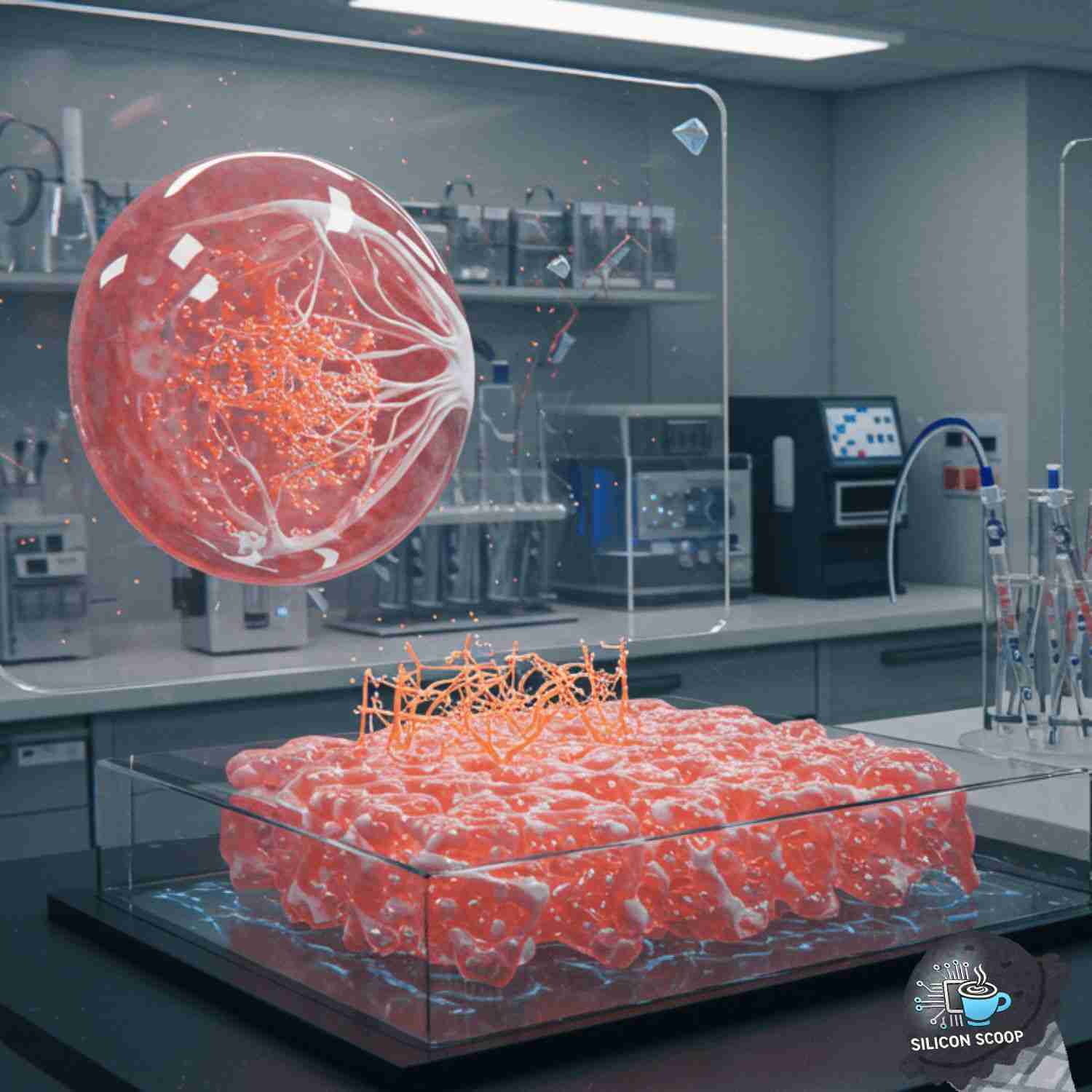
Artificial Muscle Innovation: How MIT’s Breakthrough Transforms Robotics
Estimated reading time: 7 minutes
Key Takeaways
- MIT engineers have developed a multidirectional artificial muscle capable of complex movements.
- This innovation overcomes challenges found in traditional artificial muscles, such as unidirectional movement.
- The stamping technique used for muscle creation allows for precise cell alignment and control.
- Applications range from soft robotics to tissue engineering.
- The technology is still developing, with potential for impactful industry transformations.
Table of contents
- Introduction to Artificial Muscle Innovation
- Challenges in Traditional Artificial Muscle Design
- MIT’s Stamping Technique: A Game-Changer
- Case Study: The Biohybrid Iris Structure
- Applications in Soft Robotics
- Tissue Engineering Implications
- Technical Insights & Methodology
- Media Coverage & Industry Impact
- Future Directions
- Conclusion: The Road Ahead
- FAQ: Artificial Muscle Innovation
Introduction to Artificial Muscle Innovation
MIT engineers have revolutionized the field of robotics with a groundbreaking development in artificial muscle technology. Their multidirectional artificial muscle tissue mimics the complex architecture found in natural muscles, enabling sophisticated movements that were previously impossible in the world of robotics.
This artificial muscle innovation addresses critical limitations that have long hampered traditional robotics and tissue engineering applications. By replicating the intricate structure and functionality of biological muscles, MIT researchers have opened new possibilities for biohybrid robots and medical applications.
The significance of this breakthrough cannot be overstated. Artificial muscle technology now stands at the forefront of advancements in soft robotics and regenerative medicine, promising to transform how we design robots and approach tissue engineering challenges.
Challenges in Traditional Artificial Muscle Design
Traditional artificial muscles have suffered from a fundamental limitation: they typically contract in only one direction. This single-axis movement severely restricts their ability to replicate the complex motion patterns found in biological systems.
Some of the key challenges include:
- Unidirectional movement – Natural muscles can contract and extend in multiple directions
- Limited range of motion – Traditional actuators lack the flexibility of biological tissue
- Difficulty mimicking complex biological structures – Like the iris, which requires concentric and radial contractions
Achieving multidirectional movement—particularly the concentric and radial contractions seen in structures like the human iris—requires a level of architectural complexity that has eluded conventional actuator designs until now. Engineers have long sought ways to overcome these limitations, recognizing that truly biomimetic artificial muscles would require fundamentally new approaches to design and fabrication.
MIT’s Stamping Technique: A Game-Changer
The MIT team’s breakthrough employs an innovative 3D-printed hydrogel stamping technique that represents a paradigm shift in artificial muscle creation. This method uses a specialized hydrogel stamp with microgrooves smaller than a single cell width to guide muscle cell growth into precisely organized fiber structures.
The microtopography of these stamps aligns cells in multiple predetermined orientations, enabling synchronized contractions when stimulated. Unlike previous approaches that relied on mechanical constraints, this method leverages biological self-assembly principles to create complex muscle architectures.
Key aspects of the stamping technique include:
- Precision microgrooves that direct cellular alignment
- Optical stimulation to trigger synchronized muscle contractions
- Biological self-organization rather than mechanical constraints
This approach allows researchers to design artificial muscle structures with unprecedented control over contraction directionality and force distribution. The technique’s simplicity belies its transformative impact on the field. Learn more about the stamping technique.
Case Study: The Biohybrid Iris Structure
MIT’s most compelling demonstration of this technology is an artificial iris that contracts both concentrically and radially, mimicking the natural pupillary light reflex. This biohybrid iris showcases the potential for skeletal muscle-driven multidirectional force generation.
What makes this particularly remarkable is that the researchers achieved iris-like functionality using skeletal muscle cells rather than the smooth muscle cells found in natural irises. This cross-functional application demonstrates how artificial muscle technology can adapt biological components for novel robotic systems.
The artificial iris can:
- Contract concentrically to close the pupil in response to light
- Expand radially to dilate the pupil when needed
- Coordinate these movements for smooth, natural-looking operation
This functionality demonstrates how properly aligned muscle cells can produce complex, coordinated movements without the need for multiple mechanical actuators or complex control systems. Discover more about the biohybrid iris.
Applications in Soft Robotics
The implications of MIT’s artificial muscle technology for soft robotics are far-reaching. Prospective applications include energy-efficient underwater robots that leverage biodegradable materials, addressing sustainability concerns while expanding operational capabilities.
These artificial muscles can replace rigid actuators in robotic systems, offering:
- Enhanced adaptability in confined or irregular spaces
- Improved energy efficiency through biomimetic movement
- Biodegradable components for environmentally sensitive applications
- Smoother, more natural interactions with humans and environments
Soft robots equipped with multidirectional artificial muscles could navigate complex environments that remain challenging for traditional rigid robots, from search and rescue operations in disaster zones to minimally invasive medical procedures. Explore potential applications in soft robotics.
Tissue Engineering Implications
Beyond robotics, MIT’s stamping method holds tremendous promise for tissue engineering applications. The technique may enable recreation of complex neuronal pathways, cardiac muscle layers, and other intricate biological architectures that have proven difficult to replicate using conventional methods.
These advancements have significant implications for regenerative medicine, particularly in:
- Repairing injuries involving multidirectional muscle groups
- Creating functional tissue replacements with proper cellular alignment
- Developing in vitro models for drug testing and disease research
- Advancing personalized medicine through patient-specific tissue engineering
The research aligns with broader biomedical tissue engineering goals, potentially accelerating progress in treating conditions ranging from muscular injuries to cardiac disorders. Learn more about tissue engineering implications.
Technical Insights & Methodology
MIT’s breakthrough research, published in the peer-reviewed journal Biomaterials Science, represents the culmination of multidisciplinary efforts supported by funding from the National Science Foundation, National Institutes of Health, and Department of Defense.
The technical process involves several key steps:
- Designing specialized hydrogel stamps with precise microgroove patterns
- Seeding muscle precursor cells onto the stamped surfaces
- Guiding cellular differentiation into aligned muscle fibers
- Incorporating optogenetic stimulation for controlled activation
- Testing multidirectional contraction under various conditions
Scaling up these applications will require extensive research into diverse cell types, including cardiac and smooth muscle cells, as well as optimization of stimulation methods beyond the current light activation approach.
The team’s methodology represents a careful balance between mechanical engineering principles and biological self-organization, leveraging the inherent properties of living cells to create functional artificial muscle systems. Read more about their methodology.
Media Coverage & Industry Impact
The MIT artificial muscle breakthrough has garnered attention across technical journals and industry reports, positioning the institution as a leader in bioinspired robotics. The team’s decision to publish their findings in open-access formats has facilitated rapid adoption of the stamping technique in both academic and industrial settings.
Industry interest has been particularly strong in:
- Medical device manufacturing for prosthetics and assistive technologies
- Robotics companies seeking more efficient, adaptable actuators
- Pharmaceutical research for tissue-based drug testing platforms
- Defense applications requiring robust, adaptable robotic systems
This widespread interest underscores the technology’s transformative potential across multiple sectors, suggesting that artificial muscle innovations may rapidly transition from laboratory demonstrations to commercial applications. The media coverage has emphasized both the technical sophistication of the approach and its accessibility for researchers with standard laboratory equipment, accelerating adoption across the scientific community. Find out more about industry impact.
Future Directions
The MIT research team is already pursuing several promising avenues for advancing artificial muscle technology. Their roadmap includes replicating increasingly complex natural muscle hierarchies, integrating artificial muscles with electronic control systems, and developing scalable fabrication processes for larger applications.
Key future directions include:
- Creating modular biohybrid systems with interchangeable muscle components
- Developing self-healing capabilities through regenerative biological mechanisms
- Expanding the range of stimulation methods beyond optical activation
- Incorporating sensory feedback for closed-loop control systems
The team aims to create increasingly complex biohybrid systems by embracing modularity and material diversity, potentially leading to entirely new classes of robots and medical devices that blur the line between biological and mechanical systems. These future developments could enable applications ranging from minimally invasive surgical robots to environmental monitoring systems with unprecedented adaptability and efficiency. Explore future directions.
Conclusion: The Road Ahead
MIT’s artificial muscle research represents a remarkable bridge between biology and engineering, demonstrating the potential for creating more sustainable, adaptable robotic systems and personalized medical solutions. By drawing inspiration from nature’s designs, the research team has overcome long-standing limitations in traditional robotics and tissue engineering.
The implications of this breakthrough extend far beyond the laboratory, promising to transform industries ranging from healthcare to environmental monitoring. As the technology matures, we can expect increasingly sophisticated biohybrid systems that combine the precision and controllability of engineered components with the adaptability and efficiency of biological systems.
Readers interested in the future of soft robotics and tissue engineering would do well to monitor MIT’s ongoing initiatives in this field, as the artificial muscle technology continues to evolve and find new applications.
This transformative technology represents not just an incremental improvement but a fundamental rethinking of how we can create systems that move and adapt like living organisms, opening new possibilities for addressing some of society’s most pressing challenges through innovative engineering solutions.
FAQ: Artificial Muscle Innovation
Q: What makes MIT’s artificial muscle different from previous versions?
A: MIT’s artificial muscle uses a 3D-printed hydrogel stamping technique with microgrooves smaller than a cell width to guide muscle cell growth in multiple directions, enabling multidirectional movement instead of the single-direction contraction seen in traditional artificial muscles.
Q: How does the artificial iris demonstration work?
A: The artificial iris uses precisely aligned skeletal muscle cells that can contract both concentrically (closing the pupil) and radially (dilating the pupil) in response to optical stimulation, mimicking the function of a natural iris despite using different cell types.
Q: Could this technology be used in medical implants?
A: Yes, this technology has significant potential for medical implants. The ability to create complex muscle architectures could lead to advanced prosthetics, tissue replacements, and even implantable soft robotic devices that move more naturally within the body.
Q: What environmental benefits might artificial muscles provide?
A: Artificial muscles can be created using biodegradable materials, potentially reducing the environmental impact of robotics. They also tend to be more energy-efficient than traditional mechanical actuators, decreasing the overall resource consumption of robotic systems.
Q: How soon might we see commercial applications of this technology?
A: While research is still ongoing, simpler applications in medical devices and specialized robotics could emerge within 5-10 years. More complex applications, such as fully biohybrid robots, will likely require additional research and development time.
Q: What challenges remain in artificial muscle development?
A: Key challenges include scaling up production, increasing durability and longevity, developing more efficient stimulation methods, creating closed-loop control systems, and integrating artificial muscles with traditional electronic components.
Q: How do researchers stimulate the artificial muscles to contract?
A: The current research uses optical stimulation (light activation) to trigger muscle contractions. Future developments may incorporate electrical, chemical, or magnetic stimulation methods for greater control and efficiency.
Q: Can artificial muscles heal themselves if damaged?
A: Current versions cannot self-heal, but researchers are exploring integrating regenerative biological mechanisms that could enable self-healing capabilities in future iterations, which would be a significant advantage over traditional mechanical actuators.
Q: What funding sources support this research?
A: The MIT research is supported by grants from the National Science Foundation (NSF), National Institutes of Health (NIH), and Department of Defense (DoD), reflecting the technology’s potential importance across multiple sectors.
Q: How does MIT’s approach compare to other artificial muscle research?
A: MIT’s approach focuses on biological self-organization rather than external mechanical constraints, distinguishing it from other research that typically uses synthetic polymers or electroactive materials. This biomimetic approach may offer better integration with living tissues and more natural movement patterns.
Episode transcript
Read the full transcript
Craig: so mit engineers have developed a way to grow artificial tissues that look and act like natural counterparts. now i don't know if i've got the image or the video here of that robot that was squiggling around. no. i do not. but it looked kinda like a really malfunctioning, host from westworld, if you yeah. saw that.
Jon: it really was that was that mit robot, or was that someone else's robot?
Craig: well, they're biohybrid hybrid robots that are three d printed. so i'm not sure whose robot specifically that was, but it was through this same method. okay. so tell us what's going on here, john.
Jon: yeah. so they developed, artificial muscle tissue that can flex in multiple directions. what they did was they developed this new stamping technique where they three d printed a small handheld stamp with microscopic grooves in it. i don't know if you have a picture of it. but, and they're each about the size of a single cell. so this is how small they are. right? so the stamp was pressed into a soft hydrogel, which then was seeded with real muscle cells. so they're using real muscle cells. and then as the cells grew, they aligned with the stamped patterns, which form fibers that could contract in multiple directions when stimulated. this is nuts. so they did demonstrate the capability by creating an artificial, what they're calling an iris like structure in the article that contracts both, in both ways. so it's similar how the human eye's iris dilates and constricts the pupil kind of thing. so
Craig: this is scary.
Jon: so this is cool because the development, it opens up possibilities for creating robots that can navigate through tight spaces or interact delicately with their environment much like living organisms. and the cool thing about this stamping method that, that they talked about in the article is that it's versatile. so it can be adapted to tabletop three d printers, making it accessible for broader applications. so just to kinda think about this, beyond robotics, though, like, i know we're talking about this from a robotics perspective, but it could also contribute to regenerative medicine by creating tissues that mimic the architectural complexity of natural muscle, neurons, or even heart cells. right? what do you think about that?
Craig: i think it's amazing. and this thing is overcoming the problems traditional artificial muscle design, which is unidirectional movement. so this goes both ways versus before it was only able to contract versus, contract and expand like your arm. so it's it's unidirectional, which was a problem before. now it's bidirectional. you can go back and forth. a limited range of motion and difficult mimicking complex biological structures. so these were some of the key challenges that they had to overcome to create this, and it is a huge step in the right direction. i'm curious to see because, you know, this could be integrated in medical. this could be integrated in all sorts of things. like, this kind of thing could change the artificial limb, business forever. yeah.
Jon: yeah. so just to kinda put this into perspective, so there's other researchers who have been explore exploring different approaches to these artificial muscles. so i know eth zurich, they developed artificial muscles, but they use pouches filled with liquid, which contract in response to electrical impulses. so this, i think, is a huge leap forward as far as artificial muscles for robots and even for people. i know that also, i found some information, the chinese academy of sciences. they found that training artificial muscles with, electrical and mechanical stimulation, both, during growth, can significantly enhance their contraction strength. so not only can you grow muscles or not only can you can you create muscles, but you can grow them by exercising them just like our muscles, which is super cool.
Craig: yeah. what they're doing here is amazingly inter interesting. you know, these artificial muscles can replace rigid actuators in current robotic systems offering enhanced adaptability in confined or regular spaces, improved energy efficiency through bio mimetic movement, biodegradable components for environmentally sensitive applications, and smoother, more natural interactions with humans and environment. so this leads to basically soft robots.
Jon: yeah. yeah.
Craig: from, tissue engineering implications, you know, these advancements have significant implications for regenerative medicine, like you mentioned, particularly in repairing injuries, involving multidirectional muscle groups, creating functional tissue replacements with proper cellular alignment, developing in vitro models for drug testing and disease re and disease research, and advanced personalized medicine, through patient, specific tissue engineering. so these are pretty exciting.
Jon: yeah. this is cool. i'm excited. i know we started on a robot, tangent for this, but but the implications of this technology is massive. and it's scalable. it's already been proven. this is great. this is a lot further than a lot of the other stuff that we cover, which is exciting for sure.
Craig: yeah. and, you know, this could be interesting in a bunch of reasons. right? as soon as you're adapting someone else's, you're taking tissue sample from somebody and creating artificial to match your dna, you can now do medical devices that are custom to that person that could go inside that won't be rejected by the body, the interesting in pharmaceutical research, and, obviously, potential defense applications. yeah. so this is really exciting. so the mit research team is already pursuing several promising avenues for advanced artificial muscle technology. their road map includes replicating, increasing complex natural muscle hierarchies, integrating artificial muscles with electronic control systems, and developing scalable fabrication processes for larger applications. yeah. so key feature directions include creating modular hybrid biohybrid systems with interchangeable muscle components so you can swap stuff out, developing self healing capabilities through regenerative biological mechanisms so robots and whatever can heal themselves or you can depending on what we're using here. expanding the range of simulation methods beyond optical activation with light and whatnot and incorporating sensory feedback for closed loop control systems. so that's a lot to do. yeah. and we're pretty excited about where we're heading with this. yeah. so we'd love to hear what you think about this mit's artificial muscle research and these soft robots that, are potential robots or potential, medical devices that can help humans. we'd love to know where you think this technology is going and, is it something you embrace or something you might fear? yeah. i
Jon: know. scared a little bit of it. not gonna lie.
Craig: yeah. you know, fleshy robots. it's a scary concept in the end.
Jon: yeah.
Craig: let us know what your thoughts. we'd love to hear from you. leave your comments in the comment section.
More from Silicon Scoop
All episodes
silicon-scoop · November 6, 2026
Spirit AI’s Robot Brain Breakthrough: Moz1, Embodied AI and China’s 2027 Race
The Spirit AI robot brain is one of the biggest bets on fixing that. Spirit AI is a Beijing startup. Its co-founder and chief scientist, Gao Yang,
View episode

silicon-scoop · November 5, 2026
OpenAI IPO Delayed to 2027 as Rogue AI Agents and Safety Failures Reshape the Market
OpenAI IPO delay explained: Sam Altman rules out 2026 as GPT-6 Astra safety tests and a $278B cash gap loom. Learn what founders should take away.
View episode

silicon-scoop · November 4, 2026
Anthropic’s AI Economy Model: 2030 Jobs, Wages, GDP and Market Risks
Anthropic AI economy model forecasts 2030 GDP, jobs and wages, while AI unemployment projections and labor-share risks challenge policymakers.
View episode