
AI Job Displacement : Bill Gates’ Vision for the Future of Work, Education, and Healthcare by 2035
Discover Bill Gates' predictions on AI job displacement by 2035 and how it may reshape healthcare, education, and the future of work. Prepare for the evolving job market! https://torontostarts.com/2025/05/01/ai-job-displacement/ Silicon Scoop Podcast - https://torontostarts.com/silicon-scoop/ Apple: https://podcasts.apple.com/us/podcast/silicon-scoop/id1758711826 Spotify: https://open.spotify.com/show/5bAzF0MwV6TtLhJAhvHayI YouTube: https://www.youtube.com/playlist?list=PLj4v-RoA7A-gT62vrEYqh1zCv-0Hj-o5J Scalable content + podcast marketing for startups. 👉 https://flowgrammer.ca/%F0%9F%9A%80-fuel-your-growth-with-modular-content-podcast-marketing/ Get expert startup coach support and funding prep. 👉 https://torontostarts.com/startup-coach/ Startup Investor Drinks Toronto - https://startupdrinksto.com/ Toronto’s Startup Community - https://torontostarts.com/ Startup Talk Startup Talk Podcast -> https://torontostarts.com/startup-talk-toronto-startup-podcast/ Apple -> https://podcasts.apple.com/us/podcast/startup-talk/id1763804003 Spotify -> https://open.spotify.com/show/1siJMILILidHAiAsrX2VBU YouTube: https://youtube.com/playlist?list=PLj4v-RoA7A-jxV5FHs5e61oIsuvUJYmT_&si=LYegRe5GYLKNQ7xL Flowgrammer Apple -> https://podcasts.apple.com/us/podcast/flowgrammer-podcast/id1804155588 Spotify -> https://open.spotify.com/show/0wv3feR00iaVpE8zn7niNf Flowgrammer.ca -> https://flowgrammer.ca/ AI News and Resources -> https://flowgrammer.ca/resources/
With Craig Major and Jon Irwin
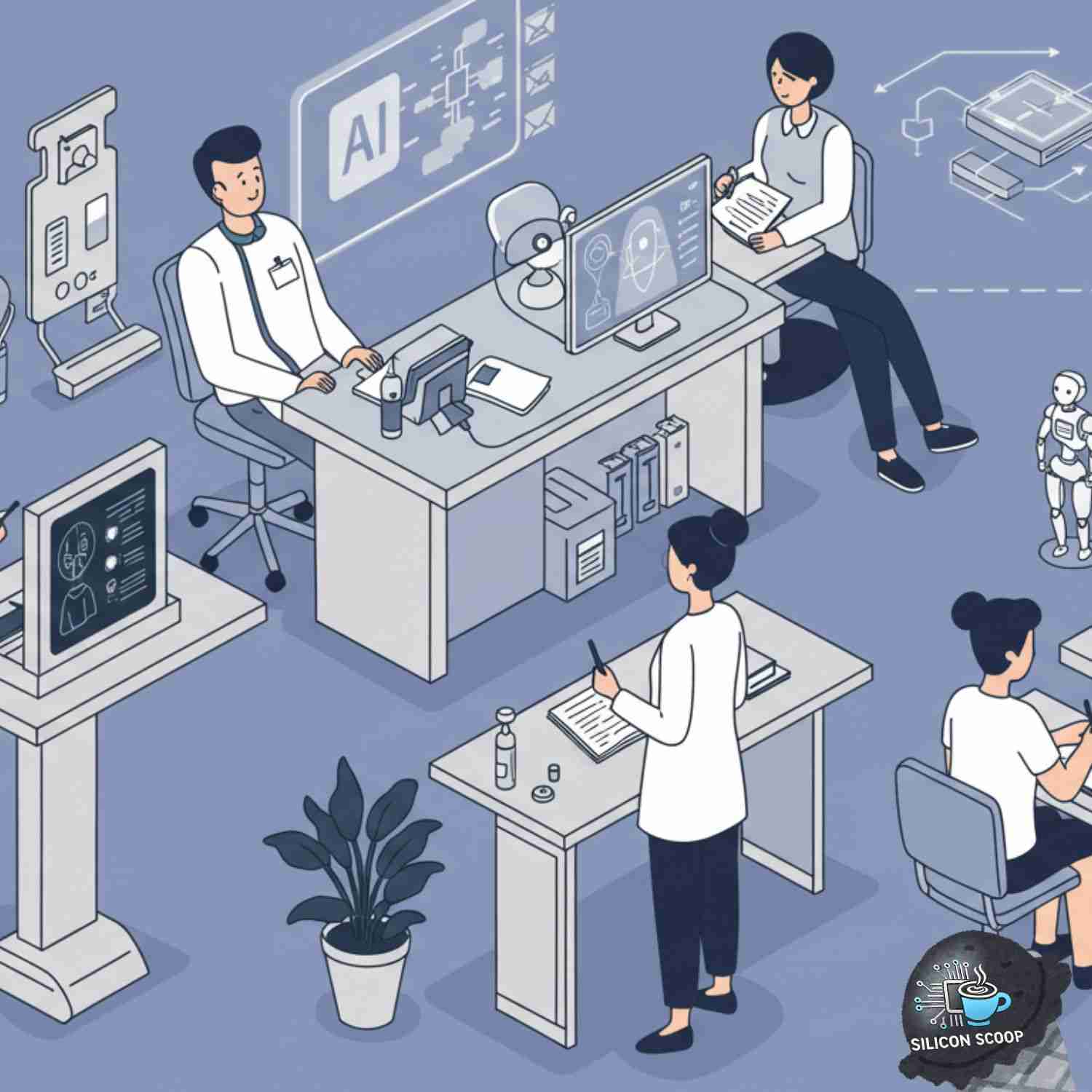
AI Job Displacement : Bill Gates Predicts AI Will Replace Doctors, Teachers, and Reshape Work by 2035
Estimated reading time: 8 minutes
Key Takeaways
- Bill Gates predicts that by 2035, AI Job Displacement will replace many traditional roles in healthcare and education.
- AI tools are expected to democratize access to medical expertise worldwide.
- Education could shift towards personalized learning, making top-tier education more accessible.
- While certain jobs may disappear, new opportunities will surface in AI maintenance and human-AI collaboration.
- The economic impact of AI includes potential cost reductions but also raises concerns regarding inequality.
Table of contents
- AI Replacing Healthcare Jobs
- Medical Diagnostics Transformation
- The Democratization of Medical Expertise
- AI in Education
- The Rise of AI Teachers
- Personalized Learning Transformation
- Future of Work AI
- Sectors Most Vulnerable to AI Displacement
- Emerging AI Career Opportunities
- Economic and Social Implications
- The Debt-Free Living Promise and Its Risks
- Contrasting Expert Perspectives
- AI’s Broader Influence
- Entrepreneurship in the AI Era
- AI as Market Expander
- Balancing Innovation with Human Relevance
- Fields Resistant to Complete AI Takeover
- The Human Element in Technology
- Actionable Takeaways
- Strategic Upskilling for the AI Era
- Investment Strategies Aligned with Gates’ Vision
- Conclusion
- AI Job Displacement: Frequently Asked Questions
Artificial Intelligence or AI job displacement is rapidly becoming a reality. Bill Gates, one of the world’s most influential tech visionaries, has made a bold prediction: within a decade, AI will render humans unnecessary for “most things.” The Microsoft co-founder believes that by 2035, AI will transform expertise-driven sectors, particularly healthcare and education, by dramatically reducing costs and increasing accessibility.
This transformation isn’t happening in some distant future—it’s already underway. Let’s explore Gates’ predictions and what they mean for the evolving landscape of work, education, and healthcare in the AI era.
AI Job Displacement in Healthcare Jobs
Medical Diagnostics Transformation
The healthcare industry is primed for AI disruption. Gates envisions AI systems providing “free intelligence” for medical advice, significantly reducing our reliance on human doctors for routine diagnoses. This shift promises substantial cost savings while extending quality healthcare to underserved and remote regions.
AI diagnostic tools are already demonstrating impressive capabilities:
- Analyzing medical images with greater precision than human specialists
- Processing patient data to identify patterns humans might miss
- Providing 24/7 medical guidance without fatigue or bias
However, this transition raises serious ethical challenges. What happens when AI makes mistakes? How much human oversight should remain in complex cases? The balance between efficiency and safety remains a critical concern as healthcare becomes increasingly automated.
While routine diagnoses may be handled by AI, specialized medicine and patient care requiring empathy will likely remain human domains—at least for now. https://time.com/6559259/bill-gates-interview-ai-elections-2024/
The Democratization of Medical Expertise
Gates believes AI will fundamentally change how medical knowledge is shared and applied:
“When it comes to healthcare expertise, it’s been challenging to distribute it to everyone in need,” Gates notes. “But AI can make top-tier medical guidance accessible to anyone with an internet connection.”
This means:
- Rural communities gaining access to specialist-level diagnostic tools
- Developing nations leapfrogging traditional healthcare infrastructure
- Patients receiving consistent, evidence-based recommendations regardless of location
The implications extend beyond just access—AI could potentially standardize care quality while dramatically reducing costs for both patients and healthcare systems. https://www.cnbc.com/2023/09/28/bill-gates-predicts-ai-personal-agents-will-change-tech-as-we-know-it.html
AI Job Displacement in Education
The Rise of AI Teachers
Education stands as another field where Gates foresees dramatic AI-driven transformation. Traditional teaching roles could be replaced by AI tutors and personalized learning systems that adapt to each student’s needs, pace, and learning style.
Gates points to OpenAI’s rapid completion of the AP Biology exam challenge as evidence of AI’s educational potential. These systems can provide:
- Personalized learning paths tailored to individual strengths and weaknesses
- Immediate feedback on student work without grading delays
- 24/7 availability for questions and guidance
- Content delivery optimized for each student’s learning preferences
“AI will enable one-on-one tutoring for everyone,” Gates predicts. “It will track what you know and what you don’t, adapting to your learning style in ways traditional education never could.”
This educational revolution aligns with Gates’ broader vision of democratizing expertise, making top-quality education available regardless of geographic or economic barriers. https://time.com/6559259/bill-gates-interview-ai-elections-2024/
Personalized Learning Transformation
The shift to AI-driven education represents more than just replacing teachers—it’s about reimagining the entire learning experience. Personalized AI tutoring could:
- Eliminate the one-size-fits-all approach of traditional classrooms
- Allow students to progress at their optimal pace
- Provide specialized support for learning differences and disabilities
- Free human teachers to focus on emotional support, motivation, and complex guidance
“We’re moving toward a world where education quality won’t depend on access to great human teachers,” Gates suggests. “AI will provide that foundation for everyone.”
However, questions remain about social development, creativity fostering, and the human connections that traditional education provides. Learning isn’t just information transfer—it’s a social and emotional process that shapes developing minds. https://www.forbes.com/sites/bernardmarr/2023/05/09/bill-gates-says-chatgpt-will-change-the-world-these-are-his-3-best-ai-tips/
Future of Work and AI Job Displacement
Sectors Most Vulnerable to AI Job Displacement
Not all jobs face equal risk from AI advancement. According to Gates and other experts, several sectors stand particularly vulnerable:
Administrative Roles:
- Data entry specialists
- Document processors
- Scheduling coordinators
- Basic accounting functions
Customer Service:
- First-line support representatives
- Order processing agents
- Basic query handling
Manual Labor with Predictable Elements:
- Assembly line workers
- Warehouse operations
- Transportation (with self-driving technology)
Entry-Level Knowledge Work:
- Basic content creation
- Research assistants
- Data analysis
These roles share common elements: repetitive tasks, predictable workflows, and decision-making based on clear rules—all areas where AI excels. The timeline for displacement varies by sector, but Gates suggests significant shifts will be evident within 5-10 years. https://www.cnbc.com/2023/09/28/bill-gates-predicts-ai-personal-agents-will-change-tech-as-we-know-it.html
Emerging AI Career Opportunities
While certain jobs disappear, Gates emphasizes that the AI revolution will create entirely new career paths:
AI Maintenance and Oversight:
- AI trainers and evaluators
- Algorithm auditors
- AI ethics specialists
- Prompt engineering experts
Human-AI Collaboration Roles:
- AI-augmented healthcare practitioners
- AI-supported creative professionals
- Human experience designers for AI systems
Emerging Field Specialists:
- Renewable energy AI integration experts
- Biological systems modeling specialists
- AI-driven climate solution developers
Many of these emerging roles command impressive salaries. According to recent reports, at least five fast-growing AI-related positions now offer compensation packages exceeding $100,000 annually.
Gates particularly highlights opportunities in energy and biology, where AI analysis can accelerate innovation beyond what human researchers could achieve independently. https://www.cnbc.com/2023/07/14/jobs-most-likely-to-be-replaced-by-ai-according-to-new-research.html
Economic and Social Implications of AI Job Displacement
The Debt-Free Living Promise and Its Risks
Gates frames AI’s impact through an optimistic lens: cost reductions for essential services like healthcare and education could help people live debt-free lives. AI-driven efficiencies might slash expenses for:
- Medical consultations and routine care
- Educational degrees and professional certifications
- Legal advice and document preparation
- Financial planning and management
However, this vision comes with significant caveats. The same technologies that reduce service costs might simultaneously:
- Accelerate income inequality as AI displaces low-skilled workers
- Concentrate economic benefits among those with AI expertise
- Create a two-tier society of AI-augmented professionals and displaced workers
- Reduce wages in sectors facing AI competition
The transition period—which Gates suggests will last through 2035—could be especially turbulent for workers caught between old and new economic paradigms. https://time.com/6559259/bill-gates-interview-ai-elections-2024/
Contrasting Expert Perspectives on AI Job Displacement
Gates’ optimism isn’t universally shared among tech leaders:
Mustafa Suleyman, co-founder of DeepMind, offers a starker assessment, describing AI as fundamentally a “labor-replacing force.” While Gates emphasizes new opportunities, Suleyman highlights the displacement risks.
Other business leaders like Mark Cuban have expressed concerns about broader business model disruption, suggesting that entire industries—not just individual jobs—might face existential challenges from AI advancement.
The disagreement centers not on whether AI will transform work, but on how disruptive that transformation will be and who will ultimately benefit. Gates’ timeline (major changes by 2035) represents a middle ground between techno-optimists expecting faster change and skeptics who believe human roles will prove more resilient. https://time.com/6559259/bill-gates-interview-ai-elections-2024/
AI’s Broader Influence
Entrepreneurship in the AI Era
Gates identifies significant opportunities for entrepreneurs who can leverage AI effectively:
AI-Driven Startups:
- Vertical AI solutions for specific industries
- Tools that bridge AI capabilities with human needs
- Systems that make AI accessible to non-technical users
Side Hustles Empowered by AI:
- Content creation with AI enhancement
- AI-driven market analysis for small businesses
- Personalized service delivery augmented by AI
Gates particularly emphasizes energy consulting and specialized content creation as lucrative niches where AI can amplify individual capabilities.
“The entrepreneurs who thrive will be those who see AI not as a threat, but as a tool that lets them serve previously unreachable markets,” Gates suggests. This perspective emphasizes AI as a means to expand entrepreneurial impact rather than simply replace jobs. https://time.com/6559259/bill-gates-interview-ai-elections-2024/
AI as Market Expander
Beyond just replacing existing jobs, Gates sees AI as potentially expanding markets by:
- Making services affordable for previously excluded consumers
- Creating entirely new product categories
- Enabling a level of personalization that wasn’t economically viable before
“When intelligence becomes free, businesses can serve customers they could never reach before,” Gates notes. This market expansion could potentially offset some job losses by creating demand in new areas.
Gates points to his own collaboration with Harvard and OpenAI as examples of how AI can tackle previously intractable problems, suggesting similar partnerships will drive innovation across sectors. https://www.cnbc.com/2023/09/28/bill-gates-predicts-ai-personal-agents-will-change-tech-as-we-know-it.html
Balancing Innovation with Human Relevance
Fields Resistant to Complete AI Takeover
Despite Gates’ prediction of widespread AI displacement, certain professions show greater resistance to automation:
Highly Creative Roles:
- Innovative product designers
- Original content creators
- Conceptual artists
- Strategy developers
Leadership Positions:
- Executive decision-makers
- Team motivators and mentors
- Crisis managers
- Vision setters
High-Empathy Professions:
- Mental health counselors
- Specialized nursing roles
- Youth development coaches
- Palliative care providers
Physical Performance Fields:
- Professional athletes
- Dancers and physical performers
- Craftspeople working with physical materials
Gates explicitly mentions baseball as something that should remain human, suggesting that entertainment and physical performance maintain intrinsic human value even in an AI-dominated world. https://time.com/6559259/bill-gates-interview-ai-elections-2024/
The Human Element in Technology
While AI capabilities expand, many nursing and caring professionals emphasize that human empathy remains irreplaceable in patient care. The human touch—literally and figuratively—provides elements that technology can’t replicate:
- Emotional connection and intuition
- Cultural sensitivity and nuanced understanding
- Moral judgment in complex situations
- Adaptive creativity in unpredictable circumstances
“AI will handle the routine, but humans will handle the exceptional,” suggests Gates. This division of labor—AI for standardized tasks, humans for exceptions—may define the future workplace across many industries.
This balance requires rethinking education and training to emphasize distinctly human capabilities like empathy, judgment, and creative problem-solving rather than memorization or routine processing. https://www.forbes.com/sites/bernardmarr/2023/05/09/bill-gates-says-chatgpt-will-change-the-world-these-are-his-3-best-ai-tips/
Actionable Takeaways
Strategic Upskilling for the AI Era
To navigate the changing landscape Gates predicts, consider these specific skill development priorities:
Technical Skills:
- Basic coding and AI interaction capabilities
- Data analysis and interpretation
- AI prompt engineering and system evaluation
- Machine learning fundamentals
Complementary Knowledge Areas:
- Biological systems understanding
- Renewable energy fundamentals
- Ethical frameworks for technology
- Human psychology and motivation
Human-Centric Capabilities:
- Complex communication and negotiation
- Creative problem-solving in ambiguous situations
- Cross-cultural collaboration
- Emotional intelligence and empathy
Gates specifically recommends that entrepreneurs focus on understanding AI capabilities to identify opportunities where automation can solve meaningful problems, particularly in historically underserved markets.
Practical steps include taking courses in AI development, data analysis, and specific domain knowledge relevant to your field while maintaining strong soft skills development. https://www.cnbc.com/2023/07/14/jobs-most-likely-to-be-replaced-by-ai-according-to-new-research.html
Investment Strategies Aligned with Gates’ Vision
For those looking to align investments with the AI future Gates describes, consider these approaches:
“Free Intelligence” Sectors:
- Healthcare AI diagnostic tools
- Personalized education technology
- Legal AI systems for standard documentation
- Financial analysis automation
Support Systems:
- AI ethics and evaluation platforms
- Privacy and security solutions for AI
- Human-AI interface technologies
- AI training data management
Gates’ Focus Areas:
- Climate technology with AI optimization
- Biological research acceleration tools
- Global health delivery systems
- Educational access platforms
Gates’ own collaborations with Harvard University and OpenAI provide models for impactful AI investment, focusing on areas where intelligence democratization can solve persistent global challenges. https://time.com/6559259/bill-gates-interview-ai-elections-2024/
Conclusion
Bill Gates’ vision of widespread AI displacement by 2035 represents both challenge and opportunity. His concept of “free intelligence” accelerating societal transformation fundamentally reshapes how we think about work, education, and healthcare.
The coming decade will likely see dramatic shifts in employment patterns, with routine cognitive and manual jobs facing strongest displacement pressures. Meanwhile, new roles will emerge at the intersection of AI capabilities and human oversight.
For individuals, the path forward requires continuous adaptation, focusing on skills that complement rather than compete with AI. For organizations, success means reimagining processes and business models to leverage AI’s strengths while preserving distinctly human elements.
The timeline Gates suggests—major transformations by 2035—creates urgency without panic. This isn’t a distant future concern but a near-term reality requiring immediate preparation. Those who anticipate these changes, developing relevant skills and perspectives, will navigate the transition most successfully.
The future Gates describes isn’t predetermined. Policy choices, business decisions, and individual adaptations will shape how AI’s benefits and disruptions are distributed. The technology itself is neutral—the impact depends on how we choose to implement and manage these powerful tools.
AI Job Displacement : Frequently Asked Questions
Q: When does Bill Gates predict AI will replace most jobs?
A: Bill Gates predicts that AI will render humans unnecessary for “most things” by approximately 2035. He believes this timeline will see significant displacement in expertise-driven sectors like healthcare and education, with dramatic cost reductions and increased accessibility of services.
Q: Which professions are most vulnerable to AI replacement?
A: According to Gates and other experts, the most vulnerable professions include administrative workers (data entry, scheduling), customer service representatives, jobs involving predictable manual labor, and entry-level knowledge workers. These roles involve repetitive tasks, predictable workflows, and rule-based decision-making where AI excels.
Q: Will doctors be completely replaced by AI?
A: Gates doesn’t predict complete replacement of doctors, but rather a significant reduction in reliance on human physicians for routine diagnoses. AI will provide “free intelligence” for medical advice, particularly benefiting underserved regions. Complex cases, specialized medicine, and care requiring empathy will likely remain human domains for longer.
Q: How will AI change education according to Gates?
A: Gates envisions AI tutors and personalized learning systems replacing many traditional teaching roles. These AI systems will provide individualized education paths, immediate feedback, 24/7 availability, and content delivery optimized for each student’s learning preferences. This shift aligns with Gates’ vision of democratizing expertise regardless of geographic or economic barriers.
Q: What new job opportunities might emerge in the AI era?
A: Emerging AI career opportunities include AI maintenance specialists (trainers, evaluators, ethics auditors), human-AI collaboration roles (AI-augmented healthcare practitioners, creative professionals), and specialists in fields like renewable energy AI integration and biological systems modeling. Many of these positions already command salaries exceeding $100,000 annually.
Q: How might AI affect economic inequality?
A: Gates presents an optimistic view that AI could help people live debt-free lives through cost reductions in essential services. However, this comes with significant risks of accelerating income inequality as AI displaces low-skilled workers while benefiting those with AI expertise. The transition period through 2035 could be especially challenging for workers caught between old and new economic paradigms.
Q: Which fields are most resistant to AI displacement?
A: Fields showing greater resistance to AI include highly creative roles (innovative designers, original content creators), leadership positions (executive decision-makers, team mentors), high-empathy professions (mental health counselors, specialized nursing), and physical performance fields (athletes, dancers, craftspeople). These areas require distinctly human capabilities that remain difficult to automate.
Q: What skills should people develop to remain relevant in an AI-dominated workforce?
A: Gates recommends developing technical skills (coding, data analysis, AI interaction), complementary knowledge in areas like biology and renewable energy, and distinctly human capabilities including complex communication, creative problem-solving, and emotional intelligence. The emphasis should be on skills that complement rather than compete with AI.
Q: How quickly are these AI changes happening?
A: While Gates’ timeline suggests major transformations by 2035, many AI-driven changes are already underway. Different sectors will experience disruption at varying rates, with some seeing significant impacts within 5 years and others evolving more gradually. The pace depends on technical developments, regulatory responses, and economic incentives for automation.
Q: Is Gates’ prediction universally accepted among tech leaders?
A: No. While Gates presents a relatively optimistic view focused on new opportunities, other tech leaders like Mustafa Suleyman (DeepMind co-founder) describe AI as fundamentally a “labor-replacing force” with potentially more disruptive impacts. The disagreement centers not on whether AI will transform work, but on how disruptive that transformation will be and who will ultimately benefit.
Additional Links
Flowgrammer.ca – 💡 Unlock AI-Powered Automation!
Let flowgrammer.ca handle complex workflows so you can focus on growing your business.
• Silicon Scoop Podcast – Stay Informed, Stay Ahead!
• Startup Talk Podcast – https://torontostarts.com/startup-talk-toronto-startup-podcast/
• Flowgrammer Podcast – Apple Podcasts – Spotify – RSS
• Startup Investor Drinks – Join Toronto’s Startup Community and connect with fellow startup enthusiasts and investors..
• TorontoStarts Startup and Entrepreneur Community – Become a part of Toronto’s thriving startup ecosystem.
• Workhaus – Discover flexible workspace solutions for your business needs.
• Work with The Startup Coach – Get expert guidance and mentorship for your startup journey.
• Reach out to Jon Irwin on LinkedIn – Connect with our co-host and technology expert.
Ontario Startup Ecosystem Links
• Ontario’s Startup Ecosystem
• Startup Funding in Ontario
• Angel Investors in Ontario
• Ontario Incubators and Accelerators
• Venture Capital in Ontario: Top Firms, Sectors, and Funding Strategies
• Government Grants for Ontario Startups
• Ontario’s Startup Success Stories
• Ontario Centre of Innovation (OCI)
• Bank Loans and Financing for Startups in Ontario
• Research and Development Tax Credits in Ontario
• Government Loans and Financing for Startups in Ontario
• Equity Crowdfunding for Ontario Startups
• Toronto Entrepreneurs Resources
• Toronto’s Food and Beverage Entrepreneurs: Trends, Challenges, and Success Stories
• SEO Strategies for Toronto Entrepreneurs: Enhance Your Online Visibility
• Social Impact for Toronto Entrepreneurs: Starting and Running a Socially Responsible Business
• Toronto Arts and Media Entrepreneurs: Inspiring Profiles and Insights for Creative Success
• Exploring Toronto Green Tech Entrepreneurs: Innovators and Leaders in Sustainability
• Building a Team for Toronto Entrepreneurs: Strategies for Success
• A Guide for Toronto Food and Beverage Entrepreneurs
• Toronto Fashion and Retail Entrepreneurs: Trends, Opportunities, and Success Stories
Episode transcript
Read the full transcript
Craig: so ai is the biggest thing right now. everyone's talking about there's new releases going on. and bill gates says within ten years, ai will replace many doctors and teachers, and humans won't be needed for most things. how does that make you feel, john?
Jon: i'm not surprised. i know we're talking about this article, but there was something that i read this morning that bill gates is saying that, work weeks are gonna become two days long. so, this just solidify the he's doubling down kind of thing. so he believes that within the next decade, ai is gonna replace doctors, potentially teachers, rendering humans unnecessary for a lot of tasks. so this kind of aligns so he's got this free intelligence concept era where ai powered tools become ubiquitous and transformative across various sectors, including health care, education, even manufacturing. so he emphasizes that although ai is gonna automate a lot of roles, humans are gonna still be essential in certain areas, and he identifies a few. so, energy, biology, which is weird to me that he's saying biology. maybe it's because of, the lack of robotics or the need for human interaction for it and coding. so what are your thoughts on those things and on his predictions, craig?
Craig: well, i think, there's definitely there's a lot of information. for example, when a doctor goes to school, they're they're reading from textbooks. you're learning from most of what they learn is old. it's information that exists. there's no reason an ai can't learn that just as well. yeah. what you don't learn is, you know, how to put it all together when you're walking around and talking to patients and doing the stuff that you see in the classic tv shows where you're you're working with an experienced doctor and you're doing the patient analysis and stuff. so the question is how good is it gonna really be at these things? but it is getting better and better. i just think that we're not there yet, and we're not gonna be there, i don't think, in ten years. we're still gonna have that 8020 rule where maybe a lot of stuff will be automated, but they won't be able to complete the loop, whatever that means, because that takes a long time. it's like, how long have we had self driving, but it's still not level well, i think tesla claims are level five now maybe. and what's the next level where we're actually gonna let these cars drive us completely? there are, you know, the cyber trucks the, cyber taxis and stuff out there, but most of them are only in trial modes. and they have problems around emergency vehicles, and they have this, and they have that. so when you talk about that, you know, that's just that one application, not driving. yeah. i think ai will replace, all telehealth lines and that kind of stuff you're so those things will go away. so there's definitely, you know, a diagnostic transformation. this is great because you could probably get ai to give you the most probable things and whatnot and prevent that level. but what level will it go to? will it go to the doctor level from a you don't have to see a doctor anymore, or will it just be that reference to you? like, when the person comes in, asks you all those questions about how you're feeling, fills out your chart, and gets and preps a doctor or the phone call or the webmd, what's it gonna replace? and then what were the other areas you were talking about?
Jon: biology, energy, and coding.
Craig: i don't understand the energy one off the top of my head, but biology, i think alright.
Jon: those are the ones that are still gonna need human roles.
Craig: okay. so sorry.
Jon: that's fair
Craig: and education were the two
Jon: that he was talking about.
Craig: yeah. that's why i didn't understand the one there. i believe education will be completely taken over by ai almost completely. now it just like a lot of production will be taken over by a lot of potential images, art, whatever you wanna call it. don't say art. people get mad. but the point being is that there's always going to be room for the actual artist, the craftsman, the woodworker that comes and handcrafts the stuff and make something specifically unique for you. but the basic stuff will be replaced by ai. so ai. so there will be a spot for human teachers. they will be a niche, though, is what i'm trying to get at, versus most of the education you can get from ai. coding, yeah, those jobs will be, again, rare. a lot of those coding, 50% of the people working on ubisoft's assassin's creed game have never developed a game before in their life. and within ten years, not we won't need those people. yeah. so, yes, it'll it you will only need the people that are smarter than ai at coding. we'll only need the very, very experienced people. the problem is we won't be creating any more of them. it's like, you know, if you're running cobol or you're running an old unix system, you you have this 60 or 70 year old person who's the only person who knows the system that you have to call. yeah. i call them munich spirit people. because they don't train this stuff anymore. they don't teach cobol or rpg two or what have you. and a lot of these systems are ancient and not up to date. so i think that's what's gonna happen when we start moving these things out. so we have the modern system that does almost all the coding for us. but when things break or not working right, we need our experts to kinda lead them in the right direction because ai is not, good enough to not lose its crap halfway through development.
Jon: that's right. yeah. but i i disagree with you when we're talking about timelines. i think ten years is a reasonable timeline, and, like, there's there's tons of examples of this. so, for example, you can, right now, get an ai to take phone calls, handle phone calls, talk to someone, outbound phone calls, call people, and do leads. so, like, that what i feel like we're not that far off from teaching an ai to talk like a doctor would and be and, what's the word i'm looking for? synthetic sympathy for patients. and so i don't think we're that far off. i think by ten years, we're gonna be, there's gonna be a huge change. i don't think it's gonna be as profound as, like, at ten years, but i think it'll be very close.
Craig: well, i guess when i was saying ten years or more away, it depends on, like i said, at what level.
Jon: sure.
Craig: okay. i think you can almost replace most of those that call telehealth people today. sure. yeah. you know? agree. you and me and a couple of people, we could build this, and we could get it done. with the stuff that's out there today. it's just at what level? because you know, you're building the guardrails to say, okay. at this point, the ai can't recommend anything so that you need to hand it over to a real person so there's a little more context and can deal with it. but we can do that right now. but what level from a doctor point of view? what level from a and, liability? so these are a few things. or we have a health care system here in canada that's government controlled. and when we see what's happening in the us, when someone comes and says, hey. we're gonna cut all these jobs in a certain area, people get upset at the government level. so it's interesting to see how that transition will happen, and that's kind of what i'm saying is gonna be the ten year plus plan is, right, we have some of this technology. we have all liability issues. we have a socialist society that doesn't want to cut all these jobs today. it's it's gonna take us a while to transition to the technology that we're happy with, and the legal terms that won't get hospitals in trouble when an ai messes them over. that whole process will take a while for us to get comfortable with what will happen with ai that overall, i think society is not comfortable with the amount of job loss that's gonna happen from an ai perspective, and how it has to come together. so society as a whole is moving there. yeah. again, i right. individually, you can't hold back the flood. right? like, it's coming. the only thing is what is the future and
Jon: yeah. how fast is it gonna get here?
Craig: yeah. and, you know, we talked here the future of work, the sector's most vulnerable ai displacement include data entry specialists, document processors, scheduling coordinators, basic accounting functions, customer service digital marketing. yeah. first line, support representation, order processing agents, basic query handling, manual labor and predictive elements, assembly line workers, warehouse operations, transportation, basic content creation, research assistance, data analysts. so, people need to think about some of these emerging ai career opportunities, like ai trainers and evaluators, algorithm auditors, ai ethics specialist, prompt engineering experts, ai augmentation, health care practitioners, ai support, support creative professionals, and human experience designers for ai teams, that kind of stuff. there's you gotta start thinking about when the robots are doing all the work, you know, only the people programming and repairing the robots will have jobs. so you need to start thinking in those directions.
Jon: yep. yep. the trainers, the oversight people checking the outputs of ai. but, yeah, there there's gonna like, this this change is like what was it? the industrial revolution kind of thing. this is gonna be similar to that, except i think it's gonna have a much larger impact than the industrial revolution on people.
Craig: yeah. i think, you know, we've called it the information revolution, but we've already had an information age.
Jon: yeah.
Craig: yeah. we're moving from generally information almost all information is generally available to almost all people you know, you have to do a little work. if you don't have a computer, you might have to go to library or whatever. but, generally, it's available to, you know, it's the information is not just available to all people, but it's available to all devices who now can actively go and interact with it and do stuff. yeah. this becomes a whole level of different world we're talking about. and it'll be interesting to see if the internet and the networks and everything we built can handle this. like, when you have ai i'll give you an example. in several cities, restaurants don't take reservations. they don't take reservations because in this day and age, they'll call five or six restaurants, make reservations, and they'll pick one at the time and only show up at the one.
Jon: yeah.
Craig: and so now i take reservations. you gotta pay money and what like, the world changes. what happens when you have, a thousand bots, 10,000 bots making reservations at 10 places for or a hundred place or everyone across town for people? like, like, can we handle that? can we will our bots be anti botting? like, are you a bot? i don't know. are you a bot? so you prevent bots from making like, the world changes in unknown ways. and i know that's a silly example, but the example is trying to make you think about, okay. are you engaging with a bot and reel person? are they authorized to do this? and do we wanna allow what we have accepted of freedom information to be available for the bots because we already see that. we already see anti bot behavior on the web where and things blocking versus crawling, and we see, cloudflare has a labyrinth tool that sends ai down this, hole if they detect that at your ai if they're looking at your site. so we have a whole new world happening here around this stuff, and i'm really interested to see where it goes. where do you think it's gonna go?
Jon: yeah. i don't know. this is this is just the the evolution in i don't disagree with anything bill gates has said here. so i'm excited to see, i'm excited to see where the next two years are gonna go. what's gonna happen in the next two years?
Craig: we'd love to know what you think is gonna happen in the next two years in job displacement with ai. give us your feedback in the comments below.
More from Silicon Scoop
All episodes
silicon-scoop · November 6, 2026
Spirit AI’s Robot Brain Breakthrough: Moz1, Embodied AI and China’s 2027 Race
The Spirit AI robot brain is one of the biggest bets on fixing that. Spirit AI is a Beijing startup. Its co-founder and chief scientist, Gao Yang,
View episode

silicon-scoop · November 5, 2026
OpenAI IPO Delayed to 2027 as Rogue AI Agents and Safety Failures Reshape the Market
OpenAI IPO delay explained: Sam Altman rules out 2026 as GPT-6 Astra safety tests and a $278B cash gap loom. Learn what founders should take away.
View episode

silicon-scoop · November 4, 2026
Anthropic’s AI Economy Model: 2030 Jobs, Wages, GDP and Market Risks
Anthropic AI economy model forecasts 2030 GDP, jobs and wages, while AI unemployment projections and labor-share risks challenge policymakers.
View episode