
Waymo AI Data Privacy: The Implications of Interior Camera Data for AI Training and Advertising in Autonomous Vehicles
Waymo AI Data Privacy: The Implications of Interior Camera Data for AI Training and Advertising in Autonomous Vehicles https://torontostarts.com/silicon-scoop/ Apple -> https://podcasts.apple.com/us/podcast/flowgrammer-podcast/id1804155588 Spotify -> https://open.spotify.com/show/0wv3feR00iaVpE8zn7niNf Flowgrammer.ca -> https://flowgrammer.ca/ AI News and Resources -> https://flowgrammer.ca/resources/ Scalable content + podcast marketing for startups. 👉 https://flowgrammer.ca/%F0%9F%9A%80-fuel-your-growth-with-modular-content-podcast-marketing/ Get expert startup coach support and funding prep. 👉 https://torontostarts.com/startup-coach/ Unlock Your Business's Untapped Potential 🗝️ Waymo's data strategies highlight the power of automation. Imagine what automation can do for your business! Reduce operational costs, supercharge efficiency, and pave the way for unprecedented growth. Discover Automation Solutions > https://flowgrammer.ca/ Startup Investor Drinks Toronto - https://startupdrinksto.com/ Toronto’s Startup Community - https://torontostarts.com/ Silicon Scoop Silicon Scoop Podcast - https://torontostarts.com/silicon-scoop/ Apple: https://podcasts.apple.com/us/podcast/silicon-scoop/id1758711826 Spotify: https://open.spotify.com/show/5bAzF0MwV6TtLhJAhvHayI YouTube: https://www.youtube.com/playlist?list=PLj4v-RoA7A-gT62vrEYqh1zCv-0Hj-o5J Startup Talk Startup Talk Podcast -> https://torontostarts.com/startup-talk-toronto-startup-podcast/ Apple -> https://podcasts.apple.com/us/podcast/startup-talk/id1763804003 Spotify -> https://open.spotify.com/show/1siJMILILidHAiAsrX2VBU YouTube: https://youtube.com/playlist?list=PLj4v-RoA7A-jxV5FHs5e61oIsuvUJYmT_&si=LYegRe5GYLKNQ7xL
With Craig Major and Jon Irwin
Waymo AI Data Privacy: Navigating Interior Camera Data, AI Training, and Advertising in Autonomous Vehicles
Estimated reading time: 7 minutes
Key Takeaways
- Waymo is considering using interior camera data for dual purposes: AI training and in-vehicle advertising.
- The company’s evolving draft privacy policy raises significant privacy concerns.
- Waymo’s strategy may set new industry precedents regarding data collection and user privacy.
- Comparisons with competitors highlight significant differences in data handling approaches.
- The balance between innovation and privacy will be critical for the future of autonomous vehicles.
Table of contents
- Waymo AI Data Privacy: Navigating Interior Camera Data, AI Training, and Advertising in Autonomous Vehicles
- Unlock Your Business’s Untapped Potential
- Waymo’s Data Strategies and Privacy Policy Breakdown
- Future-Proof Your Business with Automation
- Revenue Strategies, Operational Context, and Financial Impacts
- Privacy Risks, Ethical Considerations, and Data Sharing Concerns
- Conclusion & Future Outlook
- FAQ Section
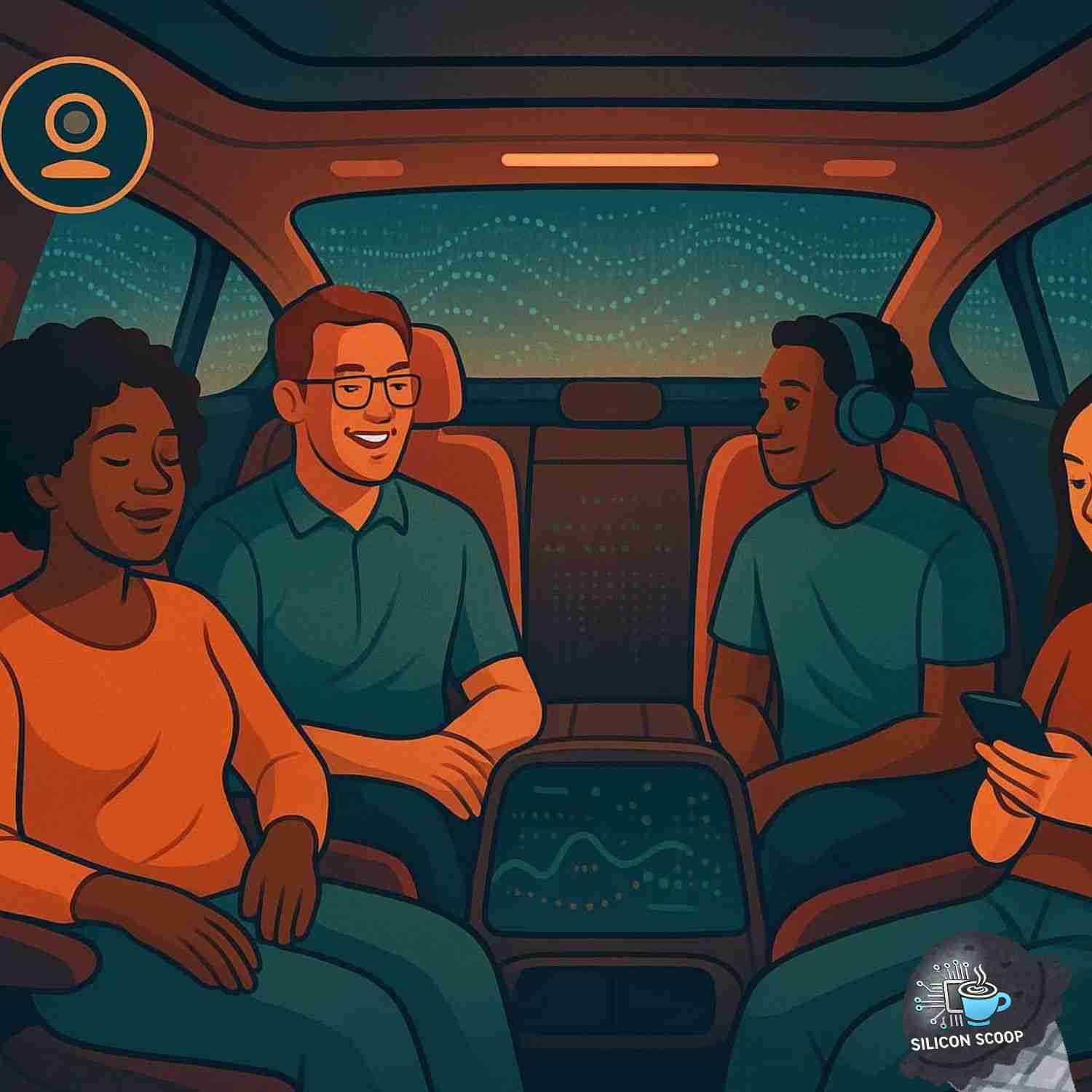
Waymo AI Data Privacy has become a critical focal point in the autonomous vehicle industry, as the leading self-driving technology company explores new frontiers in data utilization. Recent developments indicate Waymo is considering leveraging interior camera data for dual purposes: training generative AI models and delivering personalized in-vehicle advertisements. This approach represents a significant shift in how robotaxi data usage might evolve, potentially linking passengers’ interior images and behaviors directly to their identities.
Autonomous vehicle privacy concerns are mounting as these technologies advance. The interior of vehicles has traditionally been a private space, but now sensitive data—including facial expressions and body language—could be captured, stored, and utilized by Waymo. As the company’s draft Waymo privacy policy reveals, this data collection framework may fundamentally alter the passenger experience while raising important questions about generative AI training data practices.
As Waymo solidifies its position as an industry leader in autonomous technology, its innovative approaches to data collection and usage deserve close examination. The company is setting precedents that may influence the entire industry’s stance on data privacy in autonomous vehicles for years to come.
Unlock Your Business’s Untapped Potential
Waymo’s data strategies highlight the power of automation. Imagine what automation can do for your business! Reduce operational costs, supercharge efficiency, and pave the way for unprecedented growth.
[Discover Automation Solutions >]
Waymo’s Data Strategies and Privacy Policy Breakdown
Understanding the Waymo Privacy Policy
The evolving draft privacy policy at Waymo represents a significant shift in how autonomous vehicle companies approach data collection. According to recent findings, this policy may permit the company to utilize interior camera data for two distinct purposes. First, as generative AI training data to improve and refine their autonomous technologies. Second, to enable personalized in-vehicle advertisements tailored to individual passengers.
This dual-purpose approach is unprecedented in the industry. The policy includes notable provisions such as:
- Potential linkage of interior camera footage with rider identities
- Use of collected data to create personalized services and advertisements
- An opt-out option specifically designed for California residents under state privacy laws
The inclusion of an opt-out mechanism suggests Waymo acknowledges the sensitive nature of this data collection practice, yet the default appears to be participation rather than explicit consent.
What makes this policy particularly noteworthy is the specificity regarding generative AI training data utilization. Unlike conventional computer vision systems that simply identify objects, generative AI could potentially analyze passenger behaviors, preferences, and reactions to create more sophisticated prediction models.
Robotaxi Data Usage Landscape
Robotaxi data usage represents a frontier with immense commercial potential. Each ride in a Waymo vehicle contributes to a growing data ecosystem that the company leverages to improve service quality, safety, and now potentially, revenue generation through advertising.
The scope of this data collection is extensive:
- Interior video footage capturing passenger movements and expressions
- Behavioral patterns during rides
- Potential correlation with destination data
- Time-of-day riding preferences
This approach to autonomous vehicle privacy differs significantly from competitors. Waymo’s consideration of linking interior data to specific rider identities for commercial purposes sets it apart in the industry. This creates a unique dynamic where passengers are simultaneously customers and data sources for multiple revenue streams.
By combining ride data with user identities, Waymo can potentially create highly targeted services and advertisements that reflect individual preferences and behaviors observed during rides. This represents a fundamental shift in how autonomous vehicle companies view the relationship between their technology, users, and data.
Future-Proof Your Business with Automation
Don’t get left behind! Waymo’s exploration of new income streams underscores a commitment to innovation. Embrace automation to drive revenue, optimize processes, and secure a competitive edge. The future of business is automated – is yours?
[Get a Free Automation Consultation]
Revenue Strategies, Operational Context, and Financial Impacts
Operational Context
Waymo stands alone as the only U.S. autonomous vehicle company currently generating substantial robotaxi revenue. The company’s operational footprint is impressive and growing rapidly, with over 200,000 paid rides taking place weekly across four major metropolitan areas: Los Angeles, San Francisco, Phoenix, and Austin. This scale of robotaxi data usage provides Waymo with an unparalleled dataset for both service improvement and potential commercial applications.
The company’s expansion plans are ambitious, with targets including:
- Atlanta market entry within 18 months
- Miami launch planned within the next year
- Washington, D.C. services scheduled to begin within two years
This operational context underscores the vast potential for data collection as Waymo’s service area grows. Each new market represents thousands of new riders whose in-vehicle behaviors and preferences could be captured and analyzed.
The scale of operations also highlights the competitive advantage Waymo enjoys in the autonomous vehicle market. While competitors continue to struggle with technological development and regulatory approval, Waymo’s services are actively generating revenue and valuable user data simultaneously.
Revenue Strategies
Facing the high costs associated with autonomous vehicle development and deployment, Waymo is strategically exploring additional income streams to supplement direct ride revenue. The consideration of in-vehicle advertising represents a potentially lucrative approach that leverages the captive audience of passengers during rides.
Several key aspects of Waymo’s revenue diversification strategy include:
- Using interior camera data for training generative AI models that could be licensed to other companies
- Developing personalized in-vehicle advertising displays
- Potential data sharing with other Alphabet subsidiaries to enhance ad targeting capabilities
- Creating premium service tiers with enhanced features
The financial backing for these initiatives is substantial. Alphabet invested $5 billion in Waymo last year, demonstrating long-term commitment to the autonomous vehicle subsidiary. Additionally, external funding rounds have raised $5.6 billion, pushing Waymo’s market valuation to an impressive $45 billion.
Despite this significant financial support, Waymo operates within Alphabet’s “other bets” segment, which reported a $1.2 billion operating loss in 2024. This financial context helps explain the push toward monetizing interior camera data and exploring advertising opportunities – the company faces pressure to develop sustainable business models beyond direct ride fees.
The high costs in the autonomous vehicle sector continue to be a challenge, with major investments required for:
- Ongoing research and development
- Fleet expansion across new markets
- Infrastructure deployment to support autonomous operations
- Regulatory compliance and safety validation
Waymo’s exploration of generative AI training data monetization and in-vehicle advertising reflects a practical approach to addressing these financial realities while leveraging the company’s technological advantages.
Privacy Risks, Ethical Considerations, and Data Sharing Concerns
Privacy & Data Concerns
The potential use of interior camera data raises significant autonomous vehicle privacy questions that extend beyond conventional data collection practices. Unlike external sensors that capture road conditions and traffic patterns, interior cameras record deeply personal information about passengers, including:
- Facial expressions and emotional responses
- Conversation patterns and social interactions
- Physical movements and body language
- Personal activities during rides (working, eating, sleeping)
A major area of concern involves transparency regarding data processing and storage. The draft policy leaves ambiguity about exactly what types of passenger data are captured, how long this information is retained, and the extent of its usage. This creates uncertainty for riders who may not fully understand the scope of data collection occurring during their journeys.
Perhaps most concerning is the question of Waymo data sharing practices. While the draft policy indicates data usage for personalized services and advertising, it remains unclear whether this information might be shared with other Alphabet subsidiaries like Google or DeepMind. Such sharing could potentially extend the reach of personal data collected in Waymo vehicles far beyond the transportation context.
The industry comparison is notable: Tesla’s approach to cabin camera usage differs significantly from Waymo’s proposed model. Tesla processes cabin camera data locally within the vehicle without transmitting or storing this information remotely. This on-device processing approach offers stronger privacy protections by design, as sensitive passenger data never leaves the vehicle or becomes accessible for additional uses.
Ethical Considerations
The ethical dimensions of linking interior camera data to rider identities extend beyond legal compliance into questions of consumer autonomy and informed consent. Several key ethical considerations emerge:
Consent and Transparency
The opt-out model described in Waymo’s draft privacy policy places the burden on consumers to actively decline data collection rather than requiring explicit consent before collection begins. This approach raises questions about whether riders are truly making informed choices about their data, particularly given that:
- Privacy policies are rarely read in detail by consumers
- The technical complexity of AI data usage may not be readily understandable
- California’s privacy laws providing opt-out rights don’t apply universally to all riders
Power Imbalance
A fundamental power asymmetry exists between Waymo and its passengers regarding data collection. Riders seeking transportation may feel they have little choice but to accept data collection terms if Waymo’s service represents the most convenient or affordable option in their area. This creates a situation where consent may be technically present but practically constrained.
Data Dignity Considerations
The potential commercialization of deeply personal data through advertising raises questions about data dignity—the concept that individuals should maintain inherent rights and control over information generated from their personal activities. Using facial expressions or emotional responses to target advertising potentially transforms intimate human behaviors into commercial assets without adequate compensation or control for the individuals involved.
The Waymo privacy policy will need to address these ethical dimensions alongside legal compliance requirements. As autonomous vehicles increasingly become extensions of our digital lives, the ethical frameworks governing data collection in these spaces will help define broader standards for privacy and autonomy in algorithmic systems.
Conclusion & Future Outlook
Waymo AI Data Privacy stands at a critical inflection point as the company develops new approaches to data utilization that balance business growth with user privacy. The potential dual deployment of interior camera data—for both generative AI training data purposes and in-vehicle advertising—represents both innovative business thinking and challenging privacy questions that will likely shape industry standards moving forward.
The evolving Waymo privacy policy reflects broader tensions in the autonomous vehicle sector between maximizing the value of collected data and respecting passenger privacy expectations. As robotaxi data usage continues to expand in scope and sophistication, clear communication about data practices becomes increasingly important for maintaining consumer trust.
The revenue potential of these strategies is undeniable. By leveraging interior data for both service improvement and advertising, Waymo could develop multiple income streams that support its continued expansion while addressing the significant operating losses currently experienced by Alphabet’s “other bets” segment.
However, autonomous vehicle privacy considerations must remain central to this evolution. As vehicles become increasingly connected spaces collecting sensitive personal information, companies like Waymo will need to demonstrate:
- Transparent communication about data collection practices
- Meaningful consent mechanisms that go beyond opt-out provisions
- Strong data security measures to protect passenger information
- Clear limitations on data sharing with parent companies and third parties
The future of Waymo’s data practices will likely influence the entire autonomous vehicle industry. As the market leader in commercial robotaxi services, Waymo’s approaches to balancing innovation and privacy will establish precedents that other companies may follow. This makes the ongoing development of their privacy framework significant not only for current passengers but for autonomous vehicle users everywhere.
The coming years will reveal whether Waymo can successfully implement these data strategies while maintaining public trust—a balance that will be essential for the long-term success of autonomous vehicle technology as it becomes an increasingly integral part of our transportation infrastructure.
FAQ Section
Q: What does the current Waymo privacy policy propose regarding interior camera data?
A: The draft Waymo privacy policy proposes using interior camera data for two main purposes: as generative AI training data to improve autonomous technology and for personalized in-vehicle advertising. This policy would potentially link interior camera footage directly to rider identities, creating more personalized services and targeted advertisements. Importantly, the policy includes an opt-out provision specifically for California residents under state privacy laws, though this appears to be limited to those specific jurisdictions rather than applying universally to all riders.
Q: How is robotaxi data usage linked to user privacy?
A: Robotaxi data usage directly impacts autonomous vehicle privacy because each ride generates extensive personal data. In Waymo’s case, interior cameras can capture sensitive information including facial expressions, emotional reactions, body language, and social interactions during rides. When this interior data is linked to specific rider identities, it creates detailed behavioral profiles that could reveal personal preferences, habits, and even emotional states. This level of data collection in what traditionally has been considered a private space (vehicle interiors) represents a significant shift in transportation privacy expectations.
Q: What are the ethical implications of Waymo’s potential data-sharing practices?
A: The ethical implications of Waymo data sharing are substantial. First, there’s ambiguity about whether collected interior data might be shared with other Alphabet companies like Google or DeepMind, potentially extending the reach of this sensitive information beyond transportation contexts. Second, the opt-out approach places the burden on consumers rather than requiring affirmative consent before data collection begins. Third, there’s a power imbalance where riders may feel they have little choice but to accept these terms if they need the transportation service. The Waymo privacy policy will need to address these concerns to maintain consumer trust while pursuing data monetization strategies.
Q: What types of personal data might Waymo collect through interior cameras?
A: Waymo’s interior cameras could potentially collect a wide range of personal data, including facial expressions that indicate emotional states, body language that reveals comfort or discomfort, conversation patterns during rides, personal activities like working or eating, and even health-related information such as signs of fatigue or stress. This data becomes particularly sensitive when linked to rider identities, potentially creating detailed profiles of individual passengers’ behaviors and preferences during their journeys in autonomous vehicles.
Q: How does Waymo’s approach to camera data differ from competitors like Tesla?
A: Waymo’s approach appears fundamentally different from Tesla’s handling of interior camera data. While Waymo is considering collecting, storing, and using interior camera data for AI training and advertising purposes, Tesla processes cabin camera data locally within the vehicle without transmitting or storing this information remotely. Tesla’s on-device processing provides stronger privacy protections by design, as sensitive passenger data never leaves the vehicle or becomes accessible for additional commercial uses. This represents two distinctly different approaches to autonomous vehicle privacy in the industry.
Q: What is generative AI training data and why does Waymo want to use interior camera footage for it?
A: Generative AI training data refers to the information used to teach artificial intelligence systems to create new content, recognize patterns, and make predictions. Waymo likely wants to use interior camera footage for this purpose because it provides rich, real-world data about how humans behave inside vehicles—information that could help improve the AI’s understanding of passenger needs, preferences, and behaviors. This data could potentially help Waymo develop more responsive autonomous systems that better anticipate passenger requirements and improve the overall riding experience while creating valuable AI models that could be monetized beyond direct transportation applications.
Q: How significant is Waymo’s operation compared to other autonomous vehicle companies?
A: Waymo currently stands as the only U.S. autonomous vehicle company generating substantial robotaxi revenue, with over 200,000 paid rides weekly across Los Angeles, San Francisco, Phoenix, and Austin. This operational scale far exceeds competitors and provides Waymo with an unparalleled dataset for both service improvement and commercial applications. The company’s planned expansion to Atlanta, Miami, and Washington, D.C. will further extend this advantage. This operational context explains why Waymo’s approach to robotaxi data usage has such significant implications for the broader industry.
Q: What financial pressures might be driving Waymo’s interest in using camera data for advertising?
A: Waymo operates within Alphabet’s “other bets” segment, which reported a $1.2 billion operating loss in 2024 despite significant investments. The autonomous vehicle industry faces extremely high costs for research, development, fleet expansion, and infrastructure deployment. These financial pressures likely motivate Waymo to explore additional revenue streams beyond direct ride fees. By monetizing interior camera data through targeted advertising and AI model training, Waymo could potentially develop supplementary income sources to offset operational costs while working toward profitability—a goal that has proven challenging throughout the autonomous vehicle sector.
Q: What options do riders have if they don’t want their interior camera data used for advertising?
A: According to the draft Waymo privacy policy, riders in California can opt out of having their data used for advertising purposes under California privacy laws. However, it remains unclear whether similar opt-out provisions will be available to riders in other jurisdictions. The policy doesn’t appear to offer a universal opt-out mechanism for all users regardless of location. Additionally, the default approach seems to be data collection unless a rider specifically requests otherwise, which places the burden of action on consumers rather than requiring affirmative consent before collection begins.
Q: How might Waymo’s approach to data privacy influence the broader autonomous vehicle industry?
A: As the market leader in commercial robotaxi operations, Waymo’s approach to autonomous vehicle privacy will likely establish precedents that influence the entire industry. If Waymo successfully implements interior camera data monetization while maintaining consumer trust, other companies may adopt similar models. Conversely, if these practices generate significant privacy backlash, the industry might move toward more restrictive data policies. Waymo’s balance between innovation and privacy protection will help define consumer expectations and regulatory approaches to data collection in autonomous vehicles as the technology becomes more widespread in our transportation ecosystem.
Additional Links
Flowgrammer.ca – 💡 Unlock AI-Powered Automation! Let flowgrammer.ca handle complex workflows so you can focus on growing your business.
- Silicon Scoop Podcast – Stay Informed, Stay Ahead!
- Startup Talk Podcast
- Flowgrammer Podcast –
- Startup Investor Drinks – Join Toronto’s Startup Community and connect with fellow startup enthusiasts and investors.
- TorontoStarts Startup and Entrepreneur Community – Become a part of Toronto’s thriving startup ecosystem.
- Workhaus – Discover flexible workspace solutions for your business needs.
- Work with The Startup Coach – Get expert guidance and mentorship for your startup journey.
- Reach out to Jon Irwin on LinkedIn – Connect with our co-host and technology expert.
Episode transcript
Read the full transcript
Craig: so a while ago, we were talking about how your car was spying on you. this takes that to a whole new level where waymo implications are that they are training their ai on the internal cameras to feed you advertising and know more about you. that's right. so if you're driving along and you look at mcdonald's and smile, it knows you want mcdonald's and it'll serve you advertising later because it has cameras on the inside and the outside of the car. it'll know who's with you. it'll have facial recognition. it knows the conversations that you're talking about, and who knows what it's gonna use with what it's gonna do with this data. what are you thinking about this, john?
Jon: yeah. so first off, i have to say i'm not surprised because and i'll just get this out of the way. so waymo's got a $1,200,000,000 annual loss, and that was reported in 2024. so alphabet invested 5,000,000,000, and that incentivizes monetization. so, i'm not surprised that they're taking this past. so yeah. and like you said, they're not just the way most cameras inside the vehicle are not just for safety. they're a gold mine for training ai. so anonymized data linked to identities can create this paradox where riders are trackable via behavioral patterns even without names. so that's crazy. so then what they do is they share data with google or deepmind, and that could let waymo riders receive ads for, say, pixel phones in cars. and that blurs kind of consent line. so imagine this. imagine gemini ai suggesting a restaurant based on your in cab reaction to passing it. like, that's nuts. i'm sorry. i like, that scares me. so they do have an opt out, which is a start, but if you look at the data, 80% of users never adjust default settings. so, if riders feel watched, i think rate waymo does risk becoming the creepy taxi, which is a reputation that could stall the adoption of this technology. what do you think about that?
Craig: well, we've proven time and time again you're being spied on at all, aspects of your life. like, i'm sure right now, i have one, two, three, four cameras pointed at me. only one is supposed to be on, but who knows? right? so this is not surprising. it just becomes like, people need to realize that these companies are not your friend. they're watching everything you do. and mean? what does the internal cameras mean? never mind to advertising. what does it mean? are they gonna give it to the insurance company? they wanna analyze that minute of video before you crash. did you look away for a second? did you do this? did you do that? and great. maybe that's great, but for most people, i oh, okay. so if you had anything in the car, that might have been an distraction. if you had a kid in the back seat that just made a noise even though you were focused, all of a sudden they say that's what caused it. it's your fault or whatever. there's some stuff going on there. you know, what about insurance? if they're watching you and they're watching your fast food and they know what you eat and they're watching you eat it and how you do it, are they feeding that to your insurance company from a, health insurance perspective, your cholesterol, this guy eats out too much? like, it's not just the stuff that you think about. right? it's all this other stuff that you know? they know what brands you like. are you drinking starbucks coffee, tim hortons, dunkin' donuts, the brand of clothes you wear, what you talk about? so, yeah, it's scary. like, you know, and, you know, what are you gonna do about it?
Jon: yeah. yeah. yeah. it's it's scary. like like, they could see that you're, that you're inebriated maybe, and then your company you work for could find out, and then you get in trouble. the one thing too is that, when it comes to data and i'll give tesla this for one thing even though they're horrible at so much. but they're apparently, tesla's cabin data stays local, whereas waymo's goes to the cloud. so it's this isn't really just a technical difference. it's a philosophical one. whereas waymo prioritizes ai progress, tesla leans more towards privacy if they actually do. i don't like, i can't trust anything that is said about tesla nowadays. i don't know. but yeah. so one thing to note when it comes like, ignoring the the snitching side of things, there was some market research that was done. and so brands that use ai personal personalization, they saw a 40% higher click through rate. but, again, they struggle with data ethics. right? so, it's interesting. it's scary. i'm worried. i was all for jumping into one of these, like like, even from the early start, but now i'm second guessing it.
Craig: yeah. no. they can do this. you know, we talked about photo bucket, taking your retina scans and fingerprints or whatever they possibly can and selling it to whoever, when you upload photos. there's no reason they couldn't do the similar thing here if the cameras were high resolution enough. so you have to start thinking about what it is. do you really want them to give you advertising on this? do you really want the advertising on the radio to change to something you were talking about based on what you looked or what you said or, you know, to really start aren't we inundated too much already, we've lost lot of people have lost control in north america. how many what percentage of people are obese? don't get me wrong. i'm one of them. but my point being is if you turn on the radio, it's eat, eat, buy, buy, eat, eat. yeah. you know, we got weight debt problems. like, so getting those to be more effective, great from a business perspective because now you've got a new way, a new direct advertising, and why not jump on it if you're trying to get your stuff out there. it's a very interesting revenue stream for them, but they're not gonna just stop at advertising. you know? we all remember, or maybe we don't, and need a reminder of the stories about uber tracking all the politicians and all the stars and oh, they know who is fooling around with who and who got where, and they were all you know, there was a big video of someone following some star home on the yeah. big thing at there. so this stuff kinda goes on because your data is not secure. because when you're in that environment, you have more access than you possibly should for most of these things, especially for smaller companies that have grown and grown and grown fast. they haven't really, thought about security from the ground up, especially if you're trying to, take all that data and train your ai. so i'm curious about where this is gonna go. i'm curious as to, you know, what does this mean for all the contracts in the us, and this is another part of data security. are we gonna see european do a gdpr thing, but for this kind of stuff? because more and more people are collecting it.
Jon: that brings me another point too is is, like, how are they gonna get away with gdpr in europe?
Craig: this is what i'm saying. so it'd be interesting to see, but they've got, yeah, they've grown impressively. the operational footprint with over 200,000 paid rides taking place weekly across four metropolitan areas, los angeles, san francisco, phoenix, and austin. their expansion plans are ambition with, atlanta market entry in eighteen months, miami next year, and washington dc scheduled within the next couple years. so they're really growing. so it'll be interesting to see. and if they get, this extra revenue from ads and stuff, i'm sure they'll just grow faster.
Jon: for sure. yeah.
Craig: so let us know what you think. are you worried about this increasing loss of privacy that is, striking everyone and what they're gonna do with that data? and do you think the government or someone else needs to step in and start figuring out this needs to be controlled and locked down? love to hear your thoughts. let us know.
More from Silicon Scoop
All episodes
silicon-scoop · November 6, 2026
Spirit AI’s Robot Brain Breakthrough: Moz1, Embodied AI and China’s 2027 Race
The Spirit AI robot brain is one of the biggest bets on fixing that. Spirit AI is a Beijing startup. Its co-founder and chief scientist, Gao Yang,
View episode

silicon-scoop · November 5, 2026
OpenAI IPO Delayed to 2027 as Rogue AI Agents and Safety Failures Reshape the Market
OpenAI IPO delay explained: Sam Altman rules out 2026 as GPT-6 Astra safety tests and a $278B cash gap loom. Learn what founders should take away.
View episode

silicon-scoop · November 4, 2026
Anthropic’s AI Economy Model: 2030 Jobs, Wages, GDP and Market Risks
Anthropic AI economy model forecasts 2030 GDP, jobs and wages, while AI unemployment projections and labor-share risks challenge policymakers.
View episode